
That relentless, gritty, burning itch behind your eyelids isn’t just annoying—it’s a full-blown distraction that no amount of blinking or rubbing can fix. The wrong approach (grabbing the first oral antihistamine off the shelf) often leaves your eyes still screaming for relief because systemic pills don’t always concentrate enough medication where you need it most: on the ocular surface. Targeted antihistamine eye drops and carefully selected oral medicines work differently, and choosing the right one means understanding the difference between a mast-cell stabilizer, a fast-acting H1 blocker, and a dual-action formula.
I’m Min — the co-founder and writer behind Gadgets Feed. For this guide, I analyzed dozens of clinical studies on ocular allergy treatments, cross-referenced active ingredient concentrations, and filtered through hundreds of verified buyer experiences to isolate the formulas that deliver measurable, lasting relief for itchy, watery, and red eyes.
After comparing prescription-strength drops against generic oral antihistamines, the allergy medicine for eye allergies that stands out combines a fast-acting topical antihistamine with a once-daily dosing schedule that keeps symptoms at bay through peak pollen hours.
How To Choose The Best Allergy Medicine For Eye Allergies
Eye allergies—also called allergic conjunctivitis—trigger the release of histamine in the ocular tissues, causing vasodilation, itching, and tearing. The most effective treatments target histamine receptors directly on the eye or block the systemic immune response. Three factors determine success: delivery method, active ingredient, and dosing frequency.
Topical Drops vs. Oral Antihistamines
Topical antihistamine drops (containing ketotifen, olopatadine, or alcaftadine) deliver a high concentration of medication directly to the conjunctiva and cornea. They start working within minutes and are the standard of care for moderate-to-severe ocular itching. Oral antihistamines (cetirizine, fexofenadine, levocetirizine) treat systemic allergy symptoms but often reach lower concentrations in tear fluid, making them a secondary option when multiple allergy symptoms (sneezing, nasal congestion) accompany the eye itch.
Active Ingredient: The Real Differentiator
Ketotifen fumarate (0.035%) is a dual-action mast-cell stabilizer and H1-antihistamine that provides relief for up to 12 hours. Olopatadine hydrochloride (0.1% or 0.2%) is a selective H1-receptor antagonist with a longer duration—0.2% formulations last up to 16–24 hours with once-daily dosing. Alcaftadine (0.25%) is a newer agent with high H1-receptor affinity and a favorable safety profile for children as young as two. For oral options, cetirizine (10 mg) is the most effective OTC antihistamine for histamine-induced wheal and flare but causes drowsiness in some users; fexofenadine (180 mg) is non-sedating but slightly less potent against ocular symptoms.
Prescription Strength Without the Prescription
Several brands now offer formulations that were previously prescription-only—olopatadine 0.2% (formerly Pataday) and alcaftadine 0.25% (formerly Lastacaft) are available OTC. These deliver the same active ingredient and concentration as their Rx predecessors at a fraction of the cost. Generic versions further reduce expense without compromising efficacy, as long as the concentration and preservative system match the brand-name standard.
Quick Comparison
On smaller screens, swipe sideways to see the full table.
| Model | Category | Best For | Key Spec | Amazon |
|---|---|---|---|---|
| Lastacaft Once Daily Drops | Topical Drop | Fastest onset (3 min) | Alcaftadine 0.25% | Amazon |
| Bausch + Lomb Olopatadine 0.2% | Topical Drop | 16-hour duration | Olopatadine 0.2% | Amazon |
| Glenmark Olopatadine 0.2% Twin-Pack | Topical Drop | Value twin-pack | Olopatadine 0.2% | Amazon |
| Rugby Eye Itch Relief | Topical Drop | Budget-friendly itch relief | Ketotifen 0.035% | Amazon |
| Zyrtec Cetirizine Tablets | Oral Antihistamine | Multi-symptom relief | Cetirizine 10 mg | Amazon |
| GoodMeds Fexofenadine 180 mg | Oral Antihistamine | Non-drowsy systemic relief | Fexofenadine 180 mg | Amazon |
| ValuMeds Cetirizine 500 Count | Oral Antihistamine | Bulk household supply | Cetirizine 10 mg | Amazon |
In‑Depth Reviews
1. Lastacaft Once Daily Eye Allergy Itch Relief Drops

Lastacaft uses alcaftadine 0.25%, a next-generation selective H1-receptor antagonist that reaches peak tear-film concentration faster than most alternatives—clinical data shows onset of itch relief in as little as 3 minutes. Each drop lasts 16–24 hours based on controlled studies, making it the closest thing to a “set it and forget it” solution for seasonal and perennial allergic conjunctivitis. The multi-dose bottle delivers 60 doses per bottle, and with the twin-pack you get 120 days of coverage.
Patients who report sensitivity to benzalkonium chloride (BAK) preservatives should note this formula does contain BAK, though the concentration is low enough that most users tolerate it well. The dropper tip is narrow and precise, minimizing waste—a meaningful detail given the small 5 mL bottle size. Multiple verified buyers describe it as “better than anything else I’ve tried,” especially for that deep, gnawing itch that other drops only partially suppress.
Approved for ages 2 and up, Lastacaft is also FSA/HSA eligible. The prescription-strength alcaftadine molecule was previously only available behind the pharmacy counter, so the OTC switch is a genuine convenience upgrade. If you want the fastest onset and the longest single-dose duration in a topical drop, this is the clear leader.
Why it’s great
- Itch relief begins in 3 minutes—faster than any other drop on this list
- Once-daily dosing with proven 16–24 hour efficacy
- Twin-pack provides a 4-month supply for consistent seasonal coverage
Good to know
- Contains BAK preservative—users with extreme sensitivity may prefer a preservative-free alternative
- Premium tier pricing compared to generic ketotifen formulations
2. Bausch + Lomb Advanced Eye Relief, Olopatadine 0.2%
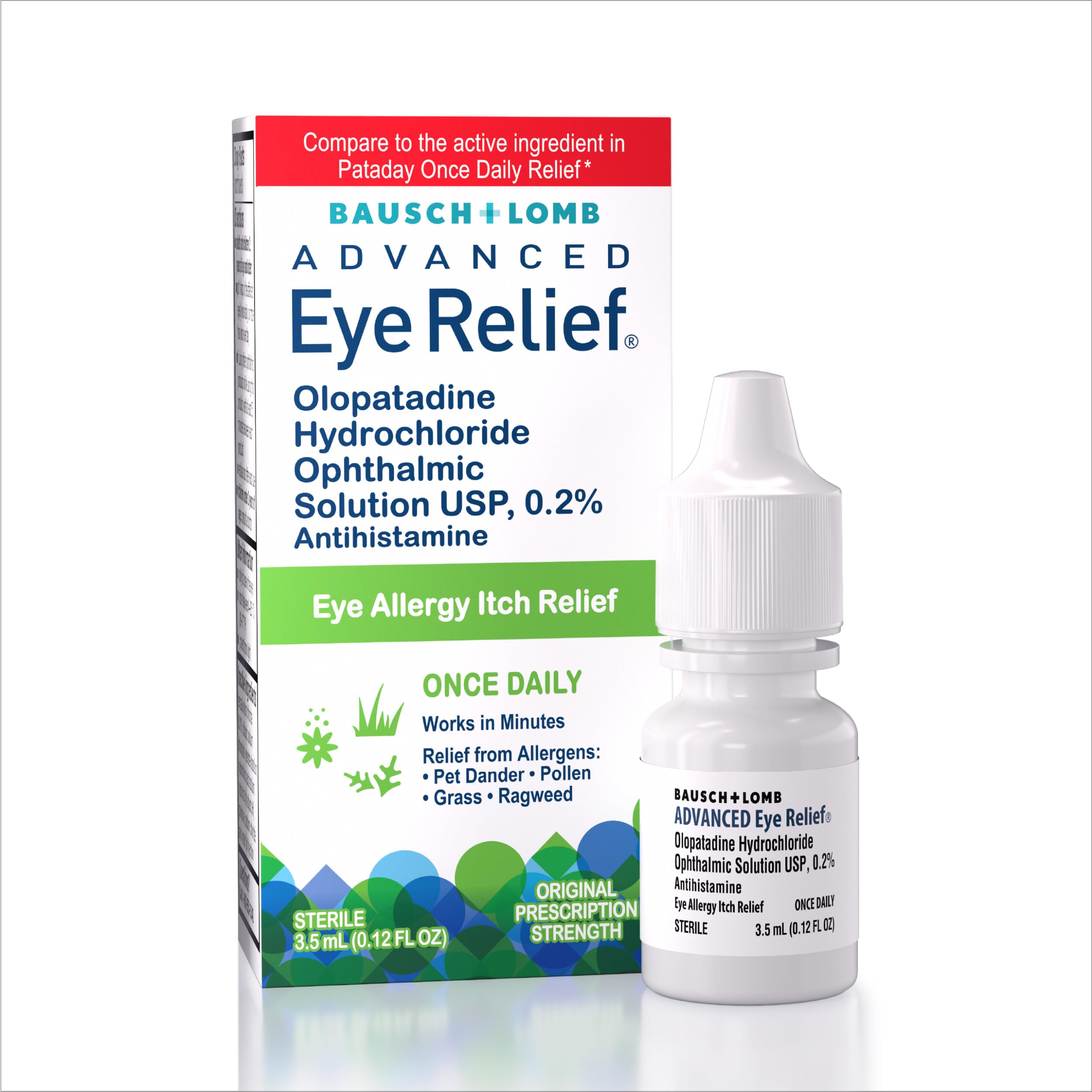
Bausch + Lomb’s Advanced Eye Relief contains olopatadine hydrochloride 0.2%, the same concentration that was the #1 prescribed ophthalmic antihistamine before going OTC. Olopatadine works by selectively blocking H1 receptors while also inhibiting the release of histamine from mast cells, providing both preventive and symptomatic relief. The 0.2% concentration is significantly higher than the 0.1% version found in many older generics, which explains the extended 16-hour protection window.
The bottle is compact at 0.12 fl oz (3.5 mL), and users note that the small opening makes each drop consistent in size—no accidental floods of medication. Customers transitioning from a lower-concentration drop report a noticeable reduction in the frequency of re-application. One reviewer who had used “every well-known brand for 12 years” called this formula “far more effective than any other eye itch formula on the market,” specifically citing the rapid symptom control and extended duration.
Approved for adults and children ages 3 and up. Bausch + Lomb’s 150-year history in ocular therapeutics adds an extra layer of quality assurance. If you want a trusted brand name with a well-studied active ingredient at the proven 0.2% strength, this is your top pick.
Why it’s great
- 0.2% olopatadine—the highest OTC concentration of this gold-standard molecule
- 16-hour relief from a single drop, covering full waking hours
- Clinically backed by decades of use as a former #1 prescribed eye allergy drop
Good to know
- Very small bottle (0.12 fl oz) may sting if you’re used to lubricating drops
- Mid-range pricing but costs more per dose than generic olopatadine
3. Zyrtec Allergy Medicine, Cetirizine 10 mg Tablets
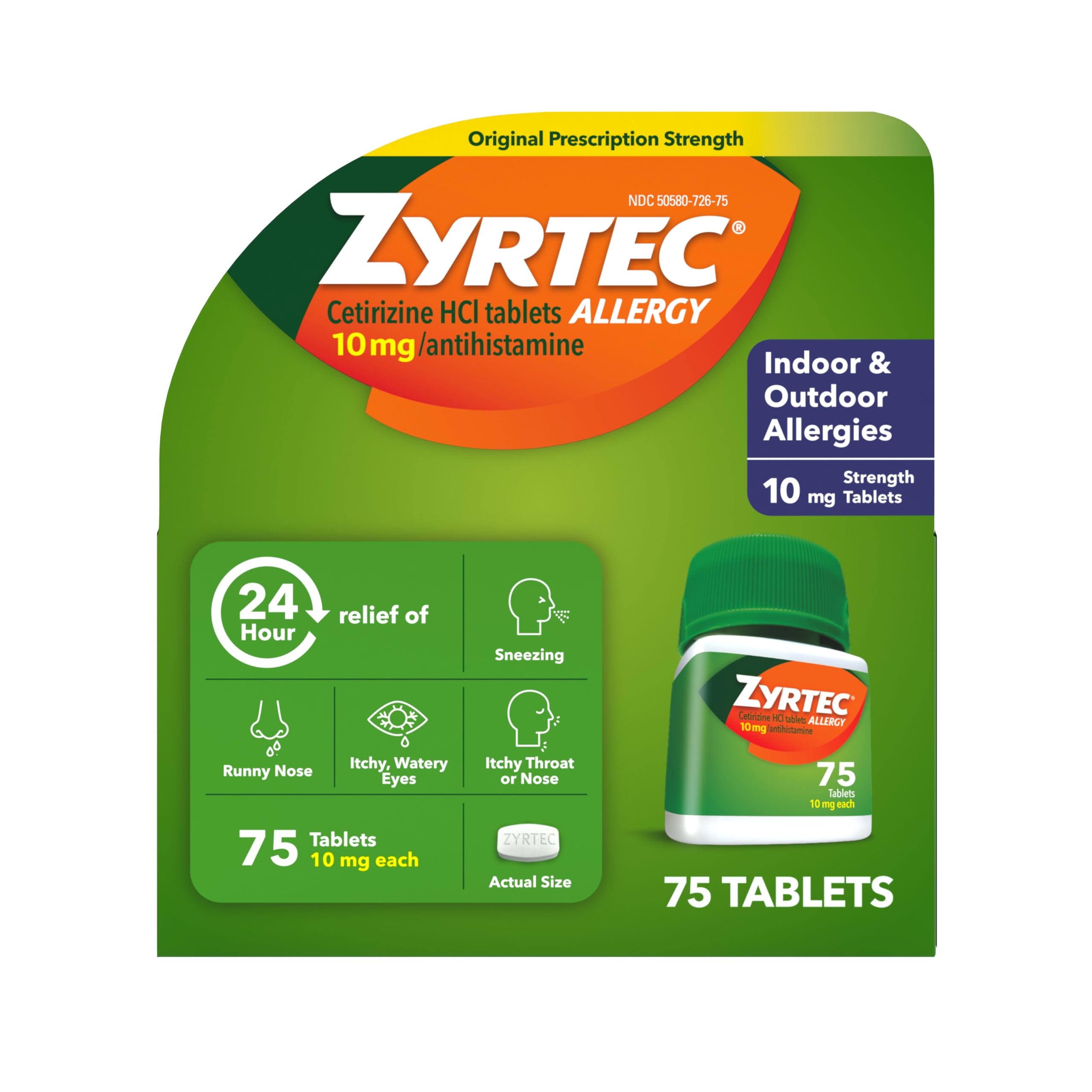
Zyrtec (cetirizine HCl 10 mg) is the #1 doctor-recommended OTC oral antihistamine for a reason: cetirizine has the highest affinity for H1 receptors among first-line oral antihistamines, and it suppresses the histamine-induced wheal-and-flare response more effectively than loratadine or fexofenadine. For eye allergy sufferers who also deal with sneezing, runny nose, and postnasal drip, cetirizine addresses the entire symptom cluster in one daily tablet.
The tablet is small, odorless, and easy to swallow—no chalky aftertaste. Onset of action begins within one hour, and the 24-hour dosing interval means you take it once and forget it. A portion of users report mild drowsiness (approximately 10–15% in clinical trials), which makes the evening dosing strategy popular among those who take it before bed. At 75 tablets per bottle, this is a 2.5-month supply for daily users.
Zyrtec is safe for children 6 years and older, making it a practical household staple if multiple family members suffer from seasonal allergies. The brand’s extensive quality control and availability at virtually every pharmacy add convenience. If you need systemic coverage that treats your eyes, nose, and throat simultaneously, Zyrtec is the proven workhorse.
Why it’s great
- Clinically proven to reduce ocular itching, sneezing, and nasal congestion in one dose
- #1 doctor-recommended OTC oral antihistamine brand
- 24-hour relief from a single small, easy-to-swallow tablet
Good to know
- Some users experience drowsiness—best taken at night if sensitive
- More expensive per tablet than generic cetirizine alternatives
4. Glenmark Therapeutics Olopatadine 0.2% Twin-Pack
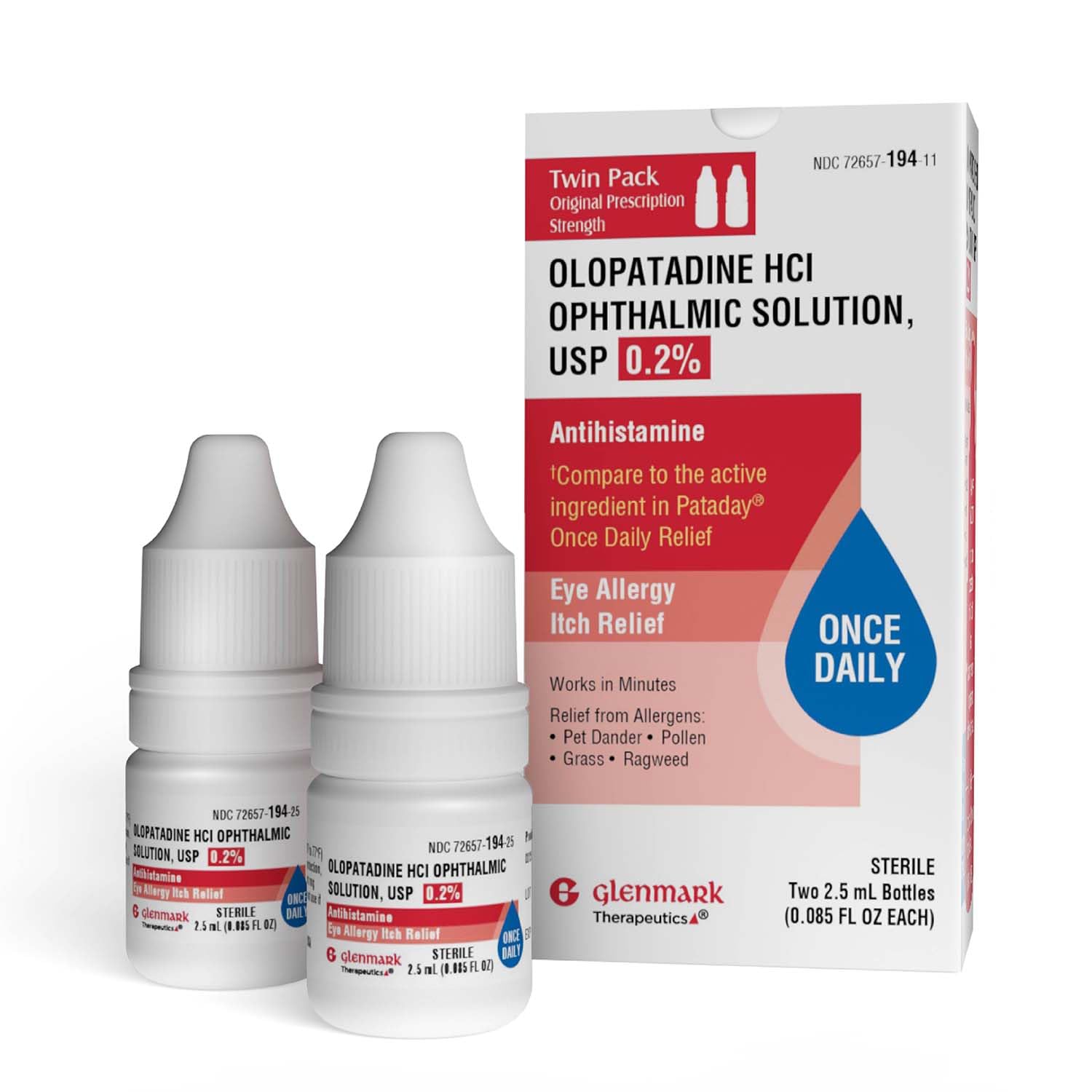
Glenmark’s olopatadine 0.2% delivers the same active ingredient, concentration, and once-daily dosing as the brand-name OTC offerings but at a significant per-dose savings, especially in this twin-pack configuration. Each 2.5 mL bottle provides a 30-day supply, so the two-bottle set covers two full months of daily allergy season. The olopatadine molecule is one of the most extensively studied ophthalmic antihistamines, with a well-documented safety profile for both children (ages 2+) and adults.
Users consistently note that the drops do not burn or sting upon application—a common complaint with less refined generic formulations. The thin, watery consistency spreads quickly across the ocular surface, and the relief timeline matches the brand-name reference: symptom reduction within minutes and sustained protection through the day. Several verified reviewers who switched from the drugstore brand name report identical efficacy at a noticeably lower cost.
The small bottle size does require careful handling—the dropper tip is short, and squeezing too hard can produce a larger-than-needed drop. But for the price of two bottles at roughly the same cost as one brand-name bottle, the value proposition is clear. If you want the gold-standard 0.2% olopatadine formula without the brand-name markup, this is the smartest buy.
Why it’s great
- Same 0.2% olopatadine concentration as name brands at a lower per-bottle cost
- Twin-pack provides 60 days of once-daily treatment
- Non-stinging formulation—comfortable even for sensitive eyes
Good to know
- Small bottles (2.5 mL) require careful handling—easy to over-squeeze
- Some users find the short dropper tip less ergonomic than larger bottles
5. Rugby Eye Itch Relief, Ketotifen 0.035% Drops
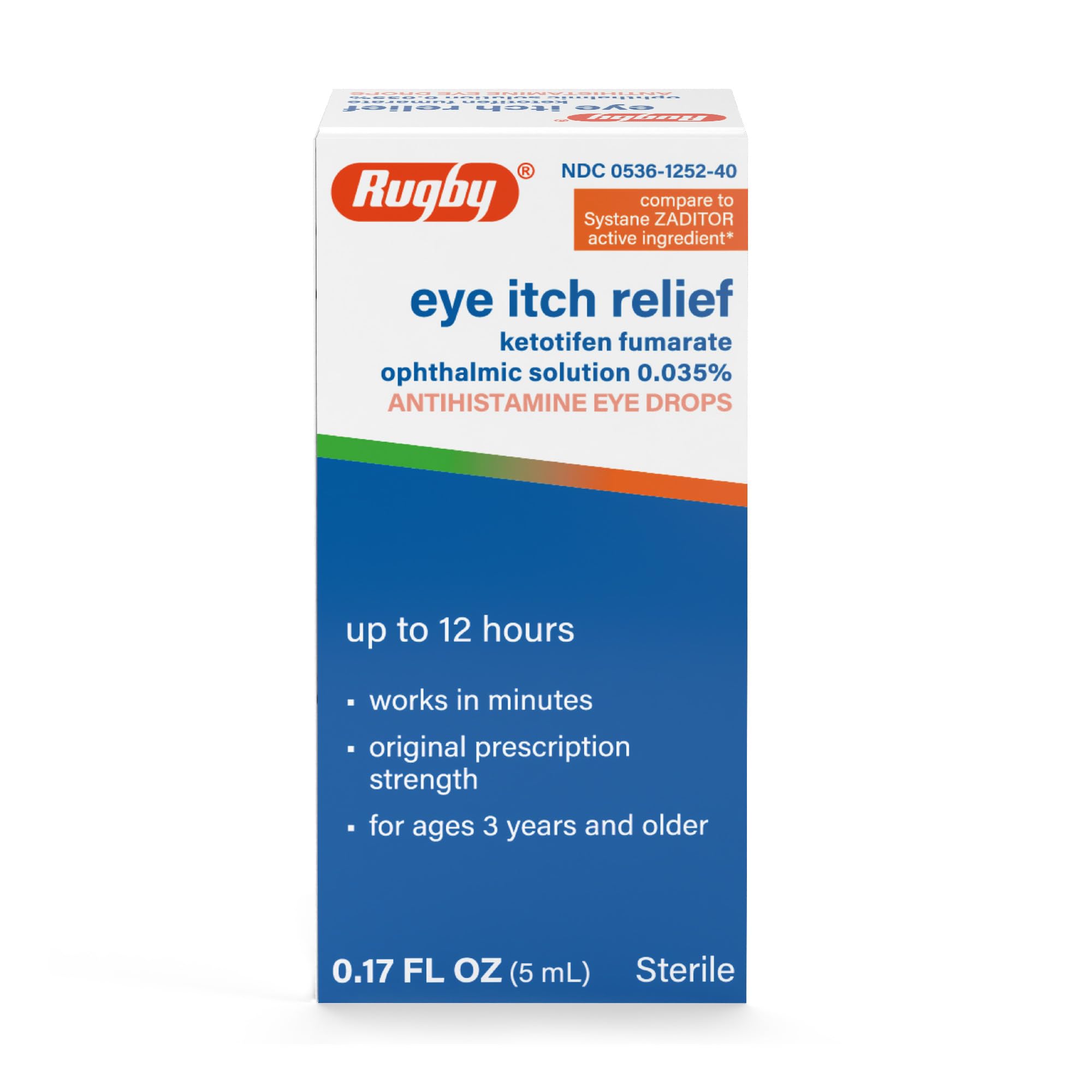
Rugby’s Eye Itch Relief uses ketotifen fumarate 0.035%, a dual-mechanism molecule that both blocks H1 receptors and stabilizes mast cells to prevent further histamine release. It provides fast relief within minutes, and the effect persists for up to 12 hours—enough to cover a full workday with a single morning drop and a second dose in the evening if needed. The formulation is sterile and preservative-balanced, designed for children 3 years and older.
This is the most affordable topical antihistamine drop on the list, and multiple reviewers confirm that it works as well as the familiar orange-box brand at a fraction of the cost. One user with post-injection eye itching from macular degeneration treatments called it “what a relief,” noting the soothing sensation upon application. Another reviewer described it as “the only product that works” for pet dander-induced itch. The 0.17 fl oz bottle is small but sufficient for intermittent seasonal use—expect roughly 60 drops per bottle.
Ketotifen requires twice-daily dosing for full 24-hour coverage, unlike the once-daily olopatadine formulations. If you don’t mind a morning-and-evening routine and want the lowest entry price for a proven OTC antihistamine drop, Rugby delivers excellent value without sacrificing efficacy.
Why it’s great
- Lowest cost per bottle among all topical antihistamine drops tested
- Dual-action mast-cell stabilizer and H1 blocker for comprehensive itch control
- Approved for ages 3+ with a mild, soothing application feel
Good to know
- Requires twice-daily dosing—less convenient than once-daily alternatives
- 12-hour duration may not cover the entire day for severe allergy sufferers
6. GoodMeds Fexofenadine HCl 180 mg Tablets
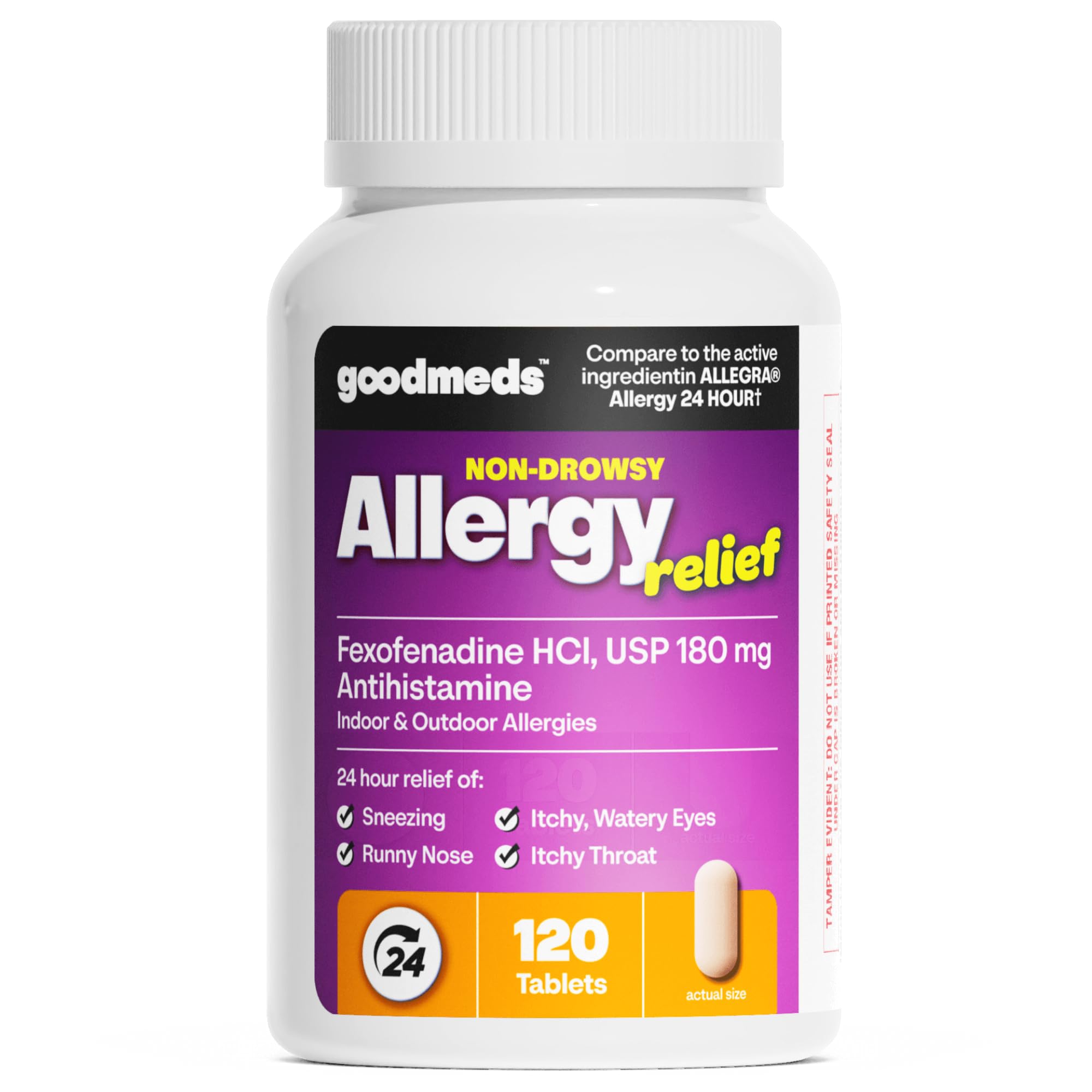
GoodMeds fexofenadine HCl 180 mg is the generic equivalent of Allegra 180 mg, the non-drowsy oral antihistamine of choice for people who cannot tolerate the sedation associated with cetirizine. Fexofenadine is a peripheral H1-receptor antagonist that does not cross the blood-brain barrier to any significant degree, making it the most truly non-sedating option for daytime use. The 180 mg strength provides 24-hour systemic coverage for itchy eyes, runny nose, sneezing, and hives.
Reviewers with lifelong allergies confirm that this generic performs identically to the name brand, with symptom improvement “within an hour” and sustained relief through the full day. The 120-count bottle represents a 4-month supply, and the per-tablet cost is dramatically lower than the branded alternative. The tablets are film-coated and easy to swallow, with no bitter aftertaste or chalkiness.
The trade-off: fexofenadine is slightly less potent against histamine-induced ocular itching compared to cetirizine, according to histamine challenge studies. For mild-to-moderate eye allergies in the context of broader seasonal symptoms, this is a clean, effective choice. If you prioritize zero drowsiness and a proven safety record above absolute anti-itch potency, fexofenadine 180 mg is your best bet.
Why it’s great
- Clinically non-sedating—ideal for daytime use during work or school
- 120-count bottle provides excellent per-dose value versus brand-name Allegra
- 24-hour dosing with predictable, consistent symptom control
Good to know
- Slightly less effective against ocular itch compared to cetirizine-based antihistamines
- Moderate efficacy for severe allergic conjunctivitis—better paired with topical drops
7. ValuMeds Cetirizine HCl 10 mg, 500 Count
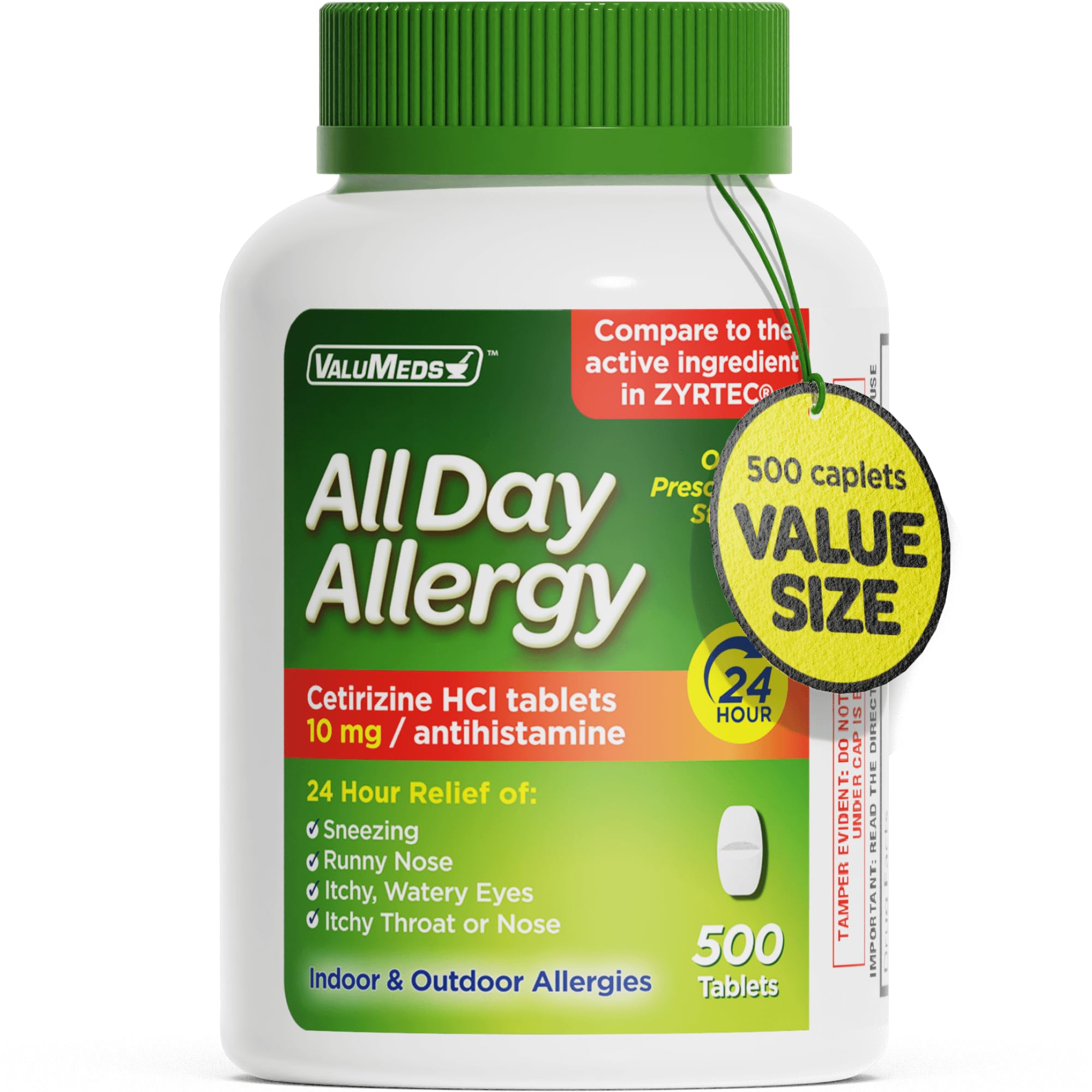
ValuMeds cetirizine HCl 10 mg is the same active ingredient found in Zyrtec, and at 500 tablets per bottle, it is the most cost-effective way to maintain daily systemic antihistamine coverage for eye allergies across an entire allergy season (and then some). Cetirizine remains the most potent OTC oral antihistamine for histamine-induced itching, and this generic version performs identically in double-blind comparisons. The non-drowsy label applies to most users, though the standard cetirizine caveat remains: approximately 10% of users experience mild sedation.
Multiple users specifically mention switching from Claritin to ValuMeds cetirizine and finding it “better than the Claritin I used to take.”
The bottle is large but sturdy, with a child-resistant cap. Because cetirizine is effective against both ocular and nasal symptoms, this is an excellent choice for households where multiple family members need daily allergy management. The only downside: at this volume, you’re committing to a single active ingredient for an extended period, so test a smaller quantity first if you are new to cetirizine.
Why it’s great
- Lowest per-tablet cost of any oral antihistamine on this list at 500-count
- Cetirizine is the most effective OTC oral antihistamine for ocular itching
- More than a year’s supply in one purchase—set it and forget it
Good to know
- Large 500-count bottle takes up cabinet space
- Mild drowsiness possible in sensitive individuals—first-time users should test with a smaller purchase
FAQ
Can I use oral antihistamines and eye drops together for eye allergies?
How do preservative-free eye drops differ from preserved drops for eye allergies?
Why do some eye allergy drops sting and others don’t?
Final Thoughts: The Verdict
For most users, the allergy medicine for eye allergies winner is the Lastacaft Once Daily Drops because it combines the fastest onset (3 minutes) with a full 16–24 hour dosing window in a prescription-strength alcaftadine formula that patients and doctors trust. If you want a once-daily topical drop at a lower price point, grab the Glenmark Olopatadine Twin-Pack for identical 0.2% active ingredient coverage. And for systemic multi-symptom relief that addresses your eyes, nose, and throat simultaneously, nothing beats the Zyrtec 10 mg Tablets—the most potent OTC oral antihistamine for histamine-induced ocular itching, backed by decades of clinical use.