
The low rumble of a gas generator is a familiar sound during a blackout, but it comes with a list of annoyances: the smell of exhaust, the hassle of storing fuel, and the constant maintenance. A battery portable generator eliminates all of that, offering clean, silent, and instant power for your home, campsite, or work van. The choice comes down to matching your energy needs with the right capacity, output, and charging features.
I’m Min — the co-founder and writer behind Gadgets Feed. I’ve spent hundreds of hours analyzing the technical specifications, customer feedback, and real-world performance data of the latest power stations to cut through the marketing noise and find the units that actually deliver reliable power.
This guide breaks down the most capable units on the market, from compact emergency packs to whole-home backup solutions, so you can confidently choose the best battery portable generator for your specific situation without overpaying or undersizing.
How To Choose The Best Battery Portable Generator
Selecting the right battery generator is about matching its electrical specs to your actual appliances. The biggest mistake is buying a unit that looks big on paper but can’t handle a refrigerator’s startup surge. Here are the three critical factors you must understand before clicking buy.
Battery Capacity (Wh) vs. Output Power (W)
Capacity, measured in watt-hours (Wh), tells you how long the generator will run your devices. A 1000Wh unit can power a 100W light bulb for 10 hours, or a standard refrigerator for about 8-12 hours depending on its compressor cycling. Output power, measured in watts (W), tells you what devices the generator can start and run simultaneously. A refrigerator needs around 600-800W to run but can require 1200-2000W for the initial compressor startup surge. Always check the generator’s peak or surge wattage rating, not just the continuous output. If your combined surge needs exceed the generator’s peak rating, it will trigger overload protection and shut down.
Battery Chemistry: LiFePO₄ is the Gold Standard
Nearly every modern portable power station uses lithium-ion cells, but the chemistry matters immensely. Lithium Iron Phosphate (LiFePO₄) batteries offer 3000 to 4000 full charge cycles before their capacity drops to 80%, meaning they can last a decade or more with regular use. They are also inherently safer, with a much lower risk of thermal runaway compared to standard lithium-ion (NMC) packs. If you see a generator advertising a 5-year or 10-year lifespan, it almost certainly uses LiFePO₄. Units with older NMC chemistry are cheaper but will degrade noticeably within 2-3 years of regular cycling.
Charging Speed & Replenishment Methods
A generator is only useful if it can be recharged before the next outage. Look at the maximum AC charging input wattage — a faster recharge rate means less downtime. Some premium units can charge from 0-80% in under an hour using high-wattage AC inputs. Solar charging input is also critical if you plan on off-grid use. Check the maximum solar input voltage and wattage; a unit that accepts 500W of solar panels will charge significantly faster on a sunny day than one limited to 200W. Finally, consider pass-through charging, which allows the generator to power your devices while simultaneously being recharged — a must for continuous home backup during extended outages.
Quick Comparison
On smaller screens, swipe sideways to see the full table.
| Model | Category | Best For | Key Spec | Amazon |
|---|---|---|---|---|
| BLUETTI AC200L | Premium | Whole-home & RV backup | 2400W / 2048Wh | Amazon |
| Jackery Explorer 2000 v2 | Premium | Lightweight 2kWh portable | 2200W / 2042Wh | Amazon |
| EF ECOFLOW DELTA 3 Max | Premium | Fast recharge & smart control | 3400W Surge / 2048Wh | Amazon |
| Anker SOLIX C2000 Gen 2 | Mid-Range | Compact 2kWh with fast charge | 2400W / 2048Wh | Amazon |
| AFERIY P210 | Mid-Range | Large capacity on a budget | 2400W / 2048Wh | Amazon |
| Jackery HomePower 3000 | Premium | Maximum home backup runtime | 3600W / 3072Wh | Amazon |
| DJI Power 1000 V2 | Mid-Range | Ultra-fast 1kWh for essentials | 2600W / 1024Wh | Amazon |
| EBL 1000W Power Station | Budget | Entry-level 1kWh with wireless charging | 1000W / 999Wh | Amazon |
| LIBRIDS C600 | Budget | Compact 640Wh for CPAP & small devices | 600W / 640Wh | Amazon |
In‑Depth Reviews
1. BLUETTI AC200L Portable Power Station

The BLUETTI AC200L is the sweet spot of capacity, output, and expandability. With a 2048Wh LiFePO₄ battery and a 2400W inverter (3600W via Power Lifting), it runs a full-size refrigerator, a freezer, and several electronics simultaneously without breaking a sweat. The 30A RV outlet allows direct connection to a camper’s electrical system, and the unit can be expanded to 8192Wh with additional B300 battery packs.
Charging speed is exceptional. The AC200L accepts up to 2400W AC input, reaching 80% in just 45 minutes. Solar input tops out at 1200W, making it a fast off-grid replenishment option for sunny campsites. The 10ms UPS switch time is certified for sensitive electronics, so your computer or CPAP machine won’t skip a beat during a grid flicker.
The trade-off is weight. At 61.4 pounds, it’s not something you’ll casually toss in a backpack; it belongs in a garage, RV bay, or the back of a truck. The app-based controls for monitoring and scheduling are functional but not as polished as some competitors. For the price and feature set, however, the AC200L delivers unmatched value for serious home backup.
Why it’s great
- Fast 45-minute 0-80% AC recharge
- Expands up to 8192Wh with add-on batteries
- 30A RV port for direct camper connection
- 3600W Power Lifting mode for high-surge appliances
Good to know
- Heavy 61.4-pound chassis; not for casual portability
- Proprietary expansion cables required for battery packs
2. Jackery Explorer 2000 v2 Portable Power Station

Jackery’s Explorer 2000 v2 uses CTB (Cell-to-Body) technology borrowed from electric vehicles to significantly shrink the footprint of a 2kWh power station. Weighing just 39.5 pounds and measuring 13.2 x 10.4 x 11.5 inches, it is 41% lighter and 34% smaller than typical 2kWh LiFePO₄ units. This makes it the go-to choice for anyone who needs a serious power reserve that is actually easy to move from the car to the campsite.
Performance is on par with larger units. The 2200W inverter handles most household appliances, and the 2042Wh capacity runs a refrigerator for over 20 hours in real-world testing. The AC fast charging hits 80% in 66 minutes, and a Silent Charging mode keeps noise under 30dB for overnight use. The integrated UPS switches in 20ms, which is fast enough for most computers and networking gear.
The port selection is a bit limited compared to similarly-priced competitors — you only get 3 AC outlets, 2 USB-C, and 1 USB-A. The solar barrel connectors have been reported to flex inward when plugged in, which is a minor build-quality concern. For the user who prioritizes weight and size savings above all else, the Explorer 2000 v2 is a standout.
Why it’s great
- Industry-leading compact size for a 2kWh unit
- Lightweight 39.5 lbs with built-in handle
- Silent Charging mode at <30dB
- UL-certified UPS for home backup
Good to know
- Limited to 3 AC outlets and only one USB-A port
- Solar barrel ports show slight flex under pressure
3. EF ECOFLOW Portable Power Station DELTA 3 Max
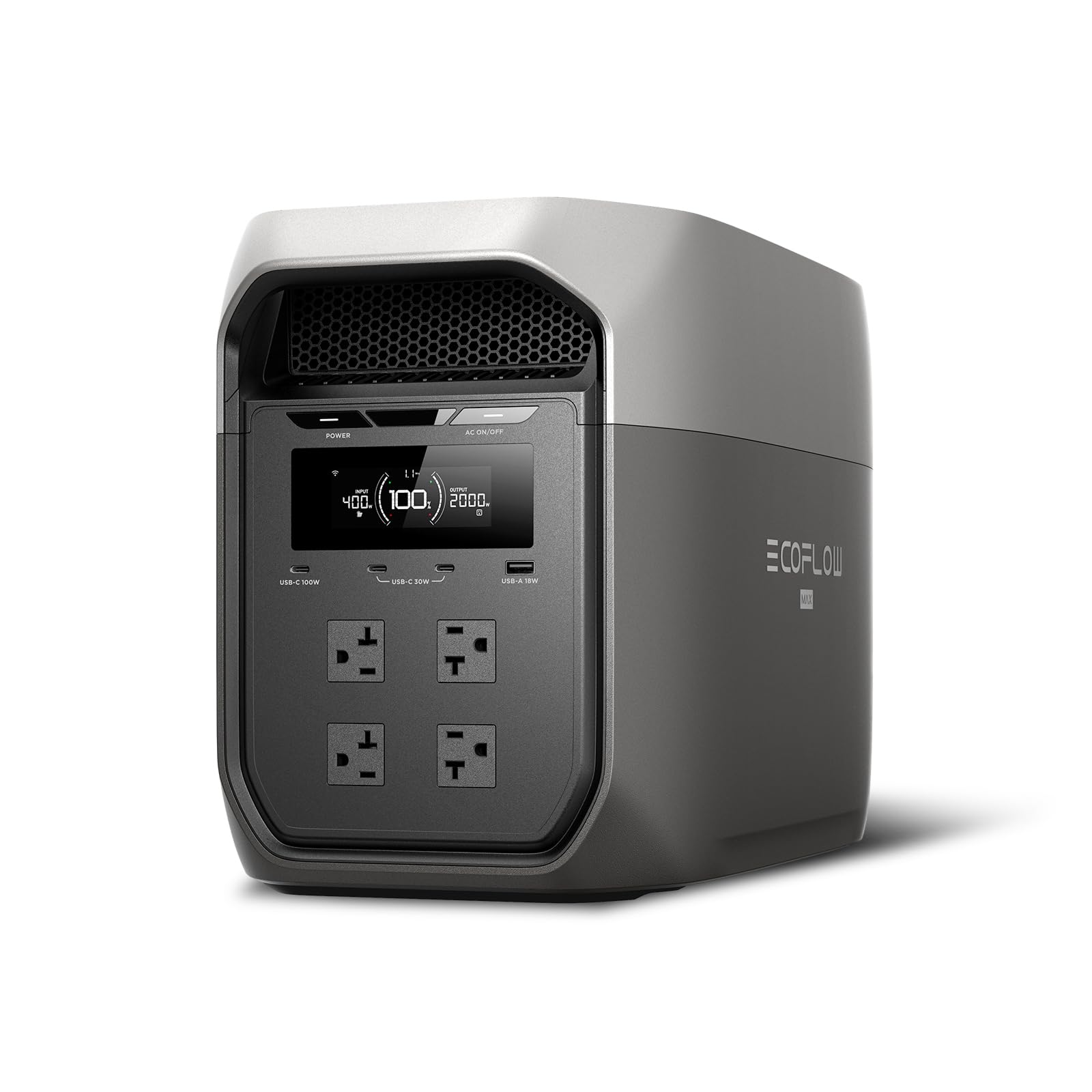
The DELTA 3 Max is engineered for speed. Using EcoFlow’s X-Stream technology, it pulls 0-80% in just 1.13 hours from a wall outlet — a significant advantage if you need to cycle the battery between outage intervals. The 3400W X-Boost surge output covers 99% of household appliances, including microwaves, refrigerators, and small power tools, all running from a 2048Wh LiFePO₄ battery.
The build is exceptionally rugged for a portable unit. The aluminum-plastic hybrid chassis with dual handles makes it easy to lift despite its size, and the fan noise during 1700W charging stays surprisingly low. The EcoFlow app provides granular control over charging schedules, discharge limits, and storm guard modes, allowing you to set the unit to automatically maintain a high state of charge when severe weather is forecast.
The biggest practical issue is the proprietary XT60i cable required for the fastest solar charging speeds. If you already own standard MC4 solar panels, you’ll need an adapter. The recessed buttons are also hard to read in dim light. For users who need a fast-charging, smart-controlled power station that can double as an ultra-reliable UPS for a home office, the DELTA 3 Max delivers.
Why it’s great
- Ultra-fast 0-80% recharge in under 70 minutes
- Industry-leading 10ms UPS transfer speed
- 3400W X-Boost surge for high-draw appliances
- Smart app with storm guard and scheduling
Good to know
- Proprietary XT60i cable needed for optimal solar input
- Control buttons are difficult to see in low light
4. Anker SOLIX C2000 Gen 2 Portable Power Station
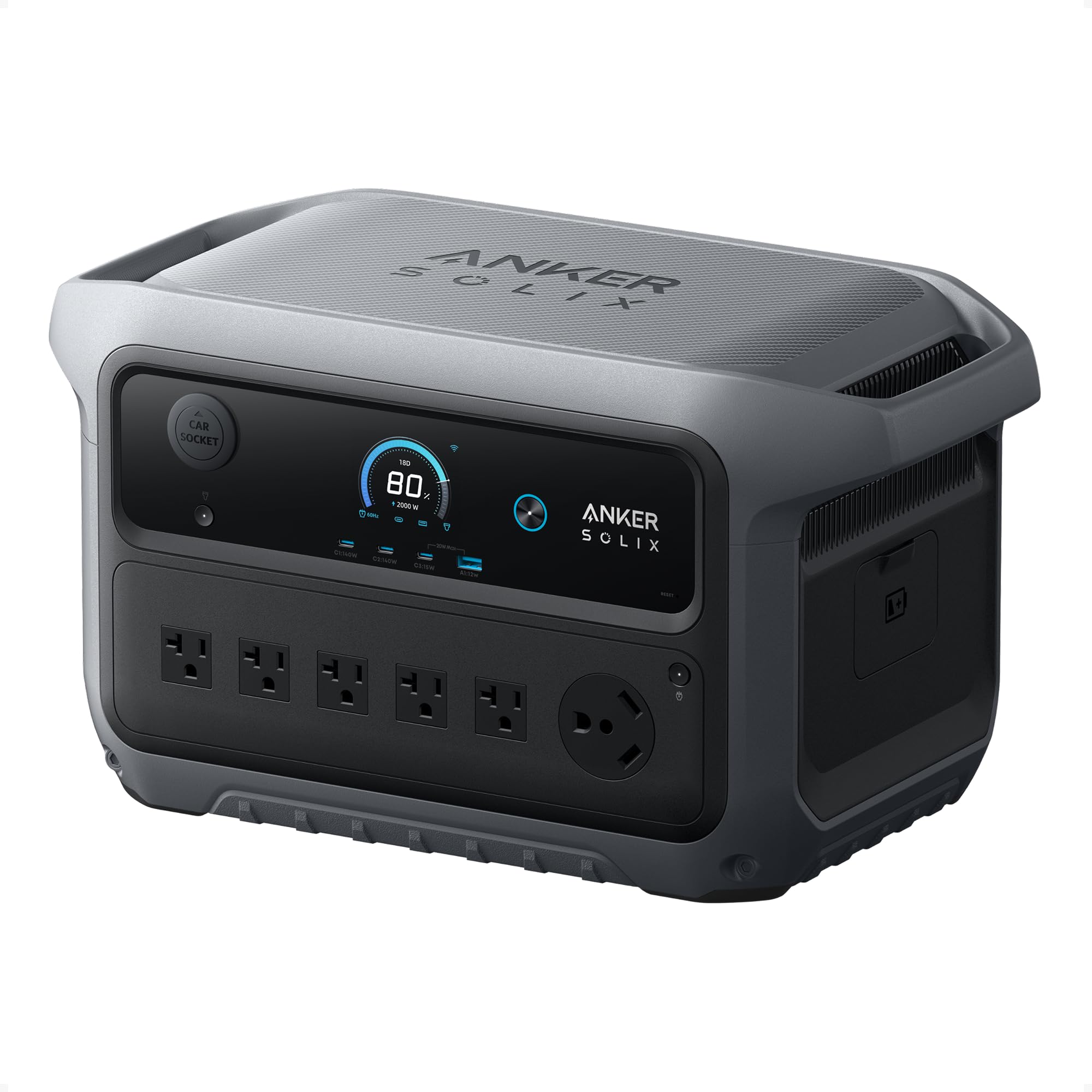
The Anker SOLIX C2000 Gen 2 packs a 2048Wh LiFePO₄ battery and a 2400W inverter (4000W peak) into a chassis that is 25% lighter and 29% smaller than comparable units at 41.7 pounds. This makes it a direct competitor to Jackery’s v2 but with a higher 4000W surge rating, allowing it to start larger window air conditioners and RV rooftop AC units that the Jackery cannot.
Charging is incredibly fast — a full 0-100% charge from AC takes only 58 minutes. The unit also supports 800W UltraFast alternator charging, which means a 3-hour drive can fully recharge the battery from a car’s alternator, making it ideal for van life and overlanding setups. The standby power consumption is an impressively low 9W, allowing the unit to power a dual-door fridge for up to 32 hours on a single charge.
The port selection is solid, including multiple AC, USB-C, and USB-A outputs, but the app-based controls are essential since there’s no printed manual in the box. Some users have noted that the Bluetooth range is shorter than expected, requiring the app to be close to the unit for setup. For the price, the C2000 Gen 2 offers an unbeatable combination of compact size, fast charging, and high peak power.
Why it’s great
- Full 0-100% charge in just 58 minutes
- 4000W peak output for large A/C startup
- 800W alternator charging for vehicle-based recharge
- Very low 9W standby power consumption
Good to know
- No printed manual included; app-dependent setup
- Bluetooth range for app connection is limited
5. AFERIY 2048Wh Portable Power Station P210

The AFERIY P210 brings a massive 2048Wh capacity and 2400W inverter into the mid-range price tier, making it one of the best values if you need lots of power on a tighter budget. The LiFePO₄ battery is rated for 3500+ cycles, and the unit comes with an industry-leading 7-year warranty that outpaces most competitors by 2 years. It also features an ultra-quiet 16dB noise floor under normal loads, making it practically inaudible in a bedroom.
The 16-port array is generous — 6 AC outlets, 4 USB-C ports (including a 100W PD), USB-A, DC5521, a car outlet, and an XT60 for solar input. The server-grade UPS switches in under 10ms, and the app offers decent energy management tools. AC fast charging reaches full capacity in about 2 hours, which is good but not class-leading.
The biggest drawbacks are reliability concerns reported by some users. A handful of units have experienced display screen failures after solar charging, requiring extensive button presses to reset. Customer service has been responsive in some cases but unresponsive in others, creating a risk. The unit is also heavy at 54 pounds and cannot be used in below-freezing temperatures due to LiFePO₄ limitations.
Why it’s great
- 7-year warranty doubles the standard coverage period
- 6 AC outlets and 16 total ports
- Ultra-quiet 16dB operation under normal load
- Excellent capacity-to-price ratio
Good to know
- Some reports of display screen freezing after solar charging
- Customer service response times are inconsistent
- Heavy 54-pound chassis; not for frequent carrying
6. Jackery HomePower 3000 Portable Power Station
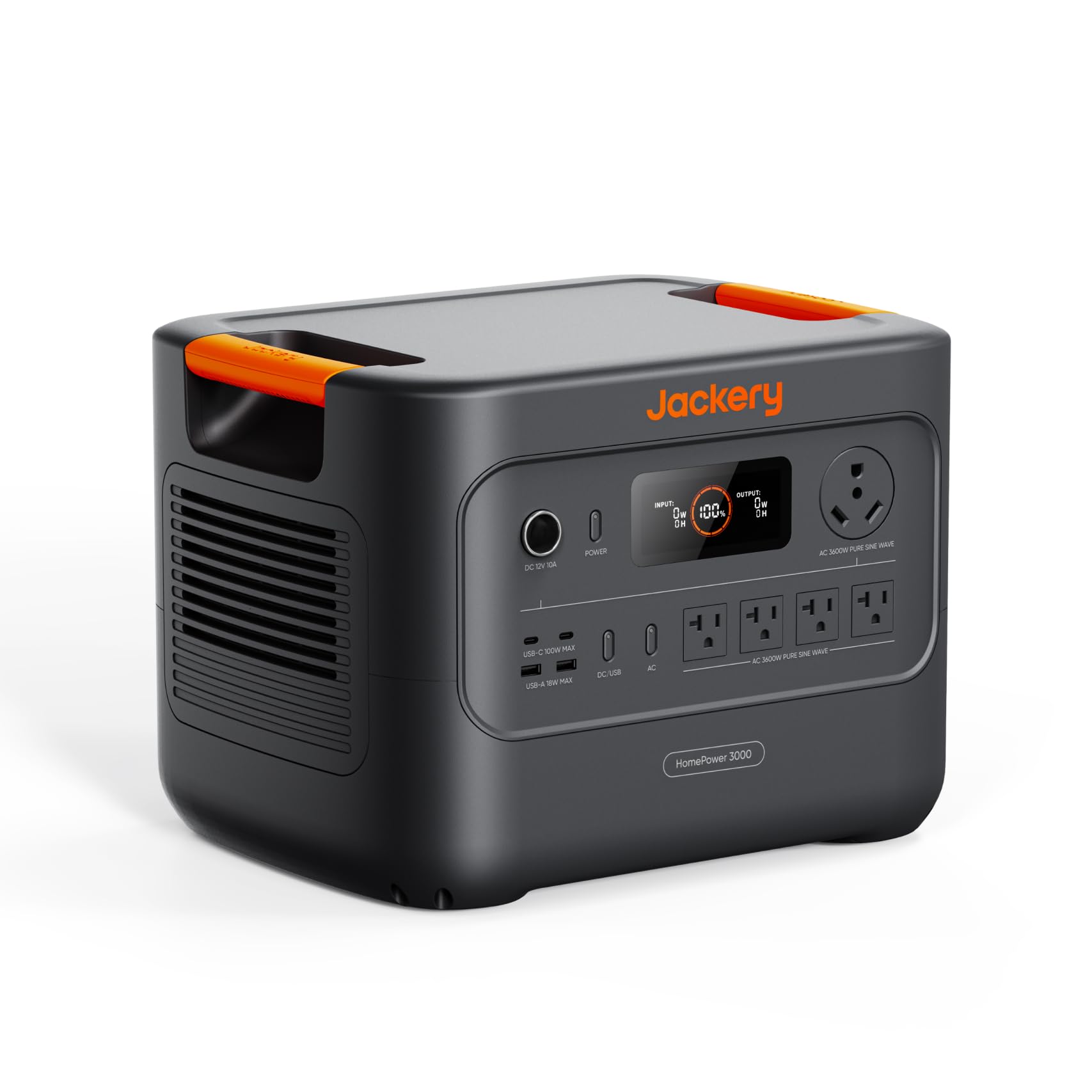
The Jackery HomePower 3000 is the largest consumer-grade battery portable generator in Jackery’s lineup, with a 3072Wh capacity and a 3600W inverter that can surge to 7200W. This is enough power to run a household’s essentials — fridge, lights, router, TV, and a microwave — for 15+ hours during an extended outage. The integrated TT-30 RV port allows direct connection to a camper’s 30A electrical system, eliminating the need for messy extension cord daisy-chaining.
Jackery’s ChargeShield 2.0 technology uses AI algorithms to optimize charging speed and extend the LiFePO₄ battery’s lifespan to 4000 cycles. The hybrid AC and DC input can fully charge the unit in 1.7 hours. The UPS transfer is ≤20ms, which is adequate for most home electronics but slightly slower than the 10ms standard set by competitors.
Weight is the primary compromise. At 59.5 pounds with dual handles, it’s manageable but not “portable” in any casual sense. The fan is noticeably louder than smaller units, hitting around 60dB under load, which makes it intrusive for use as a bedside UPS. Some buyers have reported warranty issues when purchasing through third-party sellers on Amazon instead of directly from Jackery, so verify the authorized reseller before buying.
Why it’s great
- Massive 3072Wh capacity for multi-day home backup
- 7200W surge handles well pumps and large appliances
- Built-in TT-30 RV port for direct camper hookup
- ChargeShield 2.0 extends battery cycle life to 4000
Good to know
- 60dB fan noise is too loud for quiet indoor use
- Warranty only honored if purchased directly from Jackery
- Heavy 59.5 lbs despite compact CTB design
7. DJI Power 1000 V2 Portable Power Station
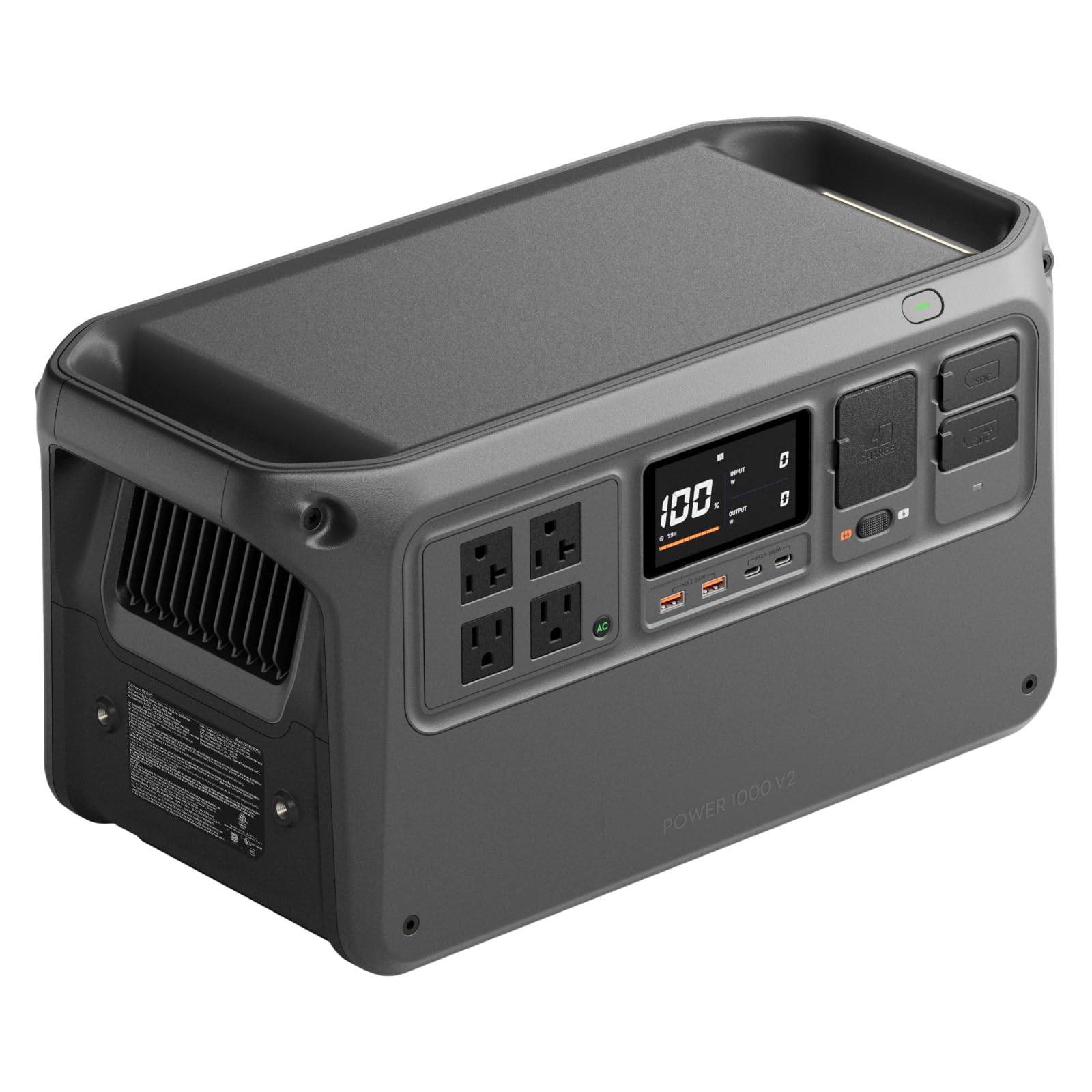
The DJI Power 1000 V2 is a bolt of speed in a mid-sized package. It can recharge from 0-80% in just 37 minutes using AC input, making it the fastest-charging 1kWh unit on the market. The 1024Wh LiFePO₄ battery is paired with a 2600W inverter that covers 99% of household appliances, including kettles and toasters, which is exceptional for a unit this size. The noise floor sits at a whisper-quiet 26dB, perfect for overnight use in an RV or camper van.
The build quality reflects DJI’s drone engineering heritage. The unit features flame-retardant housing, sub-nano coating for moisture resistance, and an intelligent BMS with 26 temperature sensors.
Two major caveats: the unit uses proprietary DJI SDC connectors for solar and car charging, requiring a separate adapter if you don’t own DJI panels. The DJI Home app is mandatory for advanced settings like charge limits and UPS configuration. Without the app, the unit functions but cannot be fine-tuned. Buyers have also reported receiving gray-market units set to 50Hz frequency rather than the standard 60Hz, so verify the seller before purchasing.
Why it’s great
- Blazing 37-minute 0-80% AC recharge time
- Dual 140W USB-C ports (280W total) for pro-content gear
- Near-silent 26dB operation for overnight use
- Rugged flame-retardant and moisture-resistant housing
Good to know
- Proprietary SDC connectors require adapters for standard solar panels
- DJI Home app required for advanced power management features
- Gray-market frequency issues reported with third-party sellers
8. EBL Portable Power Station 1000W
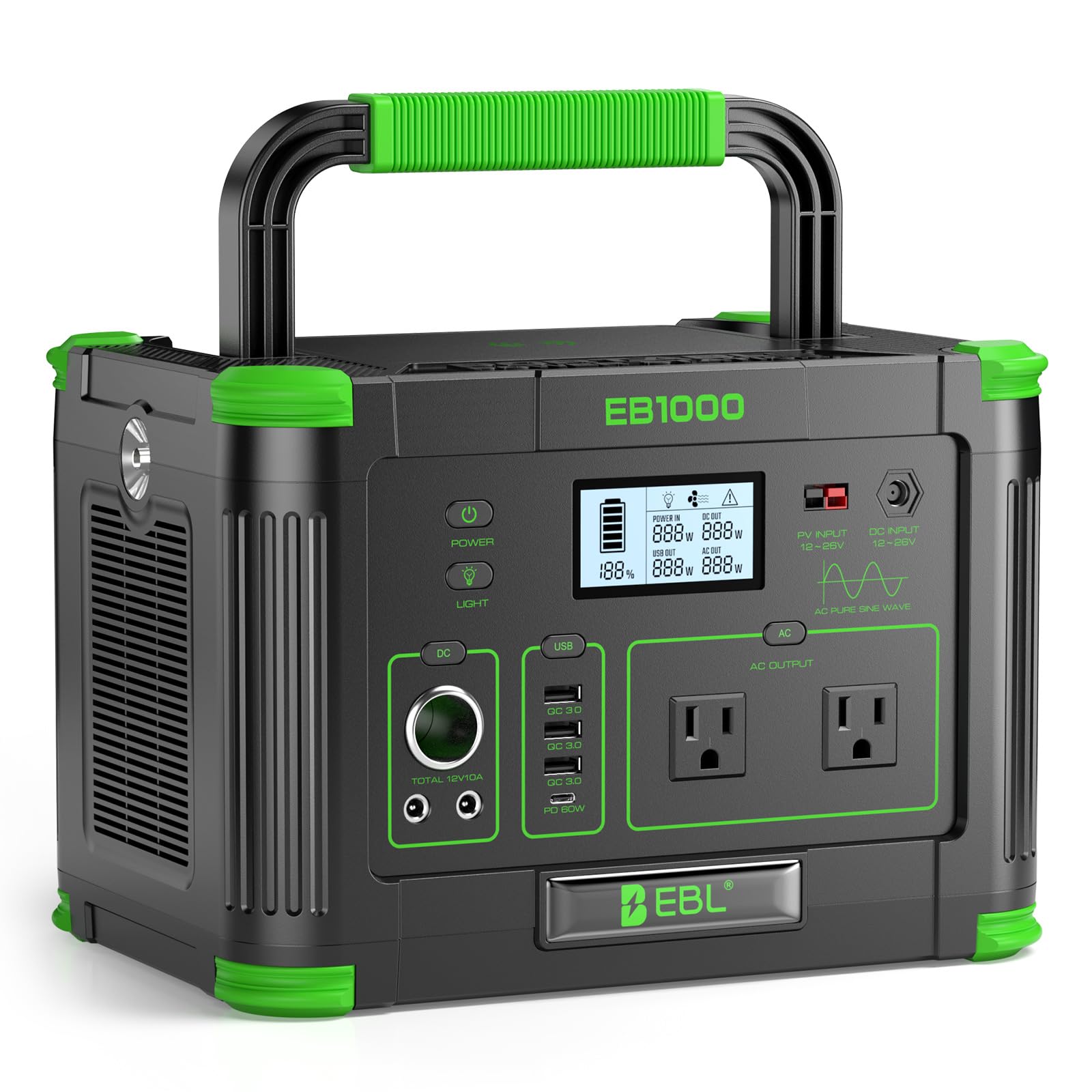
The EBL 1000W power station is an entry-level unit that punches above its price class by including a built-in 10W wireless charging pad on top of the chassis. With 999Wh capacity and a 1000W inverter, it’s well-suited for overnight CPAP use, running a small fan, charging phones, and powering lights during a blackout. The unit is relatively compact at 17.86 pounds with a folding handle, making it one of the most portable options in the 1kWh segment.
Port selection is generous for the price point. You get a 60W PD USB-C, multiple USB-A QC3.0 ports, a 12V car outlet, DC 5521 outputs, and the wireless charging pad. The LCD screen provides clear readouts of battery percentage and input/output draw, and auto-sleeps after 20 seconds to conserve power. The built-in SOS LED light is a thoughtful addition for emergency scenarios.
The AC charging time is slow at 7-8 hours for a full charge, which is a significant limitation if you need to quickly recycle the battery between uses. A few users have reported that the wireless charger doesn’t work with thick phone cases, and the actual usable capacity may be lower than the rated 999Wh in some units. For occasional backup use where recharge speed isn’t critical, the EBL offers respectable value.
Why it’s great
- Integrated 10W wireless charging pad on top panel
- Lightweight 17.86 lbs; easy to carry with handle
- Multiple port types including 60W USB-C PD
- SOS LED light useful for emergency kits
Good to know
- Very slow 7-8 hour AC recharge time
- Wireless charger may not work with thick phone cases
- Some units report lower usable capacity than rated
9. LIBRIDS Portable Power Station C600
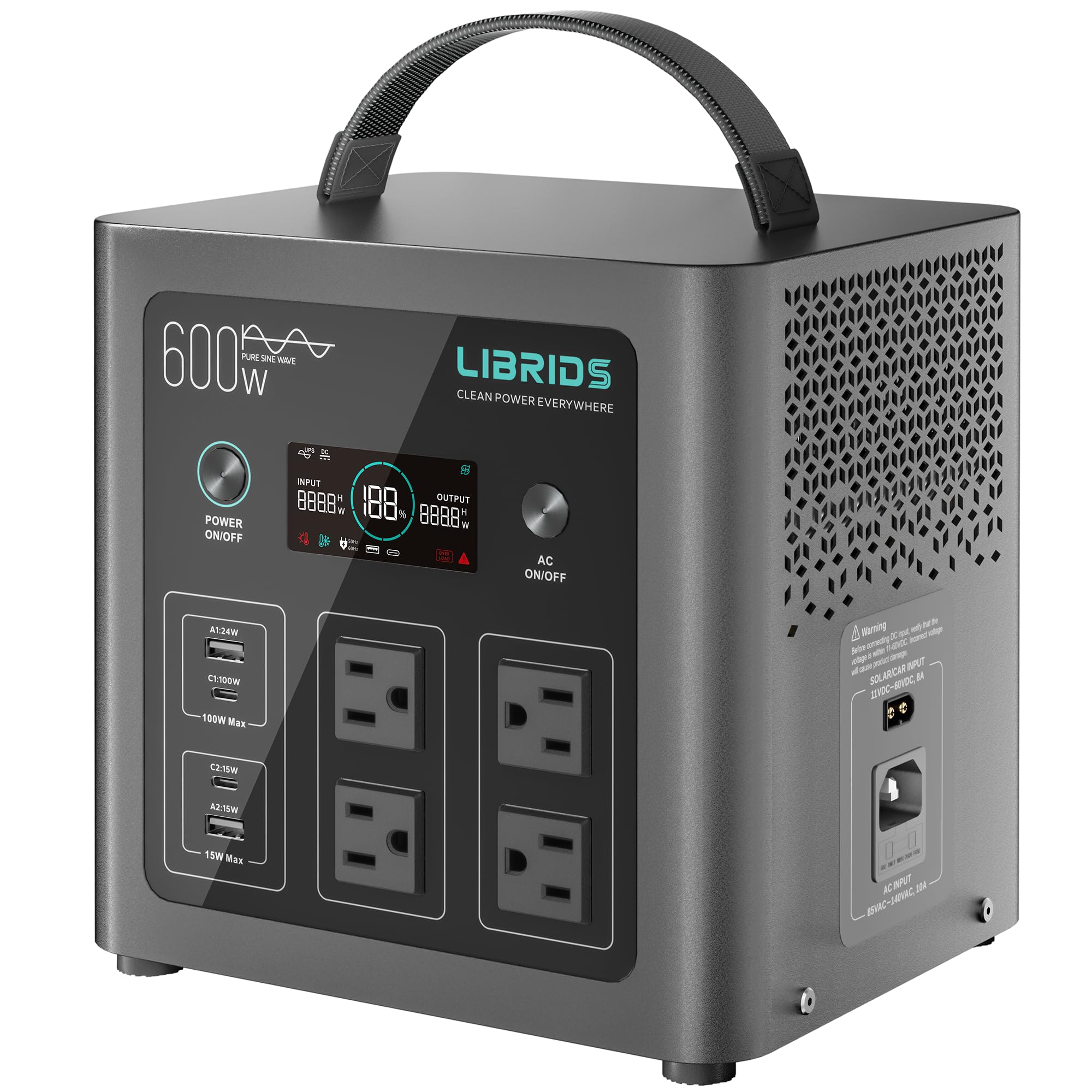
The LIBRIDS C600 is a compact 640Wh power station designed primarily for emergency backup and short camping trips. Its 600W inverter (with 1200W surge via PowerRaise technology) is enough to run a CPAP machine for a full night, keep a WiFi router and modem active during an outage, or charge multiple personal electronics. The unit’s small footprint (8.3 x 6.9 x 8.2 inches) and metal enclosure make it feel more premium than its price suggests.
One of the standout features is the 10ms UPS switch, which provides seamless backup for sensitive electronics. The 1.5-hour AC fast charging is excellent for this capacity tier, ensuring the unit is ready to go quickly after use. The LiFePO₄ battery is rated for 4000+ cycles, and LIBRIDS backs it with a 5-year warranty, which is impressive for an entry-level price point.
The main limitation is the 600W continuous output, which cannot power larger appliances like refrigerators or microwaves. It also carries a UL warning for “Indoor Use Only,” meaning it should not be exposed to rain or wet outdoor conditions, limiting its versatility for camping in unpredictable weather. For users who need a reliable, compact UPS for a home office or a CPAP backup, the C600 is a solid choice.
Why it’s great
- Fast 1.5-hour AC full recharge for a 640Wh pack
- 10ms UPS switch for sensitive home electronics
- Durable metal chassis with 4000-cycle LiFePO₄ battery
- 5-year warranty provides solid long-term value
Good to know
- 600W output cannot power refrigerators or microwaves
- Indoor-use UL warning limits outdoor weather exposure
- Compact size means no expandable capacity options
FAQ
How do I calculate the right watt-hours for my home backup needs?
Can a battery portable generator run a well pump or sump pump?
Is solar charging worth the investment for a portable generator?
What does UPS transfer time mean and why does it matter?
Final Thoughts: The Verdict
For most users, the best battery portable generator winner is the BLUETTI AC200L because it delivers the highest capacity-to-price ratio with professional-grade expandability and fast charging. If you want a lightweight 2kWh unit that is easy to move around, grab the Jackery Explorer 2000 v2. And for whole-home backup that can power your essentials through extended outages, nothing beats the Jackery HomePower 3000.