
The difference between a box that sits on a shelf and a deck that hits the table every Friday night comes down to three things: a playable leader card, a cohesive color pie, and a rulebook that doesn’t send new players running to YouTube. Anime card games have exploded in the last three years, with Bandai alone shipping hundreds of starter decks across the One Piece, Dragon Ball, and My Hero Academia IPs. But not every box marked “Starter Deck” gives you a fighting chance against a constructed meta list.
I’m Min — the co-founder and writer behind Gadgets Feed. I’ve spent dozens of hours cross-referencing card lists, watching regional tournament footage, and analyzing Amazon feedback loops to separate the true gateway products from the overpriced paperweights in this category.
Every box in this guide has been vetted for playable ratios, rulebook clarity, and long-term collectibility. Read on for the definitive list of the best anime card game products you can buy right now without guessing whether the rares inside are actually rare.
How To Choose The Best Anime Card Game
Anime card games live and die on two axes: IP loyalty and playability. A deck featuring your favorite protagonist means nothing if the rulebook is incomplete or the card ratios force you into a losing strategy from turn one. Here are the three filters every buyer should run before clicking “Add to Cart.”
Starter Deck Completeness
A true starter deck must include a leader card, a playsheet, and enough staple commons to execute the deck’s core strategy without buying a booster box on the same day. The One Piece TCG starter decks hit 51 cards plus 10 DON!! cards — that’s a full legal deck out of the box. Cheaper alternatives sometimes ship with 40-card configurations that require immediate expansion, effectively doubling your entry cost.
Pull Rate Transparency
Booster displays from Bandai and Jasco publish their rarity distributions inside the product listing. A 24-pack booster display should guarantee at least one Super Rare or Secret Rare per box. If a seller doesn’t specify the number of rares per pack, assume the worst — bulk common boxes exist and they crush the opening experience for collectors.
Language and Region Codes
The most common disappointment in this category is receiving a Japanese-language product when the listing photos show English cards. Bandai prints both English and Japanese versions of the same SKU, and Amazon’s mix-and-match inventory often ships the wrong region. Always verify the ASIN language tag — English One Piece TCG starts with B0, while Japanese variants float below B0-without the same prefix pattern.
Quick Comparison
On smaller screens, swipe sideways to see the full table.
| Model | Category | Best For | Key Spec | Amazon |
|---|---|---|---|---|
| MTG x Avatar Beginner Box | Beginner Set | Learning the game with a friend | 200 cards, 10 half-decks, 2 playboards | Amazon |
| One Piece TCG Luffy Starter Deck | Starter Deck | Competitive play right out of the box | 51 cards + 10 DON!! + Playsheet | Amazon |
| Dragon Ball Super Fusion World Goku | Starter Deck | Fresh Fusion World mechanics | 50 cards + leader + rules sheet | Amazon |
| DB Super CG Zenkai Series SD23 | Starter Deck | SSGSS Vegito and Z-Extra cards | 1 SR or SPR guaranteed per box | Amazon |
| MHA CCG Crimson Rampage Booster Box | Booster Display | Expanding a MHA CCG collection | 24 packs, 10 cards each, 1 rare/pack | Amazon |
| Battle Spirits Liberation of God Box | Booster Box | Deep collectors and Battle Spirits fans | 9 cards/pack, 88 types + 6 campaign | Amazon |
| The Dreidel Company 24-Deck Bulk | Bulk Playing Cards | Party games and classroom use | 2.25” x 3.5”, 24 decks total | Amazon |
In‑Depth Reviews
1. Magic: The Gathering | Avatar: The Last Airbender Beginner Box
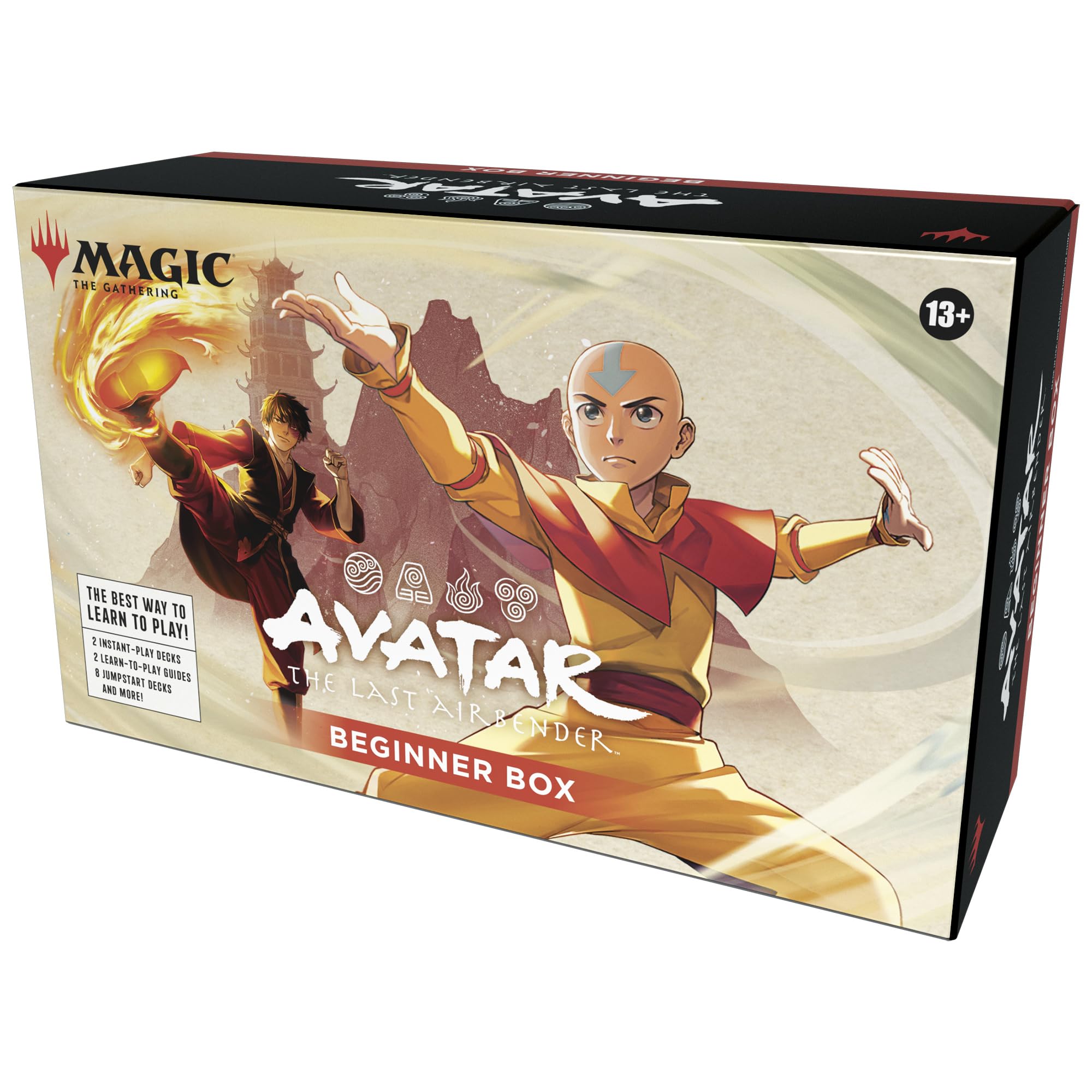
The Avatar Beginner Box is the most complete learning system in the entire anime card game category. It ships with two 20-card tutorial decks (Aang vs. Zuko) that walk you through the turn structure using scripted guide booklets, then hands you eight 20-card half-decks themed around bending styles, allies, and big creatures. You combine any two half-decks into a 40-card deck — that’s 28 possible deck combinations without buying a single booster.
Magic: The Gathering’s core rules engine powers this product, meaning the card quality, ink registration, and overall print precision are a full tier above most anime-licensed starter decks. The included playboards show exactly where lands, creatures, and enchantments go, which eliminates the single biggest friction point for new players. Both spindown life counters are easy to read and roll smoothly.
The only real limitation is card rarity — every card here is a common or uncommon, so there’s zero chance of pulling a foil chase card. That’s fine for learning, but experienced players will outgrow the card pool within a few sessions. The box also lacks dedicated storage slots for the half-decks, so you’ll need deck boxes if you want to keep the decks pre-built between games.
Why it’s great
- Two scripted tutorial decks teach the rules without frustration
- Eight mix-and-match half-decks create genuine replay value
- Cardboard playmats and spindown dice are actually usable quality
Good to know
- No foil or rare cards — all commons and uncommons only
- No deck storage boxes; half-decks mix together if you’re not careful
- Some buyers report missing decklist reference sheets inside the box
2. One Piece TCG: Monkey.D.Luffy Starter Deck

The One Piece TCG is the hottest anime card game on the market right now, and this Luffy starter deck is the cleanest entry point. It includes a fully constructed 51-card deck with a dedicated Luffy leader card, ten DON!! cards to fuel your attacks, and a playsheet that marks the zones for leader, characters, and events. This is the only deck in this guide that is tournament-legal straight out of the box without any modifications.
Card quality is exceptional — Bandai’s Japanese print runs use a thicker card stock than most Western TCGs, and the English First Printing maintains that same crisp feel. The Luffy leader card lets you restand your characters after attacking, which teaches the aggressive tempo control that defines the One Piece TCG meta. The box packaging is compact and fits easily into a standard deck box for travel.
Amazon inventory is notoriously mixed between English and Japanese versions, so check the ASIN (B0C7VFJ8LB is English) before ordering. The deck also ships with only one copy of key rares like “Robin,” meaning you’ll need two starter decks to build a fully optimized list. Some units arrive with the box tape pre-broken, though the cards inside are typically untouched.
Why it’s great
- Fully legal 51-card deck with DON!! cards and playsheet included
- Thick Japanese card stock — better than typical Western TCG quality
- Luffy leader teaches aggressive aggro mechanics central to the meta
Good to know
- High risk of receiving Japanese language version if ASIN is not verified
- Box may arrive with broken tape — inspect seal on arrival
- Only one copy of key rares; competitive play requires two decks
3. Dragon Ball Super TCG: Fusion World Starter Deck Son Goku

Fusion World is Bandai’s streamlined version of the Dragon Ball Super TCG, designed for faster games and lower deck-building overhead. This Son Goku starter deck ships with a pre-constructed 50-card main deck plus a leader card that focuses on a consistent energy curve. The card stock is slightly thinner than the One Piece TCG but still holds up well in repeated shuffling.
The rules sheet is clear and written in plain English, which is a relief compared to some denser Bandai rulebooks. The deck’s game plan is straightforward — ramp energy early, drop mid-cost fighters, then finish with high-power battle cards. This makes it an excellent teaching tool for younger players or anyone new to the Dragon Ball TCG universe.
Multiple buyers note that buying three copies of this deck gives you a complete playset of the key cards for competitive play. The box packaging is a simple pack style rather than a rigid deck box, so you’ll want to sleeve the cards immediately. The Fusion World format is still growing its tournament base, so local play opportunities may vary by region.
Why it’s great
- Clear, beginner-friendly rule sheet — no YouTube required
- Energy curve strategy teaches fundamental TCG pacing concepts
- Three copies of this deck complete a full competitive playset
Good to know
- Thinner card stock than One Piece TCG — sleeve immediately
- Fusion World format has a smaller tournament network
- No DON!! card equivalent — different resource system may confuse returning players
4. Dragon Ball Super CG: Zenkai Series Starter Deck Set 05 (SD23)

The Zenkai Series set introduces Z-Extra cards — a new horizontal card type that recreates iconic Dragon Ball attacks like the Special Beam Cannon and Soul Punisher as single-card multi-effect plays. The SSGSS Vegito leader card is competitively viable in the current meta, and the deck includes a guaranteed SR or SPR card per box, making the opening value immediately visible.
Card art in this set is among the best Bandai has produced — the foil treatments on the God Rare (GDR) cards are reflective and striking, with a texture that feels distinctly premium compared to standard holo prints. The starter deck itself is 50 cards plus the leader, but the real draw here is the box topper SR/SPR that can anchor a wider collection.
The Zenkai series uses a more complex rule system than the base DB Super TCG, so new players should be prepared for a steeper learning curve. Some units arrive with the seal partially broken — the bottom of the box can open during shipping if the tape isn’t reinforced. Multiple reviewers noted duplicate commons, which is normal for a starters set but annoying for collectors chasing completion.
Why it’s great
- Z-Extra cards condense iconic anime moments into single-game-changing plays
- Guaranteed SR or SPR card per box — no dead opening
- God Rare foil texture is genuinely premium, not cheap reflective print
Good to know
- Complex rule system — not ideal for absolute beginners
- Box seal often compromised during shipping
- High duplicate count in the common slot reduces deck variety
5. My Hero Academia CCG Series 2 Crimson Rampage Booster Display

Jasco’s My Hero Academia CCG is the competitive head-to-head dueling game for fans of the anime, and Series 2 Crimson Rampage adds 117 new cards including 20 new character cards and mechanics like “Intercept.” This booster display contains 24 packs with 10 cards each — one rare or ultra rare per pack, three uncommons, and six commons. Extra rare foil cards can appear in the uncommon slot as a bonus pull.
The card stock from Jasco is decent but noticeably thinner than Bandai’s Japanese prints — sleeves are mandatory for competitive play. The artwork is officially licensed and showcases manga-accurate renders of heroes from Class 1-A, Class 1-B, and pro heroes. Average playtime per game is 20 to 30 minutes, making it faster than most Bandai TCGs and easier to fit into a lunch break or commute.
The biggest concern here is packaging durability. Multiple customers have reported receiving a display box that looks squashed, dented, or outwardly damaged. In most cases the inner packs are still sealed and the cards remain unaffected, but the outer damage makes this a poor choice if you’re buying for a gift presentation. Additionally, the card pool in Series 2 assumes you already have a base set, so this is not a standalone starter product.
Why it’s great
- 117 new cards with fresh mechanics — real expansion value
- Guaranteed one rare per pack with chance of foil in uncommon slot
- 20–30 minute game time fits into shorter play sessions
Good to know
- Card stock is thinner than Bandai — sleeves are a must
- Outer box frequently arrives damaged or crushed
- Requires a base deck to use — not a standalone starter
6. Bandai Battle Spirits Contract Chapter 2 Liberation of God Booster Box

Battle Spirits is Bandai’s long-running original TCG that predates most of the anime-licensed games, and Liberation of God is the second chapter in the Contract series. This booster box contains 9 packs, each with 9 cards, for a total of 81 cards. The set includes 88 different card types plus 6 campaign cards, with a rarity structure spanning Commons, Rares, Master Rares, Contract X Rares, X Rares, and XX Rares.
The art style is distinctly Japanese fantasy rather than direct anime adaptation — think mythological beasts and elemental spirits rather than Dragon Ball or One Piece characters. This set is aimed squarely at existing Battle Spirits players and deep collectors; the mechanics use the Contract system that adds complexity beyond the base game. The box weight is heavy at 15.75 x 11.81 x 5.91 inches, indicating robust sample packaging.
The reviews here are split almost entirely between Japanese-language feedback, which makes sense because this product is primarily sold in the Japanese domestic market. English-language support is virtually nonexistent, and the rulebook (if included) is in Japanese. This is not a product for new players or anyone looking for an anime-licensed deck with recognizable characters.
Why it’s great
- Deep collectibility with 88 card types and XX Rare chase cards
- Robust sample packaging — larger box protects cards well
- Unique fantasy art style distinct from typical anime TCGs
Good to know
- Rulebook and cards are primarily Japanese — not English-language friendly
- Not a standalone starter product — requires Battle Spirits base knowledge
- Low average review score reflects mismatch with casual buyers
7. The Dreidel Company Playing Cards 24-Deck Bulk
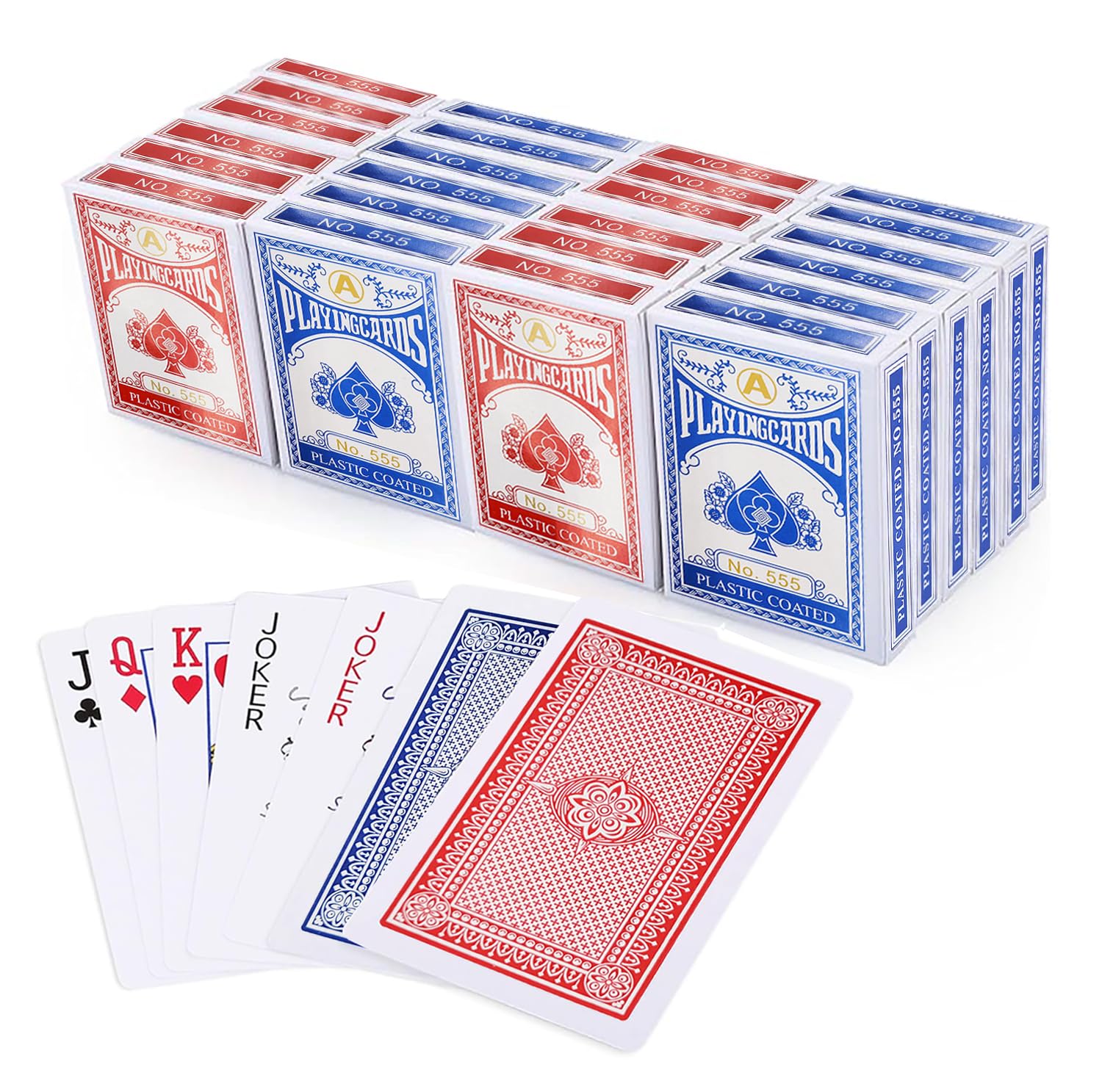
This is the outlier on the list — not an anime TCG, but a bulk pack of standard playing cards that solves a completely different problem. When you’re running a classroom, a party, or a summer camp event and you need 24 identical decks of cards that you don’t mind losing, this is the only option that makes financial sense. Each deck contains 52 standard playing cards plus jokers in classic red and black colorways.
The cards are bridge-sized at 2.25 x 3.5 inches — slightly narrower than a standard poker deck — which makes them easier for smaller hands to manage. They shuffle decently out of the box and hold up for casual use across multiple game nights. The print is clear and simple, with no frills or premium finishes. These cards are not for Euchre purists who prefer a specific card stock feel.
This product has nothing to do with anime IP or trading card games. It belongs in this guide only as the budget-tier option for buyers who need high volume at the lowest cost per unit. The plastic-free box packaging is minimal, and the card stock is thinner than what you’d find in a standard Bicycle pack. For anime card game collectors, skip this entirely — but for teachers and event planners, it’s a solid pick.
Why it’s great
- Extremely low cost per deck for bulk buyers — ideal for classrooms
- Bridge size is comfortable for younger or smaller hands
- Clear, simple print — no design distractions during gameplay
Good to know
- Not an anime TCG — standard playing cards only
- Thinner card stock than premium brands like Bicycle or Copag
- Bridge width may feel narrow for players used to poker-size cards
FAQ
Can I play competitive tournaments with a starter deck alone?
How do I tell if a Bandai anime TCG is English or Japanese before buying?
What is the difference between a booster display and a booster box?
Final Thoughts: The Verdict
For most users, the best anime card game winner is the Magic: The Gathering Avatar Beginner Box because it combines the strongest rule system in the category with a guided learning path and genuine replay value through its half-deck mixing system. If you want a tournament-ready deck that works the moment you open the box, grab the One Piece TCG Luffy Starter Deck. And for deep collectors chasing God Rare foils and horizontal Z-Extra cards, nothing beats the Dragon Ball Super Zenkai Series SD23.