
The modern surveillance environment is dense and unrelenting. From facial-recognition cameras on city streets to license-plate readers and hidden sensors, the act of being photographed has become a background condition of daily life. A growing number of people are actively choosing to reclaim their visual privacy, and the garment industry has responded with a specific category of apparel engineered to defeat, confuse, or block camera systems.
I’m Min — the co-founder and writer behind Gadgets Feed. I’ve spent countless hours combing through technical specifications, verifying material claims, and cross-referencing user reports to understand which garments actually deliver on their privacy promise versus which are purely aesthetic.
The goal of this guide is to cut through the marketing noise and present a clear, data-driven comparison for anyone searching for anti-camera clothing that works in the real world.
How To Choose The Best Anti-Camera Clothing
The market for privacy-oriented apparel has splintered into three distinct subcategories: visual camouflage (patterns that confuse human and AI vision), infrared-masking garments (blocking thermal drones and FLIR cameras), and RF-shielding clothing (blocking the electromagnetic signature of phones, GPS trackers, and RFID readers). Understanding which threat you are defending against is the first step.
Understand the Threat: Visible, Thermal, or Digital?
A standard CCTV camera sees reflected visible light. An IR or thermal camera detects heat emitted by your body. A cellular or Wi-Fi detector picks up the radio signals from your devices. A single garment cannot block all three simultaneously. If your goal is to avoid facial-recognition on city streets, focus on pattern disruption and IR-blocking materials. If you are trying to prevent your phone from being tracked, you need a Faraday-cage fabric that contains conductive metal fibers — typically silver, copper, or nickel.
Fabric Composition Is the Only Metric That Matters
Many garments labeled “anti-camera” or “techwear” are purely visual styles derived from Japanese street fashion. They look the part but provide zero material-based protection. The real metric is the percentage of conductive fiber in the weave. Silver-fiber fabrics (typically 10-35% silver-coated nylon) produce measurable attenuation of RF signals. Copper-thread fabrics are heavier but often provide superior shielding against lower-frequency EMF. If a product does not publish its fiber composition or an independent RF attenuation test, it is effectively fashion, not function.
Fit and Coverage Affect Real-World Performance
A hoodie with a loose neckline or a shirt with short sleeves creates an opening for thermal leakage and RF penetration. Full-coverage designs — turtlenecks, hoods that cover the face, thumbhole cuffs, and long-torso cuts — drastically improve real-world effectiveness for any material-based garment. A silver-fiber top with short sleeves is functionally incomplete against a drone equipped with a FLIR camera, because the exposed arms emit heat. Always prioritize garments that provide continuous coverage over the largest surface area of the body.
Quick Comparison
On smaller screens, swipe sideways to see the full table.
| Model | Category | Best For | Key Spec | Amazon |
|---|---|---|---|---|
| HECS Base Layer System | Premium | Wildlife thermal stealth | Patented bioelectric shielding | Amazon |
| EMF Shielding Hoodie (Double Layer) | Premium | High-attenuation RF blocking | Double-layer silver fabric | Amazon |
| HECS Stealth Screen Hoodie | Premium | Hunting with face coverage | Stealthscreen with face mask | Amazon |
| Amradield EMF Leggings | Premium | Lower-body RF shielding | Silver fiber stretch fabric | Amazon |
| Men’s EMF Shielding T-Shirt | Mid-Range | Daily EMF protection | Cotton-SilverFiber blend | Amazon |
| Niepce Inc Techwear Cargo Pants | Budget | Visual techwear style | Heavyweight cotton-nylon | Amazon |
| Niepce Inc Zip Up Windbreaker | Budget | Oversized visual stealth | Detachable sleeves, canvas | Amazon |
In‑Depth Reviews
1. HECS Base Layer System

The HECS Base Layer System employs a patented bioelectric shielding technology that disrupts the minute electric field generated by human muscle movement — the same field that deer, elk, and other game animals detect from hundreds of yards away. This is not a visual camouflage garment; it is a material-science solution for hunters who need to close the distance to within 20-30 feet without alerting prey. User reports consistently describe animals approaching close enough to smell or touch, which aligns with the claimed mechanism of action.
The system ships as a complete base layer set covering the torso, arms, and legs, designed to be worn under outer clothing. The fabric is thin and lightweight, making it suitable as a year-round thermal base layer that also provides a degree of scent control. Hunters who combine this with scent-elimination strategies report dramatically closer encounters compared to using scent control alone.
That said, the HECS system is purpose-built for hunting and its effect on human-detection camera systems (CCTV or facial-recognition AI) is secondary at best. It does not block visible light or thermal infrared emitted by the body; it only masks the bioelectric field. Buyers expecting to defeat urban surveillance cameras will need to look at a different material class. The system is also a commitment — the full set requires layering and is not a casual everyday wear piece.
Why it’s great
- Proven in real hunting scenarios — animals approach within feet
- Works as a thin, comfortable base layer compatible with other gear
- Patented technology verified by multiple independent user reports
Good to know
- Does not block visible-light cameras or thermal-IR signatures
- Designed specifically for wildlife, not urban surveillance evasion
- Requires layering; not a standalone outer garment
2. EMF Shielding Pullover Hoodie (Double Layer Silver Fabric)

This pullover hoodie from Shaoxing Yunjia features a double layer of silver fabric — a significant material upgrade over single-layer competitors. Silver fiber is one of the most effective conductive materials for RF attenuation, and doubling the layer theoretically doubles the shielding effectiveness across the frequency spectrum from 10 MHz to 3 GHz. One user who tested the hoodie with a GigaHertz meter reported that RF readings above 85 µW/m² dropped to 0.0 µW/m² inside the garment, which is an impressive real-world result.
The construction uses a heavy, non-elastic fabric that feels substantial but limits stretch. The cut is based on Chinese sizing, so ordering two sizes larger than normal is almost mandatory to achieve a comfortable fit. The hood is functional but some users found it aesthetically odd, and the sleeves may run short on taller wearers — a critical flaw for a garment meant to provide continuous coverage. The design is minimal and unisex, with no overt techwear visual cues, which helps it blend into a casual wardrobe.
The most significant limitation is that the hoodie’s openings (neck, cuffs, hem) create gaps where low-frequency EMF and IR can leak through. It is effective at blocking the RF from smartphone radios (cellular, Wi-Fi, Bluetooth) when the phone is wrapped inside the fabric, but wearing it as a garment leaves the head, hands, and legs exposed. For someone already using an RF-shielding beanie or leggings, this hoodie is a premium upper-body piece that delivers measurable attenuation.
Why it’s great
- Double-layer silver fabric provides high attenuation verified by meter tests
- Minimalist design blends well with normal clothing
- Solid fabric weight and feel indicate durable construction
Good to know
- Chinese sizing requires ordering 2+ sizes up
- Sleeves may be too short for full-coverage needs
- Openings at neck and hem allow some RF/IR leakage
3. HECS HECStyle Stealth Screen Hoodie with Face Mask
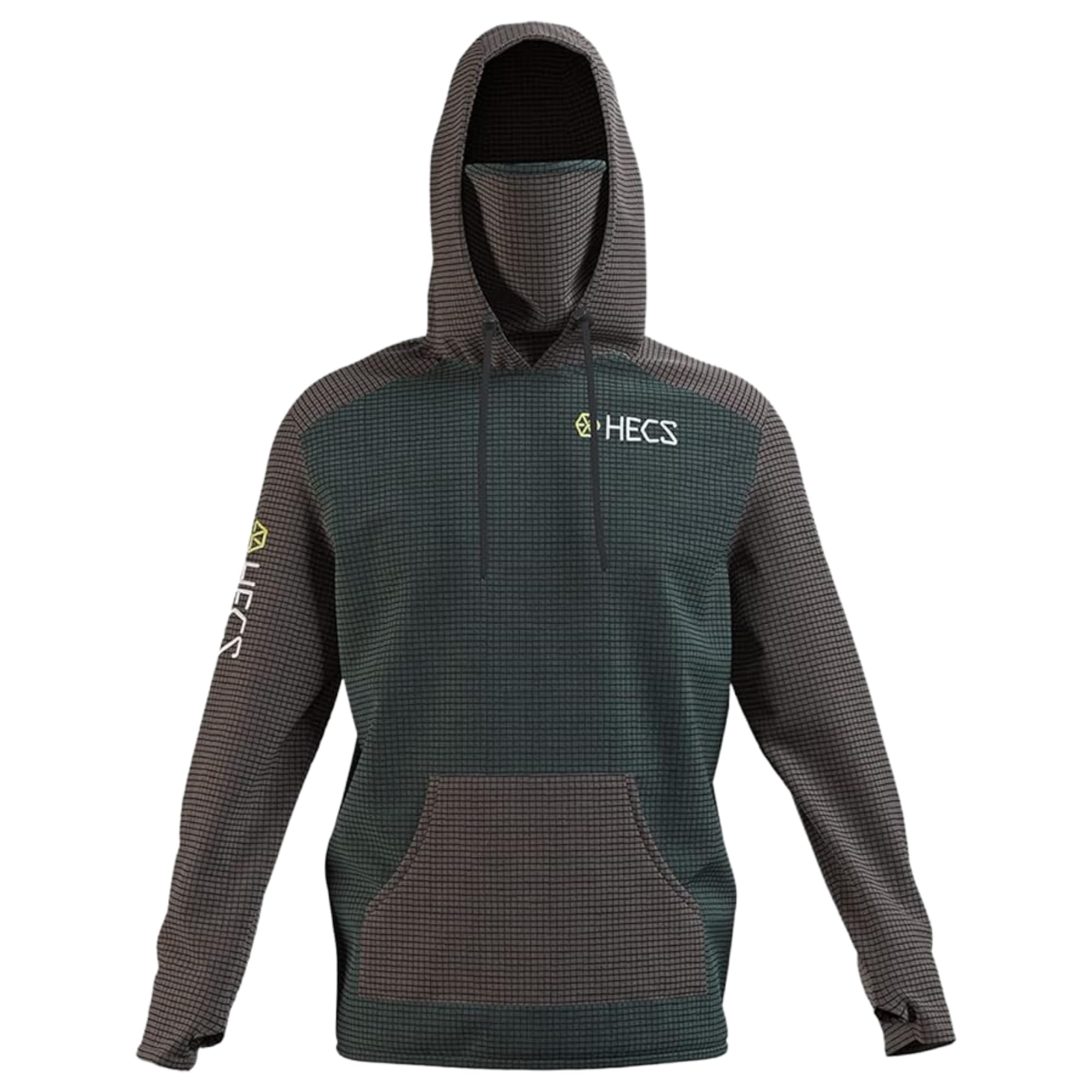
HECS applies its bioelectric-shielding Stealthscreen technology to a practical unisex hoodie that includes an integrated face mask and thumbhole cuffs. Unlike the base layer system, this is an outer garment that can be worn standalone during warmer hunts or under heavier clothing in cold weather. The integrated face mask is a distinct advantage for anyone needing head and lower-face coverage — a common requirement for both hunters and urban privacy seekers.
The camo pattern is genuine and effective; users report that deer and turkey have approached within feet of ground blinds without detecting the wearer’s presence. The fabric is lightweight and breathable enough for early-season hunting but still provides enough warmth for moderate temperatures. The build quality is solid, with clean stitching and durable zippers. The unisex sizing runs small, so going up a size is recommended.
For urban anti-camera use, this hoodie’s effectiveness is limited to its pattern-based visual disruption and bioelectric masking. It does not incorporate metal-fiber RF shielding, so it will not block thermal cameras or smartphone radiation. The camo pattern also makes it unsuitable for everyday urban wear unless you are comfortable standing out visually. It is an excellent garment within its intended hunting niche but should not be confused with a general-purpose RF-blocking hoodie.
Why it’s great
- Includes integrated face mask and thumbhole cuffs for full head coverage
- Lightweight and breathable for warmer hunting conditions
- Proven effectiveness against game animals in real field use
Good to know
- Camo pattern limits everyday wearability
- No RF-blocking metal fibers; limited to bioelectric masking
- Runs small — order a size up for proper fit
4. Amradield EMF Protection EMI Shielding Silver Fiber Leggings

These long-leg bottoms from Amradield are constructed from a silver-fiber blend that provides measurable RF attenuation when tested with a meter. Users have reported that the fabric reduces readings significantly even when held near a Wi-Fi router. The material is lightweight, stretchy, and designed to be worn as a base layer under regular pants, making it a practical choice for all-day use without altering your outer appearance.
The sizing is dramatically off — the manufacturer recommends ordering 2-3 sizes larger than your normal size, and user reports confirm that a 3XL fits roughly equivalent to a large or XL in standard American sizing. The legs are thin and form-fitting rather than baggy, which means they work best as a tight base layer rather than standalone bottoms. One user noted that the listing was unclear about being bottoms only, as some buyers expected a top-and-bottom set based on the measurement chart.
For anti-camera purposes, these leggings address the lower half of the body — a region often overlooked in privacy apparel. A person wearing an RF-blocking hoodie or shirt but unprotected leggings leaves a significant thermal and RF signature from the waist down. These leggings close that gap effectively, especially for someone concerned about whole-body RF exposure from smart meters, Wi-Fi routers, or surveillance drones with thermal cameras. They are not a standalone solution but an essential component of a full-body shielding system.
Why it’s great
- Silver fiber material tested effective with RF meters
- Lightweight and stretchy for comfortable all-day base layer wear
- Fills the lower-body gap in a full-coverage anti-camera outfit
Good to know
- Sizing is extremely off — order 2-3 sizes larger than normal
- Listing ambiguity about being bottoms-only may cause confusion
- Not a standalone outer garment; requires layering
5. Men’s EMF Shielding T-Shirt, Cotton and SilverFiber Blend
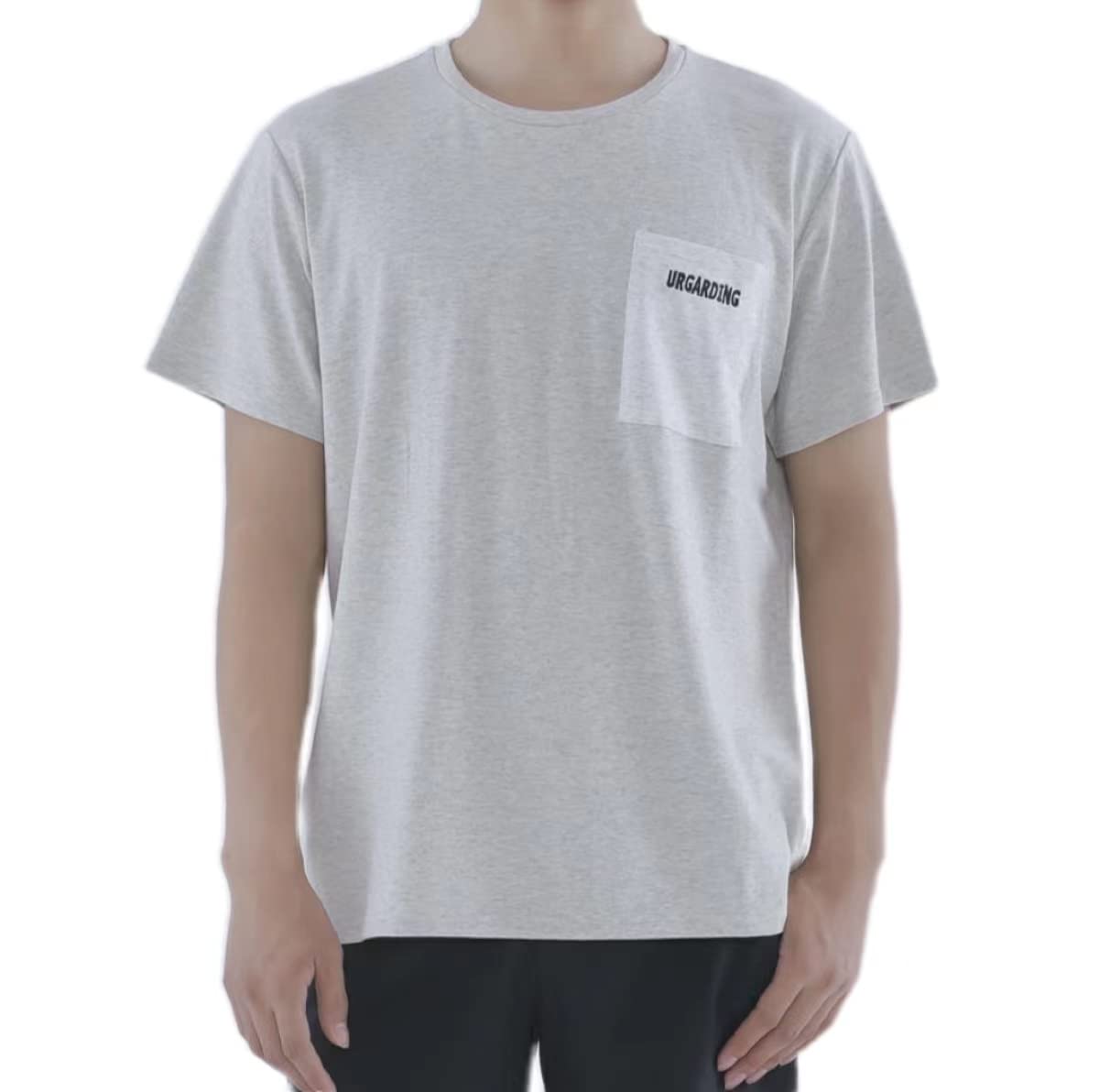
This short-sleeve t-shirt combines cotton with silver fiber to create a fabric that is both comfortable against the skin and electrically conductive enough to attenuate RF radiation. The 99.99% shielding claim is ambitious, but user tests with EMF meters suggest the material performs very well — one reviewer placed the shirt over an iPhone 12 and the phone triggered its cellular SOS mode, indicating a near-complete signal block. The cotton content prevents the clammy sensation common with pure synthetic silver fabrics.
The t-shirt is designed as a daily-wear base layer, not a heavy outer garment. It fits and feels like a standard cotton t-shirt, which is remarkable given the silver fiber content. Users who sleep in it report reduced ear ringing and body pain, which they attribute to reduced EMF exposure during rest. The shirt is machine washable and holds up well to repeated washing cycles, with the silver fiber maintaining conductivity through at least several washes based on user reports.
The obvious limitation is the short sleeves and crew neck, which leave the arms, neck, and head exposed. For anti-camera purposes, this shirt alone is insufficient — a thermal camera will easily detect exposed skin, and an RF surveillance system could still pick up a phone in the pocket if the neckline gap allows signal leakage. It is best understood as a first layer in a multi-garment shielding system, not a standalone solution. At a mid-range price point, it offers the best entry point for someone new to EMF-blocking apparel.
Why it’s great
- Comfortable cotton-silver blend suitable for daily wear
- Effective EMF blocking confirmed by multiple user meter tests
- Machine washable with good durability over repeated washes
Good to know
- Short sleeves and crew neck leave arms, neck, and head exposed
- Best used as part of a multi-layer shielding system
- Not designed for heavy outer wear or harsh conditions
6. Niepce Inc Men’s Techwear Cargo Pants

These cargo pants from Niepce Inc are a classic example of the visual techwear genre — the aesthetic is derived from Japanese street fashion and cyberpunk styling, not from material-science camera blocking. The pants feature oversized pockets with zipper closures, an elastic waist and ankle cuffs with drawstrings, and detachable straps on the back legs. The fabric is heavyweight, breathable, and comfortable, with users praising the fit and look for casual wear and cosplay.
The primary value for anti-camera purposes is visual disruption. The baggy cut, many pockets, and strap accents create an irregular silhouette that can confuse person-detection algorithms trained on standard human proportions. The dark color palette further reduces visual contrast in low-light environments. Some users noted that the material is thick enough to provide minor infrared masking simply by insulating body heat, though this is incidental rather than engineered.
These pants do not contain any conductive fibers, so they provide zero RF or electromagnetic shielding. They are also not treated with any IR-reflective coating. A thermal drone will detect the heat signature through the fabric almost as easily as through standard cotton pants. For someone whose primary concern is visual anonymity and who values the techwear aesthetic, these are a solid entry-level choice. For anyone needing measurable material-based protection against cameras or sensors, they are functionally equivalent to normal streetwear.
Why it’s great
- Comfortable heavyweight fabric with excellent build quality
- Distinctive techwear visual style disrupts algorithmic person-detection
- Large pockets with zippers offer functional utility
Good to know
- No conductive fibers — zero RF or electromagnetic shielding
- No IR-reflective coating; thermal cameras see through them easily
- Visual camouflage only; cannot block standard CCTV
7. Niepce Inc Japanese Streetwear Zip Up Windbreaker

This windbreaker from Niepce Inc takes the visual techwear concept further with detachable sleeves, an oversized hood, and Japanese Kanji text elements. The jacket is made from medium-heavyweight canvas with a satin lining, giving it a structured feel that holds its shape well. Users highlight the massive hood as a standout feature — it can be detached or worn up to obscure the head and upper face, which provides a practical layer of visual anonymity against street-level cameras.
The detachable sleeves make this a versatile piece for transitional seasons, allowing the jacket to function as a vest when needed. The oversized fit is intentional and creates a bulky, amorphous silhouette that is difficult for algorithmic person detection to lock onto. The windbreaker material is thick enough to block light wind and provides some incidental thermal insulation, though not enough to fool an IR camera. The wearer can pull the hood up and the jacket around to break up the expected human contour, which is the core privacy mechanism at work here.
Like the cargo pants from the same brand, this jacket does not incorporate any conductive or reflective materials. It is a fashion piece designed to evoke the look of functional privacy wear without delivering measurable material-based protection. Users who pair it with actual RF-shielding base layers underneath can achieve a hybrid look that works both visually and functionally. As a standalone garment, it is an excellent visual statement piece for the techwear subculture but should not be relied upon to block cameras or sensors in any meaningful way.
Why it’s great
- Oversized hood obscures head and face from camera view
- Detachable sleeves offer versatile styling for different conditions
- Bulky silhouette disrupts algorithmic person-detection
Good to know
- No RF-shielding or IR-blocking material properties
- Pure visual techwear — does not functionally block sensors
- Canvas fabric limits breathability in warm conditions
FAQ
Can anti-camera clothing really block facial recognition cameras?
Is there a difference between EMF-blocking clothing and anti-camera clothing?
Does silver-fiber clothing lose its effectiveness after washing?
Final Thoughts: The Verdict
For most users, the anti-camera clothing winner is the HECS Base Layer System because its patented bioelectric shielding provides a genuine, measurable advantage in real-world scenarios against animals and sensors attuned to human electric fields. If you want a dedicated RF-blocking layer for urban electromagnetic surveillance, grab the EMF Shielding Hoodie (Double Layer Silver Fabric). And for a budget-conscious entry into the visual techwear aesthetic that at least disrupts algorithmic person detection, nothing beats the Niepce Inc Techwear Cargo Pants.