
A standard flap door is a simple invitation for every critter in the neighborhood to walk right in. The real value of an automated cat door isn’t the hole in the wall—it’s the brain behind it that reads your pet’s microchip or RFID tag, denying entry to raccoons, possums, and neighbor cats carrying diseases or bad attitudes.
I’m Min — the co-founder and writer behind Gadgets Feed. After comparing the radio-frequency identification protocols, battery life cycles, and motor-drive systems of over two dozen selective-entry pet doors, I’ve isolated the specific features that actually separate a secure portal from a glorified draft hole.
Whether you need a window insert for a rental, a heavy-duty ultrasonic sliding door, or a microchip feeder that keeps a grazer safe from a food thief, this guide breaks down the best options for the best automated cat door.
How To Choose The Best Automated Cat Door
The line between a functional cat door and a security nightmare comes down to how the door identifies your pet and how it seals when closed. Three factors separate the premium automated doors from basic flap models: the identification method, the locking mechanism, and the installation type.
Microchip vs. RFID Tag: Which Identification Method Works?
Microchip-compatible doors read your cat’s implanted ID chip, which never gets lost or removed. The catch: they only work with ISO 15-digit chips. Non-ISO chips (common in some regions) won’t register, so you’ll need a collar tag instead. Tag-based doors use a lightweight RFID disc or SmartKey that you hang on the collar. Tags are universal and easy to pair, but collars can break or get lost. A door that supports both—microchip and tag—is the most flexible setup for multi-cat homes.
Locking Types: Flap vs. Electronic vs. Sliding
A basic magnetic or 4-way knob flap lets you manually restrict direction but offers zero security against a clever animal. Electronic locks (like PetSafe’s SmartKey) auto-lock behind your pet, keeping raccoons from pushing through. The most secure option is a motor-driven vertical-sliding door that creates an airtight seal when closed; these use ultrasonic or infrared sensors to detect a direct approach and open only for the collared pet, defeating animals that tailgate or paw at the flap.
Installation Configuration: Window Insert vs. Wall vs. Door Mount
Renters and apartment dwellers should prioritize window insert models (like Cat Flap Fever’s custom-cut plexiglass or the Ideal Pet sash door) because they require zero drilling and remove cleanly. Homeowners with a dedicated exterior door can cut into a standard wooden or metal door panel. Wall mounts are the most complex install but allow placement anywhere—ideal for connecting a catio or garage passage. Always measure your wall or door thickness against the tunnel depth provided by the door frame.
Quick Comparison
On smaller screens, swipe sideways to see the full table.
| Model | Category | Best For | Key Spec | Amazon |
|---|---|---|---|---|
| Closer Pets MiBowl CP500 | Microchip Feeder | Multi-pet diet separation | ISO & AVID 15-digit chip | Amazon |
| SureFlap Microchip Cat Flap | Microchip Flap | Selective entry only | Reads 9/10/15-digit chips | Amazon |
| Cat Flap Fever Window Insert | Window Insert | Renter-friendly installation | Custom-fit 1/4″ plexiglass | Amazon |
| SureFeed Microchip Feeder MPF001 | Microchip Feeder | Prescription diet control | 400 mL dual-compartment | Amazon |
| PetSafe SmartDoor Large | Electronic Flap | Large dogs with auto-lock | Up to 5 SmartKey tags | Amazon |
| PawsPik Automatic Feeder | Smart Feeder | App-controlled food access | 16-cup capacity | Amazon |
| High Tech Pet Power PX-1 | Sliding Door | Maximum security & draft seal | Ultrasonic collar sensor | Amazon |
In‑Depth Reviews
1. SureFlap Microchip Cat Flap

The SureFlap Microchip Cat Flap delivers the most reliable selective-entry system in a compact form factor. It scans a pet’s implanted ID microchip on entry, using a single-button programming interface you master in seconds. The flap opening measures 4.75 by 5.625 inches—tight enough to prevent most wildlife tailgating but roomy for an average-sized cat. It supports 9-digit (Avid Secure), 10-digit (FDXA), and 15-digit (FDXB) microchip numbers, making it compatible with chips from virtually any vet or shelter.
On four AA alkaline batteries, users report battery life routinely exceeding six months, with a red LED flashing a low-battery warning well before failure. The plastic frame installs into doors, walls, or windows up to 10 inches thick, though the tunnel design is narrow enough that declawed or anxious cats may resist. The auto-lock solenoid produces an audible click that spooks some sensitive cats—a known trade-off for any motorized latch.
For households where a single cat needs exclusive access to a garage, catio, or food room, this door solves the intruder problem without requiring an internet connection or phone app. The three-year warranty is a meaningful vote of confidence for a 1-pound plastic appliance that lives on an exterior door.
Why it’s great
- Reads implanted microchips up to 15 digits without any collar tag needed
- Single-button programming learns up to 32 identities rapidly
- Accepts doors, walls, and windows up to 10 inches thick
Good to know
- Flap plastic is reflective and may frighten some cats initially
- Loud lock solenoid can startle timid pets
- Cannot tailgate; a second cat can slip through if following closely
2. High Tech Pet Power Pet PX-1
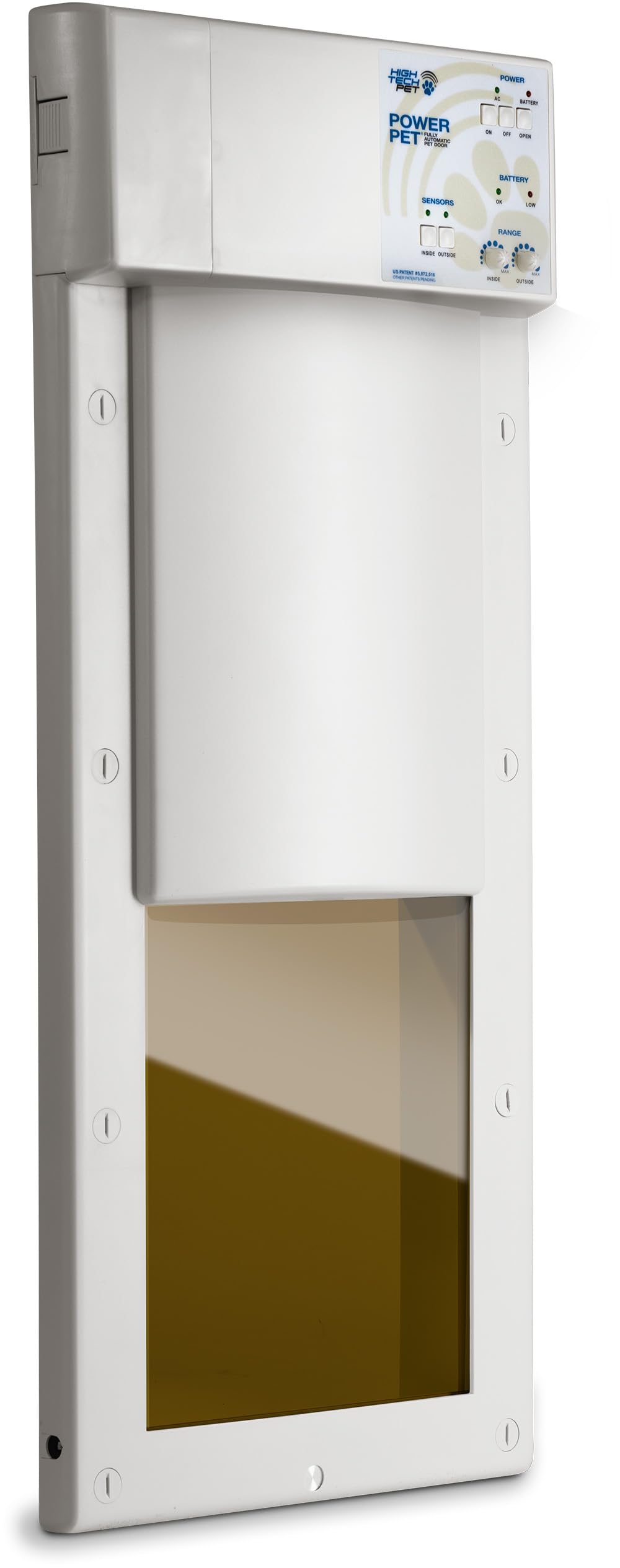
The High Tech Pet PX-1 is the gold standard for draft-proof security. Instead of a swinging flap, a motor-driven vertical panel slides upward when its ultrasonic collar sensor detects a direct approach from your pet. The directional sensing prevents the door from opening when the animal is simply walking by or sleeping next to the panel. The result is an airtight seal that blocks wind, rain, snow, and insects far better than any hinged flap—and an automatic deadbolt that no raccoon will ever paw open.
The panel opening measures 8.25 by 10 inches, accommodating cats and small dogs up to 30 pounds. Installation requires cutting a 2-inch-thick panel with a hole saw and jigsaw, which most DIYers with basic tools will finish in about 90 minutes. The MS-4 ultrasonic collar is included, and the system runs on AC power with a battery backup that keeps the door functional during outages. The 4-way access control lets you set In Only, Out Only, Full Access, or Closed and Locked via a simple rotary switch.
Multi-pet owners with six or more small dogs have reported the PX-1 operating reliably for years. The main compromises: extra collars cost around each, and the sensor module only fits the standard black collar included, so you’ll need to jimmy it onto a custom collar if your pet wears a breakaway model. The sliding mechanism also makes a mechanical noise that can spook a timid cat for the first week, though most adapt with treat-based training.
Why it’s great
- Motor-driven vertical slider creates an airtight, weatherproof seal
- Directional ultrasonic sensor prevents door from opening on passersby
- Battery backup keeps door operational during power loss
Good to know
- Requires a 2-inch-thick door panel and 90-minute install
- Extra collars are expensive and use a single-size sensor housing
- Mechanical noise may spook timid cats for the first week
3. Cat Flap Fever Window Insert
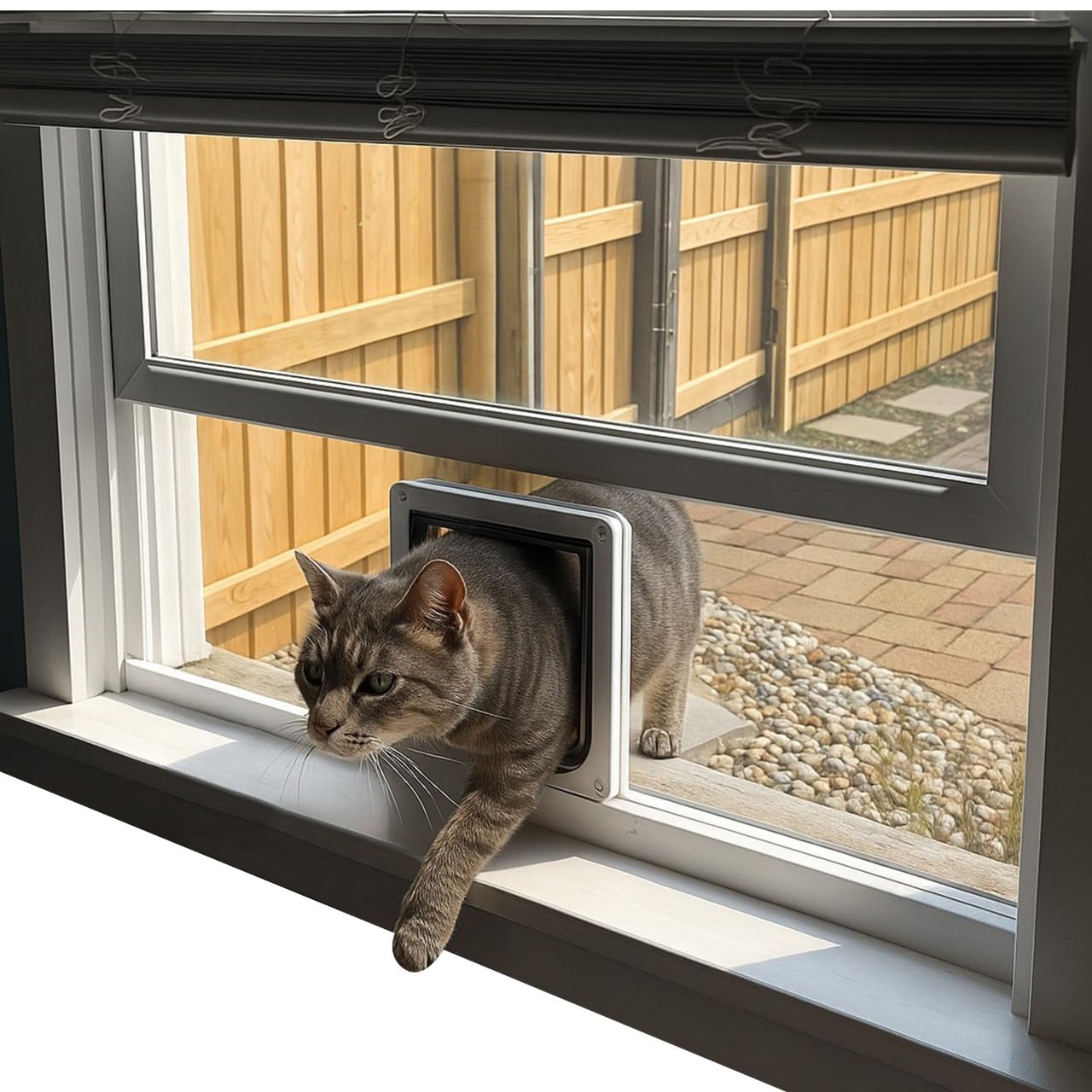
The Cat Flap Fever Window Insert solves the fundamental problem that every renter faces: how to install a permanent cat door without damaging the property. This is a custom-cut 1/4-inch clear plexiglass panel that replaces a window sash, sealing with premium foam and brush weatherstripping. No drilling, no screws, no permanent modification. The insert installs in under two minutes by simply raising the window, placing the panel, and lowering the window onto it.
The selective-entry version supports microchip recognition for up to 30 pets, plus a magnetic or 4-way locking flap. But even the base non-electronic version provides a tight thermal barrier that outperforms cheap expandable window units. The plexiglass is rated to withstand temperature swings without warping or cracking, and the company handcrafts each panel in their Georgia facility based on your window measurements. Cat owners report zero draft gaps and no insect intrusion after installation.
The main limitation is lead time: because each unit is custom-cut to your window size, you’ll wait for fabrication and shipping. Additionally, the insert reduces the light transmission of that window section and prevents the window from fully closing on that side during extreme weather. But for apartment dwellers needing a catio connection or a humane way to let the cat onto a balcony, no other product combines insulation, security, and total reversibility as well as this one.
Why it’s great
- Custom-fit 1/4-inch plexiglass seals drafts better than generic inserts
- Installs in under two minutes with zero tools or hardware
- Handcrafted in the USA with responsive customer support
Good to know
- Custom fabrication means several-day lead time before shipping
- Reduces natural light in that window section permanently
- Window cannot fully close on that sash in extreme cold
4. Closer Pets MiBowl CP500

The Closer Pets MiBowl CP500 is a microchip-activated feeder bowl that excels at one specific task: keeping one pet’s food completely inaccessible to every other animal in the house. Its enclosed back and side guards prevent food theft from any direction, meaning a determined dog or food-aggressive cat cannot reach the bowl from the rear. The bowl itself holds 11.83 fluid ounces—enough for a full wet food serving—and is removable and dishwasher-safe.
Pairing works with ISO-compliant 15-digit microchips or the included AVID-compatible electronic tag. The lid remains open while the authorized pet is eating and closes quickly after they step away. Users consistently report battery life exceeding six months on four C-cell batteries, and many multi-cat owners say their pets adapted to the system within a week using treats and a training mode published in the digital guide.
The primary limitation is size: the bowl is only 4.72 inches wide and 3.54 inches long, which works well for cats and small dogs with narrow faces but may feel cramped for a large-headed cat. Some users also note the lid buttons have a slight lag. However, as a dedicated feeding station for a prescription-diet cat or a slow grazer bullied at mealtime, the MiBowl is the most cost-effective food-separation tool available.
Why it’s great
- Fully enclosed sides and rear block food theft from any direction
- Dishwasher-safe bowl and only three removable pieces to clean
- Battery life routinely exceeds six months on four C-cells
Good to know
- Bowl is too small for wide-headed cats or large-breed dogs
- No built-in platform to raise bowl for neck comfort
- Plastic collar tag may break over time with active pets
5. PetSafe Electronic SmartDoor Large

The PetSafe SmartDoor Large uses a battery-operated SmartKey worn on the collar to unlock a motorized flap on approach, giving your pet selective entry and exit while auto-locking behind them. The large flap size accommodates dogs up to 80 pounds, making it one of the few automated doors that works for Labrador and Shepherd-sized pets without feeling cramped. Programming up to five SmartKey tags takes one button press per key, which is refreshingly simple.
The plastic frame includes LED indicators and a sensitivity control that adjusts how close the pet must be before the lock releases. Many owners appreciate that the door works with the PetSafe Electronic SmartDoor line’s accessories for multi-pet homes. The auto-lock function prevents raccoons, cats, and wildlife from pushing the flap inward, which is the primary failure mode of standard flap doors. Installation requires a standard 2-inch-thick door panel and includes a cutting template.
Battery drain is the most common complaint: the SmartKey runs on a coin-cell battery that can deplete in a few weeks if the pet triggers the sensor frequently. Some owners opt to hardwire the door to a wall outlet using a battery adapter, bypassing the issue entirely. The locking mechanism also produces an audible click that may spook sensitive pets during the initial training period. For households with large dogs that need secure, unrestricted yard access without intruder entry, this door strikes a good balance between convenience and security.
Why it’s great
- Auto-locks after each pass to prevent wildlife or stray animals from entering
- Large flap size fits dogs up to 80 pounds comfortably
- Simple single-button programming for up to five SmartKeys
Good to know
- SmartKey coin-cell batteries drain quickly with frequent use
- Locking solenoid produces a click that some pets find startling
- May need a wall-outlet adapter to avoid constant battery swaps
6. PawsPik Automatic Microchip Feeder
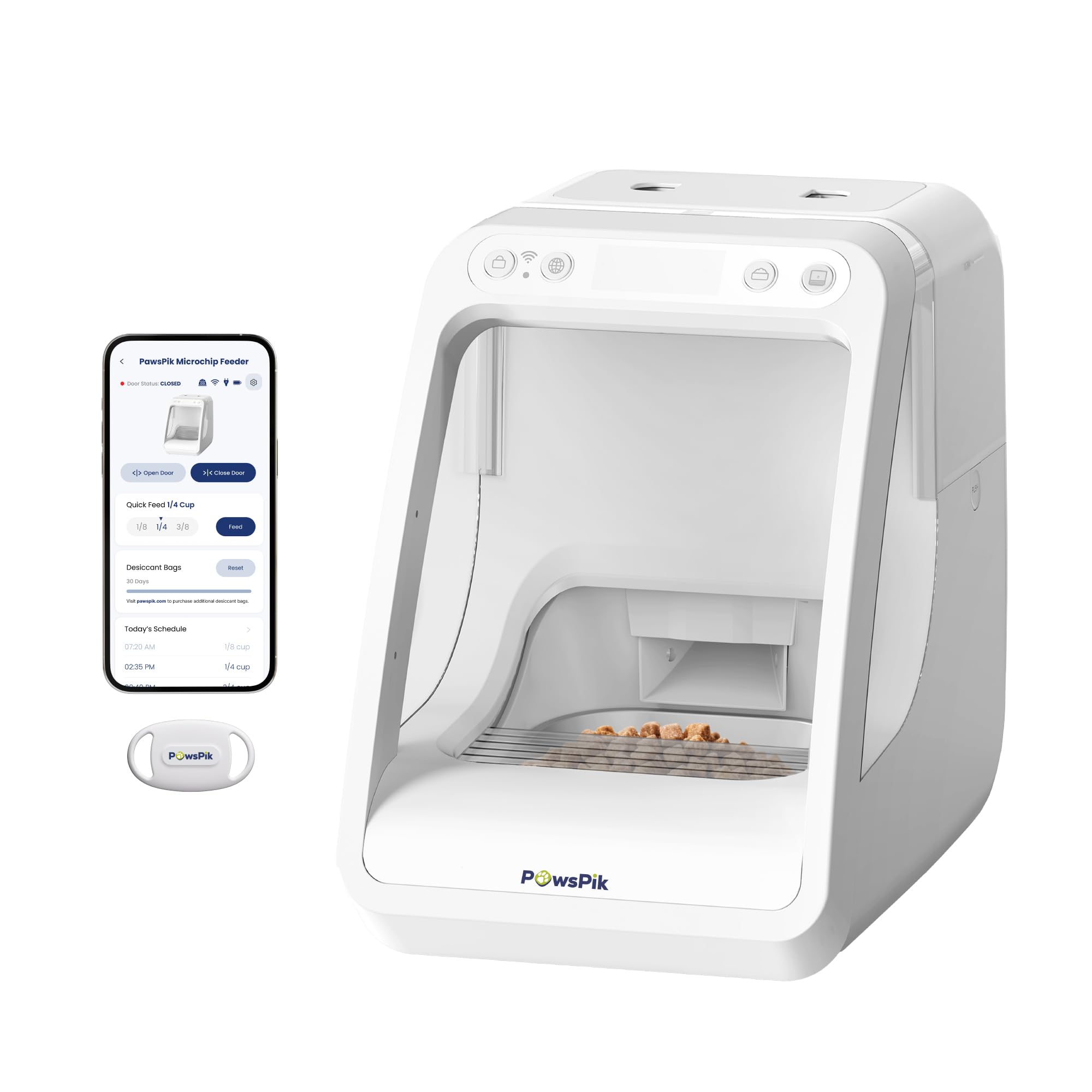
The PawsPik Automatic Feeder combines microchip recognition with a 16-cup dry-food hopper that reduces refill frequency to once every week or two. The app-controlled scheduling lets you program up to ten meals per day with precise portion sizes from 1/8 cup to 1/2 cup, which is critical for cats on prescription or weight-management diets. The feeder works with ISO-compliant 15-digit microchips or the included PawsPik RFID tag—each unit is paired to one pet only, so a multi-cat home needs one feeder per cat.
The dispenser mechanism uses a gravity-fed silicone propeller instead of a rubber belt, which avoids the common failure point of belt-driven feeders. The lid opens silently and closes quickly when the pet steps away, preventing a food-aggressive cat from stealing kibble. A backup battery slot ensures feeding continues during power outages. The stainless steel bowl is easier to clean than plastic and resists odor absorption.
The main reliability concern is microchip reader sensitivity: a small number of users report that the door never opens for their pet’s specific chip placement, even after troubleshooting with extension cords and repositioning. For those users, the Open Mode—which stays unlocked except when an unauthorized pet approaches—provides a fallback, though it defeats the purpose of selective feeding. If your cat’s microchip works with the feeder, it’s the most feature-rich and quietest smart feeder on the market.
Why it’s great
- 16-cup hopper means less frequent refilling than smaller dispensers
- Silicone propeller mechanism is more reliable than belt-driven feeders
- App-controlled scheduling with 1/8 to 1/2 cup servings
Good to know
- One feeder per pet only; multi-cat homes need multiple units
- Microchip reader may not detect all chip placements reliably
- Open Mode bypasses selective-entry if chip detection fails
7. SureFeed Microchip Feeder MPF001

The SureFeed MPF001 is the industry standard for microchip-activated feeding bowls. Its lid opens automatically when the paired pet approaches, staying up while the animal eats and closing gently when they step away. The feeder includes two bowl options—a deeper bowl for wet food and a shallower tray for dry kibble—and the 400-milliliter capacity is sufficient for a full day’s meal split into multiple portions. Users report battery life of 18 months on four C-cells, which is exceptional for any electronic pet product.
Pairing supports both ISO microchips and the included lightweight collar tag. The enclosed back cover prevents a bully pet from reaching the food from the rear, though some owners supplement with a cardboard or plastic shield around the sides to fully defeat persistent thieves. The motor is notably quiet—quieter than most competitors—which helps anxious cats adapt more quickly. The lid has two speed settings; the faster setting reduces theft opportunity during meals.
The plastic bowl can retain odors after months of wet food use, and some cats develop chin acne from eating off plastic surfaces. A stainless steel aftermarket bowl resolves this. The feeder also lacks a raised platform, which can be an ergonomic issue for older cats with neck or joint conditions. But for reliability, battery longevity, and simple microchip pairing, the SureFeed remains the feeder that every other product in this category is compared against.
Why it’s great
- Exceptional 18-month battery life on standard C-cells
- Quiet motor operation helps timid cats adapt faster
- Includes both a deep wet-food bowl and a shallow dry-food tray
Good to know
- Plastic bowl can retain odors and may cause kitty acne
- Low side walls allow food theft; an external shield is often needed
- No raised platform for ergonomic feeding
8. Ideal Pet Products Vertical Sash Window Door
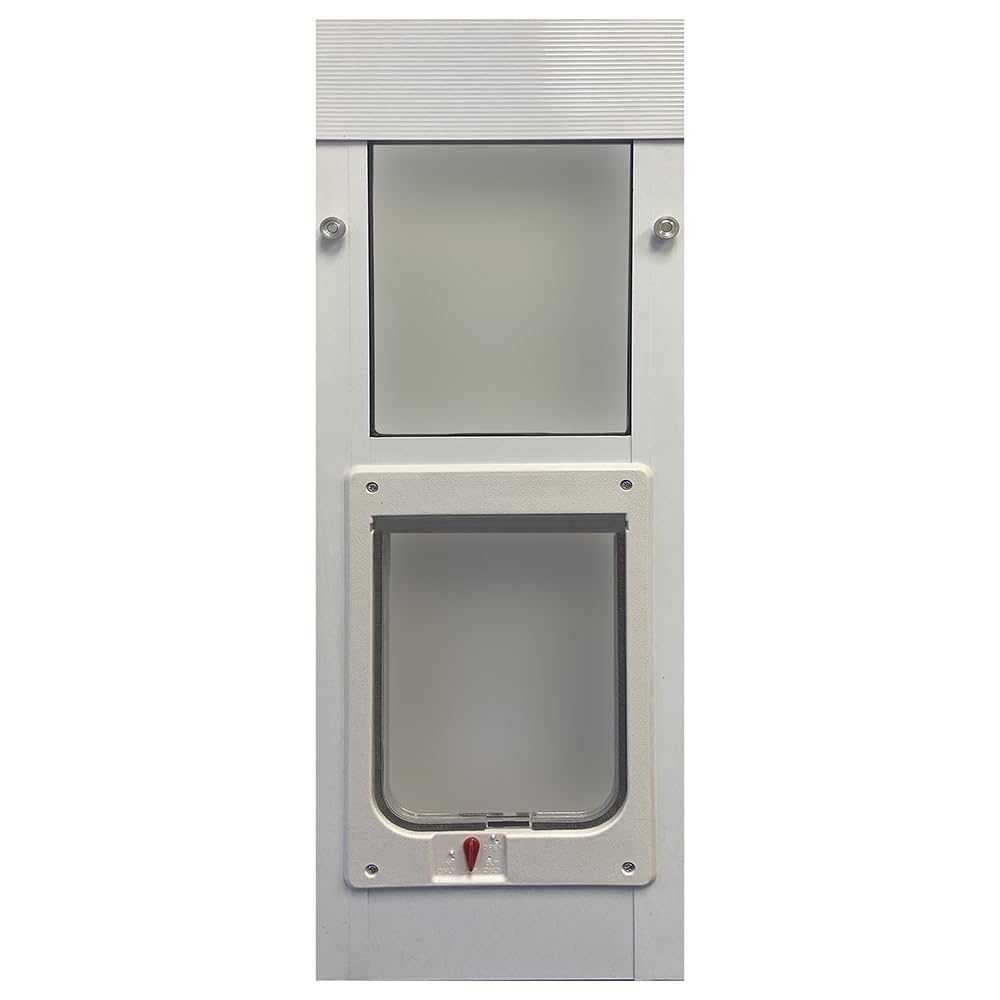
The Ideal Pet Products Chubby Kat window door is the right solution when you want a permanent cat door in a sliding window but don’t want the added complexity of electronic components. This non-electronic aluminum frame unit replaces the lower window sash with an insulated panel containing a clear Lexan flap. The 7.5 by 10.5-inch flap accommodates cats up to 25 pounds, and the spring-loaded telescoping design adjusts to fit window heights between 32.5 and 35.125 inches with a handy 2.5-inch range.
The 4-way locking knob gives you In Only, Out Only, Free Access, and Full Lock, which is sufficient control for most households without needing batteries or apps. The tempered safety glass insert and white aluminum frame blend reasonably well with standard home decor. Installation is straightforward: open the window, place the unit, expand the screws, and close the window onto the frame. Users report that cats adapt to the flap within five days on average, especially if you prop the flap open initially.
The lack of electronic selective entry means any animal that fits through the flap can enter. The manual lock also uses a plastic latch mechanism that some users have reported breaking after extended use, though a simple aftermarket security stick inserted into the window track prevents the door from being opened from the outside. This is a good budget-friendly option for a dedicated catio or a home where stray animals are not a problem, but it compromises on the “automated” promise of selective entry.
Why it’s great
- Aluminum frame with tempered glass blends seamlessly with window decor
- Spring-loaded adjustability fits a range of window sizes
- 4-way locking knob gives manual control over access direction
Good to know
- No microchip or electronic selective entry—any animal can enter
- Plastic locking latch is the weakest component
- Window becomes non-functional for that sash after installation
9. Lumizone Extra Tall Cat Gate
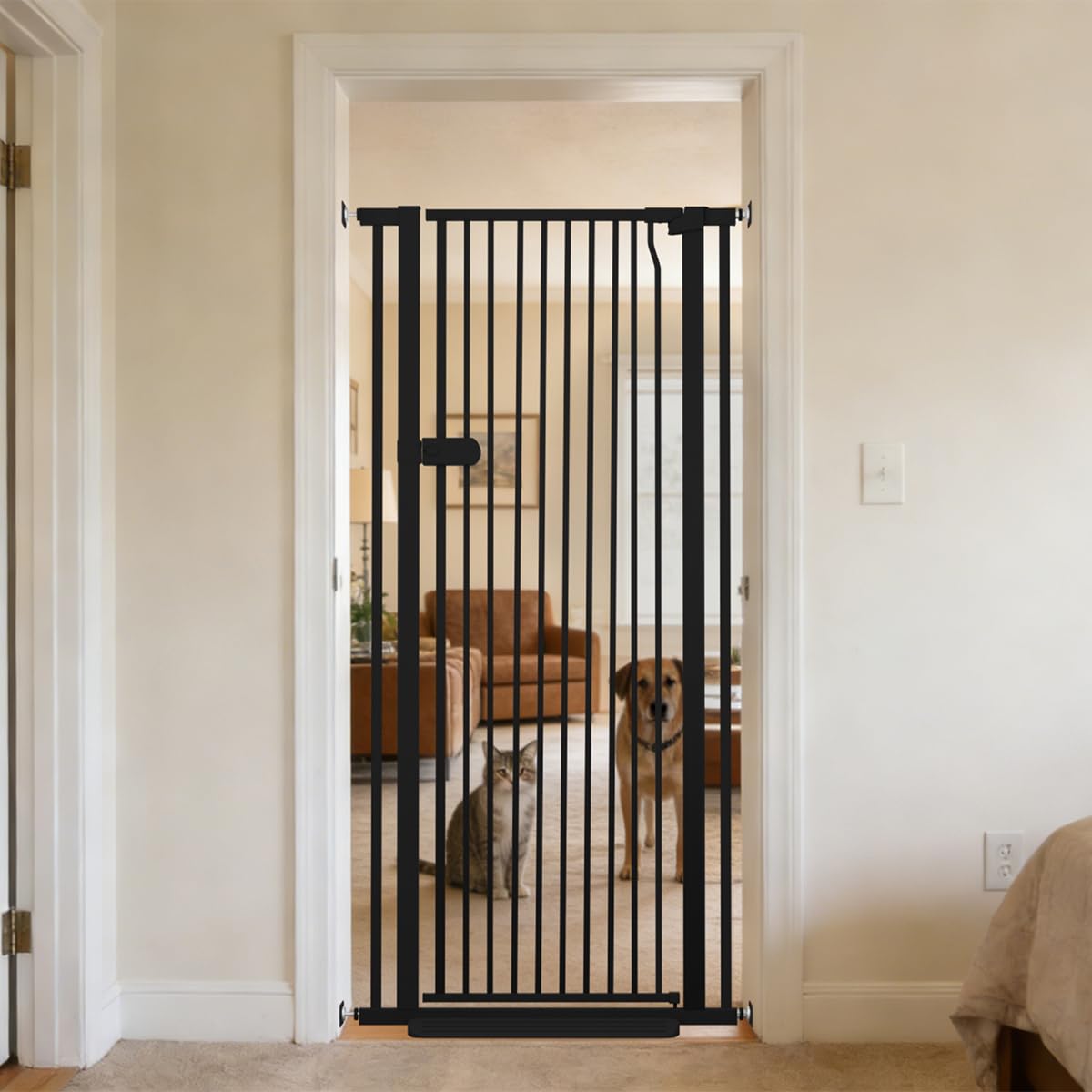
The Lumizone Extra Tall Cat Gate isn’t an electronic door in the traditional sense, but it solves the same fundamental problem—restricting cat movement—at a fraction of the cost. Standing 61 inches tall with a 1.37-inch bar gap, it prevents even the most athletic jumper from clearing it and stops kittens from squeezing through the slats. The pressure-mounted design installs without drilling, making it suitable for renters who need a temporary barrier in doorways, hallways, or stairways.
The gate features an upgraded locking mechanism with one-handed operation, which is helpful for owners with limited hand mobility. The auto-close function uses a tension mechanism: if the gate is opened less than 90 degrees, it swings shut automatically; opened to 90 degrees, it stays open for free passage. The adjustable width spans 29.92 to 34.24 inches, and the iron construction feels substantial at nearly 24 pounds.
This is not a selective-entry product—any cat or dog that fits through the gap will have full access. It also lacks any microchip or RFID functionality. But for households that simply need to keep cats out of a specific room (like a home office or nursery) without installing a permanent door, the Lumizone gate is a sturdy, well-reviewed barrier that costs a fraction of the automated doors above. The missing extender piece in some shipments and the fact that it’s a physical barrier rather than a selective portal are the main trade-offs.
Why it’s great
- 61-inch height and narrow bar gap defeat jumpers and small kittens
- Pressure-mounted install requires no drilling or wall damage
- Auto-close function prevents accidental access
Good to know
- No selective entry—any pet that fits can pass through
- Occasional missing extender pieces in some shipments
- Heavy 24-pound unit may be difficult to move regularly
FAQ
Will a microchip cat door work with my cat’s existing chip?
Can an automated cat door prevent raccoons from entering?
How long do batteries typically last in an automated cat door?
Final Thoughts: The Verdict
For most users, the best automated cat door winner is the SureFlap Microchip Cat Flap because it delivers reliable selective entry using your pet’s existing microchip, requires minimal battery changes, and fits doors, walls, or windows up to 10 inches thick. If you live in a rental and need a tool-free reversible installation, grab the Cat Flap Fever Window Insert. And for maximum security against wildlife and drafts in a permanent home installation, nothing beats the High Tech Pet Power Pet PX-1 with its motor-driven vertical slider and ultrasonic directional sensing.