
Standard pea gravel may look clean but it starves rooted aquarium plants of nutrients, causing leaves to yellow and melt away. A planted tank lives or dies by its substrate — the wrong gravel is a slow death sentence for your aquatic garden.
I’m Min — the co-founder and writer behind Gadgets Feed. I’ve spent hundreds of hours analyzing technical data sheets, customer experiences, and water chemistry parameters to find the gravel that actually feeds roots and stabilizes the nitrogen cycle in planted aquariums.
After comparing grain size, nutrient content, pH buffering capacity, and real-world user outcomes, I’ve identified the five substrates that deliver measurable results. This guide covers the best aquarium gravel for plants across every budget and tank type.
How To Choose The Best Aquarium Gravel For Plants
Choosing plant gravel is not about color or cost — it’s about chemistry and particle structure. Inert gravel offers zero nutrition, while active substrates buffer pH and release essential minerals over months. Beginners often mistake decorative pebbles for plant-capable media, leading to stunted root growth and algae blooms. Here is what actually matters when selecting the right substrate for your planted aquarium.
Nutrient Density and Release Profile
Plants require a steady supply of macronutrients (nitrogen, phosphorus, potassium) and micronutrients (iron, manganese) at the root level. High-quality aquasoil contains organic matter that releases these elements slowly through cation exchange. Budget-friendly options may lack this longevity and require additional root tabs after 6-8 months to maintain growth.
Grain Size and Porosity
Grain diameter between 2 mm and 5 mm works best for most rooted plants. Particles smaller than 1 mm compact too tightly, suffocating roots, while larger than 6 mm leave gaps where detritus accumulates. Porous granules (microscopic surface area) host nitrifying bacteria that convert ammonia into nitrate — this biological filtration is critical for tank health and plant uptake.
pH and Water Hardness Buffering
Many nutrient-rich substrates contain ingredients that gently lower pH and soften water, creating conditions preferred by demanding species like Cryptocoryne, Rotala, and carpeting plants. If your tap water is hard (GH above 10 dGH), look for a substrate with active buffering capacity. Inert gravel offers no buffering and forces you to rely purely on chemical additives for pH control.
Quick Comparison
On smaller screens, swipe sideways to see the full table.
| Model | Category | Best For | Key Spec | Amazon |
|---|---|---|---|---|
| ADA Aqua Soil Amazonia Ver 2 | Premium | High-tech planted tanks & aquascaping | 9L volume, pH-buffering to 6.0-6.5 | Amazon |
| FZONE Aquarium Soil | Premium | Fast plant growth with low dust | 8L, 3mm porous granules, high-temp sintered | Amazon |
| LANDEN Aqua Soil Substrate | Mid-Range | Natural planted tanks & shrimp tanks | 5L (10 lbs), 3-5mm grain size | Amazon |
| Fluval Plant and Shrimp Stratum | Mid-Range | Shrimp tanks & beginner planted setups | 8.8 lbs, porous granules, neutral-slightly acidic pH | Amazon |
| Doter Aquatic Plant Soil | Budget | Pond plants & outdoor water gardens | 3.3 lbs, slow-release mineral formula | Amazon |
In‑Depth Reviews
1. ADA Aqua Soil Amazonia Ver 2

ADA Amazonia Ver 2 is the gold standard for planted aquariums, crafted from specially processed Japanese black soil blended with a separate Amazon concentrate supplement bag. Its granular structure is designed to anchor roots quickly while the concentrate allows you to customize organic enrichment for specific plant layouts — a level of precision inert substrates simply cannot match.
The active buffering system naturally lowers pH and KH, creating the soft, slightly acidic water environment that demanding species like dwarf baby tears, Monte Carlo, and Bucephalandra require. Users report significant temporary ammonia spikes lasting 1-4 weeks, which is a sign of strong biological activity — essential for cycling but requiring patience before adding fish or shrimp.
Each 9-liter bag covers roughly a 60 cm tank at a 5 cm depth. The irregular granule shapes produce a natural-looking terrain that blends well with hardscape. Experienced aquascapers note that Ver 2 has fewer initial nutrients than the original Amazonia, resulting in less algae early on while still supporting lush growth when combined with CO2 injection and liquid fertilizers.
Why it’s great
- Exceptional pH and KH buffering for soft-water plants
- Natural irregular granules for realistic aquascaping
- Separate concentrate supplement for customizable nutrition
Good to know
- Requires extensive rinsing and cycling before livestock introduction
- Premium price point — budget alternatives exist for simpler setups
2. FZONE Aquarium Soil for Planted Tanks
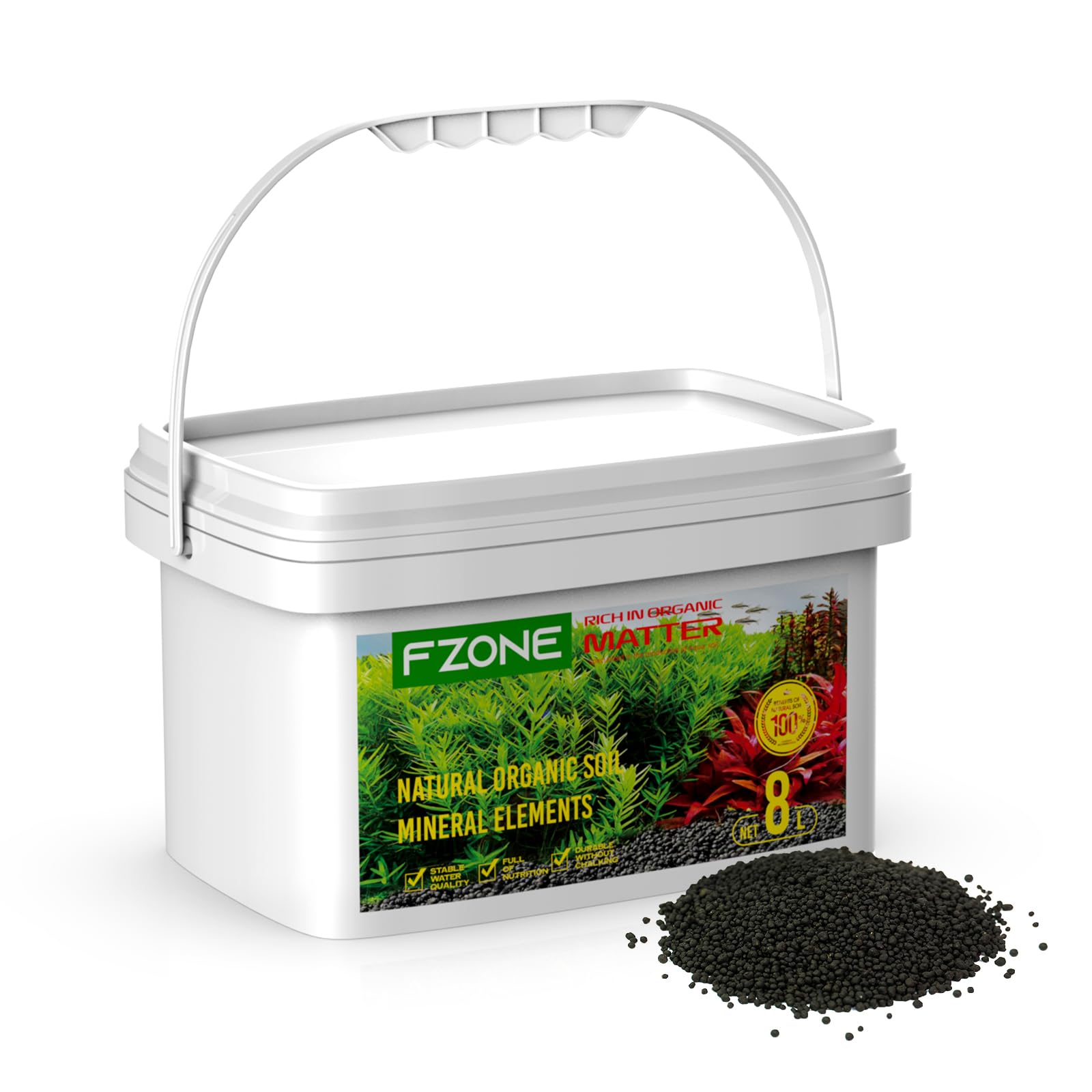
FZONE Aquarium Soil delivers premium-grade performance with a noticeably cleaner user experience. The 3 mm granules are processed through high-temperature sintering, which prevents them from breaking into dust or clouding the water — a common complaint with softer soils. Many reviewers report crystal-clear water from the first fill, with no rinsing required.
This substrate is formulated with a blend of organic matter, activated carbon, silica, and minerals that provide a steady nutrient release for stem plants like Rotala macrandra and carpeting species like Monte Carlo. Users who dry-started Monte Carlo observed faster and bigger growth compared to Fluval Stratum, with less algae during the transition period — a strong indicator of balanced initial nutrient levels.
The porous structure also captures suspended debris and gently reduces pH by absorbing alkaline ions. Several customers noted that ammonia spiked between 4-8 ppm for about 17 days, which is characteristic of an active, nutrient-rich soil. The reusable plastic container is a practical bonus, eliminating the mess of bagged substrates during storage or partial tank resets.
Why it’s great
- No rinsing needed — water stays clear from day one
- Reusable container packaging for easy handling and storage
- Outperforms Stratum in dry-start carpet plant experiments
Good to know
- Very light granules may float if not pre-soaked and pushed deep
- High initial ammonia requires aggressive water changes for up to 3 weeks
3. LANDEN Aqua Soil Substrate 5L

LANDEN Aqua Soil provides high-value per-liter performance for hobbyists who want a natural-looking planted tank without spending premium money. The 3-5 mm granules are processed from natural earth materials, delivering essential minerals and organic acids that promote healthy root development in stem plants and shrimp inhabitants.
Its porous structure encourages beneficial bacteria colonization, maintaining cleaner water between maintenance intervals. Multiple users reported that their 55-gallon tanks stayed crystal clear after setup, with fish and shrimp thriving immediately after the initial cycling period. The substrate buffers water toward mildly acidic conditions, which is beneficial for most tropical plant species listed in the technical description.
Note that some bags contain trace amounts of dried grass and small gravel fragments, so a light rinse before use is recommended despite the manufacturer’s “ready-to-use” label. A few reviewers mentioned that the light, porous soil can cause plants to float out until roots establish — weighing plants down or using plant anchors solves this quickly. After settling, the substrate holds plant waste well and breaks down gradually to feed roots over months.
Why it’s great
- Generous 5L bag at a competitive per-liter cost
- Produces crystal-clear water after initial cloudiness clears
- Ideal for soft-water shrimp tanks and neutral pH plants
Good to know
- May contain organic debris requiring pre-rinse
- Lightweight granules can cause plants to float initially
4. Fluval Plant and Shrimp Stratum

Fluval Stratum is one of the most popular substrates for shrimp tanks and beginner planted aquariums, and for good reason. Its porous volcanic granules provide enormous surface area for beneficial bacteria colonization, enabling rapid biological filtration that keeps water parameters stable even in densely stocked shrimp colonies.
The substrate is designed to maintain a neutral to slightly acidic pH range — ideal for Neocaridina shrimp and easy-to-grow plants like Java fern, Anubias, and Cryptocoryne. Users report that shrimp breed heavily within weeks of introduction, and plant roots penetrate the lightweight granules with minimal resistance. The dark brown color provides a natural backdrop that makes both fish and plants visually pop.
A key trade-off: the granules are very light and can float if not carefully submerged. Many reviewers recommend filling the tank slowly using a bowl or plastic bag to prevent the particles from dispersing. Unlike high-end soils like ADA, Fluval Stratum does not produce a strong ammonia spike, so it is safer for immediate stocking but provides less nutrient density for demanding stem plants and carpeting species.
Why it’s great
- Superior porous structure for fast nitrifying bacteria colonization
- Safe for shrimp and fish with minimal ammonia spike
- Natural dark color enhances plant and fish visibility
Good to know
- Very lightweight granules tend to float if not submerged carefully
- Lower intrinsic nutrient content than premium active soils
5. Doter Aquatic Plant Soil for Lotus & Pond Plants
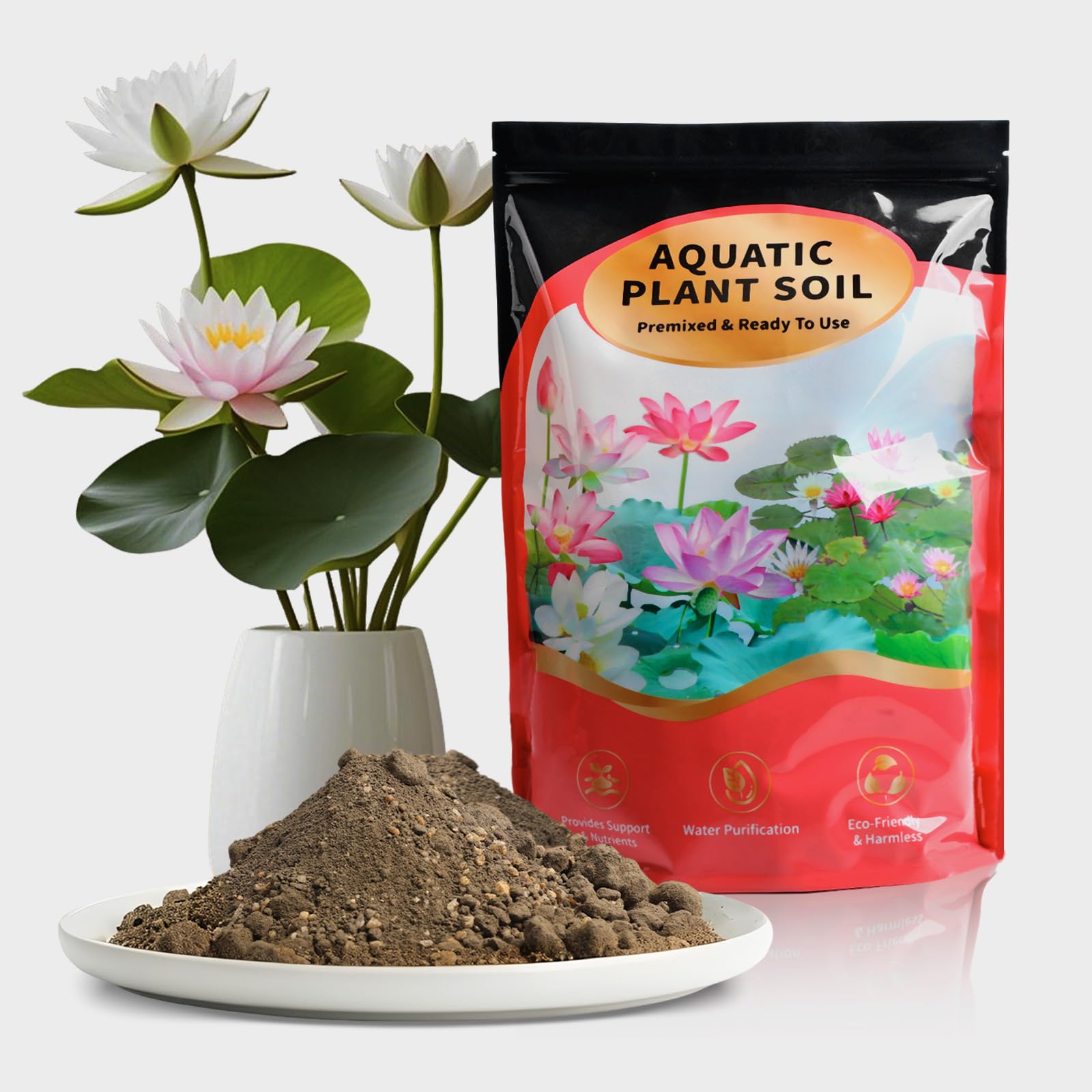
Doter Aquatic Plant Soil takes a different approach — it is designed primarily for lotus, water lilies, and pond plants rather than standard aquarium setups. The slow-release mineral formula provides steady root nutrition for heavy-rooted plants, with a granular structure that stays submerged without turning the water cloudy.
The multi-environment versatility means it works in both indoor aquariums and outdoor pond pots. Users who grew lotus reported exciting daily progress, with leaves and stems developing visibly faster than in standard pond soil. The 3-step planting system is genuinely beginner-friendly, reducing the learning curve for anyone transitioning from decorative gravel to functional substrate.
Quality control is the main concern here. Several customers found rocks, pieces of plastic, and even a snail shell mixed in with the soil, suggesting inconsistent manufacturing standards. At 3.3 pounds (52.8 ounces) per bag, the value is modest when covering larger tanks — some reviewers noted that gallon-sized aquatic bags required two bags, making the effective cost higher than expected. This substrate works best for small pond pots or nano tanks rather than full aquarium installations.
Why it’s great
- Slow-release mineral formula excellent for lotus and water lilies
- Multi-environment use — aquariums, ponds, and water gardens
- Beginner-friendly 3-step planting system
Good to know
- Inconsistent quality — some bags contain debris and foreign objects
- Small bag size requires multiple purchases for larger tanks
FAQ
Can I use regular garden soil in my planted aquarium?
How thick should my plant gravel layer be?
How long does active aquasoil last before needing replacement?
Final Thoughts: The Verdict
For most users, the best aquarium gravel for plants winner is the ADA Aqua Soil Amazonia Ver 2 because it delivers unmatched pH buffering, nutrient density, and aquascaping versatility for both beginners and advanced hobbyists. If you want a dust-free, easy-to-use alternative with faster water clearing, grab the FZONE Aquarium Soil. And for a budget-friendly shrimp tank or beginner setup, nothing beats the Fluval Plant and Shrimp Stratum.