
The single biggest mistake in planted-tank aquascaping isn’t the lighting schedule or the CO₂ injection rate — it’s choosing a substrate that leaches ammonia for weeks, clouds the water column, or compacts into an anoxic mud that strangles delicate root systems. A proper aquasoil must buffer pH, supply trace elements, and maintain porous structure for beneficial bacteria colonization from day one.
I’m Min — the co-founder and writer behind Gadgets Feed. I’ve spent hundreds of hours cross-referencing technical spec sheets, analyzing customer water-test data, and comparing granule composition, ammonia-leaching profiles, and buffering capacity across the leading brands to build this guide.
After evaluating pore structure, nutrient density, pH buffering range, and real-world cycling reports from dozens of tanks, these seven contenders represent the best options available today for anyone shopping for a reliable best aquarium substrate for planted tank.
How To Choose The Best Aquarium Substrate For Planted Tank
The wrong substrate turns a planted aquarium into a chemistry nightmare. The right one handles the nitrogen cycle, feeds your plants, and keeps crystal-clear water. Here are the three factors that separate good substrates from expensive gravel that just sits there.
Ammonia Leaching Profile
Every active aquasoil releases a pulse of ammonia during the first one to three weeks. Some substrates like ADA Amazonia Ver 2 release heavy ammonia (3-8 ppm) that requires daily water changes for up to three weeks. Others like Ultum Nature Systems Controsoil release virtually no ammonia and cycle a tank in two weeks with starter bacteria. Beginners should prioritize low-ammonia soils; experienced aquascapers chasing high-tech carpet growth often prefer the nutrient-rich spike.
pH and KH Buffering Capacity
Most planted-tank substrates are designed to buffer water to a slightly acidic pH (6.0-6.8) and reduce general hardness. This is critical for shrimp breeding and for soft-water species like Apistogramma and most South American tetras. If your tap water has high KH, you’ll need a substrate with strong buffering capacity — Carib Sea Samurai Soil and Fluval Stratum are more moderate buffers, while LANDEN and FZONE actively pull pH down into the ideal range.
Grain Size and Porosity
Grain diameter of 2-5 mm is the sweet spot for planted tanks. Smaller grains pack too tightly and create dead zones; larger grains let root tabs drift and make it hard for carpet plants to anchor. Porous granules absorb nutrients and host nitrifying bacteria on their internal surfaces — non-porous clay or gravel products provide no biological filtration benefit. Always choose a porous, sintered or natural clay-based granule over inert sand or pebbles for planted setups.
Quick Comparison
On smaller screens, swipe sideways to see the full table.
| Model | Category | Best For | Key Spec | Amazon |
|---|---|---|---|---|
| ADA Amazonia Ver 2 | Premium | High-tech carpet growth | 9L bag, 3-5mm granules, high ammonia | Amazon |
| Fluval Plant & Shrimp Stratum | Mid-Range | All-round planted/shrimp tank | 17.6 lbs, porous granules, neutral pH | Amazon |
| Ultum Nature Controsoil | Mid-Range | Fast cycling, low ammonia | 1L, volcanic ash, pH 6.8 buffer | Amazon |
| LANDEN Aqua Soil | Mid-Range | Natural look, shrimp-safe | 5L (10 lbs), 3-5mm, porous clay | Amazon |
| FZONE Aquarium Soil | Mid-Range | Root feeder growth, dust-free | 4L (6.6 lbs), 3mm sintered | Amazon |
| Carib Sea Samurai Soil | Budget | No-ammonia setup, bettas | 3.5 lbs, pre-washed, neutral pH | Amazon |
| Hygger CO2 Aquarium Soil | Budget | Large tanks on a budget | 8.8 lbs, pH 6.5-7.5, 20L volume | Amazon |
In‑Depth Reviews
1. ADA Aqua Soil Amazonia Ver 2 (9L)

ADA Amazonia Ver 2 is the benchmark that every other aquasoil is measured against. The 9L bag supplies 3-5mm granules made from rare Japanese black soil, and the included bag of Amazon concentrate supplement lets you customize nutrient density for different layout patterns. The granules have a natural irregular shape that looks completely organic while giving roots immediate anchoring points — no rolling, no floating.
The ammonia profile is aggressive. You’ll see 3-8 ppm readings for the first two weeks, which demands daily 50% water changes if you’re adding fish or shrimp early. But that nitrogen pulse is exactly what produces the explosive growth that made ADA famous — dwarf baby tears, Monte Carlo, and Utricularia graminifolia carpet three times faster than in any mid-range substrate. The pH buffer drops water to 6.0-6.5 reliably, and KH gets knocked down to near zero, which is perfect for soft-water biotopes.
Seasoned high-tech aquascapers consider this the only substrate worth using. The tradeoff is patience — you cannot rush the two-week ammonia phase. If you run CO₂ injection and high-output lighting, the Amazonia Ver 2 delivers results that budget soils simply cannot match. The 9L size covers a 60x30cm tank at a 5-6cm depth, which is the recommended minimum for root feeders.
Why it’s great
- Best-in-class plant growth for high-tech setups
- Includes separate concentrate for layout customization
- Strong pH/KH buffering to soft-acid range
Good to know
- Heavy ammonia spike requires daily water changes for 2 weeks
- Premium price point well above mid-range competitors
2. LANDEN Aqua Soil Substrate 5L (10 lbs)

LANDEN Aqua Soil bridges the gap between budget-friendly options and top-tier Japanese soils. The 5L bag weighs 10 lbs and delivers 3-5mm porous granules made from specially processed natural earth material. The structure is light enough to allow root penetration but dense enough to stay put under water flow — a balance many substrates get wrong by collapsing into mud within six months.
Water parameters stabilize predictably: pH settles at 6.0-6.5, KH drops, and the porous surface area hosts a thriving colony of nitrifying bacteria within the first week. Reviewers report that fish, plants, and shrimp all thrive after the initial week-long stabilization period. The substrate does need some rinsing before use — a few users found dried grass and leaf fragments mixed into the granules, so a quick wash in a bucket is recommended before installation.
For a 55-gallon community planted tank, two 5L bags provide adequate depth. The dark black color creates excellent contrast against green plants and brightly colored fish like rummy-nose tetras and cherry shrimp. If you want Controsoil-level performance at a more accessible price point, LANDEN is the closest alternative on the market today.
Why it’s great
- Excellent price-to-performance ratio for mid-range buyers
- Porous structure supports strong bacteria colonization
- Reliable pH buffer to 6.0-6.5 range
Good to know
- May contain dried plant matter that requires rinsing
- Light granules can float before saturation
3. Fluval 12695 Plant and Shrimp Stratum (17.6 lbs)

Fluval Stratum is the most widely recommended substrate on the market for a reason — it’s reliable, versatile, and forgiving. The 17.6-pound bag is enough to cover a standard 20-gallon long tank at 2-3 inches depth. The porous granules are lightweight but don’t disintegrate, and the neutral-to-slightly-acidic pH range works equally well for South American community tanks and dedicated shrimp breeding setups.
One of the biggest advantages of Fluval Stratum is how clean it is. Users consistently report no cloudiness after filling, no floating granules, and no ammonia spikes that require emergency water changes. The granules are dark brown and look natural in any scape — they blend well with gravel or sand if you want a mixed-depth layout. The texture is soft enough for burrowing corydoras but firm enough that heavy-rooted plants like Echinodorus don’t tip over.
Carpet plants like Hemianthus callitrichoides root easily, though lighter granules can allow plants to float if you don’t use plant anchors during the first two weeks. For beginner planted-tank keepers who want a no-hassle substrate that works out of the bag, the Fluval Stratum is the safest bet in the entire category.
Why it’s great
- Virtually no ammonia or cloudiness during cycling
- Generous 17.6 lbs covers most standard tanks
- Safe for shrimp fry with natural hiding spaces
Good to know
- Light pellets may let plants float without anchors
- pH buffer is mild — won’t drop KH drastically
4. Ultum Nature Systems Controsoil (1 Liter)

Controsoil is purpose-built for one specific advantage — it contains no added nutrients, which means virtually zero ammonia release during cycling. Where most aquasoils spike water parameters for weeks, Controsoil lets you add livestock within seven days if you use a bottled bacteria starter. The granules are made from natural volcanic ash, giving them an incredibly porous internal structure that acts as a biological filter medium in addition to a rooting substrate.
The composition is pH-buffered to 6.8, which is slightly less acidic than ADA or LANDEN but ideal for fish that prefer neutral conditions. The granules are available in fine and extra-fine sizes — choose fine for general planted tanks and extra-fine for nano tanks or shallow scapes. One liter covers a small tank (30x20cm) at a 2-3cm depth, so you’ll need multiple bags for standard aquariums.
A notable quirk: the substrate is very dirty out of the bag. Multiple reviews confirm that thorough rinsing is required or the water will turn brown for 4-12 hours. The initial color is brown or tan, but it darkens to black over several months. For shrimp breeders who want a low-ammonia substrate that matures beautifully, Controsoil is a specialized tool that delivers exactly what it promises.
Why it’s great
- Near-zero ammonia release for fast fish introduction
- Volcanic ash base provides exceptional porosity
- pH buffer at 6.8 suits neutral-water species
Good to know
- Very dirty — requires extensive rinsing before use
- Small bag (1L) means higher total cost for larger tanks
5. FZONE Aquarium Soil for Planted Tanks (4L/6.6 lbs)
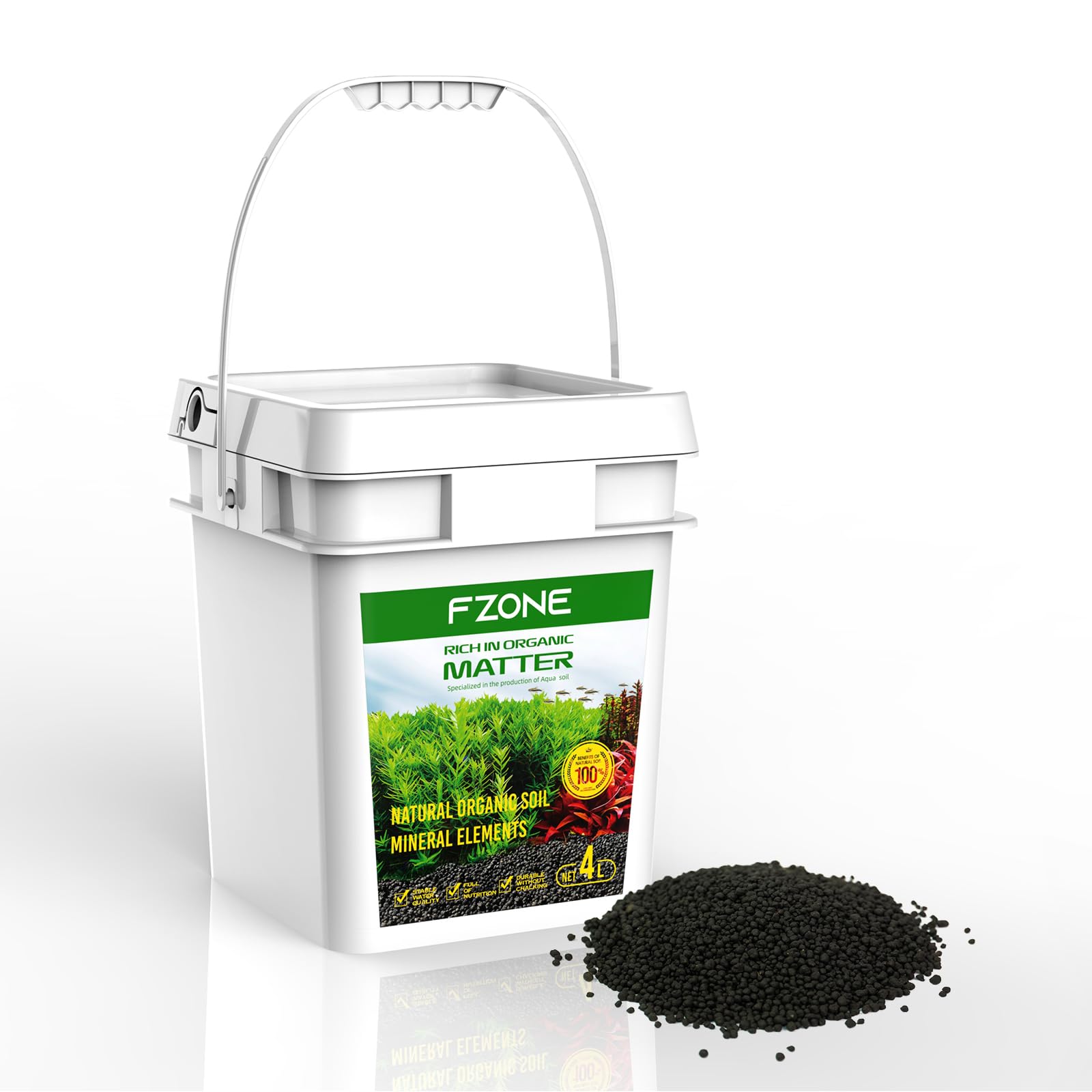
FZONE has entered the aquasoil market with a high-temperature sintered product that solves the dust problem plaguing many natural soils. The 3mm granules are processed to hold their shape indefinitely underwater — they won’t break into mud, won’t cloud the water, and require zero rinsing. The 4L bag holds 6.6 pounds and is packaged in a reusable plastic container, which doubles as a handy storage bin for root tabs or plant tools.
The nutrient profile is rich enough to support heavy root feeders like Cryptocoryne and Echinodorus without initial fertilization. The granules contain organic matter, activated carbon, silica, and minerals in a balanced blend. The buffering action gently absorbs alkaline ions and settles pH in the slightly acidic range. For demanding species like Tonina and Eriocaulaceae, the low-hardness water created by FZONE soil is ideal, though hard-water plants like Vallisneria may need a GH booster supplement.
Early testers specifically compare FZONE against Fluval Stratum and report superior Monte Carlo carpet growth in dry-start setups. The ammonia profile is significant — expect 4-8 ppm readings for approximately 17 days, requiring consistent 50% water changes. If you’re willing to manage the nitrogen cycle, FZONE delivers Stratum-level results at a competitive price with the added bonus of dust-free installation.
Why it’s great
- Completely dust-free — no rinsing or cloudiness
- Nutrient-rich formula supports heavy root feeders
- Reusable container packaging adds practical value
Good to know
- Strong ammonia spike requires 2+ weeks of water changes
- Sensitive plants like Bucephalandra may melt during cycling
6. Carib Sea 00761 Samurai Soil (3.5 lbs)

Carib Sea Samurai Soil is the substrate to choose when your top priority is a risk-free setup. It comes pre-washed and biologically inoculated to accelerate the cycle, and the formulation explicitly produces no ammonia spike — you can add fish and shrimp within hours of filling the tank. The pH is buffered to neutral-acidic, and the hardness is left unchanged, making it suitable for tap-water-incompatible species like crystal red shrimp without additional treatment.
The 3.5-pound bag is compact, but because the granules don’t disintegrate or compact over time, a single bag goes further than you’d expect. The dark color provides a nice contrast for brightly colored inhabitants. Bettas and shrimp do particularly well in this substrate, as the soft edges won’t damage delicate barbels or carapace joints — a specific concern with sharp-edged inert gravels that many beginners underestimate.
The main trade-off is the total volume. At 3.5 pounds (approximately 3.5 liters), this bag covers a 10-gallon tank at a 2-3cm depth adequately, but larger tanks will need multiple bags. The price point per liter is slightly higher than bulk options, but the convenience of zero rinsing, zero ammonia, and zero cloudiness makes it a compelling choice for first-time planted tank owners who want to minimize variables.
Why it’s great
- Absolutely no ammonia spike — immediate livestock safe
- Pre-washed and ready to use out of the bag
- Safe for delicate shrimp and betta fish
Good to know
- Lower total volume per dollar compared to bulk bags
- Mild pH buffer may not handle high-KH tap water
7. Hygger CO2 Upgraded Aquarium Soil (8.8 lbs)
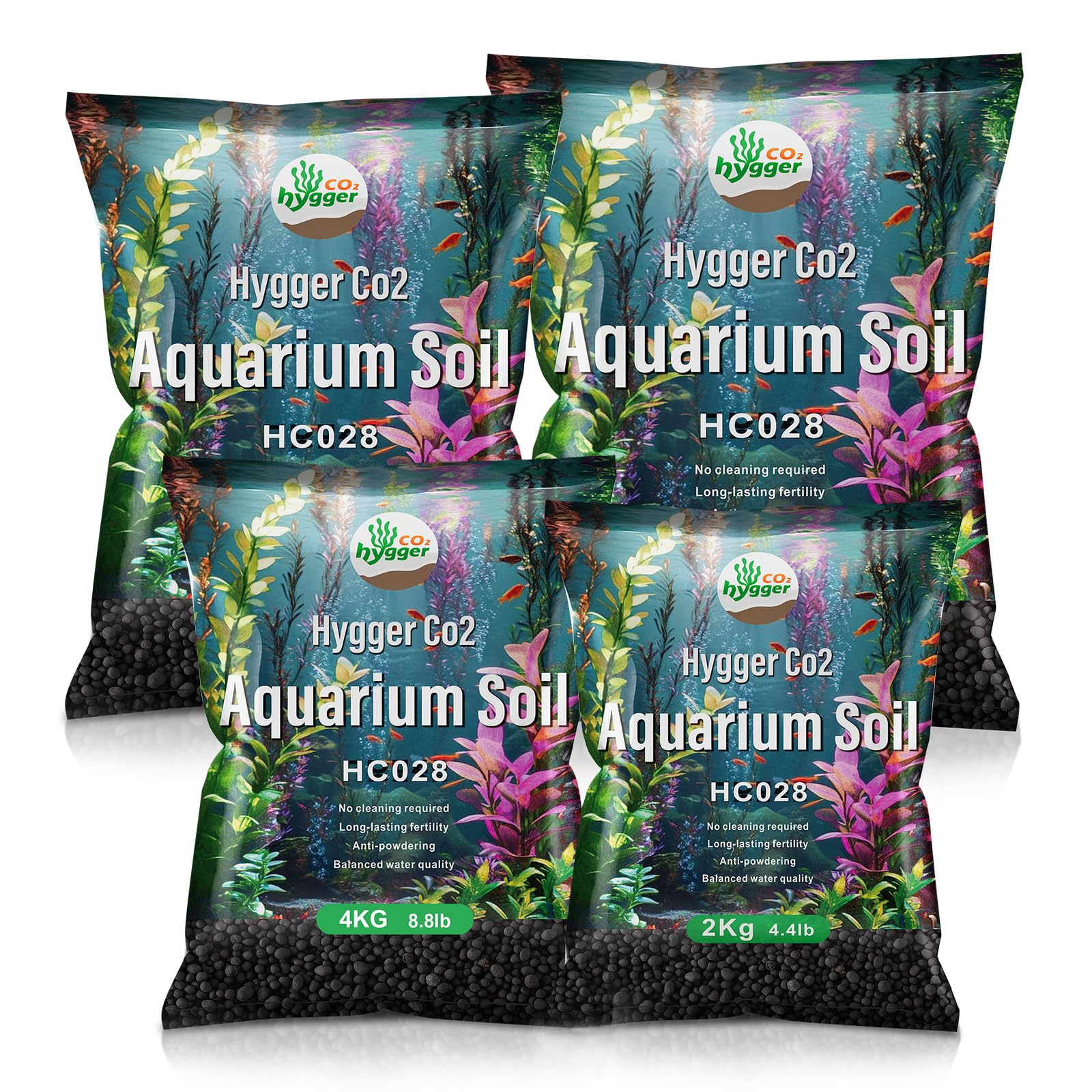
Hygger CO2’s aquarium soil offers the largest volume per dollar in this comparison — 8.8 pounds (20 liters) is enough to fully substrate a 40-gallon breeder tank without needing a second bag. The porous sintered structure is designed to promote rapid colonization of beneficial bacteria while naturally acidifying and softening water to a pH range of 6.5-7.5. This is a wider range than premium soils, making it more forgiving for mixed-community tanks where precise pH control isn’t critical.
The installation note is critical: Hygger explicitly instructs users NOT to rinse the soil. Washing breaks down the granules into mud and strips away the beneficial microorganisms embedded during manufacturing. Instead, pour the soil directly into the tank, gently fill water over a bowl or plate to minimize disturbance, and perform daily 3-5 day water changes for the first week before adding livestock. Users who follow this method report that plants revive within a week — including dying plants that recovered fully.
The trade-off is consistency. While most users report good results with thriving plants and happy bettas, a minority experienced white calcium-like deposits on glass within 12 hours of installation, requiring a full tear-down and scrubbing. This appears to be a batch-variation issue that doesn’t affect every bag. If you’re on a strict budget and need maximum coverage, Hygger provides the most substrate per dollar — but proceed with the understanding that quality control is less consistent than established brands.
Why it’s great
- Highest volume-per-dollar ratio for large tanks
- Sintered porous structure promotes good bacteria growth
- Can revive struggling plants within a week
Good to know
- Batch variation may cause calcium deposits or cloudiness
- Must not be rinsed — contrary to most substrates
FAQ
How long does the ammonia spike last in a new planted tank substrate?
Can I reuse aquasoil after tearing down a planted tank?
Should I rinse aquarium substrate before adding it to the tank?
Final Thoughts: The Verdict
For most users, the best aquarium substrate for planted tank winner is the Fluval Plant and Shrimp Stratum because it offers the safest cycling profile, the most consistent user results, and enough volume to cover standard tanks without breaking the bank. If you want high-tech carpet growth with CO₂ injection, grab the ADA Amazonia Ver 2. And for a beginner-friendly, zero-ammonia setup, nothing beats the Carib Sea Samurai Soil.