
If you’ve spent hours printing a part only to watch it turn chalky, crack, or warp under a few days of real sun, you already know the frustration of standard PLA and PETG in outdoor environments. ASA, or Acrylonitrile Styrene Acrylate, solves this by delivering the impact strength of ABS with superior UV stability, making it the go-to material for automotive brackets, garden fixtures, drone frames, and any functional part exposed to the elements and fluctuating heat.
I’m Min — the co-founder and writer behind Gadgets Feed. My hands-on analysis of extrusion consistency, interlayer adhesion, and thermal resistance across seven major ASA spools helps you bypass the trial-and-error phase most filament buyers endure.
Whether you need to print a replacement mirror housing or a weatherproof enclosure, this guide distills the real-world specs and user data to identify the best asa filament for your specific setup and budget.
How To Choose The Best ASA Filament
Selecting an ASA spool comes down to balancing print temperature range, speed capability, color consistency, and real-world UV tolerance. Not all ASA behaves the same — some flows like PETG, others demand an enclosed chamber and a hot bed to avoid corner lifting.
Diameter Tolerance and Feeding Reliability
A variance of ±0.02mm is the sweet spot for Bowden and direct-drive systems alike. Spools with ±0.03mm tolerance may still print fine but increase the risk of jams in high-speed scenarios. Larger the variance, the more likely you are to hit extrusion inconsistencies on long prints.
Heat Deflection and Warp Behavior
ASA’s glass transition sits roughly 10°C higher than the same weight of ABS, but real warp resistance depends on polymer formulation and additives. A filament rated for 90-100°C heat deflection is suited for car interiors and outdoor enclosures; anything below 80°C risks softening in direct summer sun.
High-Speed vs. Standard Feed Rates
Some modern ASA blends are engineered for 200-350mm/s flow, reducing print time without sacrificing layer fusion. If your printer supports high-speed, these spools can halve your project time. Standard ASA (50-100mm/s) still produces excellent parts but demands patience and an enclosure.
Quick Comparison
On smaller screens, swipe sideways to see the full table.
| Model | Category | Best For | Key Spec | Amazon |
|---|---|---|---|---|
| ERYONE HS ASA | High-Speed | Fast prints, minimal warping | 30-200mm/s | Amazon |
| ELEGOO ASA | Mid-Range | Outdoor functional parts | HDT up to 99°C | Amazon |
| ANYCUBIC ASA | Mid-Range | Consistency with low shrinkage | ±0.02mm tolerance | Amazon |
| FilaBees ASA | Mid-Range | Sparkle aesthetic finish | Matte sparkle surface | Amazon |
| Creality ASA | Premium | Up to 350mm/s printing | 100°C HDT, 350mm/s | Amazon |
| SUNLU ASA | Premium | Tough mechanical parts | ±0.02mm, 1kg spool | Amazon |
| FLASHFORGE ASA | Premium | Long-term outdoor durability | HDT near 93°C | Amazon |
In‑Depth Reviews
1. ERYONE High Speed ASA Filament
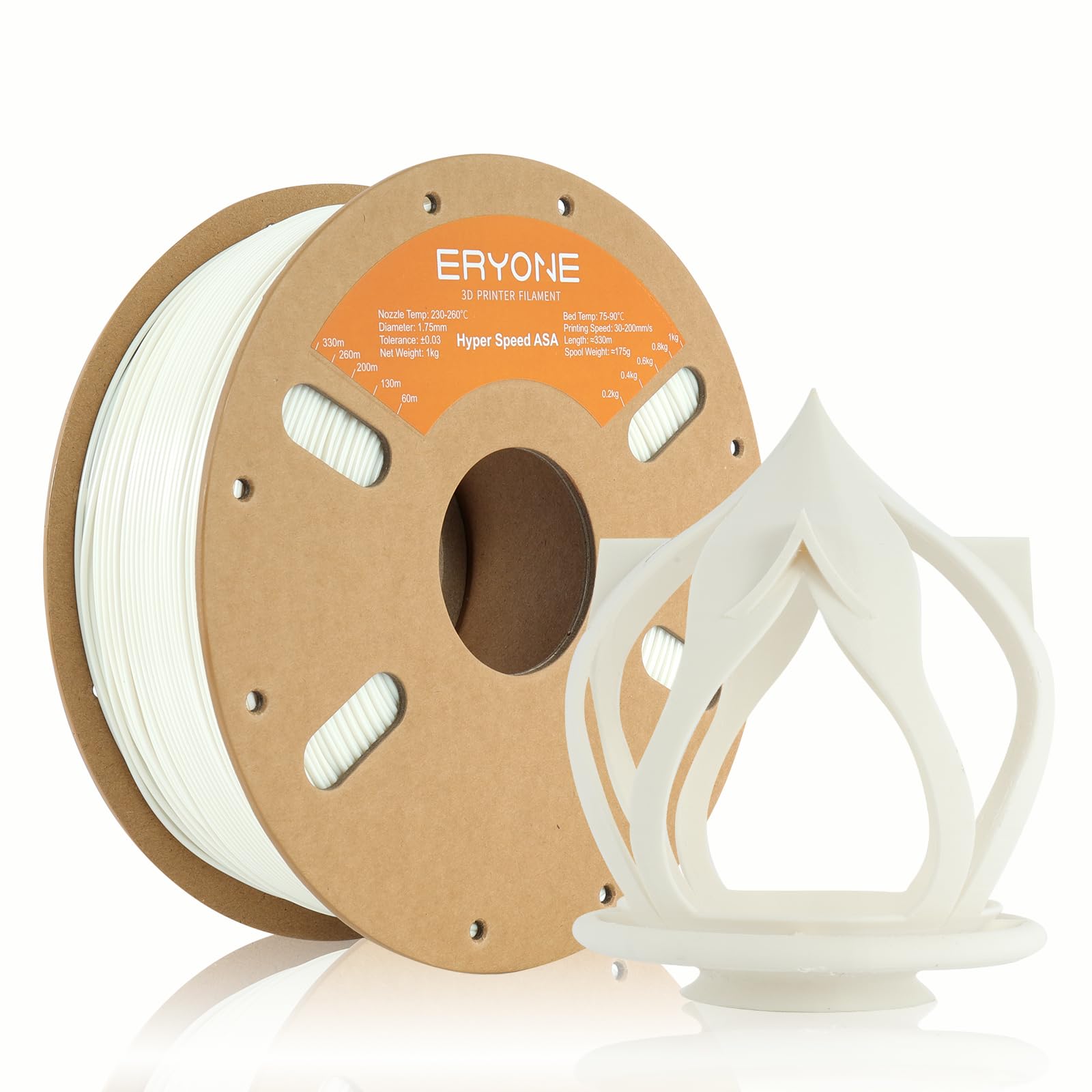
The ERYONE HS ASA is engineered with high fluidity that lets it extrude cleanly at up to 200mm/s without clogging — a genuine advantage for users running CoreXY or high-flow hotends who don’t want to compromise on layer adhesion. The rapid cooling characteristic reduces stringing and maintains dimensional accuracy even on complex overhangs.
Customer feedback confirms that this spool delivers a deep, consistent color — the white is bright and opaque — with minimal warping on an enclosed printer at 250°C hotend and 90°C bed. Users report zero cracking when twisting thin walls, a rare feat for a high-speed formulation that often trades toughness for speed.
Comes vacuum-sealed with desiccant and is strongly hygroscopic; drying before use is mandatory if the package has been opened. The heat, chemical, and UV resistance make it a solid choice for outdoor signage and marine accessories where long-term UV exposure is a given.
Why it’s great
- High-speed profile (30-200mm/s) without clogging
- Excellent layer adhesion and impact strength on thin parts
- Consistent vacuum seal with desiccant
Good to know
- Requires drying before use due to strong hygroscopicity
- Avoid drafts and temperature swings during printing
2. ELEGOO ASA Filament 1.75mm Warm White
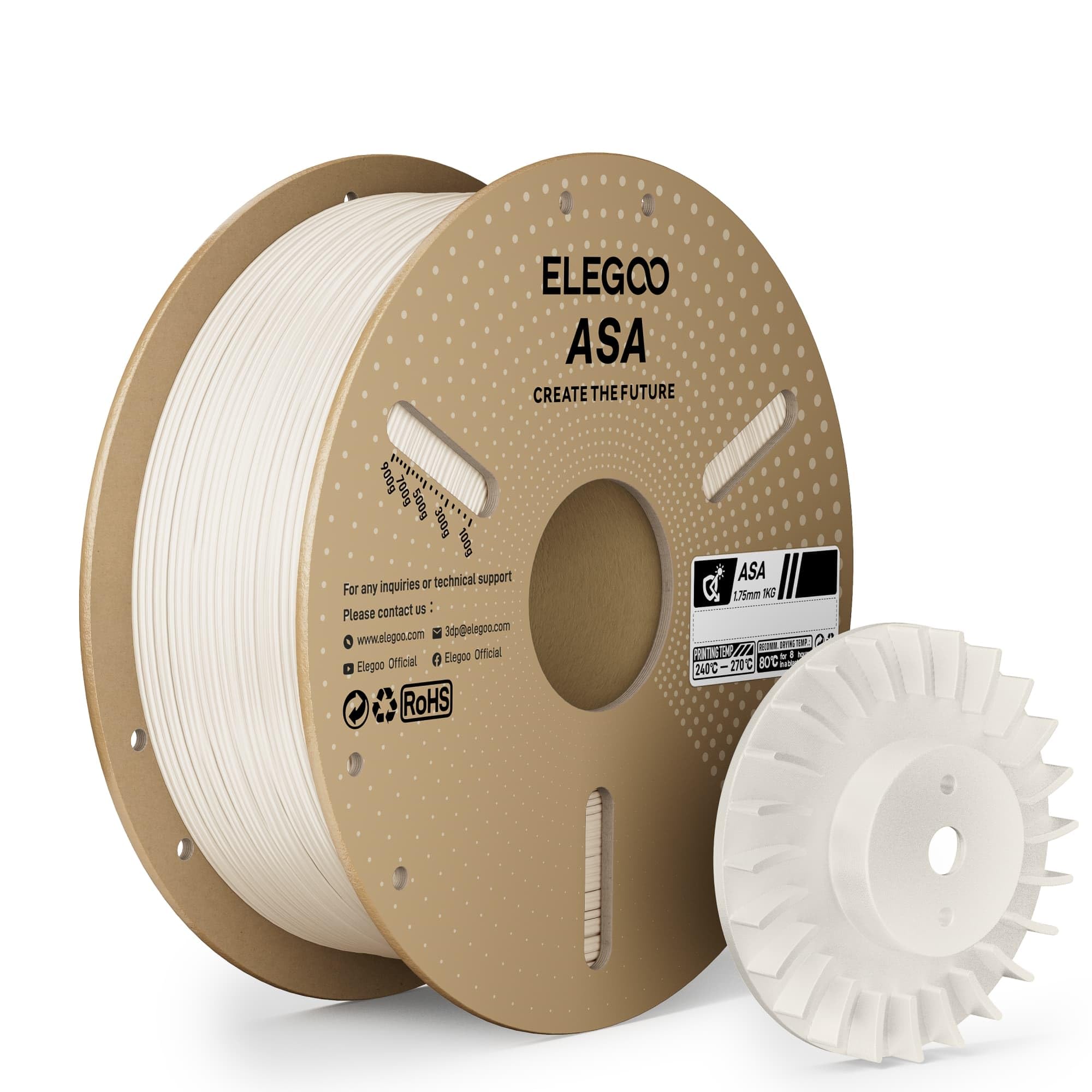
ELEGOO’s ASA brings a heat deflection temperature of 99°C, placing it at the top of the thermal resistance chart among mid-range spools. This makes it a reliable candidate for engine bay components, drone frames, and any part that needs to hold up in a hot, humid environment without losing its shape.
Warm White has a slight natural translucency and a mild yellowish tint — not a pure optical white, but consistent and matte. Reviewers noted that layer adhesion is strong with the manufacturer’s preset, and using glue stick on the textured PEI side prevents lifting even on larger bases.
The vacuum seal is robust, and the spool is neatly wound to prevent tangles. Fumes are stronger than PETG, so printing in a ventilated area or with an exhaust filter is strongly recommended.
Why it’s great
- Excellent heat resistance up to 99°C
- Strong interlayer adhesion with minimal warping on enclosed printers
- Resistant to fading and mechanical decline under prolonged UV
Good to know
- Warm White is not pure white, has a semi-translucent yellow tint
- Produces strong fumes, requires ventilation or exhaust
3. ANYCUBIC ASA Filament 1.75mm Gray

ANYCUBIC’s ASA holds a tight ±0.02mm diameter tolerance and is formulated for low shrinkage, which directly reduces the risk of corner warping and layer separation on larger prints. The gray color is rich and uniform, making it an easy pick for creating tools and functional prototypes that look professional on the first layer.
Multiple users on enclosed printers like the Kobra S1 and S1 Max report flawlessly clean prints straight from the spool after a 3-hour dry at 80°C. The heat deflection temperature of 90°C sits above PETG and below some premium ASA, but is more than adequate for outdoor plant pots, auto accessories, and garden hardware.
Naming note: one review mentions black PETG accidentally — ignore that data point; the consensus on the actual ASA gray is exceptionally positive for extrusion consistency and bubble-free flow.
Why it’s great
- Tight ±0.02mm tolerance ensures stable feeding
- Low shrinkage and reduced warping on large surfaces
- Uniform gray color with good UV resistance
Good to know
- Requires drying before use (recommended 3 hours at 80°C)
- Slower print speeds recommended for best quality
4. FilaBees ASA Filament Sparkle Storm Gray
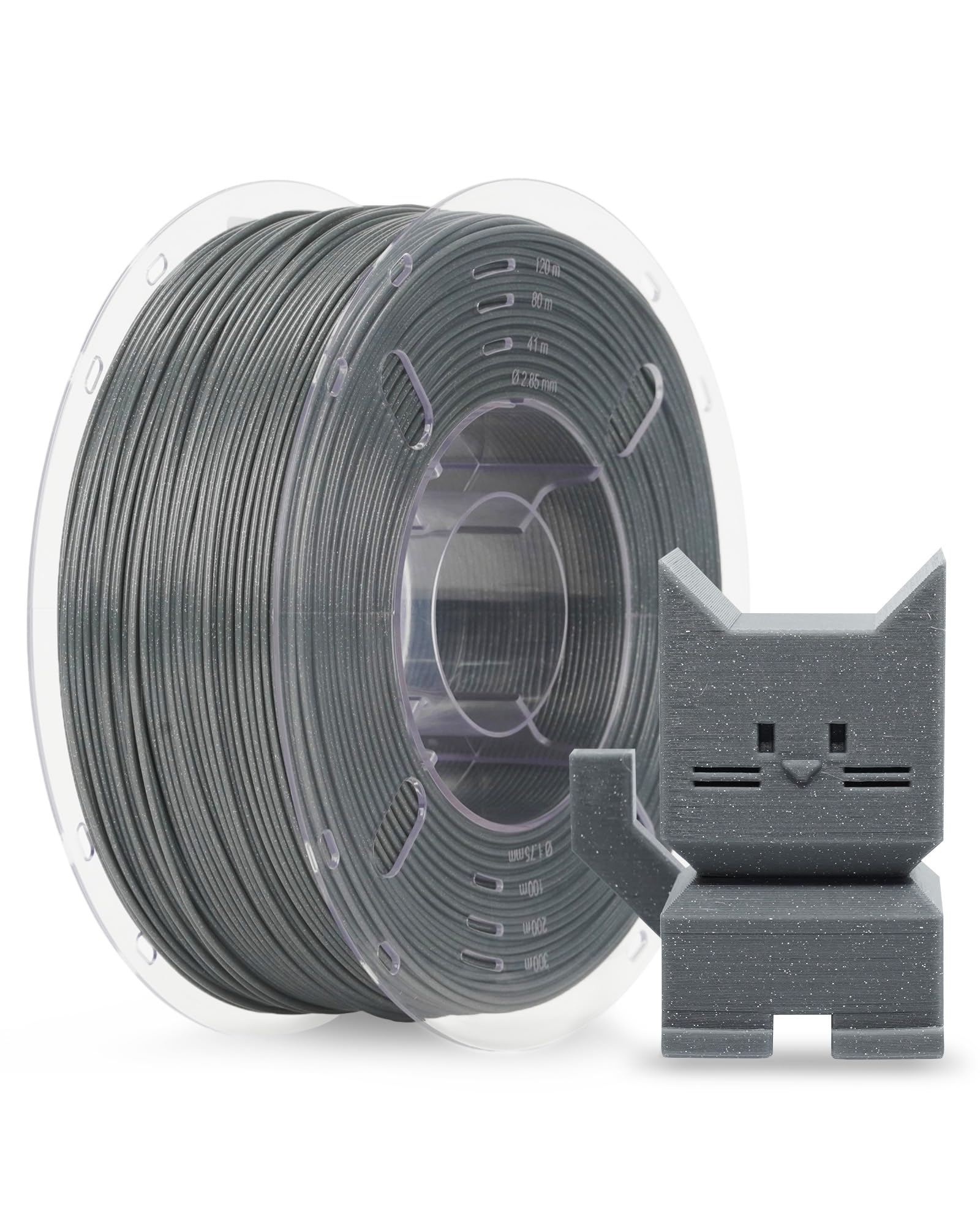
FilaBees ASA features a distinctive sparkle that catches light subtly without being gaudy — the Sparkle Storm Gray finish is matte with fine flecks that hide layer lines effectively. This makes it a favorite for aesthetic parts where you want the visual depth of a composite without the abrasive wear of a carbon-fiber blend.
The filament works well on enclosed printers, with users reporting clean prints on the Creality K1C using default settings. It has proven durable for Commodore 64 retro-fit parts and outdoor garden fixtures, and its transparency is low enough to block light while letting a faint glow pass through for LED integration.
Upgrade transparent spool lets you monitor remaining filament at a glance, a small but practical convenience. As with all ASA, an enclosure is recommended to maintain a constant temperature and reduce draft-induced warp.
Why it’s great
- Unique sparkle matte finish hides layer lines
- Durable, UV-stable for outdoor use
- Transparent spool for easy filament level visibility
Good to know
- Enclosure required to maintain constant temperature
- Limited color availability compared to standard ASA
5. Creality ASA 3D Printer Filament 1.75mm Black
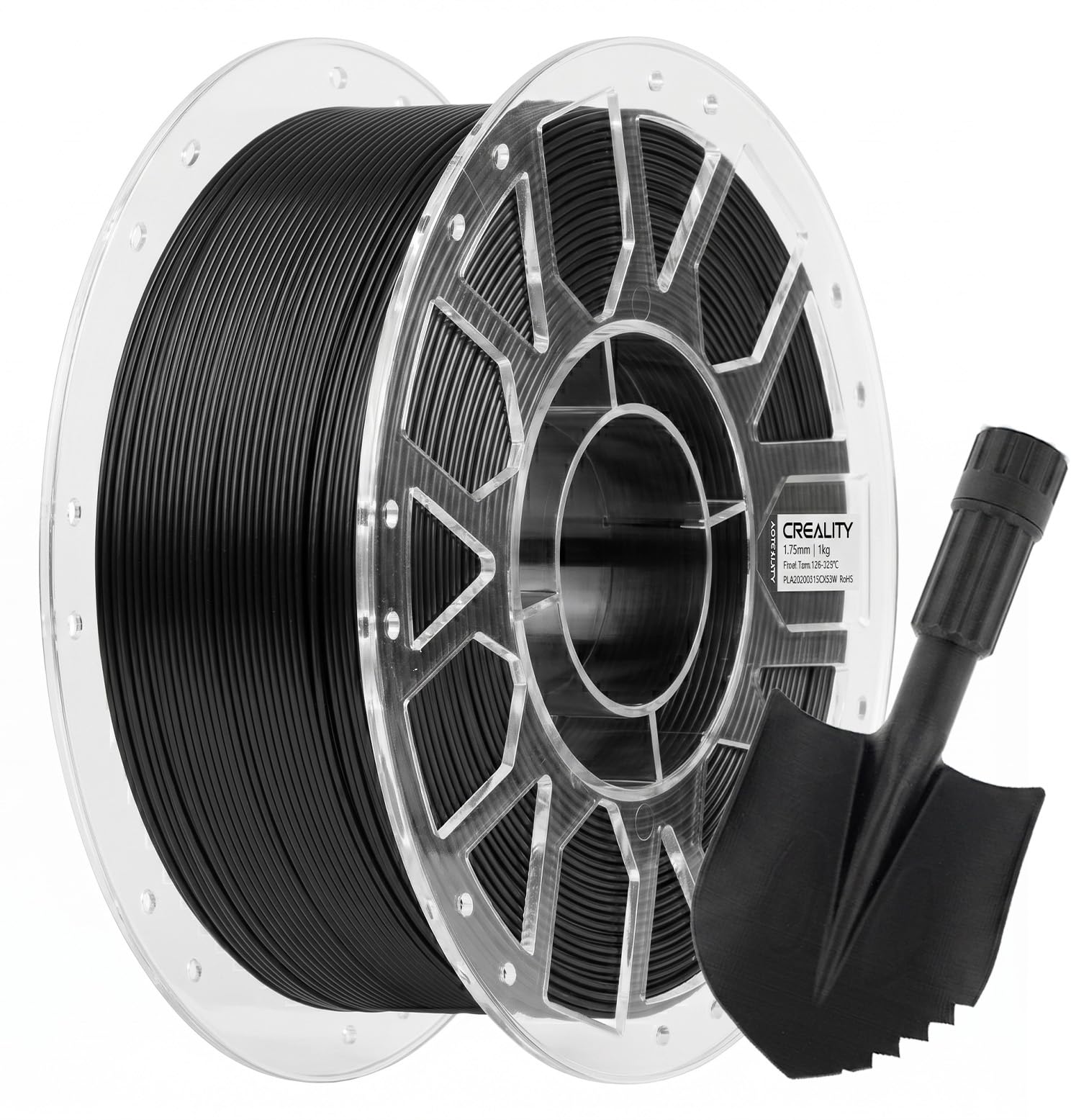
Creality’s HP ASA is designed to run at speeds up to 350mm/s while maintaining a heat deflection temperature of 100°C — the highest thermal ceiling in this list. This is the spool to reach for when you need fast turnaround on functional parts that will sit in direct sunlight or near a hot engine.
Users on Flashforge AD5X and Creality K-series machines report that it prints almost as easily as PLA after a brief drying cycle, with excellent layer bonding and zero clogging. The black color is deep and uniform, and the surface takes a nice matte finish that stands up to scuffing and abrasion.
Comes vacuum-sealed, but some users have noted the occasional need to dry it even fresh out of the bag due to storage conditions. Compatible with AMS units, making it a versatile option for multi-material users.
Why it’s great
- Ultra-high-speed capability (up to 350mm/s)
- 100°C HDT for extreme heat environments
- Compatible with popular high-speed printers and AMS
Good to know
- Should be dried before printing, even fresh spools
- May require retraction tuning for optimal stringing control
6. SUNLU ASA Filament 1.75mm Black

SUNLU’s ASA is engineered with a tough polymer blend that sits between ABS and polycarbonate in strength, delivering exceptional layer adhesion and impact resistance. The 1kg spool uses a third-generation white high-temperature spool with multi-hole drying design — ideal for users who store filament in a dryer or run it directly from a heated chamber.
Customer reviews consistently highlight its low odor compared to traditional ABS-style ASA, minimal stringing after a temperature tower calibration, and reliable bed adhesion at 100-120°C on garolite or PEI plates. The black color is deep and even, without the grey hue that some budget ASA spools exhibit.
The vacuum seal quality can be inconsistent — some users reported partially open bags — so a pre-print dry is recommended. SUNLU recommends nozzle temp of 230-260°C, which is a wide enough range to accommodate most hotend setups.
Why it’s great
- Tough, impact-resistant prints with superior layer adhesion
- Low odor for an ASA filament
- Multi-hole spool design compatible with dryers and AMS
Good to know
- Inconsistent vacuum sealing on some batches
- Requires temperature tower tuning for optimal stringing
7. FLASHFORGE ASA Filament 1.75mm Black

FLASHFORGE positions its ASA as a true ABS replacement with enhanced UV and chemical resistance, including good tolerance to oils and solvents. The 93°C heat deflection temperature is slightly lower than the Creality’s 100°C but still within the range needed for outdoor enclosures and RC car components.
User feedback on the black variant is positive for dimensional accuracy and a clean spool that feeds without tangles. The true black color is consistent across the spool, and the matte finish resists fingerprints. Some users reported difficulty with first-layer adhesion on certain beds; glue stick and a clean high-temp PEI sheet resolve this.
The 24-hour drying process before packaging ensures low moisture content out of the box, but the manufacturer still recommends storing in a dry box. The 1-year warranty adds a layer of confidence for long-term projects.
Why it’s great
- Excellent UV and chemical resistance for industrial applications
- 24-hour pre-drying ensures low moisture out of the box
- 1-year manufacturer warranty
Good to know
- Some users experienced first-layer adhesion challenges
- Fumes are stronger than PLA/PETG, requires ventilation
FAQ
Do I need an enclosure to print ASA filament?
What is the ideal drying temperature and time for ASA before printing?
Can ASA be printed on a glass bed without adhesives?
Final Thoughts: The Verdict
For most users, the best asa filament winner is the ERYONE High Speed ASA because it combines high-speed flow with excellent layer adhesion and UV resistance at a fair price point. If you want the highest thermal ceiling and extreme impact strength, grab the Creality HP ASA. And for a premium finish with sparkle depth that hides layer lines, nothing beats the FilaBees ASA Sparkle Storm Gray.