
A 155°F attic doesn’t just make your second story unbearable—it forces your air conditioner to run longer, drives up your electric bill, and slowly cooks your roof shingles from the inside out. The only solution is a dedicated ventilator that aggressively pulls that superheated air out before it radiates into your living space. The problem is most homeowners grab the first boxed fan they see at the hardware store, only to find it’s underpowered, noisy, or dead within two seasons. A proper replacement demands you match the CFM rating to your attic’s square footage and pick a mount style (gable, roof, or wall) that your actual structure can support.
I’m Min — the co-founder and writer behind Gadgets Feed. This guide compiles dozens of hours cross-referencing motor specs, CFM claims, and real-world installation feedback to find the fans that actually move air without rattling your house apart.
A bad attic fan is worse than no fan at all—it wastes electricity without cooling anything. That’s why we sorted through the market to build this definitive list of the best attic replacement fan options that deliver measurable temperature drops and real energy savings.
How To Choose The Best Attic Replacement Fan
Choosing the right attic fan isn’t about picking the biggest one you can fit. It’s about matching airflow capacity to your attic’s volume, picking a mount style your framing can support, and deciding how much control you want over the temperature and humidity triggers. Here’s what the specs actually mean before you buy.
CFM Ratings: The Real Measure of Power
Cubic Feet per Minute (CFM) is the airflow rate the fan can move. General rule of thumb: your attic fan should deliver at least 10 to 12 air changes per hour. For a 2,000-square-foot attic with a standard 8-foot peak, that means you need roughly 1,300 to 1,500 CFM. Undershoot that number and the fan runs constantly without ever pulling enough heat out. Overshoot by too much and you risk creating negative pressure that can pull conditioned air out of your living space.
Gable Mount vs. Roof Mount vs. Wall Mount
Gable mount fans install into the triangular vent at the end of your attic and are the easiest DIY option—they don’t require cutting your roof deck. Roof mount fans install through the roof itself, which often requires flashing and general roofing skills but can be more effective at exhausting heat near the peak. Wall mount shutter fans are ideal for garages or workshops with convenient wall access. Pick the style that matches the structure you already have; don’t invent a mounting point that doesn’t exist.
Thermostat, Humidistat, and Smart Controllers
A plain on/off switch means you have to climb up into the attic every time you want to run the fan. A built-in thermostat lets the fan kick on automatically when the attic hits a set temperature—usually around 100°F to 110°F. A humidistat is important if you live in a humid climate, as it triggers the fan when moisture builds up, preventing mold. Smart controllers add the ability to monitor and adjust settings from your phone, set timers, and program different speeds for different temperature bands. The more control you have, the less energy you waste.
Motor Type and Noise Level
Standard PSC motors are common and affordable, but they tend to be noisier and less efficient. EC motors (electronically commutated) are more efficient, quieter, and offer variable speed control. Dual ball bearings in the motor housing extend the fan’s lifespan, especially important in an attic where temperatures can fluctuate wildly. Noise is measured in dBA—look for ratings under 65 dBA for a fan that won’t be bothersome if your attic is near living areas.
Quick Comparison
On smaller screens, swipe sideways to see the full table.
| Model | Category | Best For | Key Spec | Amazon |
|---|---|---|---|---|
| AC Infinity AIRLIFT T20 | Premium | Whole-garage climate control | 3425 CFM / 20″ blade | Amazon |
| Quietcool AFG SMT PRO-2.0 | Premium | App-controlled gable ventilation | 1945 CFM / Smart App | Amazon |
| Cool Attic CX1600 | Mid-Range | Long-term reliability for large attics | 1600 CFM / 14″ blade | Amazon |
| Master Flow GAF ERV6BL | Mid-Range | Roof mount with thermostat control | 1500 CFM / Galvanized steel | Amazon |
| VEVOR 16 inch Shutter Fan | Mid-Range | High-velocity workshop ventilation | 3000 CFM / EC motor | Amazon |
| Air Vent Gable 53315 | Budget-Friendly | Simple gable replacement on a budget | 1050 CFM / 14″ plastic blade | Amazon |
In‑Depth Reviews
1. AC Infinity AIRLIFT T20

The AC Infinity AIRLIFT T20 represents the ceiling of what a residential exhaust fan can deliver. Its 20-inch aluminum blade moves an enormous 3425 CFM, enough to cycle the air in even a three-car garage-sized attic in well under two minutes. The real differentiator is the EC motor paired with a WiFi controller that gives you 10 speed settings, temperature and humidity triggers, and VPD programming for a greenhouse, workshop, or pool room. At 65 dBA on high speed, it runs quieter than a standard conversation, which is remarkable for a fan pushing that much air.
Installation is straightforward for a wall mount shutter design—it comes with steel shutters that close automatically when off, blocking debris and insects. The powder-coated steel frame carries an IP44 moisture and dust resistance rating, so it’s safe to mount on an exterior wall even in damp climates. Users report that the controller can be complex to set up initially, but once programmed, the fan runs completely hands-off, automatically ramping up when temps spike and shutting down when conditions normalize. The app displays real-time temperature and humidity data from the integrated probe.
For anyone serious about attic, garage, or workshop ventilation, the AIRLIFT T20 is the benchmark. The combination of raw airflow, near-silent operation, and full smart control justifies the investment if you need something that works hard without making noise about it. The only reason to look elsewhere is if your mounting location physically can’t accommodate a 23-inch square frame or if you don’t need the high CFM ceiling it offers.
Why it’s great
- Massive 3425 CFM airflow on an efficient EC motor
- WiFi app control with real-time temp/humidity monitoring
- IP44 rated for moisture and dust resistance
Good to know
- Controller setup is complex and the manual is dense
- Larger 23″ frame requires adequate wall space
2. Quietcool AFG SMT PRO-2.0

The Quietcool AFG SMT PRO-2.0 is the only true plug-and-play smart gable fan in this lineup. It ships with a 20-foot grounded power cord that needs no wiring—just install the fan into your gable vent, plug it into a standard 120V outlet, and connect the app. The two-speed PSC motor pushes 1945 CFM on high while drawing only 120 watts, a very efficient power-to-airflow ratio. The built-in thermostat and humidistat let you set temperature triggers between 85°F and 115°F.
The smart controller communicates over Bluetooth, so you can monitor temperature and humidity, set speed, and create operating schedules directly from your phone. Users in Arizona and Texas report that installing two units in parallel with staged thermostat settings (low speed at 85°F, high at 105°F) keeps attics remarkably cool even in peak summer. The Fire Safety Sense shut-off is a crucial safety feature that automatically kills power if it detects rapid temperature rise from a fire. The app interface is intuitive and displays real-time temperature and humidity readings from the fan’s onboard sensor.
If you have a gable vent and want smart features without hiring an electrician, the Quietcool PRO-2.0 is the obvious pick. The Bluetooth-only range can be a limitation if your attic is far from the house, but for most single-family homes it works fine. The low noise floor—even quieter than many 1200 CFM fans—makes it nearly inaudible from the living space below. Seal the seams around the fan with tape or flex seal for maximum efficiency.
Why it’s great
- Plug-and-play installation, no wiring required
- Smart app control with thermostat, humidistat, and timer
- Very quiet operation for its 1945 CFM rating
Good to know
- Bluetooth-only range limits remote monitoring distance
- Two-speed motor lacks fine variable speed control
3. Cool Attic CX1600

The Cool Attic CX1600 is the classic gable-mount workhorse that has been cooling attics for years. Its 4.5-amp, 115-volt motor delivers 1600 CFM at a steady 60 Hz, covering up to 2,400 square feet of attic space. The 14-inch plastic blade is light but moves air effectively, and the motor is a 0.25 HP unit, a step up from the common 0.20 HP motors found in budget fans. This extra power headroom is why many users report replacing 18-year-old attic fans with this model and seeing immediate improvement.
Installation is straightforward for any moderately handy homeowner: mount the fan, wire it to a junction box, and set the adjustable thermostat to your desired cutoff temperature. The unit is designed to mount behind existing louvers or work with the Cool Attic CX2121 automatic shutter. Owners consistently note that the fan is quiet during operation. The most common negative feedback is that the included thermostat can be slightly inaccurate—some users report the fan occasionally running continuously in mild weather, which can add minor electricity cost if left unchecked.
For someone looking to replace an aging gable fan with a time-tested, motor-upgraded unit that won’t break the bank, the CX1600 is a strong candidate. Pair it with a separate, more accurate line-voltage thermostat if you want precise on/off control. It’s not the flashiest option, but it does the job reliably. The plastic blade construction limits its use in extremely hot roof-mount applications where metal blades last longer.
Why it’s great
- More powerful 0.25 HP motor compared to standard budget models
- Quiet operation, even at full speed
- Proven long-term reliability as a measured upgrade path
Good to know
- Includes thermostat can be inaccurate—may need a separate replacement
- Plastic blade less durable in direct attic heat than metal
4. Master Flow GAF ERV6BL
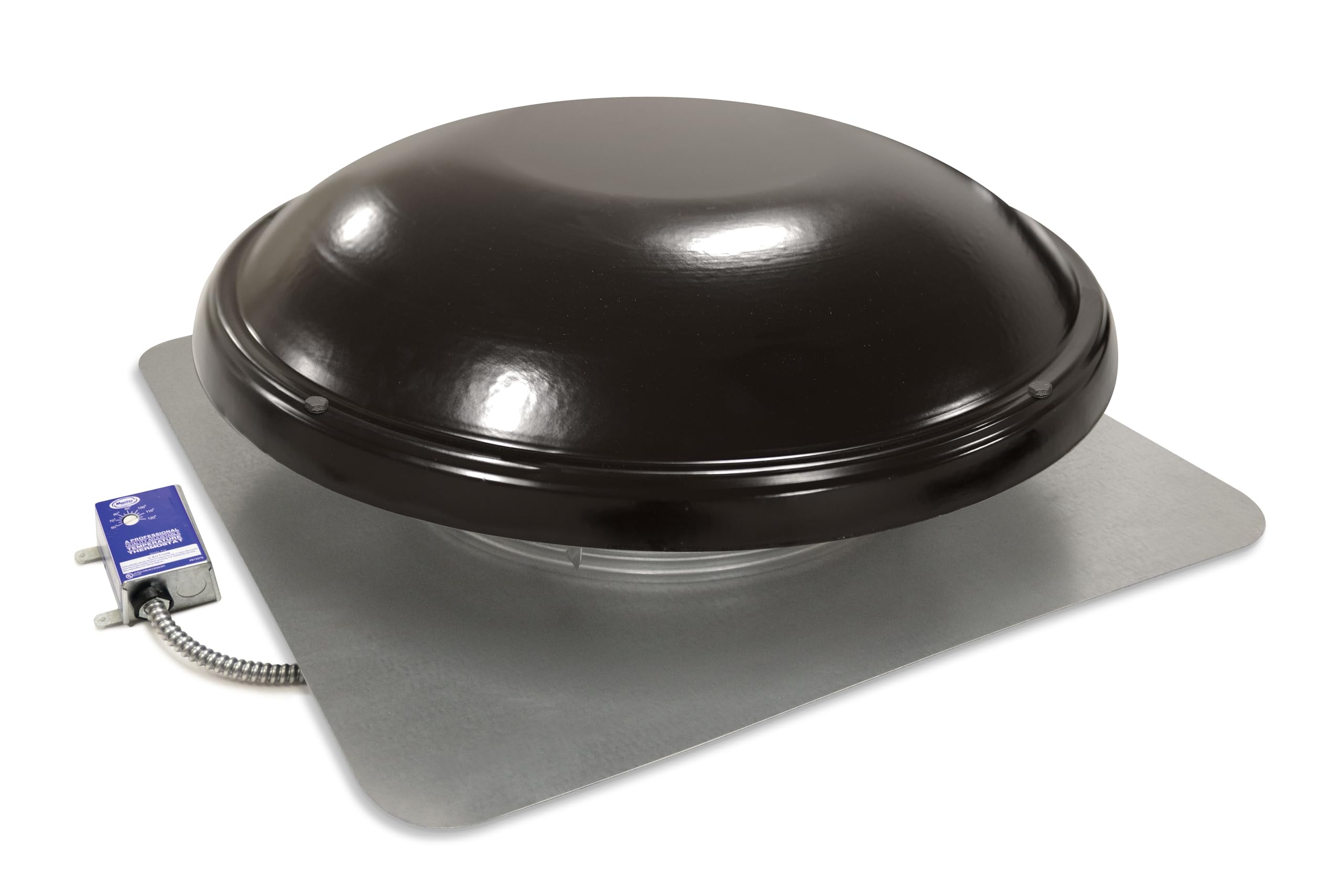
The Master Flow GAF ERV6BL is a roof-mount power vent built to handle up to 2,800 square feet of attic space. It moves 1500 CFM using a galvanized steel fan blade housed in a durable painted steel frame. This roof mount configuration installs through the roof deck, requiring you to cut a hole and secure it with flashing, which does demand more skill than a gable mount. However, the payoff is that roof-mount fans exhaust heat directly at the highest point where hot air naturally collects.
The ERV6BL ships with an HT1 thermostat/humidistat controller, giving you automatic on/off based on either temperature or humidity. The steel blade holds up well against continuous exposure to high attic temperatures and moisture without warping or cracking. Multiple user reports confirm the fan dramatically lowers attic temperatures during summer heat waves, often resulting in noticeable reductions in air conditioner runtime. The painted finish is available in black or brown to match different roof colors. The included thermostat seems to be reasonably accurate, with owners confirming it kicks on as expected at the set threshold.
Roof mount is the right choice if your attic lacks a suitable gable vent or if your gable vent is blocked. The galvanized steel construction is a meaningful upgrade over plastic-blade alternatives for longevity. The trade-off is the more complicated installation. If you’re comfortable with basic roofing and electrical, this is one of the most effective single-fan solutions for standard residential attics. For those wanting the easiest possible project, a gable mount remains the simpler route.
Why it’s great
- Galvanized steel blade and painted steel frame for long life
- Built-in thermostat and humidistat controller
- Roof mount pulls heat from the attic peak directly
Good to know
- Requires cutting a hole in the roof and proper flashing
- Not plug-and-play: hardwired electrical connection needed
5. VEVOR 16 inch Wall Mount Shutter Fan
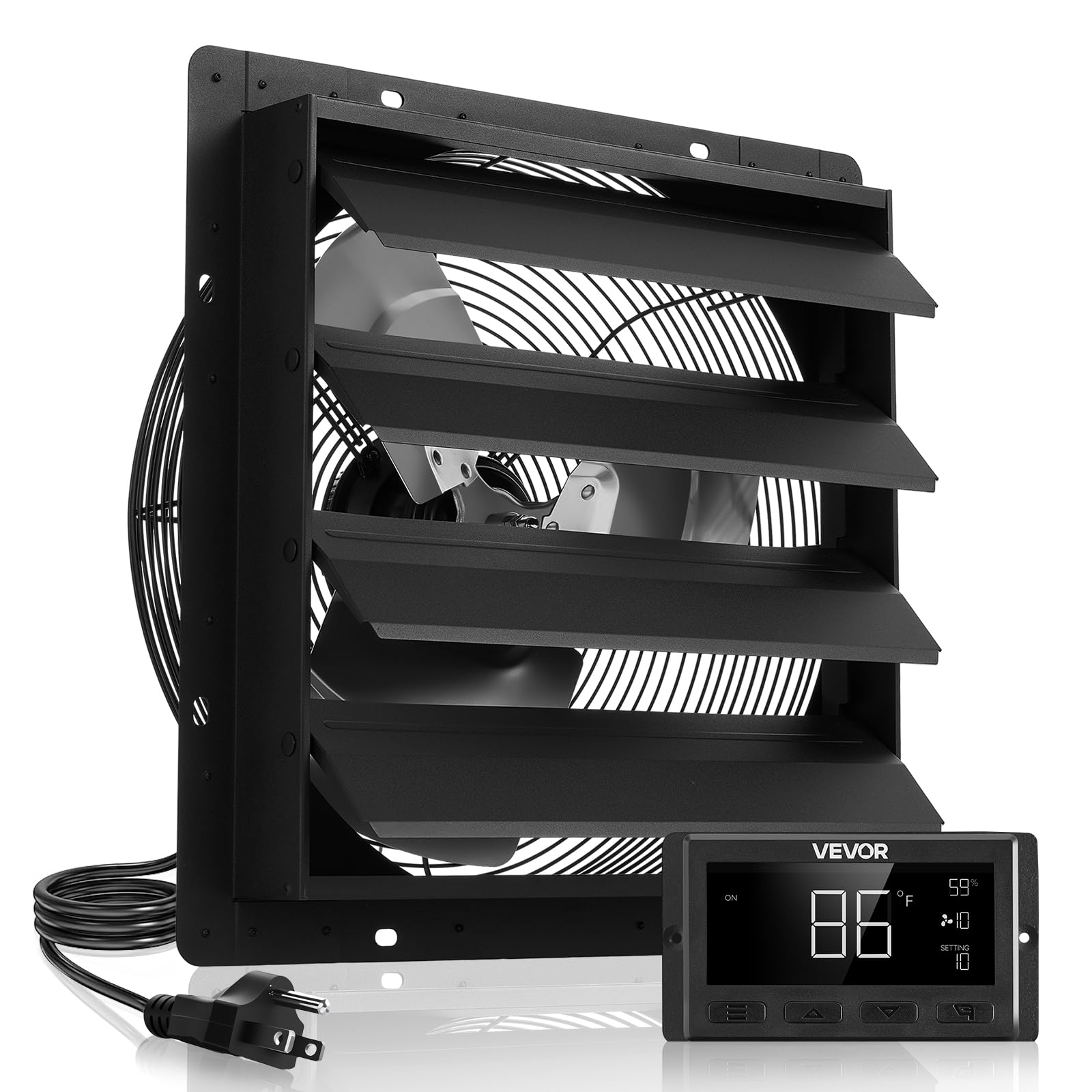
The all-metal steel construction includes automatic shutters that open when the fan is running and seal closed when off, blocking rain, insects, and debris. The 10 speed settings, temperature and humidity triggers, timer, and alarm give you deep control over when and how hard the fan runs.
Installation is a wall mount scenario: cut a 16-inch hole in an exterior wall, screw the unit in place, and plug it into the included controller. Users consistently report the fan is quiet even at the higher settings, thanks to the smooth EC motor. The digital controller display can be nearly invisible in direct sunlight, which is a problem for some greenhouse or sun-porch installations. A few users have reported the control module failing after a couple of months of light use, requiring them to bypass the module to run the fan at full speed only.
For the price, the VEVOR offers the best CFM-per-dollar ratio in the list alongside a modern EC motor that sips electricity. It is ideal for workshops, greenhouses, or garages where you want aggressive ventilation without the power bill shock. The potential controller reliability issue is the main risk, though the steel fan body itself is built to last. If the controller proves troublesome, wiring a simple inline thermostat gives you manual control and bypasses the complex digital interface.
Why it’s great
- Very high 3000 CFM at only 98W with EC motor efficiency
- Automatic closing steel shutters seal against elements
- 10 speed settings plus temperature and humidity triggering
Good to know
- Control panel is difficult to use and digital display washes out in sunlight
- Some users report controller failure within months
6. Air Vent Gable Ventilator 53315
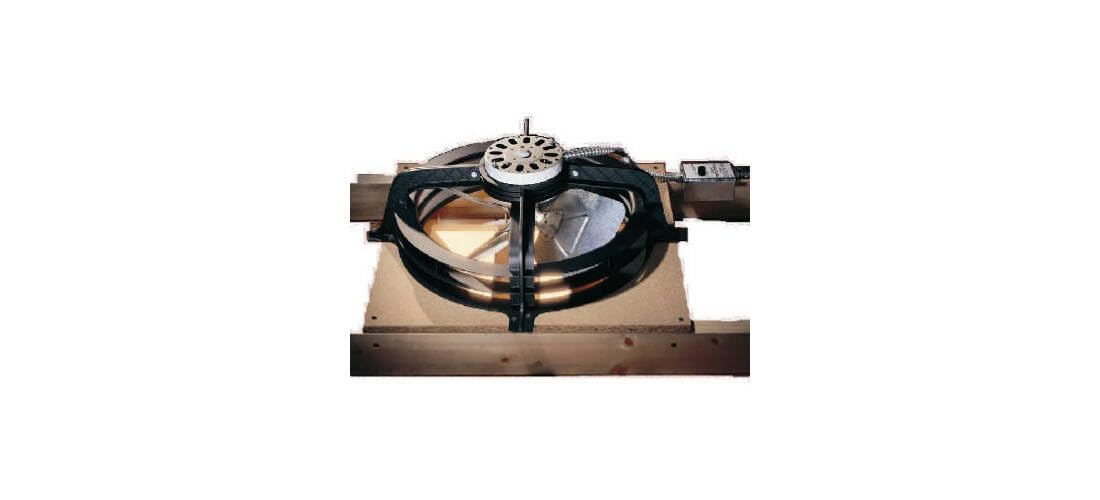
The Air Vent Gable Ventilator 53315 is the no-frills replacement that simply works. It delivers 1050 CFM at 180W, covering attics up to 1,500 square feet with a straightforward gable mount design. The 14-inch plastic blade and 1/12 HP motor are not the most powerful specs on this list, but for a smaller attic or a garage that just needs some hot air removed, it gets the job done. The stainless steel finish on the housing offers reasonable corrosion resistance for indoor gable installation.
DIY installation is where this fan shines. It mounts easily into any standard gable vent opening without heavy modifications. Owners report using it as a garage hot air exhaust that reduces heat and airborne dust, and that it runs quietly enough to not disturb the living space. Some units have arrived with minor defects such as impeller balance issues, but these are typically resolved with simple field adjustments like blade realignment or adding a rubber washer for dampening. The thermostat control is simple and functional.
If your attic is small, you are on a strict budget, or you just need a quick replacement for a failed fan, the Air Vent 53315 is a practical choice. It lacks the high CFM of larger units and the smart features of newer models, but it’s reliable, quiet, and easy to install. The key limitation is that the 1050 CFM output is marginal for anything above 1,500 square feet. Use it within its design range and it will serve you well for years.
Why it’s great
- Simple and fast gable mount installation
- Quiet operation suitable for attached garages
- Very affordable entry point for attic ventilation
Good to know
- 1050 CFM is only adequate for attics up to 1,500 sq ft
- Plastic blade and smaller bearings may have shorter lifespan in extreme heat
FAQ
How many CFM do I need for my attic?
Can I install a gable mount fan myself?
Will a noisy attic fan be bothersome from the rooms below?
Should I choose a roof mount or a gable mount fan?
Final Thoughts: The Verdict
For most users, the best attic replacement fan winner is the AC Infinity AIRLIFT T20 because its 3425 CFM EC motor, WiFi controller, and robust IP44 build set the standard for modern attic ventilation. If you want a plug-and-play smart fan you can install yourself without wiring, grab the Quietcool AFG SMT PRO-2.0. And for a budget-friendly replacement for a small attic that just works, nothing beats the Air Vent Gable Ventilator 53315.