
Most running watches today drown you in notifications, app stores, and colorful widgets that have nothing to do with putting one foot in front of the other. If you just want accurate pace, distance, heart rate, and battery life that survives a marathon training block without selling you a second mortgage, the market is surprisingly noisy. The real divide isn’t between cheap and expensive—it’s between watches that respect your focus and watches that treat your wrist like a billboard.
I’m Min — the co-founder and writer behind Gadgets Feed. I’ve spent hundreds of hours cross-referencing GPS accuracy reports, battery stress tests, and real-runner reviews to isolate the watches that deliver the core running experience without the fluff.
After filtering dozens of models through extended battery trials and satellite lock benchmarks, this guide narrows the field to the eight contenders that actually earn the title of best basic running watch for runners who prioritize performance over polish.
How To Choose The Best Basic Running Watch
The basic running watch category is full of traps: beautiful AMOLED displays that drain in hours, “100+ sport modes” you’ll never use, and GPS chips that lose lock under tree cover. Focus on the four pillars below to avoid buyer’s remorse.
GPS Accuracy and Satellite Systems
Single-frequency GPS is fine for open fields, but dual-band GPS (L1+L5) dramatically improves lane-level accuracy near buildings and under heavy foliage. Watches that support GPS+GLONASS+Galileo or BeiDou lock faster and drift less on winding trails. The difference between a watch that records 10.0 km and 10.3 km on the same route is almost always the chipset generation, not your form.
Optical Heart Rate Sensor Quality
Most basic watches use green-LED PPG sensors; premium ones add red and infrared LEDs for SpO2 and better perfusion tracking. The sensor’s sampling rate (continuous vs. once-per-second) determines whether your interval splits are meaningful or just noise. Watches with proprietary algorithms (Garmin Elevate, COROS Optical HR) tend to correlate better with chest straps during tempo runs.
Battery Life — Smartwatch vs. GPS Mode
A 14-day smartwatch claim often drops to under 20 hours with GPS active. For a basic running watch used 3–5 times per week, look for at least 15 hours of GPS runtime. Anything less forces a mid-week charge. USB-C charging is a minor convenience but a major long-term differentiator as the world phases out proprietary cables.
Water Resistance and Button Reliability
5 ATM (50 meters) is the baseline for pool swimming and rain runs. IPX7 is insufficient. Physical buttons matter more than touchscreens when your fingers are wet, gloved, or sweaty. A watch that requires smudging a wet screen to pause a run during a downpour is not a basic running watch — it’s a frustration device.
Quick Comparison
On smaller screens, swipe sideways to see the full table.
| Model | Category | Best For | Key Spec | Amazon |
|---|---|---|---|---|
| Garmin Forerunner 165 | Mid-Range | Training metrics & recovery | AMOLED, 19h GPS, 11 days smartwatch | Amazon |
| COROS PACE 4 | Premium | Ultralight daily wear | AMOLED, 41h GPS, 32g weight | Amazon |
| Garmin Forerunner 55 | Mid-Range | Absolute simplicity | MIP display, 20h GPS, 2 weeks smartwatch | Amazon |
| Amazfit Active 3 Premium | Mid-Range | Offline maps & coaching | AMOLED, 12 days smartwatch, 4GB storage | Amazon |
| COROS PACE Pro | Premium | Navigation & dual-frequency GPS | AMOLED, 38h GPS, global offline maps | Amazon |
| Garmin Forerunner 970 | Premium | Triathlon & advanced dynamics | AMOLED, 26h GPS, built-in LED flashlight | Amazon |
| mibro GS Pro2 | Budget | Best value dual-band GPS | AMOLED, 20h GPS, 5ATM, dual-band GPS | Amazon |
| Apple Watch Ultra 3 | Premium | Apple ecosystem & safety | Dual-freq GPS, 20h GPS, 100m water res. | Amazon |
In‑Depth Reviews
1. Garmin Forerunner 165

The Garmin Forerunner 165 strikes the hardest balance in this category: a brilliant AMOLED touchscreen with physical button controls, wrist-based HR that does not require a chest strap for zone training, and 19 hours of GPS battery. That GPS runtime is enough for a week of 90-minute runs, and the daily suggested workouts adapt to your recovery — a feature that usually lives in watches costing twice as much.
What sets the 165 apart from cheaper options is Garmin Coach integration and race adaptive training plans. You can pick a 5K, 10K, or half-marathon plan directly from the watch, and the morning report summarizes your sleep, HRV, and recovery outlook every day. The 43mm case is one of the lightest in Garmin’s Forerunner line, and the silicone band swaps easily with standard 20mm straps.
The 200 mAh battery is on the smaller side — heavy GPS users with always-on display enabled will see closer to 11 days of smartwatch life, not the full claim. The bezel is fiber-reinforced polymer rather than stainless steel, so it scuffs faster if you bump it against walls or equipment. Still, for pure running utility with zero bloat, this is the watch to beat.
Why it’s great
- Daily suggested workouts adapt to real recovery data
- AMOLED is crisp and readable outdoors at full brightness
- Garmin Coach plans are free and race-specific
Good to know
- No built-in music storage or offline maps
- Bezel polymer scratches more easily than metal
2. COROS PACE 4
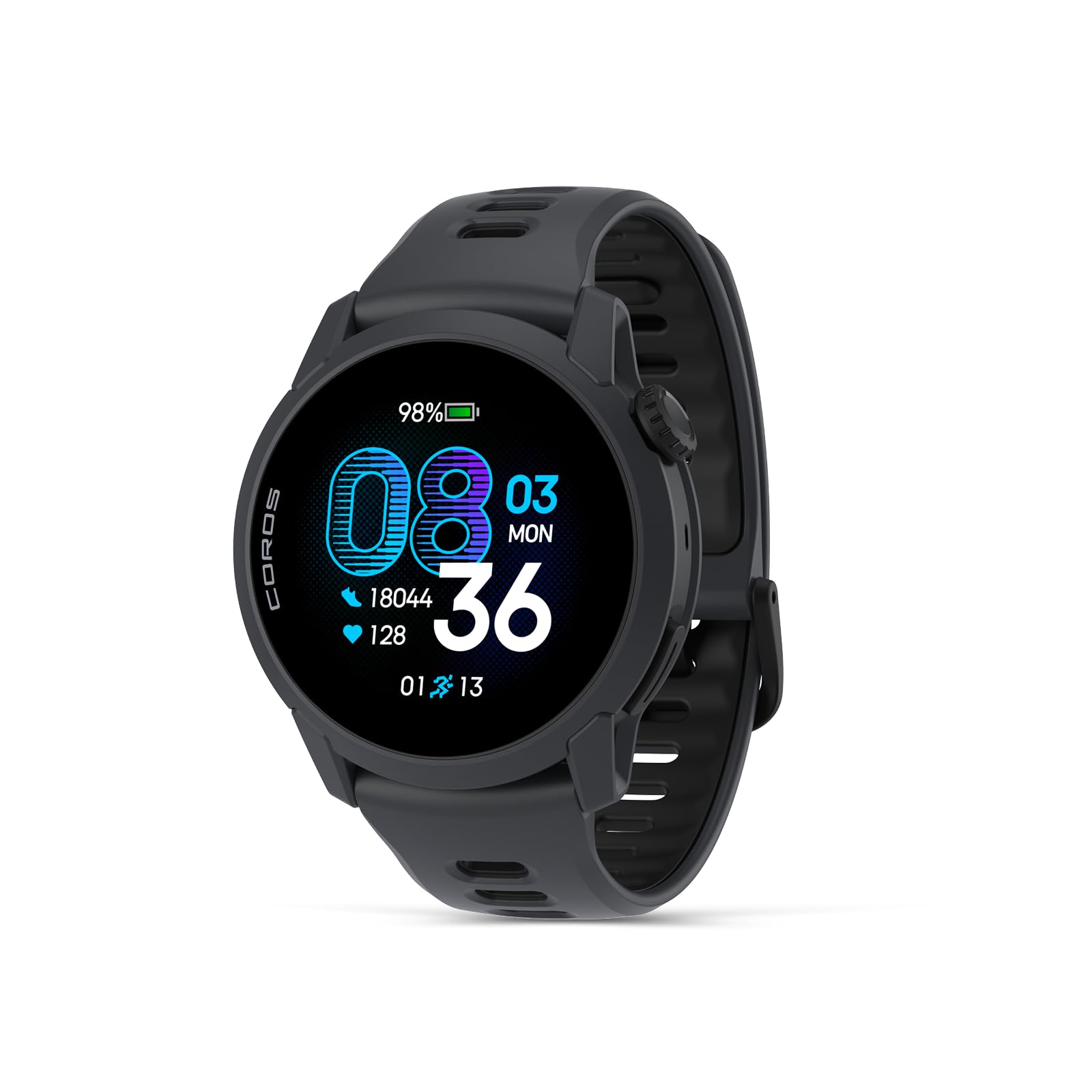
At 32 grams with the nylon band, the COROS PACE 4 is lighter than most energy gels and virtually disappears on the wrist. The 1.2-inch AMOLED offers 164% higher pixel density than the PACE 3, and the auto-brightness ramp handles the transition from dawn to midday glare without a manual tap. The digital crown plus two buttons plus touchscreen gives you three input modes — wet, gloved, or bare-skin — so you never fumble mid-stride.
The 41-hour GPS runtime is the best in this class, and the COROS app refuses to hide metrics behind a subscription. You get recovery time, HRV, sleep stages, training load, and even menstrual cycle tracking for free. The voice features — voice recording for training logs and voice control for setting alarms or creating target workouts — are genuinely useful for post-run reflection without pulling out your phone.
The default silicone band is stiff for the first week, and the 4GB storage limit means you can’t load massive music libraries without curating. The breadcrumb navigation works, but it is not the full turn-by-turn direction you get on Garmin’s higher-end models. For a pure runner who values weight savings and battery autonomy above all, the PACE 4 is the obvious choice.
Why it’s great
- Industry-leading weight of 32g with nylon band
- 41-hour GPS battery covers ultra-distance training
- All advanced metrics included with no subscription
Good to know
- Sapphire glass not available — screen protector recommended
- Offline music storage limited to 4GB
3. Garmin Forerunner 55

The Forerunner 55 is the watch that proves “basic” does not mean “bad.” It uses a sunlight-visible MIP display that stays on all the time without burning battery, and the button-only control means you never have to unlock a wet touchscreen mid-rain. The GPS locks fast — typically under 10 seconds in open sky — and the PacePro feature provides GPS-based pace guidance for a selected course or distance, something Garmin reserves for higher-tier models.
Training tools include race time predictions, finish time estimates, and suggested workouts based on your recovery status. The 20-hour GPS battery is standard, but the MIP display sips so little power that the 14-day smartwatch claim holds up in real use if you skip all-day wrist raise. The watch also tracks intensity minutes, fitness age, and respiration, giving you a surprisingly complete health picture for a sub- device.
The transflective MIP display looks dated next to an AMOLED, and the 1.65-inch screen is smaller than many competitors. There is no music storage, no touchscreen, and no color mapping — exactly the point. If you want a tool that captures every run faithfully without enticing you to scroll, the Forerunner 55 is the purist’s choice.
Why it’s great
- MIP display is always-on with zero battery penalty
- PacePro and race predictor punch above price tier
- Physical buttons work in rain, gloves, and sweat
Good to know
- Display feels low-resolution next to AMOLED watches
- No music, no maps, no touchscreen interaction
4. Amazfit Active 3 Premium
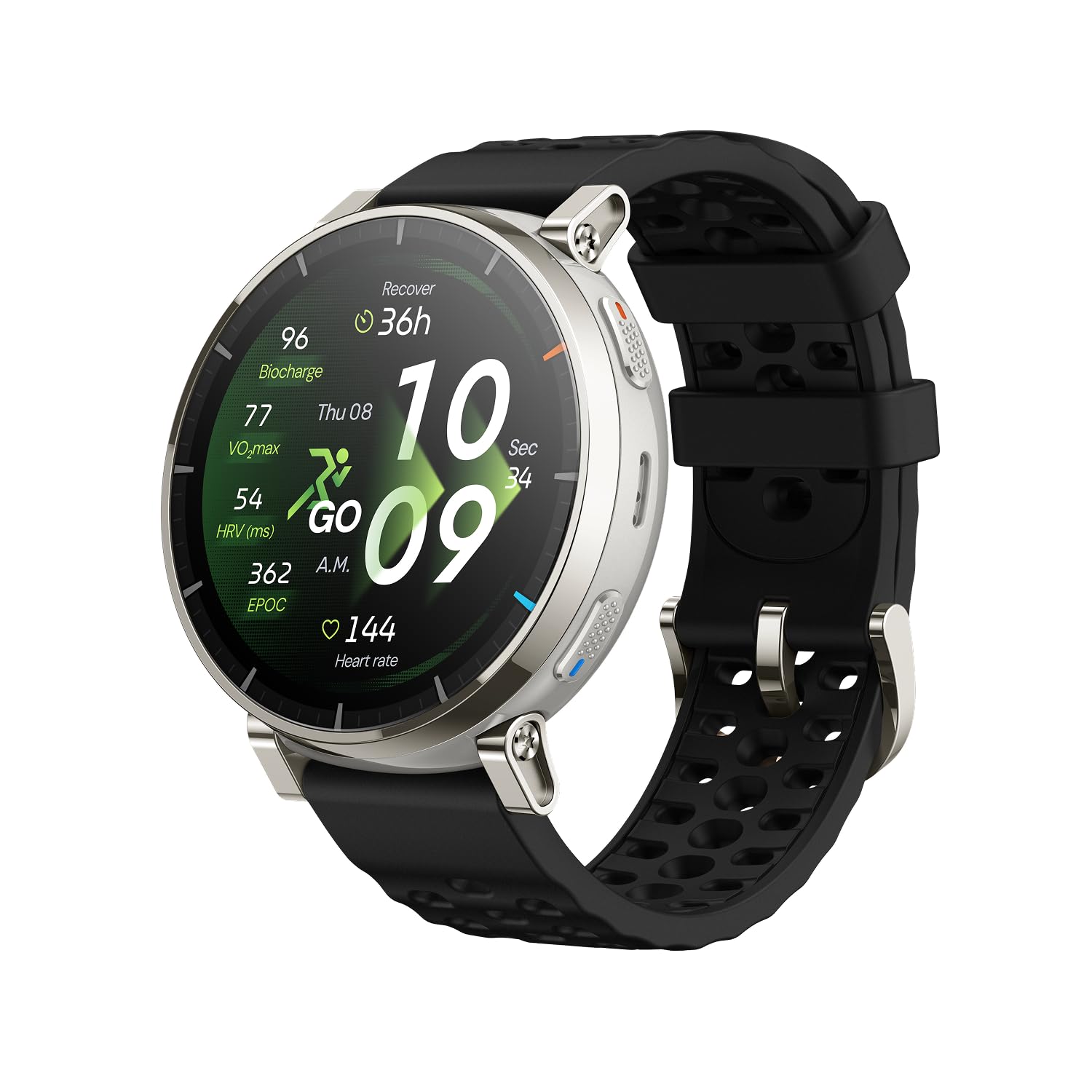
The Amazfit Active 3 Premium punches above its weight with a stainless steel frame and sapphire glass — materials usually found on watches twice its price. The 1.32-inch AMOLED is bright enough for direct sunlight, and the offline maps with turn-by-turn navigation let you explore new routes without phone tethering. The six-satellite GPS system (GPS+GLONASS+Galileo+BeiDou+QZSS+NAVIC) provides the widest satellite pool in this roundup.
The Zepp Coach feature creates personalized 5K-to-marathon training plans that adjust based on your performance, and the structured running workouts help you hit specific pace and heart rate targets. Battery life is a solid 12 days in smartwatch mode, though continuous GPS usage drops to around 20 hours. The BioTracker sensor tracks heart rate, SpO2, stress, and sleep with decent accuracy for the price.
The Zepp app interface is busier than Garmin Connect, and offline map performance can lag when zooming in and out on complex trail networks. The watch faces lean casual rather than sporty, but the standard 20mm band makes third-party strap swapping easy. For runners who want offline navigation and premium build without paying a premium price, this is a compelling dark horse.
Why it’s great
- Sapphire glass and stainless steel at a mid-range price
- Free offline maps with turn-by-turn directions
- Six-satellite system for fastest lock times
Good to know
- Zepp app is less polished than Garmin Connect
- No elevation floor tracking despite step counting
5. COROS PACE Pro

The COROS PACE Pro inherits the PACE 4’s performance DNA and adds global offline topographical maps, a 1.3-inch always-on AMOLED hitting 1500 nits, and the fastest processor in COROS’s lineup — roughly 2x the performance of the PACE 3. The dual-frequency GPS locks onto satellite signals in under three seconds, and the accuracy holds within a few meters even on streets flanked by highrises.
Battery life is the headline: 38 hours in standard GPS mode and 31 hours with dual-frequency enabled, plus 20 days of smartwatch use. The USB-C charging port with the included keychain adapter means you can top up from your laptop or phone charger without hunting for a proprietary cable. The COROS app handles route creation with elevation profiles and syncs them wirelessly to the watch.
The 49-gram weight is slightly heavier than the PACE 4, but the additional battery and mapping hardware justify the trade-off. The touchscreen is responsive, and the digital crown scrolls through menus smoothly. Watch face selection is still more limited than Garmin’s Connect IQ store, and the default silicone band’s texture can irritate during sweaty long runs. For runners who need reliable navigation and refuse to charge mid-week, the PACE Pro hits a sweet spot.
Why it’s great
- Global offline topo maps with turn-by-turn routing
- Industry-best 38-hour GPS battery life
- USB-C charging with keychain adapter included
Good to know
- Limited watch face ecosystem compared to Garmin
- Silicone band can cause minor chafing on long runs
6. Garmin Forerunner 970

The Forerunner 970 is Garmin’s most refined running watch, pairing a bright AMOLED touchscreen with a lightweight titanium bezel and sapphire lens. The built-in LED flashlight provides 360-degree awareness during early-morning or late-night runs, and the multi-band GPS locks onto satellites with sub-second precision even in dense urban canyons. The 560 mAh battery delivers 15 days of smartwatch life and 26 hours of continuous GPS.
Training analysis goes deeper than any other watch here: running economy metrics (with an optional HRM-Pro chest strap), step speed loss, running tolerance, and training readiness based on sleep quality, recovery, and HRV status. The ECG app records a single-lead electrocardiogram on your wrist, and the built-in microphone and speaker let you take phone calls and use your smartphone’s voice assistant without pulling out your phone.
The triathlon auto-transition feature detects sport changes between swim, bike, and run seamlessly. Garmin Coach offers adaptive triathlon and running plans. At this price point, the Forerunner 970 is undeniably premium, but the depth of actionable data — running power from the wrist, dynamic round-trip rerouting, and full-color maps — justifies the investment for serious racers. The learning curve is steeper than entry-level Garmins, and the sheer number of metrics can overwhelm casual runners.
Why it’s great
- Wrist-based running power and economy metrics
- Built-in LED flashlight for safety in low light
- Multi-sport auto-transition for triathlon racing
Good to know
- Requires optional chest strap for advanced running dynamics
- Interface learning curve is steeper than simpler models
7. mibro GS Pro2
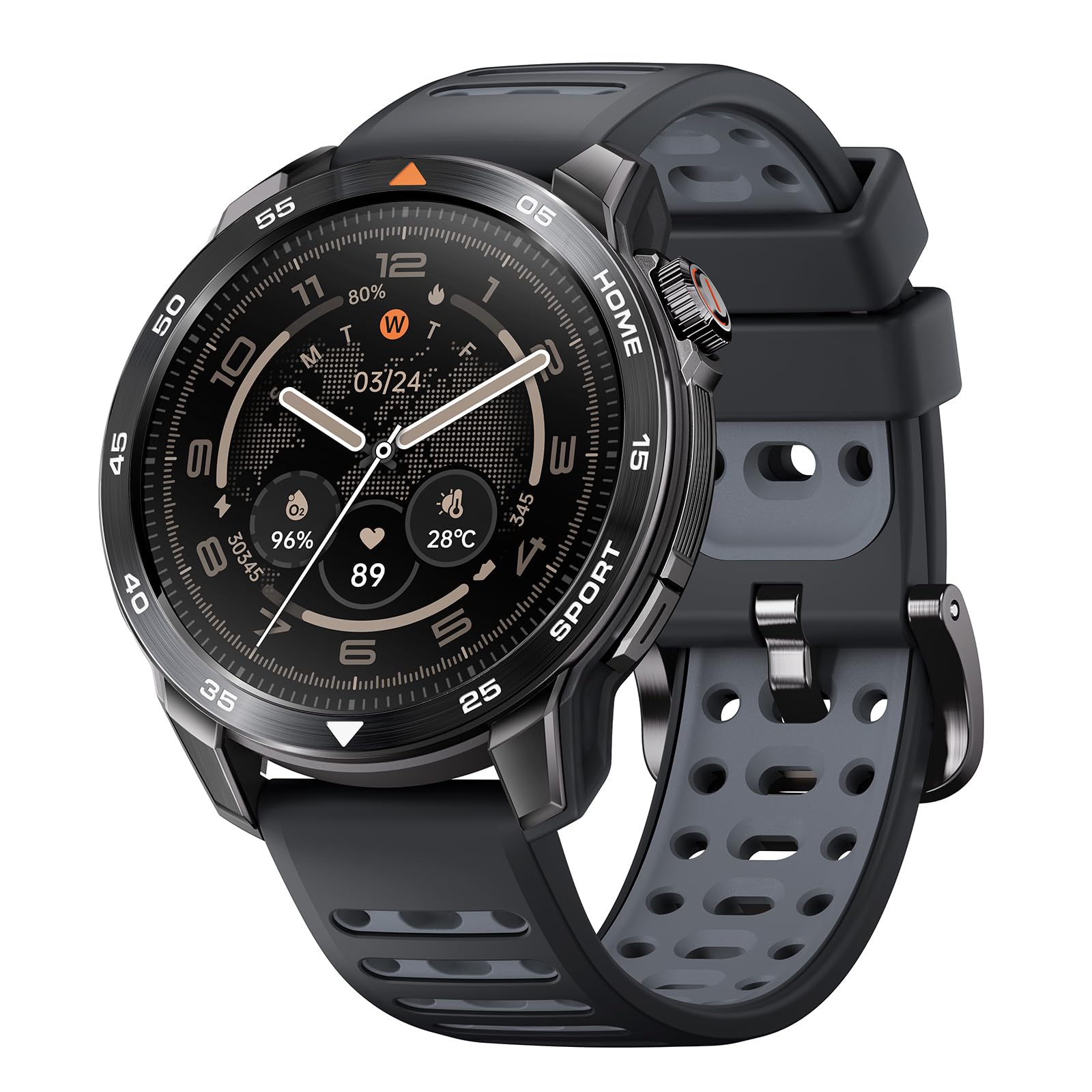
The mibro GS Pro2 is the most surprising entry in this list because it brings dual-band GPS — a feature the Forerunner 55 lacks — at a fraction of the price. The 1.43-inch AMOLED is crisp and colorful, and the 460 mAh battery delivers 20 hours of GPS tracking with 20 days of daily smartwatch use. The 5ATM water resistance means you can take it to the pool or wear it in a downpour without a second thought.
The Mibro Coach feature creates personalized training plans based on your running habits and tracks pace, cadence, and stride length in real time. Post-run analysis includes heart rate, SpO2, training load, and recovery time estimates. With 150+ workout modes, the GS Pro2 covers running, cycling, swimming, and indoor rowing without breaking a sweat. The dual-band GPS provides fast and accurate route tracking even on streets with partial tree cover.
The band is short for larger wrists — several users noted it barely fits a 200mm+ circumference. The sleep tracking and padel shot detection are functional but not as refined as Garmin or COROS implementations. The watch case is 48mm, which some runners find bulky for daily wear. For budget-constrained runners who refuse to compromise on GPS accuracy, this is the best bargain in the category.
Why it’s great
- Dual-band GPS at entry-level pricing
- 460 mAh battery lasts 20 hours in GPS mode
- 5ATM water resistance for pool and rain
Good to know
- Band is too short for larger wrists (265mm max)
- 48mm case feels large for all-day wear
8. Apple Watch Ultra 3
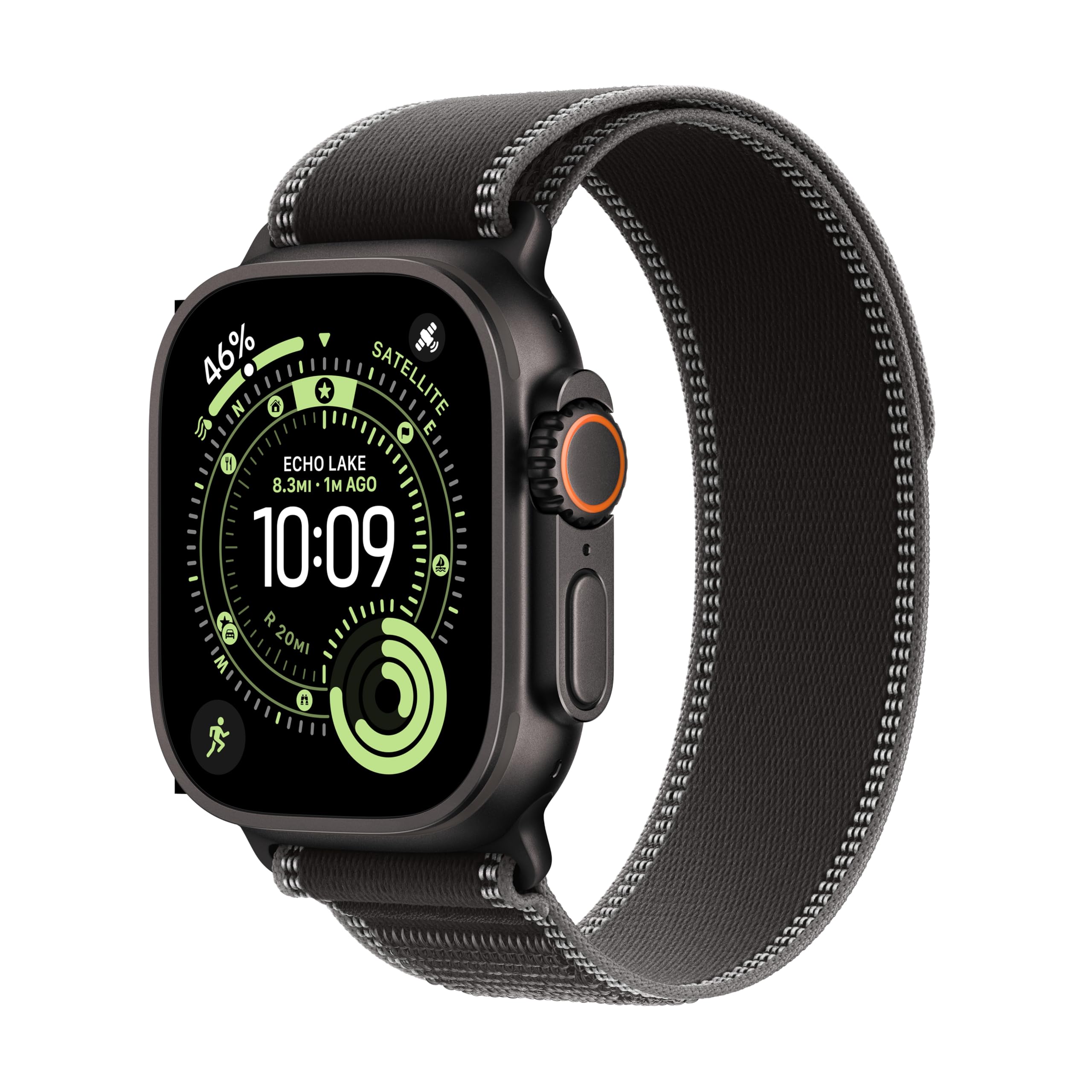
The Apple Watch Ultra 3 is the most capable watch in this roundup if you live in the Apple ecosystem, but it skews toward premium smartwatch rather than a basic running watch. The precision dual-frequency GPS matches dedicated running watches from Garmin and COROS, and the 49mm titanium case with sapphire crystal is virtually indestructible. Water resistance to 100 meters and the customizable Action Button for one-press run starts make it genuinely adventure-ready.
The health suite is unmatched: blood oxygen readings, ECG, sleep apnea detection, temperature sensing, and the Vitals app that summarizes your daily health status. The Workout Buddy feature uses Apple Intelligence from a nearby iPhone to provide real-time encouragement and form tips. Satellite SOS and fall detection mean you can run remote trails without worrying about cell service. Battery life hits 42 hours normal use and 72 hours low power mode — the best of any Apple Watch.
The catch is that the Ultra 3 costs significantly more than any other watch here, and its daily charging cadence (roughly every two days with GPS workouts) still lags behind Garmin’s two-week claims. The cellular model requires a separate plan, and many advanced running metrics are locked behind third-party apps like WorkOutDoors or TrainingPeaks. For runners deeply invested in Apple’s ecosystem who want safety features and multi-sport capability in a single device, the Ultra 3 is the ultimate — but “basic” it is not.
Why it’s great
- Best-in-class safety features: satellite SOS and crash detection
- Dual-frequency GPS accuracy rivals dedicated running watches
- 100m water resistance for serious water sports
Good to know
- Requires daily or every-other-day charging with GPS usage
- Running metrics depth requires third-party app investment
FAQ
Can a basic running watch track my sleep accurately?
Do I need a chest strap for heart rate accuracy?
How important is water resistance for a basic running watch?
What is the best basic running watch for narrow wrists?
Final Thoughts: The Verdict
For most runners, the best basic running watch is the Garmin Forerunner 165 because it bundles adaptive training plans, a brilliant AMOLED, and 19-hour GPS in a package that does not require a subscription or chest strap. If you want the lightest possible watch that disappears on your wrist, grab the COROS PACE 4. And for the purest running experience with physical buttons and a permanent always-on display that never begs for a charger, nothing beats the Garmin Forerunner 55.