
The gap between a standard gaming headset and a true audiophile-grade one isn’t subtle—it’s the difference between hearing an explosion and feeling the room shake around you. For competitive gamers and music lovers alike, the wrong cans can mask enemy footsteps, muddy critical audio cues, and fatigue your ears within an hour. This guide cuts through the marketing noise to isolate the headsets that deliver studio-grade clarity, pinpoint spatial imaging, and genuinely comfortable long-session wear without compromise.
I’m Min — the co-founder and writer behind Gadgets Feed. I’ve spent hundreds of hours analyzing frequency response graphs, driver technologies, impedance curves, and real-world user feedback across nine of the most serious contenders in the audiophile-gaming crossover space to bring you a comparison that prioritizes measurable performance over flashy RGB claims.
Whether you’re deep into competitive shooters, immersive RPGs, or critical music listening, finding the right pair demands more than brand loyalty. This is the definitive guide to choosing the very best audiophile gaming headset for your ears, budget, and setup.
How To Choose The Best Audiophile Gaming Headset
Choosing an audiophile-grade gaming headset requires understanding the compromises between studio reference tuning and real-time in-game audio cues. The right headset isn’t just the most expensive one—it’s the one matching your impedance requirements, preferred driver type, and whether you need a boom microphone on-cable or a standalone mod-mic solution. The following factors represent the most critical decision points separating entry-level upgrades from true high-fidelity setups.
Driver Technology: Dynamic vs. Planar Magnetic
Dynamic drivers, found in the beyerdynamic TYGR 300 R and DT 990 Pro X, are the traditional workhorses. They use a moving voice coil and cone diaphragm to produce sound, offering punchy bass and good efficiency at lower impedance levels. Planar magnetic drivers, as used in the ASUS ROG Kithara and Audeze Maxwell 2, use a thin, flat diaphragm suspended between magnets. This design yields lower distortion, faster transient response, and superior detail retrieval across the frequency spectrum—but typically requires more power and adds significant weight to the headset. Your choice hinges on whether you prioritize bass slam and compatibility (dynamic) or microscopic detail and control (planar).
Impedance, Sensitivity, and Amplification Needs
Impedance (measured in ohms, Ω) and sensitivity (measured in dB/mW) determine how much power your headset needs to reach a given volume. Low-impedance headsets like the MEZE AUDIO 109 PRO (40Ω) or Sony INZONE H9 II (low impedance, dedicated wireless dongle) can be driven directly by a phone, laptop, or console controller. Higher-impedance models like the beyerdynamic DT 990 Pro X (48Ω) or Sennheiser HD 490 PRO (150Ω) demand a dedicated headphone amplifier or DAC to reach their full dynamic range and volume potential. Buying a high-impedance headset without an amp is like owning a sports car you can only drive in first gear—you’ll hear it, but you won’t unlock its capabilities.
Open-Back vs. Closed-Back Acoustics
Open-back headsets, which encompass the vast majority of audiophile-grade gaming options, feature perforated ear cups that let air and sound pass through. This design creates a vastly wider, more natural soundstage with superior instrument separation and spatial imaging—critical for pinpointing enemy positions in shooters. The trade-off is zero sound isolation; you will hear your surroundings, and people nearby will hear your game audio. Closed-back options like the Sony INZONE H9 II or SteelSeries Arctis Nova Pro Omni provide passive noise isolation and Active Noise Cancellation (ANC) but at the cost of a narrower, more intimate soundstage. For dedicated single-player gamers in a private room, open-back wins every time. For shared spaces or competitive LAN environments, closed-back is the practical choice.
Quick Comparison
On smaller screens, swipe sideways to see the full table.
| Model | Category | Best For | Key Spec | Amazon |
|---|---|---|---|---|
| Audeze Maxwell 2 | Wireless Hybrid | Best Overall Wireless | Planar magnetic, 80hr battery | Amazon |
| ASUS ROG Kithara | Planar Open-Back | Best Entry-Level Planar | 100mm planar magnetic drivers | Amazon |
| Sennheiser HD 490 PRO | Studio Reference | Best for Competitive Imaging | Open-frame architecture, low THD | Amazon |
| Sony INZONE H9 II | Wireless ANC | Best Noise-Cancelling Option | WH-1000XM6 drivers, 260g | Amazon |
| beyerdynamic TYGR 300 R | Open-Back Dynamic | Best Value Open-Back | Dynamic driver, lightweight | Amazon |
| Sennheiser HD 660S2 | Reference Dynamic | Best for Vocal Clarity | 42mm transducer, deep sub-bass | Amazon |
| beyerdynamic DT 990 Pro X | Studio Dynamic | Best Wide Soundstage | STELLAR.45 driver, 48Ω | Amazon |
| MEZE AUDIO 109 PRO | Premium Open-Back | Best Premium Build & Sound | 50mm walnut wood, 40Ω | Amazon |
| SteelSeries Arctis Nova Pro Omni | Hi-Res Wireless | Best Multi-Platform Wireless | 96kHz/24bit wireless, ANC | Amazon |
In‑Depth Reviews
1. Audeze Maxwell 2
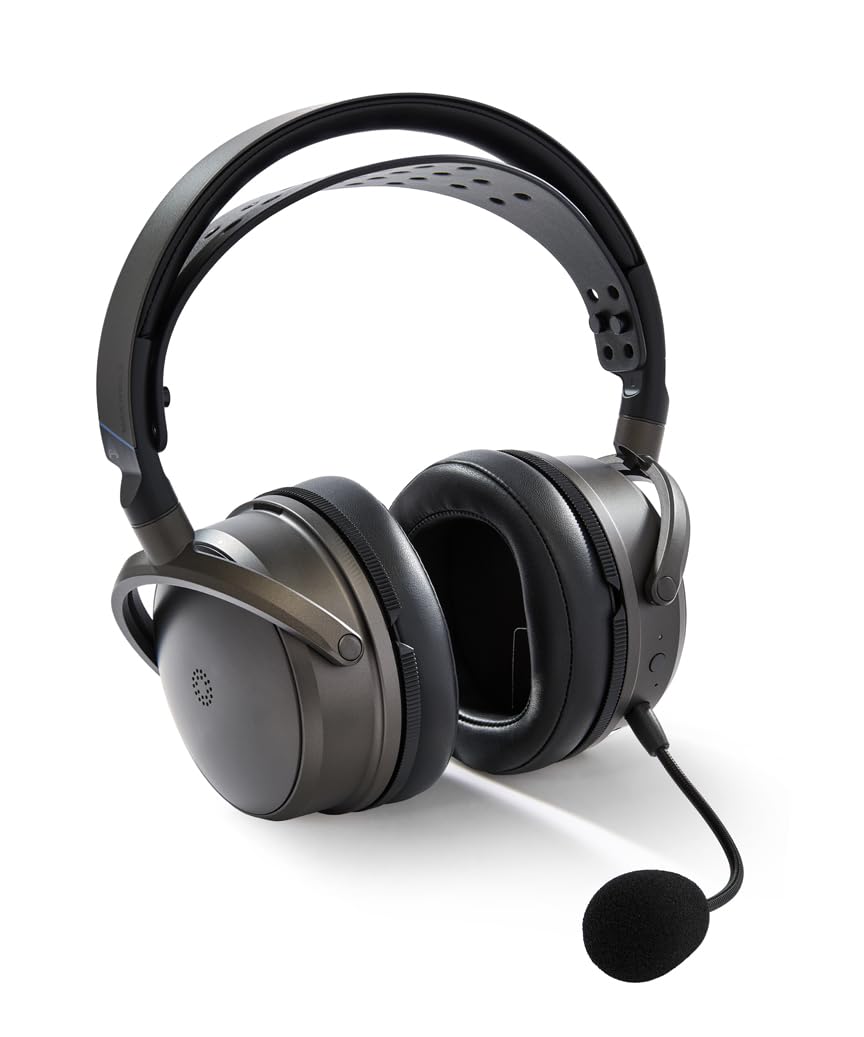
The Audeze Maxwell 2 is the rare hybrid that genuinely excels both as a gaming headset and a high-fidelity listening device. Its patent-pending SLAM technology—borrowed from Audeze’s flagship LCD-S20—delivers heightened spatial immersion and punchier bass response that transforms grenade impacts into visceral, low-frequency events. The 80-hour battery life effectively removes charging anxiety, even during marathon sessions, and the low-latency USB-C dongle keeps audio perfectly synced for competitive shooters.
On the wireless front, Bluetooth 5.3 with LDAC and LE Audio allows you to mix game audio with high-quality music from your phone simultaneously, while the improved microphone processing doubles the bandwidth of the original Maxwell for noticeably clearer comms. The build quality is robust, with aluminum and steel components that feel more like professional studio gear than a gaming peripheral, though the weight—a common trade-off with planar magnetic designs—may cause fatigue during sessions exceeding three hours.
For players who demand the absolute highest audio resolution in a wireless form factor without sacrificing competitive latency, the Maxwell 2 sets a new benchmark. The passive isolation is effective enough to block ambient noise at home, and the companion app offers subtle but valuable EQ adjustments for footstep boosting or bass shelving. It is the most complete package available right now for anyone who refuses to compromise between wireless convenience and audiophile sound quality.
Why it’s great
- Planar magnetic clean detail with SLAM-enhanced bass punch
- 80-hour battery eliminates daily charging dependency
- Simultaneous USB + Bluetooth audio mixing
Good to know
- Heavy construction may cause neck fatigue in long sessions
- No hardware ANC; relies on passive isolation only
2. ASUS ROG Kithara
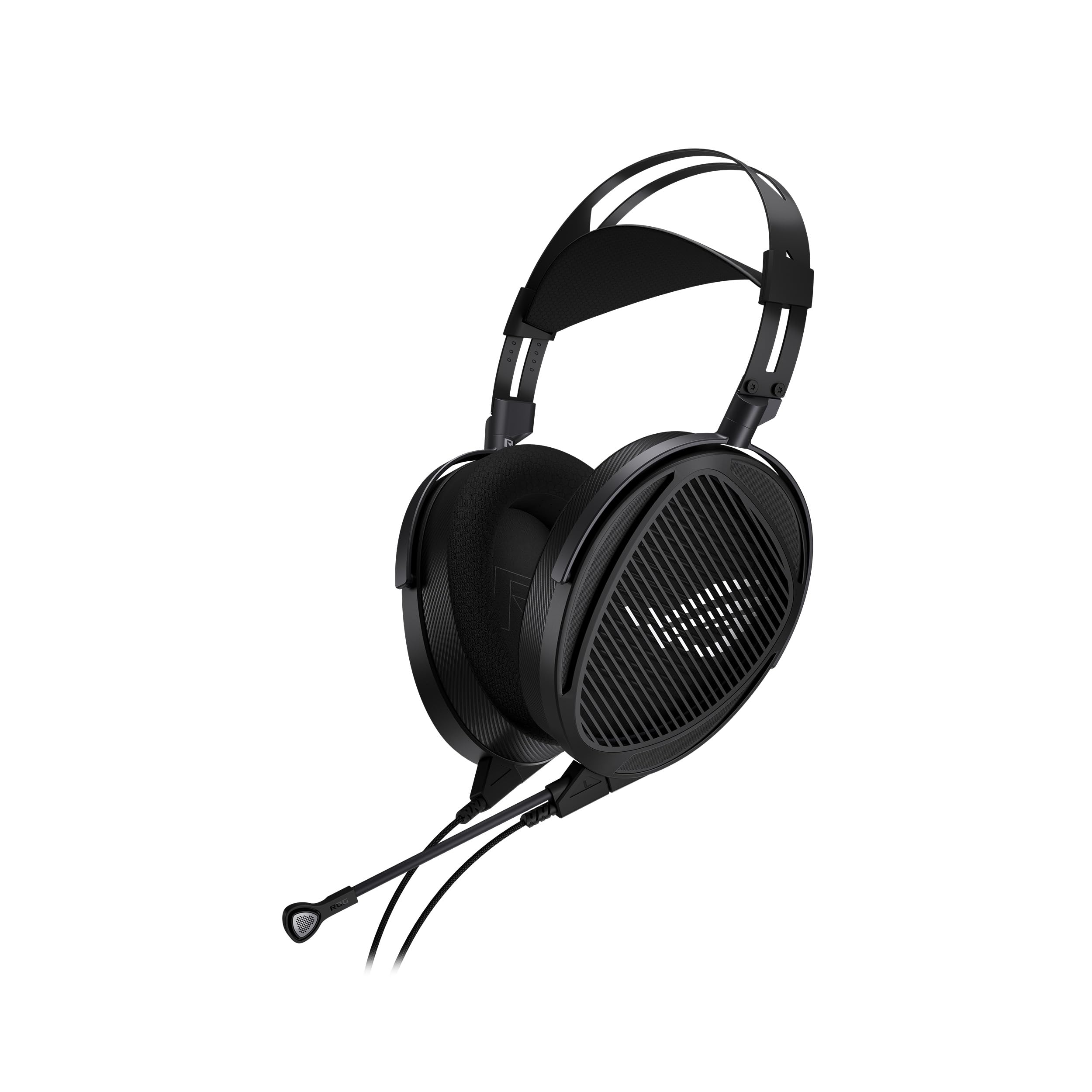
The ASUS ROG Kithara is a direct entry from ROG into the audiophile-gaming crossover, leveraging ROG-tuned 100mm HIFIMAN planar magnetic drivers. This is the same driver architecture that powers kilobuck reference headphones, but tuned here for gaming scenarios that demand vivid detail and exceptionally low distortion across the entire frequency range. The open-back architecture delivers a spacious, natural soundstage with clear separation between bass, mids, and treble, making it relatively easy to pinpoint enemy positions even in chaotic firefights.
The included on-cable full-band MEMS boom microphone offers a wide 20Hz–20kHz response with high SNR for clean, lifelike communication that surpasses most built-in headset mics. The kit comes with multiple connection options—4.4mm balanced, 3.5mm single-ended, 6.3mm adapter, and a USB-C adapter—covering every setup from a phone to a high-end DAC/amp stack. Build quality is solid with an eight-level adjustable headband and metal hinges, though some users note a loose clamp force and slightly awkward earcup angle out of the box.
Where the Kithara stumbles is its reliance on external amplification; while it reaches sufficient volume from a PS5 controller or phone at full gain, it truly sings only when paired with a dedicated DAC/amp. The mic quality, while better than typical gaming headsets, doesn’t quite match a standalone mod-mic solution. For the price, however, it offers an entry-level planar magnetic experience that rivals headphones costing twice as much, making it a compelling option for gamers ready to step into high-fidelity audio without upgrading their entire setup.
Why it’s great
- Audiophile-grade planar magnetic drivers at a mid-range price point
- Versatile connectivity with balanced and single-ended cables included
- Lightweight and comfortable for larger head shapes
Good to know
- Benefits significantly from an external DAC/amp
- Mic quality is decent but not top-tier for pro streaming
3. Sennheiser HD 490 PRO

The Sennheiser HD 490 PRO is a studio reference headphone that has been adopted by competitive gamers for its exceptionally precise spatial imaging. Its open-frame architecture reduces total harmonic distortion (THD) and minimizes resonance to a degree that makes in-game audio cues almost transparently clear—footsteps, reloads, and voice lines exist in their own distinct acoustic space without muddying into each other. The uncolored frequency response from 5 to 36,000 Hz ensures you hear exactly what the game engine outputs, without artificial bass boosts or treble peaks.
Comfort is among the best in class, with multi-directional ear cups and two included sets of pads (mixing and producing) allowing you to tailor the sound signature and fit. The headset is lightweight and glasses-friendly, with a clamp force that remains secure without being fatiguing over 8+ hour sessions. The detachable cable uses a 4-pin mini-XLR connector on both sides, and the patented cable coil blocks microphonic noise effectively. It can be driven well by a laptop or phone, though dedicated amplification improves headroom.
For competitive FPS players, the HD 490 PRO’s imaging is a revelation—users report improved survivability in Call of Duty and Battlefield after switching from consumer gaming headsets. The main downside for pure gaming use is the absence of any integrated microphone; you will need a separate mod-mic or desktop microphone. Additionally, the soundstage is more intimate than some open-back rivals, prioritizing precision over cavernous width. For gamers who prioritize accurate positional audio above all else, this is the top-tier wired choice.
Why it’s great
- Industry-leading spatial imaging for competitive shooters
- Extremely comfortable for marathon gaming sessions
- Low-impedance design is easy to drive without a dedicated amp
Good to know
- No integrated microphone; requires separate mic solution
- Proprietary ear pads are expensive to replace
4. Sony INZONE H9 II
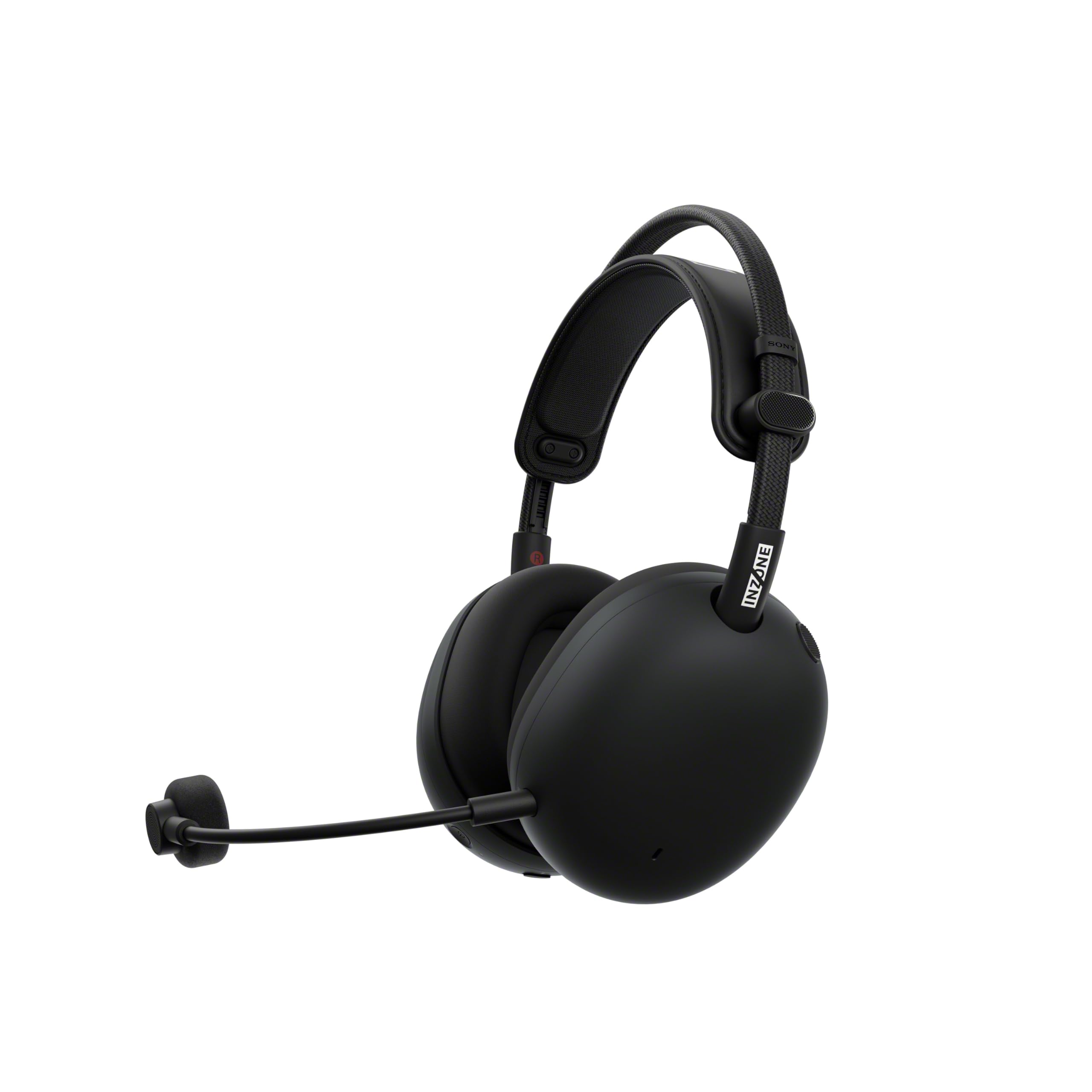
The Sony INZONE H9 II makes a strong case for the best noise-cancelling gaming headset by leveraging the same driver unit found in Sony’s flagship WH-1000XM6 headphones. This means you get full-spectrum clarity from distant footsteps to deep sub-bass rumbles, paired with Sony’s mature Active Noise Cancellation algorithm that blocks out distractions during intense gaming sessions. The headset weighs just 260 grams, making it one of the lightest options in this category, with a pressure-balanced design that disappears on your head over extended play.
Connectivity is comprehensive with ultra-low latency 2.4GHz wireless via USB-C dongle, Bluetooth 5.3, and a 3.5mm wired option for Xbox compatibility. The detachable cardioid boom mic features AI-powered noise rejection that effectively filters keyboard clatter and room ambiance, keeping comms clean. FPS EQ presets developed with Fnatic’s VALORANT and Apex Legends teams are available through the INZONE Hub software, allowing you to optimize for competitive shooters without manual tweaking. The quick-charge feature provides one hour of play from just five minutes of charging.
Where the H9 II falls short for purists is in raw audio fidelity compared to open-back wired competitors. The closed-back design inherently limits soundstage width, and some experienced listeners find the stock sound signature more focused on bass impact than midrange transparency. The battery life of approximately 30 hours, while respectable, is outclassed by the Maxwell 2’s 80-hour runtime. Nevertheless, for gamers who need ANC in a shared environment and value Sony’s tuning expertise, this is the most polished wireless ANC option available.
Why it’s great
- Industry-leading ANC from Sony’s flagship tech
- Extremely lightweight at 260g for long-session comfort
- Versatile wired/wireless connectivity for all platforms
Good to know
- Closed-back design limits soundstage compared to open-back options
- Battery life lower than top wireless competitors
5. beyerdynamic TYGR 300 R

The beyerdynamic TYGR 300 R is the budget-friendly entry point into audiophile-grade gaming audio that doesn’t sacrifice essential qualities. Designed from the ground up for gaming, it features an open-back circumaural design with a dynamic driver tuned specifically for spatial awareness—footsteps, explosions, and environmental cues are rendered with clarity that immediately sounds a tier above mainstream gaming headsets from Logitech or Razer. The low bass is intentionally restrained to avoid masking higher frequencies, which is precisely what you want for competitive shooters.
Wearing comfort is where the TYGR 300 R truly excels; at under 300 grams with soft velour ear pads, it remains comfortable for 5+ hour sessions without hot spots or clamp fatigue. Build quality is typical beyerdynamic—solid plastic and metal construction that feels durable despite the lightweight design. The sound quality extends well into music listening, offering a balanced profile that works for orchestral scores, EDM, and vocals. It connects via a 3.5mm jack with a 6.3mm adapter included, working directly with PC, PS5, and laptop controllers.
The major limitation is the short stock cable, which almost certainly requires a 3.5mm extension for desktop use. Additionally, the sound signature, while excellent for positional audio, lacks the sub-bass weight and micro-detail retrieval of planar magnetic models. There is no integrated microphone, so a separate mod-mic is necessary. For less than , however, the TYGR 300 R offers an unmatched value proposition: genuine beyerdynamic tuning, professional-grade comfort, and a soundstage that betters many headsets costing twice as much.
Why it’s great
- Excellent positional audio for competitive gaming at a low price
- Ultra-lightweight design with exceptional long-wear comfort
- Works directly with consoles without an amp
Good to know
- Short included cable needs an extension for desktop use
- No integrated mic; requires separate mod-mic solution
6. Sennheiser HD 660S2
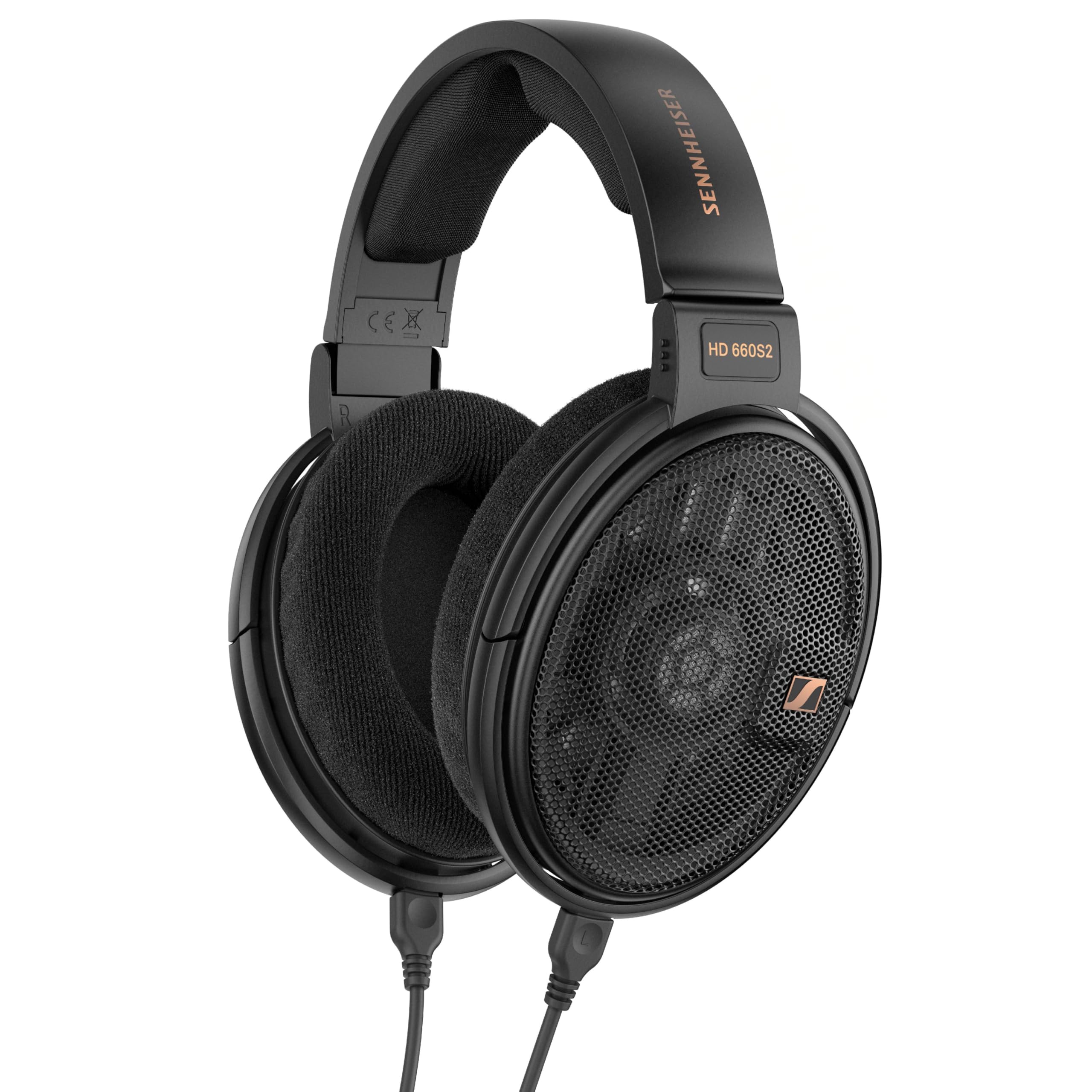
The Sennheiser HD 660S2 takes everything audiophiles love about the HD 600 series and injects controlled sub-bass extension without muddying the mids. The 42mm dynamic driver with an ultra-light aluminum voice coil delivers detailed highs and rich, natural mids that make dialogue in narrative games sound lifelike and intimate. The sub-bass response—down to 27.5 Hz—adds weight to explosions and engine rumbles without overwhelming the critical midrange where footsteps and environmental cues reside. It is a refined tuning that rewards critical listening.
Comfort is a strong point, with plush ear cushions and a circumaural open-back design that allows for breathable, fatigue-free sessions. The build quality is classic Sennheiser, with components crafted in Germany and Ireland, though the plastic construction may feel less premium than metal alternatives. The headset includes both a 6.3mm cable and a balanced 4.4mm cable, making it compatible with a wide range of DAC/amp setups. It benefits noticeably from a dedicated amp, even though its 120Ω impedance is manageable on some laptops and phones.
For gamers who value vocal clarity and organic timbre, the HD 660S2 excels where other headsets sound artificial or hollow. However, the soundstage is narrower compared to the HD 490 PRO or DT 990 Pro X, making it less ideal for hyper-competitive shooters where extreme spatial separation matters. The lack of an integrated microphone and the relatively short stock cables are practical downsides. At around , it is a specialist tool for players who prioritize musicality and vocal clarity in their gaming experience.
Why it’s great
- Natural, lifelike mids perfect for dialogue and narrative games
- Controlled sub-bass extension without bleed into midrange
- Includes balanced 4.4mm cable for higher-end DAC setups
Good to know
- Narrower soundstage than open-back competitors
- Benefits significantly from a dedicated amplifier
7. beyerdynamic DT 990 Pro X

The beyerdynamic DT 990 Pro X is the latest evolution of a studio legend, now featuring the STELLAR.45 driver that delivers a wide, natural soundstage with highly detailed spatial imaging. The open-back design allows for a sense of air and separation that few gaming-specific headsets can match, making it an excellent choice for competitive shooters where hearing the exact position and distance of footsteps is critical. The frequency response stretches from 5 to 40,000 Hz, revealing subtle mix imperfections and audio details that cheaper headsets mask entirely.
The 48Ω impedance is a smart upgrade from the original DT 990 Pro’s 250Ω, allowing the Pro X to be driven effectively by laptops, phones, and console controllers while still maintaining excellent dynamics and low distortion. The detachable cable with locking mini-XLR connector is a welcome improvement for reliability, and the velour ear pads remain among the most comfortable in the industry for extended wear. Build quality is classic beyerdynamic—robust, serviceable, and built to last for years with replaceable parts.
Some listeners find the stock tuning slightly bass-heavy for competitive FPS, though this is easily corrected with EQ. The velour pads can cause heat buildup after an hour or two, and the clamping force may be tight for users with larger head shapes initially. There is no integrated microphone, necessitating a separate solution for voice chat. At around , the DT 990 Pro X offers a taste of high-end studio monitoring that directly translates to better spatial awareness in games, making it a strong mid-range wired contender.
Why it’s great
- Wide, airy soundstage with excellent spatial imaging for competitive gaming
- 48Ω impedance is easy to drive on most devices
- Detachable mini-XLR cable and fully serviceable build
Good to know
- Stock tuning may favor bass; responsive to EQ
- Velour pads can feel warm during long sessions
8. MEZE AUDIO 109 PRO

The MEZE AUDIO 109 PRO is a masterpiece of industrial design and acoustic engineering that sets a new standard for premium wired audiophile gaming headsets. The genuine walnut wood earcups are not merely cosmetic—they contribute to the headphone’s natural acoustic resonance, reducing unwanted reflections and distortion. The 50mm dynamic driver delivers a sound that is simultaneously clear, detailed, and emotionally engaging, with a slight warmth that makes music and game audio sound rich without becoming muddy. The self-adjusting headband distributes weight evenly, and the manganese spring steel outer band ensures durability without excessive clamping force.
With an impedance of only 40Ω, the 109 PRO is remarkably easy to drive, reaching excellent volume levels directly from a phone, laptop, or PS5 controller without any external amplification. This makes it a rare high-end headphone that actually performs at its peak in a standard gaming setup. The included accessories are generous: a hard EVA carrying pouch, two detachable TPE OFC cables (1.5m and 3m), and a 3.5mm to 6.3mm adapter. Build quality is exceptional, with every component designed to be replaceable rather than glued, extending the lifespan of the headset indefinitely.
The critical caveat for gamers is the specificity of its tuning. The 109 PRO excels with orchestral scores, classical music, and acoustic genres, offering an open and airy soundstage that is spacious and immersive. However, some listeners report that the highs can be sibilant on certain tracks, and the bass, while punchy for an open-back, does not match the sub-bass weight of planar magnetic competitors. This is not the most analytical or neutral headphone in this guide; it prioritizes musicality and emotional engagement over clinical accuracy. For gamers who also use their headset for critical music listening and value premium craftsmanship, the 109 PRO is a compelling luxury option.
Why it’s great
- Stunning build quality with genuine walnut wood and replaceable parts
- Easy to drive from any source without an amplifier
- Rich, musical sound signature with expansive soundstage
Good to know
- Highs may sound sibilant to sensitive listeners
- Lack clinical neutrality that some competitive gamers prefer
9. SteelSeries Arctis Nova Pro Omni
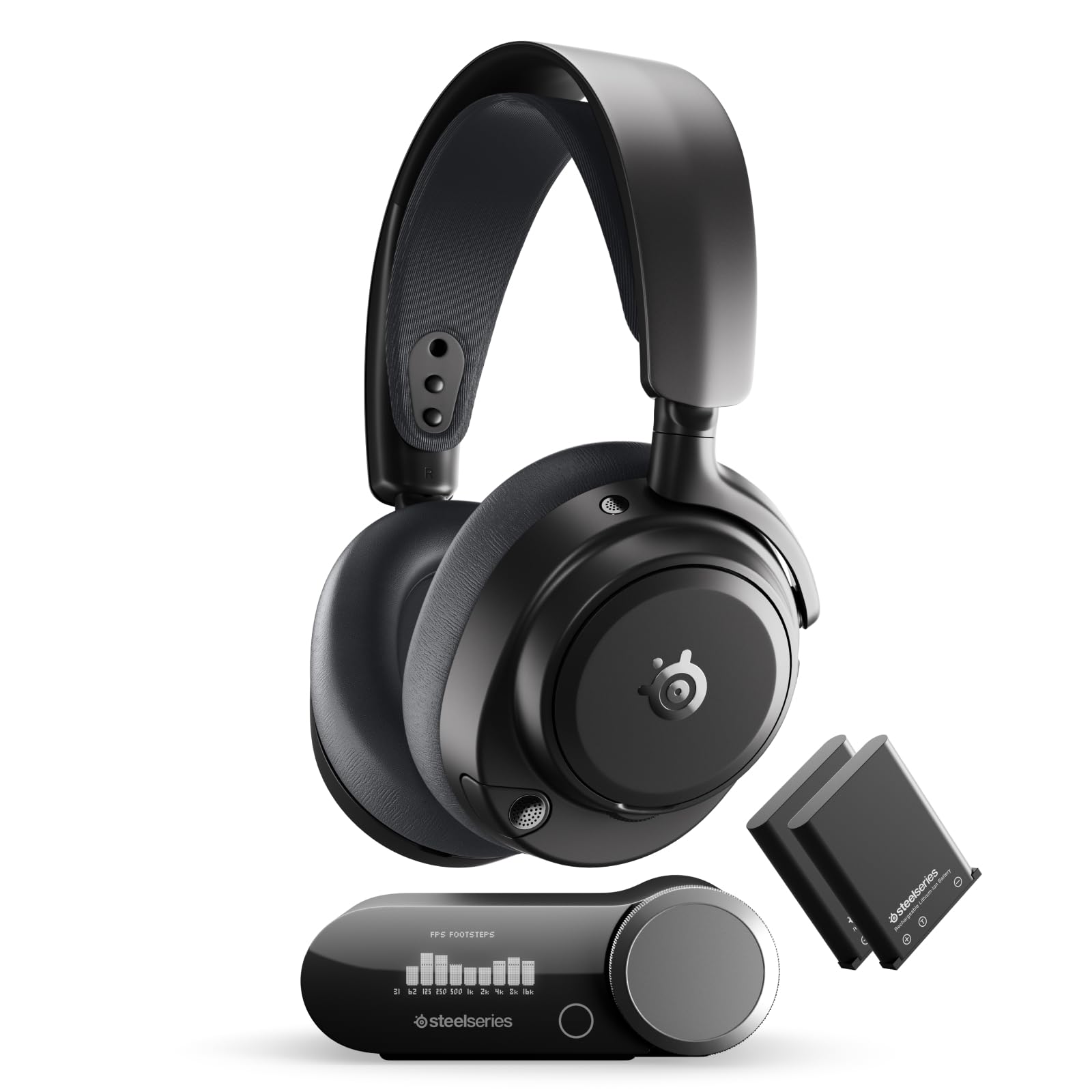
The SteelSeries Arctis Nova Pro Omni is a hi-res wireless solution that emphasizes ecosystem flexibility above all else. With official Hi-Res Wireless certification at 96kHz/24bit and OmniPlay support for up to five devices simultaneously—including PC, PlayStation, Xbox, and Switch—it is the ultimate headset for multi-platform players. The dual-battery system with a hot-swappable spare means you can swap in a fully charged battery instantly when one runs out, achieving virtually unlimited runtime. The ClearCast Pro microphone with AI Noise Rejection shields up to 96% of background noise, making comms crystal clear in noisy environments.
Audio quality is driven by hi-res neodymium magnetic drivers tuned for clarity, with improved processing power enabling the Active Noise Cancellation to block up to 40% more background noise than key competitors according to independent lab testing. The ability to mix audio from four sources simultaneously—game audio from PC via 2.4GHz and music from a phone via Bluetooth, for example—allows for seamless multitasking. The build quality is excellent, with a metal headband and fabric/leatherette ear cushions that feel premium and remain comfortable over glasses.
For the price, the Nova Pro Omni delivers exceptional versatility but does not compete with dedicated open-back audiophile headsets in raw soundstage width or micro-detail retrieval. The ANC, while effective, does not match Sony’s industry-leading implementation. The headset also relies on a proprietary USB transmitter, which can be a point of failure if lost. For players who need one headset to cover all their devices, comfort, and comms without sacrificing audio quality, the Arctis Nova Pro Omni is the most polished and feature-rich wireless option on the market.
Why it’s great
- OmniPlay supports five devices with seamless switching
- Swappable dual-battery system for unlimited playtime
- Hi-Res Wireless certification with excellent ANC
Good to know
- Soundstage is more intimate than open-back wired alternatives
- ANC is good but not class-leading compared to Sony
FAQ
Do I need a separate DAC/amp for an audiophile gaming headset?
Why do most audiophile gaming headsets not include a microphone?
Open-back vs. closed-back: which is better for competitive gaming?
What is the ideal impedance for a gaming headset without an amp?
Does higher price always mean better sound quality for gaming?
Final Thoughts: The Verdict
For most users, the best audiophile gaming headset winner is the Audeze Maxwell 2 because it combines planar magnetic detail, wireless freedom, and 80-hour battery life without compromising competitive latency. If you want a wired open-back headset with studio-grade imaging for competitive shooters, grab the Sennheiser HD 490 PRO. And for a premium build and emotional musicality that doubles as an incredible headphone for music, nothing beats the MEZE AUDIO 109 PRO.