
A bad insole turns a scenic summit into a painful death march. Thin factory foam that compresses after two miles, a complete lack of arch support, and a slippery heel cup that lets your foot slide forward on every downhill step are the fastest way to destroy a day on the trail. Your hiking boots already carry the weight; the insole is what distributes that load across your foot, absorbing shock and keeping your alignment correct mile after mile.
I’m Min — the co-founder and writer behind Gadgets Feed. My research for this guide involved cross-referencing hundreds of verified buyer reviews to isolate which insoles deliver genuine arch support, durable cushioning, and real shock absorption under heavy packs and rough terrain.
If your boots feel fine in the parking lot but leave your feet screaming after mile three, the solution isn’t new boots. It’s the right pair of boot insoles for hiking engineered to handle the specific demands of uneven ground, heavy loads, and long descents.
How To Choose The Best Boot Insoles For Hiking
The wrong insole can shift inside your boot, create pressure points, or collapse entirely under a heavy pack. Selecting the right one comes down to matching your foot mechanics with the insole’s structural design, not just picking the thickest foam you can find.
Arch Height and Support Profile
Your foot’s arch determines how force transfers from heel to toe. Low arches need support that resists collapse into overpronation; high arches need cushioning that fills the gap under the midfoot. Medium-arch insoles fit the majority of hikers, but a mismatch here causes knee strain, plantar fascia irritation, and instability on uneven terrain. Look for insoles that offer distinct low, medium, or high profiles rather than a one-size-fits-all curve.
Heel Cup Depth and Stability
A shallow heel cup lets your foot slide laterally on side slopes and forward on descents, creating hot spots and blisters around the heel counter. A deep, structured heel cup wraps the calcaneus and locks the foot in place, improving balance under a backpack and reducing the risk of ankle rolls. The best hiking insoles use a rigid U-shaped heel cup, not just foam that flattens on the first long downhill.
Material Composition and Durability
Basic EVA foam compresses within a season, leaving you with a paper-thin slab that provides zero shock absorption. Premium insoles combine a rigid base layer (often TPU or a cork blend) with multiple densities of foam in the heel and forefoot. This layered construction maintains structural integrity for 500+ miles, while a moisture-wicking top layer prevents the bacterial growth that turns insoles into odor factories after a few sweaty hikes.
Quick Comparison
On smaller screens, swipe sideways to see the full table.
| Model | Category | Best For | Key Spec | Amazon |
|---|---|---|---|---|
| SOLE Performance Thick Insole | Premium | Heat-moldable custom fit | ReCORK base, 4.8mm thick | Amazon |
| PowerStep Pinnacle Hiker | Premium | Maximum arch support | Semi-rigid arch, deep heel cup | Amazon |
| CURREX HikePro | Premium | Activity-specific shock absorption | Anti-slip heel, air vent EVA | Amazon |
| Protalus T-100 Elite | Premium | Whole-body alignment | Patented alignment cradle | Amazon |
| Cloudflo Plantar Fasciitis Insoles | Mid-Range | Heel pain relief, all-day standing | TPU shell, Ortholite cushioning | Amazon |
| Professional Heavy Duty Support | Mid-Range | Users over 230 lbs | Double PORON cushioning | Amazon |
| Dr. Scholl’s Heavy Duty Support | Budget-Friendly | Budget-friendly wide-foot option | Shock-absorbing foam, 2 pairs | Amazon |
In‑Depth Reviews
1. SOLE Performance Thick Insole

The SOLE Performance Thick insole uses a ReCORK base that heat-molds to your specific arch shape after a brief oven session. At 4.8mm total thickness (with 3.2mm of cushioning), it fills the extra volume in hiking boots without crowding the toe box, and the cork construction provides a firm platform that doesn’t soften under weight. Military boot users report three years of hard use without the insole flattening, peeling, or developing odor — a durability benchmark that foam-only insoles rarely reach.
The trim-to-fit edges allow precise customization for different boot widths, so you can adjust the fit around a wide toe box or narrow heel pocket. Customer reviews consistently mention that this insole solved alignment problems that standard insoles and even some podiatrist-recommended orthotics failed to address, with one hiker noting it finally aligned their ankles properly for backpacking.
Heat molding requires careful execution — overheat the insole or use a microwave instead of an oven and you can ruin the base structure. Some heavier users report a shorter lifespan compared to fully rigid orthotics, but the comfort-to-durability ratio still beats most over-the-counter options at this level.
Why it’s great
- Heat-moldable ReCORK base delivers custom arch support unmatched by foam-only insoles
- Proven 3+ year durability in military and heavy-use boots
- 4.8mm profile ideal for high-volume hiking boots
Good to know
- Heat-molding process requires a standard oven; incorrect heating can ruin the insole
- Lifespan shorter for users over 250 lbs compared to fully rigid orthotics
2. PowerStep Pinnacle Hiker

The PowerStep Pinnacle Hiker is built around a semi-rigid arch shell that resists compression under heavy loads, making it the best option for hikers who need active pronation control. The deep heel cup wraps the calcaneus securely, preventing the foot slide that causes blisters on long descents, and the maximum cushion layer absorbs impact from rocky terrain without sacrificing stability. Over 90% of users report reduced foot, knee, or back pain within two weeks in the brand’s own survey, and customer reviews from heavy backpackers confirm 16-mile days with zero foot fatigue.
Unlike cushioned insoles that prioritize softness over support, the Pinnacle Hiker uses a podiatrist-designed arch shape that maintains its structure after hundreds of miles. It fits best in boots with a true-to-size toe box — the semi-rigid base adds noticeable thickness that can compress toes in narrow footwear. Flat-footed hikers find it particularly effective because the arch shell prevents the inward rolling that causes plantar fasciitis and shin splints on uneven ground.
The rigid arch shell can feel uncomfortable during the first few wears if you’re accustomed to soft foam insoles. Breaking in takes about one to two short hikes, and the insole does not heat-mold to your foot, so the arch profile is fixed. It also lacks the moisture-wicking top layer found on some competitors, which can lead to odor buildup in sweaty boots after multiple days.
Why it’s great
- Semi-rigid arch shell provides active pronation control and resists compression under pack weight
- Deep heel cup locks the foot in place, reducing blister risk on descents
- Clinically proven design with high user-reported pain reduction rates
Good to know
- Fixed arch profile requires a break-in period of 1-2 hikes
- Added thickness can crowd toes in narrow-fitting boots
3. CURREX HikePro Insole
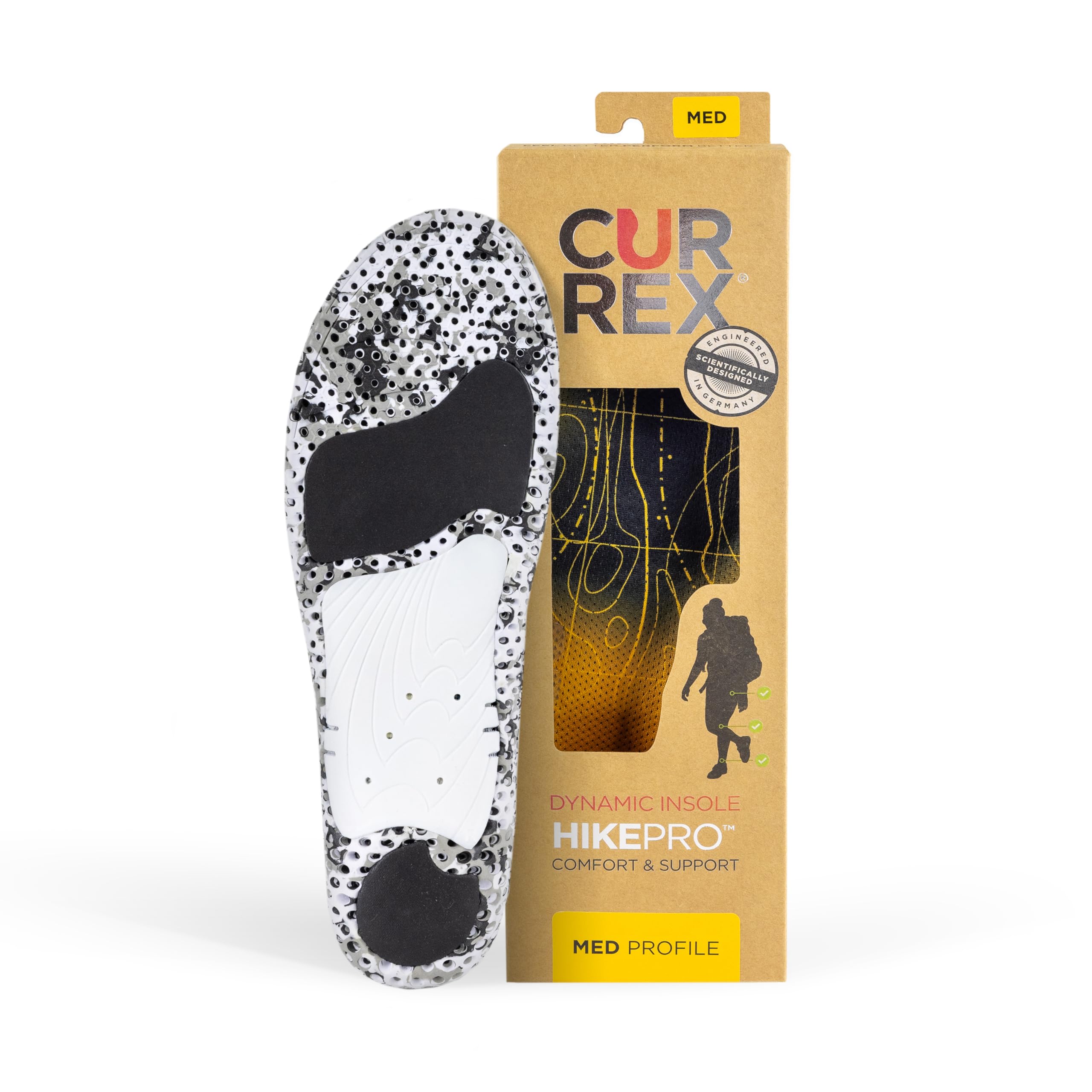
CURREX designed the HikePro specifically for hiking, not as a general-purpose insole adapted for trail use. The 3D Dynamic Arch Technology comes in low, medium, and high profiles, and the deep decoupled heel cup includes a SuperGrip anti-slip surface that prevents foot shift inside the boot — a critical feature when navigating steep, loose terrain under a pack. The recycled EVA base uses air vent technology to channel moisture away from the foot, keeping you dry and reducing blister risk during multi-day outings.
Customer reviews from ruckers carrying 60-pound loads report excellent arch support without the painful edge friction that some rigid insoles create. The flexibility profile is tuned for hiking: firm enough to stabilize on side slopes but pliable enough to allow natural foot motion during the gait cycle. Hikers who completed three-day treks with heavy packs noted the insoles maintained support throughout, with no noticeable compression in the heel pad area.
Some users question the long-term durability given the price point, and the insole’s specialized arch profiles mean you must choose the correct height — a mis-selection can leave you with poor support.
Why it’s great
- Activity-specific design with anti-slip heel surface prevents foot slide on descents
- Three distinct arch height options for proper biomechanical fit
- Air vent technology reduces moisture buildup during multi-day hikes
Good to know
- Higher price point with some durability concerns reported by heavy users
- Less forgiving trim lines require careful sizing selection
4. Protalus T-100 Elite Insole
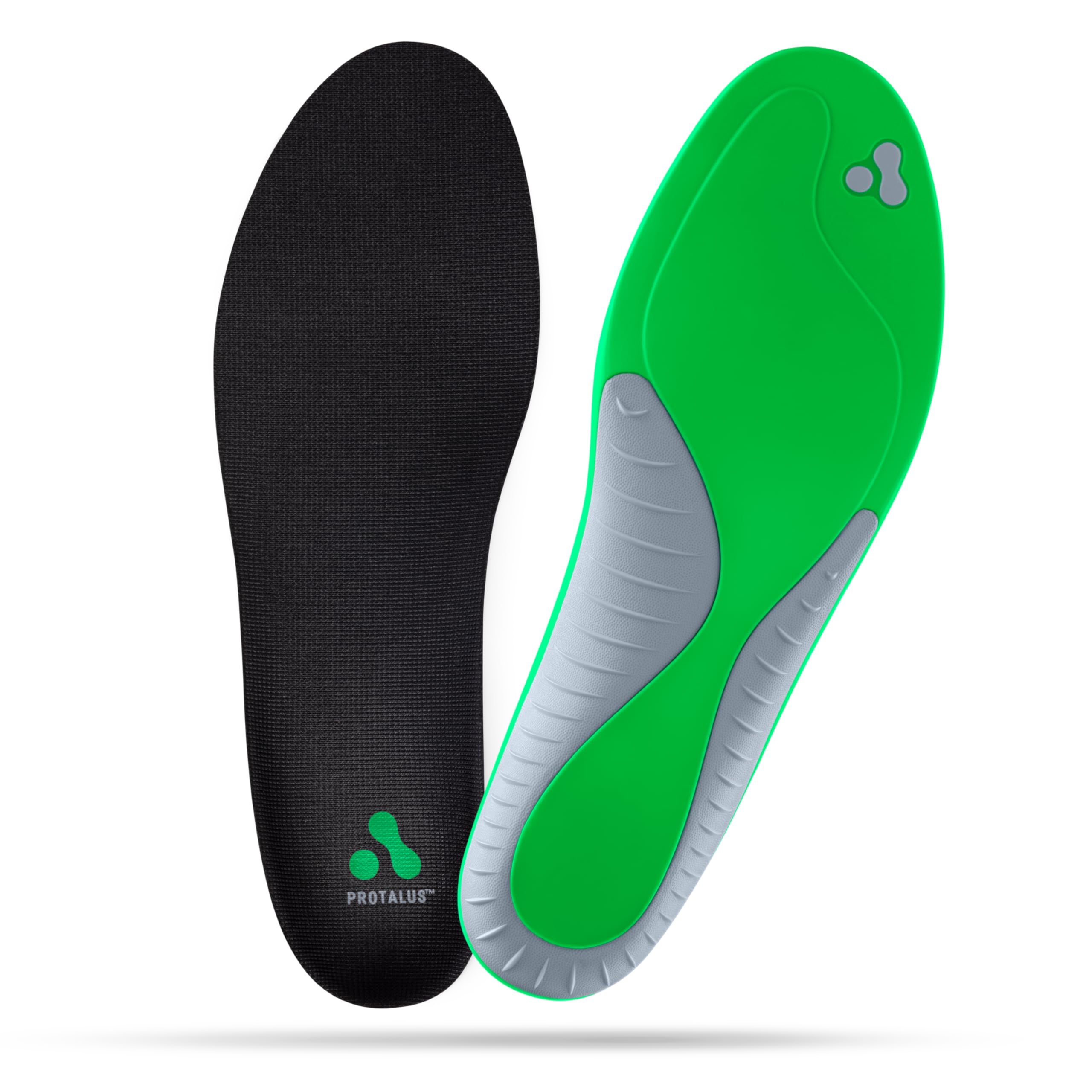
The Protalus T-100 Elite uses a patented alignment cradle that repositions the foot in a neutral posture, reducing overpronation and relieving stress on the knees and lower back. The deep heel cup and responsive cushioning layer work together to absorb impact while maintaining structural support — a combination that makes it popular among hikers who also stand for long shifts. Users report that these insoles eliminated arthritic ankle pain during extended periods on their feet, with one buyer verifying they made an immediate difference for a son working 16-hour days with plantar fasciitis.
The universal adaptive design accommodates flat feet, high arches, and everything between without requiring specific arch profile selection. The manufacturer claims up to 12 months of consistent wear before structural breakdown, which aligns with customer feedback about durability. The insole fits boots with removable insoles without adding excessive bulk, making it suitable for both trail runners and full-height hiking boots.
A subset of users report a noticeable squeaking noise, particularly in quiet environments like an office or a silent trail section. The alignment cradle also requires a short adjustment period — some users initially feel the rigid structure digging into the arch before the body adapts. The lack of a specific arch-height option means you rely on the universal shape, which may not satisfy hikers with extreme arch profiles.
Why it’s great
- Patented alignment cradle controls overpronation and reduces joint strain
- Universal arch design fits a wide range of foot types without profile selection
- Responsive cushioning layer absorbs impact without compromising support
Good to know
- Audible squeaking reported by some users in quiet settings
- Universal arch shape may not provide enough support for extreme high or low arches
5. Cloudflo Plantar Fasciitis Insoles
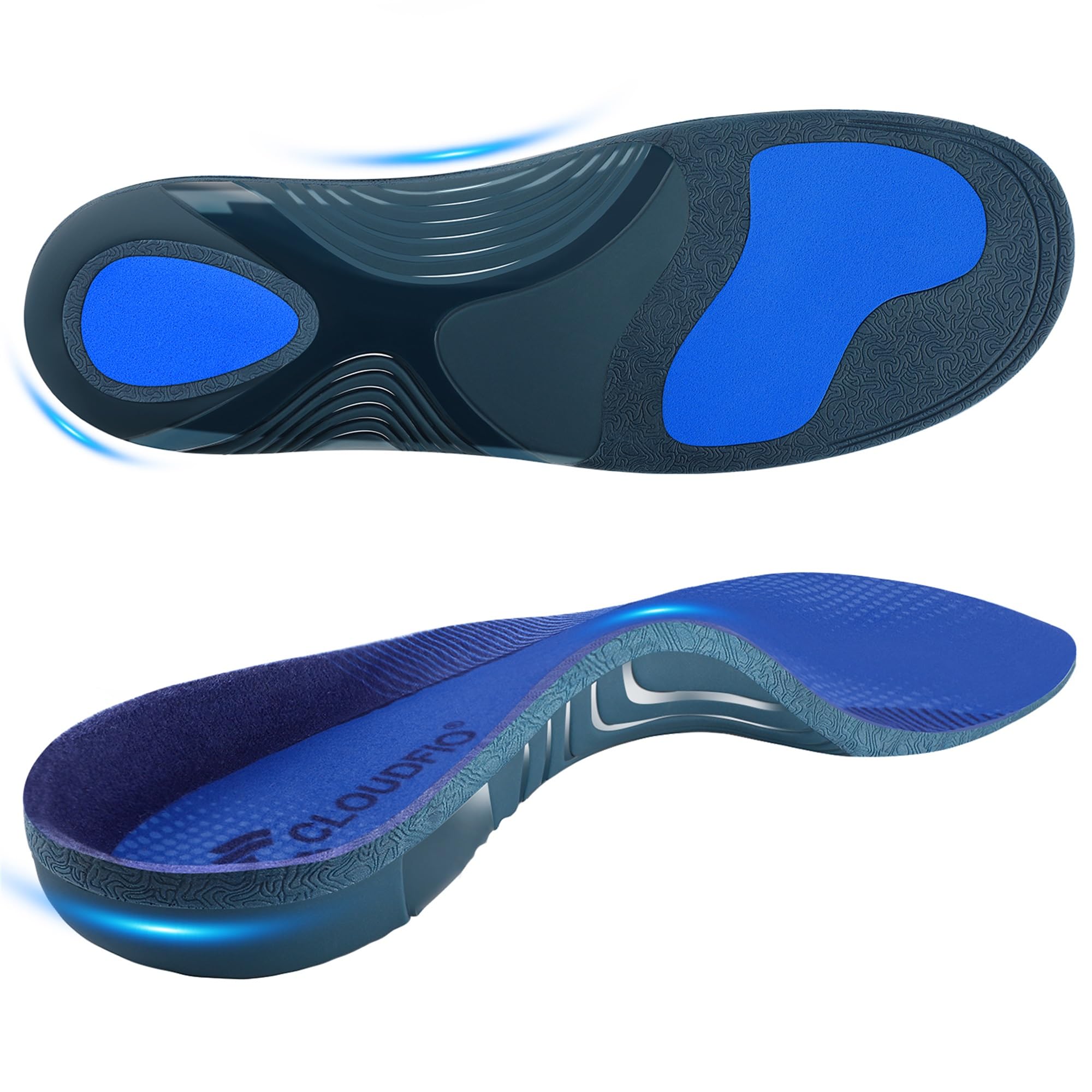
The Cloudflo insole targets the budget-conscious hiker who needs firm arch support and reliable heel cushioning without spending over fifty dollars. The construction layers a rigid TPU shell over thick Ortholite foam with a PU heel pad for shock absorption — a multi-density approach rarely found in this price tier. Customer reviews confirm that users with plantar fasciitis saw complete relief from sharp heel pain after switching to these, with one reviewer noting they could walk four miles again without discomfort after months of limping.
The design specifically accommodates users weighing over 220 pounds, using compression-resistant materials to prevent the midsection collapse that cheap insoles suffer. The deep heel cup and contoured arch hold the foot in proper position, and the breathable velvet top layer manages moisture during extended wear. Nurses, teachers, and retail workers who stand on concrete floors for 10-plus hours report consistent comfort, and the same qualities translate directly to hiking scenarios where foot fatigue typically sets in early.
The rigid TPU shell can feel stiff in shoes with no removable liner, and the insoles are slightly less refined in material quality compared to premium options. A few users note that the arch support is slightly less pronounced than specialist brands, though this trade-off is understandable given the entry-level price.
Why it’s great
- Multi-density construction (TPU + Ortholite + PU) at an accessible price point
- Designed to support users over 220 lbs without midsole collapse
- Proven efficacy for plantar fasciitis relief in real-world use
Good to know
- Rigid TPU shell may feel stiff in shoes without a removable liner
- Arch support slightly less pronounced than specialist premium brands
6. Professional Heavy Duty Support Orthotic

This insole from Psveb is engineered specifically for users over 230 pounds who need support that won’t bottom out under load. The double PORON cushioning layers in the heel and forefoot provide advanced shock absorption, while the Golden Triangle ergonomic design distributes pressure across three points: the forefoot, arch, and heel. The deep U-shaped heel cup locks the foot in place, preventing the lateral shift that causes instability on uneven trails.
Customer feedback highlights immediate relief from heel pain after months of suffering, with noticeable improvement even after a single day in work boots. The medium arch support balances firmness with effectiveness for plantar fasciitis and flat feet, and users confirm the insoles held up through 9-10 hour shifts on hard floors without flattening. The skin-friendly, sweatproof top fabric keeps feet cool and dry during extended activity.
The thick profile requires looser lacing in low-back shoes and may feel slick under the foot during the first week as the outer fabric breaks in. Some users seeking extremely high arch support find the medium profile insufficient, and the trim-to-fit sizing requires careful measurement to avoid a tight fit in narrower boots.
Why it’s great
- Double PORON cushioning absorbs heavy impact for users over 230 lbs
- Golden Triangle three-point pressure distribution reduces foot fatigue
- Deep U-shaped heel cup prevents lateral sliding on uneven terrain
Good to know
- Thick profile may require looser lacing in low-volume shoes
- Initial slickness underfoot subsides after a break-in period
7. Dr. Scholl’s Heavy Duty Support Insole
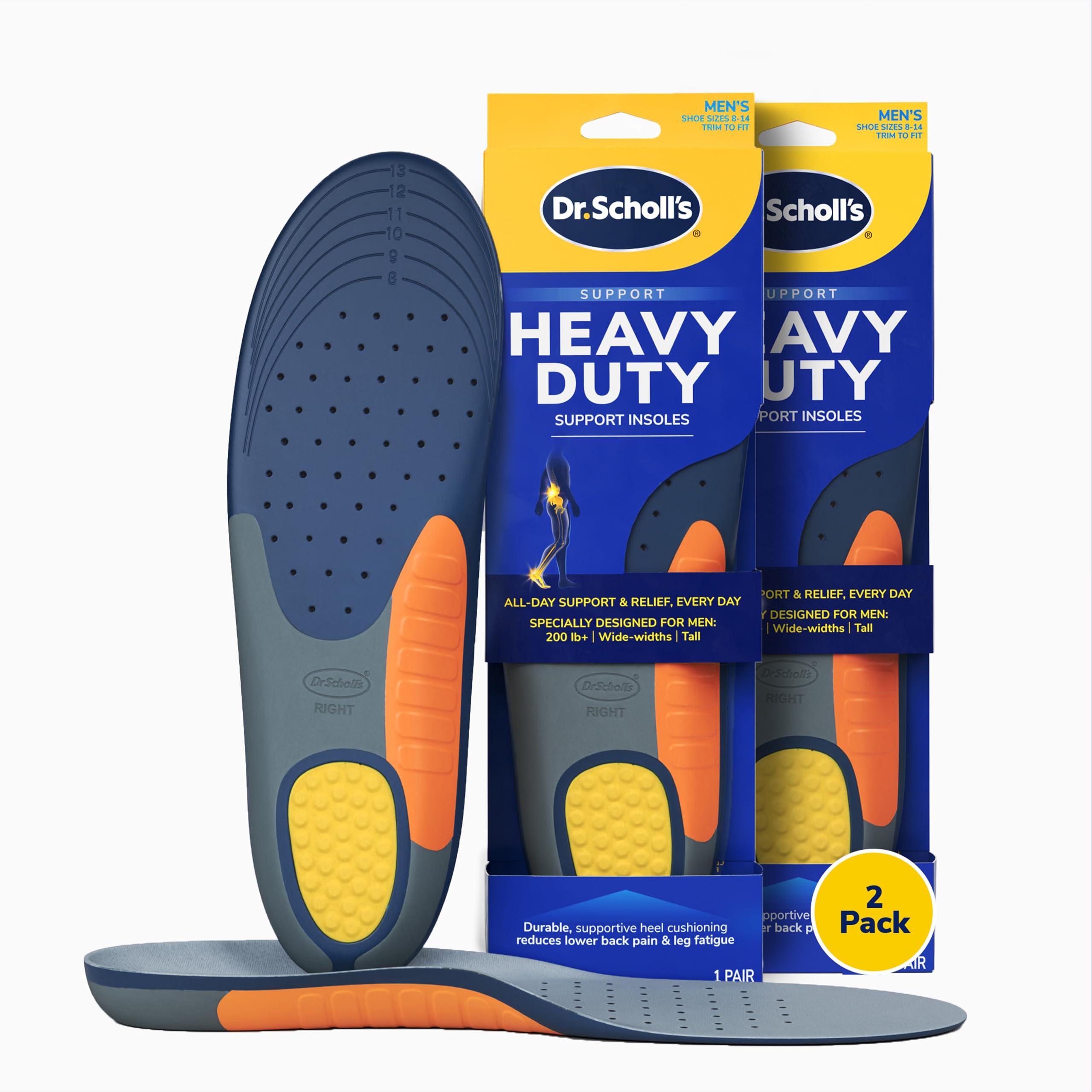
Dr. Scholl’s Heavy Duty Support insole is designed for individuals over 200 pounds, tall stature, or wide feet, and it comes as a two-pair pack, making it the most economical option in this guide. The shock-absorbing foam cushioning distributes pressure across the entire footbed, reducing impact on the heels, legs, and lower back. Customer reviews from users weighing 300 pounds confirm the insoles stand up to heavy daily use, with one buyer dubbing them “fat man rated” after they saved money on shoe replacements.
The arch support is firm and high-arched, which works well for flat feet that need strong resistance against pronation but can feel aggressive during the first few wears. The trim-to-fit design adapts to most work boots, athletic shoes, and casual footwear, and the heel cushioning specifically targets lower back pain by improving shock absorption through the kinetic chain. Users report that these insoles made their work boots fit better immediately, reducing foot fatigue and improving overall comfort throughout the day.
The foam construction is less durable than layered TPU or cork insoles — heavy users may notice compression after several months of consistent use. The high, firm arch can feel awkward for those accustomed to neutral or low-profile insoles, and the insole does not provide the same level of lateral stability as models with rigid heel cups.
Why it’s great
- Two-pair pack offers the best value in the guide
- High, firm arch support effectively resists pronation in flat feet
- Proven durability for users over 300 lbs in real-world testing
Good to know
- Foam construction compresses faster than layered TPU or cork alternatives
- High arch profile may feel abrupt for users accustomed to low-profile support
FAQ
Do I need low, medium, or high arch support for hiking boots?
How do I know if an insole is too thick for my hiking boots?
Can I heat-mold any hiking insole at home?
Final Thoughts: The Verdict
For most hikers, the boot insoles for hiking winner is the SOLE Performance Thick Insole because the heat-moldable ReCORK base delivers a custom arch fit that factory foam cannot match, proven by 3+ years of heavy use in military boots. If you need maximum arch support and pronation control, grab the PowerStep Pinnacle Hiker, designed by a podiatrist with a semi-rigid shell that eliminates foot pain on 16-mile days. And for the budget-conscious hiker who still wants firm support and reliable heel cushioning, nothing beats the Cloudflo Plantar Fasciitis Insoles for value delivered per dollar spent.