
The pursuit of reference-grade sound at home often collapses under a single misstep: buying specs instead of listening intent. An open-back dynamic driver that excels at classical guitar can sound thin on a dark electronic track, while a planar magnetic set built for bass extension may mask the micro-detail you need for critical vocal mixing. The goal is not maximum detail, but the right tuning for your library.
I’m Min — the co-founder and writer behind Gadgets Feed. I’ve spent countless hours cross-referencing frequency response graphs, driver topologies, and impedance curves across the – bracket to separate genuinely refined transducers from merely expensive ones.
This guide cuts through the marketing noise to match specific driver architectures and tonal signatures with real listening scenarios. You’ll find a curated selection of the best audiophile headphones under $1000 that earn their place on technical merit and musical coherence, not brand hype.
How To Choose The Best Audiophile Headphones Under $1000
Choosing between a planar magnetic driver and a dynamic driver is the first fork in the road. Planar magnetics, like those in the HIFIMAN Edition XS, deliver fast transient response and deep, well-controlled bass with low distortion. Dynamic drivers, such as those in the Sennheiser HD 600, offer a more traditional, often smoother tonality with a natural decay that many find more forgiving on poorly recorded tracks. Your amplification chain also matters: high-impedance dynamics (300 ohms) demand a dedicated headphone amp to reach their full potential, while low-impedance planars (18–40 ohms) are easier to drive but still benefit from clean power.
Driver Topology and Transient Response
The speed at which a driver starts and stops moving defines how crisp a drum hit or a plucked guitar string sounds. Planar magnetic drivers use a large, thin diaphragm suspended in a magnetic field, offering near-instantaneous reaction and incredibly low distortion across the frequency range. This translates to bass that is tight and textured rather than boomy. Dynamic drivers, while slower in theory, can produce a more natural, airy presentation in the upper mids and treble—a trade-off that matters most for acoustic and vocal-centric genres.
Impedance, Sensitivity, and Amplification Requirements
A headphone’s impedance (measured in ohms) and sensitivity (measured in dB/mW) determine how much voltage and current your source needs to deliver. High-impedance headphones like the Sennheiser HD 600 (300 ohms) require a dedicated amplifier to produce adequate volume and control, whereas low-impedance models like the Audeze LCD-2 Classic can reach satisfying levels from a laptop jack, though they still benefit from a clean signal. Ignoring this relationship is the most common mistake—spending on headphones only to hear a thin, lifeless sound from a phone or motherboard audio port.
Quick Comparison
On smaller screens, swipe sideways to see the full table.
| Model | Category | Best For | Key Spec | Amazon |
|---|---|---|---|---|
| Audeze LCD-2 Classic | Planar Magnetic | Warm, deep bass & immersive soundstage | 100mm planar driver, 70 ohms | Amazon |
| MEZE AUDIO 109 PRO | Dynamic | Versatile all-genre clarity & premium build | 50mm dynamic driver, 40 ohms | Amazon |
| Focal Bathys | Wireless ANC | Premium wireless with wired-level detail | 40mm Al/Mg driver, Bluetooth 5.1 | Amazon |
| Sennheiser HD 660S2 | Dynamic | Intimate, warm vocals & extended bass | 42mm dynamic driver, 300 ohms | Amazon |
| beyerdynamic DT 900 PRO X | Dynamic | Neutral monitoring & gaming with wide soundstage | 45mm STELLAR.45 driver, 48 ohms | Amazon |
| Sony MDR-MV1 | Dynamic | Ultra-comfortable spatial audio monitoring | 40mm dynamic driver, 24 ohms | Amazon |
| Audio-Technica ATH-AD900X | Dynamic | Lightweight comfort & forward vocals | 53mm dynamic driver, 38 ohms | Amazon |
| Sennheiser HD 600 | Dynamic | Dead-neutral reference for critical listening | 38mm dynamic driver, 300 ohms | Amazon |
| HIFIMAN Edition XS | Planar Magnetic | Best bang-for-buck planar with huge soundstage | Stealth Magnet planar, 18 ohms | Amazon |
In‑Depth Reviews
1. Audeze LCD‑2 Classic

The LCD‑2 Classic reissues the vintage Audeze sound with a notably warmer tonality than the standard LCD‑2, thanks to the omission of Fazors. Its 100mm planar magnetic drivers deliver bass that is both deeply extended and incredibly controlled—kick drums hit with a physical weight that dynamic drivers struggle to match. The soundstage is wide and immersive, though not as pinpoint as the HD 800, placing you in a hall rather than a studio control room.
At approximately 600 grams, weight is the primary ergonomic compromise. The new steel suspension headband and leather-free memory foam earpads improve comfort over earlier models, but extended sessions beyond an hour may require a break. The low 70-ohm impedance makes it relatively easy to drive from a portable DAC/amp, but the relaxed, non-fatiguing highs demand a clean source to avoid sounding veiled.
Hand-crafted in California, the unit feels like a precision instrument—glass-infused nylon rings add structural integrity without resonating. The included travel case and XLR cable represent significant value. For listeners seeking a warm, dark, and deeply musical presentation that avoids treble fatigue entirely, the LCD‑2 Classic sets a benchmark that is hard to surpass at this tier.
Why it’s great
- Massive, tactile bass extension with planar speed
- Relaxed, non-fatiguing treble for long listening
- Suspension headband and premium earpads improve comfort
Good to know
- Heavy at 600g; not ideal for portable use
- Slightly veiled mids compared to HD 600
- Requires a quality DAC/amp to avoid sounding muddy
2. MEZE AUDIO 109 PRO

The MEZE 109 PRO marries artisan craftsmanship with genuinely versatile tuning. Its 50mm dynamic drivers with genuine walnut wood earcups deliver a sound that is detailed, spacious, and slightly warm—bass is present without overwhelming, mids are lush, and the treble extends with good air. The 40-ohm impedance means it scales beautifully from a simple USB-C dongle all the way up to a high-end desktop stack.
Comfort is exceptional: the self-adjusting vegan leather headband and manganese spring steel outer band distribute weight evenly, while the velour earpads allow for hours of wear with zero hotspots. The included hard EVA carrying pouch and two detachable cables (1.5m and 3m) add genuine utility, though the high sensitivity can cause audible hiss with some high-gain desktop amps—a minor issue that a wide-gain control solves.
This headphone excels across genres—orchestral, jazz, rock, electronic—handling everything with a musicality that prioritizes enjoyment over clinical analysis. The replaceable components (earcups, headband, cables) reinforce its long-term value. For anyone wanting a single pair that does everything well without demanding a dedicated amp, the 109 PRO is the most complete offering under .
Why it’s great
- Gorgeous walnut wood earcups with fully replaceable parts
- Low impedance drives well from any source
- Exceptional soundstage and clarity across all genres
Good to know
- High sensitivity can reveal noise from desktop amps
- Sibilance with poorly recorded tracks for some ears
- Slightly recessed upper mids compared to HD 600
3. Focal Bathys

The Focal Bathys is a rare breed: a wireless, noise-cancelling headphone that genuinely competes with wired audiophile designs. Its 40mm aluminum-magnesium drivers, made in France, deliver a level of detail, dynamics, and soundstage that leaves the Sony XM5 and AirPods Max behind. The signature is slightly warm with excellent resolution, though the ANC introduces a subtle pressure that some find tiring over long flights.
Battery life reaches 30 hours with ANC active, and the fast-charging feature (5 hours from 15 minutes) is genuinely useful. The USB-C DAC mode unlocks the full potential of the drivers, stepping past Bluetooth compression for a near-wired experience. Comfort is strong, with plush real leather and microfiber earpads, but the weight (350g) is noticeable after extended wear.
The primary concession is the ANC implementation—it cannot be fully disabled, which may bother users sensitive to cabin pressure simulation. The absence of LDAC or aptX Lossless means you are capped at AAC or aptX Adaptive, a bottleneck that a Creative BT-W4 dongle can only partially solve. Still, for someone who needs wireless convenience without sacrificing audio quality, the Bathys is the only serious option at this level.
Why it’s great
- Best-in-class wireless sound quality with Al/Mg drivers
- USB-C DAC mode bypasses Bluetooth compression
- Fast charging and 30-hour battery life
Good to know
- ANC cannot be turned off completely
- No LDAC or aptX Lossless support
- Large and heavy for portable use
4. Sennheiser HD 660S2
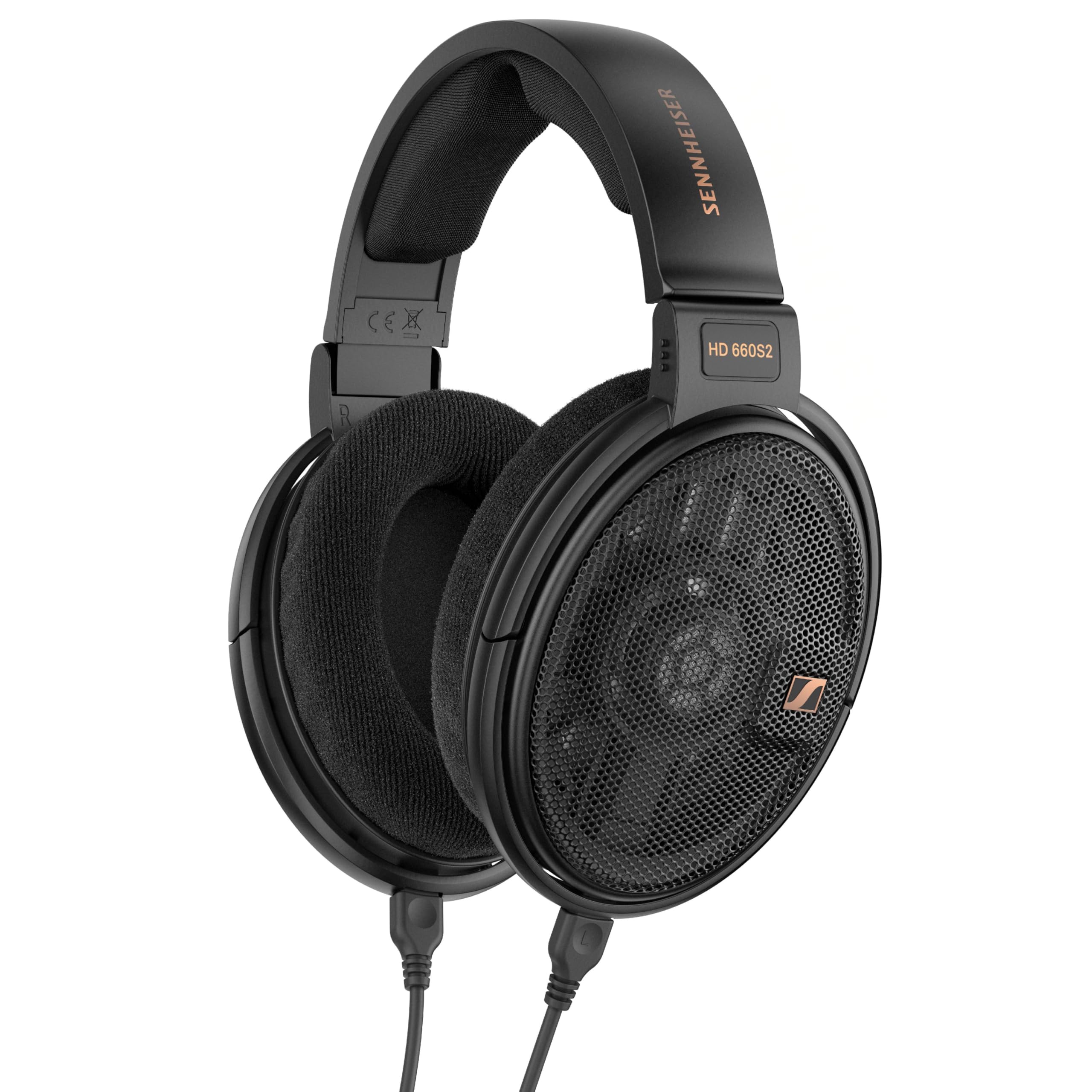
The HD 660S2 expands on the legendary HD 600 series formula by extending the low-end response down to 27.5 Hz, giving piano lows and bass drums a physical presence that the HD 600 lacks. Its 42mm dynamic drivers are tuned for a warmer, smoother presentation that is more forgiving on harsh recordings while still retaining the imaging precision that makes Sennheiser’s 600-series a studio staple.
The 300-ohm impedance demands a proper headphone amplifier—plugging these into a phone will yield a quiet, lifeless result. With a solid desktop stack, however, the HD 660S2 delivers intimate, lifelike vocals with a narrow but convincing soundstage. The build is classic Sennheiser: high-quality plastics, metal grilles, and velour earpads that are comfortable for hours. The included 6.3mm and 4.4mm cables are a welcome upgrade over predecessors.
Critically, the bass extension changes the character enough that some purists may prefer the more neutral HD 600 for critical mixing tasks. The HD 660S2 is more of a musical, consumer-friendly interpretation of the reference sound. For listeners who found the HD 600 too thin or shouty, this is the natural upgrade that adds weight without losing coherence.
Why it’s great
- Deep, controlled sub-bass extension for an open-back dynamic
- Warm, smooth tuning reduces listener fatigue
- High-quality cables and carry pouch included
Good to know
- Requires a powerful amp for full performance
- Narrower soundstage than some planars
- Stock cables are microphonic near the Y-split
5. beyerdynamic DT 900 PRO X

The DT 900 PRO X represents a thoughtful evolution of beyerdynamic’s studio legacy. Its STELLAR.45 drivers deliver a wide 5–40,000 Hz frequency response with a balanced, neutral tuning that leans ever-so-slightly toward a gentle V-curve—punchy bass, clear mids, and detailed treble without the piercing peak that plagued earlier DT models. The 48-ohm impedance means it runs well from laptops and audio interfaces without a dedicated amp.
Comfort is a standout feature: the soft, circumaural velour earpads and relaxed clamp pressure allow for marathon mixing or gaming sessions without fatigue. The detachable mini-XLR cables (1.8m and 3m) lock securely, though the locking connector limits third-party cable options. Build quality is typical beyerdynamic—tough, serviceable, and designed to last a decade.
Soundstage width and imaging are strong for a closed-back competitor but merely average among open-back designs. It is a pragmatic, durable tool that delivers reliable, high-quality sound from almost any source.
Why it’s great
- Neutral, well-balanced tuning with punchy bass
- Comfortable for all-day wear with velour pads
- Low impedance works well with basic audio interfaces
Good to know
- Locking mini-XLR limits aftermarket cable options
- Slightly stiff earcups out of the box
- Soundstage is good but not expansive
6. Sony MDR-MV1

The Sony MDR-MV1 is a reference monitor designed for spatial audio mixing, but its tuning translates beautifully to critical listening. At just 230 grams, it is the lightest open-back in this comparison, with a suede earpad and low clamp force that make it disappear on your head over long sessions. The 24-ohm impedance is the easiest to drive here, needing only a decent phone dongle to reach satisfying levels.
The sound signature is gently warm with extended, non-fatiguing treble; bass is deep and punchy, mids are slightly recessed, and the soundstage offers excellent depth for an open-back in this price tier. Imaging is sharp, making it a strong choice for competitive gaming and spatial audio content. The detachable cable is high-quality but uses a proprietary mini-jack connector, limiting replacement options.
Build quality is a mixed bag—the aluminum yoke feels premium, but the plastic joints have been reported to detach under stress. The long, tangle-prone cable and bulky 1/4-inch adapter are minor inconveniences. For the listener who prioritizes comfort and a fatigue-free, musical presentation that still retains enough detail for mix evaluation, the MDR-MV1 is a hidden gem.
Why it’s great
- Extremely lightweight and comfortable for all-day wear
- Warm, non-fatiguing sound with excellent spatial imaging
- Low impedance drives easily from portable sources
Good to know
- Proprietary cable connector limits replacements
- Build quality concerns with plastic joints
- Long, tangle-prone cable with bulky adapter
7. Audio-Technica ATH-AD900X
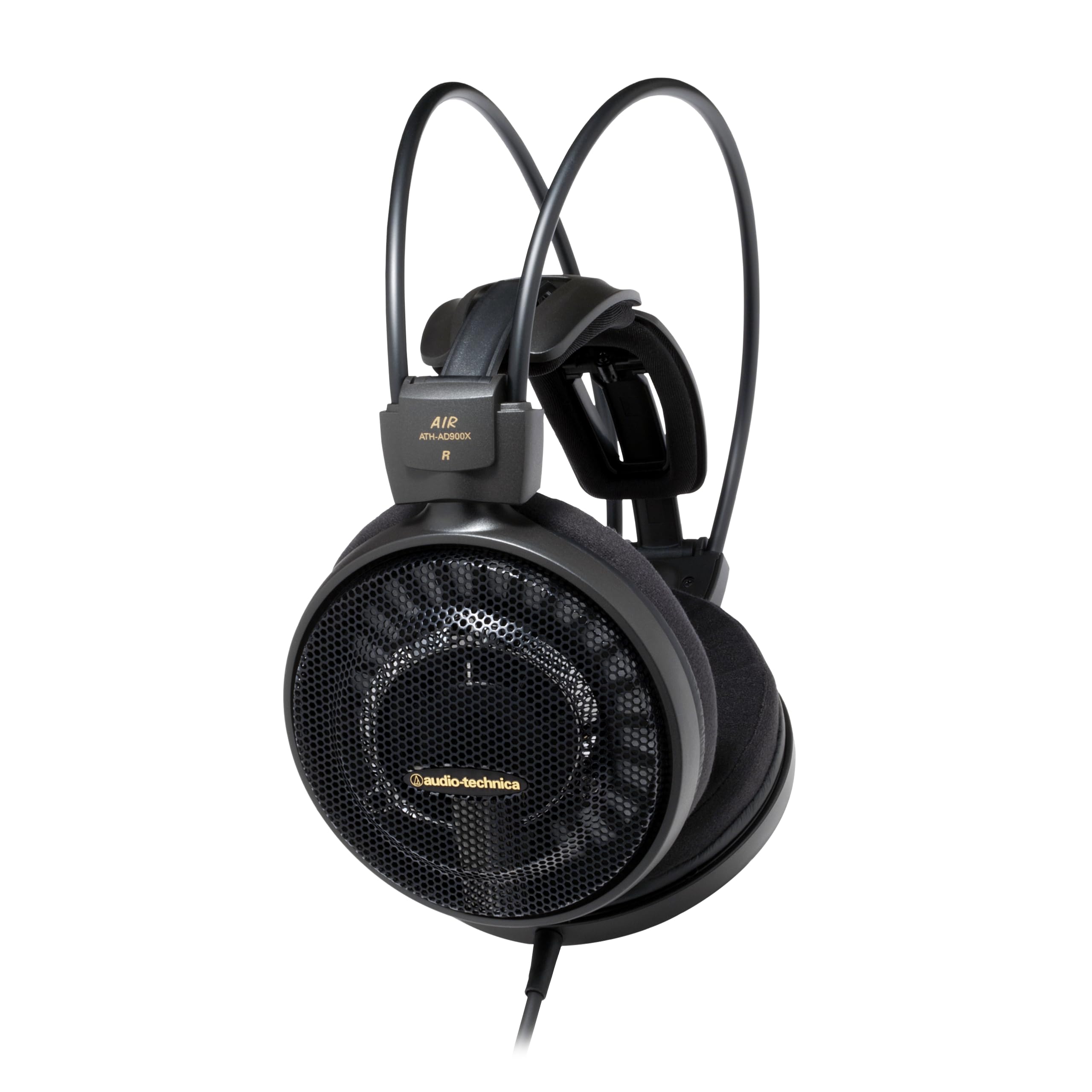
The ATH-AD900X is built for one primary strength: an expansive, airy soundstage that places instruments with pinpoint accuracy around your head. Its large 53mm drivers and open-grid housing deliver a presentation that excels at classical, acoustic, and live recordings, where spatial cues and vocal forwardness are paramount. Bass is present and tight but does not rumble—this is not a headphone for bassheads.
The 3D Wing Support headband is a love-it-or-hate-it design: it feels weightless and breathable by avoiding direct pressure on the top of the head, but the earcups rely on gravity for seal and can shift when you turn your head quickly. The velour ear pads are comfortable for large ears, though they tend to droop over time and may require repositioning. The non-removable 10-foot cable limits desktop use only.
At 38 ohms, the AD900X needs an amplifier to reach its full potential—directly from a phone, it sounds anemic. For the gamer who values spatial awareness over bass impact, or the audiophile focused on vocal clarity and instrumental separation, the AD900X offers a unique, engaging perspective that few competitors match.
Why it’s great
- Exceptional soundstage and imaging for competitive gaming
- Highly comfortable wing support system for long wear
- Clear, forward vocals and instrumental separation
Good to know
- Non-removable cable limits portability
- Ear pads can droop and lose seal over time
- Bass is tight but lacks impact for bass-heavy genres
8. Sennheiser HD 600

The Sennheiser HD 600 is the benchmark that other open-back dynamic headphones are measured against—and for good reason. Its 38mm dynamic drivers deliver a dead-neutral, uncolored sound with a midrange that is widely considered the most natural in the industry. Vocals sound lifelike and intimate, acoustic guitars have weight and texture, and the treble is crisp without being harsh.
The 300-ohm impedance makes the HD 600 demanding of amplification; running them from a laptop yields a thin, compressed sound. Pair with a Schiit Magni or JDS Labs Atom stack, and they open up into a reference tool that reveals flaws in poorly mixed tracks while celebrating good ones. The build is classic Sennheiser—thick plastic, metal grilles, velour pads that are comfortable but tight on large heads out of the box, loosening over time.
The primary weakness is bass extension: the HD 600 rolls off below 100 Hz, so fans of electronic, hip-hop, or modern pop may find it lacking. Its soundstage is modest—intimate rather than expansive. For the purist who values tonal accuracy, natural timbre, and a fatigue-free listening experience above all else, the HD 600 remains the gold standard.
Why it’s great
- Reference-grade neutral midrange with natural timbre
- Lightweight and comfortable after clamp loosens
- Highly detailed and revealing of recording quality
Good to know
- Requires a powerful amplifier for full performance
- Bass rolls off early; not for bass-heavy genres
- Soundstage is intimate rather than expansive
9. HIFIMAN Edition XS

The HIFIMAN Edition XS proves that planar magnetic performance is no longer reserved for four-figure price tags. Its Stealth Magnet design and NEO supernano diaphragm reduce distortion to near-measurable floors, delivering a soundstage that is wide, natural, and immersive—easily rivaling headphones costing three times as much. Bass is tight and textured, mids are clear, and highs are extended without the sibilance that plagued earlier HIFIMAN models.
The 18-ohm impedance makes the Edition XS deceptively easy to drive in terms of voltage, but its low sensitivity means it actually needs significant current—a portable DAC/amp like the Topping DX3 Pro+ is the minimum recommendation. Without adequate power, the sound becomes thin and dynamically flat. Comfort is a point of contention: the large ear cups and generous padding are fine, but the weight (405g) and headband pressure cause discomfort for some users after 30 minutes.
Build quality is acceptable for the price—mostly plastic with a metal headband—but does not inspire the same confidence as the MEZE 109 PRO or the Sennheiser HD 600. The short (1.5m) cable and reports of driver rattling in some units are worth noting. For the listener wanting to experience true planar bass and a massive soundstage on a budget, the Edition XS is the entry point that delivers 90% of the performance at a fraction of the cost.
Why it’s great
- Wide, immersive soundstage with excellent imaging
- Tight, textured bass and clear, extended highs
- Unbeatable value for planar magnetic performance
Good to know
- Comfort issues with headband pressure for some head shapes
- Low sensitivity means it needs a powerful amp
- Build quality is adequate but not premium
FAQ
Do I need an amplifier for 300-ohm headphones like the HD 600 or HD 660S2?
Why do open-back headphones sound more natural than closed-back models?
What does “frequency response” mean for audiophile headphones under $1000?
Can I use planar magnetic headphones for gaming?
Final Thoughts: The Verdict
For most users, the best audiophile headphones under $1000 winner is the Audeze LCD‑2 Classic because its warm planar tuning, deep bass extension, and non-fatiguing treble deliver a musical yet resolving experience that few headphones at any price match. If you want build quality and genre versatility, grab the MEZE 109 PRO. And for the purist seeking a dead-neutral reference with unmatched midrange naturalism, nothing beats the Sennheiser HD 600.