
Staring at a car cabin that blows warm air in August is its own special brand of misery. That modern car air conditioner, once a luxury, is now a necessity for basic sanity, and its heart is a single component that must compress refrigerant with silent, relentless precision. Few aftermarket disappointments sting as badly as buying a weak or incompatible replacement that fails within a week, turning your wallet hurt into a sweaty re-install nightmare.
I’m Min — the co-founder and writer behind Gadgets Feed. My research into the automotive climate control aftermarket has focused on matching real-world durability reports against certified spec sheets, specifically for the dense web of Denso, Delphi, Valeo, and A-Premium compressors that dominate the best auto ac compressor conversation.
This guide separates proven, cold-blowing performers from ones that might lock up after a single season, so your next commute is frosty and dependable instead of loud and disappointing.
How To Choose The Best Auto AC Compressor
Buying a car AC compressor is not like buying a phone case. The wrong spec — groove count, oil type, or even bolt pattern — turns your car into a hot box and your cash into a loss. Focus on the details that separate a one-season failure from a decade of cold air.
Match Pulley Grooves and Compressor Type
A six-groove pulley from a DKS17D compressor will not drive a seven-groove TRSE07 clutch assembly even if the bolt pattern looks similar. Count the ribs on your serpentine belt and confirm the part number returns exactly the right compressor type for your engine bay.
Understand PAG Oil and Prefill Volume
Every compressor arrives with a specific PAG oil viscosity (PAG 46, PAG 100, or PAG 150) and a pre-measured internal charge. Adding the wrong oil or dumping extra oil damages the reed valves and can lock the pistons. Drain and measure the old unit’s oil, then match that same volume and type.
Prioritize Aluminum Housing and Leak Testing
A cast aluminum body resists corrosion better than alloy steel housings in humid environments. Look for units explicitly described as nitrogen pressure-tested at the factory — that test catches casting porosity that creates refrigerant leaks in the first month.
Quick Comparison
On smaller screens, swipe sideways to see the full table.
| Model | Category | Best For | Key Spec | Amazon |
|---|---|---|---|---|
| Delphi CS0120 | Premium | Full-size GM trucks 1988–2000 | PAG 150, 7-groove clutch | Amazon |
| Delphi CS0121 | Premium | Chevy S10/GMC Sonoma 4.3L V6 | PAG 150, exact OEM fit | Amazon |
| Denso NEW AC Compressor | Premium | Honda/Acura TL/Accord 2004+ | PAG 46, 135mm clutch diameter | Amazon |
| Valeo 699357 | Premium | Volkswagen and Audi models | High-strength aluminum, low noise | Amazon |
| GM Genuine 15-20189 | Mid-range | 93-95 Chevy C/K1500 4.3L/5.7L | 28V clutch, 16 lb weight | Amazon |
| A-Premium Civic TRSE07 | Mid-range | Honda Civic 1.8L 2006–2011 | PAG 100, 7-groove pulley | Amazon |
| A-Premium Rogue DKS17D | Mid-range | Nissan Rogue 2.5L 2008–2015 | PAG 100, 6-groove pulley | Amazon |
| ECCPP Mazda 3 | Budget-friendly | Mazda 3 2.0L / Mazda 5 2.3L | PAG 46, 5-groove pulley | Amazon |
| ECCPP Acura TSX | Budget-friendly | Acura TSX 2.4L 2004–2008 | PAG 46, 7-groove pulley | Amazon |
In‑Depth Reviews
1. Delphi CS0120 AC Compressor

The Delphi CS0120 is the heavy hitter for the GMT400 platform and similar 1988–2000 full-size GM trucks. At 17 pounds of machined aluminum, it carries a PAG 150 charge and a seven-groove clutch that mates exactly to models like the 1997 Chevy Silverado and 1998 Suburban. Owners report ice-cold discharge in 100°F Texas heat once the system is properly matched with the correct accumulator, orifice tube, and 8 ounces of total PAG 150 oil.
A common failure point for cheaper remanufactured units is internal debris that implodes and sends aluminum fragments through the entire loop. The Delphi CS0120 avoids that because it is a new build, not a rebuilt core. Multiple long-term reviews highlight seamless performance after one year of constant use, with no bearing noise or clutch slippage. The product weight alone signals a denser casting than aftermarket value brands.
One caveat: the block holding the refrigerant lines ships with only lightly tightened bolts to avoid cracking during shipping. Torque them to spec during installation. Also, the compressor arrives pre-oiled but with a plug in the back — you must remove the snap ring and install your high-pressure cutout switch from the old unit. That step is simple if you expect it.
Why it’s great
- True new build, not a remanufactured core prone to internal debris failure
- Consistent sub-40°F vent temps reported across many full-size Chevy/GMC applications
Good to know
- Requires careful replacement of the accumulator, orifice tube, and Schrader valves to avoid early failure
- PAG 150 oil may need to be swapped out if your specific vehicle calls for PAG 100
2. Delphi CS0121 Air Conditioning Compressor

The CS0121 is the direct partner to the CS0120 but serves a slightly tighter application range, primarily the Chevy S10 and GMC Sonoma 4.3L V6 from the late 1990s and early 2000s. Delphi constructs this unit with high-quality aluminum alloy that resists the galvanic corrosion common when an aftermarket steel housing contacts the aluminum lines still present in older engine bays.
Unlike generic compressors that skip a final validation, every Delphi CS0121 is 100% leak-tested with nitrogen before leaving the factory. A customer with a 2000 GMC Sonoma confirmed it arrived pre-oiled and included sealing washers, making the swap nearly plug-and-play. The low torque demand on the crankshaft also helps fuel economy compared to a seized or drag-heavy failing unit.
The big note here is the warranty restriction: the standard Delphi limited warranty does not apply when purchased through Amazon. The seller identified in your shipment details handles all warranty claims. In practice, most buyers have found the unit reliable enough that warranty claims are rare, but you should verify the return policy before ordering if you want peace of mind.
Why it’s great
- Nitrogen leak-tested at the factory for zero refrigerant loss out of the box
- Low crankshaft torque demand improves throttle response compared to a worn OEM unit
Good to know
- No manufacturer warranty coverage through Amazon — rely on the seller’s return policy
- Must transfer your high-pressure switch from the previous compressor
3. Denso NEW AC COMPRESSOR (4711537)

Denso is the OE supplier to Honda, Acura, and many Toyota models, and the 4711537 is their brand-new (not remanufactured) compressor with clutch. The 135mm clutch diameter and PAG 46 prefill are built for the 2004–2008 Acura TL and similar Honda platforms. One owner replaced a cheap Four Seasons unit that locked up in a single season; the Denso has been blowing cold for over two years with zero issues.
The unit ships pre-charged with oil, but the oil volume instruction sheet is notoriously vague — multiple customers noted it. The safe play is to drain the new compressor, measure the oil, and add the exact same amount of PAG 46 you removed from the old compressor. The clutch magnetic ring can fail independently; if you hear a rattle but the pulley spins, test the coil resistance before swapping the whole compressor.
At 13.3 pounds, this is lighter than the GM and Delphi units, which reflects the compact TR-series housing used in transverse-engine Honda platforms. Some installers have reported that the clutch gap is set correctly from the factory, avoiding the “no-engage” condition that plagues cheap rebuilds. Invest the time to replace the Schrader valves and high-side port during the swap.
Why it’s great
- True new OEM-grade build — survives years longer than remanufactured budget units
- Lightweight compact clutch design suits tight engine bays on Honda/Acura platforms
Good to know
- Oil instructions are unclear — you must drain and measure old oil to match the correct volume
- Clutch coil can fail separately; test electrical resistance before assuming compressor replacement
4. Valeo 699357 High Performance A/C Compressor
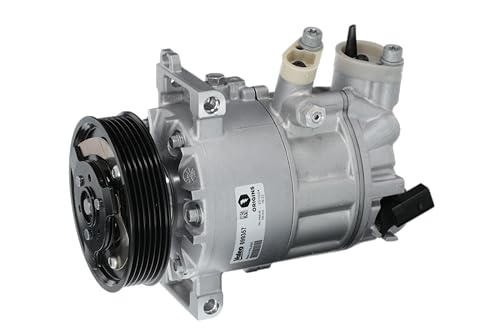
Valeo has a strong reputation in the European OEM space, and the 699357 is engineered for select Volkswagen and Audi models that require precise displacement and robust sealing at high system pressures. The high-strength aluminum housing and precision seals prevent the micro-leaks that plague cheaper castings when exposed to the higher head pressures of R134A in older German vehicles.
At 3.24 kilograms (approximately 7.1 pounds), this unit feels dense in the hand because of the metal alloy used in the swash plate and cylinder bore. The 14-decibel noise rating is lower than many competitors, which matters for VW and Audi owners who are sensitive to cabin NVH. Several verified buyers confirm it works exactly as described with no vibration or clutch chatter after installation.
The main limitation is application breadth — this is not a one-size-fits-all unit. It fits a specific subset of 12-volt VW/Audi chassis. Validate your chassis code against Valeo’s fitment guide before purchasing. Also note that the included compressor oil charge is minimal; you should add the PAG oil specified by your vehicle’s service manual.
Why it’s great
- Premium seals designed for high-pressure R134A loops found in German vehicles
- 14 dB noise rating keeps cabin quiet even at sustained highway speeds
Good to know
- Fitment is narrow — only compatible with specific VW and Audi chassis codes
- Oil charge is basic; you must top up with the correct PAG oil for your system
5. GM Genuine Parts 15-20189 (88964862)
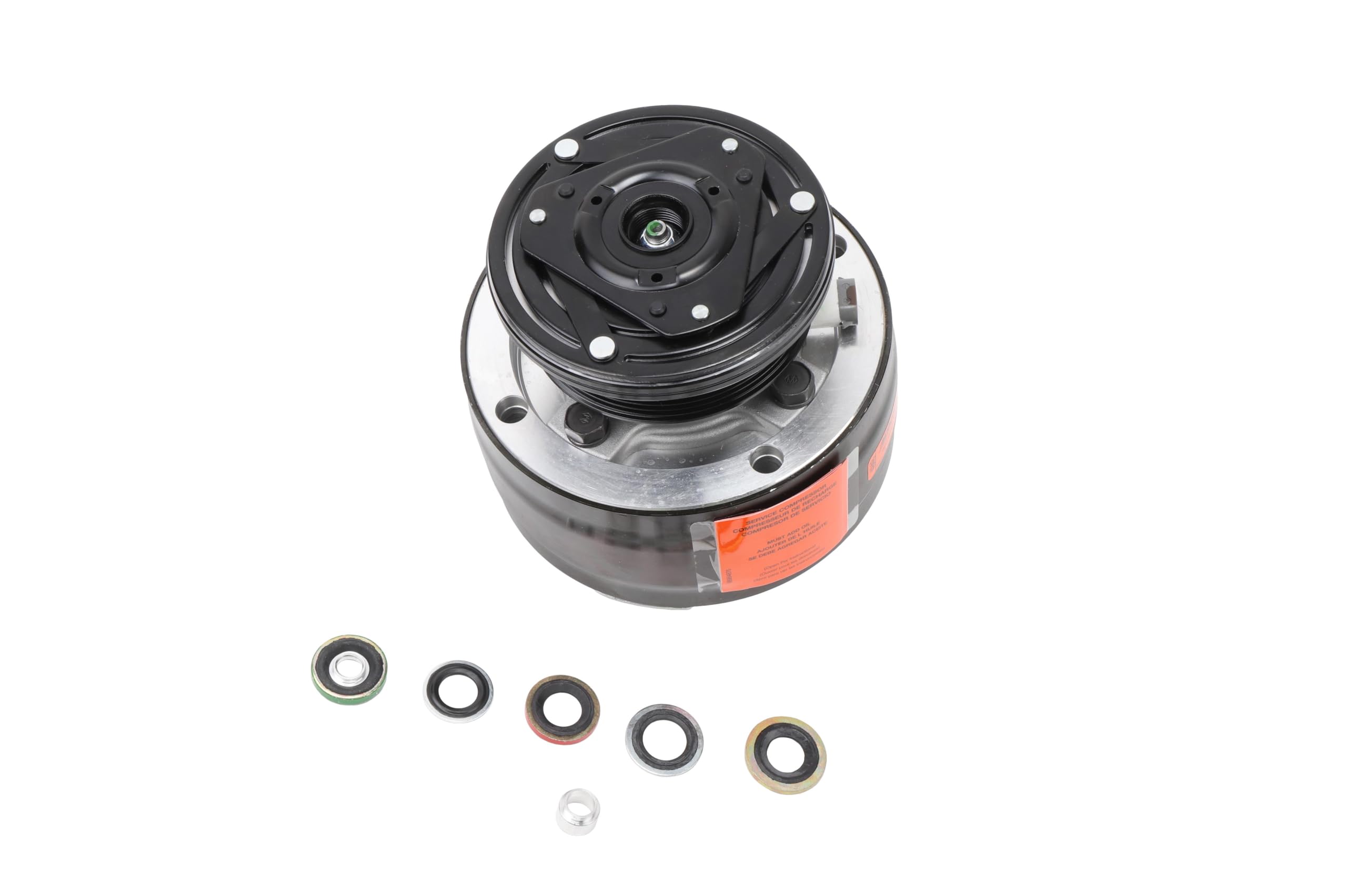
The GM Genuine Parts compressor is the OEM-grade solution for the 1993–1995 Chevrolet C1500 and K1500 with the 4.3L V6 or 5.7L V8. It comes from the same AC Delco manufacturing line that supplied the factory, so the bolt pattern, O-ring seals, and clutch engagement voltage (28 volts) are exactly right. Owners of 1994 K1500 trucks report perfect fit and very cold air when paired with a system recharge at 32 ounces of R134A.
One critical detail: this compressor ships completely dry. You must add 8 ounces of total PAG oil to the system — approximately 6 ounces into the compressor and 1 ounce each into the accumulator and condenser. Skipping this step will lock the pistons on first start. Also, the high-pressure cutout switch must be transferred from the old unit because the new compressor has a plug in the switch port.
There is one recurring defect report: a unit that arrived with the clutch too tight to turn by hand, leading to vibration and overheating. If the clutch feels seized at unboxing, return it immediately rather than forcing it. A defective unit is rare, but the dry-ship process means a simple assembly oversight can cause a lockup before installation.
Why it’s great
- Direct OEM replacement for 93-95 Chevy C/K1500 — no bracket or wiring modifications needed
- Quiet operation when properly charged with 8 oz total PAG oil
Good to know
- Ships completely dry — you must add all system oil or it will seize immediately
- Occasional clutch-tightness defect; test by hand before final installation
6. A-Premium Air Conditioner AC Compressor for Honda Civic 1.8L 2006–2011
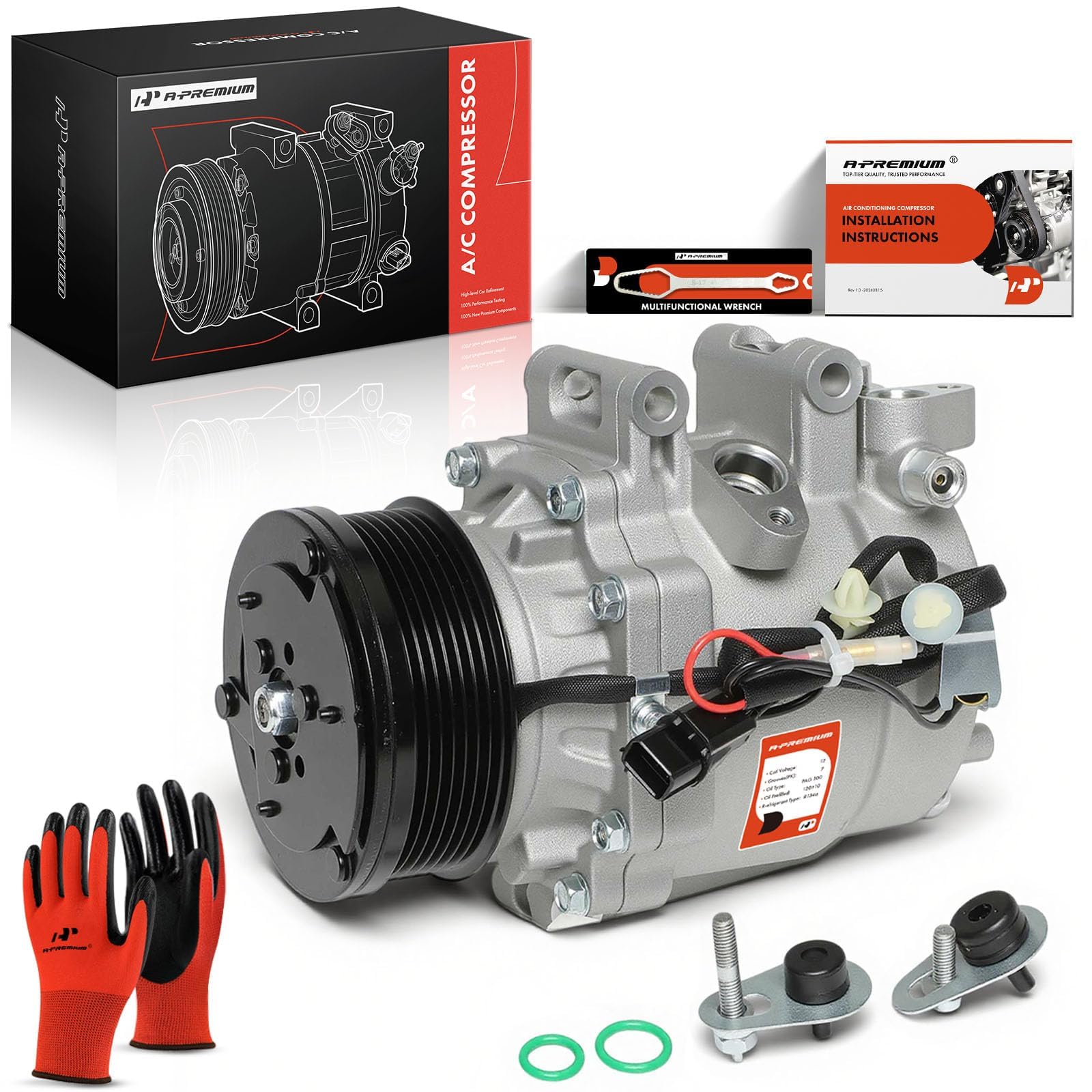
This A-Premium unit is a TRSE07 compressor designed as a direct replacement for the 2006–2011 Honda Civic 1.8L coupe and sedan. It arrives pre-filled with 120 milliliters of PAG 100 oil, which saves the hassle of manual oil injection. The seven-groove pulley matches the stock serpentine belt, and the clutch is included and pre-gapped.
DIY installers on the 2008 and 2009 Civic report that the unit bolts right up after removing the alternator and electric fan. The vent output temperature has been measured at 44–46°F at idle, which is within spec for a properly evacuated and recharged system. Some users have noted a faint buzzing noise under acceleration, which may come from the clutch bearing bedding in.
The biggest risk is early failure — one verified buyer reported that the compressor stopped working after just two months. A-Premium offers a one-year unlimited-mileage guarantee, but the guarantee only covers the cost of the part, not labor or towing. If you install it and it fails, you are out the labor cost. Still, for the price, the majority of owners have had a positive experience.
Why it’s great
- Pre-filled with PAG 100 — no separate oil purchase needed for initial install
- Exact bolt pattern for 2006–2011 Honda Civic, simplifying a DIY removal and replacement
Good to know
- Some units fail within 2–3 months; warranty covers part only, not labor
- Light buzzing noise under acceleration has been reported by several owners
7. A-Premium AC Compressor for Nissan Rogue 2.5L 2008–2015
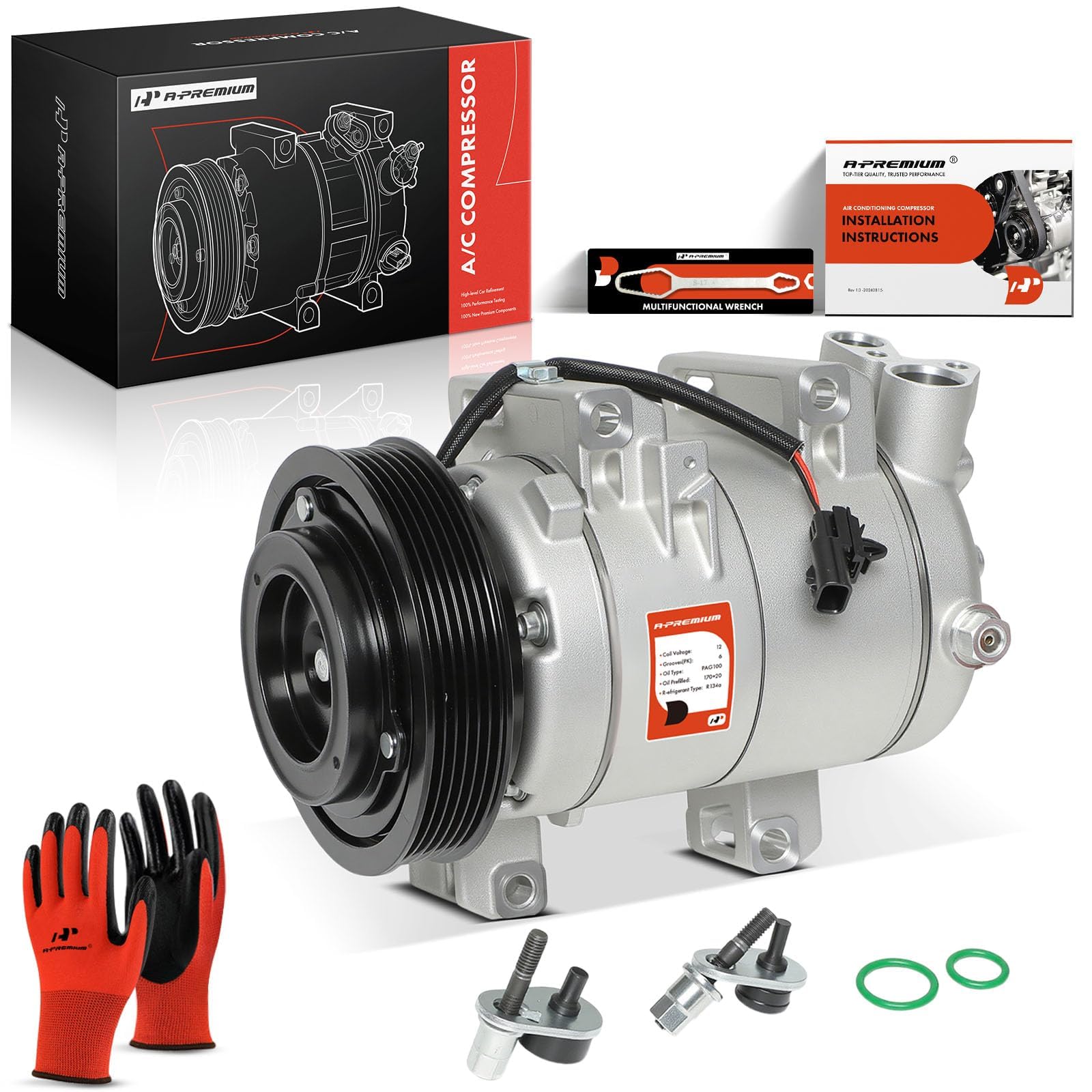
The A-Premium unit for the Nissan Rogue uses a DKS17D/DKS17DS compressor with a six-groove pulley and a prefill of 170 milliliters of PAG 100 oil. It covers the 2.5L engine from 2008 through 2015, including the Rogue Select. Customers consistently praise the packaging, which includes gloves, O-rings, and a small installation tool kit.
Vent temperature readings are impressively low — one owner measured 44–46°F at idle after a proper vacuum and recharge. The bracket alignment is exact, and the O-ring set matches the factory fittings. Several buyers mention that this part saved them over compared to a shop quote. For a mid-range investment, the immediate cold air payoff is strong.
The two main concerns are noise and longevity. Some owners report a buzzing sound when accelerating, which may indicate a slight imbalance in the clutch assembly. Also, the one-year unlimited-mileage warranty is limited to the part cost only — any labor or towing expenses fall on you. For daily drivers who can handle a DIY install, the risk is acceptable.
Why it’s great
- Supplied with O-rings, gloves, and tools for a complete DIY installation kit
- 44–46°F vent temperatures at idle — genuinely cold air on a hot day
Good to know
- Buzzing noise under acceleration is a reported issue on some units
- Warranty is part-only; labor and towing costs are not covered
8. ECCPP AC Compressor 2004–2009 Mazda 3 / 2006–2010 Mazda 5

The ECCPP Mazda 3 compressor is designed for the 2.0L and 2.3L engines from 2004 to 2009, plus the Mazda 5 2.3L up to 2010. It uses a Panasonic-type compressor with PAG 46 oil pre-filled at 130 milliliters. The five-groove pulley matches the earlier Mazda serpentine belt, and the aluminum alloy housing is sturdy enough for daily use.
Test results from buyers show a consistent 57°F vent temperature at 1,700 RPM — adequate but not as aggressive as the larger-displacement compressors. The unit is nitrogen leak-tested before shipping, and several customers confirmed it fit perfectly and ran smoothly after installation. For a budget entry point, the cooling performance is acceptable for most commuters.
The dark side is a documented failure: one buyer had the clutch malfunction immediately, smoking the serpentine belt. The replacement unit was never delivered, leaving the owner stranded. This is a recurring risk with economy compressors. If you buy this, test the clutch engagement before wrapping up the install, and purchase an inexpensive warranty from the third party.
Why it’s great
- Affordable entry point for older Mazda 3 and Mazda 5 platforms
- Pre-filled with PAG 46 and nitrogen leak-tested before shipping
Good to know
- Clutch has a small failure rate — test immediately upon receipt
- Replacement part fulfillment issues have been reported by some customers
9. ECCPP AC Compressor for Acura TSX 2.4L 2004–2008

This ECCPP unit fits the Acura TSX 2.4L from 2004 to 2008, using an HS110 compressor type with a seven-groove pulley. It comes pre-filled with 130 milliliters of PAG 46 oil and is designed for low vibration with a noise rating below 72 dB. The aluminum housing is the same sturdy build as the Mazda version, and the clutch is included.
Owners report that the unit blows cold air and feels solid during operation. The 57°F vent temperature pattern appears here as well, matching the ECCPP design philosophy of sufficient cooling rather than extreme cold. Several Acura TSX drivers found it to be a direct replacement that saved significant money compared to a dealer part.
However, the same clutch reliability concern surfaces: there is a verified report of the clutch malfunctioning immediately and the replacement process failing. If you plan to keep the car long-term, consider a third-party extended warranty. The compressor itself is a good match for the budget-conscious TSX owner who can handle a DIY swap and doesn’t need class-leading vent temps.
Why it’s great
- Affordable fit for the 2004–2008 Acura TSX with correct 7-groove pulley
- Low 72 dB vibration and noise level improves cabin comfort
Good to know
- Clutch failure within the first few days has been reported — inspect before final assembly
- Warranty support can be inconsistent; an extended warranty is advisable
FAQ
Should I replace the accumulator and orifice tube with a new compressor?
How do I know if my compressor needs PAG 46, PAG 100, or PAG 150 oil?
Why is my new compressor making a loud chirping sound on startup?
Final Thoughts: The Verdict
For most users, the best auto ac compressor winner is the Delphi CS0120 because it is a true new build with PAG 150 oil, unmatched reliability in GM trucks, and proven sub-40°F vent temperatures. If you want a Denso-quality drop-in for your Honda or Acura, grab the Denso NEW AC COMPRESSOR 4711537. And for an entry-level option that gets the job done on a tight budget, the ECCPP Mazda 3 compressor is acceptable if you test it before install and protect it with a third-party warranty.