
The dimmest corners of your landscape—the north side of a house, under a dense canopy of maples, or the shadow cast by a fence—are horticultural dead zones for most flowering perennials. Traditional sun-loving shrubs turn chlorotic, leggy, and bloomless when forced to subsist on less than four hours of direct light. The right selection, however, turns these forgotten pockets into thriving layers of texture and color that outperform anything a full-sun border can deliver.
I’m Min — the co-founder and writer behind Gadgets Feed. I’ve spent countless hours cross-referencing USDA hardiness zones, mature dimensions, light tolerances, and soil moisture requirements to separate the genuine shade performers from marketing claims that overstate a plant’s tolerance for low light.
This guide cuts through the nursery hype to pinpoint the best bushes for full shade that deliver evergreen structure, reliable blooms, or vibrant fall color without demanding a single ray of afternoon sun.
How To Choose The Best Bushes For Full Shade
Selecting a shrub for deep shade requires you to ignore the “full sun to part shade” catch-all tag and focus on three deal-breaker criteria: the leaf’s ability to photosynthesize under low light, the plant’s moisture tolerance (dry shade under trees is radically different from damp shade near a foundation), and whether the bloom cycle is triggered by day length rather than light intensity. A boxwood, for instance, offers reliable evergreen structure in dense shadow, while a hydrangea needs at least dappled morning light to set flower buds.
Assess Your Shade Type First
Deep, dry shade beneath a mature oak requires shrubs with small, leathery leaves that minimize water loss—think Holly or Nandina. Dappled shade from a deciduous tree canopy in summer that lets in spring sun is ideal for Rhododendrons and Hydrangeas, which need that early-season light for bud formation. Filtered light under a high pine canopy works for most of the entries on this list, but the one condition every listed plant rejects is the “zero-light” zone under an evergreen hedge or a solid roof overhang. Measure how many hours of direct or bright indirect light the spot actually receives before committing.
Evergreen vs. Deciduous Structure
An evergreen shade shrub—Boxwood, Holly, or Nandina—gives the garden winter bones when deciduous neighbors go bare. The trade-off is that most broadleaf evergreens are slower to establish in full shade because their leaves must photosynthesize year-round with limited energy. Deciduous options like Hydrangea and Rhododendron grow faster and bloom more visibly, but they leave a bare patch from November through March. For a privacy screen or year-round foundation planting, lean toward the evergreens. For seasonal color and mass, the deciduous choices win.
Bloom Reliability Under Low Light
The biggest disappointment in shade gardening is a shrub that promises flowers but delivers none because it didn’t get enough sun to fuel the buds. Bigleaf Hydrangeas (Hydrangea macrophylla) are notorious for this—they bloom on old wood and need summer sun to harden buds. The Heart Throb Hydrangea in this list has shown better bud retention in part-shade settings thanks to its compact habit and dense foliage. Rhododendrons are more reliable in full shade because their flower buds set in late summer and are protected by thick, waxy leaves. If blooms are non-negotiable, choose a shade-proven genus like Rhododendron or the uniquely persistent Blue Princess Holly, which produces red berries even in low light when a male pollinator is present.
Quick Comparison
On smaller screens, swipe sideways to see the full table.
| Model | Category | Best For | Key Spec | Amazon |
|---|---|---|---|---|
| Rhododendron ‘Aglo’ | Evergreen Flowering | Deep shade with pink spring blooms | Mature 5-6 ft; Zone 4-8 | Amazon |
| Hydrangea Heart Throb | Deciduous Flowering | Cherry-red blooms in part shade | Mature 36 in. W x 36 in. H; Zone 5-9 | Amazon |
| Proven Winners Sprinter Boxwood | Evergreen Hedge | Formal low hedge under trees | Mature 24-48 in. H; Zone 5-9 | Amazon |
| Blue Princess Holly | Evergreen Berry | Year-round color with red berries | Mature 12 ft H; Zone 5-8 | Amazon |
| Obsession Nandina | Evergreen Color | Bright red winter foliage in shade | Mature 48 in. H; Zone 6-10 | Amazon |
| Azurri Blue Satin Hibiscus | Deciduous Late-Bloom | Large blue flowers in summer | Mature 8-12 ft H; Zone 5-8 | Amazon |
In‑Depth Reviews
1. Rhododendron ‘Aglo’ (Rhododendron) Evergreen, Pink Flowers, #2 – Size Container

The Aglo Rhododendron earns the top spot because it performs where most flowering shrubs refuse to go: deep, full shade with barely a sliver of direct sun. Its small, evergreen leaves are built for low-light photosynthesis—thick, waxy, and dark enough to capture whatever photons filter through a dense canopy. In early May, the branches are nearly buried in pink trusses that persist for weeks, making it the most reliable bloomer in this lineup for genuinely dark sites.
The #2 container size means a substantial root system and a plant that’s already 12-18 inches tall at arrival. Customers consistently report that these rhododendrons survive shipping in frigid winter temperatures (some with curled leaves from cold stress, but all fully recover) and establish quickly without the leaf burn that plagues less hardy cultivars. The mature spread of 5-6 feet makes it a natural anchor for a shade border or a woodland understory planting.
Well-drained, acidic soil is non-negotiable—this is not a shrub for compacted clay that stays wet. And while reviews show a handful of plants that declined after a year, the overwhelming consensus points to healthy, blooming specimens that outperform nursery equivalents at a lower price point. For anyone who needs a flowering evergreen that actually delivers in deep shade, this is the choice.
Why it’s great
- Proven bloomer in full shade, not just part shade
- Small evergreen leaves stay attractive year-round
- Excellent cold hardiness down to Zone 4
- Arrives with a strong root system in a #2 pot
Good to know
- Needs acidic, well-drained soil—pH testing is advised
- Slow to establish in dry shade under mature trees
- Mature size can reach 6 ft, so plan spacing accordingly
2. Southern Living Plant Collection Hydrangea Heart Throb Shrub (2 Gallon)
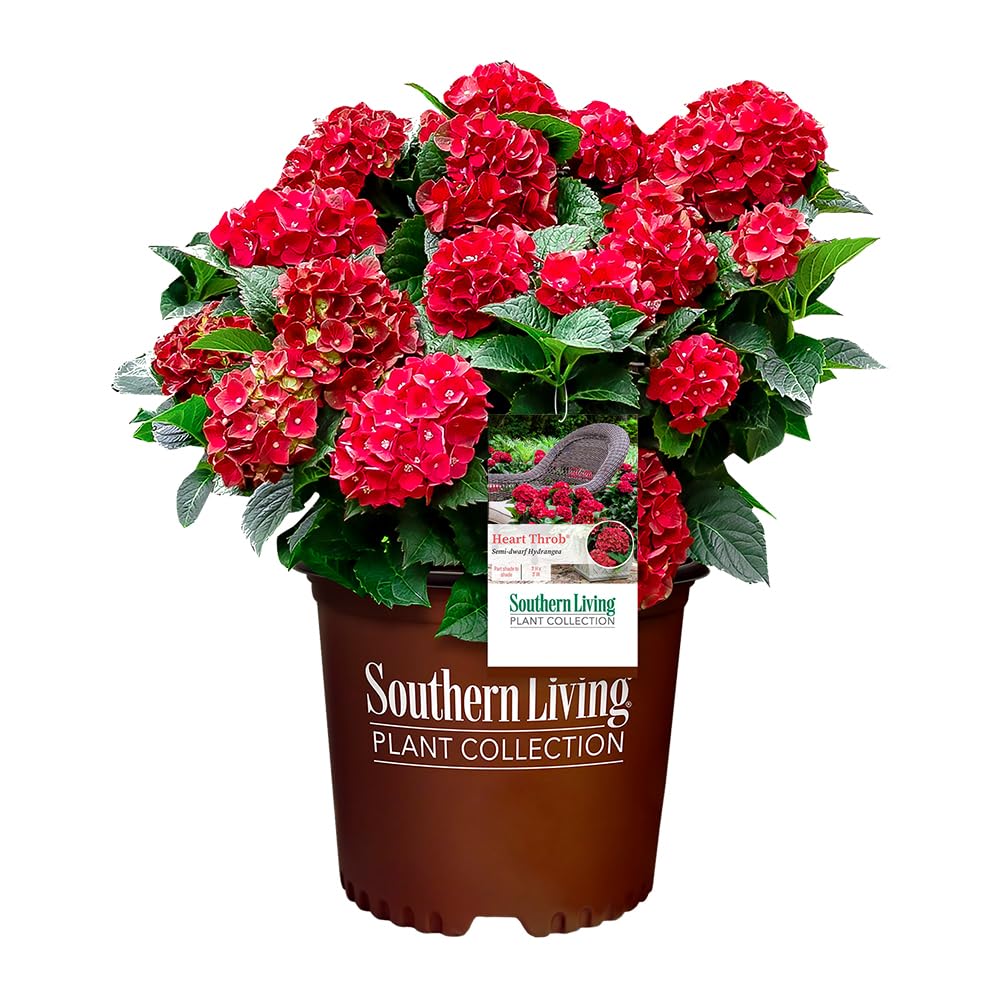
The Heart Throb Hydrangea from Southern Living brings a cherry-red flower cluster with green marbling that stands out vividly in the muted light of a shade garden. Unlike many bigleaf hydrangeas that refuse to bloom unless they soak up hours of morning sun, this cultivar has shown better bud retention in part-shade to shade conditions thanks to its dense, compact growth habit that protects developing buds.
Its deciduous nature means the foliage drops in winter, but the payoff is a 36-inch mound of dark green leaves by late spring and flower heads that hold their color well into early fall. The recommended spacing of 36 inches apart makes it perfect for a low border or a mass planting under a high tree canopy. Reviews highlight that the plants arrive exceptionally healthy, often with blooms already open, and in better condition than stock from local nurseries.
The one caveat is winter hardiness. A small number of customers reported that the shrub did not survive a harsh winter, particularly in zones at the colder edge of its range. Deep mulching around the crown before the first frost and planting in a spot shielded from harsh winds dramatically improves its odds. For anyone in zones 5-9 wanting a dense, shade-tolerant hydrangea with reliably dramatic color, this is the top contender.
Why it’s great
- Unique cherry-red bloom with green marbling
- Compact 36-inch size fits small shade gardens
- Arrives with blooms and healthy foliage
- Low maintenance once established
Good to know
- Deciduous — loses all leaves in winter
- Needs protection from harsh winter winds
- Best bloom in dappled or part shade, not total darkness
3. Proven Winners 2 Gallon Sprinter Boxwood
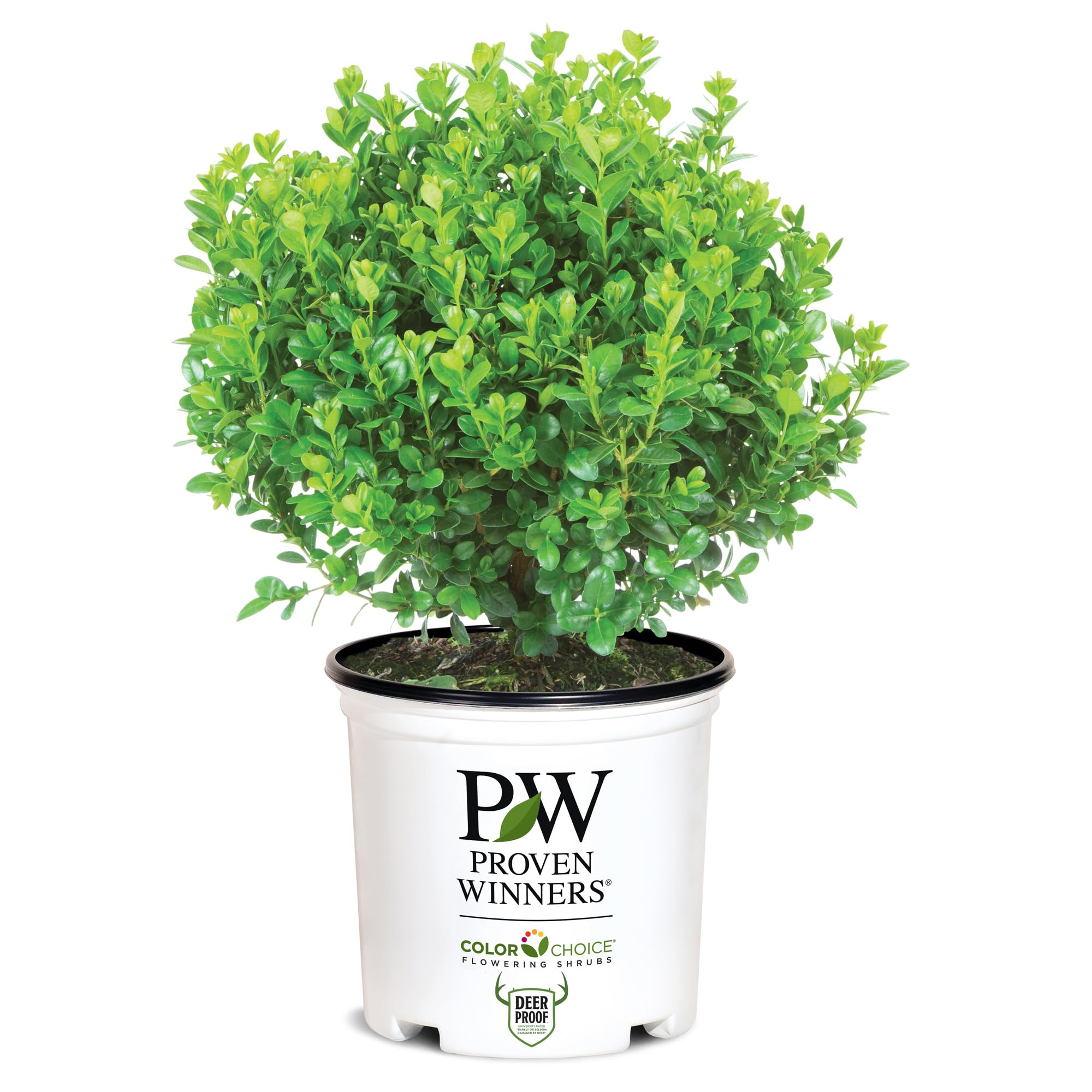
When you need a formal, evergreen hedge in a spot that never sees direct sun, the Sprinter Boxwood is the most dependable option available. Proven Winners bred this Buxus microphylla specifically for faster growth than traditional boxwoods, reaching 24-48 inches tall and wide in full shade conditions where many other boxwoods stall. The foliage is a vibrant green-yellow that doesn’t bronze in winter as much as older cultivars.
Customers consistently praise the packaging—plants arrive full, healthy, and without the dry, dead patches that plague mail-order boxwoods. The recommended spacing of 24 inches apart creates a dense wall within two growing seasons. It handles root competition from mature trees better than most shade shrubs because of its fibrous, adaptable root system.
The trade-off is that boxwoods, even shade-tolerant ones, are not bloomers. They exist as a structural backbone—a green backdrop for hostas, ferns, and impatiens. They also require consistent moisture during the first year; dry shade under a large tree will stunt them. For a classic, low-maintenance evergreen hedge that thrives where grass won’t grow, the Sprinter Boxwood is the clear winner.
Why it’s great
- Faster growth than traditional English boxwood
- Excellent winter foliage color with less bronzing
- Superb packaging with healthy, full plants
- Tolerates root competition from mature trees
Good to know
- Needs consistent watering the first season
- Not a flowering shrub — purely structural
- Can suffer leaf burn if hit by reflected afternoon sun
4. Ilex X meserveae ‘Blue Princess’ (Blue Holly) Evergreen, #2 – Size Container

The Blue Princess Holly breaks the rule that shade shrubs can’t produce significant visual interest. Its glossy, dark green leaves with a bluish cast remain evergreen all winter, and in late fall, the branches fill with bright red berries that persist into the coldest months—provided a male ‘Blue Prince’ pollinator is planted nearby. This is the only shrub on this list that delivers true winter color from fruit in a full-shade site.
The #2 container arrives with a well-established root system and, frequently, berries already present. At a mature height of 12 feet and a spread of 9 feet, it can serve as a tall privacy screen or a dramatic specimen in a shady corner. Customers note that the Blue Princess outperforms the popular Nellie Stevens holly in colder zones, surviving Zone 5 winters without the leaf damage that plagues less hardy cultivars.
The non-negotiables are a male pollinator for fruit and moderate moisture—this holly will not thrive in constantly wet soil. Some buyers were disappointed by the smaller pot size compared to what they expected, but the root-to-shoot ratio is excellent for a 2-gallon container. For year-round structure and a berry display that rivals any sun-loving shrub, this is the standout pick in this category.
Why it’s great
- Produces vibrant red berries in full shade
- Evergreen foliage with blue-green cast
- Excellent cold hardiness to Zone 5
- Grows into a substantial 12 ft privacy screen
Good to know
- Requires a male ‘Blue Prince’ holly for berries
- Needs moderate, consistent moisture
- Can reach 12 ft tall—not for tiny spaces
5. Southern Living 2 Gal. Obsession Nandina Shrub

The Obsession Nandina is the only shrub on this list that actively intensifies in color as the light drops. In full sun, the foliage holds a deep green with reddish tips. In full shade, the leaves develop an almost neon bright red and orange that makes a dark corner feel illuminated. It is a deciduous perennial in colder zones—losing leaves in winter—but in zones 8-10, it retains significant foliage year-round.
At a mature height of 48 inches with a moderately slow growth rate, it fits comfortably under low window sills or alongside shaded walkways without overwhelming the space. It produces no blossoms; the visual interest comes entirely from its multicolored foliage. Customer reviews emphasize how well the plants survive shipping from Southern Living’s nursery in North Carolina to points as far west as Oregon, arriving with moist soil and vibrant color.
The biggest issue is its temper: the “slow growing” label is accurate. Buyers expecting a fast screen will be disappointed. It also drops leaves in a hard freeze, leaving bare stems through winter in zone 6 and 7. For a low-growing, slow-spreading accent that ignites the shade garden with foliage color, this Nandina is unmatched.
Why it’s great
- Foliage turns bright red in full shade
- Low maintenance and drought tolerant once established
- Excellent shipping with healthy, colorful plants
- Compact 48-inch height fits small spaces
Good to know
- Slow growing — not a quick fill-in shrub
- Deciduous in colder zones; bare winter stems
- No flowers or berries — foliage only
6. Proven Winners – Hibiscus syriacus Azurri Blue Satin (Rose of Sharon) Shrub, #3 – Size Container

The Azurri Blue Satin Rose of Sharon is the tallest option in this roundup, reaching 8-12 feet at maturity with a spread of 6-10 feet, making it a legitimate privacy screen for the back of a shade garden. Its unique deep blue flowers with a red center appear in summer and continue through early fall, providing late-season color when many spring bloomers have faded. Despite the full-sun recommendation on its tag, it performs admirably in part shade to full shade, with customers reporting healthy growth and blooming in sites that receive only three to four hours of indirect light.
The #3 container size is significantly larger than the standard 2-gallon pot, giving this plant a head start with a robust root system. It ships dormant from late fall through winter, which is normal for this deciduous species. Customer reviews repeatedly mention the exceptional packaging that protects the plant even during cross-country shipping in extreme July heat, with specimens arriving in better condition than nursery stock.
The main compromise is that this is a late-leafing shrub—it will look like a dead stick until late spring in colder zones. It also requires moderate watering during its first summer and benefits from annual pruning to maintain shape. For a tall, deer-resistant, late-blooming shrub that can handle the darkest corner of a large landscape, this is the definitive choice.
Why it’s great
- Unique blue flowers with red center in deep shade
- Grows 8-12 ft tall for privacy screening
- Deer resistant and low maintenance
- Excellent packaging even for extreme weather shipping
Good to know
- Deciduous — bare stems late fall through spring
- Late to leaf out; looks dormant into late spring
- Needs regular pruning to keep shape
FAQ
Can any of these bushes survive under a dense evergreen tree canopy?
How do I get the Blue Princess Holly to produce berries in full shade?
Will the Heart Throb Hydrangea bloom in a spot with zero direct sun?
Final Thoughts: The Verdict
For most users, the bushes for full shade winner is the Rhododendron ‘Aglo’ because its small evergreen leaves and prolific pink blooms prove that deep shade doesn’t have to mean barren soil. If you want a formal evergreen structure without flowers, grab the Proven Winners Sprinter Boxwood. And for a tall, deer-resistant privacy screen with unique blue summer flowers, nothing beats the Azurri Blue Satin Hibiscus.