
Our readers keep the lights on and my morning glass full of iced black tea. As an Amazon Associate, I earn from qualifying purchases.
Specs are compiled from manufacturer listings and verified buyer reviews and can change over time — please confirm the key details on the product page before buying.
You get in an accident, pull the footage, and the license plate is a glowing blur — that is the fear that drives most front-and-rear dash cam purchases. Modern dual-channel cams have made crisp night video the norm rather than the exception, but you need to know which sensor and aperture specs actually deliver it.
I’m Min — the founder and writer behind Gadgets Feed. This guide is built by comparing the manufacturers’ published specifications and the patterns across verified customer reviews, so you get each pick’s real strengths and trade-offs instead of marketing spin.
Below, we break down the nine best front-and-rear setups for night vision, storage, and parking protection. This is the auto dash cam front and rear guide for drivers who want evidence-grade footage without paying for features they will never use.
Our Picks at a Glance
How To Choose The Best Auto Dash Cam Front And Rear
Dual-channel dash cams record the road ahead and behind you at the same time, so you have proof no matter which direction the other driver came from. The cheapest no-name units will capture video, but the resolution, night handling, and storage capacity are what separate a useful camera from a frustrating one.
Resolution: The Front Matters Most
The front camera is your primary evidence source, so that is where you want the highest resolution — 4K or 2.5K is ideal. The rear camera can be 1080P and still do its job, since it mainly needs to capture the car behind you in a collision.
Aperture: The Night Game Changer
Aperture is the size of the lens opening, written as F1.6 or F1.8. A lower number means the lens lets in more light, which directly translates to clearer footage after dark. Look for F1.8 or better (lower) if you drive at night regularly.
Storage and the “Free Card”
Most of these cams ship with a 64GB or 128GB card, which is genuinely enough for daily commutes thanks to loop recording. If you want long road-trip coverage without constant overwrites, check the maximum supported size — many of these units top out at 256GB or 512GB.
Quick Comparison
| Model | Best For | Front Resolution | Field of View | Max Storage | Amazon |
|---|---|---|---|---|---|
| TERUNSOUl 3-Channel★ Best Overall | Triple coverage + GPS | 4K UHD | 170° | 512 GB | Amazon |
| WOOLAACOO C5Best Value | Compact budget dual | 4K | — | 256 GB | Amazon |
| 70mai A410Night Vision Pick | Value night clarity | 2.5K | 125° | 256 GB | Amazon |
| FAIMEE F6 | Six-lane wide coverage | 4K UHD | 170° | 256 GB | Amazon |
| Coolcrazy 4K | 60fps smooth motion | 4K UHD | 170° | 128 GB | Amazon |
| Nanoby M1 | Cabin + front + rear | 4K | 160° | 256 GB | Amazon |
| 70mai A800SE | Wi-Fi 6 speed | 4K | 140° | 512 GB | Amazon |
| ROVE R2-4K | Top-tier proven reliability | 4K | 150° | 1 TB | Amazon |
| Vantrue S1 Pro | 60fps + AI safety alerts | 2.7K | 160° | 1 TB | Amazon |
In-Depth Reviews
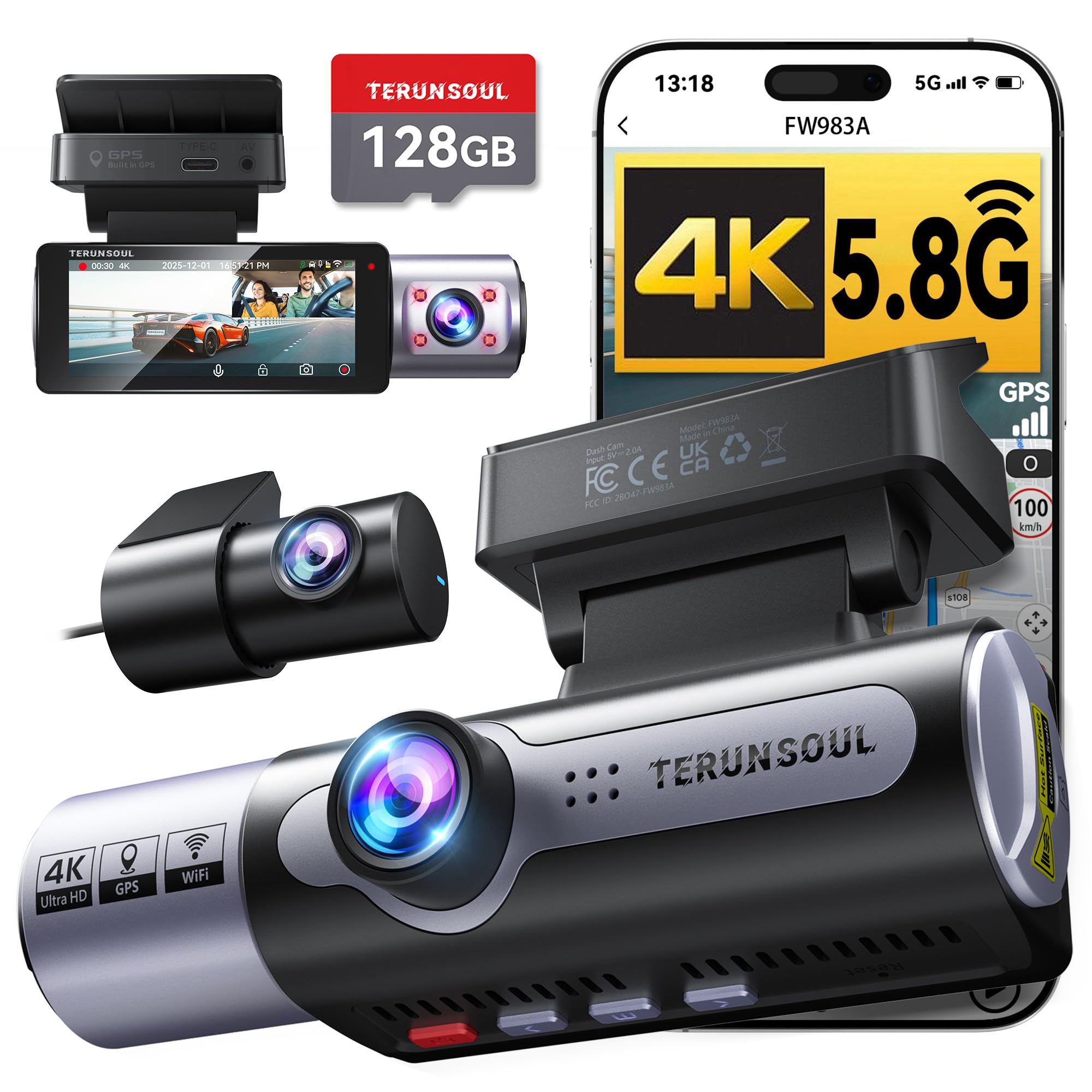
1. TERUNSOUl 4K 3-Channel Dash Cam
Our pick — over 4.5★ from 400+ verified ratings; the strongest balance of quality and price.
Triple-lens protection with a 170° front eye that catches every lane.
This is the rare dash cam that covers front, rear, and cabin simultaneously, giving you near-360° panoramic protection. The front camera records in sharp 4K UHD (ultra-high definition, about four times the pixels of 1080P), while the rear and interior cameras each capture 1080P at a 165° wide angle — so rideshare drivers and parents can see inside the car as clearly as the road ahead.
The starlight-grade five-layer lens with F1.6 aperture and HDR keeps night footage crisp. Owners praise the crisp day-and-night footage and the quick install, aided by the included 128GB card, GPS mount, and wiring tools.
What wins people over is the sheer completeness: built-in GPS embeds your speed, route, and coordinates directly into footage, and the 5.8GHz Wi-Fi lets you pull videos to your phone at up to 20MB/s. The only real catch is that 24-hour parking mode needs a separate hardwire kit, which is not in the box.
Everything Included
- Triple-channel coverage captures front, rear, and cabin
- 170° front field of view spans multiple lanes
- Free 128GB card means zero extra purchases to start
- Collision sensor auto-locks critical footage
Before You Buy
- Parking mode requires a separate hardwire kit
- At 250g, it is noticeably heavier than most rivals
Reach for this if: you want the most complete coverage — front, cabin, and rear — without buying a second camera.
Look elsewhere if: you want a barely-there camera; at 250g versus 65g on the compact WOOLAACOO, this is a bulkier unit.
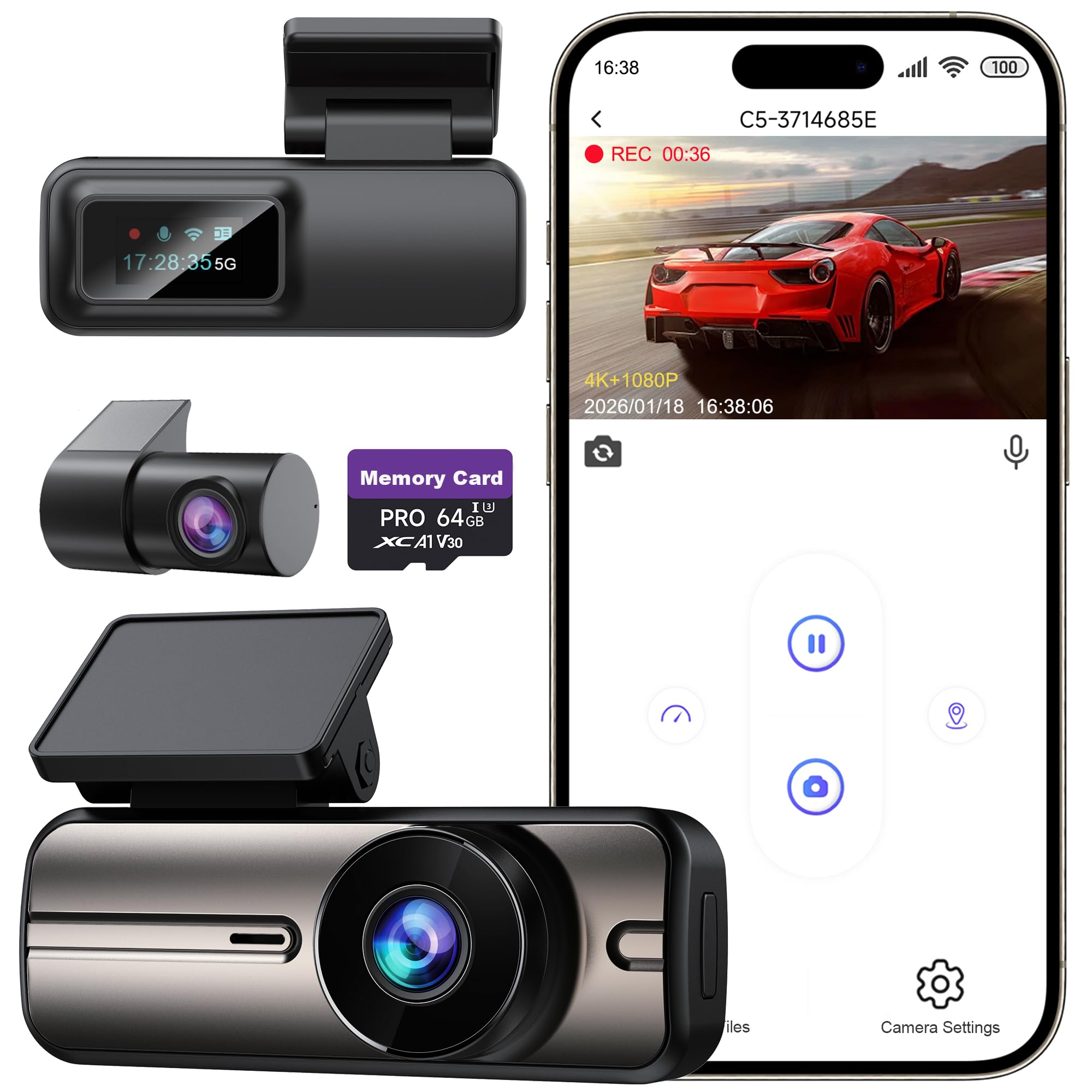
2. WOOLAACOO C5 Dash Cam
A featherweight 4K front cam that hides behind your mirror.
At just 65g and barely over an inch deep, this is the camera you forget is there — and that is exactly the point. The front lens records 4K ultra-high-definition while the rear captures 1080P, giving you clear reads on road signs, lane markings, and plates without a bulky unit blocking your view.
The compact body still packs an F1.8 large aperture for night driving, plus a G-sensor (a small motion sensor that detects a bump and locks the footage so it cannot be overwritten). A 64GB card comes pre-installed, and the charger includes a spare USB port so you can keep your phone topped up while recording.
The honest trade-off is the app: buyers report you need a membership to view your videos and timeline through it, which feels like a sting for a budget cam. That said, owners still call it easy to install with clear footage, and the small size is its biggest selling point.
Compact clarity: A genuinely tiny 4K unit that keeps plates readable night and day, at a size rivals cannot match.
The catch: the app asks for a paid membership to review footage — a real annoyance on an otherwise great value pick.
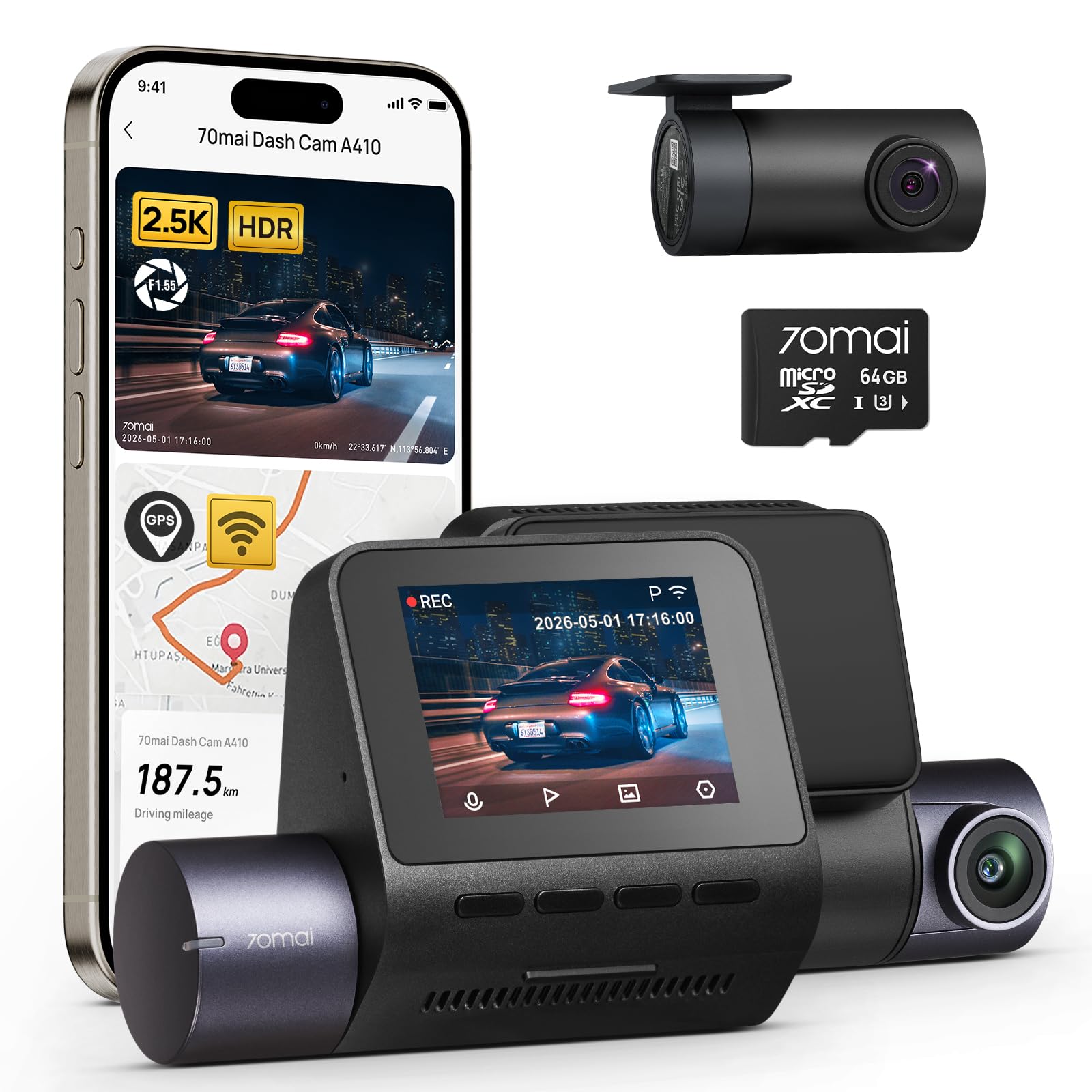
3. 70mai A410 Dash Cam
A low-light specialist with an F1.55 aperture that drinks in darkness.
The 70mai A410 makes its case with the widest aperture on this list — F1.55 — paired with HDR and super night vision to pull license plates out of near-total darkness. The front records at 2.5K (2560x1440P) and the rear at 1080P, with a 125° wide-angle lens spanning four lanes of traffic.
Owners praise the camera’s quality, easy installation, and discreet mirror-hugging design. The built-in GPS stamps coordinates, speed, and timestamps onto footage, and the electrostatic sticker mount holds firmly without leaving residue — ideal for leased cars.
The main grumbles center on the cable length for the rear camera — some found it too short — and occasional connectivity hiccups with the app. For the price, the crisp footage and low-light ability make it a smart buy for night commuters.
Low-Light Strengths
- F1.55 aperture captures clear details in unlit areas
- 125° lens covers four full lanes
- 2.5K front video balances detail and file size
- 18-month warranty and electrostatic mount included
Frequent Feedback
- Rear camera cable can run short on larger vehicles
- App connectivity is occasionally unreliable
Who it fits: night drivers and commuters who want evidence-grade low-light footage without a premium price tag.
Who should pass: truck owners with long wheelbases, since the rear cable length is a recurring complaint.
4. FAIMEE F6 Dash Cam
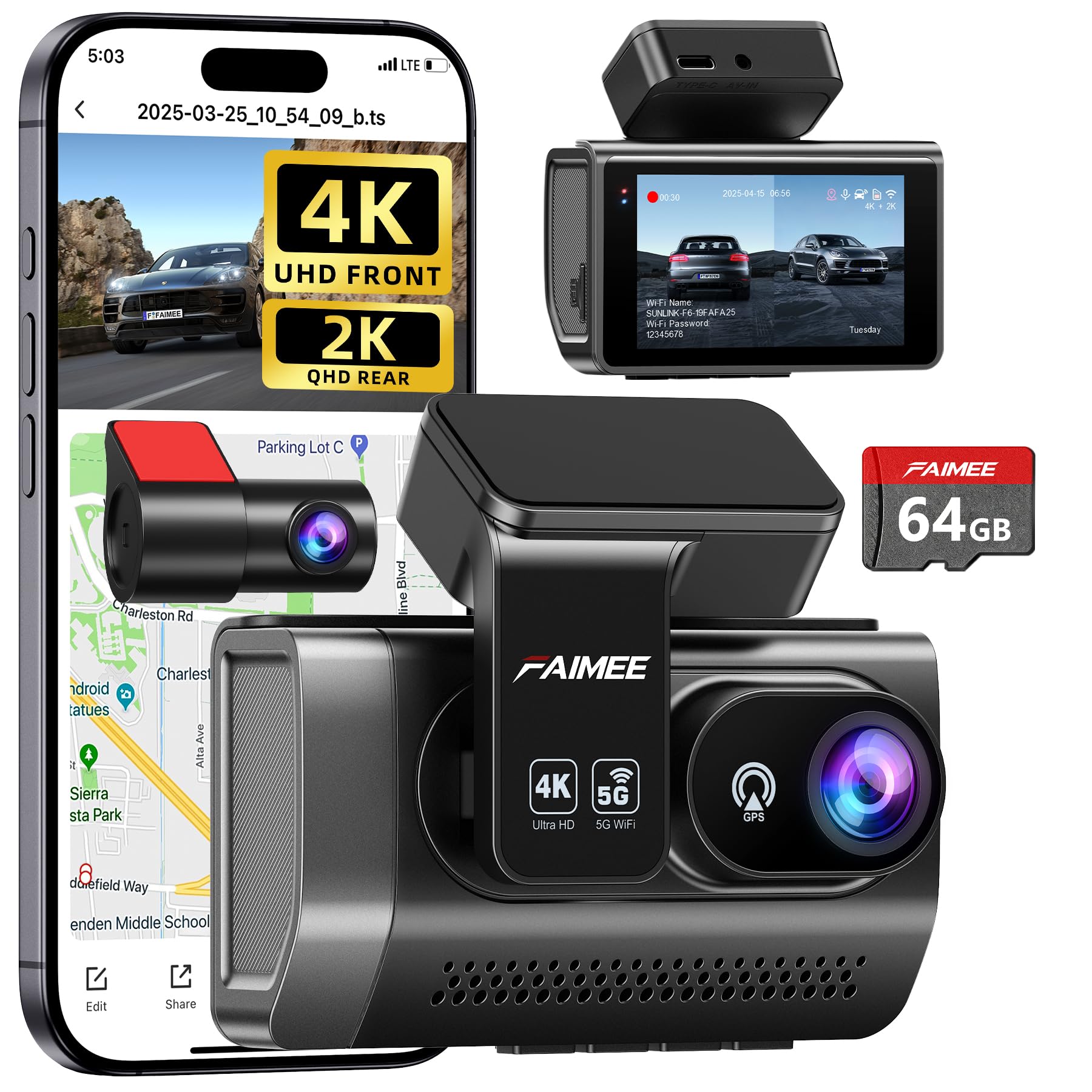
A 170° front eye that stretches coverage across six lanes.
The FAIMEE F6 stands out with the widest front field of view you can get — 170°, which the maker says captures up to six lanes of traffic. That expansive coverage pairs with a 4K UHD front camera (3840×2160P) and a 2K rear (2304x1296P), both with F1.8 apertures and WDR for balanced low-light shots.
This is a camera built around evidence: built-in GPS logs your speed, route, and coordinates, while the G-sensor instantly locks footage when it detects a collision. A 64GB high-endurance card ships in the box, and you can expand up to 256GB if you want longer retention.
Owners describe it as good value with very good video for the price, and the 18-month warranty backs the hardware. Setup can be a bit involved, and the app takes some configuring, but the dual-band Wi-Fi works well once connected.
Max coverage: The 170° front lens shows more of the road than most rivals, making it a strong pick for highway drivers.
Setup time: Expect a longer first-time configuration; owners note it takes patience to dial in.
5. Coolcrazy 4K Dash Cam
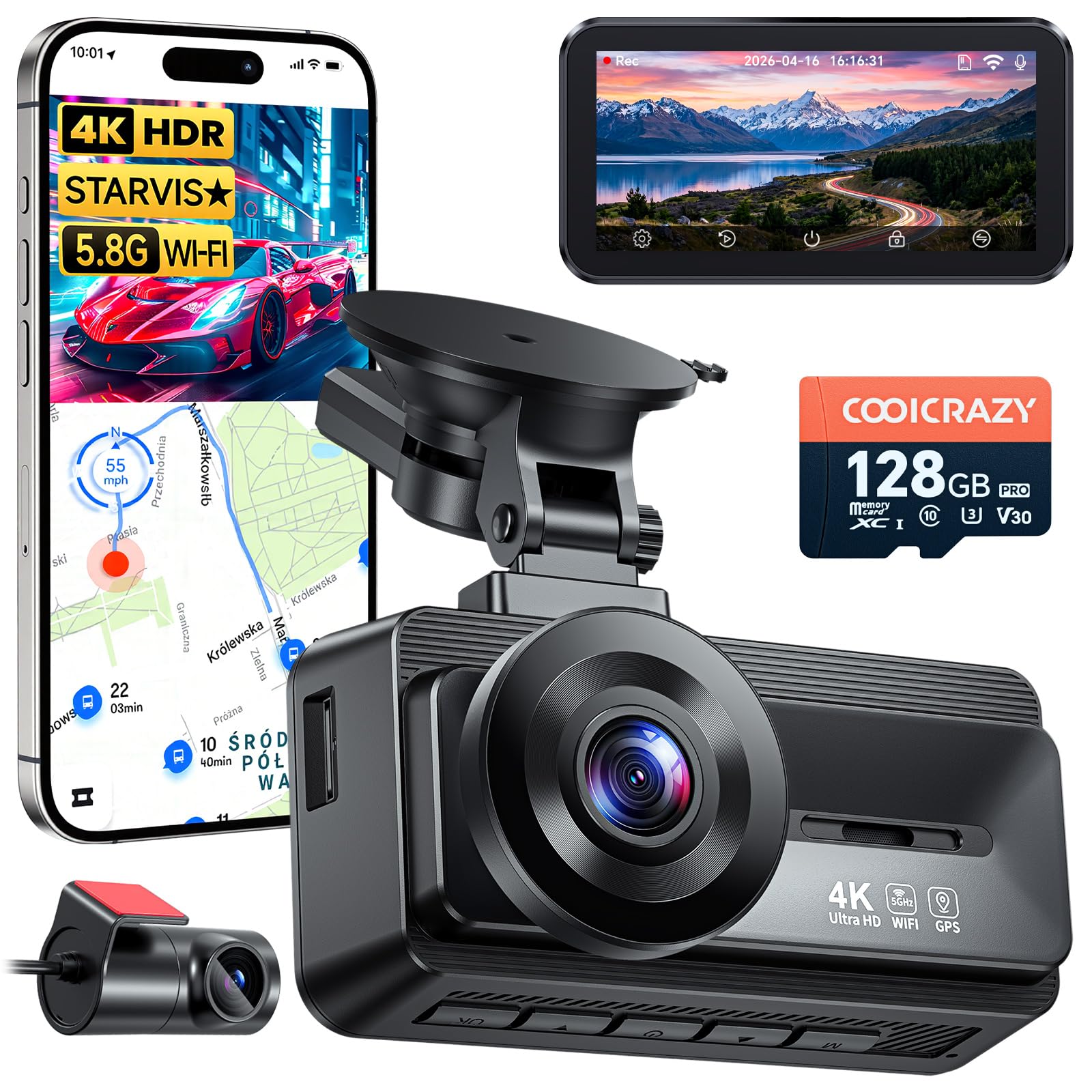
60fps smoothness that keeps fast-moving plates readable at speed.
The Coolcrazy earns its place with a spec few rivals match: 4K UHD recording at a high 60fps frame rate. That smoothness means less blur on license plates and signs when you are driving fast — exactly the moment you need a clear read.
It pairs a 170° front lens with a 150° rear, both boosted by a STARVIS starlight sensor and large-aperture WDR to cut glare from oncoming headlights. A 128GB card is pre-installed, and the built-in GPS syncs location, speed, and route with your footage for solid evidence.
Owners love the sharp day-and-night footage and reliable app, though parking mode needs a separate hardwire kit. For a camera this capable at the price, that is a minor asterisk.
Motion Clarity
- 60fps capture produces smooth, blur-free footage at speed
- STARVIS sensor keeps night shots clear without extra lighting
- 170° front and 150° rear cover both ends well
- Free 128GB card is ready to record from the start
Fine Print
- Parking monitoring requires buying a hardwire kit separately
- Sticky rear mount leaves tape residue if removed
Grab it for: highway drivers who want buttery-smooth 60fps footage without paying a premium.
skip it if: 24-hour parking protection is a must-have and you do not want to buy an extra kit.
6. Nanoby M1 3-Channel Dash Cam

The rideshare-ready triple cam with infrared interior night vision.
The Nanoby M1 is built for cabin coverage: a 4K front camera, a 1080P rear, and a 1080P interior cam with 4 infrared LEDs for night vision inside the car. That makes it a natural fit for rideshare drivers, taxi work, and families who want to know what is happening in the back seat.
The front lens opens to 160°, and the whole unit runs on a crisp 3.18-inch IPS screen. Transfer is fast too — the 5.8GHz Wi-Fi downloads videos at up to 8MB/s, roughly four times quicker than older 2.4GHz systems.
Owners highlight the crisp 4K quality and easy setup, with a 64GB card preloaded. The recurring caveat is the same as most: 24-hour parking mode needs a Type-C hardwire kit sold separately, and a few had the mount lose its grip on the windshield.
Full interior view: The infrared cabin cam captures the back seat clearly at night — rare and valuable for rideshare drivers.
Mount note: The adhesive can struggle in heat; buy an electrostatic film if your windshield runs hot.
7. 70mai A800SE 4K Dash Cam
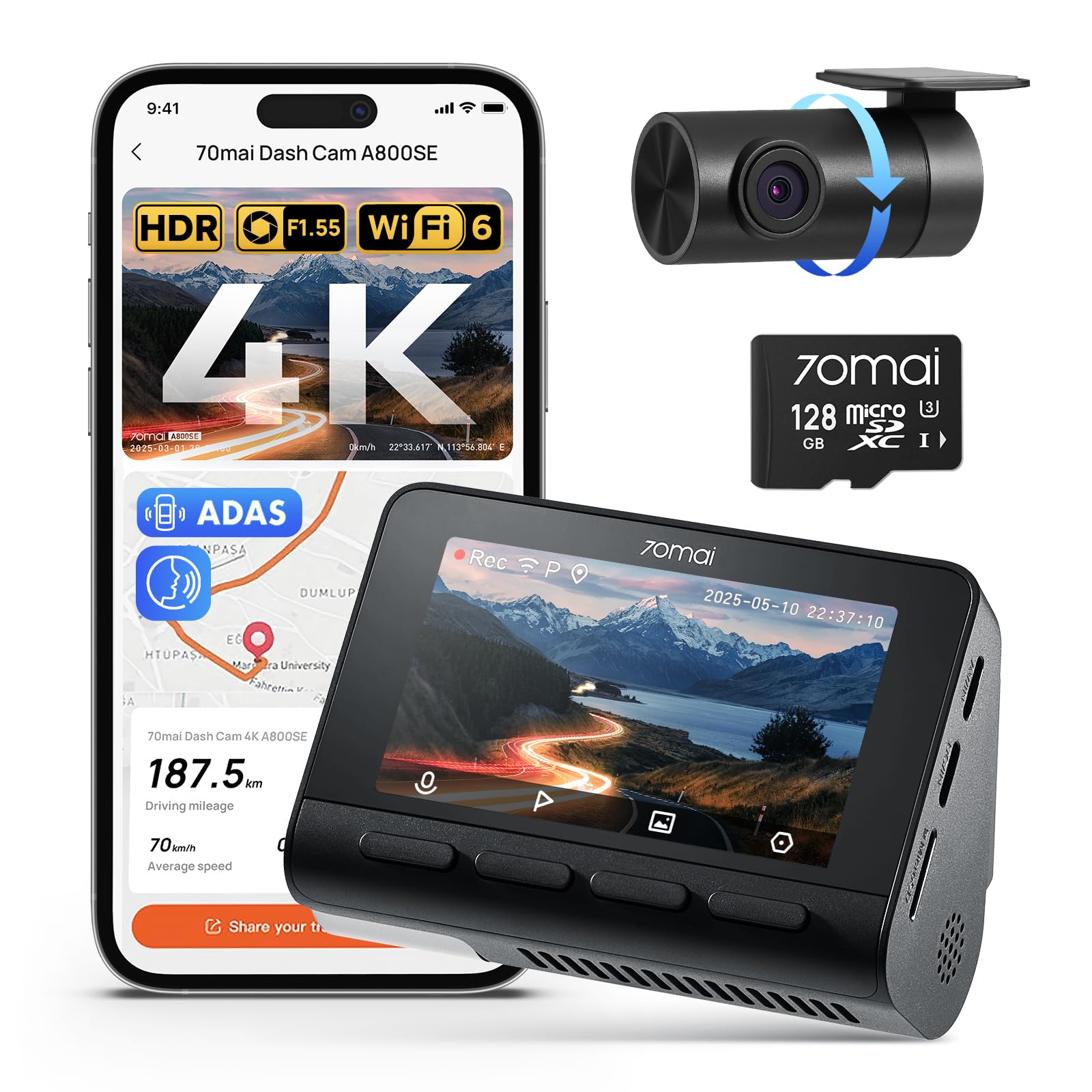
Wi-Fi 6 transfer speeds that pull footage five times faster.
The 70mai A800SE is the connectivity king here, with built-in Wi-Fi 6 that the maker says transfers data up to five times faster than traditional Wi-Fi dash cams. That means grabbing a clip for a police report takes seconds, not minutes.
Video quality is anchored by a 4K front camera and 1080P rear, both with an F1.55 aperture and dual HDR for strong night performance. The rear lens is adjustable, so you can point it out the back window or into the cabin as needed.
Owners call it easy to install and reliably sharp in daylight, with a free 128GB card and support up to 512GB. The recurring notes are that low-light rear footage can go dark with heavy window tint, and the ADAS alerts can over-trigger on bumps — both adjustable in settings.
Speed & Clarity
- Wi-Fi 6 moves files up to 5x faster than standard cams
- F1.55 aperture and dual HDR keep night footage usable
- Adjustable rear lens adds cabin-recording flexibility
- OTA updates keep the system current without effort
Owner Notes
- Rear camera struggles in very dark or tinted windows
- ADAS alerts can fire too easily; sensitivity tuning needed
Choose this for: quick photo-to-phone transfers and drivers who want ADAS lane-departure warnings built in.
Pass if: you mostly drive at night with heavily tinted rear glass.
8. ROVE R2-4K Dual Dash Cam

The crowd-proven 4K workhorse with a Sony STARVIS 2 sensor.
The ROVE R2-4K is the most battle-tested camera on this list, with a massive following of owners who swear by its reliability. At its core is a Sony IMX675 STARVIS 2 sensor in the front camera — the latest-generation low-light chip — paired with an F1.5 aperture for brighter night shots.
The front records 4K at 30fps with a 150° angle, the rear captures 1080P at 140°, and the whole system runs on a built-in supercapacitor (a power component that withstands heat better than a traditional battery). It ships with a free 128GB card and supports up to a massive 1TB if you want weeks of coverage.
Owners praise the easy install, sharp daytime footage, and useful English instruction booklet. The recurring gripe is wireless connectivity — some units have connection hiccups with phones — and the screen can be hard to read through polarized sunglasses.
Why It Leads
- Sony STARVIS 2 sensor is a genuine low-light upgrade
- 1TB max storage is the most expandable here
- Supercapacitor design lasts longer in summer heat
- Suction and sticky mounts both included in the box
Honest Limits
- Wi-Fi pairing can be finicky until you follow the manual
- Screen visibility drops with polarized sunglasses
Pick this if: you want a proven, long-lasting 4K system with the best low-light sensor and massive storage headroom.
Think twice if: you expect flawless app pairing on the first try.
9. Vantrue S1 Pro Dash Cam
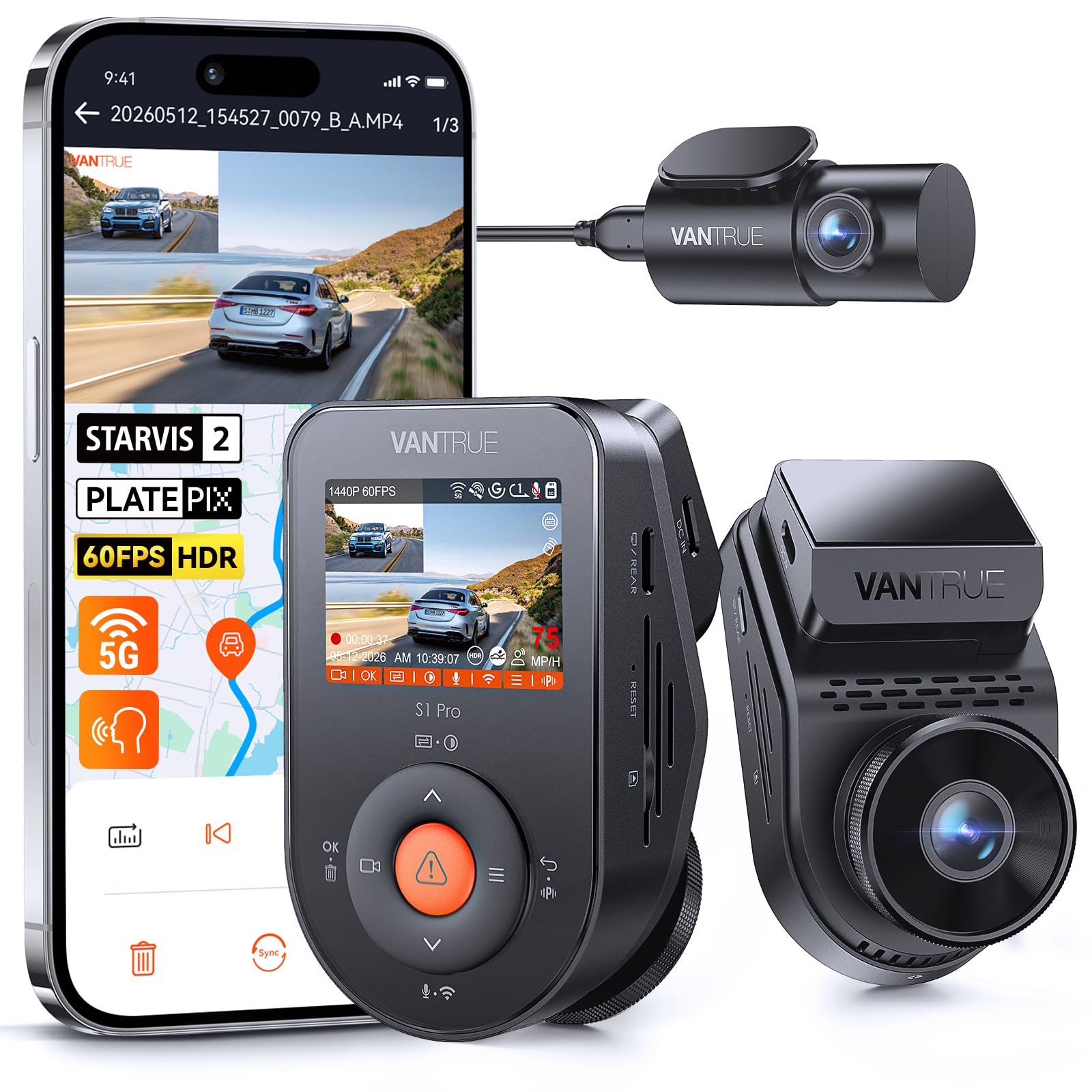
An AI co-pilot that warns you before the collision, not just after.
The Vantrue S1 Pro is the smartest camera here, packing AI-powered ADAS (advanced driver-assistance) that alerts you to potential forward collisions and a BSD (blind-spot detection) system for lane changes and reversing. It is a camera that helps you avoid the accident it is also recording.
Video capture is a choice: 1440P at 60fps for twice the smoothness, or 1944P with 1080P dual-lens on the rear. The STARVIS 2 sensor and F1.8 aperture handle night well, and PlatePix HDR technology is tuned specifically for pulling plate numbers out of glare.
Owners praise the exceptional low-light quality and intuitive app, with voice control in English, Japanese, Russian, and Chinese. The catch is the button layout — several owners find the menu controls frustrating — and the 2.7K resolution, which is not true 4K.
Smart protection: ADAS and BSD warnings add proactive safety that no other pick on this list matches.
Control quirks: The physical buttons are awkward; plan to rely on the app for most settings.
Understanding the Specs
Resolution & Frame Rate
Resolution determines how much detail the camera can capture, with 4K (3840×2160P) being the sharpest option and 2.5K (2560×1440P) a smart balance of quality and file size. Frame rate, measured in fps, matters for fast driving — 60fps footage is noticeably smoother and less blurry than 30fps when both cars are moving quickly.
Aperture & Night Sensors
Aperture (written as F1.5, F1.6, or F1.8) is how wide the lens opens, and a lower number lets in more light — critical for night plates. STARVIS sensors are a low-light chip technology that boosts visibility in darkness, while WDR and HDR are processing tricks that balance bright headlights against dark shadows for a clearer overall image.
FAQ
Will a front-and-rear dash cam drain my car battery overnight?
How much storage do I need for a 4K front and rear dash cam?
What does a G-sensor do in a dash cam?
Is a 125° field of view wide enough, or do I need 170°?
Do I need a hardwire kit for parking mode?
What is the difference between 2.5K and 4K front resolution?
Can I use the dash cam app without the camera powered on?
Are dash cams legal to use while driving?
Why does my rear camera footage look dark at night?
Final Thoughts: The Verdict
For most drivers, the auto dash cam front and rear winner is the TERUNSOUl 3-Channel because triple coverage with a 170° front lens and a free 128GB card is an unbeatable combination. If you want the fastest transfers and ADAS warnings, grab the 70mai A800SE. And for the proven low-light king with massive storage, the ROVE R2-4K is the crowd favorite to reach for.
How We Picked
We do not accept paid placement. Every pick is matched to a real buyer and a real use-case; we do not hands-on test units.
Sources & Methodology
Specifications: manufacturer listings and product documentation. Review insights: verified customer reviews, as of August 2026. Pricing: not shown on this page (it changes often); check the current price via the retailer link.
As an Amazon Associate, Gadgets Feed earns from qualifying purchases. This does not affect which products we feature.