
Rust never sleeps, and if you’re staring at a flaking chassis, a pitted trailer frame, or a weathered engine bay, you already know the fight is real. The difference between a patch job that lasts a season and a restoration that holds for years comes down to what you put on the metal first. An auto epoxy primer is not just paint — it’s a chemically bonding barrier that converts corrosion into a stable base and locks out moisture and oxygen.
I’m Min — the co-founder and writer behind Gadgets Feed. I’ve spent countless hours parsing technical data sheets, analyzing customer field reports, and comparing the chemical makeup of primers so you don’t have to guess which can will actually bond to bare steel and stop rust in its tracks.
Whether you’re refreshing a daily driver or saving a classic from the crusher, this guide cuts through the noise to help you find the best auto epoxy primer for your specific project and budget.
How To Choose The Best Auto Epoxy Primer
Selecting the right primer for your automotive project means understanding the chemistry of adhesion and the specific surface you’re working with. A universal one-can solution rarely delivers professional results across bare metal, rusted steel, aluminum, and fiberglass.
2K vs. 1K: The Catalyst Difference
A 2K (two-component) epoxy primer requires you to activate a hardener before spraying, creating a chemical cross-link that bonds at the molecular level. This delivers superior adhesion, corrosion resistance, and durability compared to 1K aerosols that dry by solvent evaporation alone. If you are painting bare metal or sealing a repair, a 2K system is the only reliable choice for long-term protection.
Rust Converter vs. Epoxy Barrier Coat
A rust converter chemically neutralizes iron oxide into a stable, paintable layer, but it does not physically seal the surface like a true epoxy barrier coat. For heavy flaking rust, a dedicated rust encapsulator with heat and UV resistance is often the better play. For clean or lightly sanded metal, a high-build epoxy primer provides the strongest foundation for your topcoat.
Spray Method and Coverage Per Can
Aerosol convenience comes at the cost of coverage: a standard 12-ounce 2K can covers roughly 10 to 16 square feet, while brush-on quarts can cover 56 square feet or more. If you are coating an entire truck chassis or boat hull, a quart or gallon of two-part epoxy will save you time and money over multiple aerosol cans. For small touch-ups or motorcycle parts, the precision of a fan-spray nozzle is worth the premium.
Quick Comparison
On smaller screens, swipe sideways to see the full table.
| Model | Category | Best For | Key Spec | Amazon |
|---|---|---|---|---|
| Eastwood 2K Epoxy Gray Primer | Premium Aerosol | Professional bodywork and panel repair | 48-hour pot life, wide fan spray | Amazon |
| SprayMax 2K Epoxy Primer Black | Premium Aerosol | Fast-drying direct-to-metal application | 15-minute dust-dry, variable nozzle | Amazon |
| TotalBoat TotalProtect Epoxy Barrier Coat | Premium Liquid | Marine and below-waterline protection | 56 sq ft per quart, high-build | Amazon |
| MuzeFansi Rust Converter & Metal Primer | Mid-Range Liquid | Eco-friendly water-based conversion | Low VOC, water cleanup, 350°F heat tolerant | Amazon |
| Meuvcol Rust Reformer Paint | Mid-Range Liquid | Heavy-duty rust encapsulator for chassis | 35 oz, brush-on, 24-hour dry time | Amazon |
| SMAPHY Rust Converter & Metal Primer | Value Liquid | Budget-friendly rust encapsulation | 100 sq ft coverage per can | Amazon |
| Transtar 4603 Gray 2-in-1 Primer | Budget Aerosol | Quick touch-ups and small repairs | Wet sandable in 20 minutes, 15 oz | Amazon |
In‑Depth Reviews
1. Eastwood 2K Epoxy Gray Primer – AeroSpray

The Eastwood 2K Epoxy Gray Primer sets the benchmark for aerosol catalyzed primers in the automotive refinishing space. The integrated 2K activator delivers a true chemical cure with a 48-hour pot life, giving you an unusually generous window to work with a single can. The proprietary wide-fan nozzle mimics a professional HVLP spray pattern, which translates to consistent film build on body panels, aluminum, and fiberglass without the orange peel typical of standard rattle cans.
Coverage is rated at 10 to 16 square feet per 12-ounce can — leaner than some competitors, but the film thickness and adhesion strength justify the trade-off. Users consistently report excellent results on bare steel and over sanded body filler, with sandability after a full cure that makes block-sanding straightforward. The gray color acts as an ideal neutral base for any topcoat color.
This is the right choice for the serious DIYer or small-shop pro who values chemical bonding over solvent-based shortcuts. The 3-year shelf life before activation and the German engineering behind the nozzle design make this a premium tool, not just a can of paint. If you are restoring a car body or painting replacement panels, this is the primer to beat.
Why it’s great
- True 2K chemical cure with 48-hour pot life
- Professional wide-fan spray pattern for even coats
- Excellent sandability after full cure
Good to know
- Limited coverage per can (10-16 sq ft)
- Requires careful activation timing
2. SprayMax 2K Epoxy Primer Black
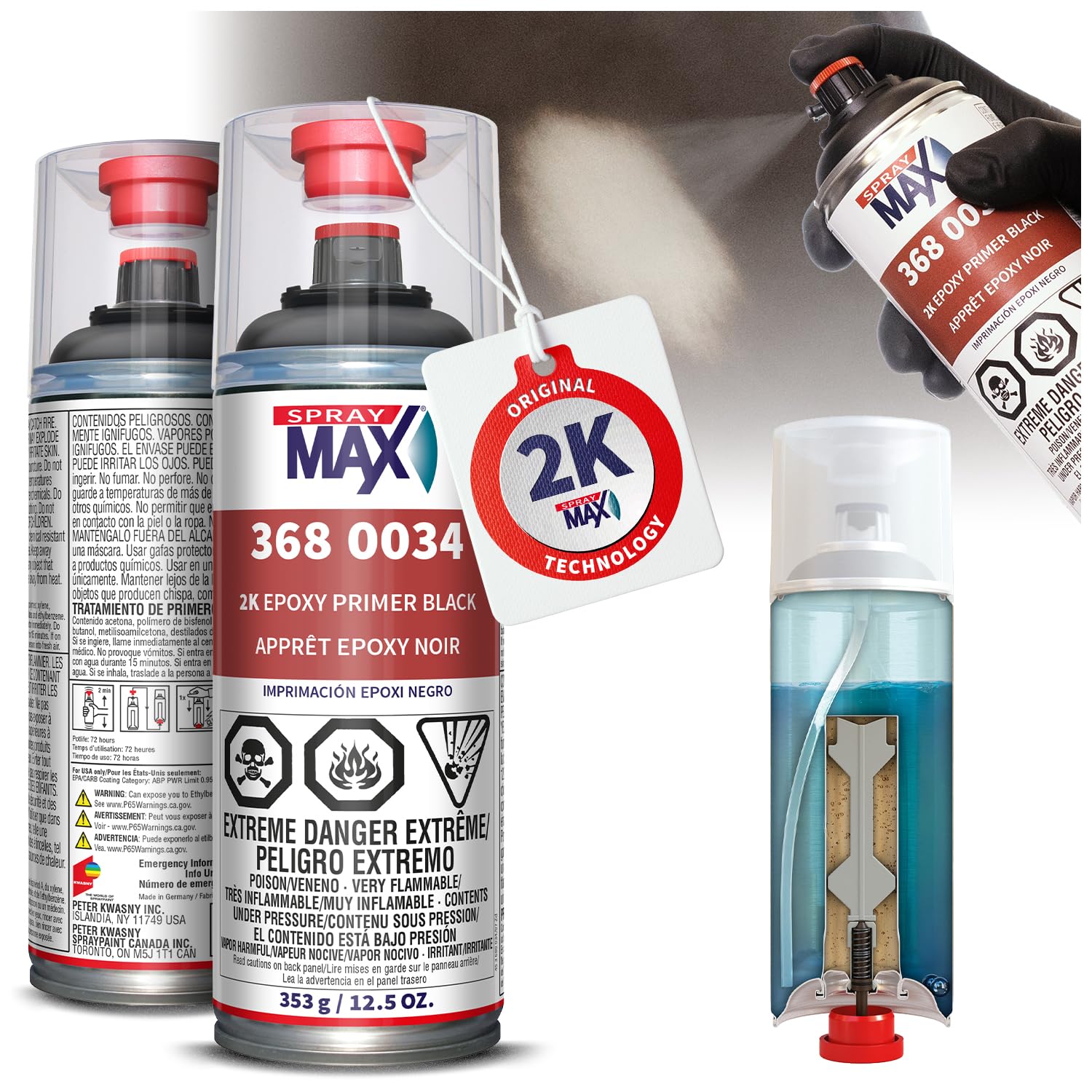
SprayMax brings a fast-drying 2K epoxy primer to the aerosol format with a dust-dry time of just 15 minutes, which is a major workflow advantage for multi-stage jobs. The variable nozzle allows you to dial in a fan pattern that suits the panel size, and users consistently note how smoothly the paint lays down without clogging — a direct improvement over many single-stage primers.
One 12.5-ounce can is sufficient for a motorcycle tank and fenders, or a single car door and rocker panel. Real-world feedback from a user who painted a fiberglass hood scoop reports no paint failure after two years, confirming the long-term chemical bond. The black finish also acts as an excellent sealer coat for dark topcoats, reducing the number of color coats needed.
The primary trade-off is coverage: expect roughly 10 to 14 square feet per can, and you may need three cans for a full car panel set. The sputtering that some users observed near the end of a can is a minor nuisance but not a dealbreaker given the overall quality. For small-to-medium projects where speed and adhesion are paramount, this is a top-tier pick.
Why it’s great
- Blazing fast 15-minute dust-dry time
- Adjustable fan nozzle for precise spray control
- Proven long-term adhesion on metal and fiberglass
Good to know
- Coverage is limited on large surfaces
- Can sputter slightly near end of can
3. TotalBoat TotalProtect Epoxy Barrier Coat (Gray, Quart)
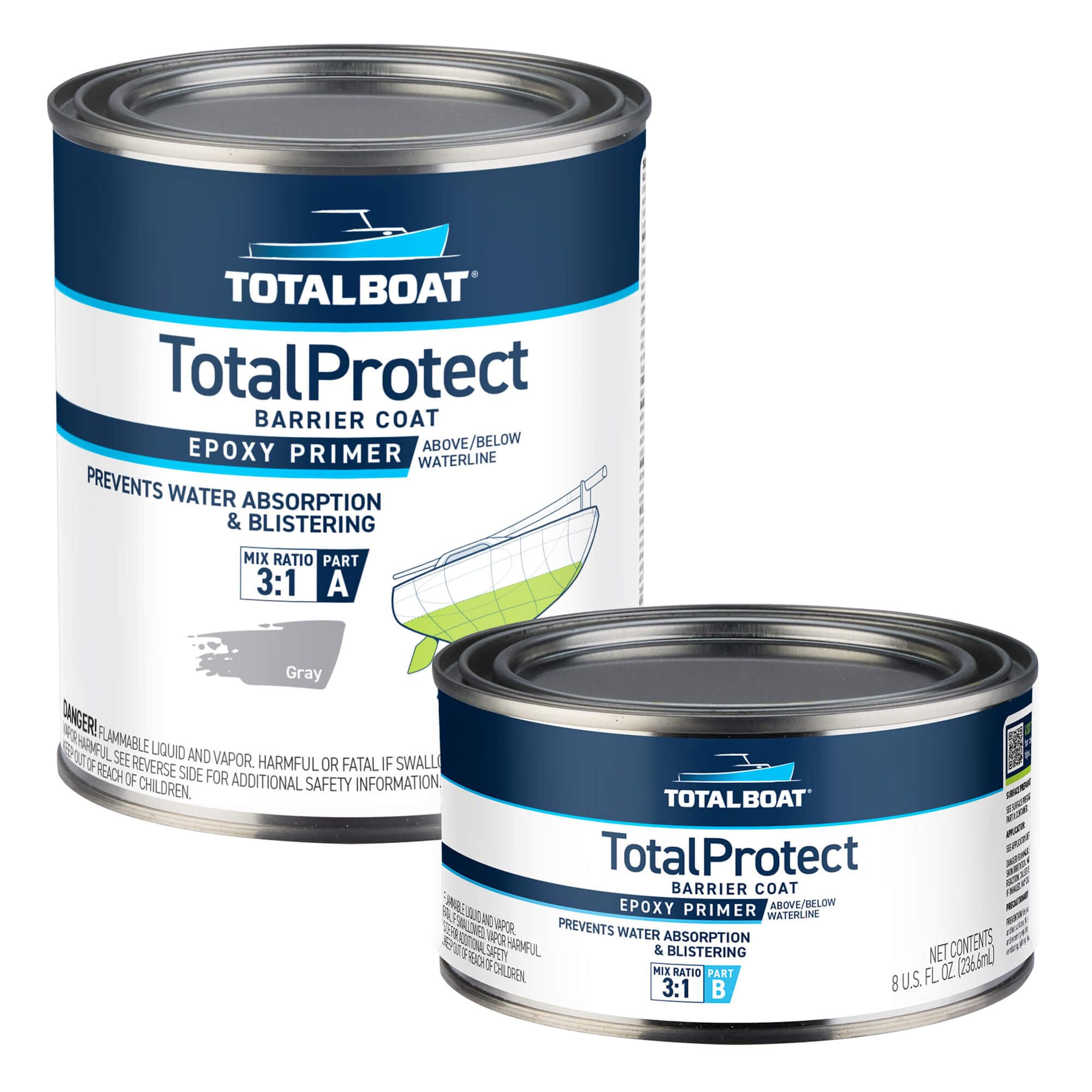
The TotalBoat TotalProtect Epoxy Barrier Coat is a two-part, high-build epoxy that delivers a thick, flexible barrier designed for use above and below the waterline on fiberglass hulls. The quart covers 56 square feet at 7 mils wet film thickness, which is a dramatic improvement over aerosol options — it is the obvious choice for coating entire bilges, trailer frames, or boat bottoms.
Users consistently praise its adhesion to epoxy, gelcoat, and JB Weld, though they caution that it cures extremely hard and requires 80-grit sanding if a smooth finish is desired above the waterline. The pot life is a generous four hours, giving you ample time to roll or brush large areas. Mixing is straightforward with a drill-mounted paddle, and cleanup requires xylene or acetone.
This is not a rattle-can convenience product. It is a professional-grade marine coating that demands proper surface prep, but the payoff in durability is unmatched among the primers reviewed here. For anyone restoring a boat, coating a trailer undercarriage, or sealing a chassis where water immersion is a risk, this is the definitive solution.
Why it’s great
- High-build epoxy barrier with 56 sq ft per quart
- Excellent adhesion to fiberglass, gelcoat, and metal
- Four-hour pot life for large-area application
Good to know
- Extremely hard cure requires aggressive sanding
- Not a spray-and-go aerosol — needs roller or brush
4. MuzeFansi Rust Converter & Metal Primer (35 oz)

The MuzeFansi Rust Converter & Metal Primer occupies a unique position as a water-based, low-VOC rust encapsulator that still delivers industrial-grade results. With a heat resistance rating of 350°F (176°C), it is suitable for engine bay components and exhaust-adjacent parts where many standard primers would fail. The 35-ounce container offers generous volume, and users report excellent coverage on heavy rust scale, flaky rust, and old paint.
Application is brush-on or roller, and the water cleanup is a genuine convenience for indoor or confined-space work. The finish dries to a flat black that bonds tightly to the substrate, and multiple thin coats are recommended for optimal film build. Real-world reports confirm that it holds up well on trailer frames and outdoor metal surfaces, though one user noted poor adhesion on completely bare, unrusted metal.
This is the smart pick for the environmentally conscious restorer who needs to stop rust without toxic solvents. The 72-hour use-window after opening is a constraint, but for a single-day project, the ease of cleanup and low odor make it a compelling mid-range choice.
Why it’s great
- Water-based with low VOC and easy cleanup
- Withstands heat up to 350°F
- Excellent coverage on heavy rust scale
Good to know
- Poor adhesion on bare unrusted metal
- Must use within 72 hours after opening
5. Meuvcol Rust Reformer Paint (35 oz)
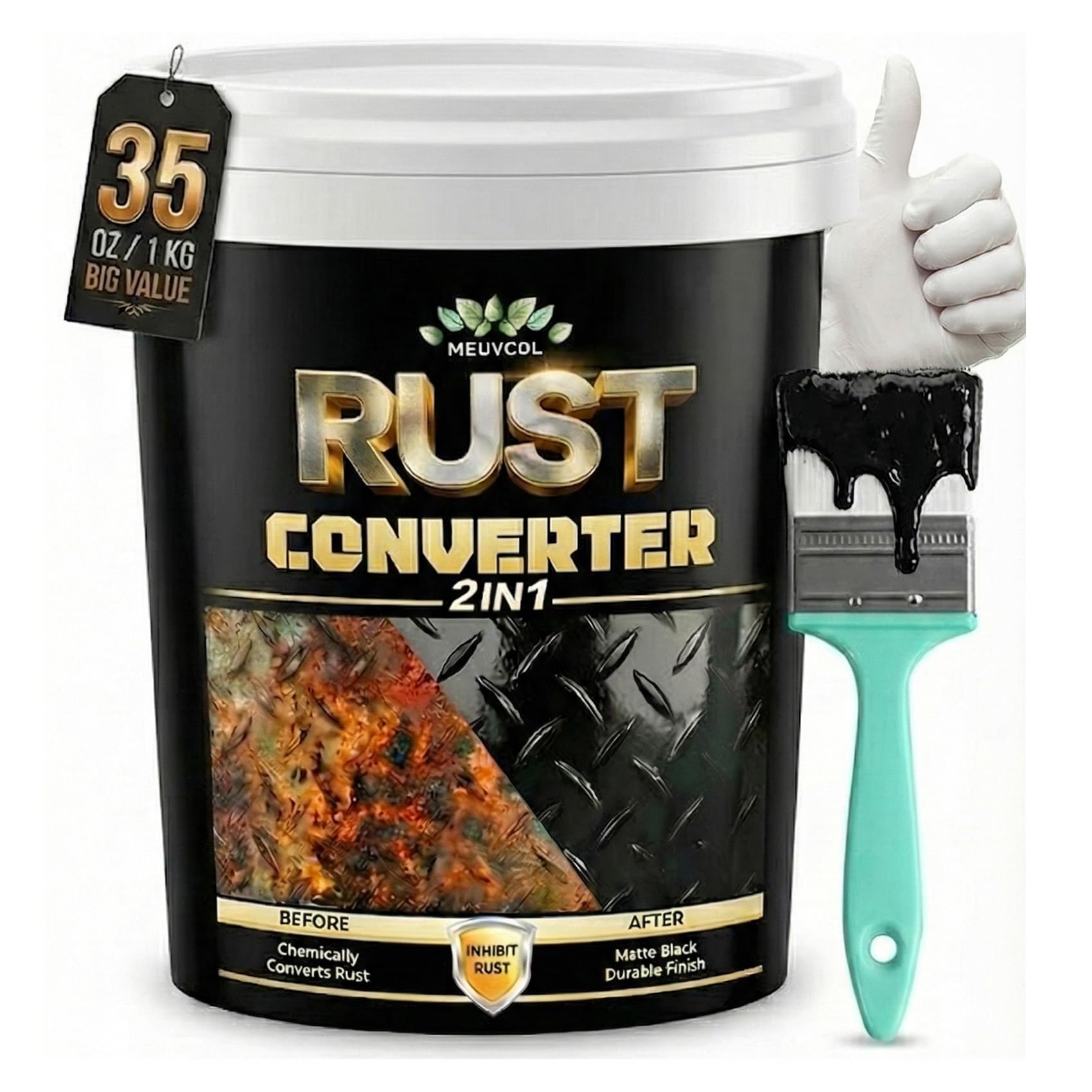
Meuvcol’s Rust Reformer Paint is a single-component, ready-to-use rust encapsulator that locks out oxygen and water with a thick, black matte coating. The 35-ounce can is paired with a brush and gloves, making it a grab-and-go solution for coating RV underbellies, trailer frames, and farm equipment. Users consistently note that it goes on smoothly, dries quickly, and provides a beautiful flat black finish that looks intentional rather than patched.
The coverage is generous for the volume, and the 24-hour dry-to-touch time is standard for this category. A few users questioned whether the rust conversion is a true chemical reaction or simply an opaque paint that covers the rust — the chemical bond is present, but surface prep remains critical. The strong solvent smell demands good ventilation, but this is typical of petroleum-based one-part formulations.
For the DIYer who needs a dependable rust stopper for visible chassis components or structural steel, this is a trustworthy mid-range option that performs reliably when applied in two thin coats. It is not a replacement for a 2K epoxy on bare metal, but for active rust arbitration, it gets the job done.
Why it’s great
- Thick coating that effectively seals out moisture
- Easy brush-on application with included accessories
- Clean flat black finish on visible chassis parts
Good to know
- Strong solvent smell requires ventilation
- Chemical rust conversion depth is moderate
6. SMAPHY Rust Converter & Metal Primer (35 oz)
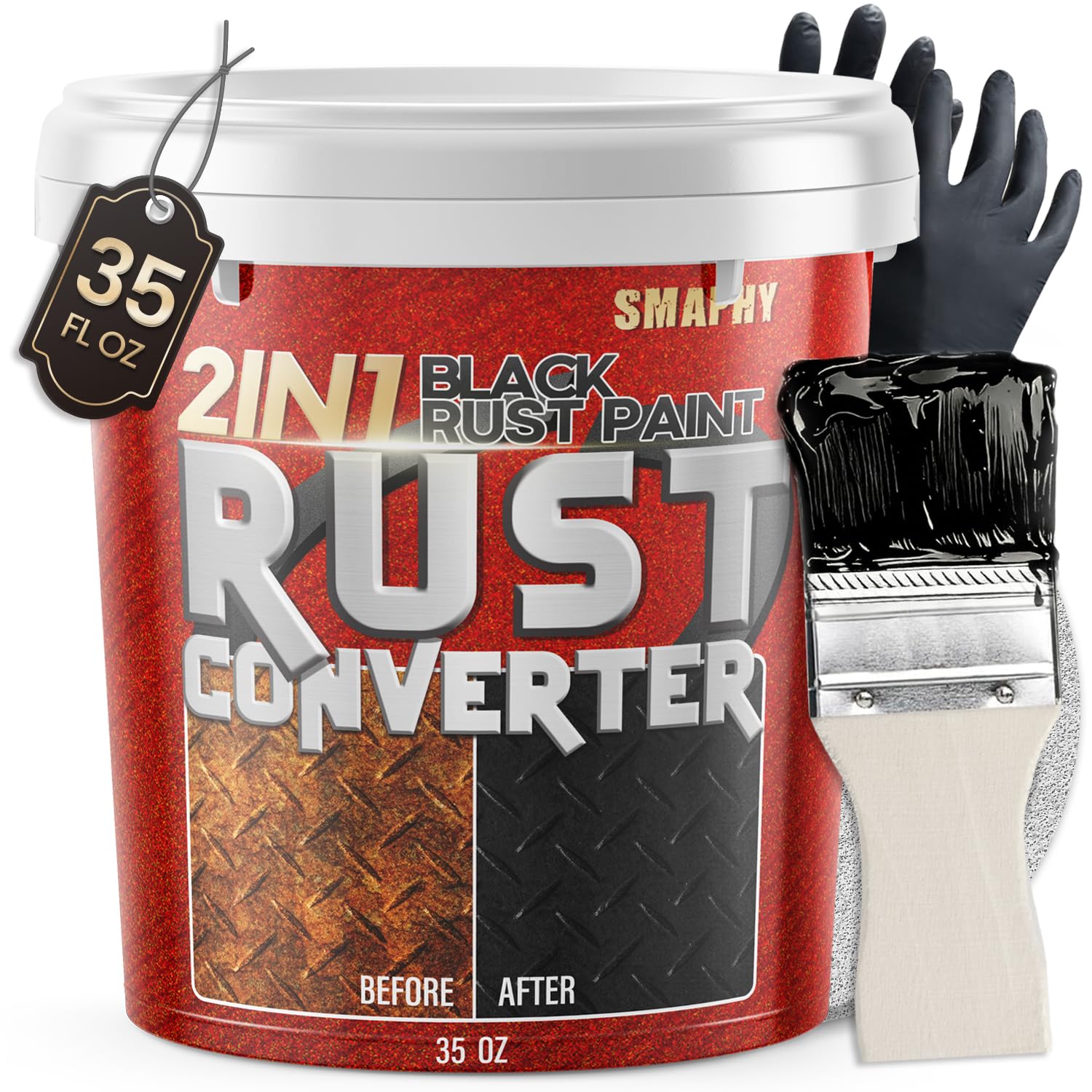
The SMAPHY 2-in-1 Rust Converter & Metal Primer stakes out an aggressive value proposition by offering 100 square feet of coverage per can — the highest raw coverage in this roundup. The flat black formula is intended to be applied directly over rust, converting it into an inert protective layer while simultaneously acting as a primer. Users report excellent results on engine bays and suspension components, with a finish that dries to a clean matte black suitable for topcoating.
The included brush and gloves make it a complete kit, though the brush application is slower than spray-on alternatives for large flat areas. Some users noted that the product does not fully convert deep flaking rust and that it performs better as a rust encapsulator than a true chemical converter. Adhesion on bare metal was reported as poor by one user, suggesting that it is best reserved for surfaces with existing surface rust rather than clean steel.
This is the economical choice for the budget-conscious restorer covering a large area like a truck frame or trailer. The value is undeniable at this coverage level, but the trade-offs in chemical conversion depth and adhesion on bare metal mean you should match it to the right job.
Why it’s great
- Exceptional 100 sq ft coverage per can
- Complete kit with brush and gloves included
- Durable matte finish on rusty surfaces
Good to know
- Poor adhesion on bare, unrusted metal
- Brush application is slow for large areas
7. Transtar 4603 Gray 2-in-1 Primer (15 oz)
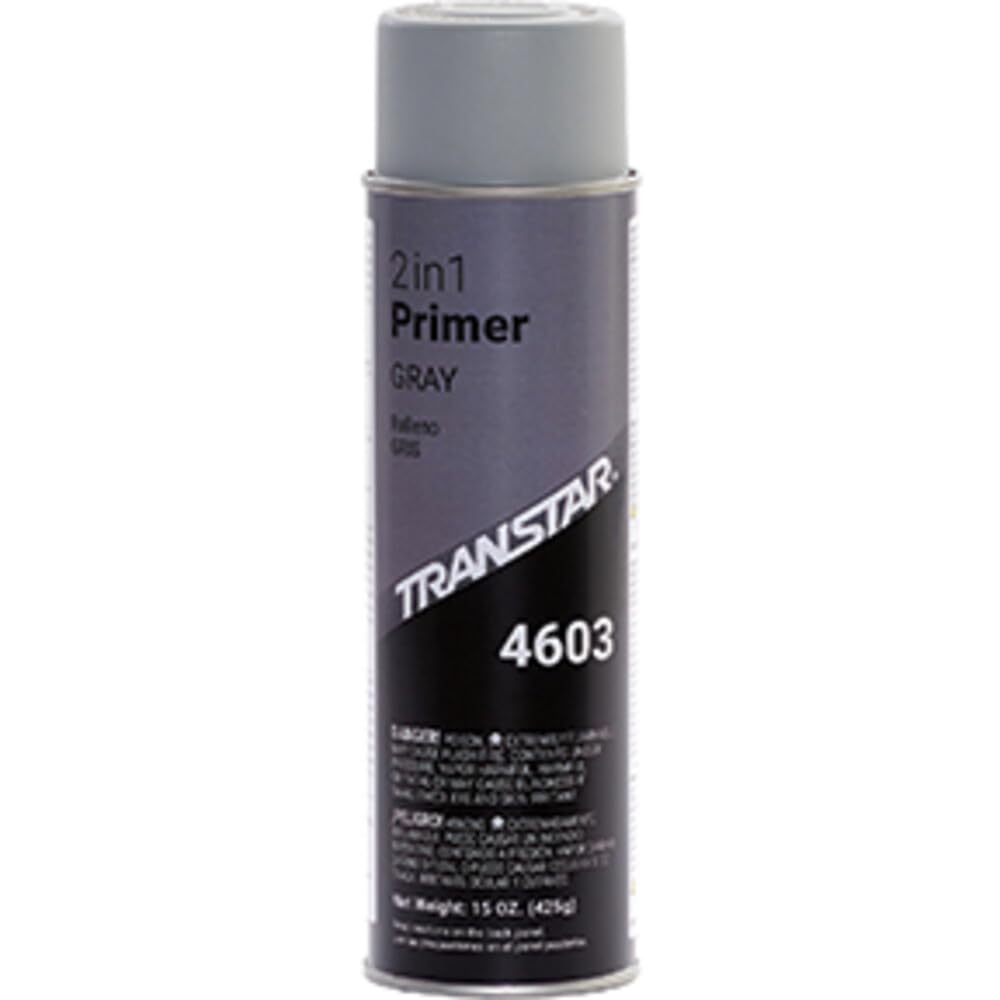
The Transtar 4603 Gray 2-in-1 Primer is a 1K aerosol that prioritizes convenience and fast turnaround for small jobs. It is wet sandable in just 20 minutes, which is a standout spec for those who need to shoot primer, block it flat, and apply topcoat all in the same day. Users report that it sprays smoothly with less clogging than comparable Duplicolor products and sands easily to a flawless finish.
At 15 ounces, the can is larger than typical 12-ounce aerosols, and one user successfully repainted an entire Jeep Cherokee hood with a single coat before applying single-stage urethane. It is not a 2K epoxy, so the chemical bond is weaker and long-term corrosion resistance is lower — but for light-duty touch-ups, interior panels, or parts that will not face road salt, it performs admirably.
This is the ideal pick for the weekend warrior who needs a reliable, fast-drying primer for small body repairs or touch-ups. It is not the tool for a full chassis restoration, but for the right scale of work, its speed and ease of use are unmatched at this entry-level price point.
Why it’s great
- Wet sandable in just 20 minutes
- Low clogging compared to other 1K aerosols
- Good coverage for small-to-medium panels
Good to know
- 1K formula lacks the chemical bond of 2K epoxies
- Not suitable for heavy rust or direct-to-metal adhesion
FAQ
Can I apply an auto epoxy primer directly over rust without sanding?
How long does a 2K epoxy primer take to cure before sanding?
Can I use a rust converter as a primer beneath urethane paint?
Final Thoughts: The Verdict
For most users, the best auto epoxy primer winner is the Eastwood 2K Epoxy Gray Primer because it combines true catalyzed chemical adhesion, a professional fan-spray nozzle, and a 48-hour pot life that gives you the flexibility of a pro gun without the compressor. If you want fast turnaround and adjustable spray control for a motorcycle or small panel job, grab the SprayMax 2K Epoxy Primer Black. And for large-area coverage or marine-grade protection below the waterline, nothing beats the TotalBoat TotalProtect Epoxy Barrier Coat.