
A wedding invitation is the first physical impression your guests will hold — and the cardstock you choose determines whether that impression feels flimsy and forgettable or substantial and treasured. The weight, texture, and finish of the paper directly affect how ink sits on the page, how the piece folds, and whether it will survive a week on a refrigerator door without curling at the edges.
I’m Min — the co-founder and writer behind Gadgets Feed. I’ve spent countless hours analyzing paper weights, GSM ratings, surface finishes, and printer compatibility data to separate the options that truly deliver for wedding stationery from those that leave you with smudged ink and bent envelopes.
Whether you are printing at home or sending files to a pro, choosing the right cardstock for wedding invitations hinges on matching the sheet’s heft, texture, and brightness to your printer’s capabilities and your design’s requirements.
How To Choose The Best Cardstock For Wedding Invitations
Wedding invitations demand a balance of heft, print quality, and durability that standard copy paper simply cannot provide. The wrong cardstock leads to ink bleeding, printer jams, or a thin feel that undermines the formality of the event. Three factors separate the best options from the rest.
Weight and GSM: The Heft Factor
Cardstock weight is measured in pounds for cover stock (lb cover) and GSM (grams per square meter). An 80lb cover sheet (about 216 GSM) offers good rigidity for a standard invitation that folds easily and feeds reliably through most home inkjets. A 110lb cover sheet (roughly 300 GSM) feels much more substantial and works well for flat cards or RSVP postcards but often requires manual feeding and scoring before folding. The 120lb cover tier (325 GSM) delivers the most premium hand-feel but will jam in many consumer-grade printers — always check your printer’s maximum paper thickness before ordering.
Surface Finish: Texture vs. Smooth
Linen-textured cardstock adds an elegant tactile pattern that elevates the perceived quality of an invitation, but it can slightly mute bright colors if the texture breaks up the ink layer. Smooth matte cardstock provides the sharpest image reproduction and works best for photo-centric designs, while shimmer or pearlescent finishes add a subtle reflective glow that photographs beautifully but may not suit ultra-minimalist typography. Consider whether your design relies on crisp text edges or photographic detail before choosing a texture.
Printer Compatibility and Cutting
Most inkjet printers can handle 80lb cover without issue, but 110lb and above often require you to set the paper type to “cardstock” or “heavy paper” in the print driver and feed sheets one at a time through the manual tray. Laser printers generate more heat, and some textured cardstocks can cause toner adhesion problems. If you plan to use a Cricut or other die-cutting machine, verify that the cardstock’s thickness lies within the machine’s clearance range — thicker 120lb sheets may not cut cleanly in one pass.
Quick Comparison
On smaller screens, swipe sideways to see the full table.
| Model | Category | Best For | Key Spec | Amazon |
|---|---|---|---|---|
| COLOANDUS Linen Textured | 80lb Cover | Home inkjet printing | 216 GSM / 100 sheets | Amazon |
| Hamilco Natural Linen | 80lb Cover | Elegant linen invites | 216 GSM / 50 sheets | Amazon |
| Silunkia Cream Shimmer | 92lb Cover | Luxury shimmer invites | 250 GSM / 120 sheets | Amazon |
| COLOANDUS 110lb White | 110lb Cover | Heavy flat invites | 300 GSM / 100 sheets | Amazon |
| S Superfine Printing | 110lb Cover | Crisp photo reproduction | 297 GSM / 50 sheets | Amazon |
| Desktop Publishing Supplies | 120lb Cover | Premium postcards | 325 GSM / 100 sheets | Amazon |
| Neenah Exact Index | 110lb Index | Large format cutting | 298 GSM / 250 sheets | Amazon |
In‑Depth Reviews
1. COLOANDUS Linen Textured Cardstock White 100 Sheets

This 80lb cover cardstock strikes the ideal balance between print reliability and tactile quality for wedding invitations. At 216 GSM and 0.26mm thick, it feeds through most home inkjet printers without manual intervention, yet still feels substantially heavier than standard copy paper — roughly three times as thick. The linen texture appears on both sides and provides a refined, woven look that works beautifully for formal invitation text and monograms.
Customer feedback confirms that black ink reproduces sharply on this surface, although saturated colors may appear slightly muted due to the texture breaking up the ink film. No smudging or bleeding issues were reported across multiple printer brands including Epson, Canon, and HP. The 100-sheet count gives you enough material for a complete invitation suite including main cards, RSVP inserts, and detail cards without needing a second order.
Solid-core construction means the white color runs through the entire sheet, so cut edges remain clean and bright. For anyone printing at home who wants a textured finish without fighting paper jams, this is the most dependable starting point. Just remember to set your printer driver to “cardstock” or “heavy paper” mode before loading.
Why it’s great
- Reliable feeding in most home inkjet printers
- Elegant linen texture on both sides
- High 100-sheet count for a complete invitation suite
Good to know
- Bright colors can appear slightly washed out on the textured surface
- Not suitable for laser printers due to heat sensitivity
2. Hamilco Natural Linen Textured Cardstock

Hamilco positions itself as the specialist pick for wedding invitations that demand a truly upscale linen finish. This 80lb cover (216 GSM) cardstock is manufactured in the United States from acid-free paper, giving it archival quality that resists yellowing over decades. The natural color tone is slightly warmer than bright white, which pairs well with cream envelopes and vintage-style invitation designs.
The linen texture is noticeably defined on both sides, and users report that inkjet printing remains clear without bleeding. One reviewer successfully ran this through an HP Color Laserjet for game cards by using the correct paper type setting, though the manufacturer explicitly recommends inkjet for best results. The 50-sheet count is lower than some competitors, but each sheet arrives shrink-wrapped in a sturdy corrugated box that protects the edges from denting during shipping.
Cutting and scoring are straightforward — the 216 GSM weight folds cleanly without cracking when scored first. For couples who want a tactile, old-world feel for their stationery and are willing to feed sheets carefully, Hamilco delivers a consistent, premium result that justifies its position above basic commodity cardstock.
Why it’s great
- Archival-quality acid-free paper prevents yellowing
- Distinctive linen texture with consistent embossing
- Protective packaging keeps sheets pristine
Good to know
- 50-sheet pack runs out quickly for large invitation suites
- Some printers may struggle to grip the textured surface
3. Silunkia Cream Shimmer Cardstock 120 Sheets

For weddings where the invitation itself is a keepsake, Silunkia’s cream shimmer cardstock delivers a subtle pearlescent glow that photographs beautifully and feels distinctly luxurious in hand. At 250 GSM (92lb cover), it sits between standard 80lb and heavy 110lb cardstock — thick enough to feel premium but still flexible enough to feed through many inkjet and laser printers without excessive jamming.
The shimmer effect is not overpowering; users describe it as a soft sheen that catches light at certain angles without distracting from printed text. The cream tone is warm and pairs naturally with gold foil, calligraphy, and botanical motifs. Multiple buyers confirmed that this cardstock cuts cleanly on Cricut machines and holds a sharp crease when scored, making it ideal for layered invitation designs with cut-out details.
The 120-sheet count is generous for the price tier, and the acid-free construction ensures the invitations will not discolor in storage. One note of caution: at 250 GSM, you must confirm your printer’s maximum paper thickness beforehand — some compact inkjets may reject sheets this heavy. If your printer can handle it, the result is an invitation suite that feels more like a gift than a piece of mail.
Why it’s great
- Subtle pearlescent shimmer adds elegant visual depth
- Works well with Cricut cutting machines
- 120-sheet pack offers excellent value for multi-piece suites
Good to know
- 250 GSM may not feed in all home printers
- Cream color is warmer than bright white — verify against your envelope color
4. COLOANDUS 110lb White Cardstock 100 Sheets

Stepping up to 110lb cover (300 GSM) gives your wedding invitations a commanding presence on the table, and COLOANDUS delivers this weight at a very competitive per-sheet cost. Each sheet measures 0.35mm thick — roughly four times the thickness of standard copy paper — and the solid-core construction means the bright white color runs through the entire sheet for clean cut edges.
The smooth matte finish on this cardstock produces excellent color reproduction and sharp text, making it a strong choice for photo-centric invitations or designs with detailed illustrations. Buyers report that this paper works well in home printers when fed manually, though some noted the need to guide the sheet into the feed mechanism to prevent skew. The 100-sheet count gives you plenty of material for tests and final prints.
One critical consideration: at 300 GSM, this cardstock will not fold without scoring first. Plan to use a scoring board or bone folder to create clean folds for your invitation cards. For flat invitations, RSVP postcards, or menu cards that do not require folding, this heavyweight stock provides a premium hand-feel that matches the formality of a traditional wedding.
Why it’s great
- Excellent color and photo reproduction on smooth matte surface
- High 100-sheet count for extensive test printing
- Bright white solid-core construction
Good to know
- Requires manual feeding in most home printers
- Must be scored before folding to avoid cracking
5. S Superfine Printing 110lb White Cardstock
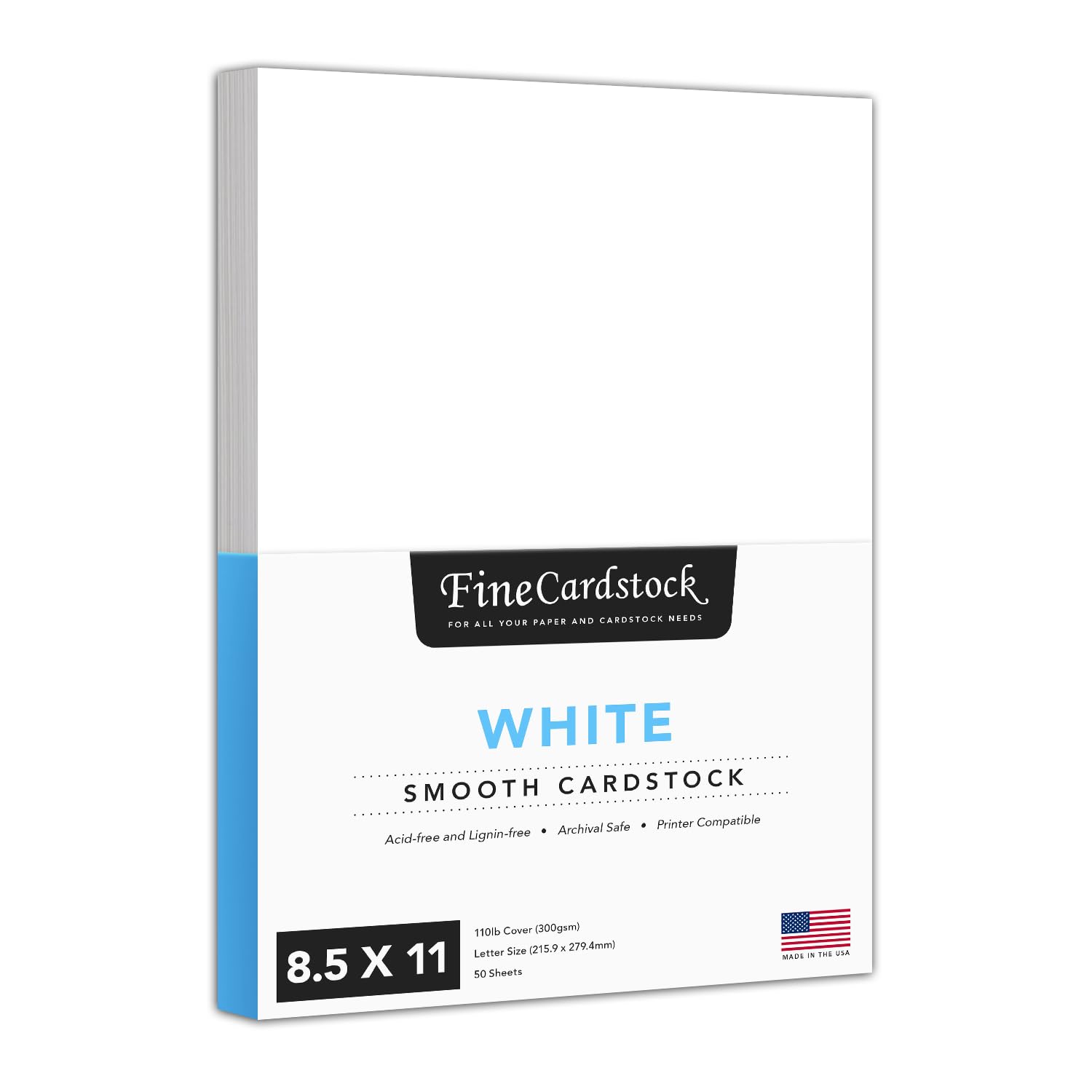
This 110lb cover cardstock from S Superfine Printing hits 297 GSM — technically a hair under the 300 GSM mark but thick enough to deliver the same rigid, professional feel. The standout feature here is the double-sided smooth matte finish, which produces some of the sharpest text and richest color reproduction in this comparison. Users running a Canon Pixma Pro 200 reported excellent ink holdout and fast drying times for double-sided printing.
The cardstock is FSC certified with 30% post-consumer recycled content, making it the most environmentally responsible option in this list without sacrificing print quality. It folds cleanly without fraying — a common failure point with heavier cardstocks — and cuts precisely in die-cutting machines. The 50-sheet pack is smaller, but the per-sheet quality justifies the count for couples who prioritize print fidelity over bulk quantity.
Archival-safe construction with acid-free and lignin-free materials means these invitations will remain crisp and vibrant for years. The only trade-off is that the smooth surface, while ideal for photography, does not offer the tactile texture that some couples want for a formal wedding invite. If your design relies on photographic imagery or intricate vector art, this is the cardstock that will make it pop.
Why it’s great
- Superior ink holdout for vivid, sharp prints
- FSC certified with recycled content
- Folds cleanly without fraying when scored
Good to know
- Only 50 sheets per pack — may need multiple packs for large suites
- Smooth finish lacks the tactile texture of linen options
6. Desktop Publishing Supplies 120lb Cover Cardstock
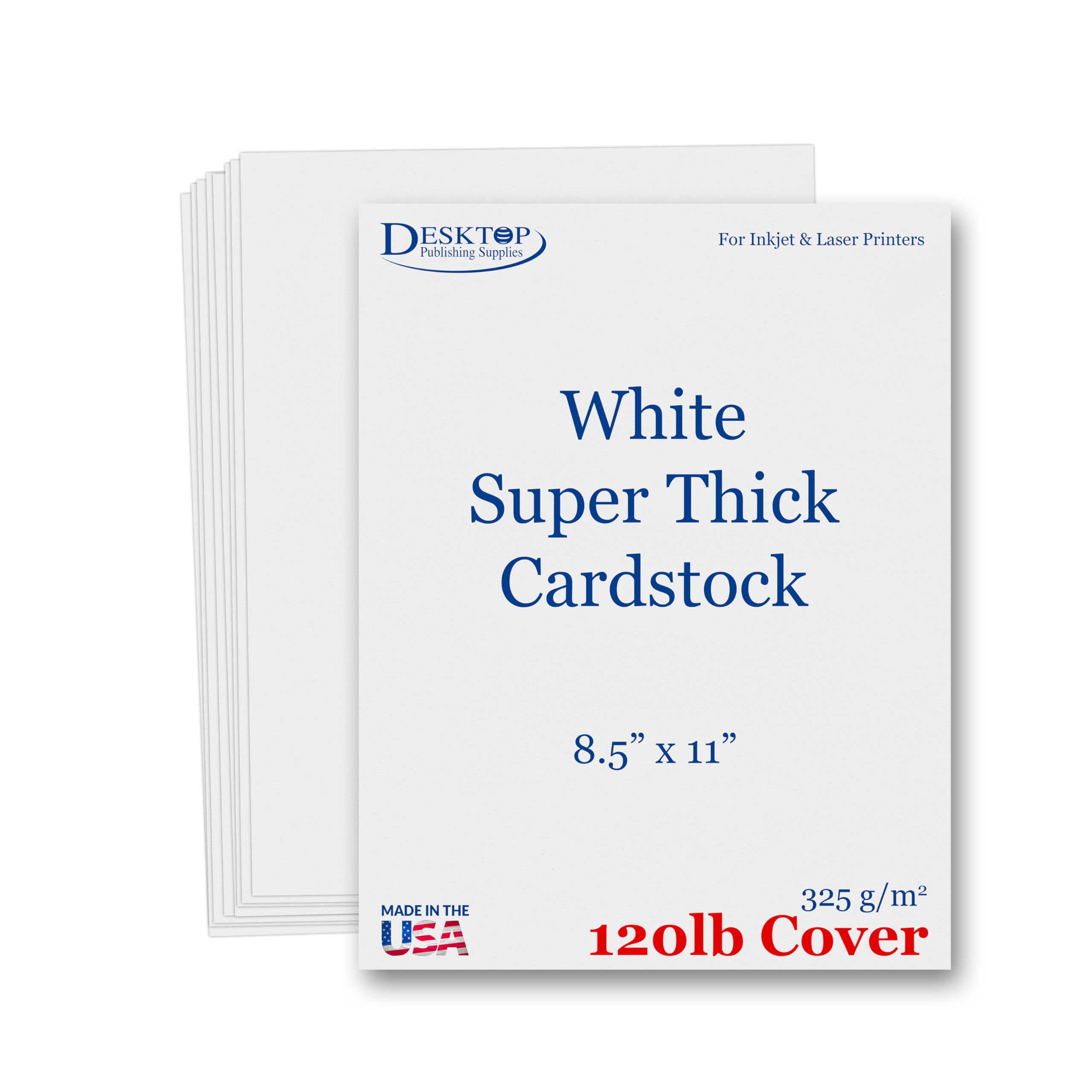
At 120lb cover (325 GSM), this is the thickest cardstock in the comparison — 0.014 inches per sheet — and it feels almost like a thin chipboard in hand. For wedding invitations that you want to stand upright on a shelf or feel unmistakably substantial, this is the extreme option. The smooth matte finish on both sides provides a clean canvas for printing, and users report beautiful output from Canon Pixma printers when fed through the manual tray.
The thickness introduces real-world challenges. Most home printers will not accept this paper — buyers with Epson inkjets confirmed jams, and the manufacturer explicitly advises checking your printer’s maximum paper thickness before ordering. Folding is essentially impossible without a heavy-duty scoring tool, and even then, the fold line may show stress marks. This cardstock is best reserved for flat invitations, postcards, or pieces that will remain unfolded.
Packaging is a recurring complaint: the thin cellophane wrap does not protect the edges from denting during shipping, and several buyers reported receiving stacks with bent corners. For the price per sheet and the premium hand-feel, you may want to order a backup pack to account for damaged sheets. Despite these quirks, the sheer heft of this cardstock delivers an undeniable quality impression that lighter papers cannot match.
Why it’s great
- Extremely thick 325 GSM feels ultra-premium in hand
- Prints well in compatible printers with manual feeding
- Ideal for flat, unfolded invitation designs
Good to know
- Will not work in most standard home printers
- Cannot fold without scoring and may still show stress marks
- Packaging does not fully protect edges during shipping
7. Neenah Exact Index Card Stock 110lb 11 x 17

Neenah is a trusted name in paper, and this 110lb index card stock delivers the lowest per-sheet cost of any option in this list thanks to its 250-sheet count. At 11 x 17 inches, the large format allows you to cut your own invitation sizes — for example, four 5.5 x 8.5 cards from a single sheet — maximizing yield for large guest lists. The 94 brightness rating provides a clean, bright white base for printing.
The index stock formulation differs slightly from cover stock: it is designed for rigidity and durability rather than folding performance. Users report that this paper prints photos well and holds up to handling, but the 110lb index weight may feel slightly less dense than 110lb cover stock from other brands. Some buyers noted that the wrapper can arrive torn and that occasional sheets may show damage, so inspect the package upon arrival.
For couples on a budget who need a high volume of cardstock for save-the-dates, direction cards, or enclosure materials, this Neenah pack stretches the dollar further than any competitor. The trade-off is that the 11 x 17 size requires a cutting tool and some time investment to produce standard invitation dimensions. If you have the equipment and patience, this is the most economical route to a professional-looking invitation suite.
Why it’s great
- 250-sheet count offers the lowest cost per invitation
- Large 11 x 17 format maximizes cutting yield
- Trusted Neenah brand with high brightness rating
Good to know
- Requires cutting to invitation size — not ready to use
- Packaging may arrive damaged with bent corners
- 110lb index feels less dense than 110lb cover stock
FAQ
What weight cardstock should I use for wedding invitations?
Can I use linen textured cardstock in my home printer?
How many sheets of cardstock do I need for a wedding invitation suite?
Should I score cardstock before folding it?
Final Thoughts: The Verdict
For most users, the cardstock for wedding invitations winner is the COLOANDUS Linen Textured Cardstock because it combines reliable printer feeding with an elegant linen finish and a generous 100-sheet count at a very reasonable cost. If you want a heavier, photo-ready surface for sharp image reproduction, grab the S Superfine Printing 110lb Cardstock. And for a luxurious shimmer effect that turns your invitation into a keepsake, nothing beats the Silunkia Cream Shimmer Cardstock.