
Cleaning second-story windows usually means balancing on a ladder with a bucket of soapy water, one hand holding a squeegee, and the other gripping the frame for dear life. Automatic window wipers eliminate that balancing act entirely by crawling across the glass autonomously, scrubbing and drying as they go, so you stay safely on the ground.
I’m Min — the co-founder and writer behind Gadgets Feed. I’ve spent hundreds of hours parsing suction specifications, spray mechanisms, and path-planning algorithms to separate the robotic window cleaners that actually deliver streak-free glass from those that just slide around noisily.
Whether you want to clean hard-to-reach panes, keep sliding doors spotless, or maintain large windows without hiring a service, this guide walks you through the specs that matter and the models that earn their keep. This is the definitive analysis of the best automatic window wipers.
How To Choose The Best Automatic Window Wipers
Not every window-cleaning robot is built for the same job. Some excel on large, uninterrupted glass panels, while others handle small, framed panes. Before you pick one, you need to match its specs to your windows and your tolerance for imperfection.
Suction Power and Safety Redundancy
Suction is the single most critical metric. Measured in Pascal (Pa), it determines whether the robot stays attached to vertical glass or tumbles off. Look for at least 3,000 Pa for reliable adhesion on smooth indoor windows. For exterior use or larger panes, 4,000 Pa and above provides a more secure hold. A backup battery that maintains suction for 20–30 minutes after a power cut is non-negotiable for any robot used above ground level.
Spray Mechanism: Ultrasonic vs. Standard Nozzle
The spray system directly affects streak quality. Standard dual-nozzle sprayers push out a fine mist, but they can clog with concentrated cleaning solutions. Ultrasonic atomization breaks water into micron-level droplets that dissolve grime without leaving residue, but they often use less water per pass, which can dry out the cleaning pad faster. If you have hard water, a standard nozzle with a vinegar-diluted solution tends to be more reliable.
Path Planning and Edge Detection
The best automatic wipers use AI navigation (often called WIN-SLAM or Smart Navigation) to map the window edges and plan overlapping cleaning passes. Without intelligent path planning, the robot may follow a random squiggle, leaving diagonal stripes of dirt and forcing you to re-run the cycle. Edge detection ensures the bot doesn’t spray water off the glass and can redirect itself when it reaches the frame.
Quick Comparison
On smaller screens, swipe sideways to see the full table.
| Model | Category | Best For | Key Spec | Amazon |
|---|---|---|---|---|
| ECOVACS WINBOT MINI2 | Premium | Smart Navigation & Edge Cleaning | WIN-SLAM 4.0 Path Planning | Amazon |
| ECOVACS WINBOT Mini | Premium | Compact & Quiet Routine Cleaning | 9-Stage Protection System | Amazon |
| Tosima W5 | Mid-Range | High Suction for Heavy Dirt | 6,400 Pa Max Adaptive Suction | Amazon |
| Obito X3 | Premium Value | Ultrasonic Dual Spray Versatility | 3,200 Pa Suction + 5.0 AI Path Planning | Amazon |
| HIXZAP X1 | Mid-Range | Maximum Suction & Buyers on a Value | 6,400 Pa Double Helix Suction | Amazon |
| KKI X3 | Mid-Range | Budget-Friendly Intelligent Clean | 3,200 Pa with 2-Speed Spray | Amazon |
| CHOVERY CL3 | Entry-Level | Budget Buy for Light Duty | 3,000 Pa Suction + 30min Backup | Amazon |
In‑Depth Reviews
1. ECOVACS WINBOT MINI2
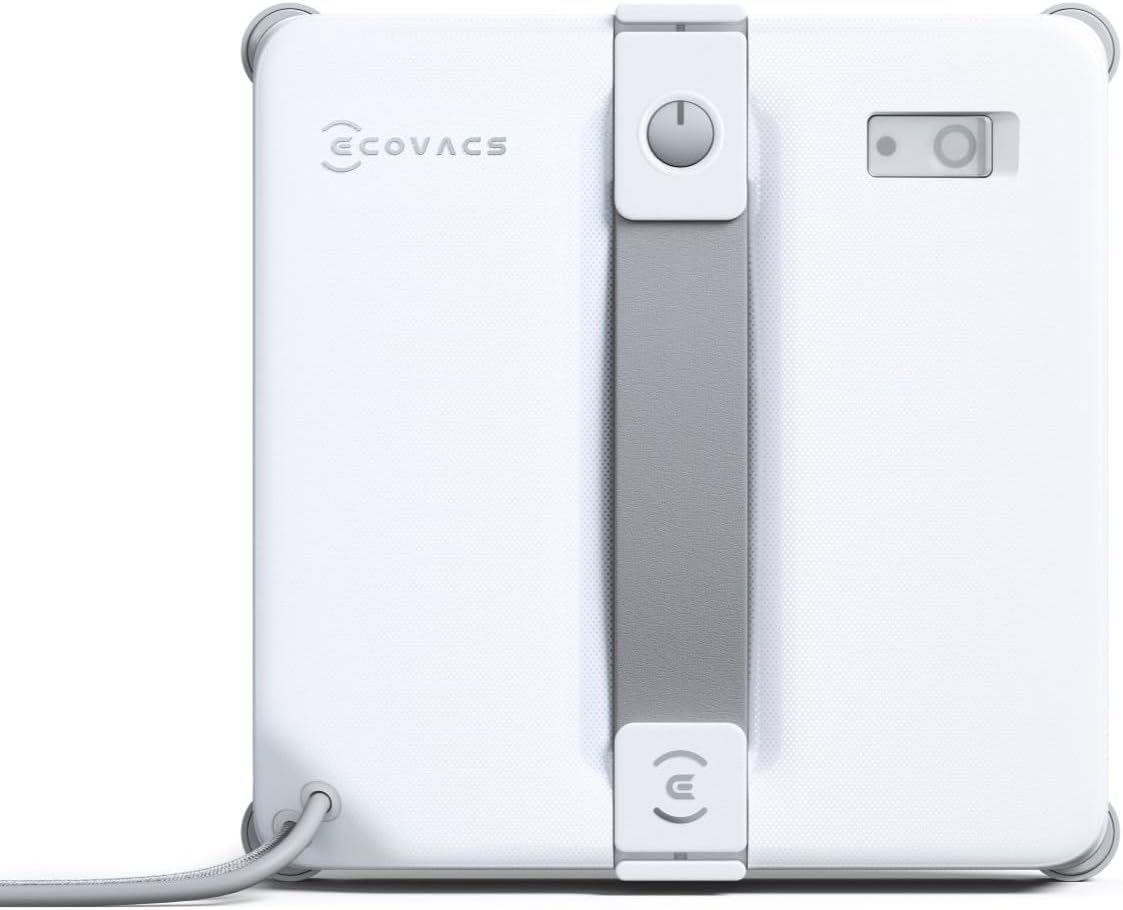
The ECOVACS WINBOT MINI2 uses its upgraded WIN-SLAM 4.0 navigation to map the edges of your window, calculate the most efficient route, and clean in systematic overlapping passes. With five cleaning modes — Deep, Fast, Precision, Spot, and Edge — it tailors the behavior to the dirt level and glass size. The two rotating mops and strong suction ensure consistent, streak-free results on large sliding doors, mirrors, and narrow apartment panes.
Real-world feedback confirms it handles roughly 95 percent of a window autonomously, leaving only a minor corner touch-up. The compact body fits where larger bots cannot, and the app control via Bluetooth adds convenience. Users note the safety cord design needs improvement, and the sprayers occasionally require a Q-Tip clean if you use concentrated solutions, but customer support resolves sprayer issues reliably.
If you want a set-it-and-forget-it robotic window cleaner with intelligent path planning and enough versatility for routine maintenance, the MINI2 delivers. It earns its position at the top because it combines solid navigation, strong adhesion, and a compact footprint that works for both small panes and large windows.
Why it’s great
- WIN-SLAM 4.0 path planning reduces missed spots
- Five cleaning modes adapt to window size and soil level
- Compact enough for small and narrow panes
Good to know
- Safety cord design could be more robust
- Sprayers may clog with thick solutions; occasional cleaning needed
- Bluetooth app range limited to about 5 meters
2. ECOVACS WINBOT Mini
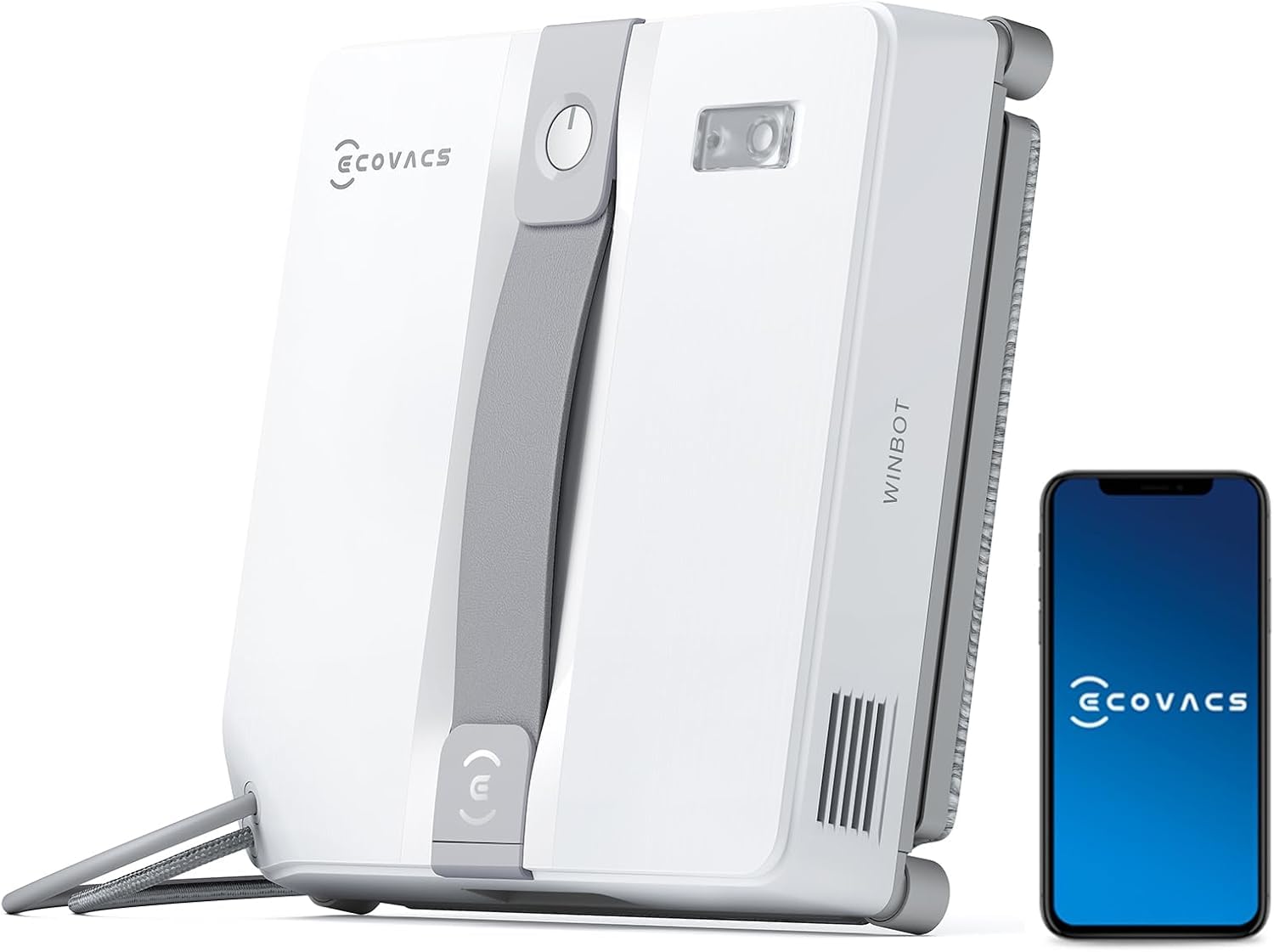
The WINBOT Mini is the lighter, quieter sibling designed for routine maintenance rather than deep-cleaning heavy grime. At just 8.46 inches square and 2.17 inches tall, it slips into tight spaces and operates at a noise level that won’t disturb a home office. Its 9-stage protection system includes a backup battery that holds suction when power cuts off, plus reliable edge detection that prevents it from spraying off the window.
Users praise its ease of setup — attach, power on, and let it clean automatically. It works best on non-paned or minimally framed glass; complex grids may cause it to get stuck. The power cord is on the shorter side, so you may need an extension for distant windows. The cleaning fluid from ECOVACS is effective but expensive; a single bottle lasts over a year with weekly use.
For apartments, small homes, or anyone who wants a quiet, no-fuss robot for weekly touch-ups, the WINBOT Mini is a solid mid-range choice that does not compromise on safety features.
Why it’s great
- Ultra-light and compact, fits small windows
- Very quiet operation for home use
- 9-stage safety system with backup battery
Good to know
- Short power cord limits placement
- Not ideal for heavily soiled exterior glass
- Cleaning fluid is proprietary and pricey
3. Tosima W5
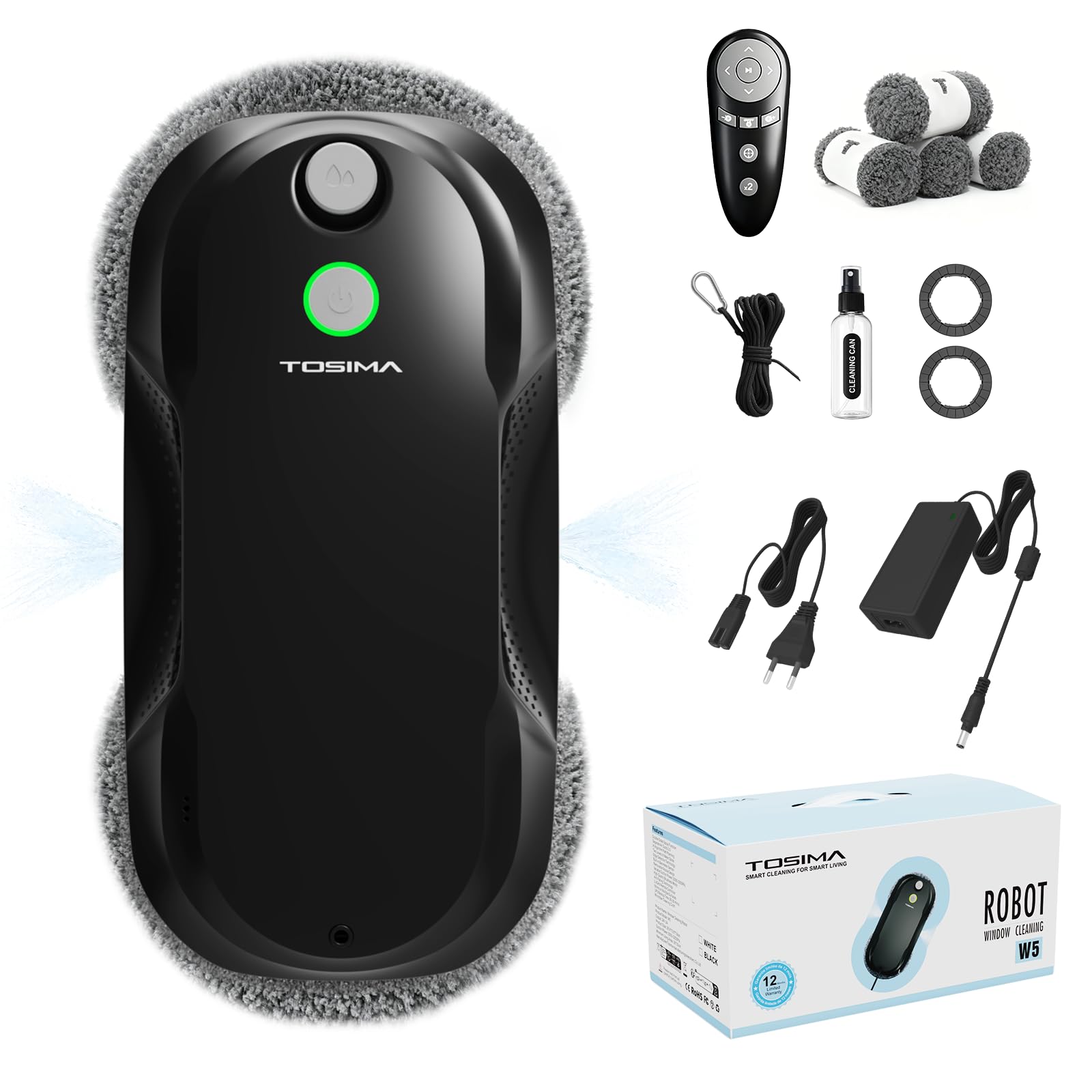
The Tosima W5 brings a variable-frequency motor that adapts suction from a base level up to 6,400 Pa, making it one of the most powerful window cleaners in its price bracket. Its bidirectional ultrasonic atomization sprays from the side rather than straight down, reducing the chances of water dripping onto the sill. The 60 ml water tank is externally visible, so you can see when it is running low.
Multiple users confirm it paid for itself after cleaning half their house versus professional quotes. The robot handles large glass panels with ease, but heavy ocean-side salt and grit require two or three passes. The cleaning pads need frequent swapping — a wet pad causes the bot to slip, so having a stack of replacement cloths is essential. The safety strap is mandatory; the unit fell off twice when pads were oversaturated.
For homes with tall windows, sliding glass doors, or significant outdoor dirt, the W5’s adaptive suction provides the secure adhesion needed to handle challenging conditions without breaking the bank.
Why it’s great
- 6,400 Pa maximum suction for heavy dirt
- Bidirectional ultrasonic spray reduces drips
- Visible water tank prevents mid-cycle dry runs
Good to know
- Wet pads can cause slipping; need frequent changes
- Does not clean corners thoroughly
- Safety cord required for all exterior use
4. Obito X3
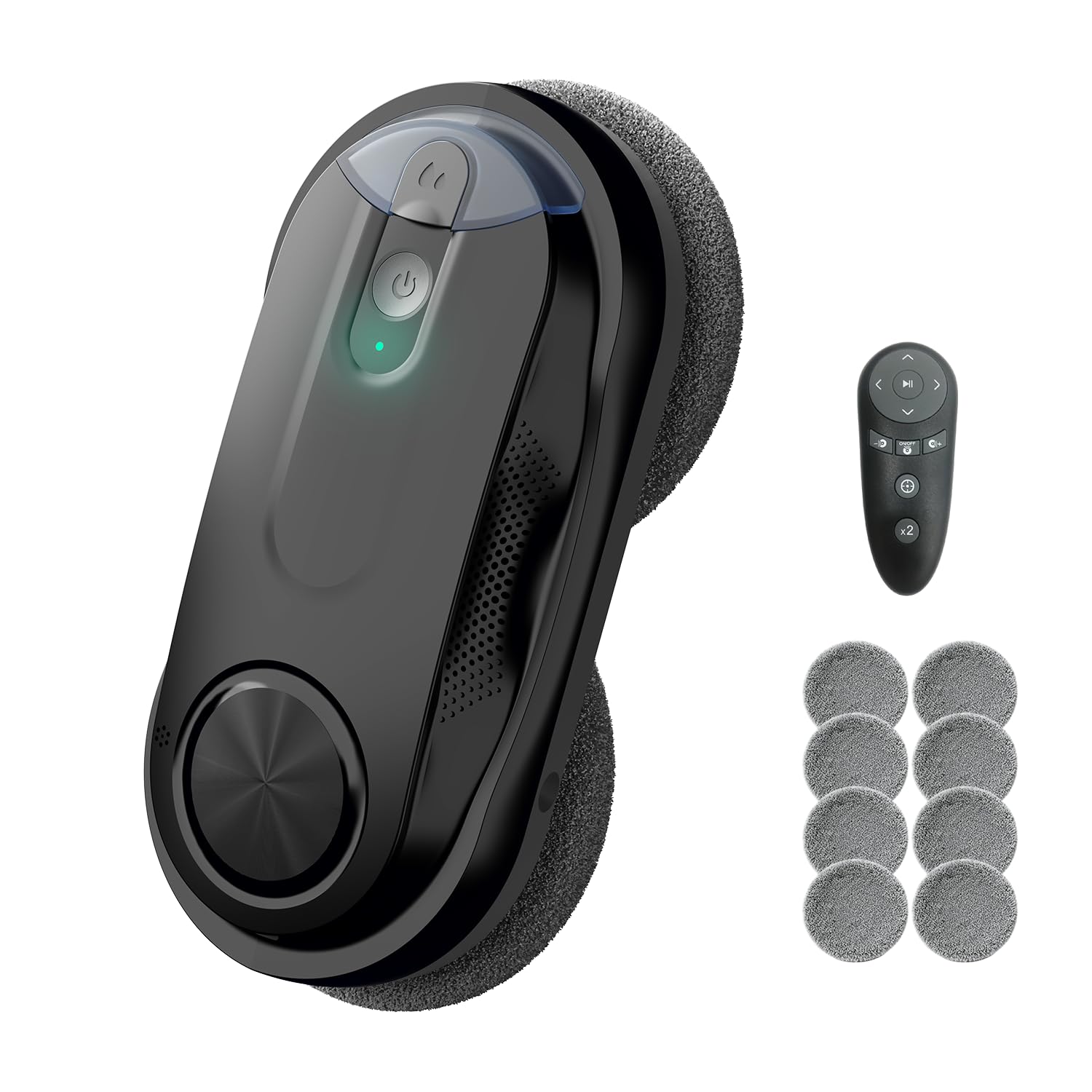
The Obito X3 stands out for its ultrasonic dual-water spray system, which turns water into micron-level mist to dissolve grease and dust without leaving residue. Its 5.0 AI Path Planning system — combined with a brushless motor producing up to 3,200 Pa of suction — creates an efficient, edge-aware cleaning pattern that works on standard glass, tiles, marble, and curtain walls between 6 and 19 mm thick.
Happy owners note it handles fingerprints on glass doors and “cat slurm” on large windows with ease. The three automatic modes (Fast, Thorough, Spot) plus manual directional control via remote give flexibility. The 18-month warranty is longer than average for this category. Some users report that windows with curved or completely flat frames (no lip) cause the robot to fall off, so it works best on windows with a traditional raised frame.
If you value a long warranty, ultrasonic spray for residue-free cleaning, and reliable AI path planning, the Obito X3 is a strong premium contender for whole-home glass maintenance.
Why it’s great
- Ultrasonic mist spray for streak-free finish
- 5.0 AI Path Planning with edge detection
- 18-month warranty covers defects
Good to know
- Requires windows with a raised frame lip
- Circular pad design misses extreme corners
- Some drying marks reported on first use
5. HIXZAP X1
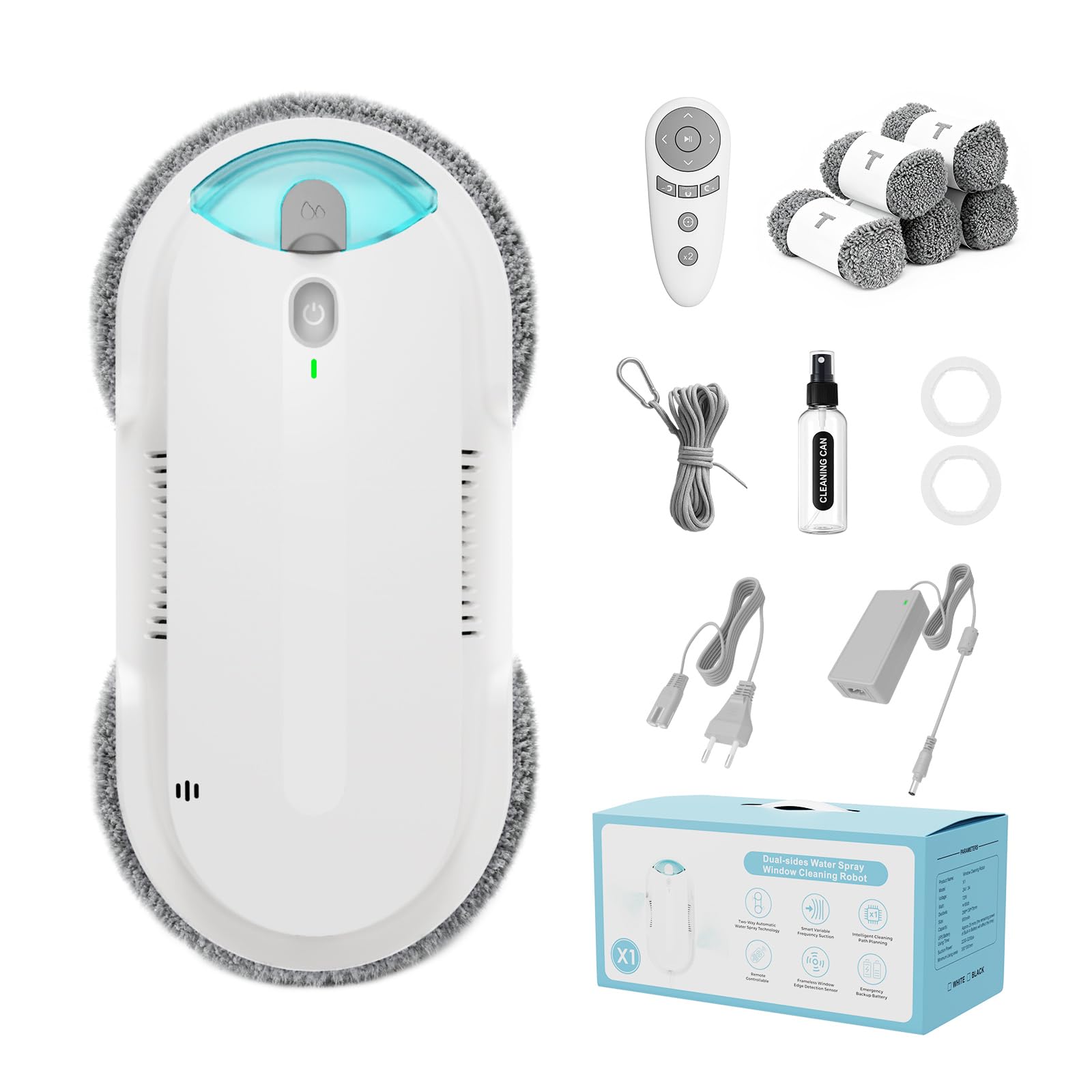
The HIXZAP X1 delivers an extraordinary 6,400 Pa suction at a price point that undercuts most competitors by a wide margin. Its double helix variable-frequency motor adjusts power based on dirt level, while the intelligent edge detection stops spraying when the robot reaches the frame edge. The 85 ml water tank is the largest in this roundup, reducing refill frequency during long cleaning sessions.
Users are uniformly impressed by its solid suction adhesion and smooth operation on large windows. It handles dust, stains, and bird droppings without losing grip. The safety lanyard can tangle with the power cord, so careful routing is necessary. The build feels robust, and the simple button-and-remote control keeps operation straightforward. Despite the low entry price, it cleans comparably to models costing twice as much.
If your budget is tight but you refuse to compromise on suction power and tank capacity, the HIXZAP X1 offers the best raw specs for the money in the category today.
Why it’s great
- 6,400 Pa suction for secure vertical grip
- 85 ml water tank reduces refill stops
- Smart edge detection prevents overspray
Good to know
- Safety lanyard can tangle with power cord
- No battery backup for power outages
- Not compatible with concentrated cleaning solutions
6. KKI X3
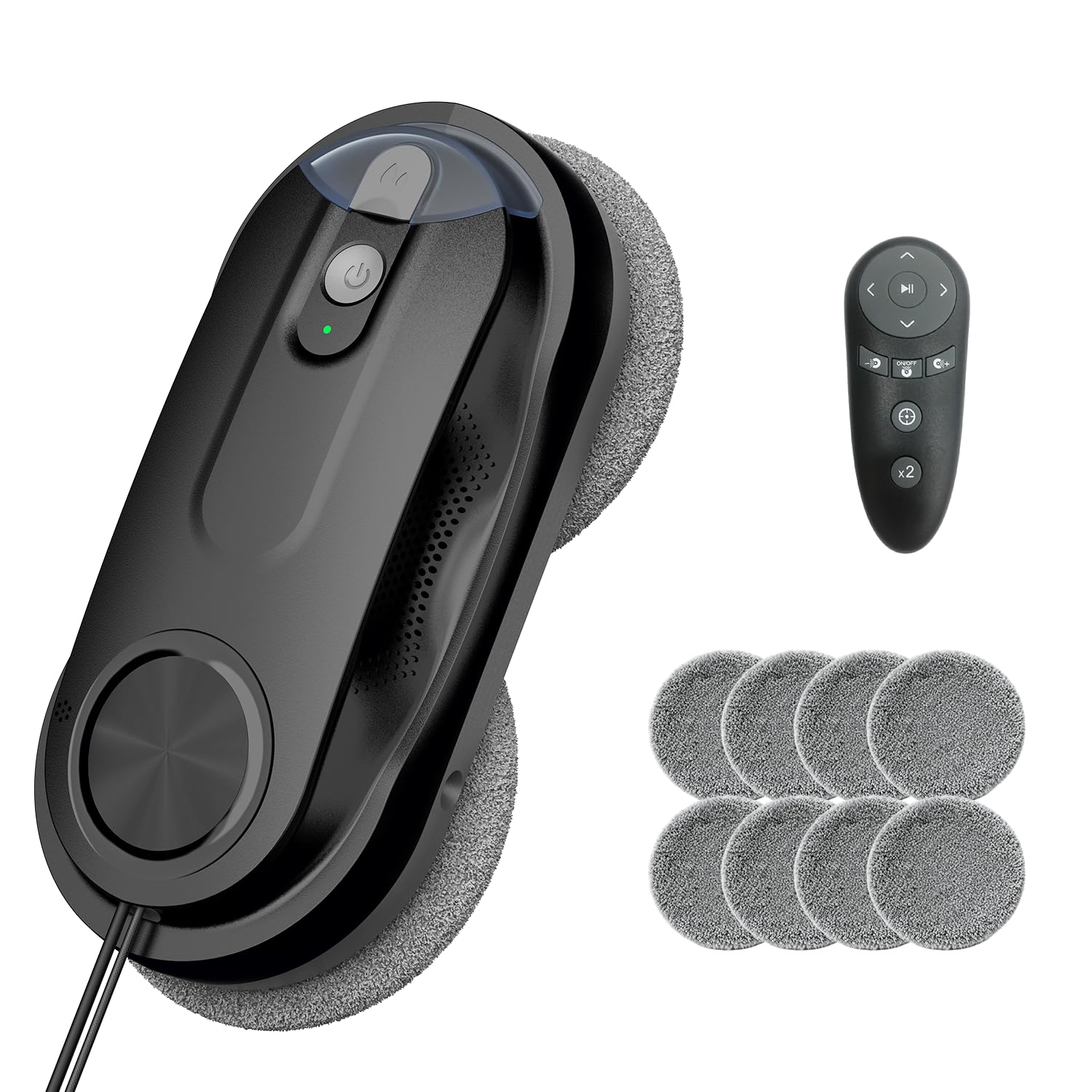
The KKI X3 uses AI-powered obstacle detection to recognize its position on the glass, scan the frame, and offer either manual or automatic cleaning modes. Its intelligent frequency conversion technology adjusts suction between 2,200 and 3,200 Pa depending on the surface dirtiness. The dual-direction auto-spray uses atomized nozzles that resist clogging, with an increased spray volume of 0.05 ml per spray.
Feedback from owners shows it works well on 11–20 windows per session and produces sparkly results. However, it struggles on exterior windows with thin weatherstripping — the suction breaks and the robot falls unless the safety cord is secured. Some users report swirl marks from the back-and-forth cleaning pattern, and the unit may drop off the bottom edge of frameless windows. The remote control is well-regarded for its quadrant and spot-cleaning functions.
For interior-focused cleaning on standard framed windows, the KKI X3 provides good intelligence at a mid-range price, but exterior use on deep-set frames may require extra attention.
Why it’s great
- AI obstacle detection and automatic path adjustment
- 2-speed water spray adapts to dirt level
- Atomized nozzles resist clogging
Good to know
- Falls on exterior windows with thin weatherstripping
- Swirl marks possible on first pass
- Must hold power button while attaching to window
7. CHOVERY CL3

The CHOVERY CL3 is the entry-level workhorse for those who want to dip a toe into automatic window cleaning without a large investment. Its dual-side auto spray covers the cleaning area evenly, and the smart navigation system includes edge detection and three auto-cleaning paths. The motor produces between 2,700 and 3,300 Pa of suction, and the built-in lithium backup battery provides 30 minutes of emergency power to prevent falls during outages.
User experiences are mixed. Many report excellent results on indoor windows, cleaning 17 or more panes without losing suction. The noise level is moderate, and the robot creates no drips on the sill. On the downside, it struggles with slanted window gaskets and can fall off the bottom edge of framed windows. A common tip is to dry-mop the outside windows first and swap pads frequently — a wet bottom pad causes slippage.
If your windows have standard flat gaskets and you are comfortable with some trial-and-error, the CL3 is a capable budget-friendly starting point for automated glass cleaning.
Why it’s great
- 30-minute backup battery for power outage safety
- Dual-side spray provides even coverage
- Affordable entry into robotic window cleaning
Good to know
- Falls off windows with slanted or raised gaskets
- Wet pads cause suction loss and slipping
- Spray setting resets each cleaning cycle
FAQ
Can automatic window wipers work on textured or frosted glass?
Do I need to use special cleaning fluid or can I use plain water?
How often do I need to change the cleaning pads?
Will an automatic window wiper clean both inside and outside simultaneously?
Final Thoughts: The Verdict
For most users, the best automatic window wipers winner is the ECOVACS WINBOT MINI2 because its WIN-SLAM 4.0 navigation, five cleaning modes, and compact design deliver hands-free streak-free results on both large panels and small panes. If you want brute suction power for heavily soiled windows, grab the Tosima W5 with 6,400 Pa of adaptive grip. And for a quiet, lightweight routine cleaner that fits apartments and small homes, nothing beats the ECOVACS WINBOT Mini.