
A frozen stream has a way of testing gear. When the waterline rises past your knees and the bottom turns to slick rock, the difference between a good day and a miserable one is measured at your feet. Bootfoot waders eliminate the guesswork by fusing the boot directly to the wader body, creating a single sealed system that keeps water out and warmth in. The insulation density, neoprene thickness, and sole traction pattern dictate how long you can stay in the water — not which brand name is on the chest.
I’m Min — the co-founder and writer behind Gadgets Feed. I spend my time cross-referencing neoprene densities, insulation gram weights, seam construction methods, and real-world durability reports from anglers and hunters to find the waders that actually perform under pressure.
Whether you are standing waist-deep in a February river or slipping through muddy marsh grass, the right pair of bootfoot waders keeps you dry, warm, and stable enough to focus on the catch instead of the shivering.
How To Choose The Best Bootfoot Waders
Bootfoot waders are not a one-size-fits-all purchase. Three variables — insulation weight, neoprene thickness, and boot tread pattern — determine whether your pair lasts a season or a decade. Ignore the hype around brand loyalty and focus on the specs that match your water temperature and terrain.
Insulation Weight: Match to Water Temperature
Insulation is measured in grams, and that number tells you the lowest temperature your feet can handle. 200-gram Thinsulate works for early fall or mild spring days above 40°F. 600 to 800 grams push into late-season duck hunting and winter steelhead fishing, keeping feet warm in water below freezing. 1400 to 1600 grams is arctic territory — think ice fishing or standing in snowmelt runoff. The wrong insulation means either sweating or shivering, and both ruin the outing.
Neoprene Thickness: Balance Warmth and Mobility
Neoprene thickness ranges from 3.5mm to 5mm. Thicker material traps more heat but restricts leg movement, making long walks and deep wading more tiring. A 4mm or 4.5mm mid-layer strikes the best balance for most anglers and hunters who spend hours both walking and standing still. 5mm is warmest but best reserved for stationary blind hunting or ice-out conditions where flexibility is less critical.
Boot Sole Design: Grip Dictates Safety
The boot is the part that touches the riverbed, and a smooth bottom is a hazard. Cleated rubber soles dig into mud and loose soil, while deep-lugged patterns grip slick rocks. Felt soles offer the best traction on algae-covered stone but wear out fast on gravel. Consider where you wade most often — rocky trout streams require different tread than muddy marsh flats — and choose accordingly.
Quick Comparison
On smaller screens, swipe sideways to see the full table.
| Model | Category | Best For | Key Spec | Amazon |
|---|---|---|---|---|
| HISEA 800G | Insulated | Cold water hunting | 4.5mm neoprene / 800G boots | Amazon |
| TIDEWE 1400/1600G | Extreme Cold | Ice fishing & arctic hunts | 5mm neoprene / 1400-1600G | Amazon |
| FROGG TOGGS Amphib | All-Rounder | Versatile fishing | 3.5mm neoprene / 200G boots | Amazon |
| BASSDASH 600G | Durable | Rough terrain wading | 4.3mm neoprene / 600G + steel shank | Amazon |
| HISEA 200G | Budget Insulated | Mild weather duck hunting | 3.5mm neoprene / 200G boots | Amazon |
| Trudave | Entry-Level | Occasional fishing / hunting | 4mm neoprene / uninsulated boots | Amazon |
| wasserflux 800G | Cool Water | Spring-fed river wading | 4mm neoprene / 800G boots | Amazon |
| Hodgman Mackenzie | Lightweight | Shore and beach fishing | 3.5mm neoprene / 200G boots | Amazon |
| Orvis Clearwater | Premium | Fly fishing in varied temps | 4-layer breathable / felt sole | Amazon |
In‑Depth Reviews
1. HISEA Chest Waders (800G Insulated Boots)

The HISEA 800G waders use 4.5mm neoprene laminated to a nylon jersey and stretch liner, creating a shell that traps heat while allowing enough flexion for casting and crouching. The 800-gram Thinsulate boots handle water temperatures down to freezing, with multiple verified reports of comfortable four-hour sits in 15°F water. The integrated LED light system hidden in the top-entry storage pouch is a practical addition for pre-dawn blind setup or late-evening river exits.
Seam construction uses double-stitched, bonded, and taped joints with widened seams compared to standard market waders, and the Water Intrusion Resistance (WIR) processing adds an extra barrier against seepage through the neoprene face. The boots run slightly large, which works for thick sock layering, but shorter users — under 5’8″ with a 31-inch inseam — may find the leg length a touch long. The drying hanger and light attachment are secondary add-ons that may not survive a full season.
Customer feedback confirms zero leaks after extended use in the Grand Canyon’s Colorado River and repeated duck hunts in sub-freezing conditions. The reinforced knees hold up to kneeling on rocky banks without wearing through. At this price point, the 800G HISEA delivers a warmth-to-weight ratio that outperforms budget alternatives and matches waders costing significantly more.
Why it’s great
- Exceptional warmth retention in sub-20°F water
- Reinforced knees with armored seam sealing
- Integrated LED light for low-light visibility
Good to know
- Boots run large — size down if between sizes
- Leg length may be excessive for shorter users
- Light bar and hanger accessories have limited durability
2. TIDEWE Hunting Wader (1400G/1600G Boots)

The TIDEWE wader targets the harshest cold-weather scenarios with 5mm neoprene construction and boots packed with 1400 to 1600 grams of Thinsulate insulation — the highest gram weight in this lineup. The cross-hatch exterior facing is tougher than standard smooth neoprene, adding resistance against briars, driftwood, and repetitive kneeling. The deep-lugged boot tread provides noticeably better stability on wet mud and snow-covered banks than lighter budget alternatives.
Seam construction uses armor weld double-stitching and polyurethane-coated leggings, and the boot features a quick-detach shell pouch with 12 loops plus a fleece-lined hand warmer pocket with a dedicated heat-pack slot. The shoulder straps run long — users under 5’6″ may need to crisscross them for a proper fit — and the boot volume can feel oversized when not wearing thick socks. The shell holder’s release mechanism can be finicky, but the overall waterproof performance holds up after a full season of heavy use.
Multiple long-term reviews confirm zero leakage after hiking through thorns and wading in near-freezing conditions. The 5mm neoprene paired with the highest insulation tier makes these the warmest option for stationary hunting in extreme cold, though the bulk reduces agility for dynamic fly fishing. If your priority is preventing foot numbness during ice-out season, this set is the strongest candidate.
Why it’s great
- Maximum insulation for extreme arctic conditions
- Anti-scratch cross-hatch neoprene facing
- Excellent traction on slippery and muddy terrain
Good to know
- Shoulder straps too long for short-statured users
- Bulk restricts movement for active wading
- Shell pouch release needs improvement
3. FROGG TOGGS Amphib Neoprene Bootfoot Wader

Frogg Toggs brings a refined fit philosophy to the Amphib wader — the high-back design allows deeper water entry, while the 3.5mm neoprene upper prioritizes flexibility over maximum insulation. The boots are lined with 200-gram Thinsulate, adequate for water temperatures from 37°F up to mild 50°F conditions. Users consistently report staying comfortable for hours without overheating when transitioning from water to land.
The boot opening is round and sits high on the leg, reducing the common “boot bite” where rigid rubber edges dig into the calf. Internal elastic straps prevent the neoprene from bunching behind the knees, and the suspenders use adjustable hook-and-loop attachments that avoid the line-snagging issue of metal hardware. Fit is notably slim through the midsection — wider-framed users may need to measure carefully before ordering. The cleated sole provides confident grip on boat ramps and gravel banks.
Reviews highlight the Amphib’s structural quality rivals waders at triple the price, with single-digit degree warmth reported when layered properly. The 3.5mm thickness makes this a strong year-round choice for anglers who fish across seasons. For those who need a warm-weather option that still handles cold snaps, the Amphib is the most versatile pick in the premium tier.
Why it’s great
- Exceptional flexibility for active wading
- High-back design allows deeper creek crossings
- Round boot opening prevents calf soreness
Good to know
- Slim belly fit excludes wider body types
- 200G insulation limits extreme cold use
- Size chart must be checked carefully
4. BASSDASH Neoprene Chest Waders (600G Boots)

BASSDASH separates itself from the mid-tier pack with a steel shank embedded in the boot, providing puncture protection against submerged oysters, mussels, and scrap metal — a critical feature for coastal wading. The 4.3mm stretch neoprene upper is layered with polyester for abrasion resistance, and the 600-gram Thinsulate boot insulation sits in the sweet spot for late-season trout and early winter duck hunting. The anatomically engineered boot resists deformation under water pressure during long wading sessions.
The camouflage pattern uses the DESOLVE Veil Camo technology with a brownish tone designed to confuse animal vision rather than human perception — relevant for serious waterfowl hunters. Storage includes a top-loading pocket with hook-and-loop closure, a fleece-lined hand warmer compartment, and an interior zippered chest pocket that flips outward. The 1.5-inch wide suspenders and quick-release belt hold the wader securely without digging into the shoulders.
Field reports from coastal Virginia confirm the steel shank protects against jagged debris, and stitching holds up after 17-plus miles of cumulative wading. The only trade-off is a snug fit around the belly for larger frames, and the shell holder can drop shells when bending aggressively. For anglers and hunters who wade in oyster-rich or rocky waters, the steel shank alone makes these worth the investment.
Why it’s great
- Steel shank protects feet from sharp underwater debris
- 600G insulation suits cool to cold conditions
- Durable reinforced knees and abrasion-resistant exterior
Good to know
- Snug belly fit for larger body types
- Shell holder may release shells unintentionally
- Hand wash only care instructions
5. HISEA Chest Waders with 200G Boots

HISEA’s entry-level chest wader pairs 3.5mm neoprene with 200-gram 3M Thinsulate Ultra insulated boots, delivering reliable performance for mild-weather duck hunting and fall fishing. The material composition — 90% neoprene and 10% polyester — balances stretch and durability, while every unit is inverted and tank-tested for leaks before shipping. The boots feature cleated soles for traction on mud and wet grass, though the rubber is thin and offers minimal ankle support on uneven terrain.
The design includes adjustable neoprene suspenders with quick-release buckles, eight shell holders on the front hand-warmer pocket, and a secure chest pocket for small valuables. Users consistently note that sizing runs small — ordering up one full size is the common recommendation — and the sock-in-boot construction can make pull-on and pull-off slower than competition. The integrated waterproof phone bag advertised in product images is often missing from the package.
Verified customers report staying dry after 25-plus minutes in waist-deep water and warm in 30°F weather with 20 mph wind. The boot leak at the seam after a year of use is a recurring pattern, though HISEA’s warranty replacement process receives high marks. For the hunter or angler who needs affordable entry-level gear before committing to premium waders, this is the most cost-effective starting point.
Why it’s great
- Factory leak-tested before shipping
- 200G Thinsulate keeps feet warm in mild cold
- Excellent warranty replacement process
Good to know
- Boots run small, size up recommended
- Thin rubber provides poor ankle support
- Waterproof phone bag often missing from box
6. Trudave Chest Waders for Men & Women

Trudave enters the budget space with 4mm neoprene construction and triple-finished seams — stitched, glued, and taped — which is uncommon at this entry level. The PVC boots are lightweight with anti-slip soles, but they lack insulation, making them a warm-weather or layering-only option. For 50°F-plus conditions, the neoprene traps enough body heat to remain comfortable without sweating. The detachable insole and breathable boot lining improve comfort for all-day wear.
Feature inclusions are generous for the price: shell pockets for quick reloading, double-layer knee reinforcement pads, an inner zippered pocket for valuables, and adjustable shoulder straps with a flexible belt. Sizing tends to run true for most users, though the boot volume is generous — those with narrow feet may need thick socks to fill the space. The unisex fit works for both men and women, with clear size chart guidance required before ordering.
Early reviews praise the build quality and waterproof performance, with users reporting warmth and dryness in 50°F weather. The PVC boot material is firm enough to protect toes but lacks the cushioning and arch support for miles of walking. For the occasional creek crossing, farm maintenance, or budget-conscious beginner, the Trudave set delivers a solid foundation without breaking the bank.
Why it’s great
- Triple-finished seams at an entry-level price
- Detachable insole and breathable boot lining
- Versatile unisex fit for multiple body types
Good to know
- Boots have no insulation for cold water
- PVC material lacks arch support for long walks
- Size chart study is essential for proper fit
7. wasserflux Fishing Waders (800G Insulation)
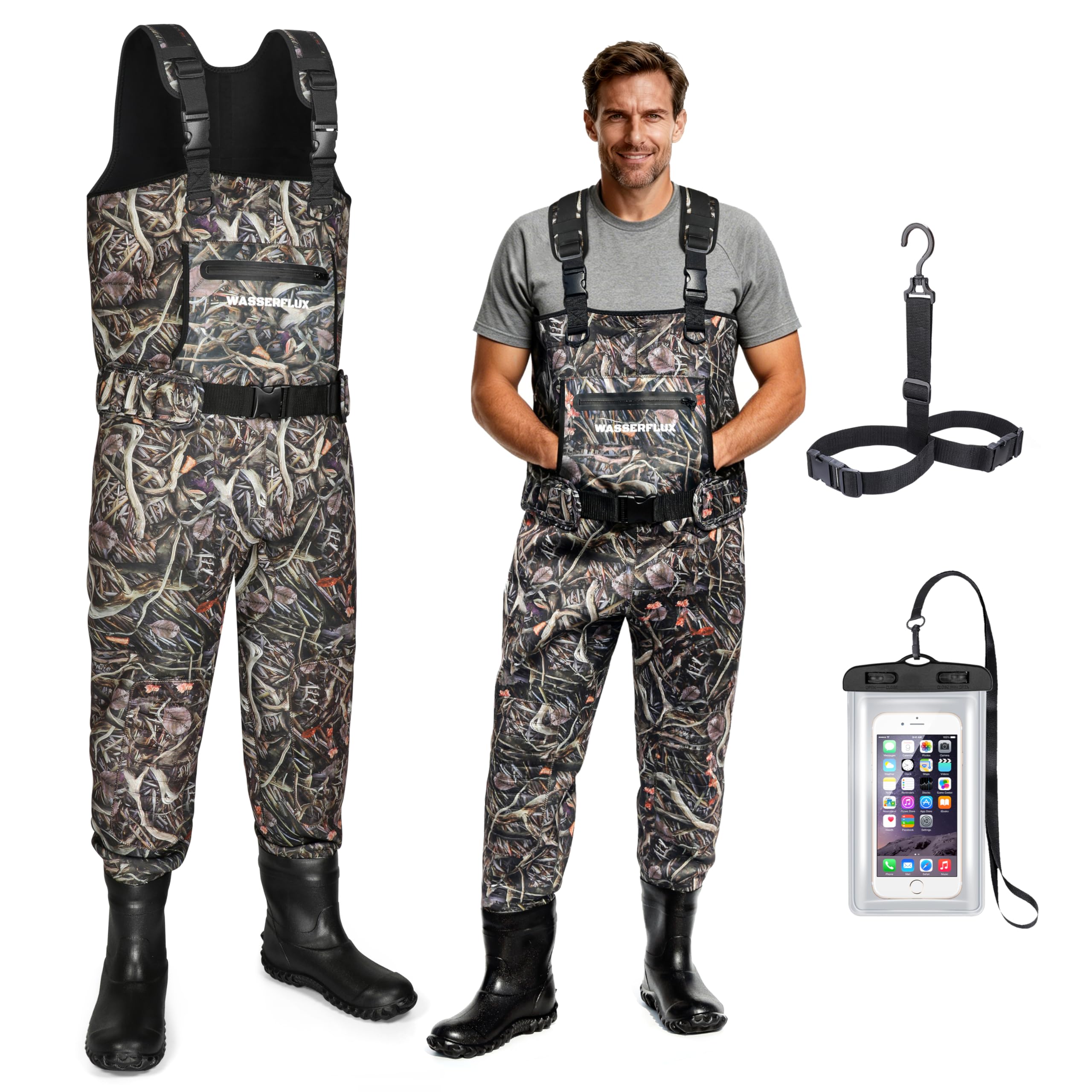
Wasserflux builds these 4mm neoprene waders specifically for cool-water environments — spring-fed rivers and mountain streams where water stays ice-cold even in warmer months. The 800-gram insulated boots handle that scenario without overheating the upper body. Every pair is tested by filling with water while inverted to verify absolute zero leakage before factory approval, with seams double-stitched, adhesive-bonded, and high-frequency heat-sealed (HHcp). The 8mm reinforced knees are thicker than any other product in this review at the knee joint.
The boot is a lightweight PVC build with a cushioned inner layer that absorbs shock better than budget alternatives. The deep-patterned anti-slip sole provides solid grip on slimy rocks and muddy banks. Included accessories — a waterproof phone pouch, heavy-duty repair patches, and a boot hanger — add tangible value beyond the wader itself. Sizing runs significantly large; a 5’9″, 170-pound user found the size 10 fit excessively baggy in the torso, and the leg length favors users over 6 feet tall.
Customer feedback confirms the waterproofing holds up at waist-deep immersion, and the cold-water protection meets expectations for early-season trout fishermen. The oversized cut is the primary friction point — shorter or lighter anglers should expect to size down aggressively. For taller, larger-framed users who need 800-gram warmth without premium pricing, the wasserflux is a well-equipped option.
Why it’s great
- Rigorous leak-testing before shipping
- 8mm reinforced knees for aggressive kneeling
- Includes phone pouch, patches, and boot hanger
Good to know
- Runs very large, size down recommended
- Leg length designed for 6-foot-plus users
- Boot cushioning adequate but not premium
8. Hodgman Mackenzie Cleat Bootfoot Wader

Hodgman’s Mackenzie wader is a lightweight, 3.5mm neoprene bootfoot built for beach fishing and boat launching where heavy insulation causes overheating. The 200-gram Thinsulate boot provides just enough warmth for mild fall days but requires thermal leggings in water below 50°F. The cleated rubber outsole delivers good traction on sand, gravel, and boat ramps, though the boot lacks the stiffness and cushioning of heavier-duty alternatives.
Storage is well-thought-out: a fleece-lined hand warmer pocket, a large top-loading storm pocket, an internal pocket, and D-rings on the front and back for net or accessory attachment. The Y-back elastic suspender straps with opposing buckles prevent the wader from sagging during active use. Seams are stitched, taped, and glued, and the knees are reinforced with a double layer of neoprene. Size 7 fits a 5’7″, 150-pound user well, but sizing runs generous overall.
Low cost makes these waders popular for weekend warriors, but durability is the trade-off. Several users report boot-seam leaks after 14 to 20 trips, and the thin boot material is vulnerable to briars and sharp objects. Patch kits extend the lifespan, but heavy-use anglers will outgrow these quickly. For the light-use shore fisherman who needs dry gear without spending heavily, the Mackenzie delivers short-term value.
Why it’s great
- Lightweight and packable for travel
- Fleece-lined hand warmer and storm pockets
- D-rings for net and accessory attachment
Good to know
- Thin boot lacks arch support for long hikes
- Boot seams prone to leaking after ~14 trips
- Not warm enough for cold water without layering
9. Orvis Clearwater Bootfoot Fly Fishing Waders
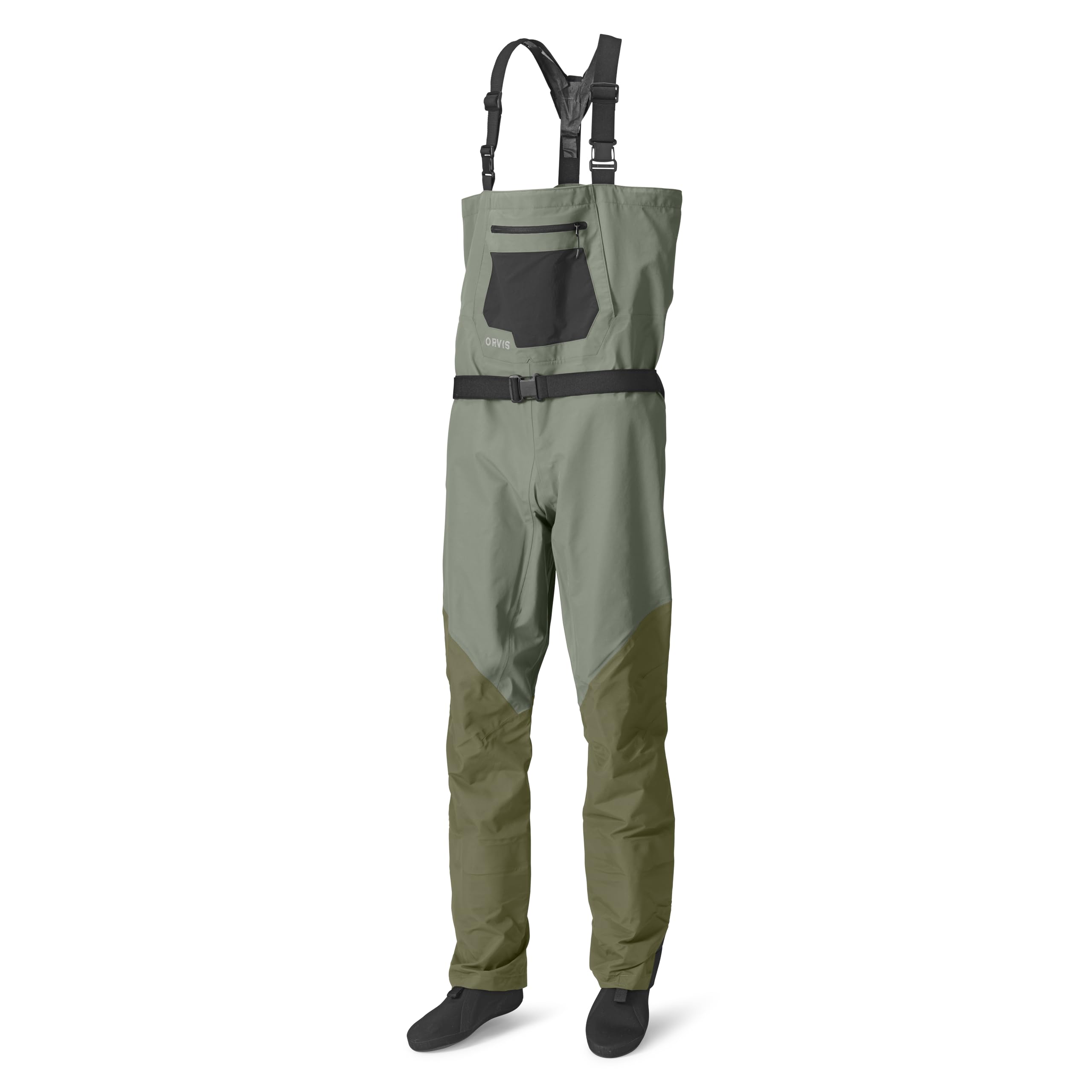
The Orvis Clearwater breaks from the neoprene pack by using a 4-layer breathable fabric upper paired with vulcanized neoprene felt-sole wading boots. This construction is a deliberate choice for fly anglers who prioritize temperature regulation: the breathable upper prevents overheating in 60°F sun while the felt sole provides unmatched grip on slippery river rocks. The modern fit is tailored for athletic builds — more fitted than any other wader in this review — and requires careful reference to the Orvis sizing chart for options like Medium-Large.
The neoprene boot fits snugly with an extra sock layer, and the vulcanized construction adds durability against sharp gravel. The felt sole is excellent for algae-covered stone but wears faster on concrete launch ramps and hiking trails. Storage is minimal compared to hunting-oriented waders — no shell holders or large cargo pockets — reflecting the fly fishing focus on streamlined mobility. Users report comfort across a 40°F to 75°F range, with the breathable fabric preventing the clamminess common to neoprene in warmer weather.
Customer feedback confirms the Clearwater survives falls on jagged rocks without damage and keeps anglers dry during winter wading in Idaho. The higher cost reflects the premium materials and brand reputation, but the loss of insulation means this is a three-season wader for moderate climates. For the dedicated fly angler who wades active rivers and values breathability over maximum warmth, the Clearwater is the most technically refined option here.
Why it’s great
- Breathable 4-layer upper prevents overheating
- Felt sole offers best grip on slick rocks
- Fitted athletic cut with durable vulcanized boots
Good to know
- No insulation for cold winter water
- Felt soles wear fast on gravel and pavement
- Minimal storage compared to hunting waders
FAQ
Should I buy bootfoot or stockingfoot waders?
How does neoprene thickness affect waterproofing?
Can I wear bootfoot waders for hiking to my fishing spot?
Final Thoughts: The Verdict
For most users, the bootfoot waders winner is the HISEA Chest Waders with 800G Boots because it balances 4.5mm neoprene insulation with 800-gram Thinsulate boots for reliable cold-water performance without sacrificing leg mobility. If you need extreme cold protection for ice-out conditions, grab the TIDEWE Hunting Wader with 1400G/1600G Boots. And for the fly angler who demands breathable comfort and rock-specific grip, nothing beats the Orvis Clearwater Bootfoot Fly Fishing Waders.