
A sagging, stained, or torn automotive headliner doesn’t just age your car—it actively degrades the cabin experience by letting in road noise, trapping heat, and making the interior feel neglected. The right replacement fabric transforms that tired ceiling into a quiet, premium sanctuary that looks factory-fresh and withstands the brutal heat inside a parked vehicle.
I’m Min — the co-founder and writer behind Gadgets Feed. I’ve combed through hundreds of spec sheets, foam density figures, fabric weights, and adhesive compatibility notes to isolate the precise qualities that separate a weekend DIY success from a sagging nightmare.
Whether you are restoring a classic truck or refreshing a daily driver, choosing the right material means the difference between a job that lasts years and one that needs redoing in months. My research pinpoints exactly what matters in the best automotive interior fabric for a flawless, durable finish.
How To Choose The Best Automotive Interior Fabric
Automotive interior fabric isn’t decorative trim—it’s an acoustic, thermal, and structural layer. The wrong choice introduces heat buildup, muffled road noise, and foam delamination within a single summer. Focus on three pillars: the fabric face material, the foam backing thickness and density, and the packaging method that arrives at your door.
Fabric Face: Suede vs. Mesh vs. Standard Fabric
Synthetic suede offers a plush, premium feel with excellent sound-dampening microfiber construction. Mesh weaves prioritize breathability and a modern ribbed aesthetic, while standard fabric headliners trade luxury for cost savings. Suede absorbs more vibration but requires careful nap direction alignment during installation to avoid visible color shifts.
Foam Backing: Thickness and Compression Resistance
Headliner foam ranges from 1/8-inch (roughly 3mm) to 3/16-inch (roughly 5mm). Thicker foam masks panel imperfections and delivers superior heat insulation, but it can be harder to stretch around tight radius corners like sunroof cutouts. High-density polyurethane foam resists the creep that causes sagging over years of hot and cold cycling.
Delivery Format: Tube vs. Folded Packaging
Folded fabric inevitably arrives with crease lines that require careful steaming or ironing to remove. Tube packaging preserves the roll shape so the material lays flat immediately. For first-time installers especially, tube packaging saves hours of prep work and reduces the risk of permanent crease shadows showing through after adhesive application.
Quick Comparison
On smaller screens, swipe sideways to see the full table.
| Model | Category | Best For | Key Spec | Amazon |
|---|---|---|---|---|
| MOTUKA 79\” x 60\” Black Suede | Premium Suede | Large vehicle full coverage | 79\” x 60\” piece with 3/16\” foam | Amazon |
| Babnecl Suede 98\” x 60\” | Premium Suede | Seamless single-piece install | 98\” length in tube packaging | Amazon |
| Hiksuky Mesh 58\” x 60\” | Premium Mesh | Modern ribbed aesthetic | 58\” x 60\” tube-packaged mesh | Amazon |
| RadiantDecor Red Suede Wrap | Self-Adhesive | Wrapping plastic trim pieces | 17\” x 70\” self-adhesive sheet | Amazon |
| WUJODOR Suede 54\” x 60\” | Mid-Range Suede | Budget-conscious headliner swap | 54\” x 60\” with 3mm foam | Amazon |
| SARANDAVE Beige 60\” x 54\” | Standard Fabric | Color-matched OEM replacement | 60\” x 54\” with 3/16\” foam | Amazon |
| Garifon Suede 54\” x 60\” | Entry-Level Suede | First-time DIY projects | 54\” x 60\” with 1/8\” foam | Amazon |
In‑Depth Reviews
1. MOTUKA 79″ x 60″ Black Suede Headliner Fabric

The MOTUKA panel delivers the largest surface area in the mid-premium tier at 79 inches long by 60 inches wide, giving you enough material to cover extended cab trucks and full-size SUV headliners in one continuous sheet. The 3/16-inch high-density polyurethane foam backing is noticeably thicker than entry-level options, which helps mask panel irregularities and provides superior thermal insulation that keeps cabin temperatures down during summer parking.
Real-world feedback from owners of 1989-1993 full-size trucks confirms the material has held firm without sagging for over two years when installed with proper contact cement. The micro-suede face has a feel nearly identical to the factory suede found in luxury trims like the Hyundai Santa Fe Calligraphy, delivering an OEM-grade aesthetic at a fraction of the dealer replacement cost.
The fabric ships folded, so expect creases that require laying it flat in the sun or applying gentle heat to remove. The generous 79-inch length also creates a small waste margin—buyers report trimming 1-2 inches off each side to tuck cleanly behind trim clips, but the extra coverage prevents the nightmare of coming up short mid-install.
Why it’s great
- Maximum 79-inch length fits full-size SUVs and trucks without splicing
- 3/16-inch foam thickness offers best-in-class heat and sound insulation
- Micro-suede texture matches factory luxury trim quality
Good to know
- Arrives folded and requires heat or sunlight to remove creases
- Over-saturating with spray adhesive can cause the foam to separate
2. Babnecl Suede Auto Headliner Fabric 98″ x 60″

The Babnecl fabric is the standout choice for owners of long-roof vehicles like Suburbans, Excursions, and extended vans because its 98-inch length covers the entire headliner in a single uncut piece—no unsightly seams or weak glue lines. The fabric arrives in a sturdy tube, meaning it stays flat and smooth from the moment you open the box, eliminating the hours of steaming and waiting that folded materials demand.
The 1/9-inch (roughly 3mm) foam backing is thinner than the MOTUKA’s 3/16-inch option, which makes it easier to stretch around tight compound curves like sunroof cutouts and rear dome light recesses. Users report the suede nap can be coaxed into a consistent direction using compressed air, a technique that ensures the finished surface catches light uniformly without patchy reflections.
Customers who installed this in a Corvette headliner noted the material lays down beautifully without over-saturating the adhesive—too much glue soaks through the thin foam and causes visible stains. The 60-inch width leaves some margin for error, but tight-radius interior corners require slow, deliberate stretching to avoid tearing the fabric at the foam interface.
Why it’s great
- 98-inch length covers long headliners in a single seamless piece
- Tube packaging guarantees flat, crease-free material on arrival
- Thinner foam backing simplifies stretching around tight curves
Good to know
- Thin foam is less forgiving of over-saturated adhesive application
- Difficult to work into very tight radius corners without tearing
3. Hiksuky Auto Headliner Fabric 58″ x 60″ Gray Mesh

The Hiksuky mesh headliner is a deliberately different proposition from the suede options—its plain-weave synthetic mesh offers a clean, modern ribbed texture that looks particularly at home in trucks and SUVs with industrial interior styling. The 1/9-inch foam backing is paired with a fabric face that is stiffer and more dimensionally stable than suede, which means less stretch during installation but zero risk of nap-direction mismatches.
The tube packaging ensures the mesh arrives perfectly flat, and customers report the beige color is slightly lighter than the factory 2001 Suburban headliner material—a detail worth noting for concours-level restorations where exact color matching is critical. The 58-inch width measured 59 inches on some units, leaving small half-inch gaps on each side that required creative trimming of the trim clips to hide.
Acura RDX owners confirm the material pairs well with two cans of 3M headliner adhesive, though novice installers should watch multiple YouTube tutorials first because the mesh’s lack of stretch makes it less forgiving than suede when pulling around sharp edges. The foam backing is durable and resists tearing better than the fluffier suede foam layers, making it a strong candidate for first-time DIYers.
Why it’s great
- Modern mesh weave provides a clean OEM ribbed aesthetic
- Tube packaging eliminates crease removal effort
- Dimensional stability means less risk of stretching or sagging
Good to know
- Mesh lacks the stretch needed for complex compound curves
- Width can slightly vary from advertised 60 inches
4. RadiantDecor Premium Red Suede Fabric Wrap
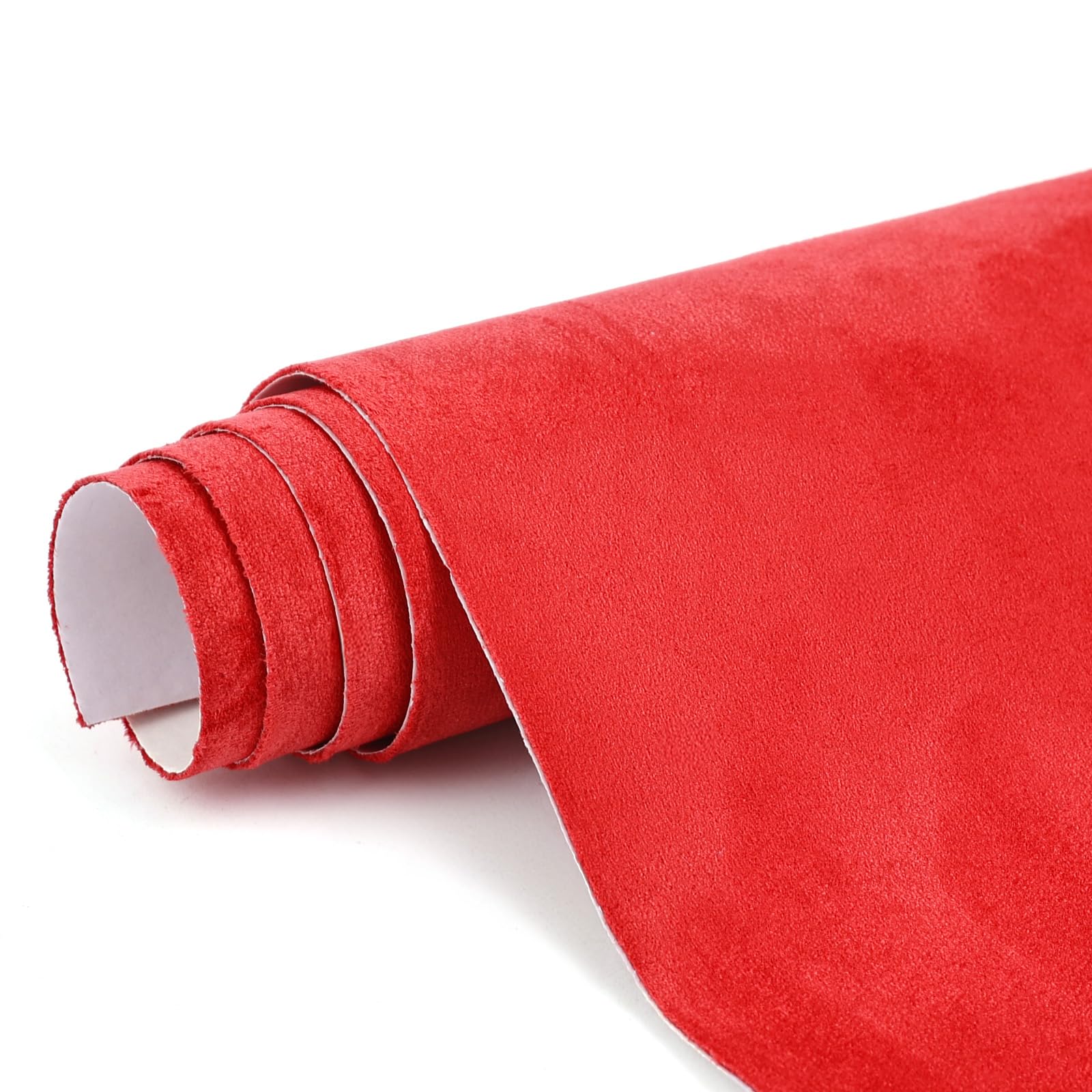
Unlike the foam-backed headliner panels above, the RadiantDecor wrap is a self-adhesive suede sheet designed specifically for covering rigid plastic interior pieces—A-pillars, center consoles, door card inserts, and dash trim elements. The 17-by-70-inch size gives you enough material to wrap five separate plastic panels in a truck interior, which is a fraction of the cost of buying factory replacement trim pieces.
The adhesive uses a “pressing technology” refined over five years to provide high-temperature resistance, which matters when a parked car’s interior hits 140°F. The red suede face is soft and thick enough to resist tearing when stretched around 90-degree corners, provided you use fabric scissors for clean cuts. The material does not leave residue when removed, an important factor if you ever decide to revert to the factory look.
Customers stress that the adhesive is incredibly aggressive—once it touches the plastic surface, repositioning is nearly impossible without damaging the fabric. The recommendation is to buy more than you think you need and to cut oversized pieces that can be trimmed flush after the adhesive bonds. The suede’s nap direction is consistent, but any overlapping seams are visible under direct light.
Why it’s great
- Self-adhesive backing eliminates need for separate spray glue
- Stretches well enough to wrap complex 90-degree corner shapes
- Heat-resistant adhesive survives extreme cabin temperatures
Good to know
- Adhesive bonds instantly with zero repositioning tolerance
- Only covers trim pieces, not large headliner surface areas
5. WUJODOR Suede Headliner Fabric 54″ x 60″
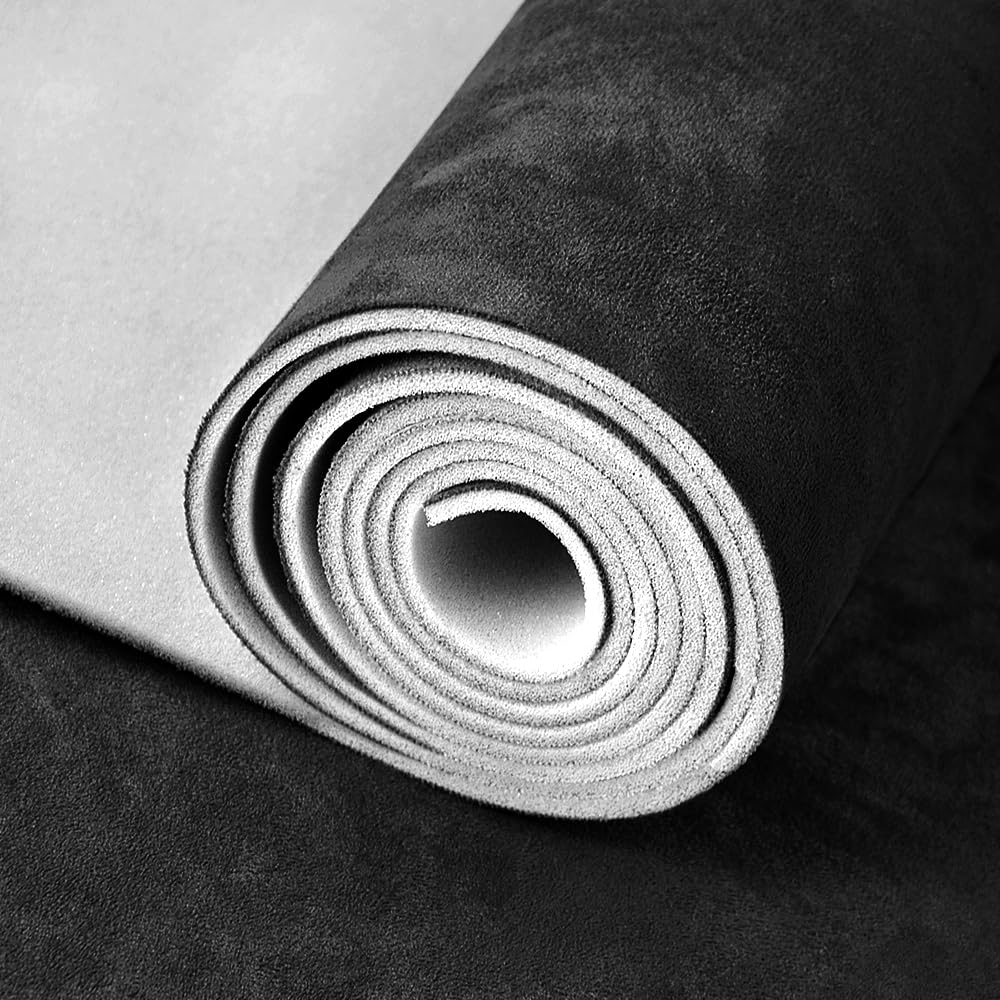
The WUJODOR headliner fabric delivers a solid entry into suede headliner replacement at a reasonable cost, packing a 54-by-60-inch panel with a 3mm polyurethane foam backing. The synthetic suede face has a soft, Alcantara-like finish that Ford Bronco owners have successfully used to upgrade their factory headliners, reporting improved sound dampening and thermal insulation as measurable benefits.
The four-way stretch of the suede face contours well around dome light cutouts and sun visor mounts, bonding effectively with standard trim adhesive when applied according to upholstery tutorials. Customers note the fabric arrives folded with prominent crease lines that require ironing over a damp cloth or laying flat for 24-72 hours to relax—an extra step that less patient DIYers may find frustrating.
Flame resistance is listed as a feature but has not been independently verified by customers, so treat that claim cautiously if you are working on a vehicle with strict safety requirements. The material has held up well in high-contact areas for daily drivers, but the thinner 3mm foam means less padding for masking panel dents compared to the 3/16-inch options from MOTUKA or SARANDAVE.
Why it’s great
- Four-way stretch contours easily around curves and cutouts
- Alcantara-like suede finish upgrades cabin aesthetics noticeably
- Sound dampening improvement is measurable after installation
Good to know
- Arrives folded and requires ironing or days of flattening
- 3mm foam is thinner and masks panel imperfections less effectively
6. SARANDAVE Headliner Fabric 60″ x 54″ Beige

The SARANDAVE headliner stands apart because it offers a beige color option that closely matches the factory headliner found in countless 1990s and 2000s sedans, SUVs, and trucks—an essential detail for restorers who value color accuracy. The 3/16-inch foam backing is thick enough to feel plush under the fabric and provides genuine heat insulation, which is rare at the entry-level price tier.
The standard fabric face (not suede or mesh) has a matte texture that resists showing fingerprints and smudges, making it practical for family vehicles. Customers report the material cuts cleanly with scissors, glues well with standard headliner adhesive, and is thin enough to tuck behind trim panels without adding bulk that prevents the clips from snapping back into place.
The main trade-off is the folded packaging—the beige fabric arrives with sharp creases that some users found stubborn to remove completely, requiring heavy flat objects left on the corners overnight plus careful ironing. The material is thin enough that aggressive stretching during installation can cause the foam to separate from the fabric face, so patience and even pressure application are required.
Why it’s great
- Beige color matches factory headliner tones in many older vehicles
- 3/16-inch foam provides real thermal and acoustic insulation
- Matte fabric face is practical and resists visible smudging
Good to know
- Stubborn creases from folded packaging require significant effort to remove
- Thin fabric can separate from foam if over-stretched during install
7. Garifon Suede Headliner Fabric 54″ x 60″ Grey
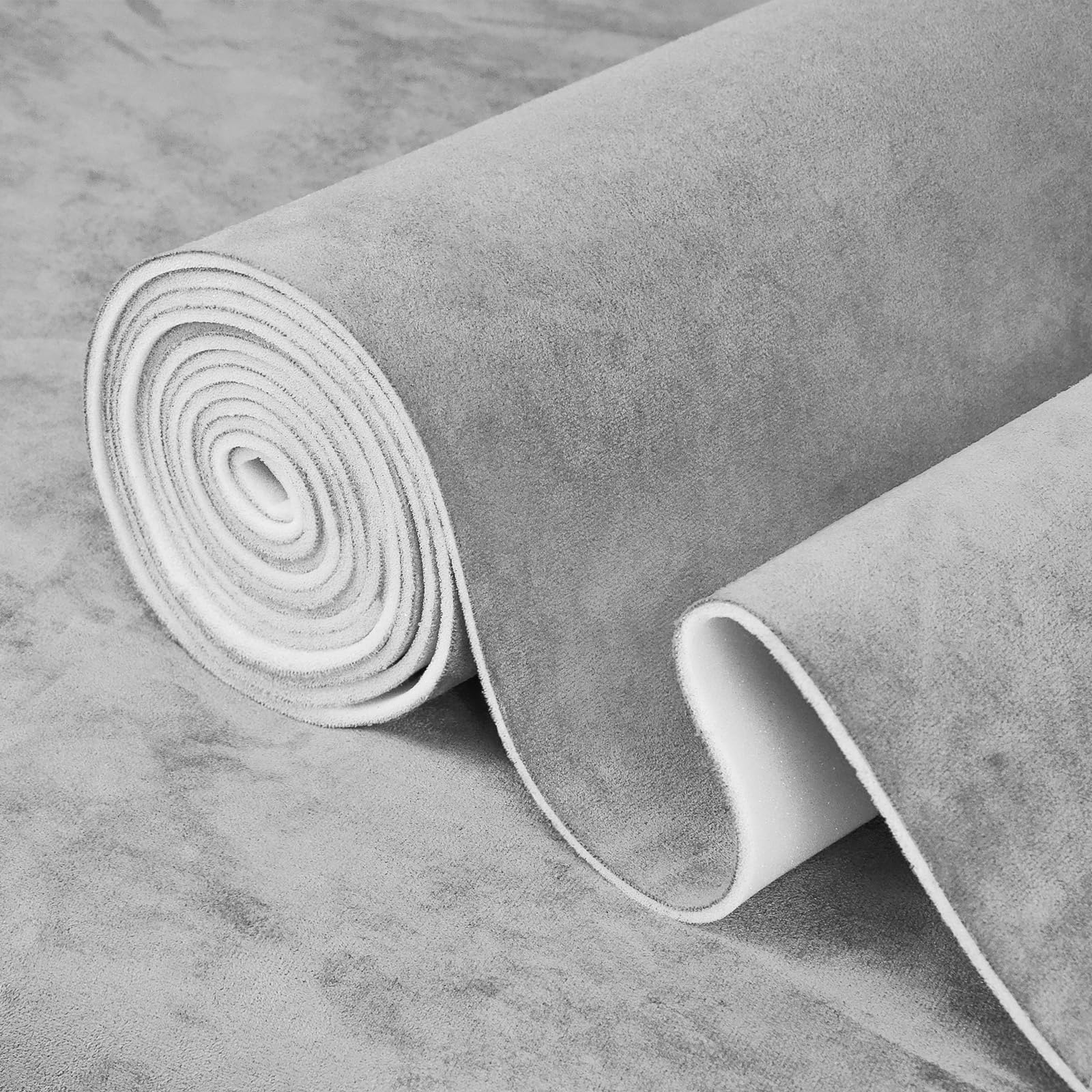
The Garifon suede headliner is the most affordable entry into premium suede fabric, offering a 54-by-60-inch panel with a 1/8-inch high-density foam backing at a price that makes it the ideal learning material for first-time DIYers who expect to make mistakes. The synthetic suede face is soft to the touch, and the black color option is rich and fade-resistant according to early adopter reports.
The 1/8-inch foam is thinner than the category average, which actually helps it cut cleanly with standard scissors and conform to tight panel curves without bunching. However, that same thinness means the foam can tear away from the fabric face if you need to reposition the material after initial glue contact—a real consideration if you are working alone and can’t hold tension perfectly on the first try.
The fabric arrives folded, though customers report the fold marks largely disappear after glue application because the tension during stretching pulls the creases flat. The grey color option is neutral enough to blend with most factory interiors without clashing. The UV-blocking and heat-resistant properties are claimed but not independently tested, so treat it as a surface-level feature rather than a guaranteed long-term performance spec.
Why it’s great
- Lowest price point makes it a low-risk choice for beginner DIY projects
- Thin foam cuts cleanly and conforms to tight curves easily
- Fold marks disappear under tension during glue application
Good to know
- Thin foam tears away from fabric if you need to reposition
- UV and heat resistance claims are not independently verified
FAQ
What adhesive works best with foam-backed headliner fabric?
How do I remove creases from folded headliner fabric?
Can I use automotive headliner fabric for boat interiors?
Final Thoughts: The Verdict
For most users, the best automotive interior fabric winner is the MOTUKA 79″ x 60″ Black Suede Headliner because its 3/16-inch foam backing hits the sweet spot between thermal insulation and stretchability, and the 79-inch length covers full-size vehicles without splicing. If you need a single seamless piece for a long-roof vehicle, grab the Babnecl 98″ x 60″ Suede for its crease-free tube packaging. And for wrapping plastic trim pieces rather than full headliners, nothing beats the RadiantDecor Self-Adhesive Suede Wrap for its instant-bond convenience and heat resistance.