
A life jacket that rides up over a toddler’s face is worse than no jacket at all — it creates a false sense of security while introducing a genuine drowning risk. That specific nightmare, the shoulder-strap-slip-panic at the pool edge, is what separates a properly engineered baby life jacket from an accessory that simply looks the part.
I’m Min — the co-founder and writer behind Gadgets Feed. I’ve spent years tracking infant flotation standards, comparing USCG certification language against real-world fit data, and analyzing how different strap geometries, collar heights, and foam densities perform on children from lean 9-pound newborns to stocky 55-pound toddlers. (And Homer 🐱 supervised every draft from the warm spot atop the shipping box, one paw on the leg strap sample).
Every jacket on this list has been vetted for genuine security and adjustability — no inflatable toys, no cheap foam slabs. If you’re shopping for a USCG-approved or infant-specific flotation vest, this guide to the best baby life jacket will help you match the right design to your child’s size and your family’s water environment.
How To Choose The Best Baby Life Jacket
Selecting a life jacket for a baby or toddler isn’t like buying one for yourself. A child’s body proportions — large head, short torso, low center of gravity — mean a jacket that fits an adult perfectly can slip right over a toddler’s face. Here are the three non-negotiable checks to make before you click “buy.”
Weight Range vs. Age Labeling
Ignore “2-4 years” or “toddler” printed on the tag. Weight is the only reliable sizing metric. A jacket rated for 30-50 pounds will be dangerously loose on a 22-pound baby, no matter what the age says. Always match the child’s current weight to the jacket’s stated range, and check the fit before every use by lifting the child by the shoulder straps — their chin and ears should not slip through.
Leg or Crotch Strap (Non-Negotiable for Infants)
For any child under 30 pounds, a leg strap or crotch strap is not an extra — it is the primary safety feature. The strap prevents the jacket from riding up toward the child’s face in the water. If a jacket lacks this strap and the label claims it fits infants, look for a different model. The strap should be adjustable and easy for an adult to operate but difficult for a child to unbuckle.
Foam Buoyancy and Head Support
A good baby life jacket uses segmented foam panels, not a single slab, to distribute buoyancy evenly around the torso. Look for collars that support the neck and keep the head tilted back, away from the water. Jackets that float the baby face-down or cause chin-to-chest folding are dangerous. The best designs force a gentle 45-degree backward angle when the child relaxes in the water.
Quick Comparison
On smaller screens, swipe sideways to see the full table.
| Model | Category | Best For | Key Spec | Amazon |
|---|---|---|---|---|
| Level Six Puffer | Infant Flotation | Newborns & small babies 9-25 lbs | 3-piece neck collar | Amazon |
| HyperLite Elite | Toddler Water Sports | Active toddlers 30-50 lbs | Biolite foam, 1 lb weight | Amazon |
| Body Glove Paddle Pals | Multi-Surface PFD | Pool, lake & beach 33-55 lbs | Shoulder harness system | Amazon |
| O’Neill Child Superlite | Boating Vest | Boating & watersports 30-50 lbs | 11.99 oz, polyethylene foam | Amazon |
| Dark Lightning Infant | Infant PFD | Babies 0-30 lbs | Grab handle + leg strap | Amazon |
| SwimWays Bluey | Toddler Swim Aid | Bluey fans 33-55 lbs | Arm floatie combo design | Amazon |
| TRC Super Soft | Beach & Pool Vest | Non-bulky comfort, 23-24″ chest | Vinyl-coated foam | Amazon |
In‑Depth Reviews
1. Level Six Puffer Baby Flotation Vest
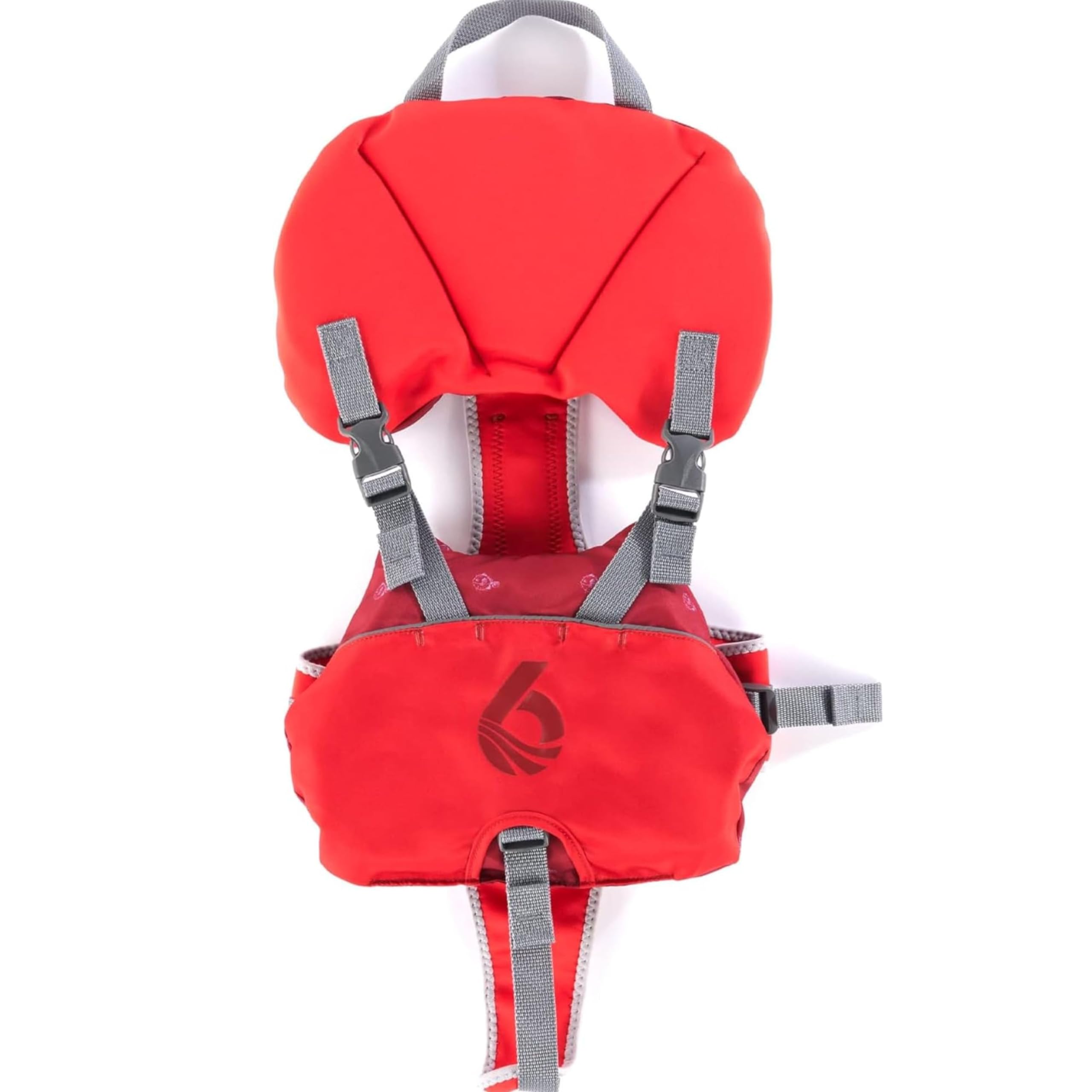
This is the only flotation vest on the market designed specifically for babies as small as 9 pounds — a weight tier where most USCG-approved jackets start at 20 or 30 pounds. The Level Six Puffer uses a 3-piece collar that wraps around the baby’s neck like a cushioned horseshoe, providing head support that keeps the face tilted away from the water. The neoprene and polyester shell is both stretchy and soft, reducing chafing on delicate infant skin.
The tri-webbing adjustment system includes three separate buckles: one at the lower front for easy diaper changes, plus two at the shoulders for an adult to cinch snugly. This design allows the jacket to grow with the baby from infancy past 25 pounds. Because no USCG testing standard exists for children under 20 pounds, this jacket isn’t USCG-approved — but its buoyancy distribution and passive back-floating behavior are engineered specifically for the unique proportions of very small infants.
Parents consistently report that their babies nap comfortably in this vest during all-day boat trips, and the fold-away grab handle on the back gives adults an easy emergency hold without pulling the jacket upward. It is not a toy — it is a serious flotation aid for the smallest swimmers.
Why it’s great
- Starts at 9 pounds, the lowest weight range on the market
- Three-piece collar provides genuine neck and head support for infants
- Third buckle at front makes diaper changes practical
Good to know
- Not USCG approved (no testing standard exists for under-20-pound children)
- Neoprene holds water weight longer than nylon-coated foam
2. HyperLite Elite Infant/Toddler Life Jacket

The HyperLite Elite is a zip-front life jacket with Biolite foam core panels and Fluidflex patterning that allows remarkable freedom of movement for an active toddler. At just 1 pound, this is one of the lightest USCG-approved jackets in the 30-50 pound class, and the zip closure ensures the jacket cannot be kicked off by a wriggling child the way a buckle-only jacket sometimes can. The rule printed on the vest is simple: “If it zips, it fits.”
Multiple customer reports confirm that the jacket forces the child into a stable 45-degree back float when they relax, preventing the dangerous face-down position that cheaper vests allow. The bright orange color provides high visibility in open water, and the crotch strap prevents ride-up even during active splashing. The foam dries quickly and the zippers resist sand and grit, making this a durable choice for beach vacations.
Some families at the upper end of the weight range (45-50 pounds) report that the fit becomes snug, which is exactly what you want from a Type III PFD — any looseness at that weight would compromise safety. If your toddler is approaching 50 pounds, consider measuring chest circumference against the vest’s sizing chart before purchasing.
Why it’s great
- Zip-front design prevents accidental removal by the child
- Forces a safe back-float angle in the water
- Ultra-lightweight at 1 pound for all-day wear
Good to know
- Runs slightly large; measure your child before ordering
- Top of the 30-50 lb range may feel restrictive for some 4-year-olds
3. Body Glove Paddle Pals Life Jacket
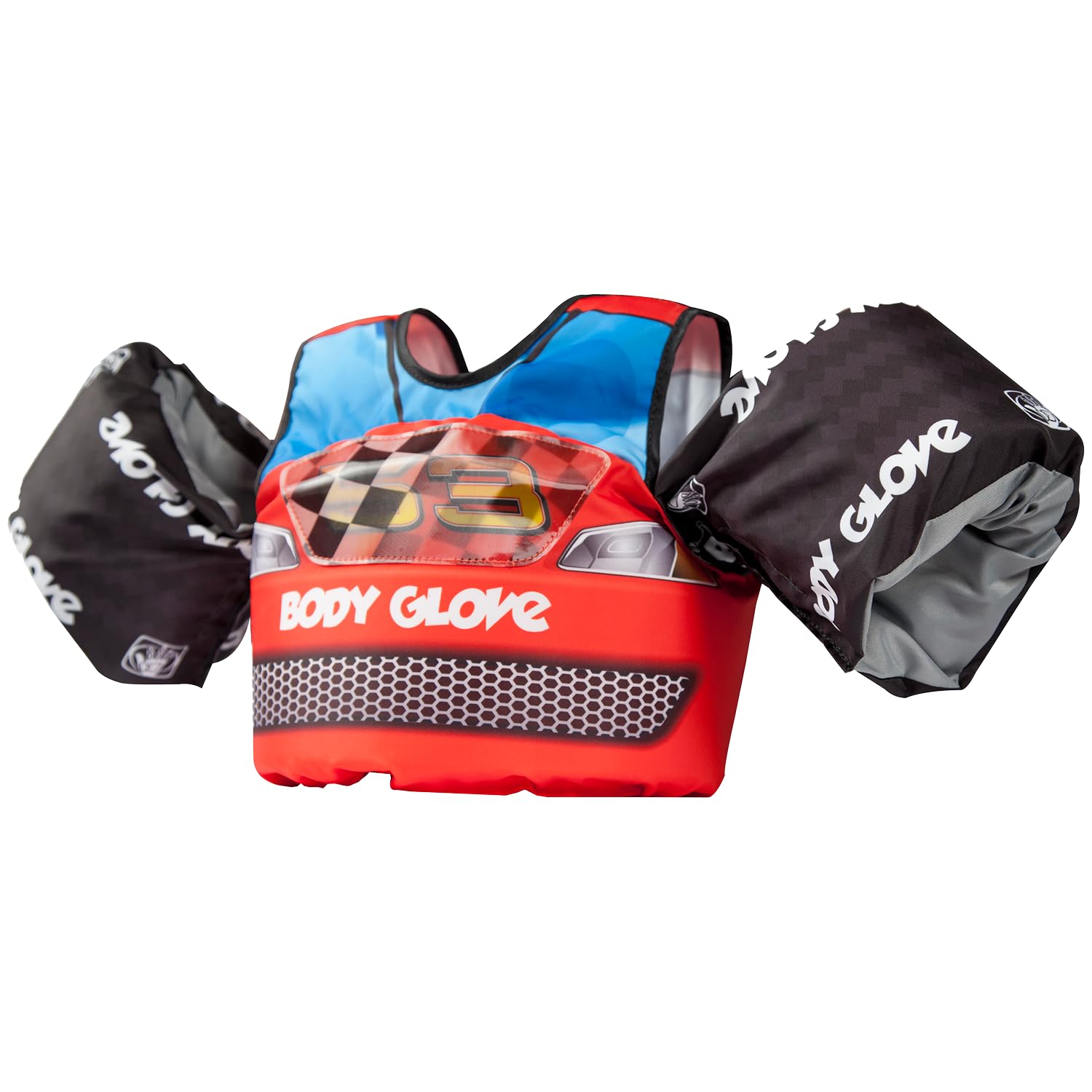
Body Glove has been making water gear since 1953, and the Paddle Pals line brings decades of flotation engineering to a kid-friendly package. The standout feature here is the patented shoulder harness system — a set of straps that run over the shoulders and clip at the chest, preventing the jacket from riding up even when the child is lifted by the shoulders from the water. This is the type of detail that makes a real safety difference at pool parties or busy beaches.
The holographic motion graphics on the outer shell are not just for show — they make the child highly visible in murky lake water or crowded pools. At 250 grams, the jacket is light enough for a 2-year-old to move freely while still delivering USCG Type V/III certification for children 33-55 pounds. The back buckle is designed for adult-only operation, so toddlers cannot release themselves mid-swim.
One limitation: the jacket does not include a between-the-legs strap, relying instead on the shoulder harness to prevent ride-up. For children at the lower end of the weight range (33-40 pounds), parents should perform a strap-tightness check before every use. The multi-panel design reduces chafing, and the foam core holds up well after repeated pool exposure.
Why it’s great
- Patented shoulder harness prevents ride-up effectively
- Holographic panels make child easy to spot at a distance
- Lightweight at 250g for free range of motion
Good to know
- No dedicated leg strap — rely on shoulder harness for fit security
- Design patterns vary by model; check for your child’s favorite
4. O’Neill Child Superlite Life Vest

The O’Neill Superlite weighs just 11.99 ounces — lighter than many toddler water shoes — and uses anatomically cut polyethylene foam panels that contour to a child’s body without adding bulk. The coated polyester outer shell is durable enough for waterskiing and wakeboarding yet soft enough to prevent skin irritation. This is a USCG Type II jacket rated for 30-50 pounds, designed for active water sports where mobility matters more than pool floatation.
The heavy-duty 1-inch webbing belts with quick-release buckles provide a truly adjustable fit, though multiple parents note that the jacket runs small. A 36-pound child wearing the 30-50 pound rating may find it snug, which is preferable to a loose fit. The side flotation panels keep the child upright, and the between-the-leg strap is crucial for preventing ride-up when the child is in the water. The bright turquoise and berry colorways offer solid visibility against dark lake water.
Some families report that the vest pushes younger children up in shallow water, making it harder for them to touch the bottom — this is inherent to any properly buoyant life jacket and reinforces the need for constant adult supervision. The vest’s minimal profile makes it an excellent travel companion for beach trips or boat rentals where storage space is tight.
Why it’s great
- Under 12 ounces — one of the lightest USCG-approved toddler vests
- Anatomical foam cut for maximum arm mobility during water sports
- Highly adjustable webbing belts for a custom fit
Good to know
- Runs noticeably small — size up or measure chest carefully
- Buoyancy pushes smaller children up in shallow water
5. Dark Lightning USCG Infant Life Jacket
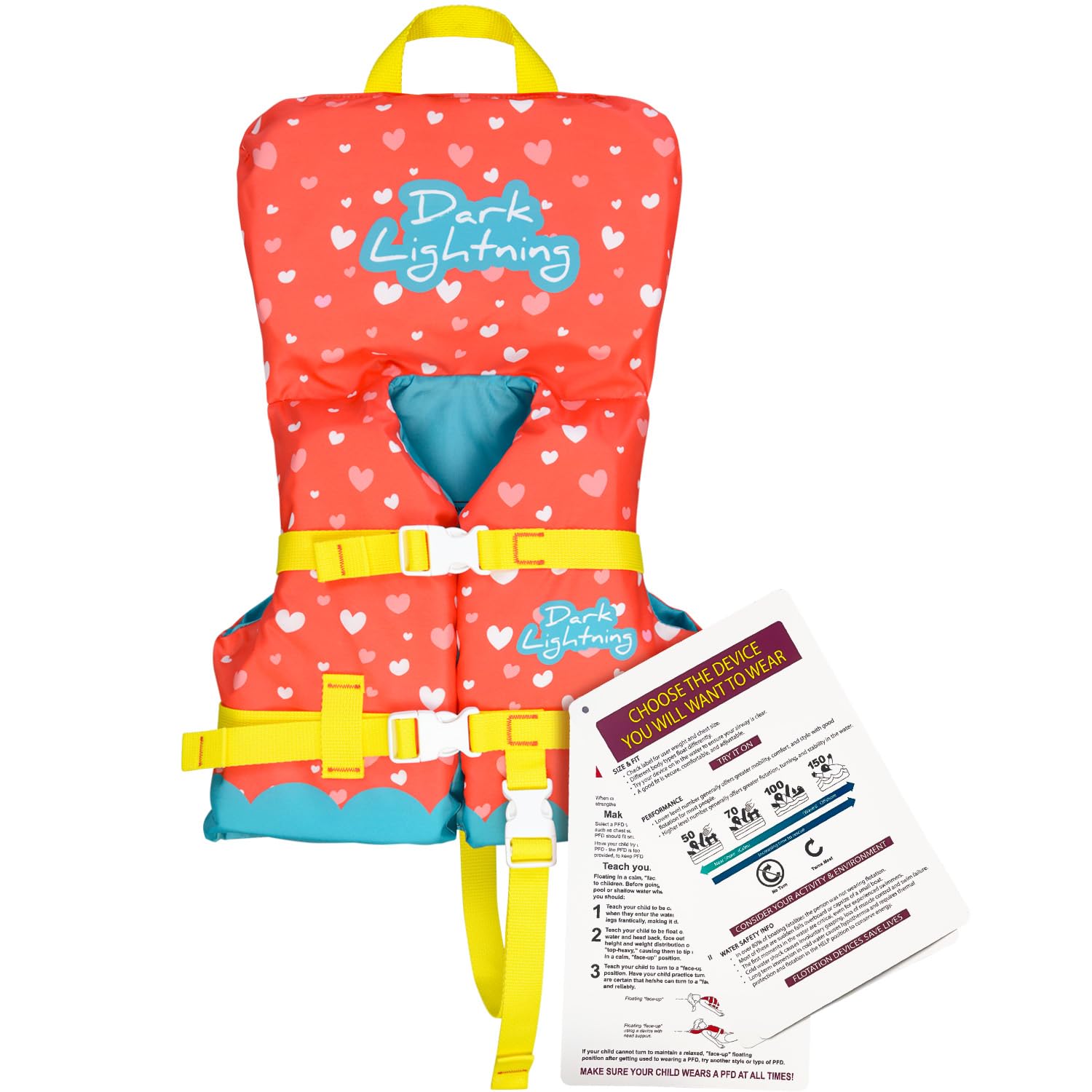
The Dark Lightning infant vest is one of the very few USCG-approved life jackets that specifically targets babies under 30 pounds — and delivers both a leg strap and a top grab handle as standard equipment. The supportive foam headrest is integrated into the collar, giving an infant’s head enough buoyancy lift to keep the airway clear. The leg strap runs between the legs and clips at the front, making it virtually impossible for the jacket to slide up over the child’s face.
At just 200 grams, this jacket is exceptionally light and uses adjustable side straps rather than a zipper, so parents can dial in the tension exactly without pinching skin. The grab handle on the back is reinforced and positioned at the center of gravity, allowing an adult to lift the baby effortlessly without tilting the jacket. Parents of toddlers with autism or sensory sensitivities report that the soft foam and simple buckle system cause significantly less resistance than bulkier vests.
The jacket is constructed from a closed-cell foam that does not absorb water, so it remains buoyant even after repeated dips. Bright color options improve visibility. One note: the jacket has no zipper, so the fit depends entirely on the side straps being tightened evenly. Check that both straps are snug before each use.
Why it’s great
- USCG approved for the critical 0-30 lb infant range
- Integrated headrest and leg strap prevent face submersion
- 200g weight is comfortable for extended wear
Good to know
- No zipper, so side-strap tightening is essential for a secure fit
- Leg strap must be adjusted correctly to avoid chafing
6. SwimWays Bluey Life Jacket

Licensed character life jackets often prioritize looks over function, but the SwimWays Bluey vest is a legitimate USCG-approved PFD for children 33-55 pounds. What sets this design apart is its 2-in-1 construction that combines a traditional foam life vest with a pair of arm floaties attached at the shoulders. This hybrid approach provides additional lateral buoyancy that gives toddlers extra confidence to paddle independently.
The soft polyester outer shell feels like a favorite t-shirt rather than stiff neoprene, which explains why parents report significantly less resistance from toddlers who previously refused to wear life jackets. The adjustable back buckle is positioned high enough that children cannot reach it to unbuckle themselves, yet it remains easy for adults to operate. The jacket measures 13.25 inches long by 3.25 inches wide, making it compact enough for travel without sacrificing the 15-25 kg buoyancy rating.
One practical limitation: the arm floaties are sewn into the design and cannot be removed, so this jacket is best suited for recreational swimming rather than open-water boating where you might want a sleeker profile. Colors fade slightly after extended chlorinated pool use, but the structural integrity of the foam core remains intact. For Bluey-obsessed toddlers transitioning from pool toys to real flotation devices, this is an excellent gateway jacket.
Why it’s great
- Arm floatie hybrid boosts toddler confidence in the water
- Soft fabric exterior is comfortable and easy to clean
- Back buckle is child-proof but adult-friendly
Good to know
- Attached arm floaties add bulk compared to traditional vests
- Print may fade with heavy chlorinated water exposure
7. TRC Recreation Super Soft Child Life Jacket
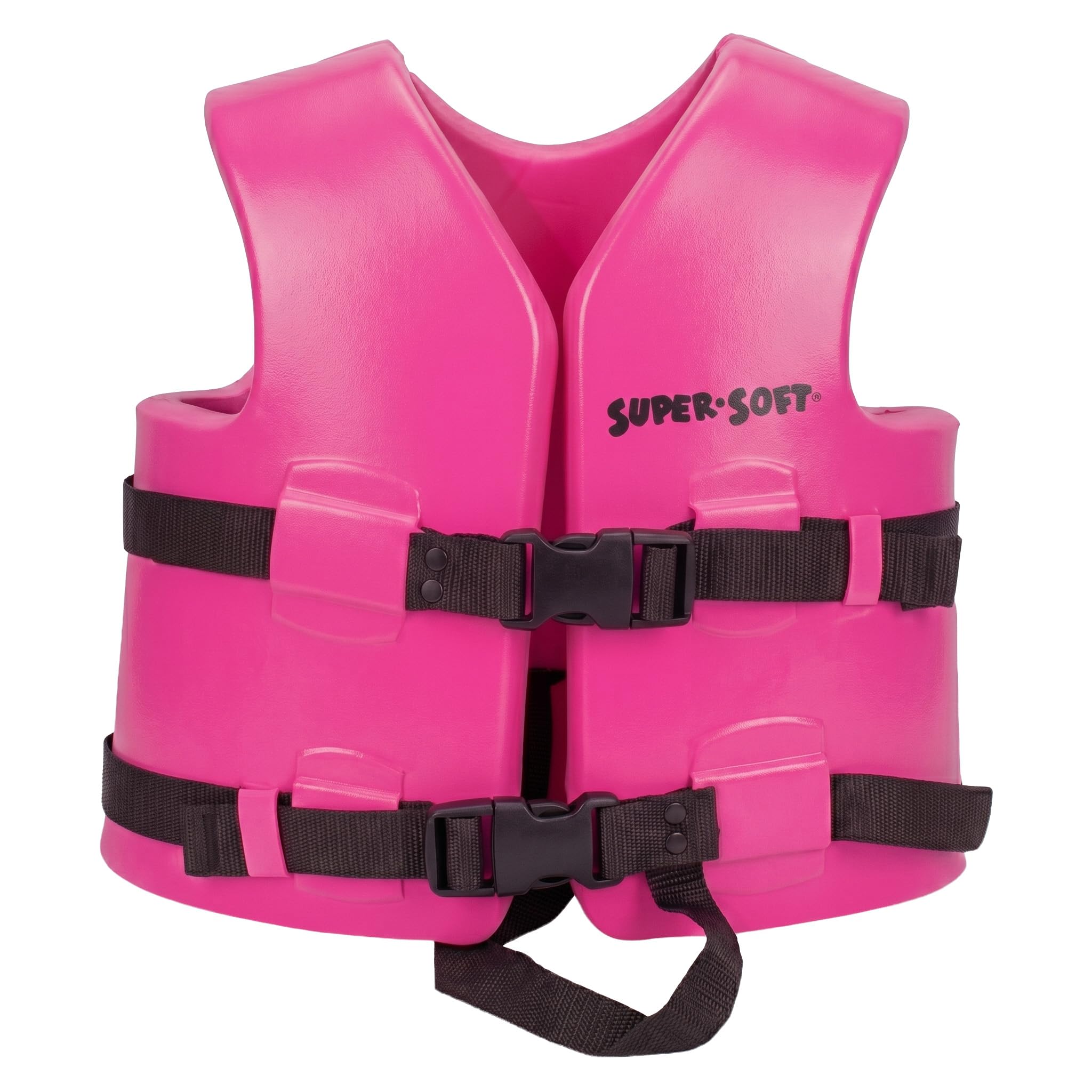
The TRC Super Soft jacket occupies a unique spot in this category: it is a USCG-approved Type III vest that prioritizes comfort over everything else, using a vinyl-coated foam core wrapped in an exceptionally pliable outer material. For children who are sensitive to texture — including those on the autism spectrum — the soft shell eliminates the scratchy, abrasive feeling that makes many children refuse to wear a life jacket. The smaller arm holes are deliberately sized to prevent the vest from riding up, a design detail missing from many competitors.
This jacket is made in the USA and is available in the small size that fits chests of 23-24 inches, which corresponds roughly to children ages 2-5 depending on build. The included bottom strap adds an extra layer of security that keeps the vest anchored. Multiple parents report that their children became independent swimmers at the Disney resort pools while wearing this vest, a strong vote of confidence for its balance of safety and mobility.
The vinyl coating makes the jacket resistant to saltwater corrosion and pool chemicals, extending its lifespan across multiple seasons. The trade-off is that vinyl-coated foam does not breathe as well as fabric-covered foam, so the child may feel warmer during extended wear on hot days. The closure system uses adjustable straps rather than a zipper, which gives a more customizable fit but requires careful tightening before each session.
Why it’s great
- Exceptionally soft material works well for sensory-sensitive children
- Smaller arm holes prevent ride-up movement in the water
- Made in the USA with a durable vinyl-coated foam core
Good to know
- Vinyl shell can get warm during extended use in direct sun
- Adjustable straps require regular re-tightening
FAQ
Can a baby wear a life jacket without a leg strap?
Is USCG approval the only thing I should look for?
What weight range is safest for my baby to start wearing a life jacket?
Final Thoughts: The Verdict
For most families, the best baby life jacket is the Level Six Puffer for the smallest infants (9-25 lbs) who need specialized neck support and passive back-floating. If your toddler is 30-50 pounds and active in the water, the HyperLite Elite delivers USCG-approved lightweight performance with a secure zip closure. And for budget-conscious parents looking for a proven USCG vest for 33-55 pound children, the Body Glove Paddle Pals offers excellent value with its patented shoulder harness and high-visibility design. Pick the one that matches your child’s exact weight — and always supervise when water is near.