
A ripped bag of granola, a soggy first-aid kit, and a bear that ransacked your entire food stash — these are the nightmares that a flimsy stuff sack invites into the backcountry. The right backpacking food bag does more than carry calories; it creates a waterproof, rodent-resistant, and organized barrier between your essential supplies and the relentless wilderness. Choosing poorly means starving, cleaning up messes, or attracting unwanted wildlife to your tent at 2 a.m.
I’m Min — the co-founder and writer behind Gadgets Feed. After spending hundreds of hours combing through material science, closure mechanisms, and real-world stress tests across the budget-to-premium spectrum of dry sacks, I’ve learned exactly which specs separate a reliable food bag from a disposable liability.
This buying guide isolates the seven top-rated options to help you select the ideal backpacking food bag for your next overnight or multi-day trek without wasting money on overpriced nylon that fails at the first river crossing.
How To Choose The Best Backpacking Food Bag
Every ounce you strap to your pack must earn its place. A backpacking food bag that leaks, tears, or attracts critters wastes grams and ruins morale. These four decision points will guide you toward the right closure, capacity, material, and weight profile for your specific adventure style.
Material and Waterproofing Standard
The fabric’s denier (D) and coating define its real-world durability. A 30D ripstop nylon with a 2,000mm waterhead rating sheds rain and splashes but cannot survive being sat on with sharp rocks underneath. A 420D nylon with TPU lamination — triple-coated at the base — handles rafting, bike-packing drops, and abrasive canyon walls. For true submersible use, look for welded seams and a roll-top closure rated IPX5 or higher. Silnylon sacks save grams but puncture faster; heavy-duty PVC or TPU-coated bags add grams but protect meals over a full season.
Closure Type: Roll-Top vs. Hook-and-Loop vs. Zipper
A proper three-roll hypalon buckled closure is the gold standard for keeping water out and smells in. Hook-and-loop closures — like the heavy-duty Velcro on stainless steel mesh bags — stop rodents but are not waterproof and can snag on pack contents. Zippered bags are convenient for quick access but are the least reliable seal against moisture unless paired with a dry-bag roll-top. If you cross rivers or expect sustained rain, a roll-top is non-negotiable. If you camp in high-rodent zones, a mesh bag with hook-and-loop becomes a separate, complementary layer.
Capacity Planning: Liters vs. Meals
One person eating 2,500 calories per day typically needs 10 to 15 liters of bag volume for a 3- to 5-day trip. A 5-liter bag holds roughly one day’s food plus a stove and fuel canister. A 20-liter bag can accommodate two people for three days or one person for a full week. Oversizing forces you to carry dead space; undersizing forces you to cram and crush delicate items. Measure your typical bear canister volume (usually 10 to 12 liters) and match the bag to that number if you are not using a hard-sided canister.
Weight and Packability
Every gram counts on the trail. A standard 20-liter dry sack weighs between 0.2 and 0.4 pounds; an ultralight 30D Cordura bag set weighs as little as 0.07 pounds per sack. Conversely, a stainless steel mesh bag weighs 12.5 ounces for 2,500 cubic inches — roughly double the weight of standard nylon options. The trade-off is clear: if you hike in areas with aggressive rodents, the extra weight of a metal mesh bag is a small price for not losing three days of food to a single marmot.
Quick Comparison
On smaller screens, swipe sideways to see the full table.
| Model | Category | Best For | Key Spec | Amazon |
|---|---|---|---|---|
| Ridgefrost 20L Dry Bag | Dry Sack | Day kayak & dual-compartment wet/dry storage | 20L capacity with separate cool-storage compartment | Amazon |
| Sea to Summit Big River 5L | Dry Sack | Rafting & heavy-duty waterproofing | 420D TPU-coated nylon, triple-coated base | Amazon |
| Osprey Waterproof Dry Sack 20L | Dry Sack | Lightweight packing with see-through convenience | 20L, IPX5-rated, 0.24 lb with viewing window | Amazon |
| Sea to Summit Ultra-Sil Dry Bag Set | Ultralight Set | Ultralight backpacking & pack organization | 3L + 5L + 8L, 30D Cordura, 0.07 lb each | Amazon |
| Osprey Ultralight Backpack Liner | Pack Liner | Internal pack waterproofing for 55-65L backpacks | Medium fits 58L packs, 0.26 lb nylon sleeve | Amazon |
| Wallaby 30-Pack Mylar Bags | Food Storage | Pre-trip meal prep & long-term food storage | 1-gallon each, 7.5 mil thick, 400cc O₂ absorber included | Amazon |
| RATSACK Rodent Proof Bear Bag | Mesh Sack | Aggressive rodent zones & ultralight critter defense | 1,800 cu in stainless steel, 12.5 oz, hook-and-loop closure | Amazon |
In‑Depth Reviews
1. Ridgefrost 20L Dry Bag
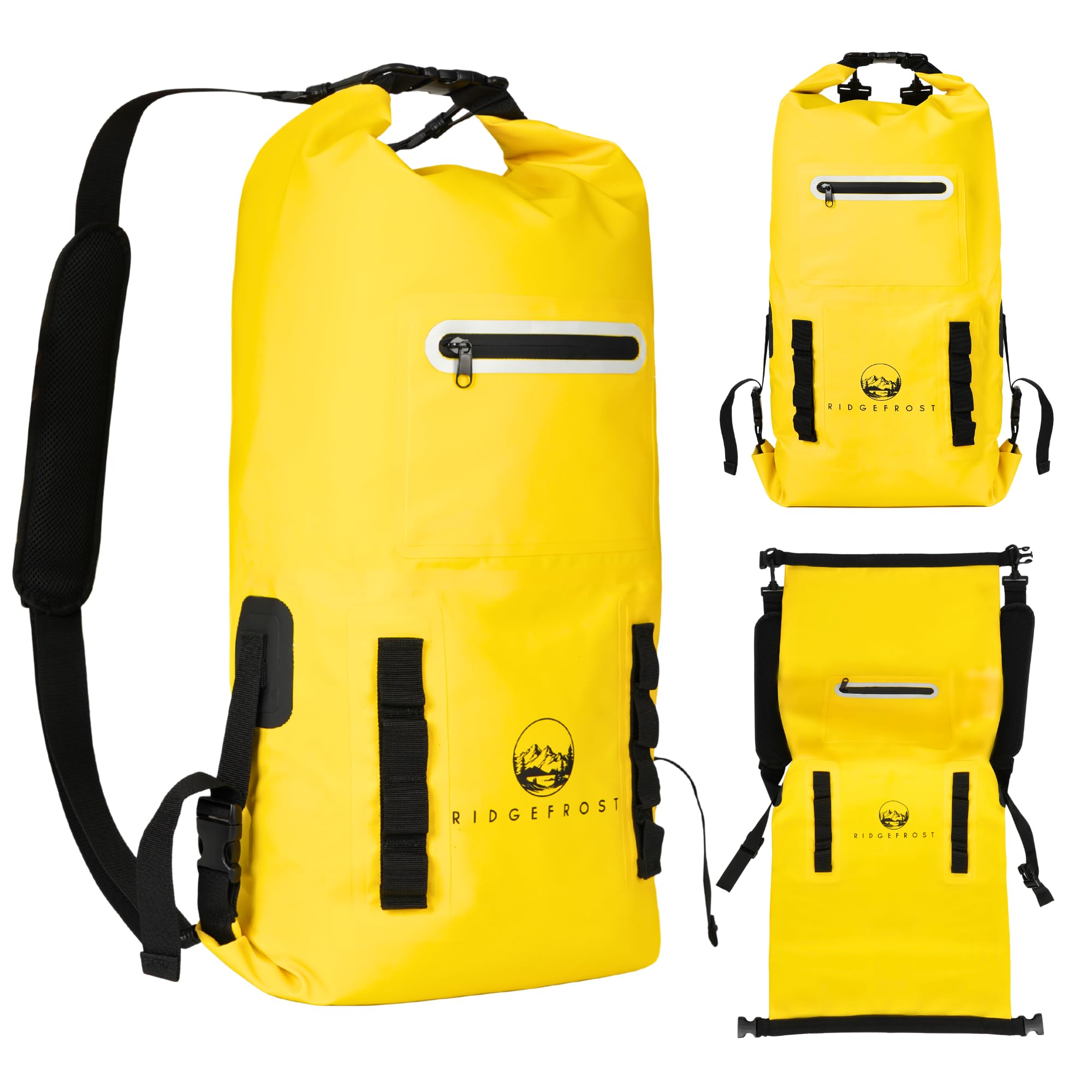
The Ridgefrost 20L Dry Bag stands out for its dual-compartment architecture — a top roll-top dry zone and a lower insulated cooler section — which is rare at this price tier. The high-visibility yellow PVC shell resists scratches and tears far better than budget silnylon, and the padded straps are comfortable enough for kayak portages or short carries to camp.
Testers report it holds 13 to 14 pounds of gear — enough for clothes, a first-aid kit, and four water bottles plus ice packs in the cooler base. The side pocket provides quick access to a phone or map without opening the main seal, and the QR-code setup guide helps first-timers master the roll-top folding technique.
Where it falls short is all-day hiking support: the backpanel lacks a chest or waist strap, so the bag tends to sway on longer walks. Still, for car camping, afternoon kayaking, or overnight trips where weight is not the primary constraint, this is the most versatile single bag on the list.
Why it’s great
- Dual wet/dry and insulated compartments in a single roll-top bag
- High-visibility color aids tracking in fast-moving water
- Built-in exterior pocket for phone or keys without breaking the seal
Good to know
- Lacks chest or waist strap for all-day hiking carry
- Cooler compartment delays warming but does not replace a true cooler
2. Sea to Summit Big River Dry Bag 5L
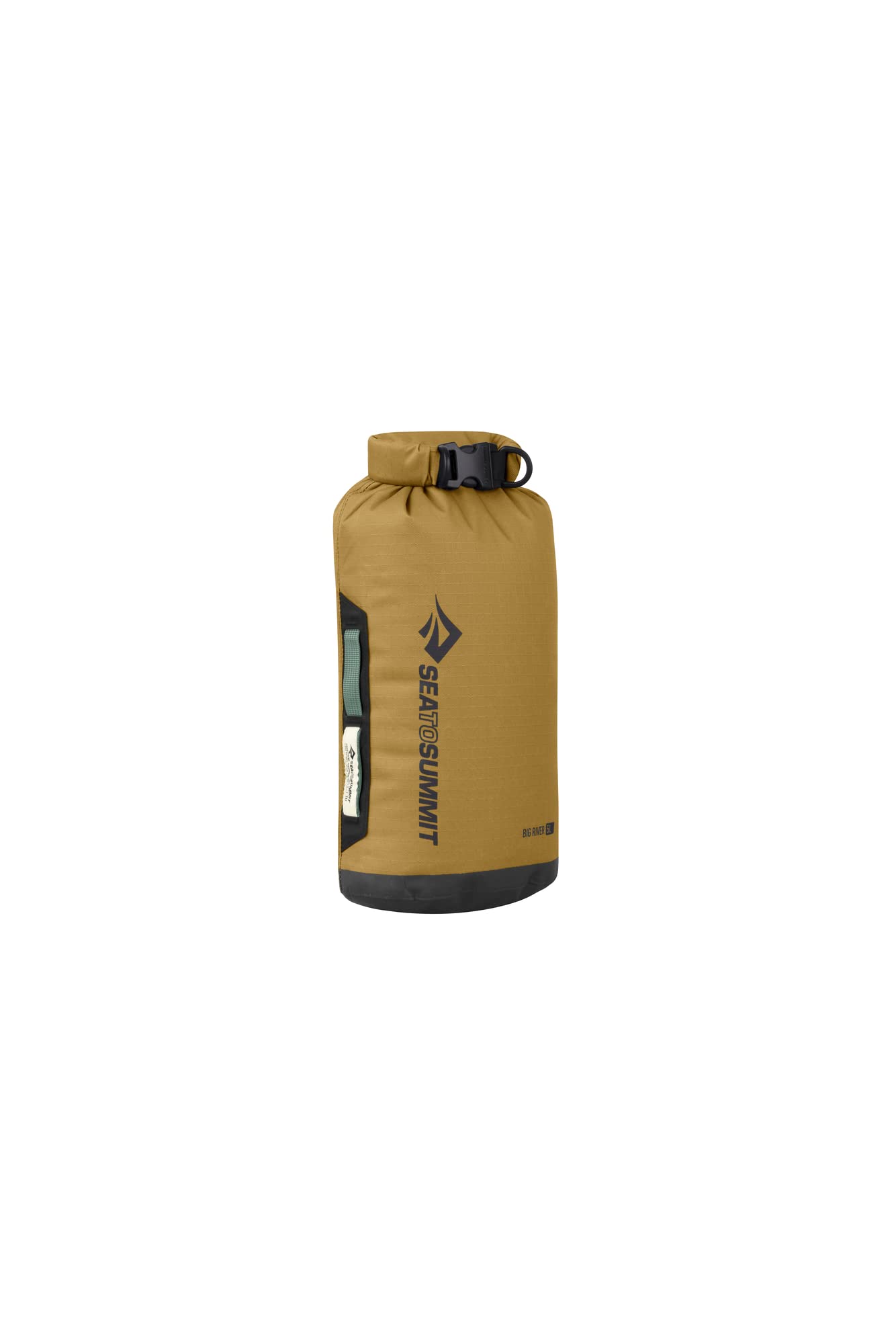
When the trip involves Class III rapids or motorcycle touring through unpredictable weather, the Sea to Summit Big River Dry Bag delivers uncompromising protection. The 420D nylon is triple-coated at the base with TPU laminate, and the seams are both double-stitched and tape-sealed. The white laminate interior makes it easy to spot a stray energy bar in low light.
At 5 liters, this bag fits a single day’s food, a phone, and a small first-aid kit — purpose-built as a component inside a larger pack system rather than a standalone food hauler. The hypalon roll-top closure with an easy-grab handle stays secure after three rolls, and the patent-pending field replacement buckle means a snapped buckle does not end the trip.
The oval base resists rolling inside a boat or pack, and the low-profile shape fits tight against a kayak bulkhead. Weighing 203 grams, it is heavier than ultralight alternatives, but the abrasion resistance is unmatched for technical water sports. Best paired with a larger dry bag for multi-day food storage.
Why it’s great
- Triple-coated TPU base is the most durable floor on this list
- Field-replaceable buckle prevents trip-ending hardware failure
- White interior lining makes contents visible without dumping everything out
Good to know
- 5L is too small for multi-day food supplies alone
- Premium fabric adds weight relative to ultra-sil options
3. Osprey Waterproof Dry Sack 20L with Window

Osprey’s 20-liter Dry Sack proves that a sub- dry bag can carry the brand’s Mighty Guarantee without cutting corners. The roll-top closure meets IPX5 standards — splashproof in rain and shallow immersion — and the waterproof-coated fabric and seams hold up against sustained drizzle. The single-compartment design keeps things simple: open, load, roll, clip.
The defining feature is the see-through window, which lets you spot the exact bag that holds dinner without unrolling every sack in your pack. The rectangular shape is noticeably different from round dry bags — it lies flat against the backpanel of a backpack or kayak bucket, reducing shifting during movement. At only 0.24 pounds, it adds negligible weight for a full day of food.
Some users note that the “black” color leans toward a Mars-red hue, so color-sensitive buyers should confirm before purchasing. The single compartment means wet and dry items share space, so pairing this with a smaller waterproof pouch for electronics is wise for kayak trips. For backpackers who want a lightweight, brand-backed dry bag with a rare quick-visibility feature, this is a compelling pick.
Why it’s great
- Transparent TPU window eliminates guesswork when grabbing a specific bag
- Rectangular shape packs more efficiently than cylindrical dry sacks
- Osprey’s All Mighty Guarantee covers defects forever
Good to know
- Single compartment — no separation for wet vs. dry items
- Color may differ significantly from product photos
4. Sea to Summit Ultra-Sil Dry Bag Set (3L, 5L, 8L)

For gram-shavers who refuse to sacrifice dry storage, the Sea to Summit Ultra-Sil set is the definitive ultralight kit. Each bag is sewn from bluesign-approved 30D Ultra-Sil Cordura ripstop nylon with a 2,000mm waterhead rating — enough to keep contents dry in a wet pack pocket or rainstorm. The three-bag set (3L, 5L, 8L) weighs a combined 0.25 pounds.
The translucent fabric offers a softer, more packable alternative to the Osprey’s window: you can roughly see contents without the weight penalty of a TPU panel. The hypalon roll-top closure and tape-sealed seams provide reliable waterproofing for backpacking, bike touring, and air travel. The oval base prevents rolling inside a pack, and the slippery finish slides easily into tight corners.
Durability is the trade-off: 30D fabric punctures more easily than 420D or PVC. A user reported a hole after rough bikepacking, and the bags are not designed for submersible use or abrasive canyon walls. For thru-hikers, weekend backpackers, and bike-packers who pack with care, this set offers the best weight-to-waterproofing ratio available.
Why it’s great
- Three graduated sizes cover everything from electronics to two days of food
- Bluesign-approved 30D Cordura is the lightest certified fabric here
- Translucent material allows rough visual identification without weighing the bag
Good to know
- 30D fabric punctures easier than mid-weight or heavy-duty alternatives
- Not rated for submersion — splashes and rain only
5. Osprey Ultralight Protective Backpack Liner (Medium, 58L)
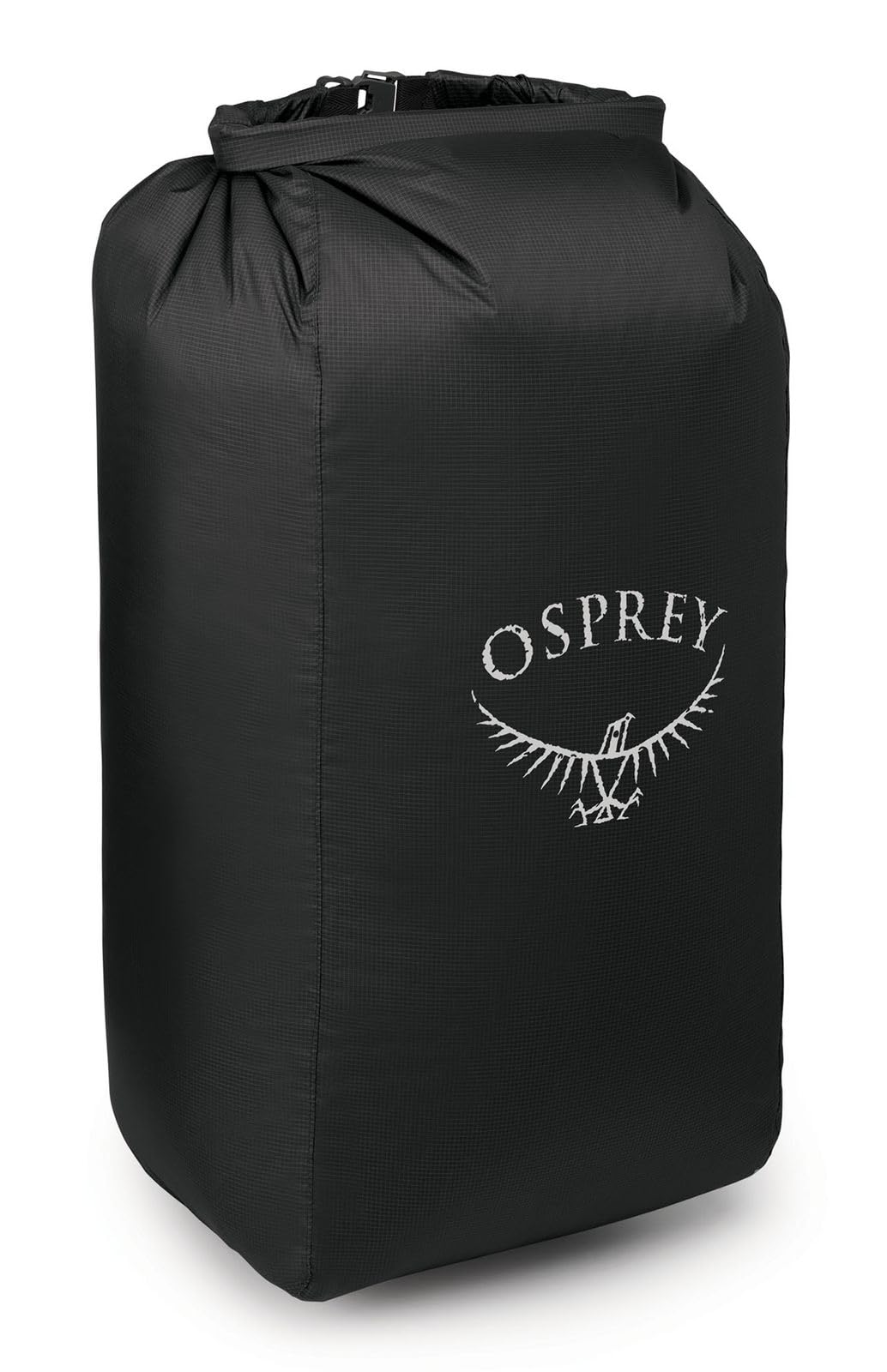
The Osprey Ultralight Backpack Liner takes a different approach from traditional dry bags: instead of compartmentalizing food inside a sack, it waterproofs the entire interior of your backpack. This 58-liter liner fits snugly inside packs from 55 to 65 liters, creating a single waterproof envelope that protects food, clothes, and electronics simultaneously.
Weighing just 0.26 pounds, the thin nylon sleeve adds less weight than a standard 20-liter dry sack while protecting a larger volume. The roll-top closure at the top of the liner seals the entire pack contents against rain, river splashes, and condensation. Users report it works flawlessly for canoe-barrel liners and as a first line of defense against moisture on multi-day treks.
The key trade-off is access: you must unroll the entire top of your pack to retrieve a single meal, which can be frustrating in rain. It also does not provide any critter resistance — rodents can chew through the thin nylon. Best used as a primary waterproof layer inside a traditional pack, with food inside separate dry bags for organization inside the liner.
Why it’s great
- Waterproofs the entire pack cavity without adding multiple bags
- Exceptionally light for the coverage volume — 0.26 pounds for 58 liters
- Eliminates wet-gear surprises after a full day of rain
Good to know
- Must unroll pack top to access any item — inconvenient for quick food retrieval
- Thin nylon offers zero rodent or puncture resistance
6. RATSACK Rodent Proof Bear Bag (Stainless Steel Mesh)
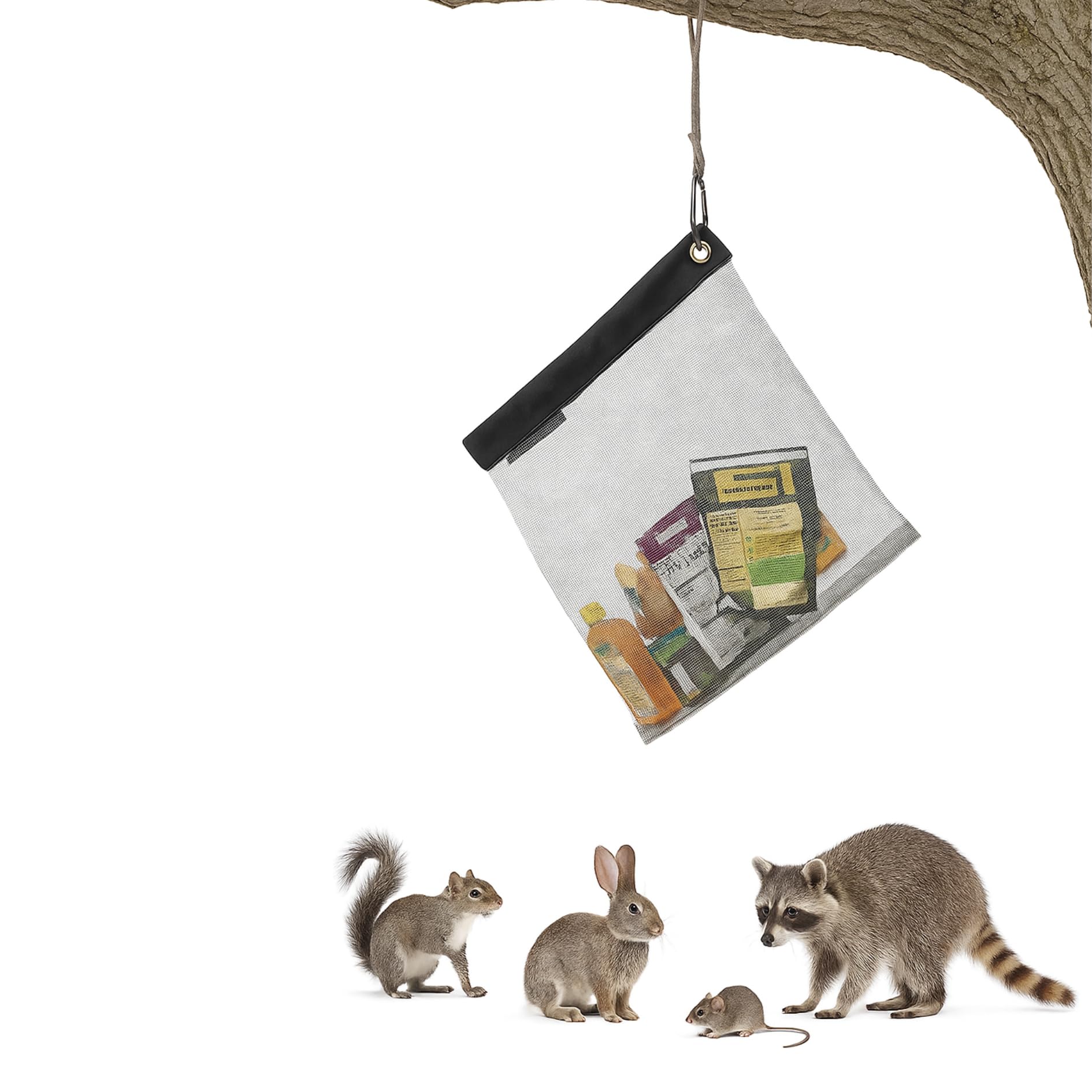
The RATSACK is the only bag on this list specifically engineered to stop rodents, not just water. Handcrafted from ultralight stainless steel mesh in Flagstaff, Arizona, it offers 1,800 cubic inches of storage space at 12.5 ounces — roughly twice the weight of a nylon dry bag, but with zero chew-through risk. The 2-inch wide hook-and-loop closure is strong enough that testers report struggling to open it quickly.
Field tests confirm the mesh stops squirrels, chipmunks, coatis, and other small mammals from accessing food, but it is not bear-proof. A determined bear tore down a hung bag and crushed it. The high-tensile metal mesh can also abrade other gear — wrapping the bag in a camp towel or stuff sack prevents damage. The initial smell of WD-40 on the mesh fades after a few days of airing out.
The bag must be packed empty on the trail and loaded at camp to keep the mesh from scraping against trekking poles and tent poles. For trips through Yosemite’s rodent-heavy zones or any area where mice are known to shred silnylon, the RATSACK is a non-negotiable addition to a dry-bag system.
Why it’s great
- Stainless steel mesh is the only 100% chew-proof material in this guide
- Handcrafted and warrantied for 2 years against manufacturing defects
- Large capacity handles a week of food for one person
Good to know
- Mesh can abrade soft gear, food packages, and pack interiors
- Not bear-proof — must still be hung properly at least 10 feet off the ground
7. Wallaby 30-Count 1-Gallon Mylar Bags with Oxygen Absorbers

Strictly speaking, Mylar bags are not a single backpacking food bag — they are the pre-trip meal-prep system that makes every other bag more effective. Each 1-gallon pouch is 7.5 mil thick with an internal aluminum layer that provides superior puncture resistance and blocks light and oxygen. The 400cc oxygen absorbers included in the bundle remove 99% of residual oxygen, extending the shelf life of trail food to years rather than months.
Users confirm the heat-sealable zipper is strong enough for short-term carry, while the heat-seal above the zipper locks food for long-term storage. Bags stand upright for easy filling, and the included labels help organize meals by day and calorie count. The bundle is ideal for pre-packing a season’s worth of backpacking meals in one afternoon.
These bags do not replace a dry sack — Mylar is not abrasion-resistant and will puncture if carried loose in a pack. The correct workflow is to heat-seal meals into Wallaby bags, then load those bags into a roll-top dry sack or a RATSACK for trail protection. For thru-hikers and weekenders who meal-prep at home, this bundle is the most cost-effective way to keep food fresh and organized on day one versus day ten.
Why it’s great
- 7.5 mil thickness with aluminum layer is tougher than standard Mylar storage bags
- Includes 30 oxygen absorbers and 30 labels — true all-in-one meal prep bundle
- Zipper allows easy daily access with heat-seal for long-term security
Good to know
- Mylar punctures easily against sharp gear — must be carried inside a dry sack or mesh bag
- Not waterproof on its own; requires a dry bag shell for wet conditions
FAQ
Can I use a standard dry bag for backpacking food or do I need a special food bag?
Should I use a pack liner or individual dry bags for food?
Will a stainless steel mesh bag keep out bears?
Is a 20-liter bag enough for a three-day solo trip?
Final Thoughts: The Verdict
For most users, the backpacking food bag winner is the Ridgefrost 20L Dry Bag because its dual-compartment design handles both wet river gear and dry food without cross-contamination while delivering roll-top security at a mid-range weight. If you need ultralight organization across multiple days of food, grab the Sea to Summit Ultra-Sil Dry Bag Set. And for camping in rodent-heavy zones where a single marmot can end a trip, nothing beats the RATSACK Rodent Proof Bag.