
When the grid goes down—whether from a hurricane, winter storm, or rolling blackout—a gas generator’s noise, fumes, and fuel logistics turn a manageable situation into a headache. A dedicated home backup solar bank solves this by silently drawing energy from the sun, storing it in a high-cycle lithium battery, and delivering clean AC power to your fridge, lights, router, and even a CPAP machine without you ever touching a gas can. The key difference between a dabbler’s camping battery and a true home-resilience system comes down to three numbers: capacity in watt-hours (Wh), inverter wattage, and battery chemistry—specifically LiFePO₄ for longevity.
I’m Min — the co-founder and writer behind Gadgets Feed. I’ve spent hundreds of hours analyzing inverter efficiency curves, battery cycle-life ratings, solar charge controller MPPT specs, and real-world runtime reports to separate marketing claims from real performance in the home backup space.
After combing through over 100 verified buyer experiences and comparing capacity, peak power, recharge speed, and portability, I’ve narrowed the market to the eleven models that genuinely deliver on the promise of a reliable backup solar bank for home.
How To Choose The Best Backup Solar Bank For Home
A home backup solar bank is a multi-year investment in resilience. The wrong choice leaves you with a battery that dies during the second outage or an inverter that can’t start your fridge compressor. Here are the three specs you need to get right.
Capacity (Wh) and Inverter Wattage (W)
Capacity, measured in watt-hours (Wh), tells you how long your gear will run. A 1,000Wh unit runs a 100W fridge for about 10 hours (assuming inverter losses). The inverter’s continuous wattage must exceed the starting surge of your biggest appliance—fridges need 600–1200W to start, sump pumps often require 1500W+. Look for “surge” or “peak” power ratings: they tell you if the unit can handle that momentary inrush without shutting down.
Battery Chemistry: LiFePO₄ vs. NMC
Lithium iron phosphate (LiFePO₄ or LFP) batteries are the gold standard for stationary home backup. They offer 3,000 to 4,000 charge cycles before dropping to 80% capacity—roughly 10 years of daily use. NMC (nickel manganese cobalt) batteries found in older or cheaper units degrade faster and are more prone to thermal runaway. For a device that sits idle 99% of the time waiting for an outage, LiFePO₄’s calendar life and safety profile are decisive advantages.
UPS Transfer Time
If you plan to keep a desktop PC, network switch, or medical device running during a flicker, the unit’s UPS (Uninterruptible Power Supply) transfer time matters. Look for specs under 20 milliseconds (ms)—ideally 10ms or less. Slower switchovers (like the 100ms+ on older models) can cause connected electronics to reboot or lose data. Many modern solar banks now include this feature, but not all advertise the actual transfer speed. Verify it in the technical specs before buying.
Quick Comparison
On smaller screens, swipe sideways to see the full table.
| Model | Category | Best For | Key Spec | Amazon |
|---|---|---|---|---|
| BLUETTI AC70 | Mid-Range | Essential appliances & portability | 768Wh, 1000W inverter, 2000W surge | Amazon |
| EcoFlow DELTA 3 Classic | Mid-Range | Fast recharge & smart app control | 1024Wh, 1800W inverter, 3600W surge | Amazon |
| BLUETTI Elite 100 V2 | Mid-Range | Compact 1kWh unit with fast solar | 1024Wh, 1800W inverter, 3600W surge | Amazon |
| EBL Acc2400 | Budget | High capacity at lower cost | 1843.2Wh, 2400W inverter | Amazon |
| AFERIY P210 | Mid-Range | Server-level UPS & quiet operation | 2048Wh, 2400W inverter, 4800W surge | Amazon |
| Jackery Explorer 2000 v2 | Premium | Lightweight 2kWh, quiet operation | 2042Wh, 2200W inverter, CTB tech | Amazon |
| Anker SOLIX C2000 Gen 2 | Premium | Fastest charging, expandable to 4kWh | 2048Wh, 2400W inverter, 4000W surge | Amazon |
| EcoFlow DELTA 3 MAX | Premium | 3400W X-Boost, solar bundle ready | 2048Wh, 2400W inverter, 4800W surge | Amazon |
| Jackery HomePower 3000 | Premium | Whole-home backup, CTB compact design | 3072Wh, 3600W inverter, 7200W surge | Amazon |
| GROWATT HELIOS 3600 | Premium | 240V split-phase, whole-house expandable | 3600Wh, 3600W inverter, up to 36kWh | Amazon |
| ABOK Ark3600 | Premium | Massive 3840Wh capacity, wheeled portability | 3840Wh, 3600W inverter, 4500W surge | Amazon |
In‑Depth Reviews
1. BLUETTI AC70 Portable Power Station

The BLUETTI AC70 packs a 768Wh LiFePO₄ battery and a 1000W pure sine wave inverter (2000W Power Lifting surge) into a 22.5-pound chassis that’s genuinely portable. You get two AC outlets, a 100W USB-C port that charges a MacBook Pro 16” at full speed, and a bright display that shows remaining runtime as a percentage. The XT-60 solar input is rated up to 500W, and real-world reports confirm roughly 150W from a 200W panel—efficient MPPT tracking for a mid-range unit.
What sets the AC70 apart in the sub-1kWh class is its AC recharge speed: a single cable pushes up to 950W, hitting 80% in 45 minutes and full in 1.5 hours. That means you can top it up during a short grid window and have backup ready again quickly. The 3,000-cycle battery rating ensures it will still hold 80% capacity after nearly a decade of weekly cycling, making it a long-term piece of home infrastructure rather than a disposable gadget.
Verified buyers confirm it runs a 100W guitar amp for over 19 hours, powers a PC/monitor/router combo through a multi-hour outage, and operates silently under load. The ≤20ms UPS mode is fast enough for most electronics, though not as instantaneous as the sub-10ms units higher in this guide. For a household that needs essential backup for a fridge, lights, and a CPAP without spending over a thousand dollars, the AC70 is the most balanced choice.
Why it’s great
- Fast 45-min AC recharge to 80%
- 500W MPPT solar input for efficient solar recharging
- Compact 22.5-lb design with built-in handle
- LiFePO₄ battery rated for 3,000+ cycles
Good to know
- 768Wh capacity may not run large appliances like a microwave or space heater for long
- UPS transfer time (≤20ms) is adequate but not the fastest in this guide
2. EF ECOFLOW Delta 3 Classic
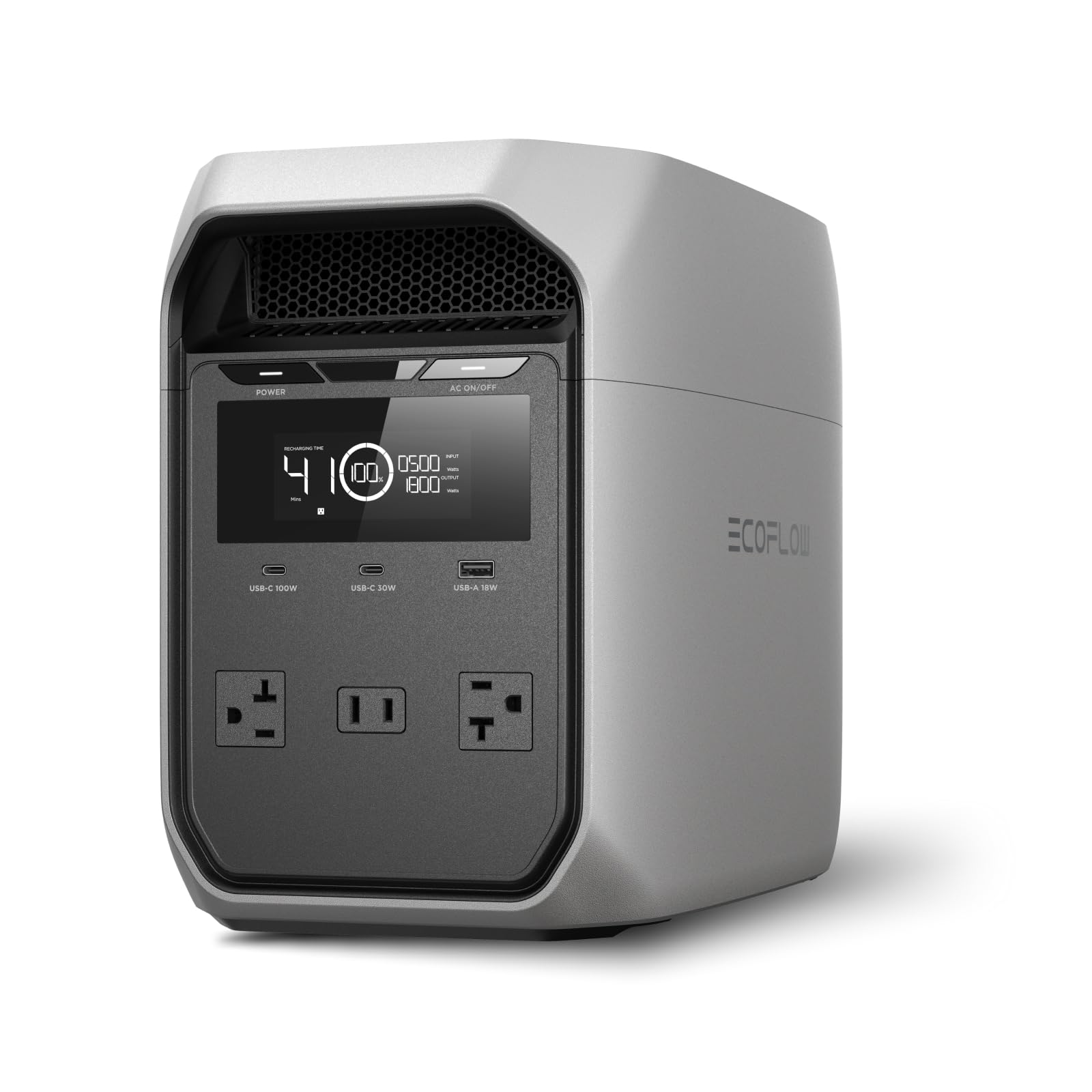
EcoFlow’s DELTA 3 Classic delivers 1024Wh of LiFePO₄ storage with an 1800W inverter that can surge to 3600W via X-Boost technology—enough to start a refrigerator or microwave compressor without tripping. The unit weighs only 15 pounds, making it one of the lightest 1kWh-class power stations on the market, and its metal-and-plastic housing feels rugged enough for RV or garage duty.
The headline feature here is the <10ms UPS switchover, which verified buyers confirm keeps a desktop PC, network switch, and even a mini fridge running seamlessly during grid flickers. The app-based scheduling lets you set charge/discharge windows to take advantage of time-of-use electricity rates, and the Storm Alert mode automatically tops up the battery when severe weather is forecast. X-Stream AC charging hits 80% in 45 minutes, and a 500W solar input can refill the battery in roughly 2.5 hours with adequate sun.
Real-world reports show the Delta 3 Classic running a 65” TV for 4-5 hours (dropping to 20% battery), powering two CPAP machines for two nights, and handling a tankless water heater through multiple showers. The X-Boost feature does introduce some waveform alteration under heavy loads—sensitive audio equipment may hum slightly. For most home backup scenarios, though, this is a fast, smart, and portable solution that bridges the gap between a small emergency unit and a whole-house system.
Why it’s great
- <10ms UPS transfer for sensitive electronics
- Only 15 lbs with dual-carry handles
- 3600W X-Boost surge for starting heavy loads
- Scheduling and Storm Alert via EcoFlow app
Good to know
- X-Boost modifies the sine wave—not ideal for sensitive audio gear
- Not compatible with Delta 2 or Delta 3 Series expansion batteries
3. BLUETTI Elite 100 V2
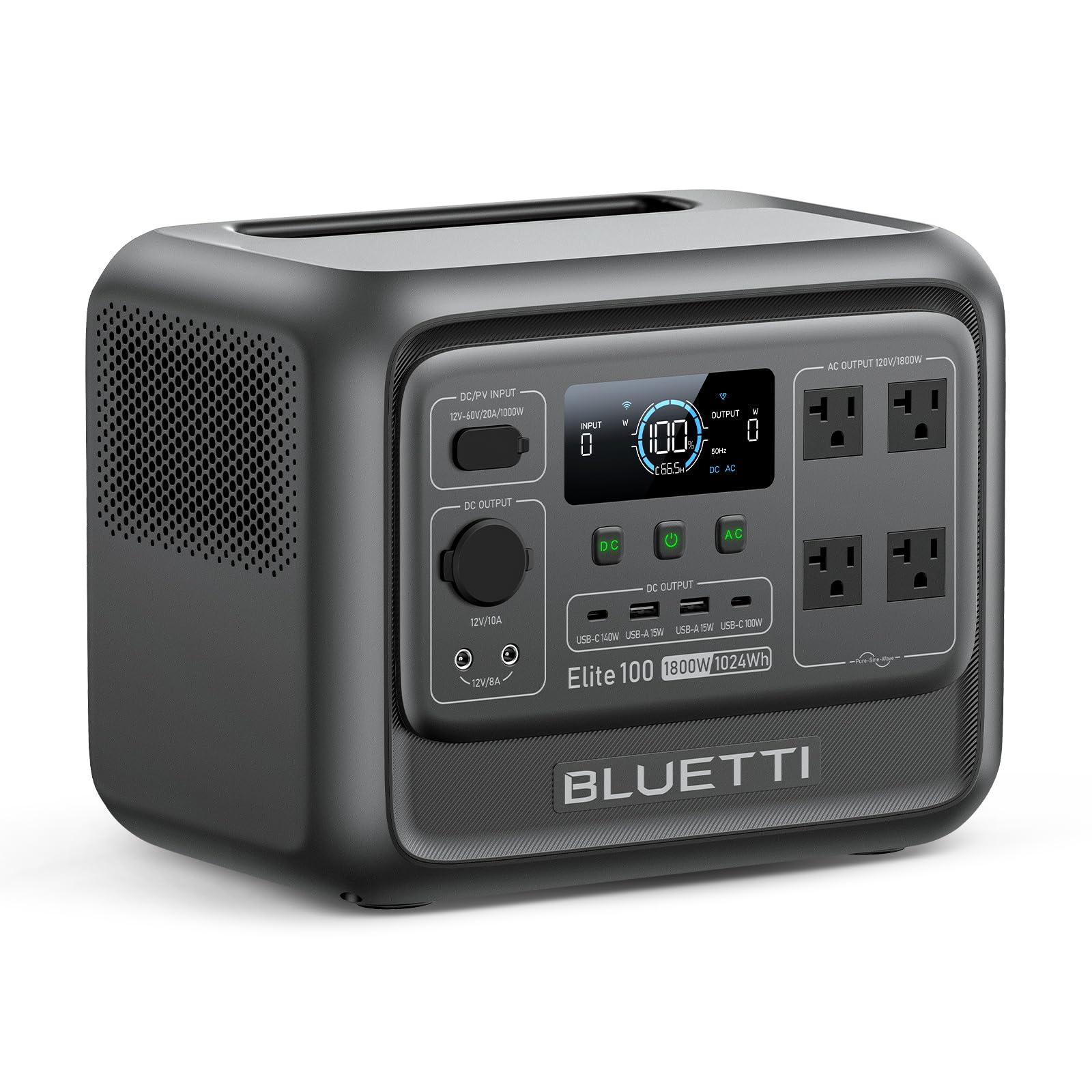
The BLUETTI Elite 100 V2 is a second-generation 1024Wh unit that shrinks the footprint by 35% compared to earlier models while maintaining four AC outlets (1800W continuous, 3600W surge). It weighs 25 pounds and includes a hidden top handle for one-handed carrying—a thoughtful touch for a unit that lives beside a nightstand or under a desk waiting for an outage.
The biggest upgrade is the 1000W solar input, the fastest in its class for a 1kWh station. In good sun, you can fully recharge from a 1000W solar array in about 70 minutes, which is remarkable for a sub- unit. AC TurboBoost charging also hits full in roughly 70 minutes. The internal fan runs at just 30dB in silent mode—verified by a buyer who uses it bedside to run a CPAP machine—making it one of the quietest 1kWh stations available.
The 4,000-cycle battery rating outlasts most competitors by 1,000 cycles, pushing the effective lifespan past 10 years with daily use. The ≤10ms UPS switchover is fast enough for sensitive electronics. Downsides include a mobile propping the unit up while traveling and an app that can’t wake the unit via Bluetooth alone—you need to press the power button first. For a home backup unit that balances compactness, quiet operation, and solar speed, the Elite 100 V2 is hard to beat.
Why it’s great
- 1000W solar input recharges in ~70 min
- 35% smaller than previous generation
- Whisper-quiet 30dB fan in silent mode
- 4,000-cycle LiFePO₄ battery
Good to know
- App cannot power on the unit remotely—requires a button press
- No wireless charging pad or built-in light
4. EBL Acc2400
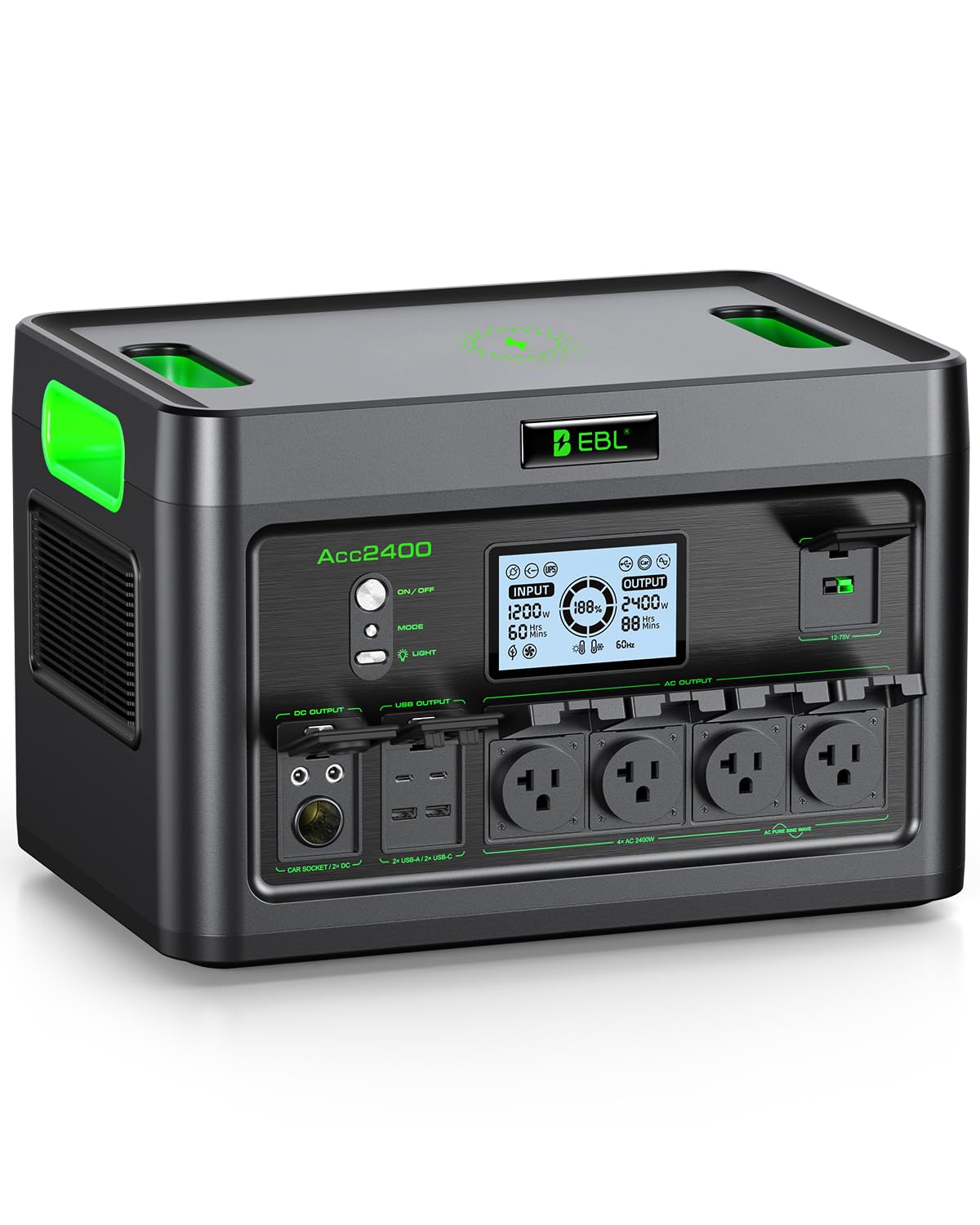
The EBL Acc2400 offers 1843.2Wh of LiFePO₄ storage and a 2400W inverter at a price point that undercuts most 2kWh competitors by a wide margin. It has 12 output ports including four AC outlets, two USB-C (one with 100W PD), USB-A ports, a car port, two DC5521 barrels, and a top-mounted wireless charging pad—enough connectivity to run a campsite or power a home office through an outage.
The built-in emergency power mode switches to battery backup in 0.1 seconds (100ms), which is adequate for lights and most appliances but slower than the sub-20ms units that protect sensitive electronics. The 4-mode LED light is useful for camping or blackout navigation. Battery chemistry is rated for over 3,500 cycles, matching the longevity of premium brands. At 54 pounds, it’s not something you want to carry far, but the dual-side handles and relatively compact 16.9” x 11.8” footprint make it manageable for garage-to-living-room moves.
Verified buyers report excellent results running CPAP machines all night, large fans for 4+ hours with battery to spare, and quiet indoor operation. Some units have experienced QC issues—a few buyers report bricked displays or faulty wireless charging pads—so purchasing from a seller with a good return policy is wise. For the capacity-to-dollar ratio, the Acc2400 is an aggressive budget option that competes above its weight class.
Why it’s great
- 1843Wh at a very entry-level price point
- 12 outlets including 100W USB-C and wireless charging
- 3500-cycle LiFePO₄ battery
- 0.1s UPS switch for power outage protection
Good to know
- Slow full recharge (up to 8 hours reported)
- Some units have display or wireless charger defects
5. AFERIY P210

The AFERIY P210 packs 2048Wh of LiFePO₄ capacity and a 2400W pure sine wave inverter (4800W surge) into a relatively compact 48.5-pound chassis—about 20% lighter than typical 2kWh units thanks to high-density battery cells. The 16-port panel includes six AC outlets, dual USB-C (one 100W), dual USB-A, DC5521 ports, a car outlet, and an XT60 DC output for off-grid gear. The 7-year extended warranty (2 years beyond industry standard) signals confidence in the build quality.
The server-level <10ms UPS is the fastest transfer time in this class, making the P210 genuinely suitable for running a home server, medical equipment, or a desktop workstation through grid flickers without a reboot. Noise is rated at under 30 dB at full load—verified by buyers who keep it in their living space without disturbance. The AFERIY app enables remote monitoring, charge scheduling, and automation settings, though some buyers report the app lacks scheduled charging functionality for the 2048Wh battery.
Real-world feedback is overwhelmingly positive: food truck owners rely on it for all-day equipment power, off-grid users pair it with 200W solar panels for sustainable daily cycles, and home backup buyers praise its fast AC recharge. A small number of units have developed display screen issues after solar charging, requiring repeated button presses to reset. Overall, the P210 delivers premium UPS-grade performance and high capacity at a price that sits between entry-level and premium.
Why it’s great
- <10ms UPS transfer for sensitive electronics
- 48.5 lbs—lighter than typical 2kWh stations
- Pure sine wave output protects sensitive appliances
- 7-year extended warranty
Good to know
- App lacks scheduled charging for some users
- Display screen glitches reported after solar charging
6. Jackery Explorer 2000 v2

The Jackery Explorer 2000 v2 uses the same CTB (Cell-to-Body) technology found in modern EVs to achieve a 2042Wh capacity in a chassis that weighs just 39.5 pounds—41% lighter than typical 2kWh LiFePO₄ power stations. Its 2200W pure sine wave inverter is backed by a 20ms UPS transfer (UL1778 certified) that keeps home essentials running through grid flickers. The three AC ports, dual USB-C (one 100W PD), and DC car port cover most home backup needs.
AC fast charging hits 80% in 66 minutes, and Emergency Super Charging via the app delivers a full charge in 102 minutes. Silent Charging mode runs at under 30dB, verified by buyers who say it’s quiet enough for a bedroom. The app provides real-time battery percentage, remote control, and charge scheduling. Solar charging with 400W panels takes about 6 hours for a full top-up—slower than dedicated solar-focused units but adequate for daily solar cycling in sunny regions.
Buyers confirm it runs a fridge for over 21 hours, powers a boat’s 12V electronics for days, and handles a full home office setup during a Florida hurricane outage. The barrel-style solar input ports are a minor weak point—some users report they flex inward when plugged in. For anyone who values portability and quiet operation above raw solar speed, the Explorer 2000 v2 is the lightest 2kWh solution available without sacrificing safety or cycle life.
Why it’s great
- 39.5 lbs—lightest 2kWh power station
- UL1778 certified UPS with 20ms transfer
- Quiet 30dB Silent Charging mode
- Emergency Super Charging in 102 minutes
Good to know
- Solar barrel ports flex inward when cable is plugged in
- Charges slower via solar than AC (6+ hours with 400W panels)
7. Anker SOLIX C2000 Gen 2
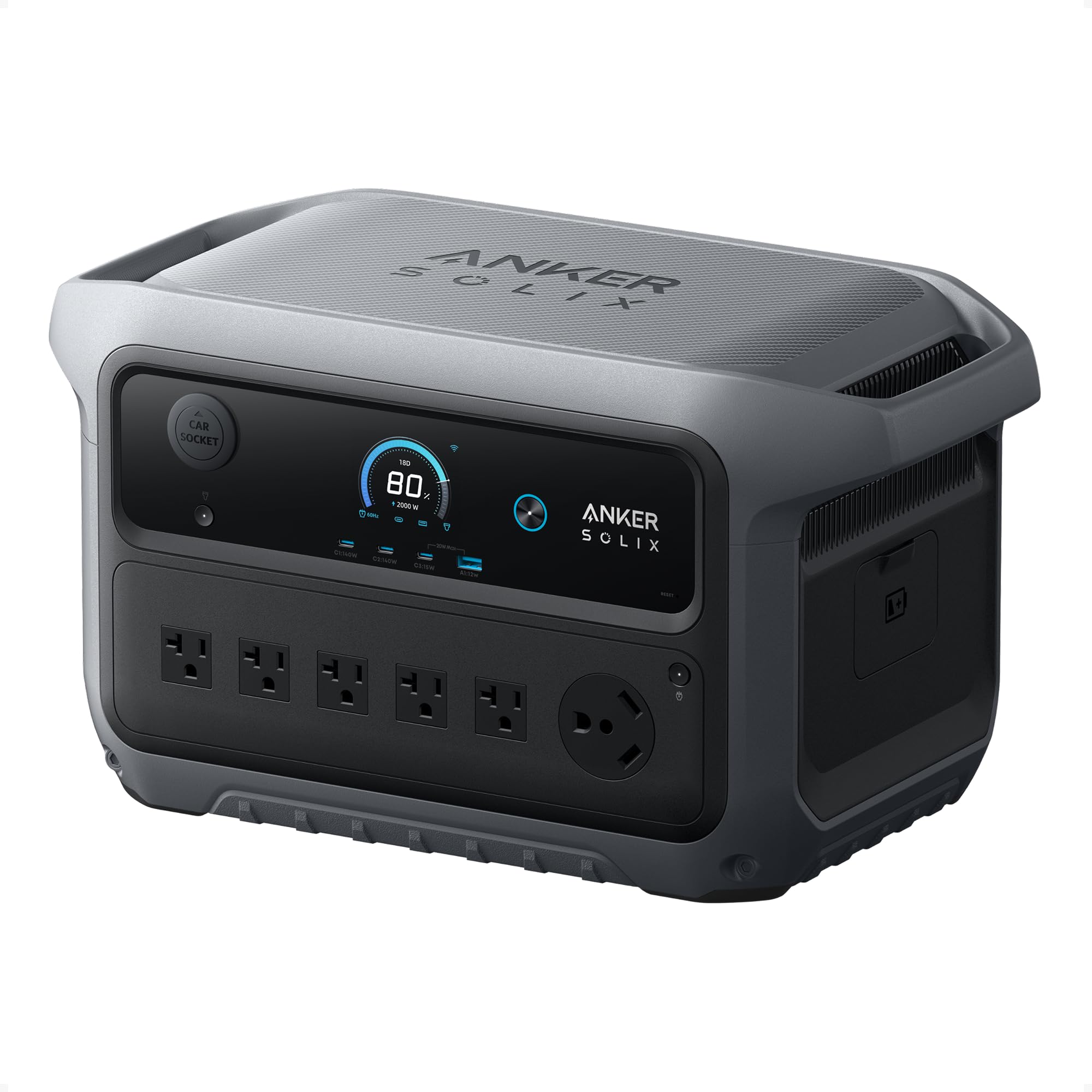
The Anker SOLIX C2000 Gen 2 is a 2048Wh power station with a 2400W inverter (4000W peak) that recharges to 100% in just 58 minutes via AC—the fastest full recharge in the 2kWh class. Standby power consumption is an industry-leading 9W, meaning the unit can run a dual-door fridge for up to 32 hours on a single charge. The capacity is expandable to 4kWh with an add-on battery, extending fridge runtime to 64 hours.
The 4000W peak output is high enough to start most window and RV air conditioners, which usually require 2000W–3000W inrush current. Six ways to recharge include AC, solar (up to 1000W input), and alternator charging at 800W—8× faster than a standard car socket. The unit is 25% lighter and 29% smaller than equivalent competitors, weighing 41.7 pounds. Anker’s app enables remote monitoring and auto-scheduling.
Verified buyers confirm it runs a fridge/freezer combo plus a fan, modem, TV, and lighting for over 10 hours during an outage, and powers a 30-quart car fridge for 5-7 days on a single charge during a road trip. The Bluetooth connection is reliable, and the build quality feels premium. The lack of a printed manual in the box was noted by some buyers. For those who want the fastest possible turnaround between grid availability and a fully charged backup battery, the C2000 Gen 2 is unmatched.
Why it’s great
- Full recharge in just 58 minutes
- 9W standby—powers fridge for 32 hours
- Expandable to 4kWh total capacity
- 800W alternator charging for road trips
Good to know
- No printed user manual included in the box
- 41.7 lbs is still relatively heavy for frequent moving
8. EF ECOFLOW DELTA 3 MAX
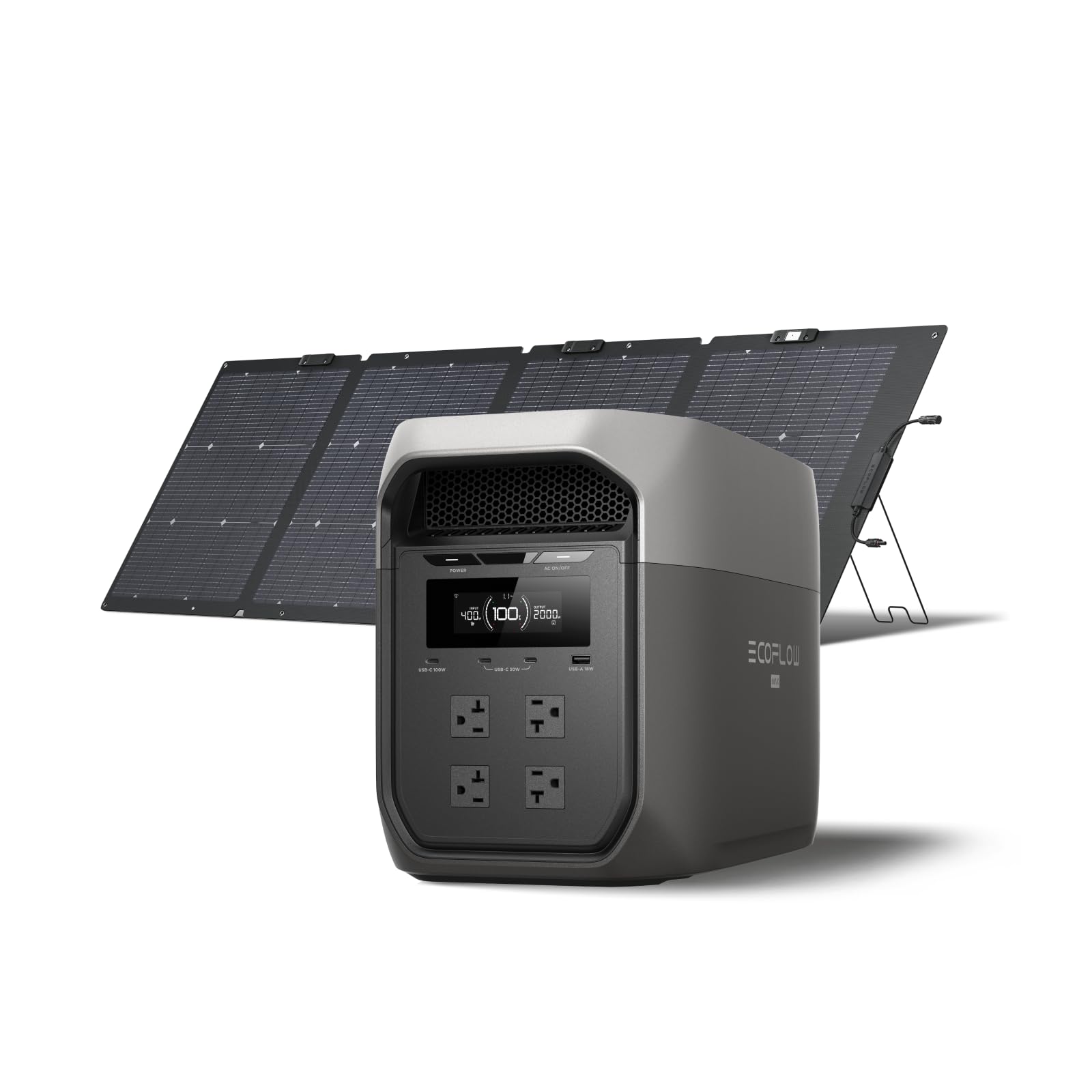
The EcoFlow DELTA 3 MAX comes bundled with a 220W bifacial solar panel, offering a complete home backup solar kit out of the box. The panel captures light from both sides, delivering up to 220W from the front and 155-175W from the rear. The station itself packs 2048Wh of LiFePO₄ capacity, a 2400W continuous inverter (4800W surge), and X-Boost technology that can push up to 3400W for short bursts—enough to start a freezer, air fryer, or microwave without tripping.
X-Stream AC charging hits 80% in just 1.13 hours and full charge in about 80 minutes. Solar input supports up to 1000W, and the <10ms UPS transfer keeps sensitive electronics running seamlessly during flickers. The LiFePO₄ battery is rated for 10 years of daily use with a 5-year warranty. The unit is quieter and lighter than the Delta 2 Max, with built-in handles for transport. The app allows real-time monitoring, scheduling, and Storm Alert functions.
Buyers report running a freezer, microwave, TV, and multiple devices simultaneously without issue. The 220W bifacial panel is lightweight and portable, but reviewers note the panel is bend-prone and requires careful handling. The base model does not support expansion batteries, so the internal 2048Wh is the maximum capacity. For a turnkey solar backup solution with one of the fastest recharge speeds and proven EcoFlow reliability, the Delta 3 MAX bundle is a serious contender.
Why it’s great
- Includes 220W bifacial solar panel
- 3400W X-Boost for heavy appliances
- 0-80% charge in 1.13 hours
- Quieter and lighter than Delta 2 Max
Good to know
- Solar panel is bend-prone and needs careful handling
- No expansion battery option for the base unit
9. Jackery HomePower 3000
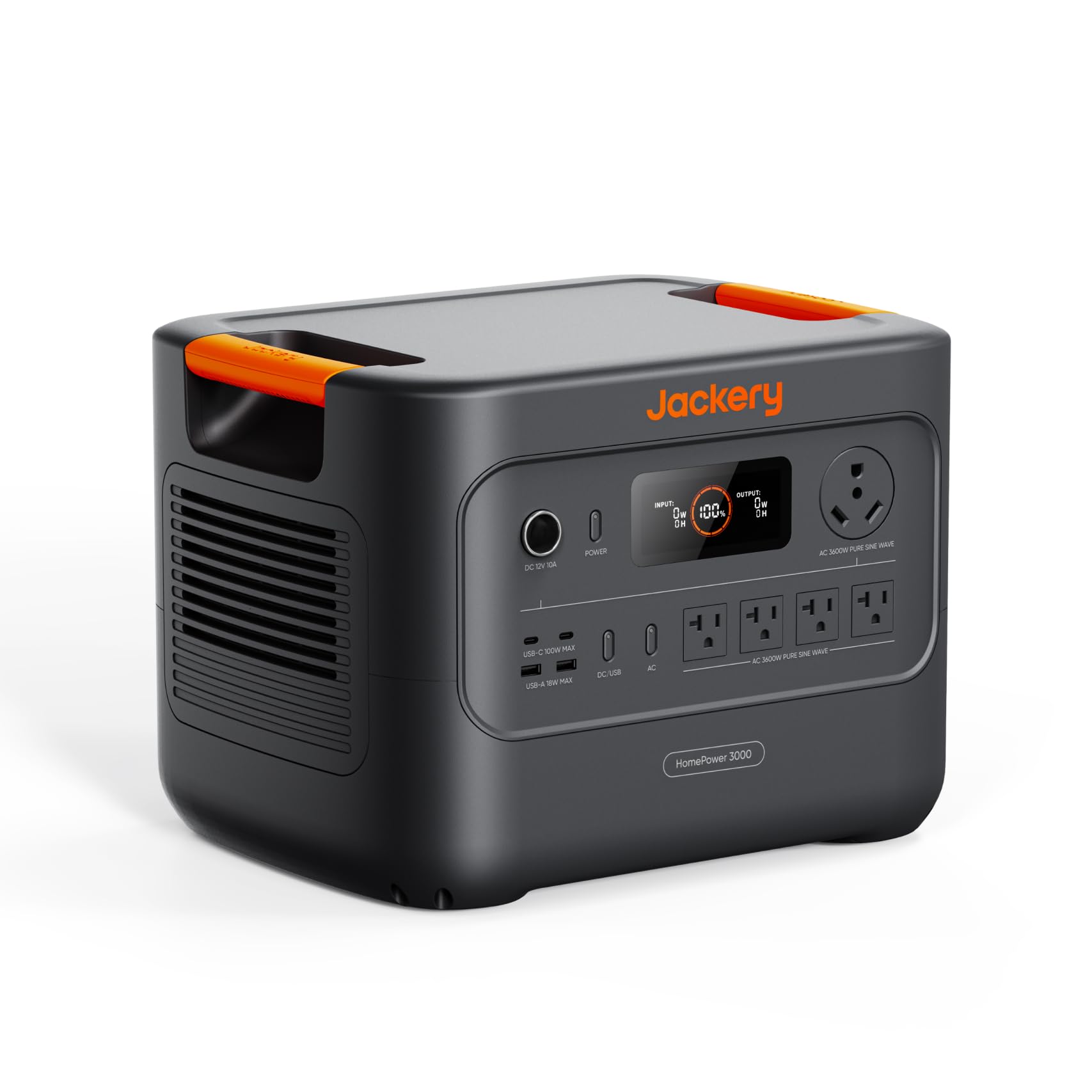
The Jackery HomePower 3000 is a 3072Wh LiFePO₄ station with a 3600W inverter (7200W surge)—enough to run a refrigerator, well pump, and home office simultaneously for over 15 hours. At 59.5 pounds, it’s the lightest and smallest 3kWh-class unit available, thanks to CTB (Cell-to-Body) technology that boosts space efficiency by 14%. The housing includes a honeycomb-style bottom shell for added stability and a built-in TT-30 RV port for direct camper hookup.
The ≤20ms UPS transfer is UL-certified, and the dual 100W USB-C PD ports can fast-charge two laptops simultaneously. Hybrid AC+DC charging reaches full in 1.7 hours, while AC-only charging takes 2.2 hours. With two SolarSaga 200W panels, it hits 80% in about 9 hours. ChargeShield 2.0 technology with AI algorithms adjusts charging speed to extend battery lifespan, and the 4,000-cycle rating ensures a decade of reliable service.
Real-world buyers confirm it runs a 30-foot travel trailer’s AC for 3+ days without generator support, powers a complete home office through multi-day outages, and charges from a 200W solar panel in decent sun. The fan noise is noticeable at around 60dB under any load—louder than the ultra-quiet competitors—which makes it less ideal for indoor UPS use overnight. The warranty is only honored if purchased directly from Jackery, not through Amazon. For whole-home backup that doesn’t require installation, the HomePower 3000 delivers massive capacity in a compact package.
Why it’s great
- 3072Wh capacity with 3600W/7200W surge
- Lightest 3kWh station (59.5 lbs) with CTB tech
- TT-30 RV port for direct camper connection
- 4,000-cycle LiFePO₄ battery
Good to know
- Fan runs at ~60dB even under moderate load
- Warranty only valid for direct Jackery purchases
10. GROWATT HELIOS 3600
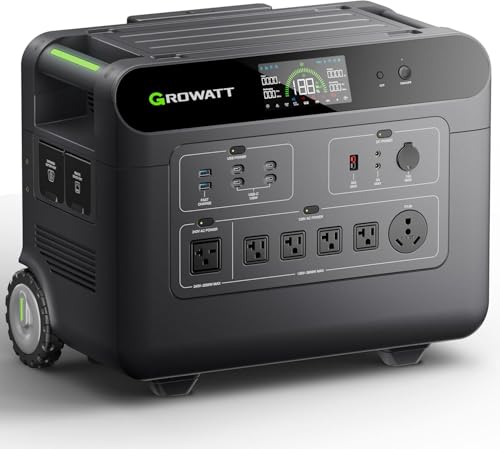
The GROWATT HELIOS 3600 is a 3600Wh station with a 3600W inverter that can be paired with a second unit via split-phase connection to deliver 240V/7200W—enough to run a central air conditioner, well pump, or electric dryer. Expandable up to 36kWh with addition batteries, it can power a typical home for up to 7 days. The unit includes a NEMA TT-30 outlet for RVs, Anderson ports for off-grid gear, and 16 total output ports.
The <15ms EPS transfer keeps critical loads online, and cold start technology allows operation down to -22°F—a standout feature for winter storm-prone regions. Solar charging at up to 2000W achieves a full charge in 2.8 hours, while AC charging reaches full in 1.5 hours at 240V or 3 hours at 120V. The app enables TOU (Time-of-Use) scheduling to reduce grid consumption. The unit is built around EV-grade LFP cells with a 4,000-cycle life.
Verified buyers report running an 8,000 BTU air conditioner for about 5 hours, powering a fridge, router, Starlink, and TV for 24-30 hours on a 2-hour AC charge, and charging a PHEV in 3.5 hours. The unit is heavy at 100+ pounds with expansion batteries, though the built-in wheels and handles help. The EPS function disables in 240V mode, and some users report Bluetooth/Wi-Fi connectivity issues. For whole-house backup with 240V capability and industry-leading solar charging speed, the HELIOS 3600 is a professional-grade solution.
Why it’s great
- Split-phase parallel for 240V/7200W
- 2000W solar input—full charge in 2.8 hours
- Cold start operation down to -22°F
- Expandable up to 36kWh for whole-week backup
Good to know
- Heavy at 100+ lbs with expansion batteries
- EPS disabled in 240V split-phase mode
- Bluetooth/Wi-Fi connectivity can be unreliable
11. ABOK Ark3600
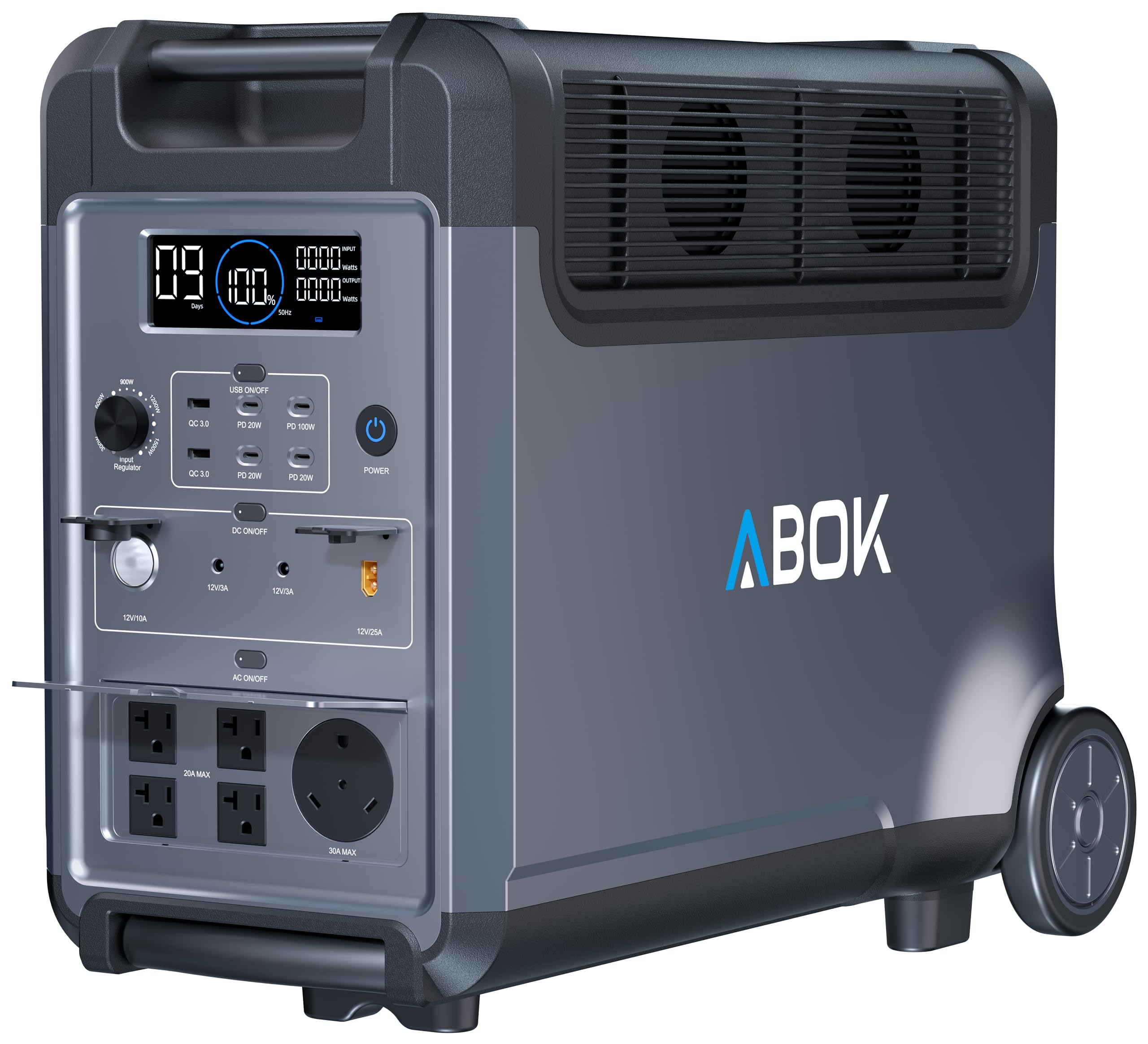
The ABOK Ark3600 is a 3840Wh (3.84kWh) LiFePO₄ power station that expands to 11520Wh (11.52kWh) with additional batteries—the largest capacity in this guide. Its 3600W inverter (4500W surge) powers 99% of household appliances, and the 15 output ports include a 30A NEMA TT-30 RV outlet, four 20A AC outlets, three USB-C ports (one 100W PD), dual USB-A, DC5521, and an XT60 connector. The telescoping handle and durable wheels make it relatively easy to move despite the 92-pound base weight.
Hybrid AC+PV charging delivers a full charge in just 1.29 hours, and AC-only charging takes 3 hours. Solar input is rated at 2000W, making it one of the fastest solar-recharging units available. The ≤10ms UPS transfer protects sensitive electronics. The LiFePO₄ battery is rated for over 4,000 cycles with a 10-year lifespan, and the unit may qualify for the Residential Clean Energy Tax Credit (up to 30%)—though this depends on your utility provider and local regulations.
Verified buyers confirm it runs heavy power tools (wetvac, heatgun, SDS hammer drill) simultaneously, powers a fridge and fan for days without issue, and provides silent, fume-free operation during hurricanes. The cooling fan runs intermittently under sustained loads, which is typical for high-capacity units. Some users note the app documentation is weak and there’s no 240V output. The ABOK support team receives high marks for warranty handling. For the highest base capacity and easiest transport in the premium tier, the Ark3600 is unmatched.
Why it’s great
- 3840Wh base capacity—largest in this guide
- Expandable to 11520Wh for week-long backup
- Telescoping handle and wheels for easy transport
- 2000W solar input with 1.29-hour hybrid recharge
Good to know
- 92 lbs is still heavy despite wheel design
- No 240V output—limited to 120V split-phase
- App documentation is thin and lacks detail
FAQ
Can a backup solar bank power a refrigerator during an outage?
How many solar panels do I need to recharge a 2kWh bank in one day?
Is LiFePO₄ battery chemistry really worth the extra cost?
Final Thoughts: The Verdict
For most users, the backup solar bank for home winner is the BLUETTI AC70 because it balances essential capacity (768Wh), fast recharge (45 min to 80%), true portability (22.5 lbs), and LiFePO₄ longevity at a price that doesn’t break the budget. If you want a 2kWh system with the fastest recharge on the market, grab the Anker SOLIX C2000 Gen 2. And for whole-house backup with 240V capability and multi-day runtime, nothing beats the GROWATT HELIOS 3600.