
The right balaclava transforms a bitter morning commute or a long day on the mountain from a shivering ordeal into manageable comfort. But grab the wrong one — too thick to breathe through, too loose to stay under a helmet, or too thin to block a freeze — and it becomes a nuisance you’ll rip off at the first stop.
I’m Min — the co-founder and writer behind Gadgets Feed. My approach to finding the best face and neck protection involves cross-referencing fiber composition, seam construction, and moisture-wicking performance against real-world user conditions logged across thousands of hours of use.
A warm head, neck, and face are non-negotiable for cold-weather work or play, and pinpointing the strongest options starts with a solid breakdown of the best balaclava models available right now.
How To Choose The Best Balaclava
A balaclava is a simple piece of gear, but small differences in material, construction, and intended use make the difference between a dependable layer and one you leave behind. These three factors define the hunt.
Fabric Weight and Fiber Blend
Lightweight polyester or polypropylene blends excel for high-output activities like cycling or trail running in mild cold because they wick moisture and don’t trap excess heat. Heavier fleece or brushed knits lock in warmth for stationary work or extreme temperatures. For jobsite safety, fabrics must carry a flame-resistant rating — look for modacrylic or aramid fibers to meet NFPA 70E standards.
Fit Profile and Seam Design
A balaclava that slips down over your eyes or bunches under a hard hat has failed its primary job. Stretchy materials like elastane blends conform to the head for a secure fit. Flat-lock seams prevent irritation and pressure points during long wear. Open-face designs leave your eyes and nose free for easier breathing and better goggle seal, while full-face versions provide maximum coverage in wind or sparks.
Breathability and Moisture Management
Wicking ability is what stops a balaclava from turning into a wet, cold sponge. Hydrophobic performance fibers pull sweat away from the skin and dry quickly, which prevents heat loss during rest periods. Mesh ventilation panels in strategic areas, like the mouth and nose zone, further boost airflow without sacrificing wind protection elsewhere.
Quick Comparison
On smaller screens, swipe sideways to see the full table.
| Model | Category | Best For | Key Spec | Amazon |
|---|---|---|---|---|
| Fullsheild FR Flame Resistant | Mid-Range | FR-rated work & welding | 2.12 oz weight, modacrylic blend | Amazon |
| HEGGCOOE Ski Mask | Mid-Range | Cold weather skiing & shoveling | Thermal fleece lining | Amazon |
| adidas Alphaskin | Mid-Range | Athletic cold-weather runs | Mesh front, fleece lining | Amazon |
| Nike PRO Hyperwarm Hydropull | Premium | Athletes & multi-sport cold wear | Dri-FIT sweat-wicking | Amazon |
| Alpinestars Open Face | Premium | Motorcycle helmet comfort | Moisture wicking, extended neck | Amazon |
| Dainese Dry Balaclava | Premium | Under-helmet warm weather | 95% polypropylene / 5% elastane, 0.02 kg | Amazon |
| Carhartt FR Force Balaclava | Premium | FR-rated industrial & job site | Cat 2 / ATPV 8.2, FastDry wicking | Amazon |
In‑Depth Reviews
1. Fullsheild FR Flame Resistant Face Mask

The Fullsheild FR uses a modacrylic blend that meets fire-resistant requirements for welding, electrical, and military use while weighing only 2.12 ounces. This low weight makes it easy to pack in an emergency bag or slip into a work vest pocket without noticeable bulk. Multiple buyers note the fit is on the loose side, which helps women and those who wear ponytails pull it over their head more easily.
User feedback confirms it blocks slag from falling down the shirt collar during welding and keeps the neck warm during motorcycle rides in colder weather. A few customers mention the beige color shows dirt quickly and the fabric is thicker than expected for sun protection, but the FR safety callout is the top priority for most. The fit accommodates a variety of head sizes when used with ponytail clearance.
For the combination of flame resistance, multi-use versatility from welding to emergency preparedness, and a price that undercuts most FR-rated headwear, the Fullsheild FR earns the top spot. It covers the face, neck, and front collar zone with a secure closure that doesn’t rely on fragile hook-and-loop tape.
Why it’s great
- Flame-resistant modacrylic blend meets NFPA 70E standards
- Lightweight at 2.12 ounces for easy packing
- Snug enough for helmet or hard hat use
Good to know
- Loose fit may not suit those with smaller face frames
- Beige color shows dirt and staining quickly
2. HEGGCOOE Balaclava Ski Mask
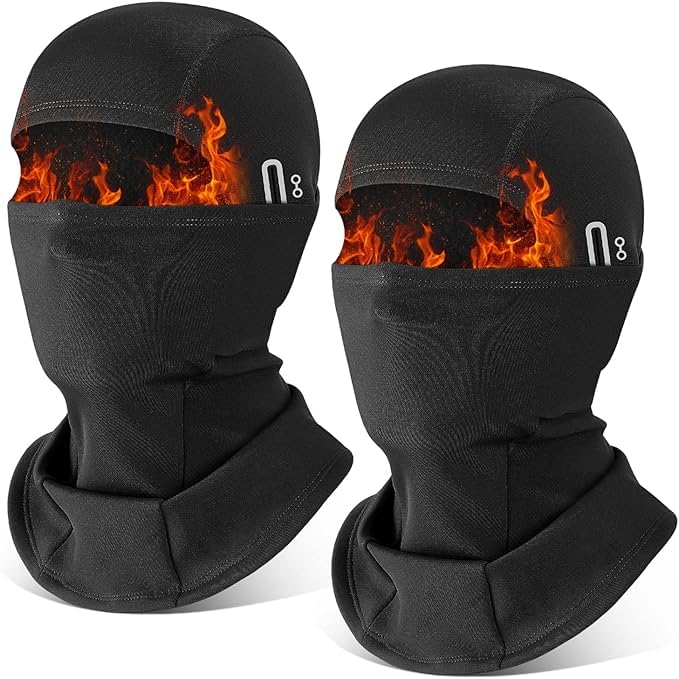
This balaclava uses a thermal fleece lining and windproof outer shell to keep heat trapped when the mercury drops. One user reported staying comfortable while shoveling snow in -5-degree temperatures at the top of Wildcat Mountain, New Hampshire. The material is soft against the skin and stretches enough to form a seal around the face without feeling restrictive.
Reviewers consistently describe the HEGGCOOE as thick, warm, and comfortable. Several have used it for winter skiing, snowboarding, and cold-weather work, noting it holds up well after multiple washes. The lightweight polyester blend dries faster than traditional wool, so it stays manageable even when damp from sweat or snowmelt.
If your primary use case is extreme cold exposure — standing on a ski lift, running a snow blower, or working outside in freezing wind — this mask delivers reliable warmth at a very accessible price point. It lacks an FR rating, so it is not suitable for welding or electrical work.
Why it’s great
- Thermal fleece lining traps heat in sub-zero conditions
- Soft, stretchy fabric molds to the face comfortably
- Dries quickly to prevent moisture buildup
Good to know
- No flame-resistant rating
- May be too warm for moderate or high-exertion activity
3. adidas Alphaskin Balaclava Ski Mask

Adidas places a mesh panel on the front of the Alphaskin to increase ventilation while maintaining a fleece lining everywhere else for warmth. This design targets the cold-weather athlete — someone running, skiing, or cycling at a pace that generates significant body heat. The reflective elements on the fabric add a low-light visibility feature, though adidas specifies it is decorative rather than safety-rated.
Users report the mask is snug, warm, and notably breathable even during exertion. Multiple reviews mention it wears comfortably under a football or cycling helmet because the thin material layers without creating pressure points. The stretch fit keeps it in place during movement, and the fabric washes well without odor retention or pilling.
For runners and cyclists who need a warm layer that doesn’t suffocate during high-output efforts, the Alphaskin hits the sweet spot. It is not a heavy winter mask for standing around, but for active cold-weather work it outperforms thicker alternatives you’d want to pull down after a mile.
Why it’s great
- Mesh front promotes airflow during high-exertion activity
- Fleece lining stays warm without overheating
- Layers smoothly under helmets without shifting
Good to know
- Reflective elements are decorative only
- Not thick enough for extreme cold while stationary
4. Nike PRO Hyperwarm Hydropull Hood Balaclava

The Nike PRO Hyperwarm uses Nike’s signature Dri-FIT technology to manage moisture while retaining heat. The material is stretchy, so it accommodates a wide range of head sizes without feeling restrictive, and reviewers note the fit stays in place during runs and lifts. The clean aesthetic with a subtle Nike logo appeals to athletes who want performance without an oversized brand graphic.
Users widely describe the fabric as soft, non-itchy, and breathable — a common issue with fleece or wool balaclavas is resolved here. Several mention using it in temperatures from cool to moderately cold and staying comfortable without overheating. The mask is lightweight enough to stow in a gym bag, and the price undercuts retail stores by a meaningful margin according to multiple reviews.
For the athlete who demands reliable moisture management in cold weather without bulk or irritation, the Hyperwarm is a polished pick. It lacks FR capability and is thinner than heavy winter masks, but for active use between 20 and 40 degrees Fahrenheit it delivers a premium experience.
Why it’s great
- Dri-FIT fabric wicks moisture effectively during exercise
- Soft, non-itchy material comfortable for long wear
- Stretchy fit stays in place without slipping
Good to know
- Not suitable for flame-resistant environments
- Thin construction lacks warmth in sub-zero conditions
5. Alpinestars Open Face Balaclava

The Alpinestars Open Face Balaclava is purpose-built for motorcyclists who need a thin moisture-wicking layer under a full-face helmet. The open-face design leaves the eyes, nose, and mouth free to reduce fogging and improve airflow, while the extended neck piece prevents zipper rash from jacket collars. Flat-lock seams minimize friction against the skin inside the helmet.
Users report that this balaclava eases helmet on and off because the smooth fabric slides against the liner rather than pulling the head and ears. The heavyweight feel of the material surprises some buyers expecting a heavier winter layer, but the lightweight fiber blend is intentional for warm-weather riding. A strong fuel-oil smell on opening was noted by multiple customers, requiring a few days of airing out before use.
If you ride a motorcycle in warmer months and need a helmet liner that manages sweat and prevents helmet odor, the Alpinestars is a purpose-built answer. It is not a cold-weather mask — the open face leaves too much exposed — but for its intended summer-to-spring role it outperforms general-purpose alternatives.
Why it’s great
- Open-face design reduces fogging and improves breathing
- Extended neck protects against zipper irritation
- Flat-lock seams prevent pressure points inside the helmet
Good to know
- Strong fuel-oil smell upon opening requires airing out
- Not warm enough for winter or cold-weather use
6. Dainese Dry Balaclava

The Dainese Dry Balaclava is constructed from 95% polypropylene and 5% elastane, making it one of the lightest and most breathable options in the lineup at just 0.02 kilograms. The hydrophobic fiber pulls moisture away from the skin aggressively and dries extremely quickly, which is critical for riders who sweat under a helmet in spring or summer. The stretch fit adapts naturally to the head without bunching.
Users consistently rate the comfort highly, describing the material as smooth against the face and non-irritating. Several women with smaller helmet sizes (XS) note the fit is proportionate without excess fabric. It layers seamlessly under a jacket collar, and the thin profile means it doesn’t affect the helmet’s fit or create pressure points. One reviewer specifically called it perfect for spring and summer, and not intended for winter use.
For riders who prioritize breathability and sweat management over insulation, the Dainese Dry is the most technically focused option. The higher price reflects the premium fiber and Italian construction, and if year-round riding in warm climates is your norm, this balaclava justifies the spend with tangible moisture benefits.
Why it’s great
- Hydrophobic polypropylene fibers manage sweat exceptionally well
- Low-profile stretch fit doesn’t affect helmet positioning
- Dries rapidly for multi-day use without washing
Good to know
- Not warm enough for cold-weather use
- Premium price compared to mid-range options
7. Carhartt Men’s Flame Resistant Force Balaclava

The Carhartt FR Force Balaclava meets NFPA 70E and ASTM F1506 standards with a Category 2 rating and an ATPV of 8.2 cal/cm². The fabric blend — 45% modacrylic, 35% lyocell, and 20% aramid — provides flame resistance while FastDry technology wicks sweat away from the skin. The full facial protection extends below the neckline, and the face mask portion pulls down under the chin when not needed.
Users confirm the material is high quality and works well in both sun and cold protection. However, several note the balaclava is on the thinner side, which reduces standalone warmth in gusty or windy conditions. One user who works outdoors in cold weather uses it as a base layer under a thicker FR balaclava on the coldest days. The fit is snug and stays in place under hard hats or welding hoods.
For job-site safety where arc flash or flame exposure is a real risk, the Carhartt FR Force is the most certified option. It prioritizes safety and moisture management over insulation, making it a smart base layer rather than a standalone winter mask. If your work demands Cat 2 FR protection, this is the standard to beat.
Why it’s great
- Cat 2 FR rating with 8.2 ATPV for arc flash protection
- FastDry technology manages moisture on the job site
- Pull-down face mask offers flexibility while resting
Good to know
- Thin construction requires layering for extreme cold
- Snug fit may feel restrictive for some head shapes
FAQ
How do I stop my balaclava from fogging my glasses or goggles?
Can a balaclava be worn under a hard hat or motorcycle helmet?
What does an NFPA 70E Category 2 rating mean for a balaclava?
Final Thoughts: The Verdict
For most users, the best balaclava winner is the Fullsheild FR because it combines certified flame resistance, lightweight construction, and multi-environment versatility at a reasonable price. If you need sub-zero warmth for skiing or snow removal, grab the HEGGCOOE. And for premium moisture management under a helmet during warm-weather riding, nothing beats the Dainese Dry Balaclava.