
When the lights go out, the roads clog, and the shelves empty, the difference between chaos and control often comes down to one piece of gear: your bug out kit. A well-assembled kit isn’t just a bag of stuff; it’s a pre-planned lifeline that buys you time, shelter, hydration, and medical capability during the first critical 72 hours of a disaster. The market is flooded with options, but the real test is whether a kit can actually withstand real-world evacuation scenarios without falling apart or leaving you hungry.
I’m Min — the co-founder and writer behind Gadgets Feed. I’ve spent hundreds of hours analyzing the build quality, caloric density, water capacity, tool redundancy, and shelf-life specifications of dozens of survival kits to separate the genuinely useful from the overpriced or under-stuffed.
This guide cuts through the marketing noise to focus on concrete specs, real customer experiences, and the essential gear ratios that matter when you’re on the move. These recommendations represent the most reliable, thoughtfully assembled options available today for anyone serious about building or buying the best bug out kit.
How To Choose The Best Bug Out Kit
Choosing a bug out kit requires more than just looking at a piece count. You need to evaluate the ratios of food to water, the quality of the backpack, and whether the included tools match your personal risk profile. A great kit should cover the core pillars of survival: hydration, nutrition, shelter, first aid, and communication.
Caloric & Hydration Density
Most kits advertise “food and water for 72 hours,” but the reality varies wildly. Check the total caloric intake per person — a common benchmark is 1200 to 3600 calories per person per day. For water, aim for at least one gallon per person per day. The best kits include a water filter or purification tablets to extend your supply beyond the included pouches.
Backpack Construction & Capacity
The bag itself is the foundation. Look for 600-denier or higher nylon or polyester construction with reinforced stitching and YKK-style zippers. A 40 to 50-liter capacity is ideal for 72-hour kits, as it offers room for the base gear plus personal extras like medications, a change of clothes, or a small stove. MOLLE webbing is a bonus for attaching additional pouches externally.
Tool Quality vs. Quantity
Higher piece counts often mean more plastic trinkets. Focus on the quality of the multi-tool, flashlight, and radio. A hand-crank AM/FM radio with a built-in flashlight and USB phone charger is worth its weight in gold during a power outage. Avoid kits that include cheap, single-use plastic tools and instead look for stainless steel equivalents.
Quick Comparison
On smaller screens, swipe sideways to see the full table.
| Model | Category | Best For | Key Spec | Amazon |
|---|---|---|---|---|
| Sirius Survival Bug Out Bag | Premium | Complete 2-Person Kit | 232-Piece, 50L Backpack, Solar Power Bank | Amazon |
| Ready America 72 Hour Deluxe | Premium | Family Emergency Plan | 4-Person, 107-pc First Aid, Hand-Crank Radio | Amazon |
| Emergency Zone 2 Person Survival Kit | Mid-Range | Customizable Starter | 2-Person, 121-pc FAK, Tube Tent, Sleeping Bags | Amazon |
| Quake Kits Prepared Survival Kit | Mid-Range | Organized 4-Person Kit | 4-Person, 600D Molle Pack, AM/FM Radio | Amazon |
| Emergency Zone 2 & 4 Person Kit | Mid-Range | Budget Family Starter | 2-4 Person, 53-pc FAK, Collapsible Water Container | Amazon |
| ReadyWise Tactical Survival Backpack | Budget | Compact Solo Kit | 64-Piece, 36 Servings Food, 9lb Total Weight | Amazon |
| Sierra Madre Emergency Sleeping Bag | Budget | Supplemental Shelter | 6oz, Mylar, 95% Heat Reflection | Amazon |
In‑Depth Reviews
1. Sirius Survival Bug Out Bag
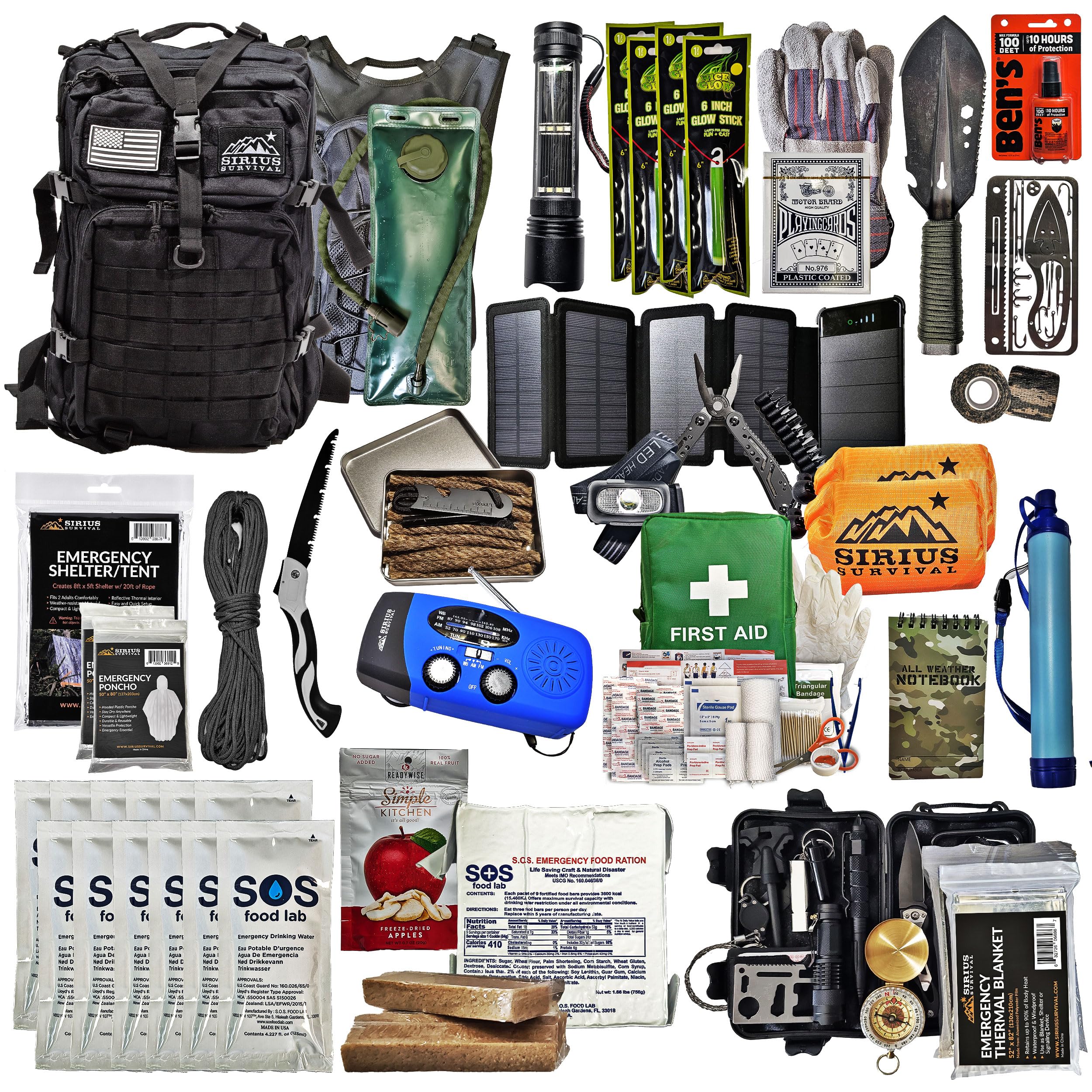
The Sirius Survival Bug Out Bag represents the pinnacle of pre-packed preparedness. With 232 individual components packed into a heavy-duty 50-liter backpack, this kit goes beyond the basics to include a solar-powered power bank, a water filter straw with a bladder, and US-made, Coast Guard-approved food rations that are calorie-dense and non-thirst inducing. The backpack itself is designed with chest clips and a comfortable harness system, making it viable for long-distance evacuation on foot.
Each component was chosen with redundancy in mind — the kit includes multiple fire-starting methods, a comprehensive first aid pouch, fishing gear, and emergency shelter materials. Users consistently praise the thoughtfulness of the organization and the high quality of the core tools. The solar power bank is a standout feature, allowing you to recharge critical electronics without relying on the grid.
While the weight is substantial when fully loaded (around 15+ lbs), the design encourages splitting the gear between two people for longer hauls. The included handbook provides clear guidance on usage, which is invaluable for those new to survival scenarios. For anyone seeking a turnkey solution that requires minimal supplementation, this is the definitive choice.
Why it’s great
- Solar power bank for grid-independent charging
- US-made, Coast Guard-approved food rations
- Comprehensive 232-piece kit with minimal dead weight
Good to know
- Heavy when fully packed; best split between two people
- Premium price point may exceed some budgets
2. Ready America 72 Hour Deluxe Emergency Kit
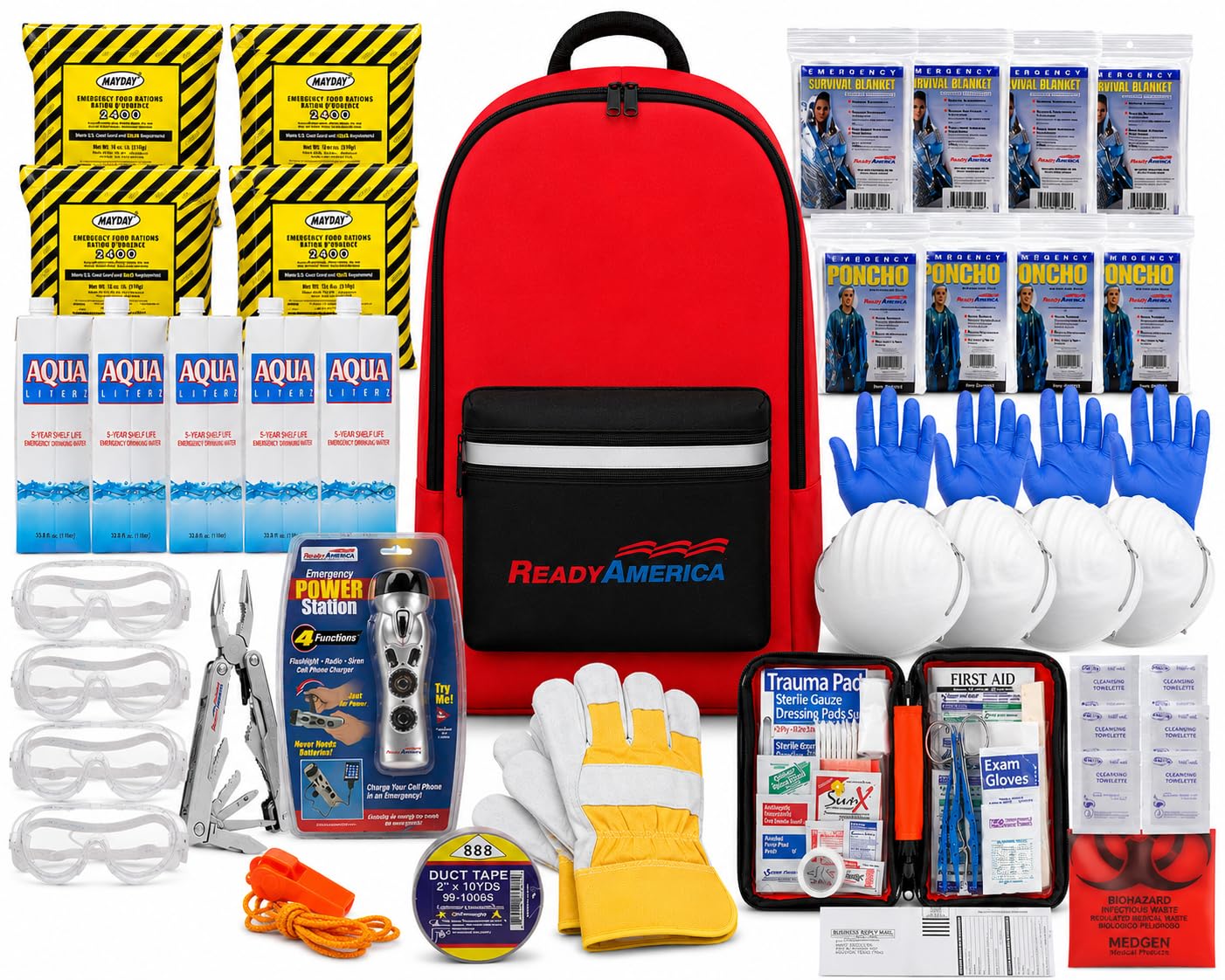
The Ready America 72 Hour Deluxe kit is explicitly designed for a family of four, providing a complete 3-day supply of food, water, and medical supplies. The 107-piece first aid kit is one of the most robust included with any pre-packed bag, covering everything from bandages to splints and ointments. The hand-crank flashlight, AM/FM radio, siren, and phone charger is a critical all-in-one tool that eliminates battery dependency.
The kit includes four 2400-calorie food bars and four 1-liter Aqua Literz water cartons, providing a solid baseline for a family. The shelter components — four emergency ponchos and four survival blankets — are standard mylar but functional. The inclusion of N95 dust masks, safety goggles, and nitrile gloves adds a layer of protection for post-disaster environments where air quality may be compromised.
Users report that the backpack is lightweight enough for even a child to carry in an evacuation, which is a practical design choice. The main criticism is that the water supply is slightly under the recommended one gallon per person per day, so adding a water filter or additional pouches is recommended for extended survival. The 4-year shelf life on the food and water is clearly labeled for easy rotation.
Why it’s great
- Incredibly comprehensive 107-piece first aid kit
- Hand-crank radio/flashlight with phone charger
- Lightweight backpack suitable for smaller family members
Good to know
- Water supply is slightly below 1 gallon per person per day
- Safety goggles and some items feel lower quality
3. Emergency Zone Urban Survival Bug Out Bag

The Emergency Zone Urban Survival Bug Out Bag is a favorite among preppers who want a solid foundation to build upon. The two-person kit includes 3600-calorie food bars, water pouches, a collapsible water container, and Chlo-Floc purification tablets, giving you multiple hydration options. The 121-piece first aid kit is well-stocked with scissors, bandages, and basic trauma supplies.
The inclusion of two sleeping bags and a tube tent sets this kit apart from many competitors that only offer mylar blankets. The hand-crank radio and flashlight are described by users as loud and effective, requiring only 10 cranks for operation. The backpack is a medium-gray color without loud emergency labeling, allowing for discreet use in urban environments where drawing attention could be a liability.
Some users note that the backpack straps feel less durable than a dedicated hiking pack, and the lack of MOLLE webbing limits external customization. However, the internal organization via ziplock bags is thoughtful and keeps contents dry and sorted. For those looking to add their own knife, multi-tool, or water filter, this kit offers the best balance of price and expandability.
Why it’s great
- Includes actual sleeping bags and a tube tent for real shelter
- Multiple water sources: pouches, container, and purification tabs
- Discreet, non-tactical backpack for urban evacuation
Good to know
- Backpack straps may not withstand heavy daily abuse
- No MOLLE webbing for attaching extra pouches
4. Quake Kits Prepared Survival Kit
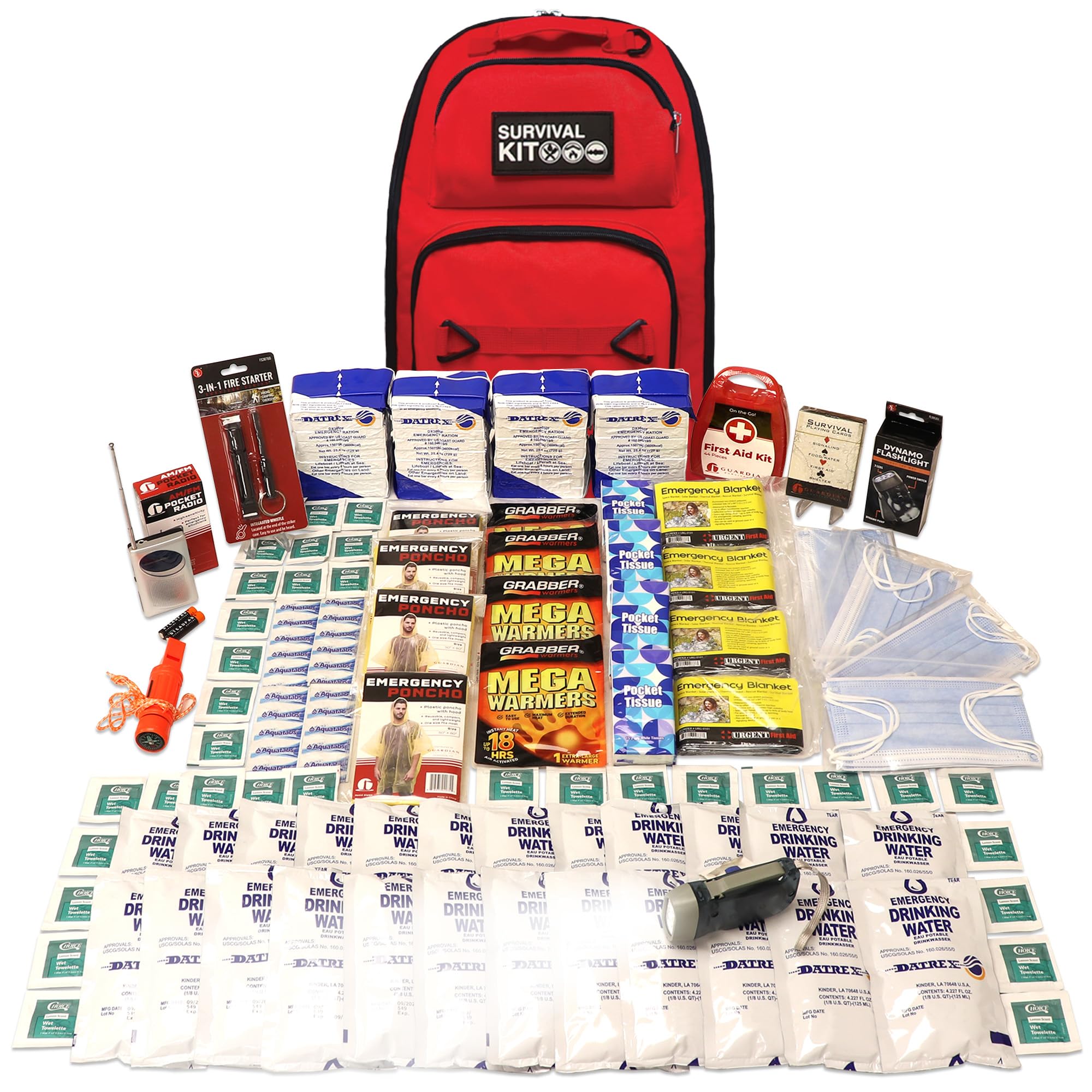
The Quake Kits Prepared Survival Kit prioritizes organization and quality. The 600-denier Molle backpack is praised by users for its excellent build quality and ample extra space for personal additions. The kit is segmented by function: light and communication, tools and first aid, shelter and warmth, and hygiene and sanitation — making it easy to locate items under stress.
Each person gets 1200 calories of food and .95 gallons of water per day, which is close to the recommended 1-gallon target. The 5-in-1 emergency whistle (with signal mirror, compass, flint starter, and waterproof container) is a genuinely useful multi-tool. The inclusion of a custom survival-themed deck of playing cards adds a morale boost, which is an often-overlooked psychological survival tool.
Users note that the kit is a “starter” in the sense that it covers the Red Cross minimums but leaves room for upgrades. The AM/FM radio is functional, and the aluminum flashlight provides adequate light. For a family that wants a grab-and-go solution with the option to expand over time, this kit hits a sweet spot between completeness and cost.
Why it’s great
- Well-organized into color-coded categories for quick access
- High-quality 600D Molle backpack with room for extras
- Includes a 5-in-1 whistle and survival-themed playing cards
Good to know
- Requires AA/AAA batteries for the radio (not included)
- Food supply is on the lower end at 1200 cal/person/day
5. Emergency Zone 2 & 4 Person Survival Kit
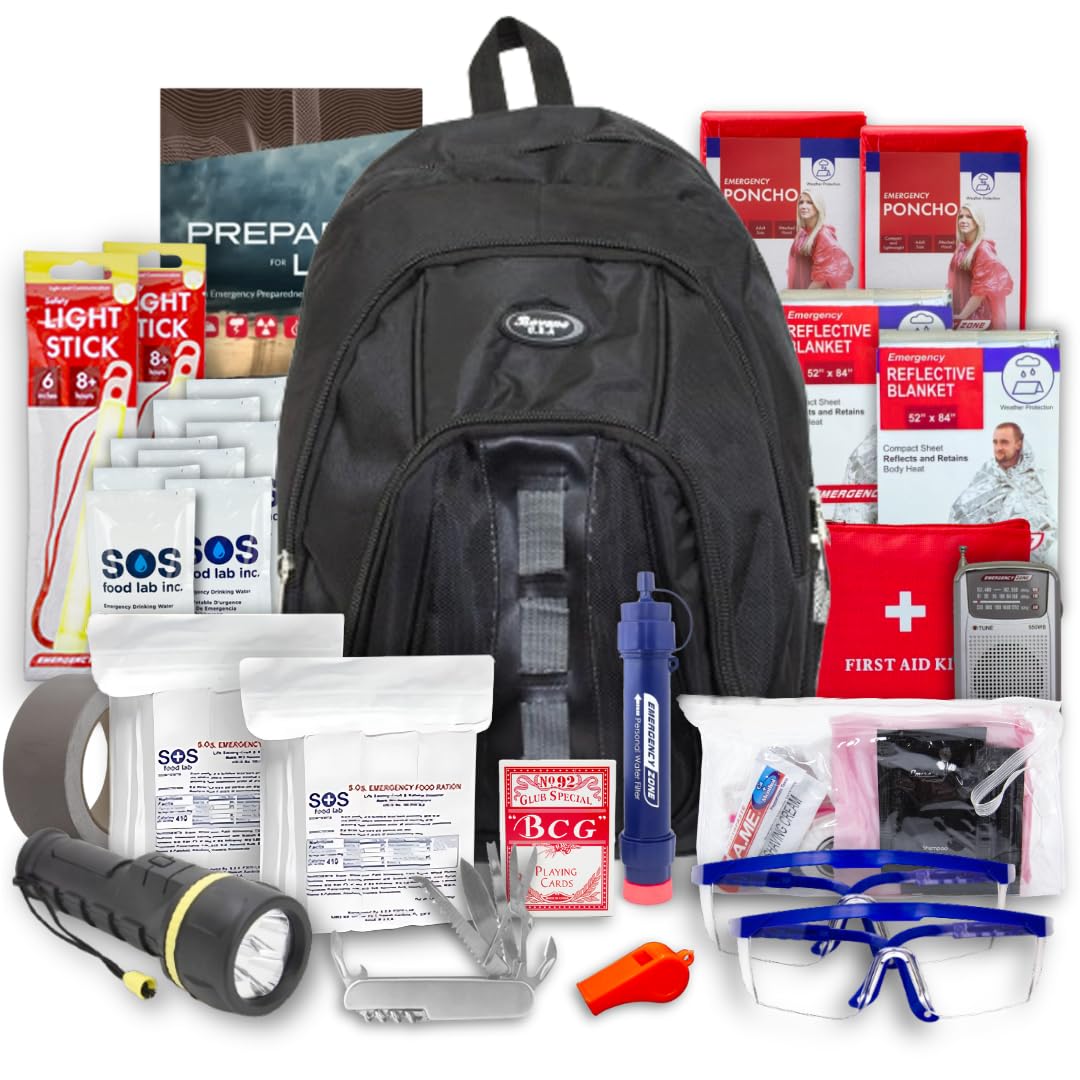
The Emergency Zone 2 & 4 Person Survival Kit is a no-frills solution that focuses on the absolute essentials. It features SOS brand food rations and water pouches with a 5-year shelf life, and a Frontier Straw Filter that can purify up to 30 gallons of water from any source. The 53-piece first aid kit is basic but covers cuts, scrapes, and minor burns.
The backpack is described by multiple users as well-made with strong zippers and compact dimensions. It lacks the tactical look of some competitors, which can be an advantage in a non-permissive environment. The kit is designed to cover one person generously or stretch for two in a pinch, making it flexible for different household sizes.
Customer feedback highlights the need to supplement the kit with a few personal items — a proper knife, more toilet paper, and additional food rations. The collapsible water container is a nice touch for extended stays, but the water pouches themselves are limited. For the price point, this is a solid entry-level kit that won’t break the bank.
Why it’s great
- Includes a Frontier Straw Filter for 30 gallons of water
- Compact and lightweight backpack with strong zippers
- 5-year shelf life on food and water
Good to know
- Limited water pouches; the straw filter is essential for longer use
- Basic first aid kit needs personal upgrades
6. ReadyWise Tactical Survival Backpack

The ReadyWise Tactical Survival Backpack is a 64-piece kit built around a red tactical-style backpack. The standout feature is the 36 servings of freeze-dried breakfasts and entrees, each with a 25-year shelf life, making this kit suitable for long-term storage. The food pouches require only hot water to prepare, and the kit includes a portable stove, fuel tablets, and a stainless steel cup.
The kit also includes a first aid and hygiene kit, a squeeze flashlight, a waterproof match case, and a survival blanket. The backpack itself is made of durable nylon/canvas and weighs 9 pounds, which is reasonable for a loaded bug out bag. Users report that the bag is high quality and has enough empty space to add personal gear like a small pot set or additional food packs.
Some shipping damage has been reported, with bags arriving with broken zippers or missing items. The survival tools are described as “medium quality” by one reviewer, but the core food supply and the stainless steel cup are consistently praised. This is a great option for someone who wants to prioritize long-term food storage over having every possible tool.
Why it’s great
- Exceptional 25-year shelf life on freeze-dried food
- Includes a stove, fuel tablets, and stainless steel cup
- Durable tactical backpack with extra storage capacity
Good to know
- Shipping damage reported — inspect immediately upon arrival
- Some survival tools are basic quality
7. Sierra Madre Emergency Sleeping Bag
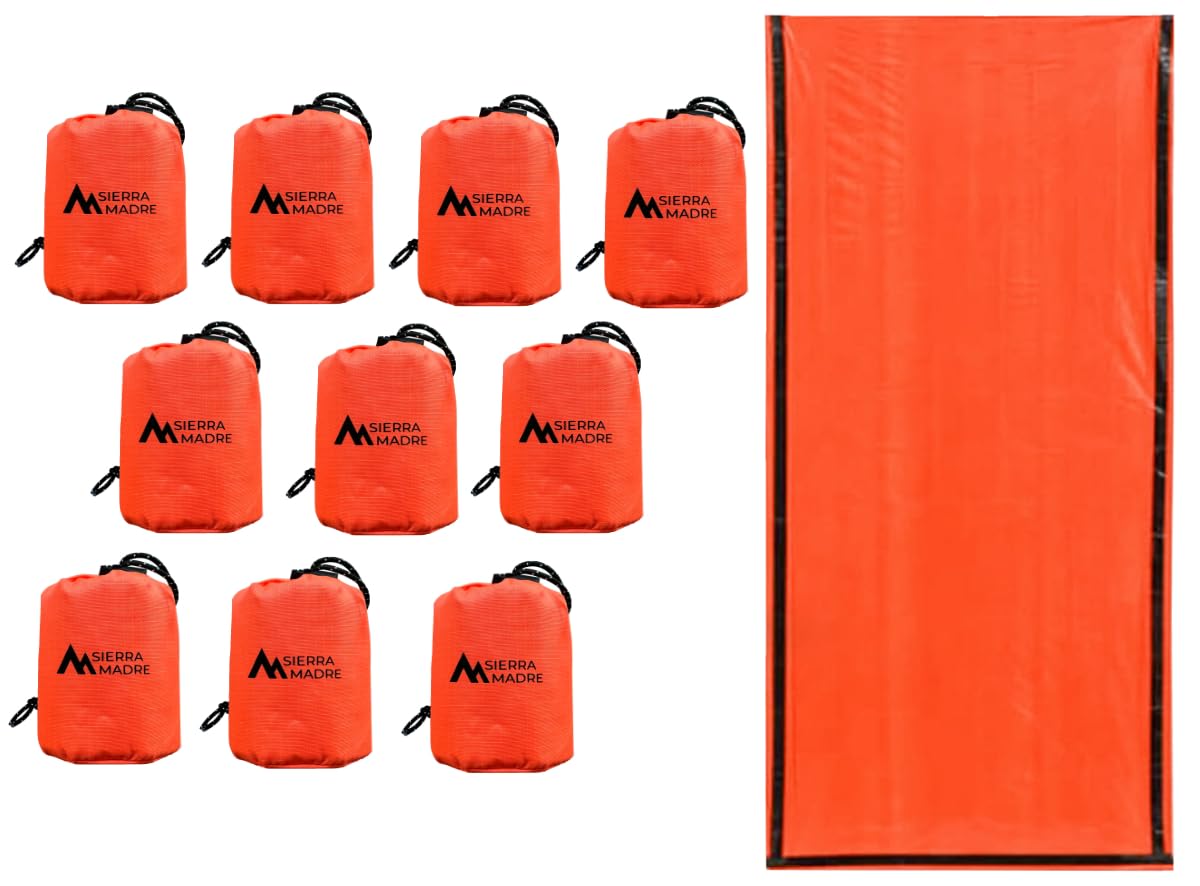
The Sierra Madre Emergency Sleeping Bag is not a standalone bug out kit, but it is an essential component of any comprehensive survival system. Weighing just 6 ounces and packing down to the size of a fist, this mylar thermal bivy sack reflects over 95% of body heat, making it a critical tool for staying warm in extreme cold. Unlike flimsy space blankets, this bag is tear-resistant and reusable.
The bivy is waterproof and windproof, using the same NASA-derived polyethylene insulation material that space blankets are famous for, but in a more durable, full-body enclosure. The orange color increases visibility if you need to be spotted by rescuers. With a maximum height recommendation of 7 feet, it fits most adults comfortably.
Users across the board recommend adding this to any emergency kit, whether in a car, home, or as a backpacking backup. It is not designed for long-term use or heavy abrasion, but as a 72-hour emergency shelter layer, it is practically unbeatable for its weight and cost. Pair it with a more complete kit for true peace of mind.
Why it’s great
- Extremely lightweight at 6 ounces
- Reflects 95% of body heat for hypothermia prevention
- Durable, reusable mylar construction
Good to know
- Not a standalone shelter — use as a supplement to a full kit
- Not designed for high-abrasion or long-term camping use
FAQ
What is the most important item in a bug out kit?
How often should I rotate the food and water in my bug out kit?
Should I buy a pre-packed kit or build my own bug out bag?
Final Thoughts: The Verdict
For most users, the best bug out kit winner is the Sirius Survival Bug Out Bag because it combines a 50-liter backpack with a comprehensive 232-piece kit that includes a solar power bank, water filtration, and US-made food rations. If you want a family-oriented kit with an exceptional first aid package, grab the Ready America 72 Hour Deluxe Kit. And for a customizable starter that leaves room for your own gear, nothing beats the Emergency Zone Urban Survival Bug Out Bag.