
A catcher’s bag lives a brutal life — dragged across gravel, stuffed into car trunks, left on muddy dugout floors. The wrong bag turns every practice into a gear-organizing nightmare. The right bag stores a full arsenal of protective equipment, keeps your mitt from getting crushed, and rolls smoothly over any surface without tipping.
I’m Min — the co-founder and writer behind Gadgets Feed. I’ve analyzed hundreds of hours of user reviews and cross-referenced every spec from wheel diameter to compartment count to identify the bags that actually survive a full season of catching.
After reviewing dozens of models, I’ve narrowed the field to the seven best options that solve the unique storage and transport challenges every catcher faces. This is the definitive guide to finding the best baseball bag for catchers.
How To Choose The Best Baseball Bag For Catchers
A catcher’s gear bag is not a one-size-fits-all accessory. The specific combination of a chest protector, helmet, shin guards, multiple gloves, cleats, and bats demands a bag designed around those irregular shapes. Choosing poorly means either struggling to zip the main compartment shut or lugging a bag that collapses under the weight.
Wheel Configuration and Terrain Capability
The biggest decision is whether you need a wheeled bag or a backpack. Wheeled bags are essential for catchers carrying a full pro-grade set — typically 15 to 20 pounds of gear. Look for wheels at least 4 inches in diameter with a rubber tread if you traverse grass or gravel regularly. Telescopic handles should lock into at least two positions to accommodate different user heights. Backpacks remain viable for younger players or those with lighter kits, but they shift the entire weight onto your shoulders and spine.
Compartment Design and Internal Organization
Catchers’ bags differ from generic baseball bags in their need for dedicated storage zones. A premium bag offers a separate helmet compartment that prevents the shell from scratching or denting, a shin guard pocket that isolates the hard plastic, and a ventilated cleat section to control odors. The main compartment should have at least one removable shelf or divider so you can stack your chest protector and pants without everything settling into a pile at the bottom.
Material Durability and Zipper Quality
The fabric should be at least 600-denier polyester or a heavy-duty nylon blend that resists abrasion from dragging. Reinforced stitching at stress points — particularly where the handle meets the bag and where the wheels attach — is non-negotiable. Zippers are the #1 failure point in catcher bags. Look for YKK zippers or brands that specifically mention reinforced zipper tracks. Avoid bags that use single-stitch zipper panels; they will separate within one season of heavy use.
Quick Comparison
On smaller screens, swipe sideways to see the full table.
| Model | Category | Best For | Key Spec | Amazon |
|---|---|---|---|---|
| No Errors NO E2 Wheeled | Premium Wheeled | High school to college catchers | Large Fatboy wheels for rough terrain | Amazon |
| Bownet Commander | Premium Wheeled | Travel ball & tournaments | 14 pockets including helmet case | Amazon |
| PowerNet Optimus | Premium Wheeled | Catchers 12+ with heavy gear sets | 7 internal bat sleeves | Amazon |
| Rawlings Gold Collection | Premium Backpack | Serious catchers who prefer carrying | Protective glove crib compartment | Amazon |
| Easton E610CBP | Mid-Range Backpack | Youth catchers & travel-friendly carry | Vented main compartment for gear | Amazon |
| Boombah Rolling Superpack | Mid-Range Wheeled | Youth to high school wheeled option | Separate shoe compartment | Amazon |
| Rawlings YADI Wheeled | Value Wheeled | Budget-conscious serious catchers | 37-inch length, holds up to 4 bats | Amazon |
In‑Depth Reviews
1. Bownet Commander Catcher’s Gear Bag
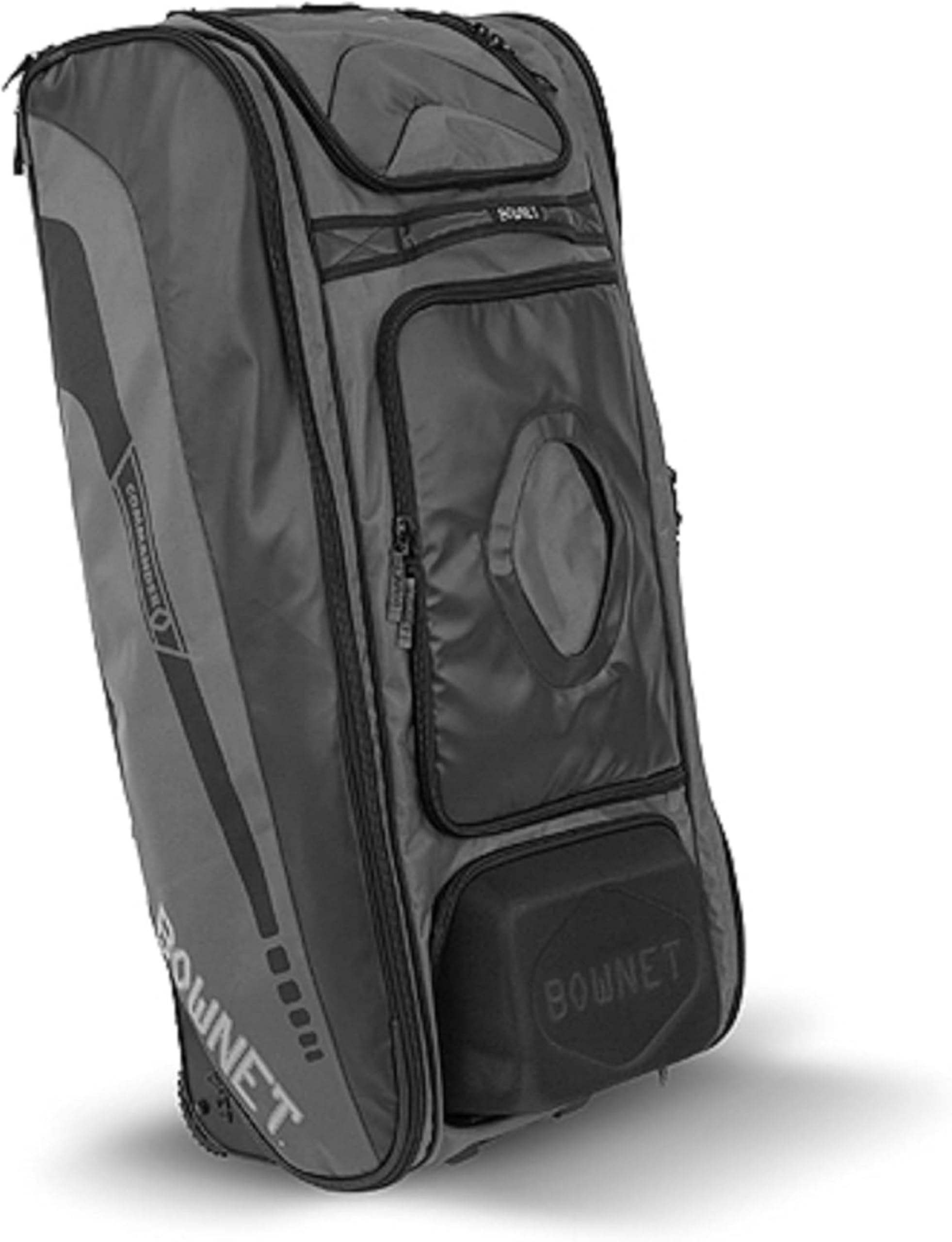
The Bownet Commander is the closest thing to a rolling locker that fits in a car trunk. Its Big Trax wheels are rubber-treaded and oversized — roughly 6 inches in diameter — which means they roll over grass, gravel, and dirt without catching or tipping. The telescopic handle locks into two positions, making it usable for both youth players and adults.
The 14-pocket design is purpose-built for catchers. A molded semi-hard helmet case protects the shell from scratches and dents during transport. The shin guard pocket isolates the hard plastic away from the chest protector, preventing premature wear. The ventilated cleat compartment lets wet shoes air out while sealed away from the main gear. The removable internal shelving lets you stack chest protectors and pants without everything collapsing into a single pile.
At 14.99 pounds empty, this is a heavy bag — but the weight reflects the heavy-duty nylon fabric, reinforced zippers, and bottom feet that keep the bag off dirty dugout floors. Multiple users report three-season lifespans before any zipper failures, which is exceptional in this category. The only notable limitation is that the outer bat compartment struggles with bats longer than 33 inches.
Why it’s great
- Oversized rubber-tread wheels handle all field surfaces smoothly
- Molded helmet case prevents damage during transport
- 14 dedicated pockets keep every piece of gear organized
Good to know
- Weighs nearly 15 pounds empty before any gear is added
- Outer bat pocket fits 33-inch bats, but larger bats may not fit
2. No Errors NO E2 Wheeled Catchers Gear Bag
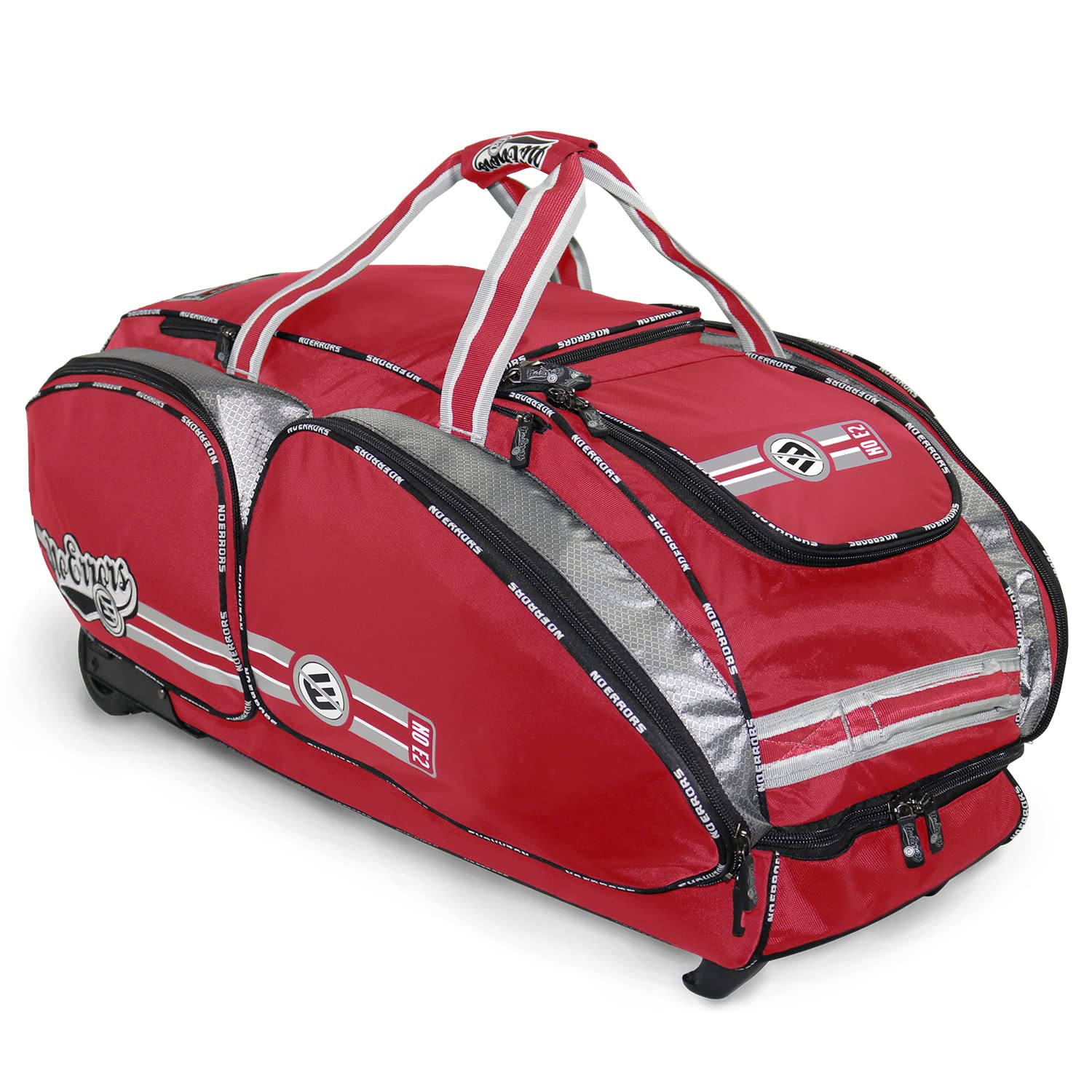
The No Errors NO E2 is built around its Fatboy wheels — wide, chunky rubber rollers that glide over rough terrain without bogging down. The bag’s dimensions (36 x 13.5 x 8 inches when packed) are optimized for storing a full catcher’s set plus a second position’s gear, a setup that travel catchers with double-duty responsibilities need.
The interior space is immense. Users consistently report fitting a catching helmet, a batting helmet, a chest protector, shin guards, three gloves, and multiple bats with room to spare. The center divider is removable, giving you the option to use the bag as a single giant compartment for oversized items or as a two-zone organizer. The exterior material uses heavy-duty fabric that resists abrasion from dragging across concrete and gravel.
Two real-world compromises appear in long-term reviews. First, the bag does not stand upright on its own — you will need to lean it against a wall or use the built-in fence hooks. Second, the zippers are the limiting factor on lifespan; overstuffing the main compartment puts stress on the zipper track, and some users report needing to reinforce shelf snaps with superglue. But for catchers who prioritize wheel performance above all else, this bag delivers unmatched rolling capability.
Why it’s great
- Wide Fatboy wheels roll effortlessly over grass and gravel
- Massive interior fits dual-position gear sets
- Removable center divider offers flexible organization
Good to know
- Does not stand upright when loaded; requires leaning or hanging
- Zippers can strain under heavy loads; avoid overstuffing
3. PowerNet Optimus Catcher’s Bag
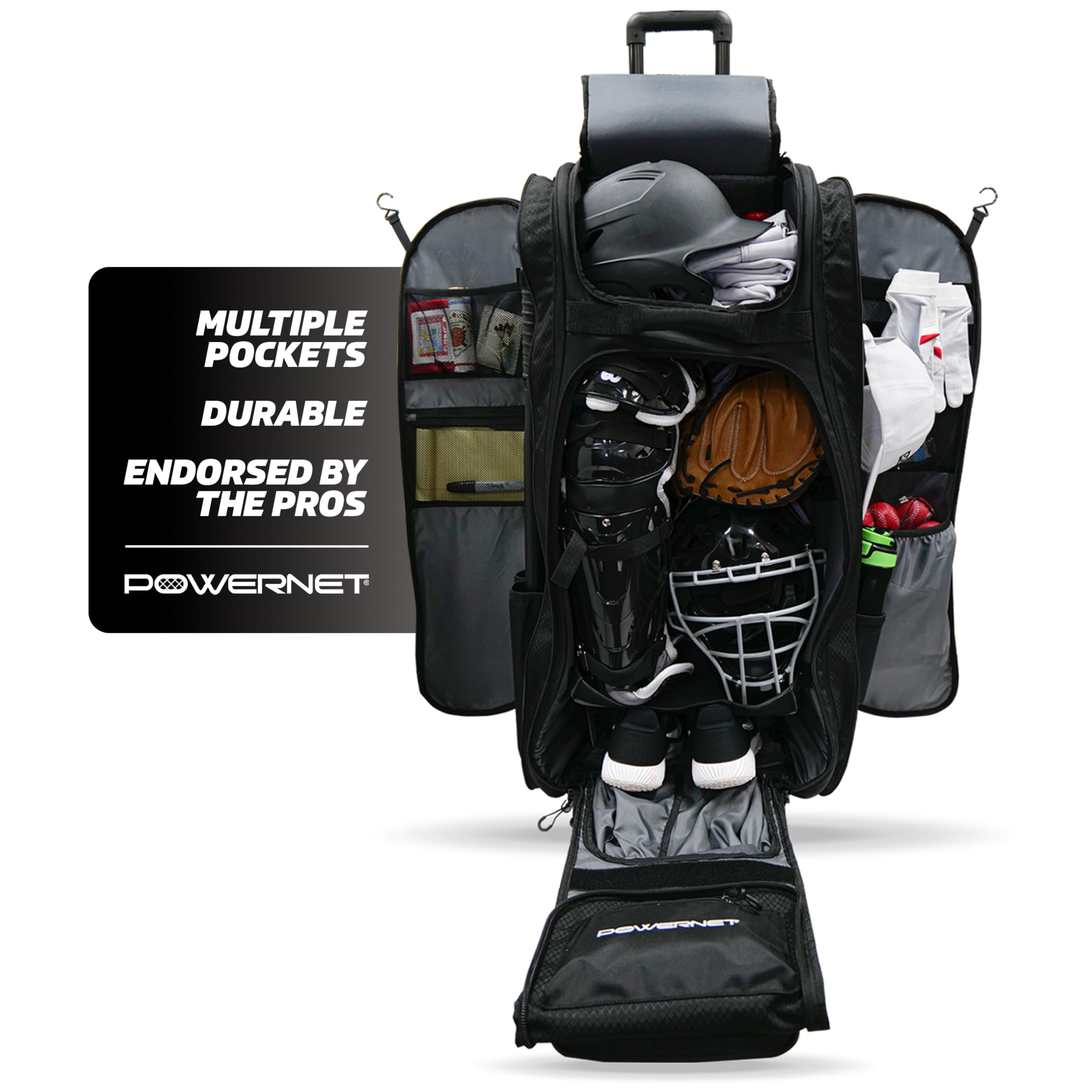
The PowerNet Optimus treats catcher gear storage like a portable locker system. It packs 8 internal compartments including 7 bat sleeves — an extreme number for catchers who also need to haul team bats or who switch between multiple models during games. The adjustable shelving system lets you configure the main compartment height depending on whether you’re storing a bulky chest protector or stacking uniforms.
Organization extends to accessory-specific pockets. Felt-lined phone pockets prevent screen scratches. Fabric strips hold batting gloves in place. Three accessory hangers keep masks and harnesses off the floor. The ventilated cleat compartment is separate from the main gear area, so muddy cleats don’t contaminate your chest protector. The rigid back panel prevents the bag from flopping over when you set it down — a design borrowed from high-end suitcases.
Durability is strong after two years of heavy use in multiple reviews, but the initial design had a weak point: the weight distribution when dragging the bag empty could cause a small hole on the first day if pulled roughly. PowerNet has reinforced the back support rails since then. The bag is recommended for catchers aged 12 and up due to its size — younger players may struggle with the 38-inch height when storing.
Why it’s great
- 7 internal bat sleeves handle heavy bat loads
- Adjustable shelving configures to any gear combination
- Rigid back prevents flop-over when set down
Good to know
- Initial designs had weak weight distribution; newer batches improved back rails
- Size and weight are suited for players 12 and older
4. Rawlings Gold Collection Backpack Equipment Bag
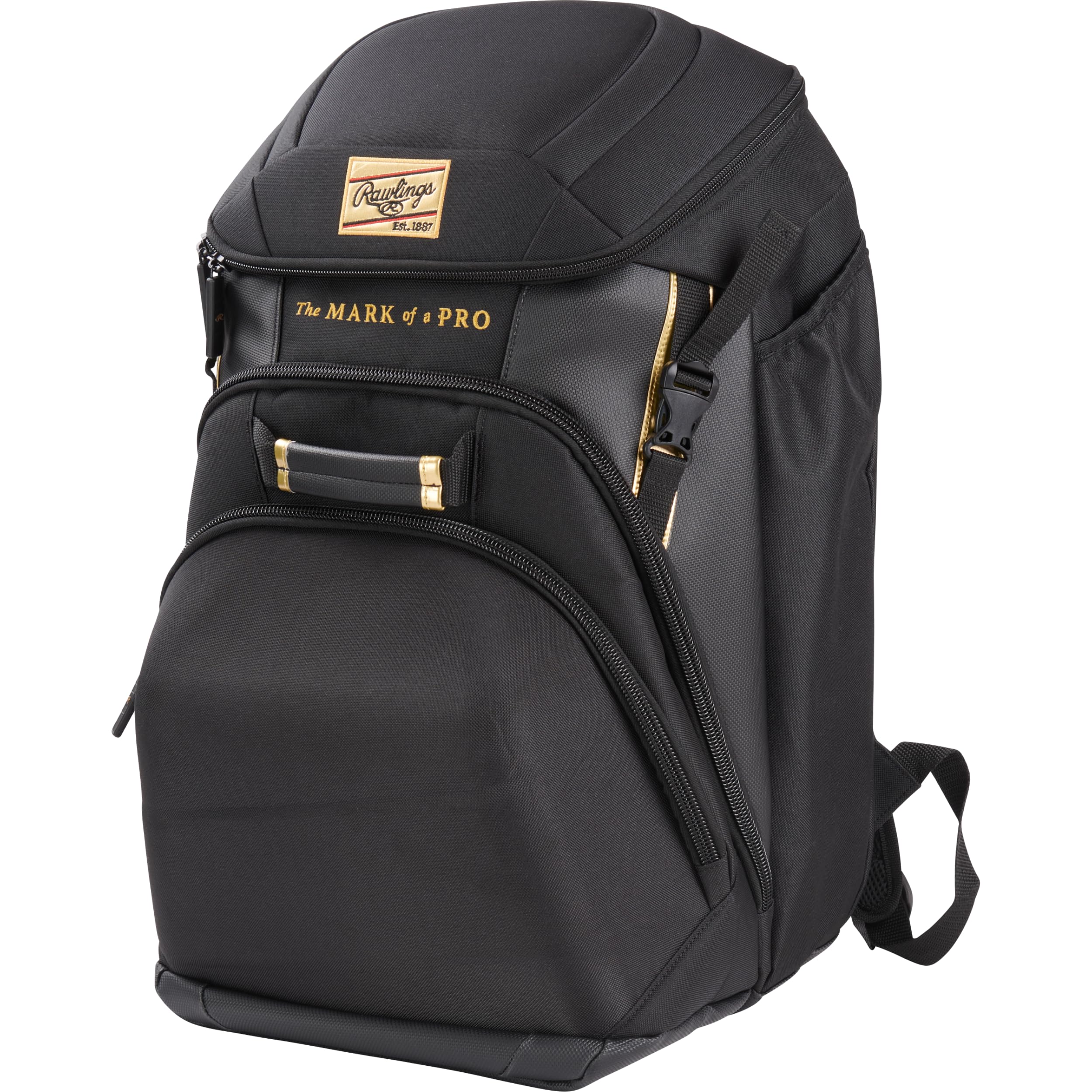
The Rawlings Gold Collection backpack solves the single biggest problem catchers have with backpacks: glove crushing. The protective interior “glove crib” is a semi-hard compartment that preserves your mitt’s shape during transport, preventing the pocket from collapsing under the weight of a chest protector. An external glove storage slot allows you to carry a second glove without removing it from the bag.
The organization system uses a three-zone approach. The top section has soft-lined zipper pockets for valuables. The middle fits a helmet and chest protector with the internal locker shelf system. The outer shell accommodates a glove up to 12.75 inches. The two external bat sleeves secure bats without rattling. Side slots double as cleat storage or water bottle holders, with mesh that allows airflow to dry out shoes.
Molded backpack straps with EVA back support distribute weight comfortably even when the bag is fully loaded — which is critical because a fully packed catcher backpack can exceed 15 pounds. The Gold Glove and Heart of the Hide Speed Shell material gives the bag a soft-touch feel that resists scuffing better than standard polyester. The main trade-off is that the bag sags backward when hung on a fence, but the overall build quality justifies the premium cost for catchers who prefer carrying over rolling.
Why it’s great
- Glove crib compartment prevents mitt deformation during transport
- Molded shoulder straps and EVA back support reduce carrying fatigue
- Speed Shell material resists scuffs and looks premium
Good to know
- Sags backward when hung on a fence due to weight distribution
- Large for smaller youth players; best for ages 9 and up
5. Rawlings YADI Wheeled Catcher’s Bag (Yadier Molina Model)

The Rawlings YADI Wheeled bag, designed in partnership with Yadier Molina, is a no-compromise volume machine. At 37 inches long and 14 inches wide and deep, it offers 37 liters of cargo space — enough to swallow a full catcher’s set plus two mitts, a batting helmet, cleats, up to four bats, and a separate fielding glove. The XL main compartment means no Tetris-style gear packing; everything goes in without fighting zippers.
The wheeled design uses large rugged wheels with a reinforced support base and a telescopic pull handle. Users report the handle holding up after a full year of weekly use. The exterior pockets separate accessories from the main gear — a small glove pocket and bat slot exist, but the bag relies primarily on the giant single compartment rather than multiple internal dividers.
The simplicity is both the strength and the weakness. Without dedicated internal shelving, chest protectors and pants will settle into the bottom of the bag, and you may need a separate shoe bag for muddy cleats. But for catchers who prioritize raw capacity at an accessible price point, the YADI delivers more cubic inches per dollar than any bag on this list. The zippers use quality construction and have held up well across multiple customer seasons.
Why it’s great
- 37-liter capacity fits a full catcher’s kit with room for extras
- Reinforced wheels and handle survive heavy use over multiple seasons
- Single giant compartment eliminates zipper-struggle packing
Good to know
- No internal dividers; gear settles to the bottom without organization
- Lacks separate shoe compartment; muddy cleats need a separate bag
6. Boombah Rolling Catcher’s Superpack
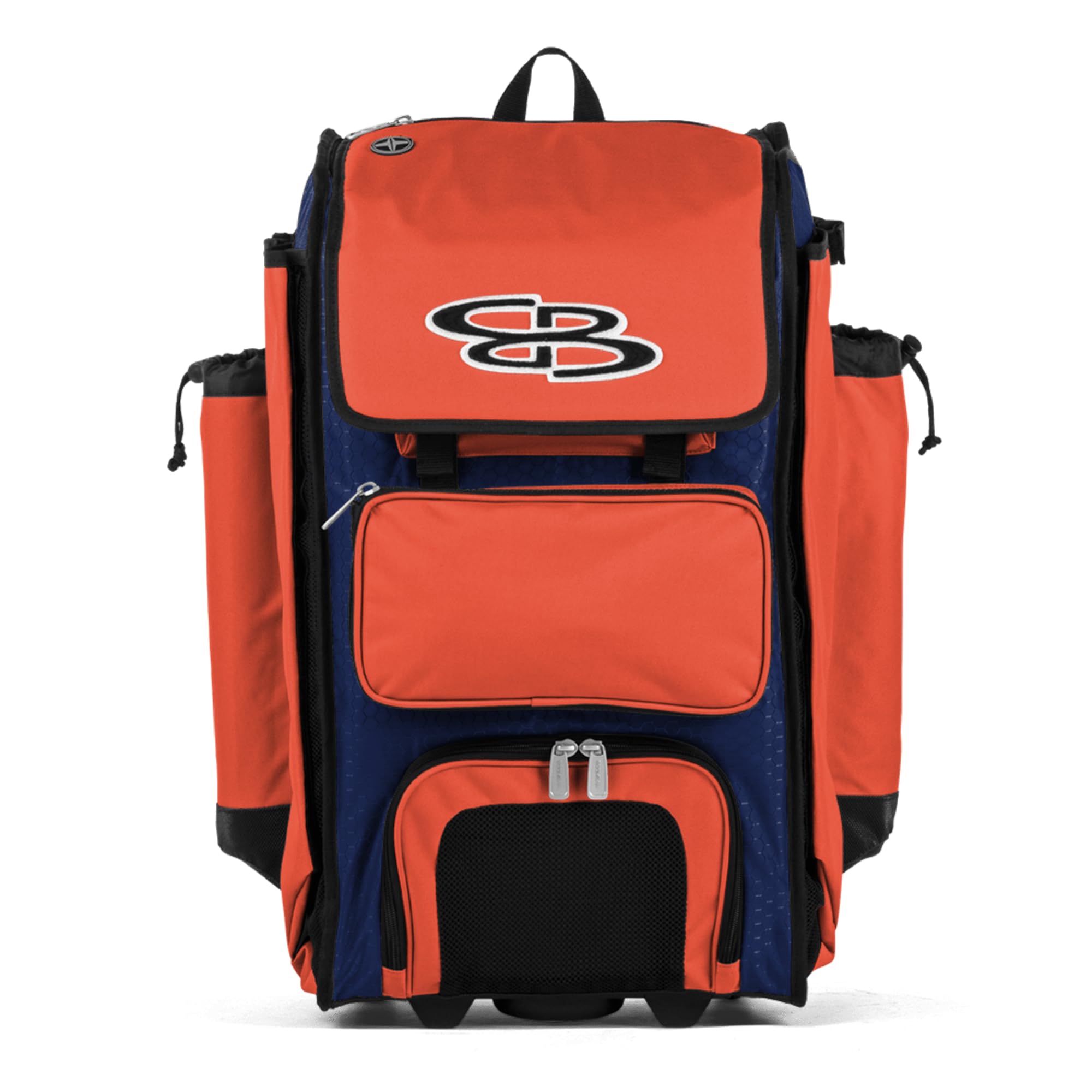
The Boombah Rolling Superpack brings wheeled convenience to the youth and high school catcher market without the premium price tag. The telescopic handle has two positions, allowing shorter players to roll the bag comfortably. The heavy-duty wheels roll evenly on grass without tipping, a common failure point in budget wheeled bags.
The compartment design includes a separate shoe compartment that isolates cleats from the main gear — a feature usually reserved for bags at twice the price. The two side bat compartments hold up to four bats total. Users consistently report that the bag fits a 10-year-old’s full catcher gear plus an extra helmet, three gloves, and four bats without needing to overstuff anything. The polyester fabric shows some cosmetic wear after truck transport but maintains structural integrity.
The reinforced J-hooks allow fence hanging, though some users note they could be more robust. The bag dimensions (23.5 x 13.5 x 9.5 inches) make it compact enough for smaller players while still accommodating growth. The main trade-off is a lower number of internal pockets compared to premium bags — you get two compartments plus the shoe area, not the 14-pocket system of higher-end models.
Why it’s great
- Separate shoe compartment keeps cleats isolated from main gear
- Telescopic handle with two positions fits different player heights
- Wheels roll smoothly on grass without tipping sideways
Good to know
- Fence J-hooks could be thicker and more durable
- Limited internal pocket count compared to premium-tier options
7. Easton E610CBP Catcher’s Backpack

The Easton E610CBP backpack is the lightest option at just 2 pounds, making it ideal for travel where every ounce counts. The vented main compartment uses mesh panels to circulate air through the gear, reducing odor buildup between games — a practical feature for multi-day tournaments where your gear stays in the bag overnight.
The side mesh pockets are specifically designed for leg guards, so you can stuff your shin guards into the exterior without taking up space in the main compartment. A buckle system on the side allows you to lash a helmet externally. The interior shelving offers multiple organization options within the 25-inch tall pack. Two bat sleeves on the exterior carry bats securely without them clanking together during transport.
The 15 x 10 x 25 inch profile fits youth and smaller adult gear well, but serious limitations appear with larger kits. Users report that an adult catcher’s full set — helmet, chest protector, shin guards, two gloves, and two bats — fits, but leaves no room for a batting helmet or extra clothing. The cleat compartment is vented but small. For younger catchers or those who prioritize weight savings, this is the most carry-friendly option on the list, but gear-heavy catchers will find it tight.
Why it’s great
- Weighs only 2 pounds, ideal for air travel and carrying long distances
- Vented main compartment reduces gear odor between games
- Side mesh pockets specifically shaped for shin guard storage
Good to know
- Limited capacity; adult gear fits but leaves no room for batting helmet
- Small non-ventilated cleat compartment
FAQ
Should I get a wheeled catcher bag or a backpack?
How much space do I need for a full catcher’s gear set?
What material should a catcher bag be made of?
Can I fit two gloves in a catcher bag?
Final Thoughts: The Verdict
For most users, the best baseball bag for catchers winner is the Bownet Commander because its combination of Big Trax wheels, 14 purpose-built pockets, and airline-approved dimensions covers every scenario from practice to travel tournaments. If you want the most innovative backpack design with a dedicated glove crib, grab the Rawlings Gold Collection Backpack. And for catchers on a budget who need max capacity without breaking the bank, nothing beats the Rawlings YADI Wheeled bag.