
The difference between a frozen rope and a floater often comes down to the ball in your hand. Whether you are slinging BP in the cage, running infield drills, or dialing in your arm slot with plyo work, the construction of the baseball directly dictates how it flies, how it feels off the bat, and how long it survives a season of abuse. The wrong ball can distort after a single session or tear open on a wet baseline, derailing practice before it even starts.
I’m Min — the co-founder and writer behind Gadgets Feed. I have combed through hundreds of hours of user feedback, material science comparisons, and durability tests across the full spectrum of baseballs available on the market today to separate the genuine performers from the inflated claims.
This guide breaks down seven distinct options covering youth leagues, pitching machines, weighted training, and competition-grade leather, helping you find the best baseball ball for your specific level of play and practice intensity.
How To Choose The Best Baseball Ball
Picking the right baseball starts with matching the core, cover, and seam design to your intended use. A ball that works for a youth T-ball player can be completely wrong for a high school pitcher using a pitching machine, and a competition-grade leather ball is overkill for casual backyard catch. Focus on these three critical factors first.
Cover Material: Synthetic Leather vs. Full-Grain Leather
Synthetic leather covers resist water absorption and hold up well against repetitive machine pitching, but they lack the tacky grip and the pronounced break-in feel of full-grain leather. Full-grain leather wraps — common on premium game balls like the Diamond DOL-1 or Rawlings ROLB1X — develop a better hand feel over time and maintain their shape after hundreds of impacts, though they cost significantly more per ball.
Seam Profile: Raised vs. Flat
Raised seams provide a higher ridge for your fingers to grip, allowing pitchers to generate more spin and sharper breaking balls. Flat seams, found on the Franklin Sports OL1000, reduce air friction during flight and are ideal for fielding drills where consistent, predictable trajectory matters more than movement. Beginners often find raised seams easier to release cleanly.
Core Construction and Weight Compliance
Most official practice balls use a cork and rubber center that compresses on impact and returns to shape quickly. For youth players under 8, a sponge rubber core (Rawlings TVB) reduces sting and injury risk on errant throws or batted balls. Weighted training balls shift from 3.5 oz to 20 oz — the lighter end helps mechanics while the heavier end builds explosive arm strength without overstressing tendons.
Quick Comparison
On smaller screens, swipe sideways to see the full table.
| Model | Category | Best For | Key Spec | Amazon |
|---|---|---|---|---|
| Diamond DOL-1 | Premium Leather | Competition-grade practice | Full-grain leather cover | Amazon |
| Rawlings ROLB1X | Competition | 14U recreational games | Full-grain leather, raised seams | Amazon |
| Amazon Basics 24-Pack | Value Pack | Youth league BP | 24 balls in storage bucket | Amazon |
| VeloU Rewire Weighted Set | Training Tool | Arm strength drills | 6 balls, 3.5 oz to 20 oz | Amazon |
| Rawlings TVB T-Ball | Youth Safety | T-ball / ages 8 and under | Sponge rubber core | Amazon |
| Franklin Sports OL1000 | Bulk Practice | Youth team drills | Flat seams, synthetic leather | Amazon |
| Baisidiwei Dimpled 9″ | Pitching Machine | Heater / sling machines | Dimpled, lightweight ball | Amazon |
In‑Depth Reviews
1. Diamond Usssa Dol-1 Leather Baseballs 12 Ball Pack

The Diamond DOL-1 sets the standard for a competition-grade ball that doubles as a heavy-rotation practice ball. Its full-grain leather cover develops a natural tack over repeated use, giving pitchers the confidence to snap off curveballs without the cover slipping. The raised seam profile yields a high ridge that is easy to index with your index and middle fingers, translating directly to cleaner spin axis orientation on every release. Yarn-wound construction around a cork and rubber core ensures the ball retains its roundness after hundreds of tee impacts.
Varsity-level players and high school coaches consistently report that these balls outlast synthetic-leather alternatives by a wide margin, with only superficial scuffing after 1,000+ swings into a batting cage net. The 12-ball count is modest, but each ball’s lifespan makes the overall cost per usable inning lower than cheaper packs that flatten or delaminate. The white full-grain surface also holds chalk or marker logos well for team identification.
No ball in this price tier offers a better combination of game-legal specs and training durability. The DOL-1 is the benchmark that other premium practice balls are measured against.
Why it’s great
- Full-grain leather holds shape after 1,000+ cage reps
- Raised seams deliver superior spin control for pitchers
- Yarn-wound core maintains consistent weight over time
Good to know
- 12-ball pack only; heavy-use teams may need multiple orders
- Full-grain requires occasional conditioning to stay supple
2. Rawlings ROLB1X Official League Baseballs 24 Count

The Rawlings ROLB1X straddles the line between recreational game ball and high-volume practice option, delivering full-grain leather and raised seams at a per-unit cost that undercuts most other competition-grade buckets. The 24-ball count in a 6-gallon plastic bucket with a cushioned snap-on lid solves storage and transport issues — the lid doubles as a bench seat for catchers during bullpens. Its composite cork and rubber center is tuned for ages 14 and under, offering enough compression stiffness for consistent bat exit speeds without punishing younger hands on mishits.
Users running team batting practice note that the leather cover does not shred after wet grass exposure, a common failure point for budget synthetic balls. The raised seams provide enough texture for pitchers working on two-seam fastballs and changeups, though elite-level hurlers may prefer a tighter stitch count. The bucket itself is a practical asset, holding the balls securely and surviving rough transport in truck beds or dugout corners.
For a coach or parent managing a youth roster, the ROLB1X bundle is the most convenient entry into leather-cover performance without stepping up to the per-ball premium of single-game rubber balls.
Why it’s great
- Full-grain leather with raised seams in a bulk 24-pack
- Sturdy bucket doubles as a seat during practice sessions
- Composite cork/rubber core stays round under repetitive tee work
Good to know
- Not USSSA stamped; check league requirements before game use
- Stitching can loosen if balls are stored in direct moisture
3. Amazon Basics Bucket of Practice Baseballs, 24 Count
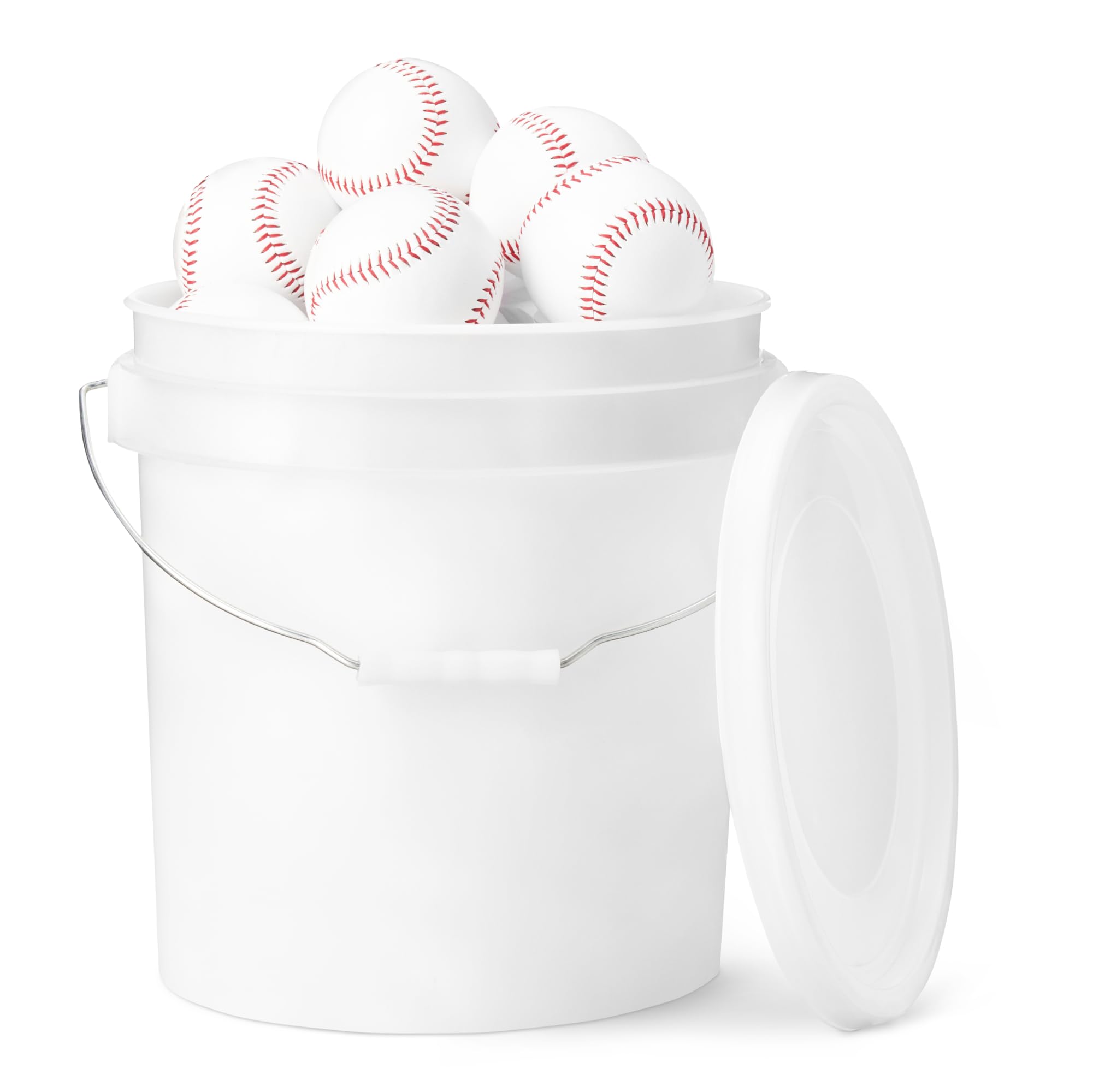
The Amazon Basics bucket undercuts most major-brand practice ball pricing by a noticeable margin while delivering a surprisingly durable synthetic leather cover and a solid cork/rubber core. Each ball measures 9 inches in circumference and weighs 5.1 oz, matching regulation dimensions for youth leagues up to 10U. The PVC cover resists scuffing from repeated machine feeding and holds its red stitching better than entry-level no-name balls that often shed thread after 50 pitches.
Families running backyard BP or net setups will appreciate the 24-ball count — enough volume for a full hitting session without chasing down strays constantly. Reviewers consistently note that these balls maintain their spherical shape even after multiple rounds of tee work, a common failure point in the ultra-low-cost tier. The storage bucket has a secure lid that seals out garage dust and rainwater, though the lid can be stiff on first removal.
If you need a high-volume practice solution and you can accept synthetic leather instead of the premium grain feel, this bucket delivers the best cost-per-throw ratio in the entire lineup. It is a pragmatic choice for league teams on a tight equipment budget.
Why it’s great
- 24 regulation-size balls for a fraction of the per-unit premium
- Cork and rubber core retains shape after hundreds of impacts
- Durable synthetic cover resists scuffing in pitching machines
Good to know
- Bucket lid may be difficult to unseal initially
- Synthetic leather lacks the tack development of full-grain
4. VeloU Rewire Weighted Baseballs 6 Ball Set

The VeloU Rewire set is purpose-built for velocity training and arm strengthening, covering a progressive resistance span from 100 grams (3.5 oz) up to 565 grams (20 oz). Each ball is molded PVC that is engineered to survive 18,000 throws without cracking, even against concrete or chain-link fences. The standard baseball diameter (2.9 inches) maintains the same release point across the weight spectrum, so your mechanics stay consistent as the load increases.
For pitchers and position players looking to increase throwing velocity, the lighter balls (100g and 150g) help groove quick arm action while the heavier balls (340g to 565g) build tendon strength and endurance. Coach feedback confirms that the color-coded weight system simplifies progression — a 15-year-old can move through the set in a structured long-toss routine without guessing which ball to use next. The durability claims hold up in real-world testing; users report no deformities after months of daily use against hard surfaces.
These are not game balls or fielding balls — they are a targeted training implement. For anyone serious about adding miles per hour to their fastball, the Rewire set is the most thoughtfully graduated weighted-ball system currently available at this commitment level.
Why it’s great
- Six distinct weights for structured arm-strength progression
- PVC construction withstands concrete and chain-link impacts
- Standard diameter maintains consistent grip across all weights
Good to know
- Not intended for live batting practice or game use
- Heaviest ball (20 oz) may feel oversized in smaller hands
5. Rawlings TVB Official T-Balls, 12 Count with Bucket

Every new player needs a ball that builds confidence without intimidation, and the Rawlings TVB delivers exactly that with its sponge rubber core that reduces sting on impact. The synthetic leather cover has a forgiving feel so a 6-year-old fielding a grounder does not flinch away from the ball, reinforcing proper catching mechanics. The 12-ball bucket keeps the set organized and includes a white center that makes tracking the ball easier in flight — a critical detail for developing hand-eye coordination.
Parents report that these balls survive outdoor sun exposure well, with the cover staying intact even after being left in the yard for days. The softer compression means less bounce than a standard baseball, which actually helps T-ball players learn to field true hops rather than hard-line rockets. The weight is light enough for young arms to throw across the diamond with proper form, reducing the likelihood of shoulder discomfort from over-effort.
If you are equipping a 4-to-8-year-old player or a league where safety is the primary concern, the TVB bucket is the category leader. It prioritizes injury prevention and fun retention over competitive specs, exactly as a T-ball ball should.
Why it’s great
- Sponge core drastically reduces sting on mis-hit catches
- Durable synthetic leather holds up to sun and grass exposure
- Bucket packaging provides instant portable storage
Good to know
- Too soft for pitching machines or competitive play
- Not regulation weight for 8U+ baseball leagues
6. Franklin Sports OL1000 Practice Baseballs, 12 Pack

The Franklin Sports OL1000 is the go-to choice for coaches who need a large quantity of serviceable baseballs for basic throwing and fielding drills without blowing the season budget. The synthetic leather cover with flat seams minimizes air friction, producing a flatter, more consistent flight path that helps young fielders learn proper read steps. The cork and rubber core provides a firm enough feel for ground-ball hops while keeping the ball weight compliant with official 12-inch circumference specs.
Review feedback highlights that these balls are perfectly adequate for youth teams running infield/outfield practice, soft toss, and basic hitting drills off a tee. The flat seams are less ideal for pitchers who need to spin the ball, but for the intended practice audience — 8U to 12U players learning fundamentals — the low cost per ball outweighs the seam style limitation. The included mesh bag keeps the dozen together for easy transport between the dugout and the bucket.
At this price tier, the OL1000 avoids the common pitfalls of generic bulk balls: consistent roundness out of the box, solid stitching that does not unravel after a week, and a cover that does not crack in cold weather. It is a perfectly honorable entry-level baseball for volume-driven practices.
Why it’s great
- Flat seams deliver consistent, predictable flight on throws
- Cork/rubber core holds shape for basic fielding drills
- 12-pack with mesh bag keeps the set organized
Good to know
- Flat seams limit grip for spin-intensive pitching work
- Synthetic cover may show wear under heavy machine use
7. Baisidiwei Dimpled 9-Inch Pitching Machine Balls, 12 Pack

Pitching machine owners face a specific challenge: standard baseballs with smooth covers can degrade machine tires quickly and produce inconsistent ejection speeds. The Baisidiwei dimpled balls solve both problems with a textured surface that grips the drive wheel uniformly and reduces wear on the machine’s rubber components. At 9 inches in circumference, these balls are slightly smaller than full regulation size, which makes them feed smoothly through both sling-style and two-wheel machines without jamming.
Users running Heater and Black Flame machines confirm that the lighter density of these dimpled balls pushes output speeds 5-10 mph faster than heavier practice balls at the same dial setting, making them a good fit for hitters facing live arm velocity without the literal weight. The bright yellow color significantly cuts down on lost balls during backyard BP — easier to spot in tall grass or against a dark fence. The synthetic leather cover handles repetitive impacts without tearing, though the stitching is entry-level and will show fraying over extended use.
For any household or team that relies on a pitching machine for regular batting practice, this dimpled 9-inch pack is the most practical choice. It protects the machine investment, delivers usable speed ranges, and reduces the constant ball-retrieval chore through high-visibility coloring.
Why it’s great
- Dimpled texture prevents premature machine tire wear
- Lighter construction yields higher exit speeds on sling machines
- High-visibility yellow reduces lost ball count
Good to know
- 9-inch circumference is smaller than regulation 9.25-inch balls
- Stitching may show wear after several machine sessions
FAQ
What is the difference between raised seams and flat seams on a baseball?
Can I use dimpled pitching machine balls in a standard game?
How many throws should a weighted training baseball last?
What age group is safe for sponge rubber core baseballs?
Do 9-inch pitching machine balls work in two-wheel and sling machines?
Final Thoughts: The Verdict
For most users, the best baseball ball winner is the Diamond DOL-1 because its full-grain leather cover and raised seams deliver the most balanced blend of competitive specs and training longevity. If you want a bulk practice solution for a youth team, grab the Amazon Basics 24-count bucket. And for velocity-focused arm development, nothing beats the VeloU Rewire weighted set.