
A catcher’s mitt isn’t just a piece of equipment—it’s a target, a shield, and a weapon. The difference between a smooth frame-and-block and a wild pitch that gets by you often comes down to the leather, padding, and pocket design of the mitt strapped to your hand. Every pitcher on the mound trusts you to present a confident, stable target and to swallow up anything they throw in the dirt. That trust is earned through the right gear.
I’m Min — the co-founder and writer behind Gadgets Feed. I’ve spent countless hours analyzing the construction techniques, leather origins, and break-in processes of dozens of catcher’s mitts, from budget-friendly youth options to pro-grade kip leather models, to help you find the exact mitt that fits your game and your wallet.
Whether you’re a youth player moving up to kid pitch or a seasoned backstop protecting the dish, choosing the right gear starts here. This guide breaks down the top contenders for the best baseball catchers mitt and explains exactly what separates a reliable target from a liability behind the plate.
How To Choose The Best Baseball Catchers Mitt
Choosing a catcher’s mitt means balancing leather quality, padding density, and fit. Unlike a standard fielder’s glove, your mitt will absorb high-velocity impacts on nearly every pitch. Prioritizing the wrong spec—like getting a stiff pro-level mitt for a youth player—can lead to frustration and poor performance. Here are the key factors a serious catcher evaluates before buying.
Leather Grade and Durability
The leather type directly dictates break-in difficulty and lifespan. Full-grain cowhide offers a balanced entry point: soft enough for youth players to close but durable for multiple seasons. Premium kip leather, used in high-end models, is lighter and softer than steerhide yet still holds its shape through thousands of reps. Avoid synthetic materials for a primary mitt—they break down quickly and don’t create the deep, reliable pocket a catcher needs.
Padding Architecture and Ball Absorption
A catcher’s mitt must have dense padding in the palm and along the heel to deaden the impact of fastballs and redirect balls in the dirt. Look for 100% wool padding in premium models—it forms a pocket naturally without becoming a stiff board. Lower-tier mitts often use foam filler, which packs down quickly and transfers more sting to the hand. If you are catching pitchers throwing over 65 mph, prioritize wool or a multi-layer leather and foam sandwich construction.
Pattern Size, Hand Stall, and Wrist Fit
Youth mitts typically measure 32″ to 32.5″, while adult options run from 33″ to 34″. The size affects blocking range and visibility around the glove. More important is the hand stall fit: a narrow-tapered stall secures smaller hands, while an open back with an adjustable closure accommodates larger hands or those who prefer a looser feel. Look for features like the Flex Notch system or a quick-fit elastic wrist—they make the mitt easier to squeeze and keep the glove securely on your hand during a swing-through or foul tip.
Quick Comparison
On smaller screens, swipe sideways to see the full table.
| Model | Category | Best For | Key Spec | Amazon |
|---|---|---|---|---|
| Rawlings PRO Preferred | Premium | Pro-level play, maximum durability | Kip leather, 100% wool padding | Amazon |
| SSK Z5 Catcher’s Mitt | Premium | Game-ready, lightweight feel | Cowhide Nameshi leather, 33.5″ | Amazon |
| Wilson A700 FPCM | Mid-Range | Smaller hands, Pedroia Fit | 32.5″, Full Grain A700 leather | Amazon |
| Marucci Acadia M Type V2 | Mid-Range | Youth on a budget, easy break-in | Full-grain cowhide, 32″ | Amazon |
| Wilson A500 Youth | Budget | 8U-10U, minimal break-in | Top grain leather, 32″ | Amazon |
| Easton Future Elite Youth | Budget | Youth (11U), Flex Notch system | Full grain leather, 1.31 lbs | Amazon |
| SSK Z5 Craftsman Infield | Mid-Range | Doubles as infield glove, big hands | 12″, Dimple Sensor palm | Amazon |
In‑Depth Reviews
1. Rawlings PRO Preferred Series
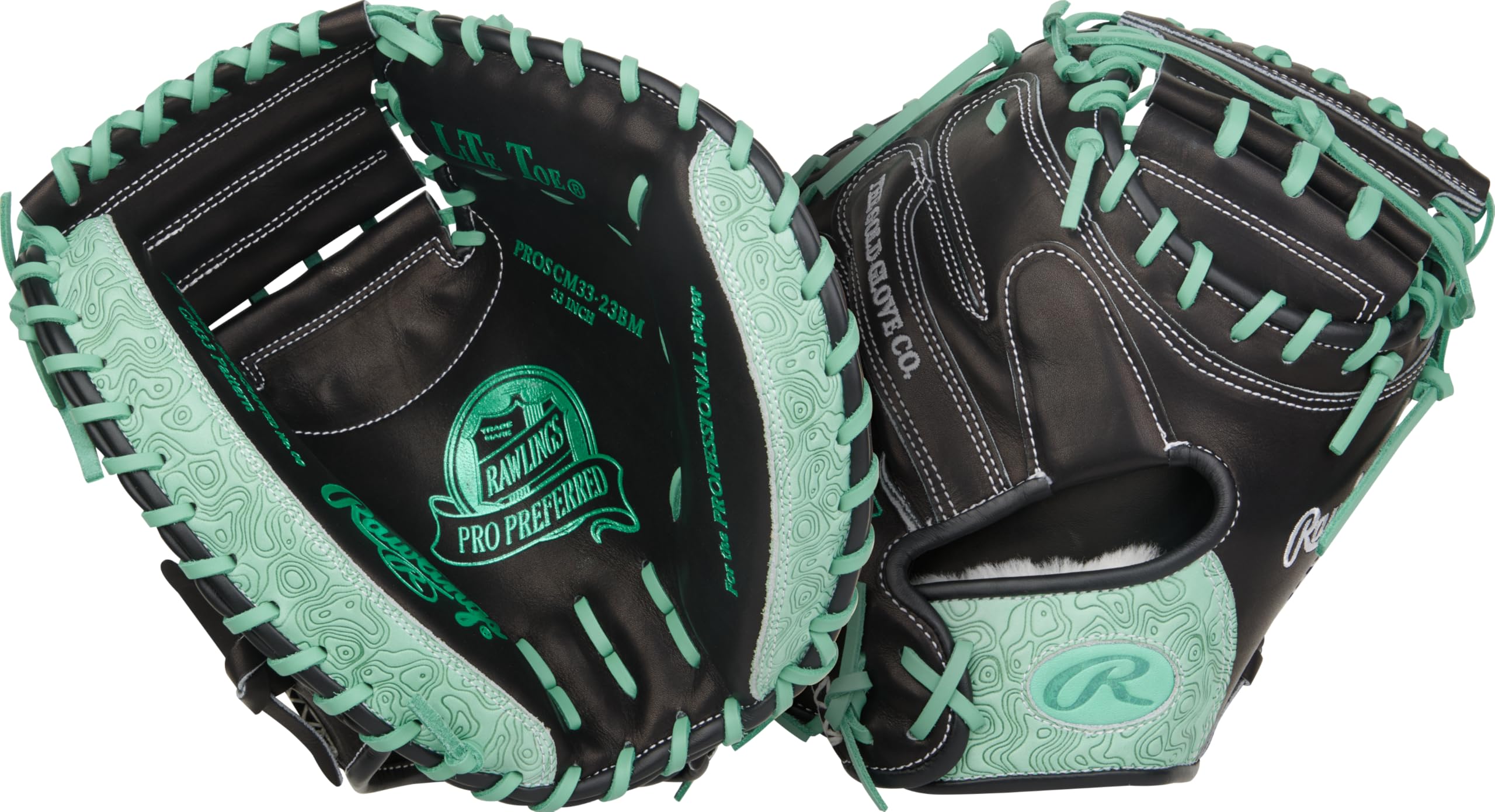
The Rawlings PRO Preferred sits at the apex of the catcher’s mitt world, built with premium kip leather that is lighter and softer than standard steerhide but significantly more durable than entry-level cowhide. The 100% wool padding is a key differentiator—it absorbs shock naturally without packing down, which means the pocket forms exactly to your hand and retains its shape through hundreds of innings. The Pittards sheepskin palm lining actively wicks moisture, keeping your catching hand dry during long summer doubleheaders or tournament weekends.
At 33 inches, this mitt falls into the standard adult catcher’s range, offering a deep single-post double-bar web that provides a generous target for pitchers. The break-in period is noticeably stiff—multiple steaming sessions and mallet work are required—but players who commit to the process report a glove that becomes buttery soft while maintaining a loud, crisp pop on every catch. The individual identification number stamped on the thumb adds an authenticity that serious collectors and competitive players appreciate.
For catchers throwing to pitchers at 80+ mph, the PRO Preferred’s padding density and kip leather structure prevent sting while the 100% wool core ensures long-term pocket retention. While the investment is significant, the build quality and material selection mean this mitt will outlast multiple seasons of high-level play, making it a true lifetime piece of catching equipment.
Why it’s great
- Kip leather is supple yet incredibly durable, breaking in beautifully over time
- 100% wool padding provides superior shock absorption and pocket retention
- Pittards sheepskin lining keeps the hand dry and comfortable
Good to know
- Requires a significant break-in period with multiple treatments
- Premium pricing puts it beyond casual or youth player budgets
2. SSK Z5 Craftsman Catcher’s Mitt

The SSK Z5 Craftsman series brings Japanese glove craftsmanship to the catcher’s position, using Cowhide Nameshi leather that is lightweight, soft, and game-ready straight out of the box. The extra factory break-in process means you can take this 33.5-inch mitt to practice the same day without spending a week pounding a mallet. The Dimple Sensor Technology in the palm is a genuinely useful feature—the micro-dimple texture reduces ball spin on impact, which helps secure the catch even when the ball hits slightly off-center.
This mitt is particularly well-suited for catchers with larger hands. The hand stall is generous, and the 33.5-inch pattern provides excellent blocking coverage without making the glove feel overly heavy. Players at the 13U to high school level have reported a smooth break-in that takes only two to three days of dedicated work, resulting in a mitt that opens and closes easily. The top-grain leather lacing is a practical upgrade over standard lace, holding tension well through repeated flexing during bullpen sessions.
The only compromise is the pocket depth—some catchers note that the pocket is less pronounced than on a Rawlings Heart of the Hide, which requires more precise catch positioning to secure the ball firmly. At mid-range pricing, the SSK Z5 delivers a compelling mix of premium feel, lightweight construction, and immediate usability that makes it an excellent choice for the developing catcher who wants quality without the pro-level price.
Why it’s great
- Game-ready right out of the box with minimal break-in needed
- Dimple Sensor Technology reduces ball spin for better grip
- Lightweight Nameshi leather is easy to close and controls ball well
Good to know
- Pocket is not as deep or defined as some premium competitors
- May feel too spacious for players with smaller hands
3. Wilson A700 FPCM Catcher’s Mitt
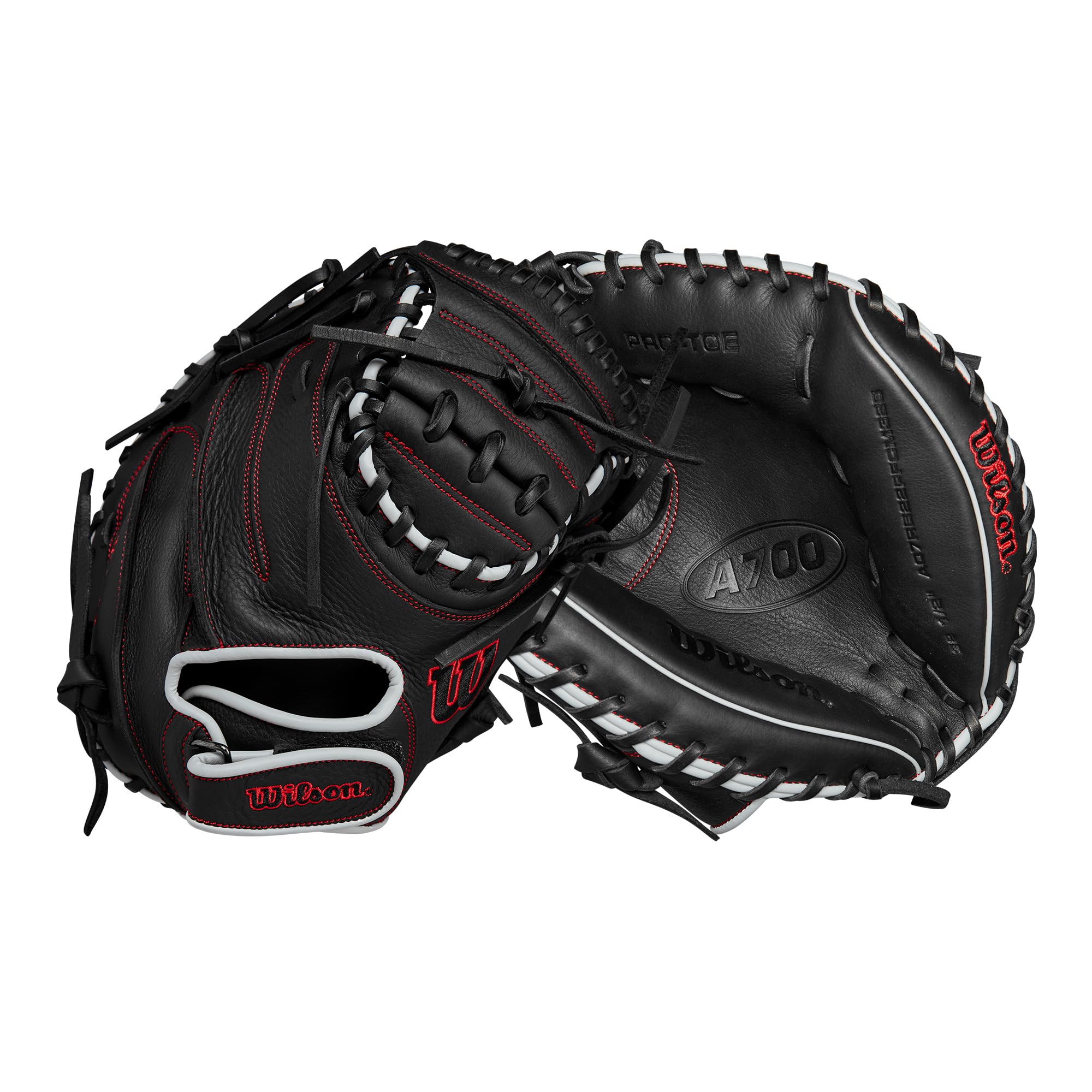
The Wilson A700 FPCM is specifically designed with Pedroia Fit technology, which shortens the finger stalls and narrows the wrist opening to accommodate players with smaller hands. This is a crucial spec for younger catchers or adults with narrower palms—standard mitts often leave too much space inside the glove, causing the mitt to flop open during a block. The 32.5-inch size hits a sweet spot for pre-teen to early high school catchers, offering adult-level protection without the bulk that overwhelms smaller frames.
The Full Grain A700 leather is soft straight from the factory, meaning this mitt requires very little break-in before it becomes game-ready. Parents and coaches have noted that the glove is light enough for an 8-year-old to close consistently, yet the leather quality holds up well across a full season of weekly games and practices. The two-piece closed web provides a solid, no-nonsense target, and the glove’s weight of 1.4 pounds keeps fatigue low during extended innings behind the dish.
Where the A700 really excels is value—it uses a real full-grain leather construction that competes with mitts costing significantly more, while the Pedroia Fit ensures a secure, locked-in feel. The trade-off is that the padding is not as dense as premium-tier mitts, so catchers facing high-velocity pitchers above 70 mph may feel more sting on badly located pitches. For the youth to intermediate level, however, this is one of the most comfortable, user-friendly mitts available.
Why it’s great
- Pedroia Fit ensures a secure, snug fit for smaller hands
- Full-grain cowhide leather that is soft and requires minimal break-in
- Excellent value for a real leather mitt at this price point
Good to know
- Padding is less dense than pro-level mitts, more sting on high-speed balls
- Size may be too small for adult catchers with larger hands
4. Marucci Acadia M Type V2 Catcher’s Mitt

The Marucci Acadia M Type V2 is engineered for the youth catcher, combining a full-grain cowhide leather shell with a supple leather palm lining that provides added cushioning right where the ball hits. The 32-inch pattern is manageable for players aged 8 to 12, and the narrow-tapered hand stall ensures the mitt doesn’t slip off during a swing-through or foul ball. The soft microfiber wrist lining adds an extra layer of comfort that is welcome during long practices.
Reviewers consistently highlight how quickly this mitt breaks in—players report being able to use it effectively on the day of delivery, with the leather softening noticeably after just a few sessions of catch. The pocket forms a nice, deep channel that helps secure pitches and blocks, and at 32 inches, the mitt doesn’t overwhelm a young player’s field of vision behind the plate. The colorway options in Mesa/Camel give it a classic, traditional look that young players appreciate.
The main durability concern involves the lacing. Multiple users note that the laces are lower quality than the leather itself—they can stretch and require frequent tightening, and the thumb knot sometimes fails under tension. This is a manageable issue if you inspect and relace the mitt periodically, but it prevents the glove from being a multi-season workhorse for growing players. For the price, the Acadia offers a refined, ready-to-play experience that is ideal for young catchers entering kid pitch.
Why it’s great
- Soft, pre-broken-in feel straight from the box
- Narrow-tapered hand stall keeps the mitt secure on smaller hands
- Deep pocket forms quickly for reliable ball security
Good to know
- Lacing quality is a weak point, stretches and may need replacement
- Best suited for youth play, not durable enough for high school or higher
5. Wilson A500 Youth Catcher’s Mitt

The Wilson A500 Youth catcher’s mitt delivers a reliable, real-leather option for the youngest catchers—specifically the 8U through 10U range. The 32-inch size, closed one-piece web, and top-grain leather construction make it a straightforward, no-nonsense mitt for players transitioning from T-ball to coach-pitch or early kid-pitch. The Quick Fit Wrist system uses an elastic closure that hugs the wrist securely without needing a complex lacing adjustment, which is a practical feature for parents helping younger players suit up.
Break-in is remarkably short for this category. Kids as young as seven can squeeze the mitt closed within a couple of days of working with it, and the lightweight feel means they won’t drag the glove through their warmups. Reviewers point out that the top-grain leather is much more durable than the synthetic starter gloves commonly found at big-box stores, and the A500 holds its shape well across a full season of weekend games. The lacing at the web knots can loosen with heavy use, but checking and retightening every few weeks keeps everything secure.
For value-focused parents, the A500 is a smarter buy than cheap synthetic alternatives because the leather construction allows the glove to form a usable pocket rather than staying stiff and flat. The trade-off is that this is not a mitt that will grow with a player through multiple positions or age groups—it is purpose-built for the youth catcher’s mitt spot. When the player outgrows the 32-inch pattern, they’ll need to step up to a larger size, but for the entry-level catcher, this mitt gets the job done with no frills.
Why it’s great
- Real top-grain leather at a price point that beats synthetic alternatives
- Quick Fit Wrist system makes fitting easy for young players
- Very short break-in period, game-ready in days for 8U players
Good to know
- Web lacing knots can loosen and need periodic retightening
- Best suited for 8U-10U; players will outgrow it within a couple seasons
6. Easton Future Elite Youth Catcher’s Mitt
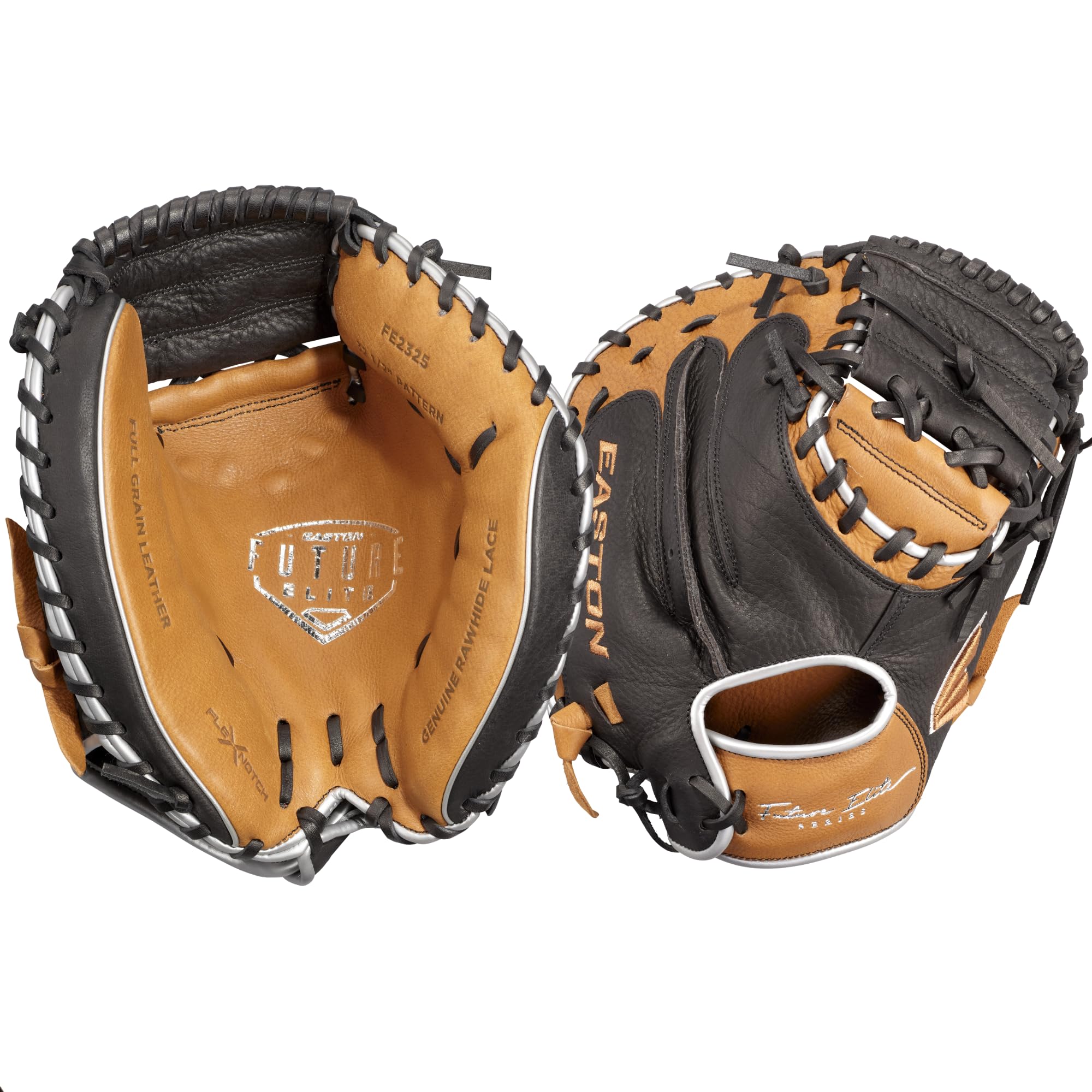
Easton’s Future Elite Youth glove brings a design detail rarely seen at the entry-level price point: the Flex Notch closure system. This mechanism involves pre-cut notches in the leather at the hinge points of the glove, which dramatically reduces the break-in effort required for young players to squeeze the mitt closed. For a 7 or 8-year-old catcher, being able to close the glove easily is the difference between developing confidence behind the plate and getting frustrated with a stiff, unresponsive piece of leather.
The full-grain leather shell is more durable than many competitors at this price tier. Reviewers who compared the Easton head-to-head with similarly priced Mizuno or entry-level Wilson models found that the Easton leather held up better, with stronger heel support and better cushioning in the palm area. The pro-style open back with an on-the-fly adjustable fit system allows the mitt to adapt as the player grows, and the repositioned pinkie loop supports a two-fingers-in-the-pinkie-stall technique that provides better leverage for smaller hands.
The only notable drawback is a wrist fit that some users find slightly loose—the adjustable system works best when cinched tight, but the opening may feel a bit roomy for very slender wrists. This can be mitigated by wearing a batting glove underneath, but it’s worth noting. Overall, the Future Elite offers a compelling package of real leather construction, thoughtful youth-specific engineering, and a low break-in curve that makes it a strong contender for kids playing at the 11U and under level.
Why it’s great
- Flex Notch system makes break-in effortless for young players
- Full-grain leather outlasts synthetic options at similar price points
- Adjustable open back and pinkie loop support proper catching mechanics
Good to know
- Wrist opening can feel loose on very slender arms
- Best suited for youth (11U); not built for high school or adult play
7. SSK Z5 Craftsman Infield Glove
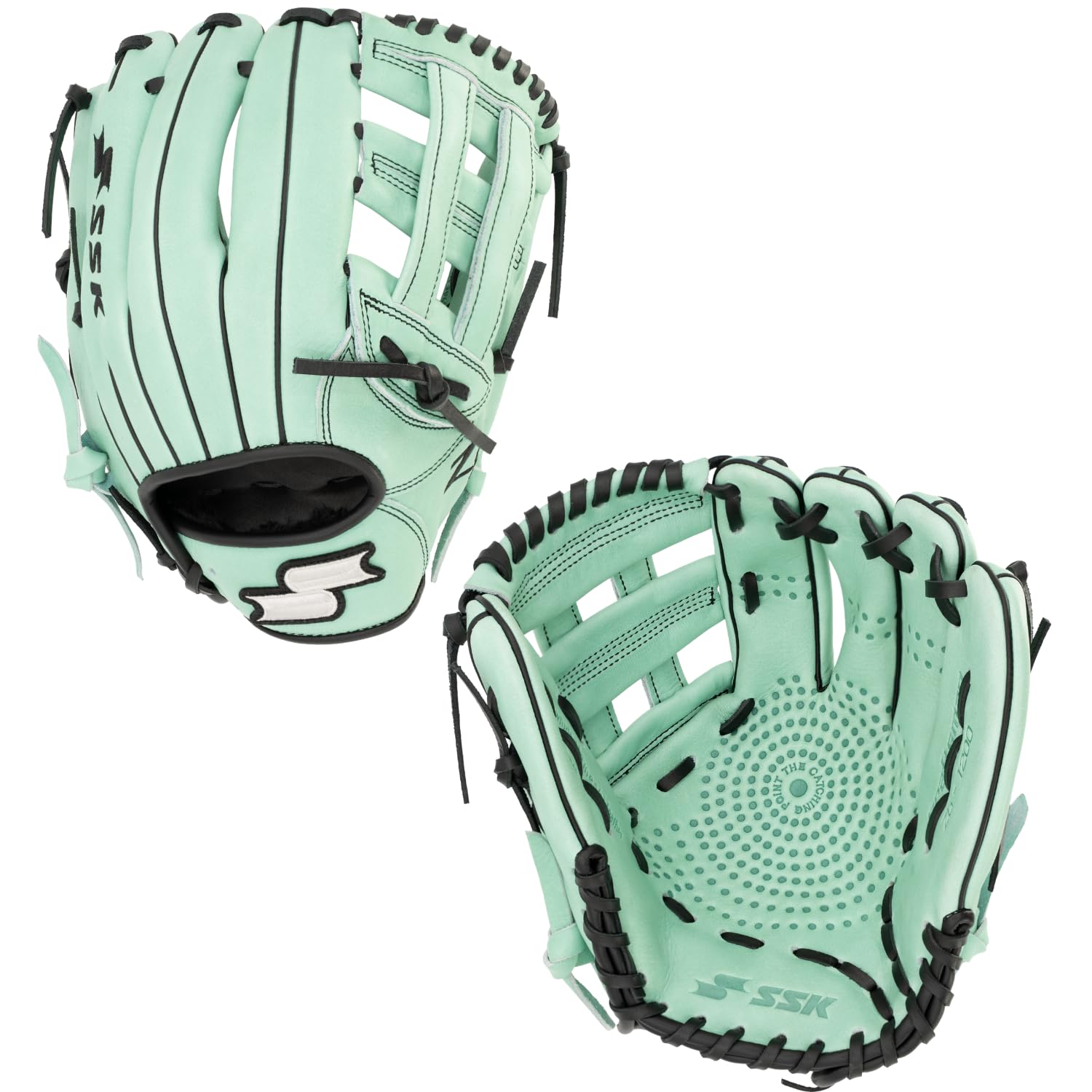
While this SSK Z5 Craftsman is technically an infield glove rather than a dedicated catcher’s mitt, it earns a mention for players who need a high-quality, versatile leather glove that can handle spot catching duties or serve as a primary infield glove for a player who also backs up the catcher position. The 12-inch pattern with an H-web gives it the size to coralf line drives while maintaining enough pocket depth for occasional catching work with lower-velocity pitchers.
The Cowhide Nameshi leather is the same premium material used in SSK’s dedicated catcher’s mitt, offering a factory-soft break-in that requires minimal effort. The Dimple Sensor Technology in the palm—the same micro-texture used in the catcher’s version—helps increase grip on the ball during the transfer, which is a legitimate advantage for infielders who need quick glove-to-hand transitions. The glove comes Shokunin approved from Japanese glove masters, and the craftsmanship is evident in the clean stitching and consistent leather thickness throughout the pattern.
Players with larger hands, particularly coaches or adults who catch batting practice or bullpens for a daughter or son, have found this glove to be an excellent fit. The palm is spacious, and the H-web provides a secure feel for different types of catches. It is not a substitute for a true catcher’s mitt with full padding for high-velocity pitching, but for low-stakes catching duties or as a primary infield glove with excellent leather quality, it is a standout in the mid-range segment.
Why it’s great
- Premium Nameshi leather offers a game-ready feel with minimal break-in
- Dimple Sensor palm improves grip and transfer speed on infield plays
- Excellent fit for players with larger hands
Good to know
- 12-inch infield pattern lacks the full padding of a dedicated catcher’s mitt
- Not suitable for catching high-velocity pitchers on a regular basis
FAQ
How long does it take to break in a new catcher’s mitt?
Can an adult use a youth-sized 32-inch catcher’s mitt?
What is the difference between a catcher’s mitt and a first baseman’s mitt?
How should a catcher’s mitt fit on the hand?
Final Thoughts: The Verdict
For most users, the best baseball catchers mitt winner is the SSK Z5 Craftsman Catcher’s Mitt because it delivers a game-ready feel from premium cowhide Nameshi leather with the innovative Dimple Sensor Technology, all at a mid-range price that doesn’t force you to spend months breaking it in. If you want pro-grade kip leather and 100% wool padding that will last a decade, grab the Rawlings PRO Preferred. And for the youth player who needs a real leather mitt that closes easily and fits securely, nothing beats the Marucci Acadia M Type V2.