
A basic alarm system is no longer just a loud siren on the wall. Today it means a wireless hub, contact sensors for doors and windows, a motion detector, and a keypad or key fob — all talking to your phone. The hardest part is filtering out the noise between kits that actually alert you reliably and those that drop the Wi-Fi signal when it matters most.
I’m Min — the co-founder and writer behind Gadgets Feed. I spent dozens of hours cross-referencing sensor ranges, alarm decibel ratings, battery life claims, and app responsiveness across the most popular entry-level security kits to find the ones that hold up in real homes.
After comparing nearly two dozen configurations, this review isolates the six best configurations that deliver reliable intrusion detection without forcing you into a monitoring contract — the true definition of a best basic alarm system for anyone who values direct control and zero monthly fees.
How To Choose The Best Basic Alarm System
Every basic alarm system follows the same blueprint: a central hub that listens for triggers from door sensors, motion detectors, and keypads, then sounds a siren and pushes a notification to your phone. The differences come down to how fast the sensors communicate, how loud the siren actually gets, and whether the hub stays online when Wi-Fi cuts out.
Sensor Count vs. Real Coverage
A kit that includes ten door sensors sounds great on paper, but most single-floor apartments only need two or three. The real metric is whether the hub supports motion sensors with a 90-degree or wider field of view and a detection range of at least 30 feet. Over-buying on contact sensors you’ll never install wastes money you could put toward a better hub with cellular backup.
Siren Loudness and Placement
A 120 dB siren is roughly as loud as a jackhammer from three feet away — loud enough to wake neighbors and deter a brief entry. The problem is that many kits list a peak theoretical dB that the hub can produce, but the included siren module rarely matches that figure. Look for systems that list an actual measured siren decibel rating (not “support up to 120 dB”) and ideally include a separate plug-in siren you can place away from the base station.
Battery Backup and Connectivity
If the power goes out and your router dies, a Wi-Fi-only alarm becomes a paperweight. The best basic systems include a 24-hour rechargeable backup battery inside the hub and at least cellular SMS fallback so the hub can still send alerts through a 4G network. For the lowest tier, even a base station with replaceable alkaline batteries that lasts 8 hours is a meaningful upgrade over zero backup.
Quick Comparison
On smaller screens, swipe sideways to see the full table.
| Model | Category | Best For | Key Spec | Amazon |
|---|---|---|---|---|
| SimpliSafe 11-Piece Gen 3 | Premium | Reliable 24hr cellular backup | 24hr battery + cellular fallback | Amazon |
| OSI Alarm System Gen 2 | Premium | 7-inch touchscreen + 160 sensors | 7″ 1024×600 anti-fingerprint display | Amazon |
| LWOHSI PG108 4G | Mid-Range | Wi-Fi + 4G dual-network alarm | Built-in 4G GSM + SMS call alerts | Amazon |
| tolviviov 15-Piece Kit | Mid-Range | Maximum sensor count per dollar | 10 door sensors + 1 motion sensor | Amazon |
| X-Sense AS05 5-Piece | Mid-Range | Best value 5-year battery life | 100 dB siren + 5-year battery | Amazon |
| TOWODE WiFi Alarm | Budget | Garage/shed with 120 dB siren | 120 dB siren + 30-sensor support | Amazon |
| PGST A105F | Budget | 4G SMS + Tuya app hybrid | 4G SMS + Tuya app + RFID reader | Amazon |
In‑Depth Reviews
1. SimpliSafe 11 Piece Wireless Home Security System Gen 3
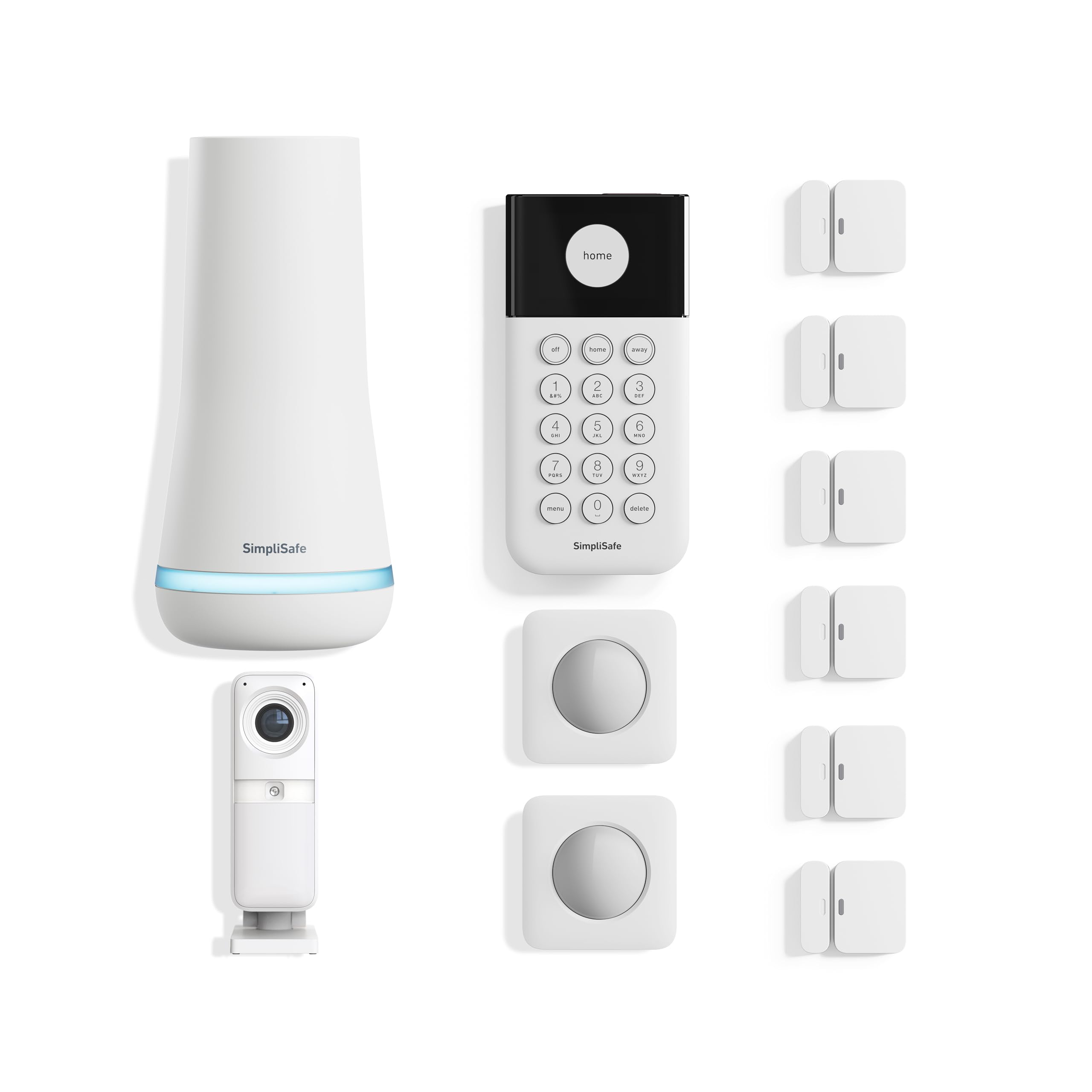
The SimpliSafe Gen 3 starts with the strongest foundation: a base station that runs on a 24-hour internal battery and switches to cellular backup when both power and Wi-Fi go dark. This 11-piece kit ships with six entry sensors, two motion sensors (with pet immunity up to 60 pounds), an indoor HD camera with two-way audio, and a backlit keypad. The 95 dB siren is loud enough for a three-bedroom house, and the optional professional monitoring plan (starting at a modest monthly fee) can dispatch police within five seconds of verification.
Setup follows a true DIY flow: peel the adhesive on the entry sensors, stick them to door and window frames, and pair each sensor by pressing the base station’s side button. Users report zero false alarms over months of use, and the motion sensor’s 35-foot range with a 90-degree field of view covers open-concept living areas without gaps. The app lets you arm, disarm, and receive push alerts from anywhere, and Alexa/Google voice control is native out of the box.
Critically, the entry sensors have a maximum gap tolerance of roughly 1.5 inches — wider gaps on older doors may require the optional larger sensor. The indoor camera resolution is adequate for identification but not crisp 4K detail. Still, for a basic system that scales to full professional monitoring without a long-term contract, this kit sets the reliability benchmark.
Why it’s great
- Battery backup keeps the system alive for 24 hours after power loss
- Cellular fallback works even when the home internet is down
- Optional Fast Protect monitoring with police dispatch in under 5 seconds
Good to know
- Entry sensors only tolerate a 1.5-inch gap between magnet and switch
- Indoor camera is 1080p, not 4K
- Professional monitoring requires a separate monthly plan
2. OSI Alarm System Gen 2 (4G) 11-Piece Kit
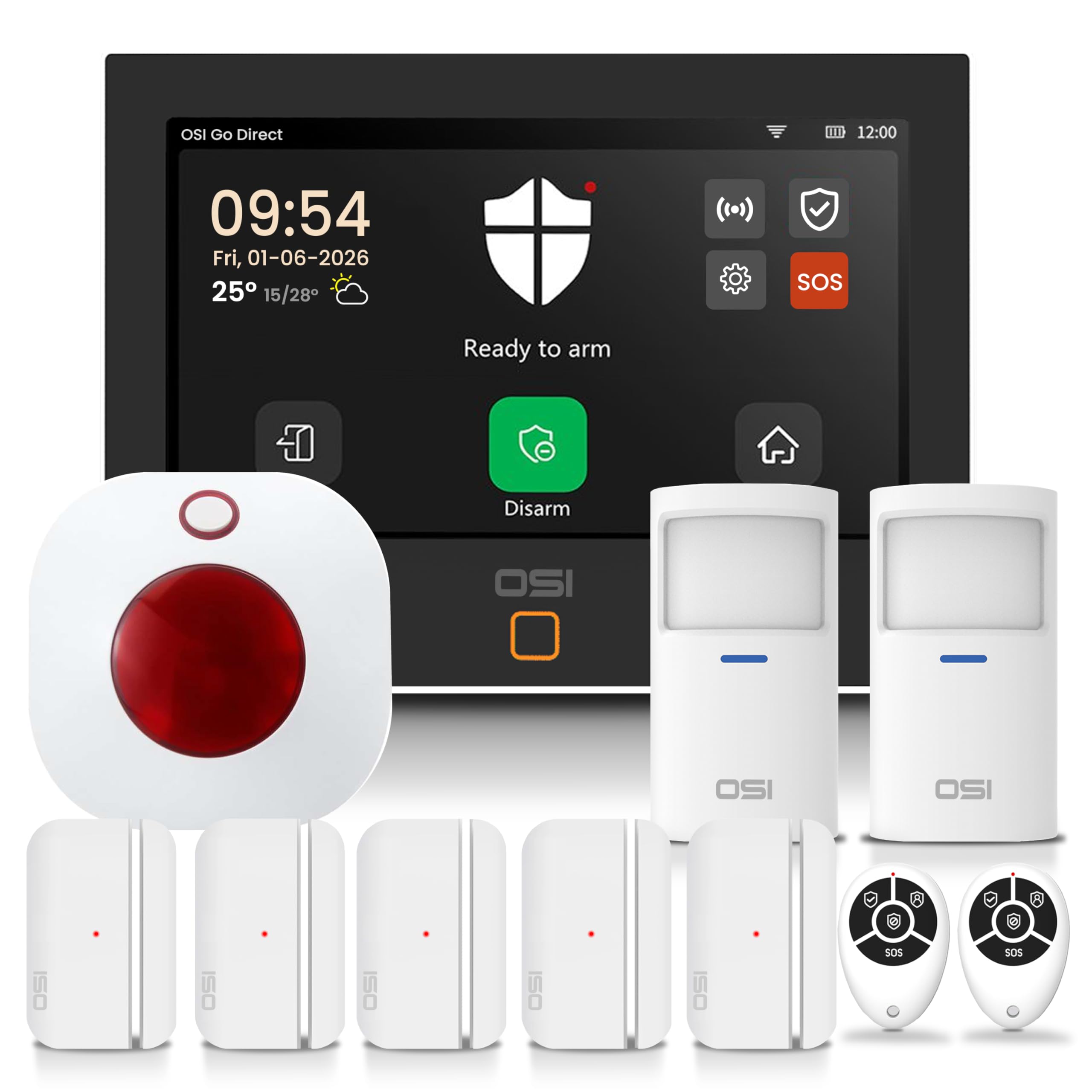
The OSI Gen 2 replaces the traditional numeric keypad with a 7-inch anti-fingerprint touchscreen running at 1024×600 pixels. The included 11-piece bundle covers the essentials: a wireless strobe siren, two motion sensors, five contact sensors, and two remote controls, all communicating on the 433 MHz frequency band that punches through concrete and rebar better than 2.4 GHz Wi-Fi. The hub supports both self-monitoring (no monthly fees) and optional 24/7 professional alarm monitoring, with 4G connectivity that sends SMS alerts directly if you insert a standard SIM card.
Setup uses an interactive wizard that walks you through naming sensors and configuring entry delays. The hub can scale to 160 sensors, six controllers, six doorbells, and six keypads — meaning this kit grows with a large home or small business without requiring a hardware swap. User accounts include one admin and five limited-access profiles, a rare feature for a basic kit that makes it practical for landlords managing short-term rentals.
The siren is separate from the base station, which lets you hide the main panel in a closet while the siren sits in a visible hallway location — a smash-and-crash deterrent tactic. The included plug-in siren does occupy two wall outlet spaces, and the Smart Life app lacks a granular event history log. Still, for a sub-premium price point, the combination of 4G fallback, massive expandability, and a proper touchscreen interface is unmatched in this tier.
Why it’s great
- 433 MHz sensor RF penetrates thick walls and concrete better than Wi-Fi
- 7-inch touchscreen with interactive setup wizard
- Scalable architecture supports up to 160 sensors
Good to know
- Plug-in siren takes up two wall outlet spaces
- Smart Life app lacks detailed event history
- SIM card for 4G SMS not included
3. LWOHSI PG108 4G/Wi-Fi Alarm System
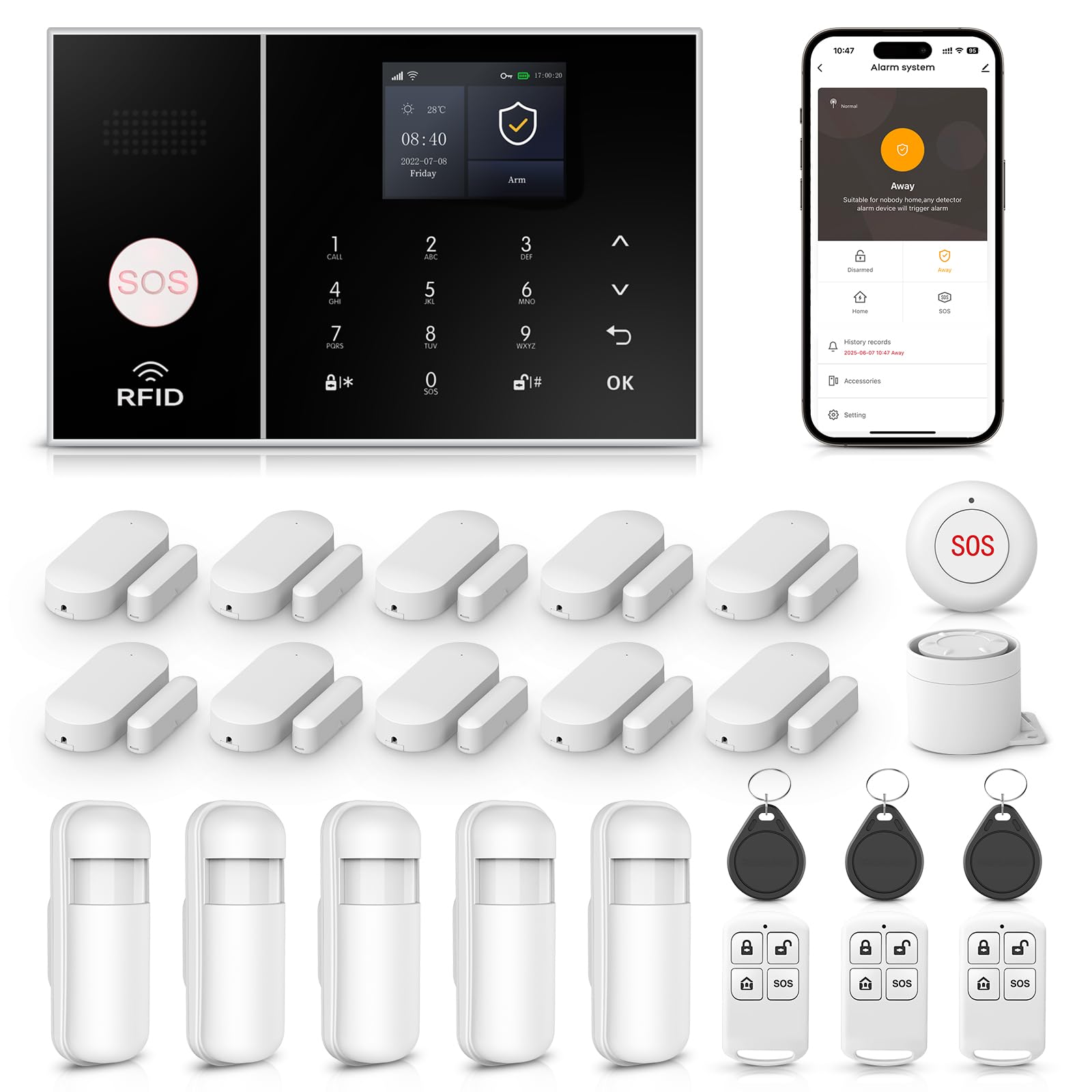
The LWOHSI PG108 uses a hybrid approach: a built-in 4G GSM module that can place calls and send SMS alerts to five programmed phone numbers, plus 2.4 GHz Wi-Fi for real-time Tuya app push notifications. The central panel is powered by a 32-bit Cortex-M3 CPU and supports up to 100 wireless detectors, 100 RFID cards, and 100 remote controls — an unusually high device ceiling for a system at this price tier. The kit includes a motion sensor, door/window contact sensors, and remote controls, but the real draw is the dual-path alarm delivery.
When the siren trips, the control panel simultaneously pushes an app notification and dials the preset numbers. If you’re away and the Wi-Fi is cut, the 4G module still places the call. Installation involves mounting the panel with screws and pairing each sensor by pressing a button on the circuit board. Users report reliable motion detection with few false triggers, though the system arms all zones together with no per-zone bypass option — you cannot leave a specific door unarmed while keeping the rest active.
The Tuya app integrates with Alexa and Google Assistant for voice arming and disarming. But for anyone who needs SMS calling as a fallback without paying for a monitoring contract, the PG108 delivers a rare feature set at a mid-range price.
Why it’s great
- 4G GSM module makes phone calls and sends SMS independently of Wi-Fi
- Supports up to 100 paired devices including RFID cards
- Cortex-M3 CPU handles multiple alarm events simultaneously
Good to know
- No per-zone arming — it’s all-or-nothing
- Reliability concerns reported after long-term use
- Screw-in mounting required for the main panel
4. tolviviov 15-Piece WiFi Alarm System

The tolviviov 15-piece kit offers the highest component-per-dollar ratio in this roundup: one base station, ten door sensors, one motion sensor, one keypad, and two remote controls. The base station integrates with the Tuya app via 2.4 GHz Wi-Fi and is compatible with Alexa and Google Assistant for voice control. The claimed 120 dB siren is generated by the base station itself, and it is genuinely loud enough to be heard across a 2,000-square-foot home through closed doors.
Each of the ten magnetic sensors comes pre-linked from the factory, but multiple users recommend deleting and re-learning them individually to ensure sync stability — a five-minute step that prevents ghost triggers. The contact sensors have a wider gap tolerance than budget competitors, so they work on doors that don’t close perfectly flush. The keypad includes a panic button that triggers the siren immediately, and the system supports expansion up to 20 sensors and five remotes.
The base station runs on AC power with no built-in battery backup — if the power goes out, the system goes silent until it returns. An optional 8-hour battery backup is mentioned in the spec sheet but refers to specific individual sensor battery life, not the hub. For renters or homeowners who never lose power, this kit covers an entire house with sensors at a fraction of the cost of a professionally installed system. The 2.4 GHz requirement is strict, but a Wi-Fi extender resolves compatibility with 5 GHz-only mesh networks.
Why it’s great
- Includes ten contact sensors — enough to cover every exterior door and window
- 120 dB siren is genuinely loud and deterrent-level
- Alexa and Google Assistant integration for hands-free arming
Good to know
- Base station has no internal battery backup — dies with power loss
- Only works on 2.4 GHz Wi-Fi; 5 GHz networks need an extender
- Sensors should be re-learned individually for stable pairing
5. X-Sense AS05 Smart Home Security System 5-Piece
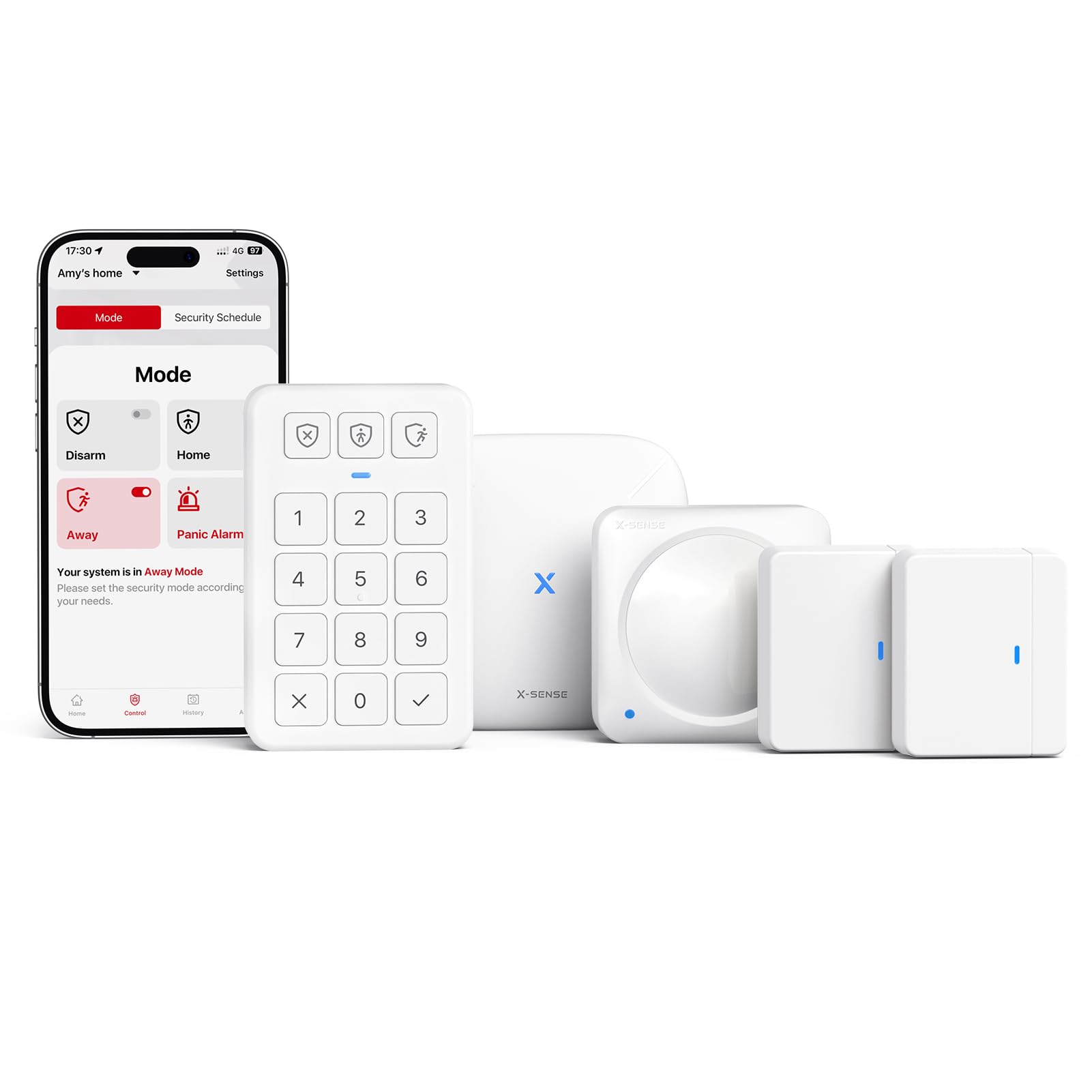
X-Sense is best known for smoke and CO detectors, and they’ve translated that reliability into the AS05 security system. The 5-piece kit includes a base station, a keypad, two door sensors, and one motion sensor — a lean configuration suited for apartments or small houses. The standout spec is the alkaline battery life: each sensor is rated for up to five years, and the batteries are standard replaceable cells, so you won’t be hunting for proprietary packs. The siren hits 100 dB, which is slightly quieter than the 120 dB leaders but still enough to alert neighboring units in a shared building.
The X-Sense Home Security app integrates with Alexa for voice-controlled arming and disarming. The system supports Home, Away, and Disarm modes with automatic scheduling, and you can expand up to 44 additional devices and six keypads. Installation is tool-free using pre-applied adhesive tape or screws, and the entire setup took verified users under 30 minutes. The motion sensor only triggers when the system is armed — it does not send quiet notifications when disarmed, unlike the door sensors which can be set to chirp on entry.
The AS05 uses a 2.4 GHz Wi-Fi connection and is incompatible with 5 GHz networks. There is no cellular backup and no battery in the base station, so a power outage disables the hub entirely. However, the sensor battery life is genuinely long — many users report no battery changes after several months — making this a low-maintenance option for anyone who only needs to cover a few entry points without expanding to a full-house deployment.
Why it’s great
- Sensors last up to 5 years on standard alkaline batteries
- Compact setup installs in under 30 minutes with adhesive tape
- Expandable to 44 devices and six keypads
Good to know
- No base station battery backup — system goes offline during power loss
- Motion sensor only triggers when armed, no passive notification mode
- Limited to 2.4 GHz Wi-Fi only
6. TOWODE WiFi Alarm Home Security System

The TOWODE system prioritizes raw audio deterrence above all else. The included plug-in siren hits 120 dB — loud enough to be genuinely painful in an enclosed space and audible from outside a single-family home. The kit ships with a hub, two window/door sensors, three motion sensors, and two remote controls, and the hub supports up to 30 wireless detectors and 20 remote controls for future expansion. The system communicates over 2.4 GHz Wi-Fi and integrates with the Tuya app for real-time push alerts.
Each sensor is pre-paired at the factory, so the hardware works immediately after the hub is plugged in and connected to Wi-Fi. The motion sensors use passive infrared (PIR) detection and have a manual on/off switch on the casing — a useful feature for rooms you want to exclude without disarming the whole system. Users in apartments and garages consistently highlight the ease of DIY installation and the absence of any ongoing subscription fee.
The weak point is the build quality of the PIR motion sensor enclosures: the two-piece plastic casing has a gap that can let moisture in if mounted outdoors under an eave, potentially causing false alarms. Additionally, the factory batteries in the sensors are reported to perform only adequately, and some users recommend replacing them with name-brand alkaline cells immediately. For under , this is an aggressive entry-level option that works best for securing a garage, shed, or single-room rental where siren volume matters more than premium fit and finish.
Why it’s great
- Genuinely loud 120 dB siren deters intruders effectively
- All hardware comes pre-paired for immediate use out of the box
- Expandable to 30 detectors and 20 remote controls
Good to know
- Motion sensor casing has gaps that can cause water ingress outdoors
- Factory batteries are mediocre — replace with quality alkaline cells
- No battery backup in the hub for power outages
7. PGST A105F Smart Home Security System

The PGST A105F packs a surprising amount of hardware into a budget-tier price. The main panel combines a touch-sensitive keypad, an SOS panic button, and an RFID card reader — features normally found on systems costing twice as much. It connects over 2.4 GHz Wi-Fi to the Tuya app and also includes a 4G GSM module for SMS alerting, although that module requires a separate SIM card with an active plan. The kit ships with the default components of motion and door sensors, and users report the setup completing in about ten minutes once the app pairing instructions are deciphered.
The siren volume is described by multiple buyers as “very loud,” and the motion sensor response is immediate with very few false alerts. The entrance and exit delays are adjustable, and the system supports 433 MHz sensors from other brands — a rare cross-compatibility that lets you reuse existing hardware. The keypad illumination is clean and easy to read in the dark, and the RFID tags can be assigned to family members for quick disarming without fumbling for a remote.
The documentation is the weakest link: the manual is printed in very small type and the Wi-Fi pairing instructions omit the critical detail that pairing is done through the Tuya app, not the physical panel. Customer support is based overseas and non-responsive according to several verified purchasers. One user received a defective sensor and had to return the entire kit to Amazon. For buyers comfortable troubleshooting independently, the feature density is unbeatable at this price level.
Why it’s great
- Touch keypad with SOS panic button and RFID reader at a budget price
- 4G GSM module adds SMS fallback independently of Wi-Fi
- 433 MHz cross-compatibility with third-party sensors
Good to know
- Manual is vague and pairing instructions omit key app details
- Customer support is difficult to reach
- Defective units require full kit return to Amazon
FAQ
Can I use a basic alarm system without subscribing to a monthly plan?
Why does my alarm system require 2.4 GHz Wi-Fi instead of 5 GHz?
Will the alarm work during a power outage?
Final Thoughts: The Verdict
For most users, the best basic alarm system winner is the SimpliSafe 11-Piece Gen 3 because it combines a 24-hour battery backup with cellular fallback, pet-friendly motion sensors, and optional professional monitoring — all without a long-term contract. If you want a large touchscreen interface and the ability to scale to 160 sensors, grab the OSI Alarm System Gen 2. And for covering every door and window in a house for the lowest possible cost, nothing beats the tolviviov 15-Piece Kit.