
Your phone clipped to the handlebars works — until a drizzle hits, the battery dies at mile 40, or the screen washes out in direct sunlight. A dedicated cycling computer fixes all that with GPS tracking, ANT+ sensor support, and a battery measured in days, not hours. For anyone starting out, the market offers reliable units starting well under the cost of a mid-tier helmet.
I’m Min — the co-founder and writer behind Gadgets Feed. I study spec sheets, cross-reference customer testing data, and compare satellite lock times, battery endurance, and sensor compatibility to separate real value from brand hype in the cycling tech space.
This guide evaluates the seven most compelling contenders to help you find the perfect beginner cycling computer without overspending on features you will never use.
How To Choose The Best Beginner Cycling Computer
Not all entry-level GPS units are created equal. The first decision is whether you want simple speed and distance tracking or the ability to pair with a heart-rate monitor and cadence sensor later. The second is battery: a unit that lasts 20 hours versus one that lasts 40 changes how often you charge. The third is display readability — a 2.6-inch anti-glare screen makes a bigger real-world difference than a higher pixel count buried in a glossy panel.
GPS Chipset and Satellite Lock Speed
Multi-constellation support (GPS + GLONASS + Beidou + Galileo) determines how fast your computer finds your position. Budget models may only use GPS and Beidou; premium chipsets from Airoha or u-blox acquire a signal in under ten seconds after a warm start. A cold-start lock faster than 40 seconds is a good benchmark for a beginner unit. Slower locks waste time at the trailhead.
Sensor Ecosystem: ANT+ vs. Bluetooth
Every computer listed here supports ANT+ for third-party sensors — heart-rate straps, speed/cadence magnets, and power meters. Bluetooth is primarily used for pairing with the companion phone app to sync rides to Strava or TrainingPeaks. If you already own a Bluetooth-only smart trainer or heart-rate armband, confirm the computer’s protocol list includes BLE. Most beginner models cover both, but a few (like the COOSPO BC107) rely on ANT+ for sensors and use Bluetooth solely for phone pairing.
Display Size and Readability
A 2.2-inch screen can display three data fields at a readable size; a 2.9-inch panel can show five. For beginners, a screen larger than 2.4 inches reduces squinting. The anti-glare coating, measured by its matte or laminated finish, matters more in direct sun than raw resolution. Auto-backlight sensors that adjust based on ambient light are a useful upgrade — they save battery during daytime and improve visibility at dusk.
Quick Comparison
On smaller screens, swipe sideways to see the full table.
| Model | Category | Best For | Key Spec | Amazon |
|---|---|---|---|---|
| iGPSPORT BSC100S | Mid-Range | Best Overall | 40-hour battery life | Amazon |
| XOSS G+ Gen2 | Mid-Range | TrainingPeaks Sync | 28 hours battery life | Amazon |
| CYCPLUS Wireless GPS | Mid-Range | Longest Battery Life | 60 hours battery life | Amazon |
| COOSPO BC107 | Mid-Range | Compact Design | IP67 waterproof rating | Amazon |
| Navihood L4 | Premium | Ultra-Light Build | 45g weight, 22h battery | Amazon |
| Magene C506SE | Premium | Color Screen & Navigation | 2.4” color display, 24h battery | Amazon |
| Magene C506 | Premium | Touchscreen & Smart Features | Touchscreen, 24h battery | Amazon |
In‑Depth Reviews
1. iGPSPORT BSC100S GPS Bike Computer
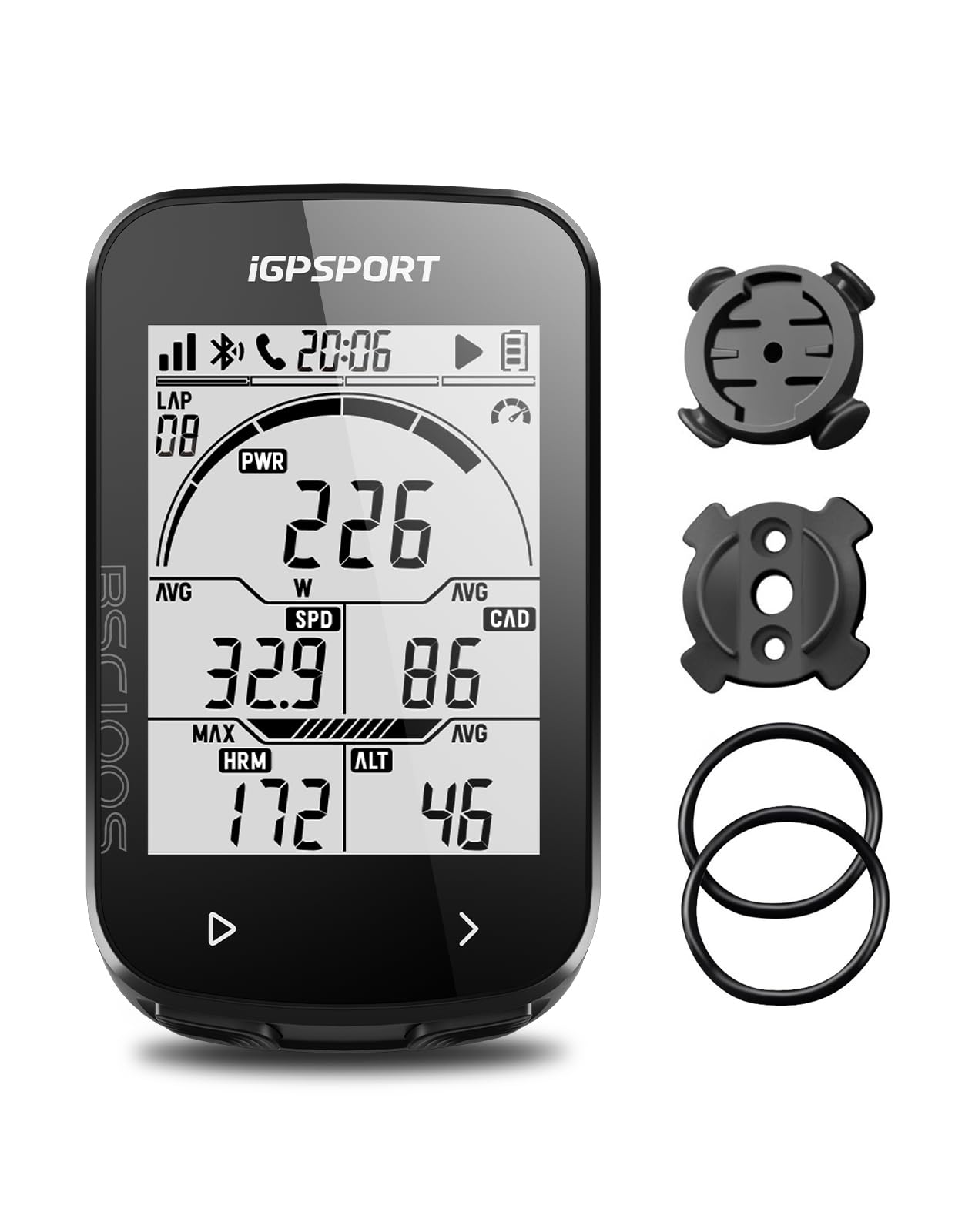
The iGPSPORT BSC100S strikes the hardest balance of battery, connectivity, and price in the beginner segment. Its 2.6-inch anti-glare LCD is readable even with polarized sunglasses, and the five-satellite system (GPS, Beidou, GLONASS, Galileo, QZSS) locks quickly and maintains accuracy under tree cover. The 600mAh battery delivers a genuine 40-hour runtime in real-world use — enough for two weeks of commuting or a multi-day tour without recharging.
ANT+ and Bluetooth 5.0 dual-protocol support means you can pair speed, cadence, heart-rate, and even power sensors without worrying about compatibility. The companion iGPSPORT app syncs data to Strava and Komoot reliably, and the IPX7 waterproof rating shrugs off heavy downpours. The two-button interface is intentionally simple — there is no color map or turn-by-turn routing, which keeps the learning curve flat for a first-time user.
Some users report the battery indicator drops faster than the claimed 40 hours at the upper end, and the manual contains awkward translation, but the community support on YouTube fills the gaps. The rubber-band mount is functional rather than elegant, yet the unit stays secure on rough roads. For a sub-premium entry point with real GPS depth, this is the unit to beat.
Why it’s great
- 40-hour battery covers long rides without worry
- Multi-constellation GPS provides fast, accurate position lock
- ANT+ and Bluetooth dual protocol for wide sensor compatibility
Good to know
- No GPS navigation or color map display
- Rubber-band mount feels less premium than twist-lock options
- Manual is poorly translated; rely on online guides
2. XOSS G+ Gen2 GPS Bike Computer
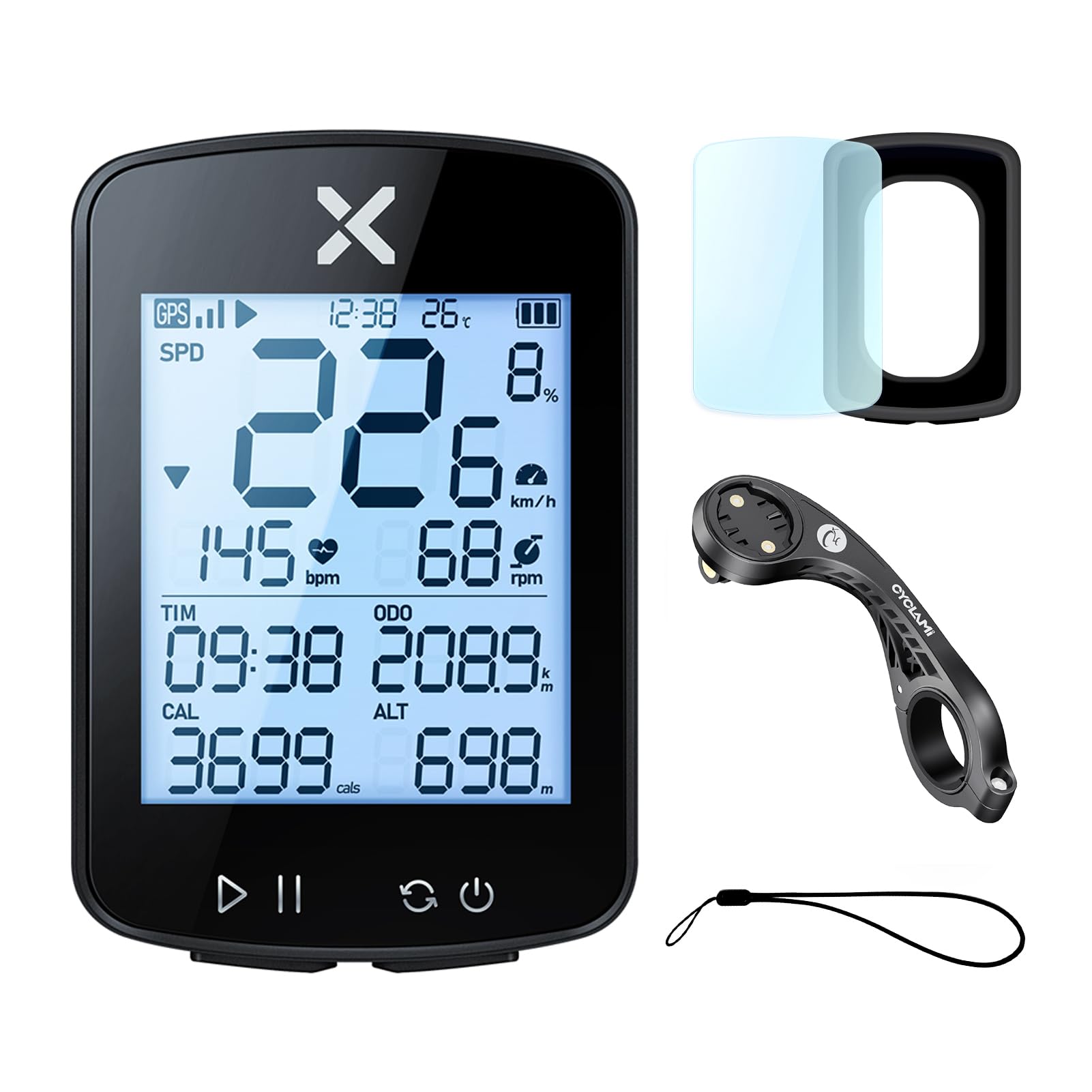
The XOSS G+ Gen2 targets riders who want structured training analysis without stepping up to a premium ecosystem. Its standout feature is native TrainingPeaks synchronization — a rarity at this price tier — letting you upload sessions directly to the platform for advanced performance breakdowns. The 2.2-inch non-glare screen includes auto-backlight that adjusts based on sunrise and sunset times, keeping data visible from dawn to dusk without manual toggling.
Triple-satellite support (GPS, Beidou, and QZSS) delivers consistent positioning, though cold-start acquisition is slower than the iGPSPORT BSC100S. The ANT+ compatibility connects to power meters, heart-rate straps, and speed/cadence sensors simultaneously. The 28-hour battery life is adequate for weekend-long rides, and the Type-C charging port tops the unit quickly compared to older micro-USB designs.
The biggest complaint centers on the handlebar mount — reviewers report it can loosen on gravel or bumpy terrain, potentially sending the unit flying. The rubber insert that secures the computer requires a small trim to fit snugly on larger handlebars. Despite the mount issue, the XOSS app, while quirky, provides rich data export options. For a budget-friendly unit that prioritizes training metrics, this is a strong contender.
Why it’s great
- Native TrainingPeaks sync for serious training analysis
- Auto-backlit 2.2-inch screen adapts to daylight conditions
- Type-C fast charging for quick top-ups
Good to know
- Handlebar mount can come loose on rough terrain
- GPS cold-start takes noticeably longer than rivals
- App interface has minor quirks and translation issues
3. CYCPLUS Wireless GPS Bike Computer

The CYCPLUS M1 is the battery champion of the group, packing a 1200mAh cell that delivers over 60 hours of continuous GPS logging — enough for a week-long bikepacking trip without a charger. Its 2.9-inch FSTN LCD is the largest screen in this roundup, displaying up to five data fields at a size that riders with reading glasses can appreciate. The FSTN anti-glare technology keeps the display crisp under direct sunlight, and the tempered-glass top layer resists scratches from keys or tools in a saddlebag.
An imported Swiss navigation chip handles dynamic GPS positioning, and while the track accuracy is good on open roads, tree cover and urban canyons can introduce 5–10% distance drift. The unit connects to ANT+ sensors easily — cadence and speed pairs in seconds — and syncs with the CYCPLUS FIT app, which in turn pushes data to Strava and TrainingPeaks. The three-button interface is intuitive, with stiff tactile feedback that prevents accidental presses during bumpy descents.
The CYCPLUS M1 lacks turn-by-turn navigation, calorie calculations, and a reconfigurable data display — you are locked into the factory page layout. Some units ship with the UTC clock not aligning to the local time zone, requiring a manual fix via the app. Customer support is responsive, with several reviewers reporting quick replacements for defective units. For riders who prioritize battery endurance above all else, this is the clear pick.
Why it’s great
- 60-hour battery is unmatched in this price bracket
- 2.9-inch FSTN screen is large and readable in bright sun
- Tempered glass protects against scratches
Good to know
- GPS accuracy drops in heavy tree cover or tall buildings
- Data display pages are not user-customizable
- Some units require manual time zone correction
4. COOSPO BC107 GPS Bike Computer

The COOSPO BC107 proves that a compact footprint does not require sacrificing core tracking reliability. Its 2.4-inch LCD is wrapped in a glass-filled ABS and TPU chassis that weighs only 140 grams (including the mount), making it one of the lightest fully-featured GPS units available. The IP67 waterproof rating surpasses the IPX7 standard — it can be submerged in one meter of water for 30 minutes, not just splashed — a meaningful advantage for riders caught in sudden downpours or who ride through streams.
Satellite acquisition uses GPS and Beidou dual-mode, delivering a cold-start lock in roughly 30 seconds. The BC107 is ANT+-only for sensor connections — there is no Bluetooth for heart-rate or cadence sensors beyond the phone pairing. This is an intentional trade-off that keeps the unit stable but means you cannot use a Bluetooth-only HR armband. The CoospoRide app provides thorough ride analysis, .FIT file export, and Strava sync, though some users report the auto-sync occasionally requires a manual login refresh.
The standard mount uses rubber bands, which can shift on wider handlebars; an extended front mount is available separately. The orange-accented design adds visibility to the cockpit but may clash with certain bike colors. For riders who want a waterproof, lightweight, no-fuss tracker that pairs reliably with ANT+ sensors, the BC107 delivers exactly what it promises.
Why it’s great
- IP67 waterproof rating for submersion protection
- Very lightweight at 140g total package
- Reliable ANT+ sensor pairing with fast lock times
Good to know
- ANT+ only for sensors — no Bluetooth HR support
- Standard rubber-band mount can shift on wider bars
- App auto-sync occasionally needs manual intervention
5. Navihood L4 GPS Bike Computer
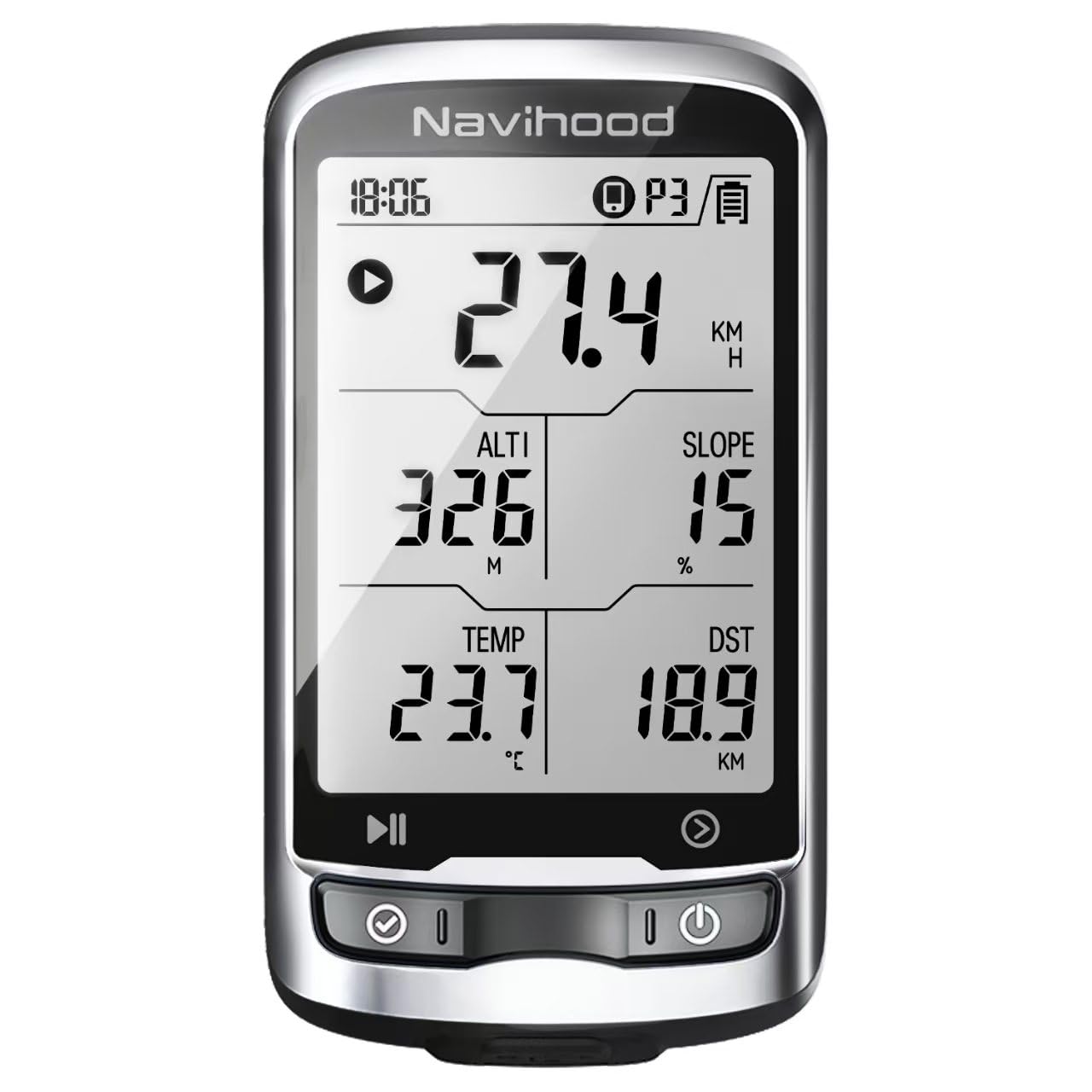
The Navihood L4 prioritizes minimalism with a 13.5mm-thin, 45-gram chassis that barely adds mass to a handlebar setup. Its 2.3-inch laminated anti-glare screen includes an automatic backlight that activates in low light, and the IPX7 waterproofing ensures survival through rain and splash. The cold-start positioning is rated at 30 seconds, but the warm-start and reacquisition time of two seconds is class-leading — you will never wait for the signal to reappear after a tunnel or bathroom break.
The Navihood app allows full customization of up to nine data pages with 25 different data types, including incline measured to 0.1 degrees. This level of configurability is unusual at this weight and price point. The L4 supports both ANT+ and Bluetooth 5.0, so it pairs seamlessly with heart-rate straps, speed/cadence sensors, and even smart trainers. Data syncs to Strava and other training platforms without friction, and the 1000-kilometer history storage means you do not have to offload rides daily.
The 22-hour battery life is shorter than the iGPSPORT or CYCPLUS, and the O-ring mount design has been criticized for potential rubber fatigue over extended use. The altitude readings can drift — a common issue among barometric-sensor-free computers. For weight-conscious riders or those who want a barely-there unit for race days and fast group rides, the L4 is an excellent minimalist tool.
Why it’s great
- Only 45g and 13.5mm thick — virtually unnoticeable
- Two-second warm-start reacquisition is best in class
- Nine customizable data pages with 25 data types
Good to know
- 22-hour battery is lower than the category leaders
- O-ring mount may wear out over time
- Altitude readings can be inconsistent
6. Magene C506SE Wireless GPS Bike Computer

The Magene C506SE marks the transition from monochrome LCD to a 2.4-inch color display, and the difference is immediate — circular dials, line graphs, and bar charts make ride data feel like a live dashboard rather than a readout of numbers. The Airoha chipset achieves a 5-second satellite lock even before you roll out of the driveway, supported by AGNSS offline data that remains valid for 14 days. WiFi connectivity enables data uploads 28 times faster than Bluetooth alone, so your ride is synced to OnelapFit and Strava before you walk through the door.
Route navigation with turn-by-turn prompts and off-course alerts is included, though it is only active when the unit is connected to the OnelapFit app. The C506SE supports nine device types simultaneously — speed, cadence, heart rate, power meters, smart trainers, radar tail lights, smart tail lights, and electronic shifting groupsets like SRAM eTap and Shimano Di2. This level of ecosystem compatibility rivals units that cost twice as much.
The IP54 rating means it is splash-resistant but not fully waterproof — heavy, sustained rain is a risk. Some users report pairing drops after the first couple of uses, requiring a factory reset to reconnect. The 24-hour battery in endurance mode is average for the premium tier. For a beginner who wants a color screen and navigation without jumping to the top of the price spectrum, the C506SE is a compelling leap forward.
Why it’s great
- 2.4-inch color screen with dials and bar charts
- 5-second GPS lock with offline AGNSS backup
- WiFi sync is dramatically faster than Bluetooth-only units
Good to know
- IP54 splash resistance only — not for heavy rain
- Occasional Bluetooth pairing drops reported
- Navigation features require app connection
7. Magene C506 GPS Bike Computer
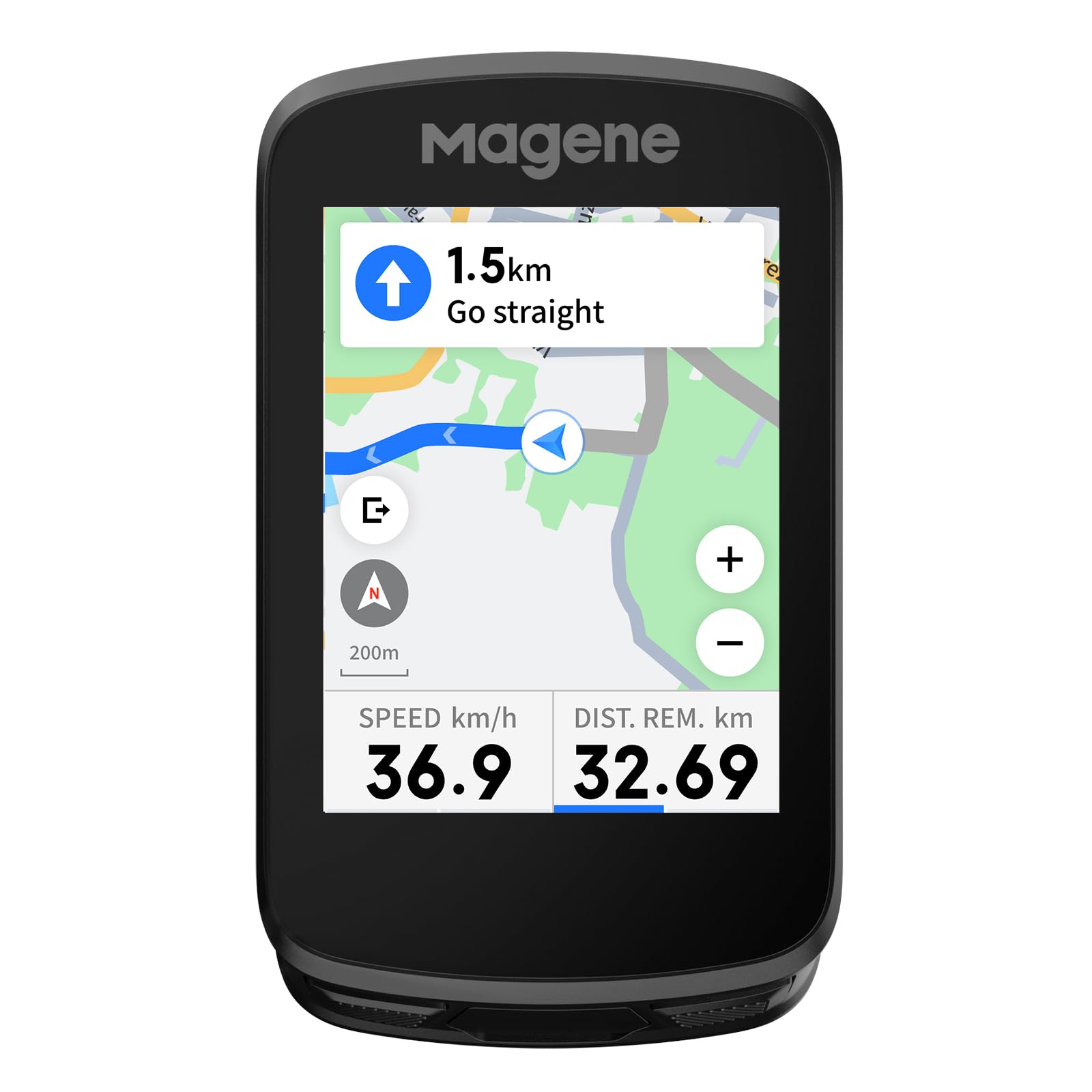
The full Magene C506 adds a touchscreen to the color display package, along with free global offline map downloads and turn-by-turn navigation with street-level naming. The 2.4-inch LCD is bright enough for direct sunlight, and the smart riding assistant controls compatible tail lights (L508/L308) automatically — turning them on at 10 km/h and off when you stop. The ambient light sensor adjusts brightness dynamically, saving battery while keeping the screen clear in all conditions.
Data customization reaches 105 items across 14 categories, including circular gauges and trend graphs. The pairing system connects to nine device types simultaneously, including electronic shifting. The 24-hour battery in endurance mode is consistent with the C506SE, and the WiFi sync transfers rides quickly. For indoor training, the C506 can control a smart trainer’s resistance and gradient directly, uploading FIT files from TrainingPeaks for structured workouts.
The touchscreen responsiveness is noticeably less snappy than a smartphone — multiple presses are sometimes needed, especially with sweaty or gloved fingers. The OnelapFit app has been described as slow and poorly translated, though the core functionality works once you navigate the menus. The map download process is unintuitive, requiring patience. For the beginner who values navigation and ecosystem integration enough to work through occasional software friction, the C506 offers genuine premium features at a mid-range price.
Why it’s great
- Touchscreen with free offline global maps
- Smart tail-light control without needing a phone
- 105 customizable data items across 14 categories
Good to know
- Touchscreen requires deliberate presses, especially with gloves
- OnelapFit app is slow and translation quality is poor
- Map download process is not intuitive
FAQ
How long does the battery last on a typical beginner cycling computer?
Can I use a beginner cycling computer with a smart trainer?
Do I need a phone app to use a GPS bike computer?
Final Thoughts: The Verdict
For most users, the best beginner cycling computer winner is the iGPSPORT BSC100S because it delivers 40 hours of battery, five-satellite GPS, and dual-protocol sensor support at a price that leaves room for accessories. If you want a color screen and turn-by-turn navigation, grab the Magene C506SE. And for battery endurance that outlasts any multi-day tour, nothing beats the CYCPLUS Wireless GPS.