
You want a fountain pen that actually works the first time you use it — no skipping, no blotching, no fighting the nib (the metal tip that touches the paper) to get a decent line. A good beginner pen should make your handwriting look better and feel effortless, not add frustration to a simple note or journal entry. The gear that matters: a nib that lays down a consistent ink line, a comfortable grip that doesn’t tire your hand, and a reliable filling system that keeps you writing instead of cleaning.
I’m Min — the co-founder and writer behind Gadgets Feed. This guide is built by comparing the manufacturers’ published specifications and the patterns across verified customer reviews, so you get each pick’s real strengths and trade-offs instead of marketing spin.
Every pen here was chosen because it solves the real problems beginners face — scratchy nibs, poor ink flow, slippery grips, and confusing refill options. If you want a smooth writing experience from day one, this guide to the best beginner fountain pen cuts through the noise to find your perfect match.
How To Choose The Best Beginner Fountain Pen
The right beginner pen comes down to three things: the nib’s behavior on normal paper, the grip’s comfort over a full page of writing, and how easy it is to refill. Here’s what to look for.
Nib Size: Fine vs Medium
Your nib size determines how thick your line looks and how it behaves on cheap office paper. A Fine nib (around 0.5mm line width) writes a thinner, neater line and works well on paper that tends to absorb ink, which is a common issue with simple notebooks. A Medium nib (around 0.7mm) lays down a bolder, more expressive line but can make smaller handwriting look crowded or cause slight smudging on thin paper. Also, Japanese brands like Pilot make their nibs about one size finer than Western brands like Lamy — so a Pilot Fine actually writes closer to a Western Extra-Fine.
Pen Weight and Grip Comfort
Your pen’s body material changes how heavy it feels in your hand over twenty minutes of writing. A brass barrel gives a solid, substantial weight (about 0.96 pounds total) that some find reassuring for control, while a plastic body (around 0.2 pounds) is much lighter and less tiring during long journaling sessions. The grip zone matters just as much — a textured ergonomic grip prevents your fingers from sliding as you write, whereas a smooth plastic or metal grip can feel slippery after your hand warms up, which reviewers often mention as the one thing they’d change.
Ink System: Cartridges vs Converter
Cartridges are the simplest way to start — you just snap in a pre-filled plastic tube and write. A converter is a refillable reservoir that lets you use bottled ink, which gives you thousands of color choices and creates less plastic waste over time. For a true beginner, a pen that includes both options (a cartridge to start and a converter for later) is ideal because you can learn the basics before moving to bottles.
Quick Comparison
On smaller screens, swipe sideways to see the full table.
| Model | Category | Best For | Key Spec | Amazon |
|---|---|---|---|---|
| PILOT Metropolitan Collection | Fine Nib | First-time buyers wanting a reliable, smooth writer | 0.96 lbs brass barrel | Amazon |
| PILOT MR Animal Collection | Medium Nib | Value seekers who want a premium feel and a gift-ready box | Includes converter and cartridge | Amazon |
| Lamy Safari | Medium Nib | Left-handed writers and those who prefer a lighter, ergonomic grip | Contoured grip with snap cap | Amazon |
| WRITECH Clictek Fountain Pen (Black Ink) | Medium Nib | Buyers who want a retractable pen and a large ink supply | 10 included cartridges | Amazon |
| WRITECH Clictek Fountain Pen Set (Blue Ink) | Medium Nib | Budget buyers who like the retractable concept with blue ink | 5 blue ink cartridges included | Amazon |
In‑Depth Reviews
1. PILOT Metropolitan Collection Fountain Pen

The 0.5mm Fine nib and skip-free start out of the box make the PILOT Metropolitan Collection Fountain Pen the top pick for absolute beginners who want a fountain pen that works immediately with zero adjustments. The 0.96-pound brass barrel gives it a solid, premium feel that cheaper plastic pens lack — substantial but not tiring during a journal entry.
Reviewers consistently point out that the Fine nib is forgiving on regular notebook paper — it doesn’t bleed through or feather like broader nibs often do, and the included ink converter lets you try bottled inks later when you’re ready. The Pilot Metropolitan leads the WRITECH Clictek on build quality; the brass body feels far more durable than the plastic WRITECH, which reviewers call cheap-feeling. Plus, the Fine nib writes a thinner, neater line than the Medium on the WRITECH, making it better for small handwriting or daily planning.
One honest limit: the smooth plastic grip section can get slippery during long writing sessions (a reviewer who uses it for daily planner notes mentioned the grip may loosen over time). If you have sweaty hands or plan to write for hours, the Lamy Safari’s contoured grip handles that better. But for reliability, ink flow, and that satisfying heft, this is the one to pick.
Why it’s great
- Writes reliably from the first use — no fiddling required
- Brass body feels substantial and well-made in hand
- Includes both a cartridge and a converter for future ink options
Good to know
- Smooth grip can become slippery after extended writing
- Japanese Fine nib is actually closer to an Extra-Fine by Western standards
2. PILOT MR Animal Collection Fountain Pen

Compared to the top-pick Metropolitan’s Fine nib, the Pilot MR’s Medium nib (around 0.7mm line width) produces a bolder, more expressive line — so your handwriting shows more character, like thicker downstrokes and thinner upstrokes — while sharing the same brass barrel quality and sturdy, well-weighted feel (0.96 pounds). For a beginner who wants to see that classic fountain-pen line variation, the Medium nib delivers a smooth, effortless flow that reviewers call “writes smoothly without skipping” and “very good for beginner and experts alike.”
What makes this pick special is what you get in the box: an ink cartridge to start writing immediately, plus a converter (a squeeze-sponge filler) for bottled ink. However, buyers report the included squeeze converter is finicky — one reviewer called it “garbage” — and recommend buying a proper Pilot CON-40 converter instead if you plan to use bottled inks frequently. At the same price point, the WRITECH Clictek comes with 10 cartridges but a plastic body; the Pilot MR’s brass body is heavier and feels significantly more premium for the same cost.
For a beginner who values a more forgiving writing angle and a comfortable metal weight for longer sessions — while also getting a pen that looks and feels like a step above plastic entry-level options — the Pilot MR is the smart second choice over the top pick. The included gift box makes it an especially good pick if you’re buying for someone else.
Where it shines
- Solid brass construction with a stylish crocodile finish
- Comes with both a cartridge and a converter for versatility
- Gift box presentation makes it ready for giving
Worth noting
- The included squeeze converter is tricky to use and hard to clean
- Medium nib can bleed through very thin paper
3. Lamy Safari Fountain Pen
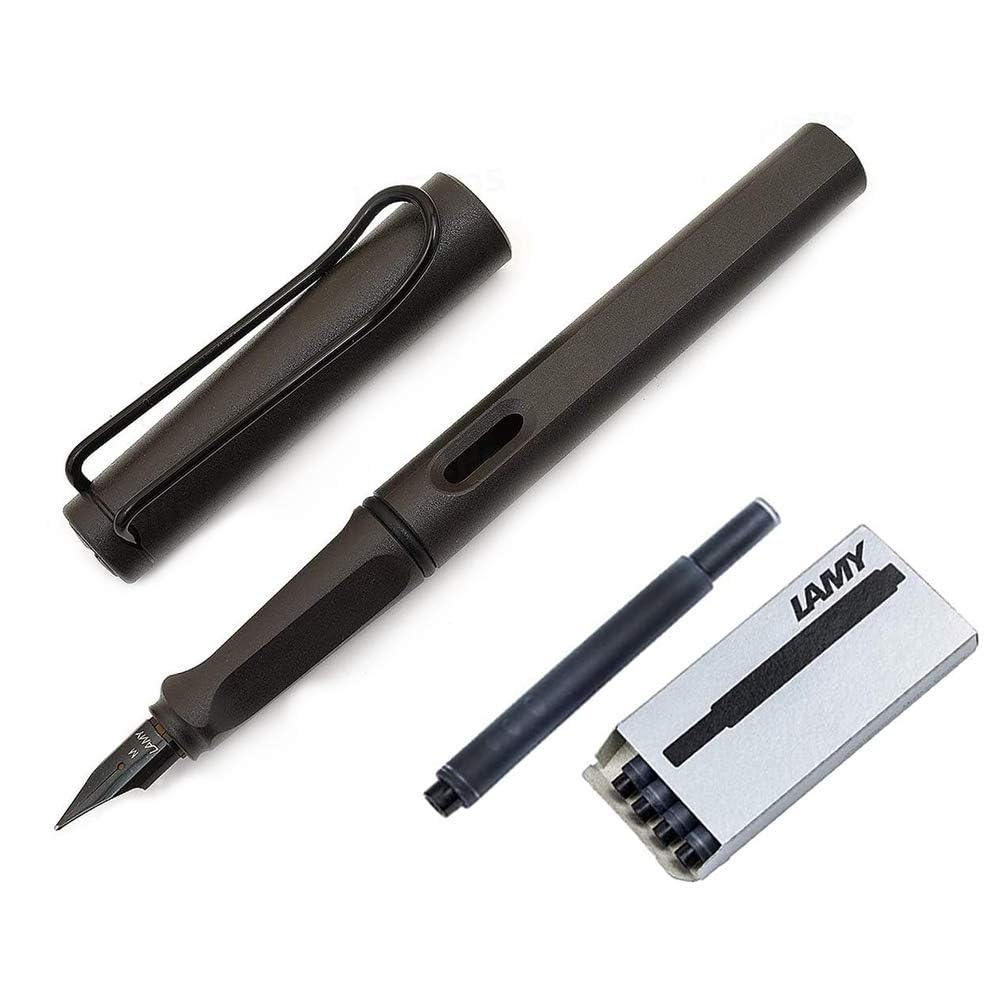
If you’re left-handed, or you need a pen that stays securely clipped to your shirt pocket or notebook, the Lamy Safari is the one to choose. The snap cap and the contoured grip section — with finger-indexing notches that guide your hand into the same position every time — allow you to hold the pen consistently, which helps maintain tidy handwriting. This is also the lightest premium pick here; at roughly 0.2 pounds, it’s significantly lighter than the Pilot Metropolitan’s 0.96-pound brass body, so your hand stays relaxed even during a full journaling session.
The Medium nib (about 0.7mm) is smooth and clean, and owners mention it works well for left-handed writing — no leaks, no constant adjustment. One reviewer who owns 15 pens ranging from entry-level to luxury called the Lamy their second favorite overall, praising its lightweight feel and solid clip (the metal band that attaches to a pocket). The pen ships with 5 blue ink cartridges instead of black, which some buyers found surprising, but the simple cartridge swap makes refilling easy and mess-free. In head-to-head use, the Lamy’s grip is more ergonomic than the Pilot’s smooth plastic section, making it the better choice if finger fatigue is your concern.
One thing to note: the Medium nib is broader than the Pilot Metropolitan’s Fine, so your lines will be thicker and wetter. On absorbent paper, this can cause slight bleeding. But for a pen that’s comfortable, durable, and genuinely fun to write with — one happy buyer said it made cursive writing feel fun again — the Lamy Safari is a fantastic value. skip it if you want a very fine, precise line on cheap paper; the Metropolitan is better there.
What stands out
- Contoured grip with indexing notches for consistent hand position
- Very lightweight — about 0.2 pounds — for fatigue-free writing
- Strong clip design is rated best in class by reviewers
The trade-offs
- Medium nib writes thicker than comparable Japanese pens
- Initial cartridge is blue, not black
4. WRITECH Clictek Fountain Pen Retractable
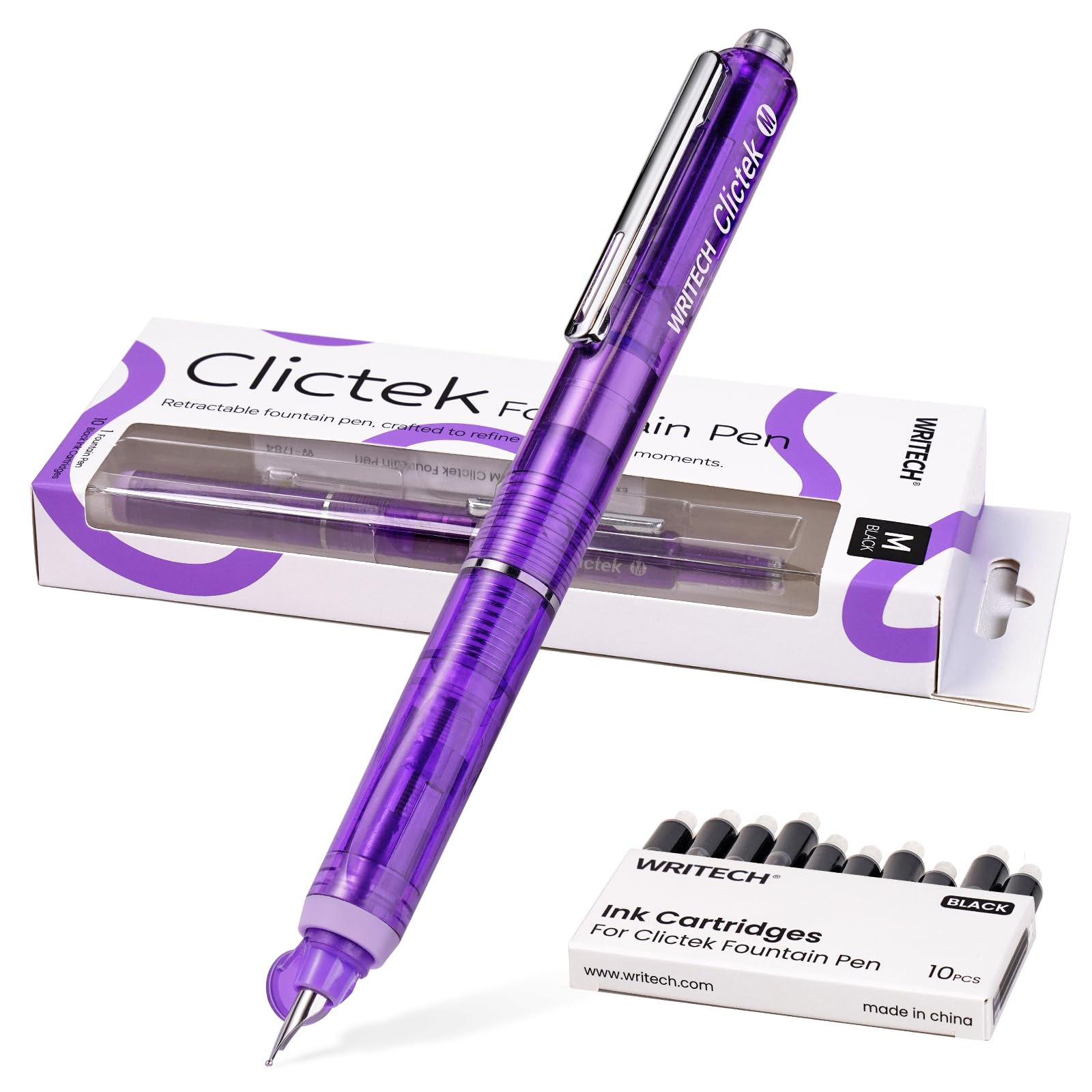
The single number that matters most in this category is “10” — you get 10 black ink cartridges included in the box, which is more than any other pen in this guide offers. That alone makes it an attractive value pick for a beginner who wants to write without worrying about running out of ink for months. The second big feature is the retractable nib (the metal tip retracts into the body when you click the end): you click the top, and the nib extends or retracts, so there’s no cap to lose or fiddle with.
The catch is noticeable. The entire body is plastic, which customers note “feels cheap” compared to the Pilot pens’ brass barrels. More importantly, the ink flow is inconsistent — one reviewer noted that “the ink just never flows smoothly so it skips and alternates dark lines with barely visible lines,” which is the opposite of what you want as a beginner. Another reviewer noted the Medium nib (around 0.7mm) writes like a broad nib, with heavy ink flow, long dry times, and smudging. In a head-to-head, the Pilot Metropolitan’s ink flow is vastly more reliable, with its 0.96-pound brass body feeling far more substantial. This pen suits someone who absolutely must have a click-to-retract mechanism and can accept some ink-flow quirks; pass on it if consistent writing is your top priority.
Given the included cartridge count and the retractable mechanism, this pen delivers a price-to-value read that favors quantity and convenience over writing quality and build feel.
The upsides
- Retractable click mechanism — no cap to lose or unscrew
- Generous 10-cartridge supply in the box
- Transparent barrel lets you see ink level at a glance
Keep in mind
- Plastic body feels less premium than metal-barrel alternatives
- Ink flow can be inconsistent, causing skipping in some units
- Medium nib writes very wet, leading to smudging on standard paper
5. WRITECH Clictek Fountain Pen Set (Blue Ink)
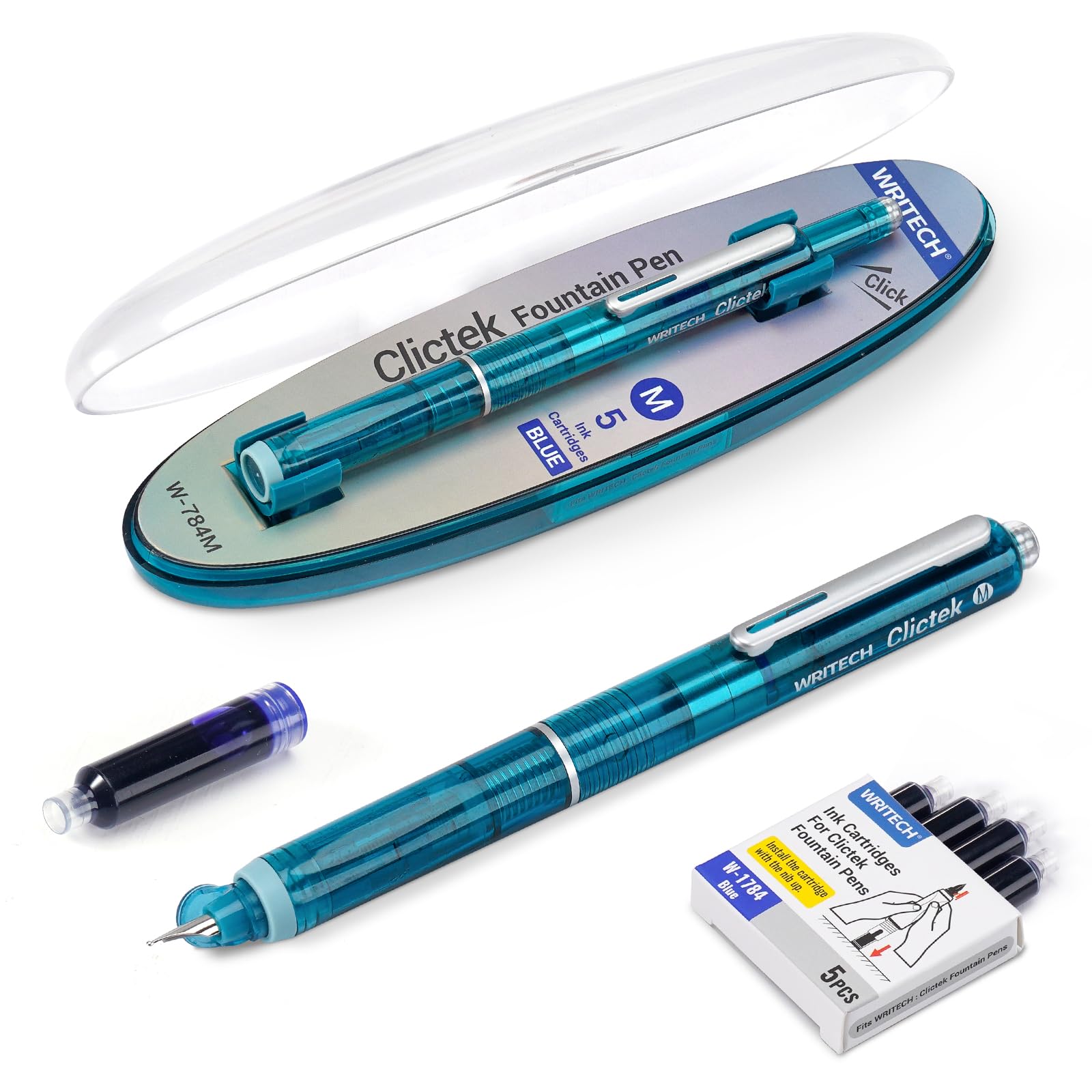
What you get at this entry-level price is the unique convenience of a retractable fountain pen without the premium cost of Japanese or German brands: the same WRITECH Clictek design with a plastic body, retractable click mechanism, and Medium nib (around 0.7mm), but in a blue-ink version that comes with 5 blue cartridges and a transparent gift box.
What you give up is consistency. Reviewers point out the same Medium nib writes very broadly (one called it “too large for small writing”) and the ink flow slows down as the cartridge runs low. A buyer reported the “medium nib is too large for small writing; choose fine,” though fine isn’t an option with this pen. The pen also uses proprietary ink cartridges that are not refillable, meaning you’re locked into the WRITECH system for refills. Compare that to the Lamy Safari, which offers an easy cartridge swap and a much more ergonomic contoured grip for a similar budget price.
This pen is perfect for a beginner who specifically wants a retractable fountain pen in blue ink, values a quiet click mechanism, and plans to use it for larger handwriting or signatures where a broad line is fine.
Why we’d pick it
- Retractable mechanism is quiet and satisfying to click
- Blue ink is a fun alternative to standard black
- Transparent gift box doubles as storage
A few caveats
- Medium nib writes very broad — not ideal for small handwriting
- Uses proprietary cartridges that aren’t refillable with bottled ink
- Some units experience ink flow slowing near the end of a cartridge
Understanding the Specs
Nib Size and What It Means for Your Writing
The nib is the metal tip that touches the paper, and its size (Fine, Medium, Broad) controls the width of your ink line. A Fine nib (about 0.5mm) produces a thin, precise line that dries quickly and works well on cheap paper, but it can feel scratchy if you press too hard. A Medium nib (about 0.7mm) gives a smoother, wetter line that shows off ink shading and variation, but it takes longer to dry and may bleed through thin notebook paper. For a new user, Fine is usually safer because it’s more forgiving on everyday office paper.
Pen Weight and How It Affects Hand Fatigue
The weight of the pen body is measured in pounds (lbs) or grams. A brass-barrel pen (like the Pilot Metropolitan at 0.96 lbs) feels substantial and balanced in your hand, which some people say gives them more control over their writing. A plastic-barrel pen (like the WRITECH Clictek) is significantly lighter, around 0.2 lbs, which reduces muscle strain during long writing sessions but can feel flimsy. Your personal preference matters here — try a heavier pen at a store if possible, because you’ll know within one paragraph which weight feels natural to you.
FAQ
Is a Fine or Medium nib better for a beginner fountain pen user?
Can I use bottled ink with a beginner fountain pen?
Why does my fountain pen skip or write inconsistently?
Final Thoughts: The Verdict
For the majority of shoppers, the best beginner fountain pen winner is the PILOT Metropolitan Collection because it writes perfectly out of the box, has a solid brass barrel that feels premium, and includes both a cartridge and a converter for future ink flexibility. If you want a more ergonomic grip and a lighter, left-hand-friendly feel, grab the Lamy Safari. And for a bolder, more expressive line with a gift-ready presentation, the standout is the PILOT MR Animal Collection.