
Walking into a motorcycle gear shop for the first time can feel like staring at a wall of identical plastic shells, each one promising to save your skull. The real problem isn’t a lack of choices; it’s that the wrong helmet can be noisy, foggy, ill-fitting, and dangerous — a distraction that makes learning to ride harder than it needs to be. A smart first purchase requires focusing on fit, certification, and features that actually help a new rider, not marketing hype.
I’m Min — the co-founder and writer behind Gadgets Feed. I’ve spent countless hours analyzing the technical specifications, real-world owner feedback, and safety certifications of beginner-focused helmets to separate the genuine performers from the look-alike shells.
After cross-referencing shell materials, ventilation designs, visor clarity, and weight data across dozens of models, I’ve assembled this guide to the best beginner motorcycle helmet options that balance protection, comfort, and real-world usability for someone just starting their riding journey.
How To Choose The Best Beginner Motorcycle Helmet
Picking your first helmet is a different process than selecting gloves or a jacket. The helmet is your primary safety device, and an uncomfortable or poorly-fitted helmet will make you dread every ride. Focus on four core areas to narrow the field effectively.
Fit and Head Shape First, Everything Else Second
The most expensive helmet in the world provides zero protection if it wobbles on your head or creates painful pressure points. Measure the circumference of your head just above your eyebrows and use the manufacturer’s sizing chart — but also identify your head shape (intermediate oval, round oval, or long oval). A helmet designed for a round shape will cause forehead pressure on a long oval head, leading to headaches within 20 minutes of riding. Always buy a helmet that feels snug, not tight, and expect a break-in period of 5-15 hours of use.
Understand the Certification Landscape
In the US, DOT (FMVSS 218) is the legal minimum — it proves the helmet meets basic impact, penetration, and retention standards. ECE 22.05 or 22.06 is a more rigorous European standard that includes rotational impact testing and variable-speed impacts. Snell M2020/M2025 is a voluntary, independent standard that demands even higher energy absorption. For a beginner, DOT is non-negotiable, but a helmet that also carries ECE or Snell approval offers demonstrably higher head protection at a small weight or price premium. Avoid helmets that only claim “meets DOT standards” without a visible DOT sticker.
Visors, Ventilation, and Everyday Usability
New riders are often surprised by how quickly a visor fogs up at a stoplight or how loud a cheap helmet can be at highway speed. Look for a Pinlock-ready or Pinlock-equipped visor — the silicone insert creates a thermal barrier that nearly eliminates fogging. An integrated drop-down sun visor is a major convenience, letting you react to changing light without swapping shields at the roadside. Ventilation is about channeling airflow from front to back: at minimum, you want a chin vent and a top vent, plus rear exhaust ports. Finally, check for speaker pockets if you plan to use a Bluetooth communicator, and ensuring there is a glasses groove if you wear prescription eyewear.
Quick Comparison
On smaller screens, swipe sideways to see the full table.
| Model | Category | Best For | Key Spec | Amazon |
|---|---|---|---|---|
| ScorpionEXO T520 | Full Face Touring | Best Overall Value | 3 Shell Sizes / AirFit Cheek Pads | Amazon |
| AGV K1 S | Full Face Sport | Premium Track-Ready Build | ECE 22.06 / 190° Visor Field | Amazon |
| Bell Qualifier | Full Face Daily | Entry-Level Premium Features | Velocity Flow Ventilation / Padded Wind Collar | Amazon |
| LS2 Assault | Full Face Street | Lightweight Composite Shell | KPA Shell / 3 Shell Sizes | Amazon |
| HJC C10 | Full Face Standard | Reliable Budget Performer | Polycarbonate Shell / 3+2 Intake/Exhaust Vents | Amazon |
| HJC i10 PLUS | Full Face Touring | Integrated Sun Visor Pick | HJ-V7 Integrated Smoke Sun Visor | Amazon |
| BEON Open Face | 3/4 Retro Open Face | City Cruiser / Scooter | Dual Visors (Clear + Retractable Sun) | Amazon |
| ILM Modular 159 | Modular Flip-Up | Flip-Up Convenience | Dual Visor System / Quick Release Buckle | Amazon |
| HAX Impulse | Full Face Value | Budget-Friendly Entry | DOT Certified / Dual Visor (Clear + Sun) | Amazon |
In‑Depth Reviews
1. ScorpionEXO T520 Full Face Touring Helmet
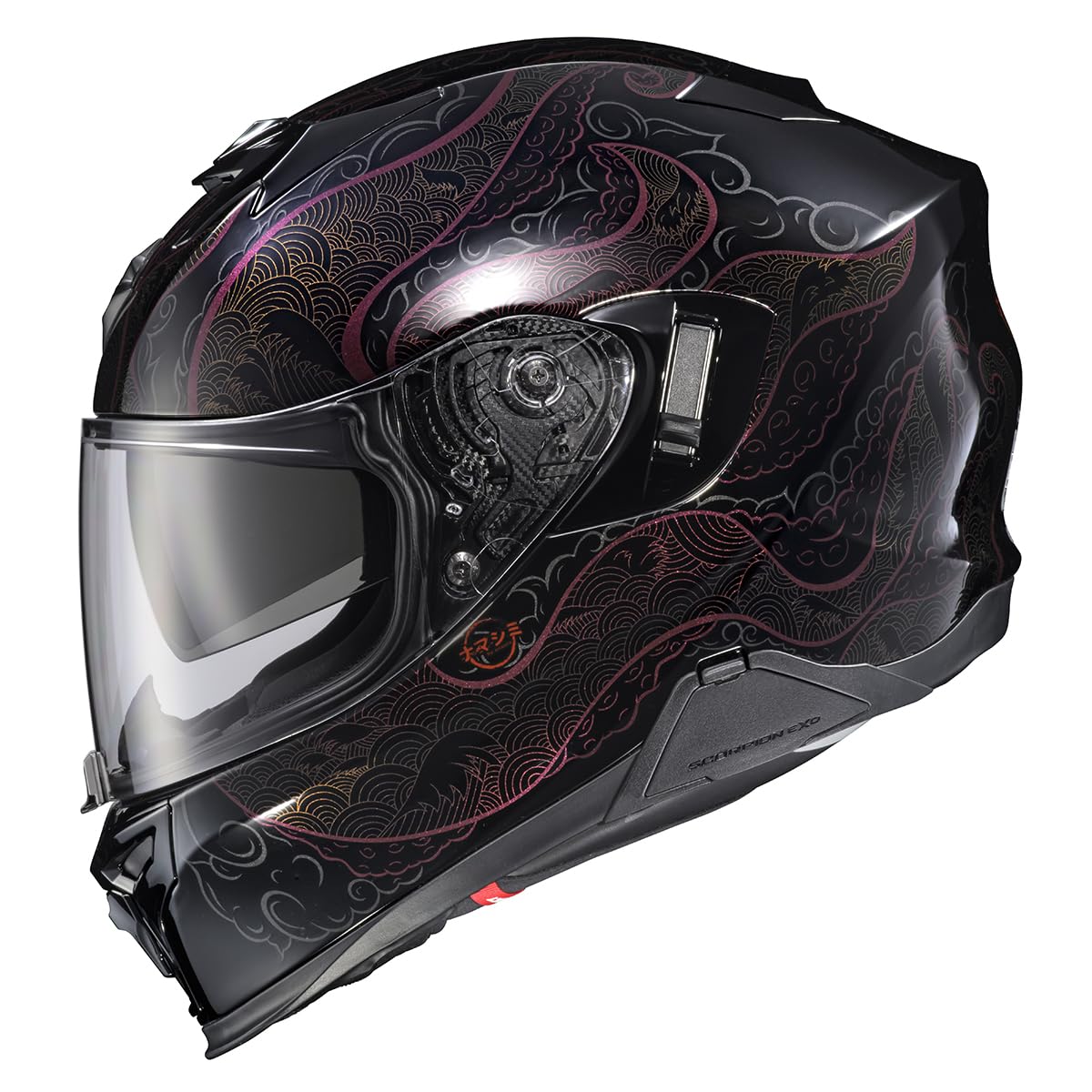
The ScorpionEXO T520 uses an advanced polycarbonate shell with dual-density EPS, and its three distinct shell sizes across the XS-3XL range mean that a beginner with a smaller head doesn’t wear an unnecessarily large and heavy helmet. The Ellip-Tec ratchet system pulls the Everclear no-fog shield tight against the eye port, and the retractable SpeedView sun visor adds instant adaptability to changing light conditions.
The defining feature for a new rider is the AirFit inflation system — you pump air into the cheek pads to dial in a custom snug fit, which reduces wind noise and prevents the helmet from shifting in the windstream. The KwikFit cheek pads are sculpted with eyeglass relief, and the large-diameter speaker pockets accommodate most Bluetooth communicators without pressure points.
DOT and ECE 22.05 certification provide dual safety reassurance, and the included chin curtain and breath deflector further minimize fogging and noise. Reviewers consistently note the T520 feels premium and comfortable straight out of the box, with the only trade-off being the D-ring retention instead of a quick-release buckle.
Why it’s great
- AirFit cheek inflation for a perfect custom fit on day one
- Everclear anti-fog shield plus drop-down sun visor
- Three shell sizes optimize weight across all head sizes
- Integrated speaker pockets and glasses-friendly design
Good to know
- Uses a double D-ring strap, not a quick-release buckle
- Inner sun visor could be darker for bright direct sunlight
- May feel warm in stop-and-go traffic despite good airflow at speed
2. AGV K1 S Full Face Helmet
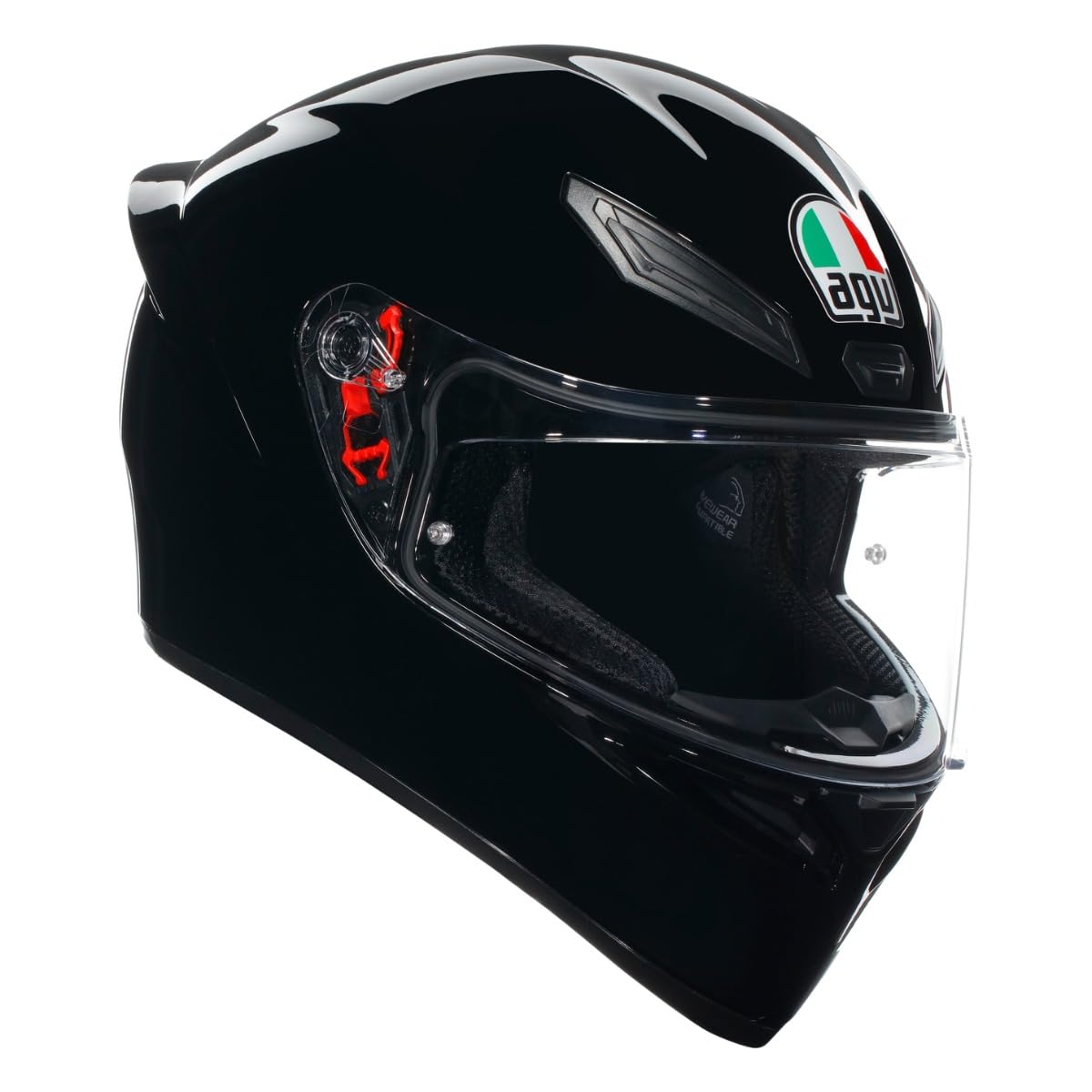
The AGV K1 S inherits its aerodynamic shape and race-proven double D-ring from AGV’s higher-end lines, but uses a high-resistance thermoplastic shell in two sizes to keep weight manageable at a more accessible price point. Its wide GT4 visor offers a 190-degree field of view, which is noticeably larger than budget helmets and helps a beginner spot hazards earlier out of the corner of the eye.
Seven vents — large front and crown intakes plus rear extractors — deliver strong airflow, though the vent controls are small and finicky with thick gloves. The interior is plush with dedicated glasses grooves, and the Pinlock MaxVision insert (sold separately) ensures tear-free riding in cold or wet weather. At under 1,600 grams, the K1 S is light enough to avoid neck fatigue on long training rides.
ECE 22.06 certification is the highest current European standard, including rotational impact testing that DOT does not require. Reviewers praise the quiet cabin and stable high-speed behavior, though the lack of an included Pinlock lens and the minimal DOT labeling are minor frustrations. For a beginner who wants the safety ceiling of a track-focused helmet without the MotoGP price, this is a strong upgrade pick.
Why it’s great
- ECE 22.06 certified for premium rotational impact protection
- Lightweight thermoplastic shell with wide 190° visor opening
- Excellent top and chin vent airflow with rear extractors
- Built-in glasses grooves and Bluetooth communicator space
Good to know
- Pinlock MaxVision insert is sold separately
- Ventilation controls are hard to operate with thick gloves
- May produce more wind noise than premium touring helmets
3. Bell Qualifier Helmet

The Bell Qualifier packs features typically found on pricier helmets — a padded wind collar for noise reduction, a NuRTA fog-resistant shield, and a click-release visor system for tool-less swaps — into a budget-friendly package that punches well above its tier. The Velocity Flow ventilation system uses chin and brow intakes plus a rear exhaust to channel air across the rider’s head, making summer rides tolerable without creating excessive buffeting.
Integrated speaker pockets and a removable, washable liner make daily use convenient, and the Qualifier’s intermediate oval fit works for the most common head shape. The shield is Pinlock-ready (insert sold separately), and the visibility through the faceport is generous, giving a beginner confidence in their peripheral vision. Reviewers consistently mention it’s comfortable after a brief break-in period and holds up well over several seasons of regular riding.
The main downsides are noticeable wind noise at highway speeds — some reviewers rate it the loudest helmet they’ve owned — and a visor that scratches more easily than premium models. For a beginner sticking to city streets and back roads, these compromises are minor compared to the value the Qualifier delivers at its price point.
Why it’s great
- Padded wind collar dramatically reduces road noise for the price
- Click-release visor system for fast, tool-less shield changes
- NuRTA fog-resistant shield and Pinlock-ready design
- Integrated speaker pockets and removable washable liner
Good to know
- Wind noise is higher than premium touring helmets at highway speeds
- Visor and shell can scratch relatively easily
- Glasses fit can be tight depending on frame thickness
4. LS2 Assault Full Face Helmet

The LS2 Assault stands out in the mid-range by using Kinetic Polymer Alloy (KPA), a proprietary blend of polycarbonate and aramid fibers that yields a lighter shell than standard polycarbonate while maintaining impact strength. Three shell sizes across the size run ensure each rider gets the smallest, lightest helmet possible for their head size — a crucial factor for a beginner who may not have built up neck strength.
The optical-quality faceshield is Pinlock-ready (insert sold separately), and the retractable internal sun visor deploys smoothly via a slider. Large adjustable vents on the chin bar and top of the helmet feed into the rear spoiler and side venturi vents, creating a dynamic airflow path that works well in both hot and cool conditions. The 3D laser-cut comfort liner uses moisture-wicking fabric and is fully removable for washing.
Owners praise the snug, secure fit right out of the box, noting the KPA shell feels premium and weighs noticeably less than budget ABS helmets. The quick-release chin strap is a convenient feature for a beginner. On the downside, the noise level is moderate, and the eye port can feel slightly restrictive for riders who prefer an upright touring posture. For a beginner who commutes daily and values a lightweight lid, the LS2 Assault is a top-tier choice.
Why it’s great
- KPA composite shell is lighter than standard polycarbonate helmets
- Three shell sizes optimize fit and weight for each head size
- Smooth retractable sun visor with Pinlock-ready faceshield
- Quick-release chin strap and fully washable 3D liner
Good to know
- Wind noise is moderate, not the quietest in its class
- Limited upward visibility when in a more aggressive tuck
- Pinlock insert is sold separately
5. HJC C10 Solid Full Face Helmet

The HJC C10 is a straight-ahead full-face helmet built around a lightweight polycarbonate shell with the company’s Advanced Channeling Ventilation system — three front intakes and two rear exhaust vents. This design pushes air across the rider’s head to flush heat and humidity, which is a noticeable step up from cheaper helmets that rely on passive airflow alone. The HJ-34P shield is Pinlock-ready and offers 99% UV protection with an anti-scratch coating.
The interior uses moisture-wicking, quick-drying fabric with removable and washable cheek pads and crown. Dedicated speaker pockets make integrating a Bluetooth communicator straightforward, and the overall fit follows HJC’s well-established intermediate oval shape that works for a broad range of head geometries. At roughly 1,500 grams, the C10 feels light on the head and doesn’t create neck strain during long practice sessions.
Reviewers highlight the C10 as an unbeatable value for a new rider, with one even calling it their favorite helmet over a Sedici after trying three others. The main criticisms are that the shield can fog up in the cold without the Pinlock insert, and the shell may scratch more easily than premium options. For a beginner who wants proven HJC reliability and modern ventilation without spending beyond their comfort zone, this is the sweet spot.
Why it’s great
- ACS ventilation with 3 intake and 2 exhaust vents for active airflow
- Lightweight polycarbonate shell reduces neck fatigue
- Pinlock-ready HJ-34P shield with 99% UV protection
- Built-in speaker pockets for Bluetooth communicators
Good to know
- Pinlock anti-fog insert is sold separately
- Shell and shield scratch more easily than premium tiers
- Cheek pads for fit adjustment are not universally available
6. HJC i10 PLUS Full Face Helmet
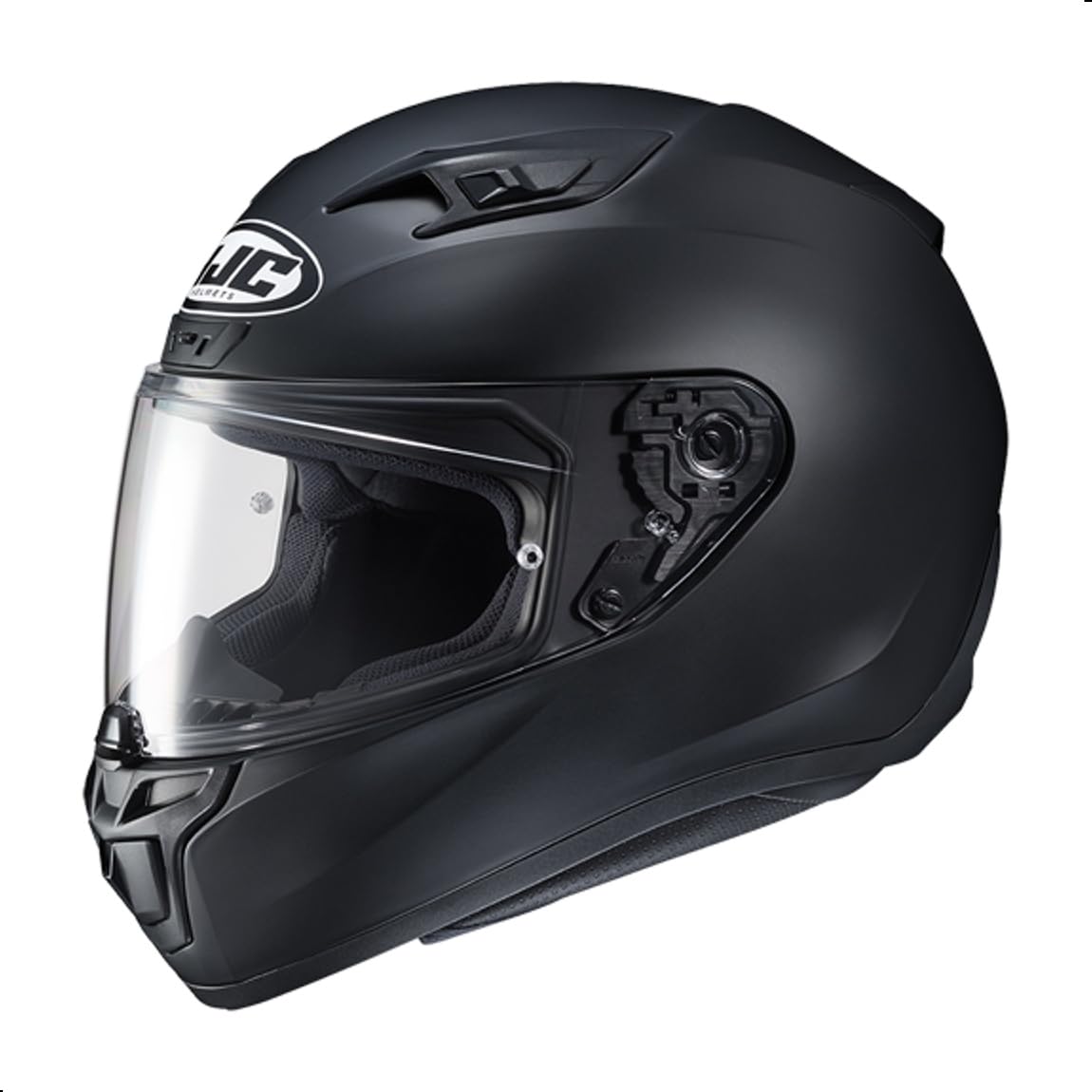
The HJC i10 PLUS is a touring-oriented full-face helmet that comes standard with the HJ-V7 integrated dark smoke sun visor, operated by a slide lever on the left side of the shell. This is a major convenience for a beginner who doesn’t want to fumble with swap-out shields or get caught off guard by a sudden sunset glare. The clear HJ-20M faceshield is Pinlock-ready and uses a 3D design for optical clarity and 95% UV protection.
The shell is an advanced polycarbonate compact design using CAD-optimized shaping to keep weight down while accommodating a multi-density EPS liner. The ACS ventilation system uses adjustable forehead and chin vents plus rear exhaust ports, and the “Supercool” interior fabric is antibacterial and moisture-wicking. A built-in glasses groove is molded into the foam to prevent eyewear arms from digging into your temples.
This model carries both DOT and Snell M2020 certification — a rarity at this price point that signals higher impact energy standards. Reviewers note the i10 PLUS is lightweight, well-ventilated, and breaks in comfortably after a few rides. The flip side is that the shell opening is small, making entry and exit snug for some head shapes, and the sun visor may not darken enough for extremely bright desert conditions. For the beginner who prioritizes visor versatility and certified safety, this helmet is a standout.
Why it’s great
- Integrated HJ-V7 dark smoke sun visor with easy slide lever
- DOT and Snell M2020 certified for higher impact protection
- Lightweight polycarbonate compact shell with ACS ventilation
- Built-in glasses groove for comfortable eyewear fit
Good to know
- Shell opening is small, making it a tight entry for some heads
- Sun visor coverage could be wider on the sides
- Pinlock insert is sold separately
7. BEON Open Face 3/4 Helmet

The BEON B-120 is a classic 3/4 open-face helmet that pairs a retro bucket silhouette with modern certification (both DOT and ECE 22.05). It uses an advanced thermoplastic shell with high-density EPS foam, a super-soft mesh inner liner, and a Click-n-Secure quick-release buckle that can be undone with one gloved hand. The visor package includes a clear anti-scratch outer visor and a retractable inner sun visor for UV protection.
What makes this particularly appealing for a new rider on a cruiser, moped, or scooter is the ear pad design — the removable velcro ear pads allow room for earbuds and glasses arms, solving the fitment issue that plagues many open-face helmets. An additional long outer visor is included in the box for higher-speed riding, providing more face coverage without switching to a full-face shell.
Reviewers consistently praise the “Speed Racer” aesthetic, comfortable padding, and sun visor that clicks into place without optical distortion. The helmet fits true to size, though owners should note that an open-face design offers less chin and jaw protection than a full-face model. For a beginner who only rides at city speeds and values style and air-on-the-face comfort, the BEON delivers impressive quality and features at its price tier.
Why it’s great
- DOT and ECE dual certification for international safety standard
- Removable ear pads accommodate earbuds and glasses comfortably
- Dual visor system: clear anti-scratch outer plus retractable sun visor
- Quick-release buckle and included long visor for highway use
Good to know
- Open-face design provides no chin or jaw impact protection
- Wind and road noise are higher than full-face helmets
- Not ideal for wet or cold weather riding without additional gear
8. ILM Modular Flip-Up Helmet Model 159

The ILM Model 159 is a modular (flip-up) helmet that combines the convenience of an open-face experience at gas stations and traffic lights with the full-face protection of a rigid chin bar while riding. The shell is lightweight ABS with a high-density fully vented EPS liner, and the helmet meets DOT FMVSS 218 safety standards. The ventilation system includes an intake and exhaust setup to keep airflow moving through the cabin.
Dual visors are a core feature here: a wide clear front visor with good impact resistance, plus a built-in inner sun visor operated by a simple switch. The quick-release buckle makes on-and-off easy for a beginner, and both the liner and cheek pads are removable and washable. At roughly 1,750 grams, it’s not the lightest option, but the flip-up hinge adds structural mass that is expected in this category.
Owner feedback emphasizes the incredible value for the money — many report it feels comparable to more expensive name-brand modulars. The glasses-friendly fit is noted, though some eyeglass wearers find the side temple snug. Sizing can run large, so careful measurement against the brand’s chart is recommended. For a beginner who wants the versatility of a modular helmet without paying premium prices, the ILM 159 is the strongest entry-level flip-up on the list.
Why it’s great
- Flip-up chin bar offers open-face convenience with full-face safety
- Built-in drop-down sun visor for instant glare reduction
- Quick-release buckle and fully removable washable liner
- Exceptional value compared to premium modular helmets
Good to know
- Modular hinge adds weight compared to standard full-face helmets
- Sizing can run a full size large on some head shapes
- Flip-up design may not offer the same structural rigidity as a full-face
9. HAX Impulse Full Face Helmet

The HAX Impulse is a full-face helmet that nails the essentials for a first-time buyer: DOT safety certification, a lightweight ABS shell with an aerodynamic shape and dual rear wing, and a clear outer visor with an integrated inner sun visor. The multi-vent system helps replace stale air quickly, and the emergency padding removal pull is a thoughtful safety addition rarely seen at this level. The Pinlock-ready plastic nails let you add an anti-fog insert (sold separately) to the DKS274 lens.
The interior uses an anti-allergic liner with memory foam padding for comfort, and the headset slot is designed to accommodate Bluetooth speakers without compressing the foam. The UV treatment on the visors blocks roughly 98% of ultraviolet radiation, protecting eyes on sunny rides. At about 2.18 kilograms, it’s on the heavier side, but the weight distribution is decent for a basic ABS shell.
Reviewers mention the helmet feels impressively robust and well-made for its price, with a nice paint finish and smooth-operating visors. Common notes include a snug fit that runs slightly small, noticeable wind noise, and a visor tab that can be stiff to operate while riding. For the entry-level rider whose budget is the primary constraint, the HAX Impulse provides legitimate DOT protection, dual visors, and a modern aesthetic without cutting corners on the safety baseline.
Why it’s great
- DOT certified with emergency padding removal pull for first responders
- Dual visor system (clear + inner sun visor) with 98% UV blockage
- Pinlock-ready lens design for optional anti-fog upgrade
- Anti-allergic memory foam liner with Bluetooth speaker slot
Good to know
- Heavier than premium polycarbonate models at roughly 2.18 kg
- Runs slightly small; order a size up from your normal fit
- Wind noise is noticeable, especially at higher speeds
FAQ
How tight should a beginner motorcycle helmet feel in the store?
Is a Snell-rated helmet worth it for a beginner rider?
Can I wear glasses with a full-face motorcycle helmet?
How often should a beginner replace their helmet?
Final Thoughts: The Verdict
For most new riders, the best beginner motorcycle helmet winner is the ScorpionEXO T520 because it combines DOT/ECE certification, the innovative AirFit custom-fit cheek system, an Everclear anti-fog shield with a drop-down sun visor, and integrated speaker pockets — all without breaking the premium price barrier. If you want the absolute lightest shell and highest safety certification, grab the AGV K1 S for its ECE 22.06 rating and race-inspired aerodynamics. And for the rider on a strict budget who still needs legitimate DOT protection and dual visors, nothing beats the HAX Impulse as a capable, affordable starting point.