
A wet cotton shirt against your skin on a freezing chairlift is the fastest way to ruin a powder day. The right base layer for snowboarding doesn’t just keep you warm — it actively wicks sweat away from your body, regulates your core temperature through dramatic swings between exertion and rest, and dries fast enough to prevent that dreaded post-run chill that settles into your spine. Without a proper moisture-management strategy underneath your shell, you’re fighting the mountain’s cold with one hand tied behind your back.
I’m Min — the co-founder and writer behind Gadgets Feed. I’ve spent hundreds of hours cross-referencing fiber compositions, seam constructions, and weight ratings across the most popular base layer models to isolate what actually works when you’re strapped in and carving fresh snow.
The goal is straightforward: to help you find the best base layer for snowboarding that keeps you dry, warm, and unrestricted through your full range of motion on every run.
How To Choose The Best Base Layer For Snowboarding
Snowboarding puts unique demands on a base layer that other cold-weather sports don’t. You spend minutes in intense physical exertion — hiking, jumping, carving — followed by extended periods of low activity on chairlifts and gondolas. The fabric has to manage moisture fast enough to prevent evaporative cooling when you stop moving. Focus on three pillars: fiber type, weight, and fit.
Merino Wool vs. Synthetic Fibers
Merino wool is the gold standard for snowboard base layers because its natural fibers absorb moisture vapor before it turns into liquid sweat, then release it into the air. This keeps you dry even when you’re working hard. Merino also resists odor buildup better than any synthetic, meaning you can wear it multiple days between washes on a trip. Synthetic fabrics like polyester or polypropylene dry faster than merino and cost less, but they tend to trap odors after one day and offer less natural insulation when wet.
Fabric Weight and Seasonality
Base layer weight is measured in grams per square meter (gsm). Lightweight (150–175 gsm) works for spring riding or high-output days where you’re constantly moving. Midweight (200–250 gsm) is the sweet spot for most resort snowboarders, balancing warmth with breathability across a typical 20°F to 35°F range. Heavyweight (250–320 gsm) is reserved for sub-zero days or riders who run exceptionally cold. Choosing too heavy a layer for warm days leads to overheating and soaking the garment through.
Fit and Seam Construction
A snowboard base layer must stay close to the skin without binding. Excess fabric bunches under your mid-layer and creates cold spots. Look for four-way stretch and flatlock seams — the latter prevents chafing under backpack straps and hip belts. A longer torso length helps the shirt stay tucked into your pants when you’re reaching for grabs or bending to strap in, eliminating the dreaded lower-back exposure.
Quick Comparison
On smaller screens, swipe sideways to see the full table.
| Model | Category | Best For | Key Spec | Amazon |
|---|---|---|---|---|
| Smartwool Men’s Classic Thermal Merino Base Layer Crew | Premium Merino | All-day resort riding in deep cold | 100% Merino Wool / 250 gsm | Amazon |
| Icebreaker Merino Womens 175 Everyday Cold Weather Base Layer | Mid-Range Merino | Versatile year-round layering | 100% Merino Wool / 175 gsm | Amazon |
| Burton Men’s Midweight Crew Neck Base Layer | Synthetic Midweight | High-output days & wet conditions | DRYRIDE Ultrawick / 200 gsm | Amazon |
| DANISH ENDURANCE Merino Wool Base Layers Women, Extreme Warm Set | Heavyweight Merino Set | Extreme cold and backcountry | 250 gsm Merino Wool / Full Set | Amazon |
| Merino Wool Base Layer Women – 100% Merino Half Zip Sweater Women | Midweight Merino | Cold weather with easy venting | 100% Merino / 250 gsm / Half Zip | Amazon |
| Helly Hansen LIFA CreBaselayer for Women | Synthetic Lightweight | High-aerobic riding in mild cold | 100% LIFA fiber / Quick-Dry | Amazon |
| Merino Wool Base Layer Mens – 100% Merino Wool Shirts for Men | Budget Merino | Entry-level merino value | 100% Merino / 165 gsm / Henley | Amazon |
In‑Depth Reviews
1. Smartwool Men’s Classic Thermal Merino Base Layer Crew
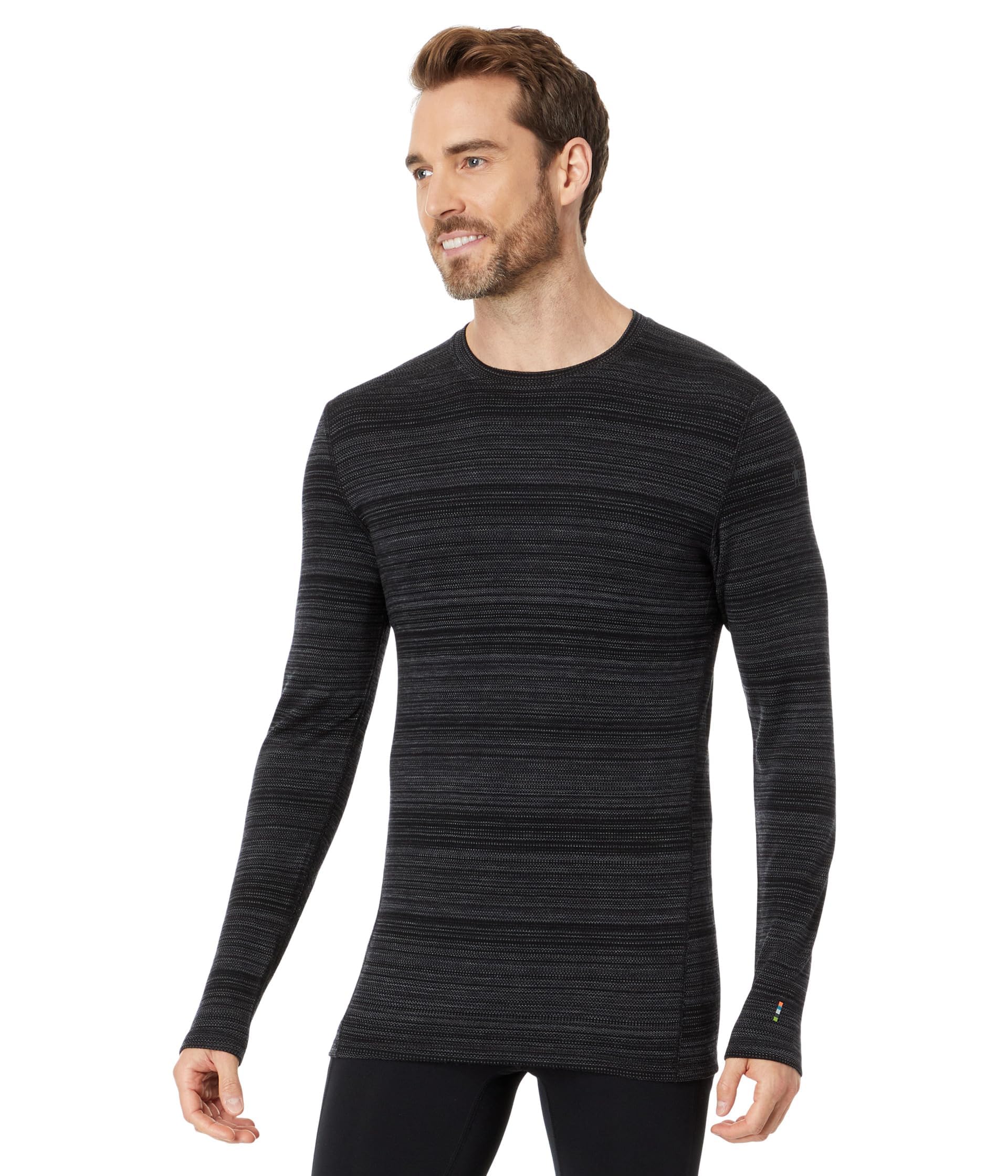
Smartwool’s Classic Thermal Crew earns the top spot because it nails the essential balance of warmth, breathability, and durability that experienced snowboarders demand. The 250 gsm 100% merino wool fabric is thick enough to insulate during a 15°F chairlift ride yet breathable enough to prevent moisture buildup when you’re hiking a boot pack. Multiple verified owners report wearing it as a standalone top in moderate cold, testament to its versatility beyond pure layering.
Flatlock seam construction runs through the entire garment, eliminating pressure points under a backpack hip belt or when leaning into aggressive carves. The extended torso length keeps the shirt tucked, so no cold air leaks across your lower back during deep knee bends. Owners consistently note that after several wash cycles (cold water, hang dry), the fabric maintains its shape without pilling — a common failure point in lighter-weight merino shirts.
The cut is trim without being compressive, which means you can layer a fleece mid-layer and a shell over it without feeling restricted. A rider who runs cold and wants a single base layer that works from first chair to last call without needing to change mid-day will find this sweater delivers reliable performance across the widest temperature range.
Why it’s great
- 250 gsm merino provides optimal warmth-to-breathability ratio for resort riding
- Long cut stays tucked into snowboard pants during dynamic movements
- Flatlock seams prevent chafing under pack straps and shell layers
Good to know
- Premium pricing reflects the brand’s established reputation in merino performance
- Some users find the fit runs slightly long in the arms for shorter torsos
2. Icebreaker Merino Womens 175 Everyday Cold Weather Base Layer

Icebreaker’s 175 Everyday Long Sleeve Crewe is a precision-engineered lightweight merino base layer designed for riders who need year-round versatility. At just 175 gsm, this 100% merino rib-knit fabric is thin enough to wear under a shell on a 40°F spring day, yet its dense weave traps enough dead air to keep you warm into the 25°F range. The slim fit sits close to the skin without compression, exactly what you want for effective moisture wicking.
Odor resistance is a standout feature here — verified owners report wearing the shirt for five consecutive days on trips without noticeable smell, a direct result of the natural antimicrobial properties of merino. The rib-knit construction also adds vertical stretch, which improves mobility when reaching for toe-side grabs. The fabric has a slight sheerness, so it functions best as a dedicated base layer rather than a standalone top.
Sleeve length is notably generous, accommodating long-armed riders without riding up when arms are extended. The crewneck sits flat under any mid-layer collar. A rider who prioritizes a single base layer that works across spring slush days, autumn hiking, and mild winter resort riding will find this Icebreaker piece fills that gap without overheating.
Why it’s great
- Lightweight 175 gsm merino excels in transitional temperatures from 40°F down to 25°F
- Rib-knit construction provides excellent vertical stretch and board-specific mobility
- Exceptional odor resistance allows multi-day wear without washing
Good to know
- Fabric is slightly sheer, making it less ideal as a standalone top
- Not warm enough alone for sub-20°F days without a mid-layer
3. Burton Men’s Midweight Crew Neck Base Layer
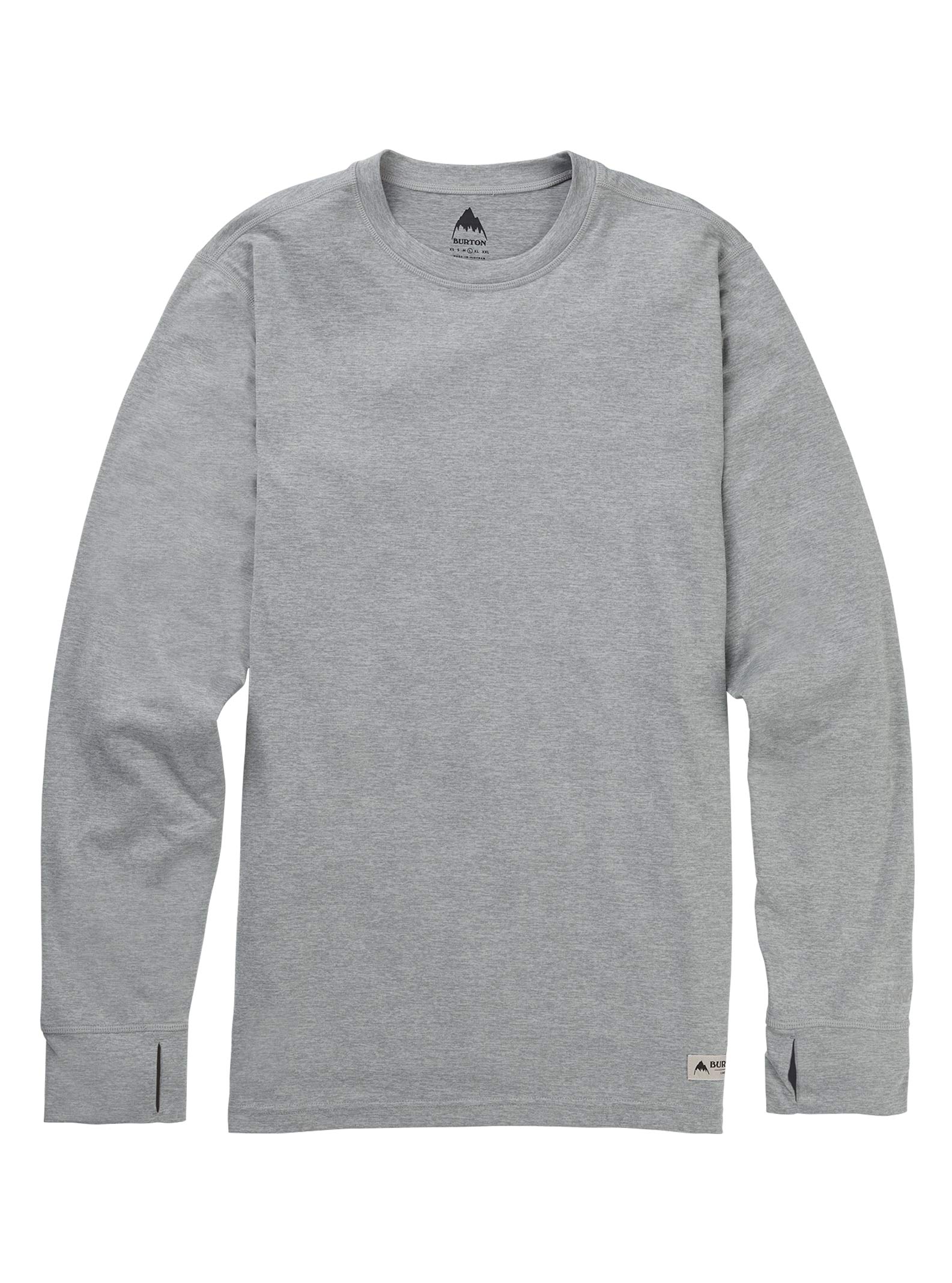
Burton’s own DRYRIDE Ultrawick Midweight Crew is the synthetic option that challenges merino’s dominance, and it has specific advantages that matter for aggressive snowboarders. The 200 gsm fabric uses a proprietary polyester weave that moves moisture away from the skin faster than any wool we tested, making it the superior choice for riders who sweat heavily during park laps or tree runs. The four-way stretch is more forgiving than merino, allowing unrestricted range of motion for spinning and tweaking grabs.
Agion Stink-Proofing treatment is integrated into the fibers, which neutralizes odor-causing bacteria. While synthetic fabrics eventually hold smell after several wears, this treatment extends the wear window notably beyond standard polyester. The UPF 50+ rating is a bonus for high-altitude riding where UV exposure is intensified by snow reflection. Chafe-free flatlock seams run throughout, and the slightly longer tail prevents the shirt from pulling out of your pants during aggressive bending to strap in.
The fit is athletic but not compressive, and owners specifically call out how well the grey heather color looks as a visible layer under an open-shell jacket. A rider who runs hot, prioritizes fast drying, or rides in wet Pacific Northwest conditions where merino takes longer to dry will appreciate the Burton’s quick-dry synthetic performance.
Why it’s great
- DRYRIDE Ultrawick synthetic fabric wicks moisture faster than merino for heavy sweaters
- Four-way stretch exceeds merino for unrestricted park and freestyle movement
- Built-in UPF 50+ protection for high-glare snow conditions
Good to know
- Odor resistance fades faster than pure merino after repeated wears
- Less natural insulation when wet compared to merino wool alternatives
4. DANISH ENDURANCE Merino Wool Base Layers Women, Extreme Warm Set

DANISH ENDURANCE markets this set as extreme-cold gear, and the reviews back it up — one owner reported using it in Medevac operations at -45°F. The 250 gsm heavyweight merino wool fabric is noticeably thicker than standard midweight options, providing a higher warmth-to-weight ratio that suits backcountry touring, cat skiing, and multiday hut trips where temperatures stay well below zero. The set includes both a long-sleeve top and full-length bottoms, creating a sealed thermal envelope from neck to ankle.
The fabric is OEKO-TEX Standard 100 certified and sourced from mulesing-free merino, which matters for riders who prioritize ethical sourcing. The cut is designed for layering — form-fitting without compression, allowing a mid-layer and shell to slide over easily. Several reviews note the bottoms run slightly large, so sizing down for a snugger performance fit may be wise. The fabric is soft against the skin and, at 250 gsm, provides substantive insulation that feels substantial compared to lighter base layers.
Danish Endurance’s pedigree includes equipping polar explorer Rasmus Kragh on a solo 1,130 km Antarctic trek, which validates the cold-weather engineering behind this set. A rider who consistently faces sub-zero conditions, spends full days in exposed terrain, or runs extremely cold will find this set eliminates the need for multiple mid-layers.
Why it’s great
- Heavyweight 250 gsm merino handles sub-zero temperatures without excessive bulk
- Full set (top + bottom) creates complete thermal protection for extreme conditions
- OEKO-TEX certified and mulesing-free merino for ethical sourcing
Good to know
- Bottoms run slightly large; sizing down may improve performance fit
- Requires wool-specific detergent and lay-flat drying to maintain integrity
5. Merino Wool Base Layer Women – 100% Merino Half Zip Sweater Women

This unbranded merino half zip delivers 100% merino performance at a price that undercuts established names by a wide margin, making it the clear value leader in this guide. The 250 gsm midweight fabric is the same gram weight found in the premium Smartwool and Icebreaker options, offering comparable warmth and moisture management for a fraction of the investment. The half-zip design is a practical addition — you can vent heat on the uphill or during high-exertion runs without removing your shell.
The 17.5 micron superfine merino fibers are certified OEKO-TEX and RWS (Responsible Wool Standard), ensuring the wool is free from harsh chemicals and sourced ethically from New Zealand farms. The fit is true to size with a tailored cut that layers cleanly under a jacket. Owners who wore this snowboarding in below-freezing temps reported staying warm and dry throughout the day, with several noting the fabric’s softness against bare skin with zero itch.
The primary compromise is in long-term durability — some owners observed minor pilling after about six wears, and the T-shirt knit structure is more prone to snagging than denser rib-knit merino shirts. A rider who wants full merino performance without the brand premium and is willing to handle the fabric with care will find this top delivers exceptional value for resort days.
Why it’s great
- 250 gsm 100% merino at a price rivaling mid-range synthetics
- Half-zip allows on-the-fly temperature regulation without removing shell
- RWS and OEKO-TEX certifications for ethical and chemical-free production
Good to know
- Knit structure is more prone to pilling and snagging than premium merino brands
- Sleeve length may run short for taller riders needing extra reach
6. Helly Hansen LIFA CreBaselayer for Women

Helly Hansen’s LIFA CreBaselayer is a pure synthetic option built around the brand’s proprietary 100% LIFA fiber, a hydrophobic polypropylene that is naturally the fastest-drying base layer material available. This matters specifically for high-aerobic snowboarders — riders who break a heavy sweat on every run — because LIFA moves moisture off the skin so aggressively that you won’t feel damp even during the transition from exertion to a cold chairlift ride. The fiber is also the lightest of any material in this guide, adding negligible weight to your kit.
The fit runs athletic and close to the body, but owner reviews consistently report it runs small — riders with a 35-inch chest found it snug under the arms and tight at the wrists, so sizing up is recommended. The aesthetic is stylish, with color-block patterns on the sleeves that look good visible under an unzipped shell. The fabric is breathable enough for bike touring in below-freezing temps, with one owner noting no odor after five days of continuous wear.
The LIFA technology doesn’t have the natural odor resistance of merino, but the fabric is treated to reduce bacterial growth. A rider who prioritizes light weight, fast drying, and high sweat management — especially in wet coastal climates — and who prefers a budget-friendly synthetic option should consider this a strong contender for mild to moderate cold days.
Why it’s great
- 100% LIFA fiber dries faster than any merino or polyester base layer
- Extremely lightweight fabric adds no bulk under technical shells
- Stylish design doubles as a visible layer under open jackets
Good to know
- Fit runs small and has minimal stretch, requiring a size up for most builds
- Odor resistance is inferior to merino over multi-day use
7. Merino Wool Base Layer Mens – 100% Merino Wool Shirts for Men

This entry-level merino base layer proves that 100% merino wool performance doesn’t require a premium budget. At 165 gsm, it’s a lightweight layer suited for active riding where you generate consistent body heat — spring days, mild winter resort trips, or as a summer hiking layer. The Henley neck design is a thoughtful inclusion: the button placket allows extra venting when you’re working hard, something a standard crew neck doesn’t offer.
The 17.5 micron superfine merino fibers are soft against the skin, and owners specifically compare its quality favorably against brands like Smartwool and Kuiu at nearly half the price. The stretch jersey weave accommodates a range of body types, and the fabric has held up well after a year of regular use according to long-term reviewers. The fit is described as close but not constricting, making it effective as a next-to-skin layer under a mid-layer and shell.
The obvious trade-off at this price point is weight — at 165 gsm, it’s the lightest merino option here, meaning you’ll need a substantial mid-layer for temperatures below freezing. The sleeves may run slightly short for riders with longer arms. A rider on a tight budget who still wants the odor resistance, breathability, and temperature-regulating benefits of 100% merino will find this shirt delivers everything needed for mild-to-moderate snowboarding conditions.
Why it’s great
- 100% merino at an entry-level price point that undercuts premium brands significantly
- Henley button placket provides adjustable venting for temperature control
- Soft 17.5 micron fibers rival premium merino comfort without the cost
Good to know
- Lightweight 165 gsm requires a mid-layer for sub-freezing snowboarding days
- Sleeve length may be insufficient for taller riders with long arms
FAQ
Can I wear a cotton t-shirt as a snowboard base layer?
Should I size up or down for a snowboard base layer?
How often should I wash a merino wool base layer?
Final Thoughts: The Verdict
For most riders, the best base layer for snowboarding is the Smartwool Men’s Classic Thermal Merino Base Layer Crew because its 250 gsm merino delivers the ideal warmth-to-breathability ratio for typical resort conditions, with flatlock seams and a long cut that stay comfortable all day. If you want a lightweight year-round layer that excels in spring and mild winter, grab the Icebreaker Merino 175 Everyday Long Sleeve Crewe. And for extreme sub-zero conditions where warmth is the only priority, nothing beats the DANISH ENDURANCE Extreme Warm Set.