
Finding a pair of alpine boots that don’t leave your feet screaming by lunch is the single biggest hurdle for anyone new to skiing. A boot that fits poorly, flexes too stiff, or feels like a vise will ruin the mountain experience before you even clip into your bindings. The right pair delivers warmth, controlled response, and a forgiving flex that lets you learn without fighting your gear.
I’m Min — the co-founder and writer behind Gadgets Feed. After hours of research comparing shell designs, last widths, flex ratings, closure systems, and liner materials across nine products, I built this guide to cut through the noise and pinpoint the models that genuinely serve a first-time buyer’s needs.
Whether you have narrow feet, wide feet, or just want a boot you can wear all day without pain, this breakdown of the best beginner ski boots separates the comfortable keepers from the painful mistakes.
How To Choose The Best Beginner Ski Boots
A ski boot is the most important piece of gear a new skier will own. Rentals are often beat-up, poorly sized, and lack the warmth or support that a well-fitted personal boot provides. Before you click “buy” on any ski boot, you need to understand three core specs that define how it will feel and perform on the snow: flex rating, last width, and liner construction.
Flex Rating — Soft is Your Friend
Flex rating measures how stiff the boot shell is forward to backward. A rating of 50 to 70 is considered soft and is ideal for beginners. A soft flex allows you to bend your ankles naturally, making it easier to balance, turn, and control your speed. A boot with a flex of 90 or higher is meant for aggressive carving at high speeds and will punish your shins on your first blue run. For your first season or two, stick to boots with a flex of 80 or less. The Nordica Cruise and the Rossignol Evo 70 both live in this sweet spot and reward you with a forgiving ride.
Last Width — Where Pain or Comfort Lives
The last width is the measurement across the forefoot at the widest part of the boot, usually in millimeters. A 98mm last is a narrow performance fit. A 100-102mm last is a standard medium fit. A 104mm last is a wide or “high volume” fit. Beginners often have no idea how wide their feet are. If you wear a wide shoe in street shoes, or if you have bunions or a wide forefoot, you must look for a 104mm last boot. Trying to cram a wide foot into a 98mm shell will cause severe foot pain, numbness, and cold toes within an hour. The Nordica Cruise (men’s and women’s) and the K2 BFC 80 both feature a generous 104mm last and are frequently cited for their out-of-the-box comfort.
Liner Quality — Heat-Moldable vs Basic Foam
The liner is the soft inner sleeve your foot slides into. Basic liners are packed with standard foam that provides okay comfort for the first few runs but packs out and loses support after a season. Heat-moldable liners contain a foam formulation that softens when exposed to heat (from a boot oven at a shop or a hair dryer at home) and then conforms to the specific bumps, arches, and ankle bones of your foot. A heat-moldable liner turns a good boot into a custom-fit boot. The Rossignol Evo 70 and the K2 BFC 80 offer heat-moldable shells or liners. For a beginner, this is a feature worth paying a small premium for because it eliminates high-pressure points that make skiing painful.
Quick Comparison
On smaller screens, swipe sideways to see the full table.
| Model | Category | Best For | Key Spec | Amazon |
|---|---|---|---|---|
| Rossignol Evo 70 | Men’s (Relaxed Fit) | All-day comfort with heat-moldable shell | Flex 70 / Last 104mm | Amazon |
| Nordica Sportmachine 3 80 | Men’s (Mid Volume) | Intermediate skier upgrading from rental | Flex 80 / Last 102mm | Amazon |
| K2 BFC 80 | Men’s (Wide Last) | Hot-moldable shell for wide feet | Flex 80 / Last 104mm | Amazon |
| Dalbello Veloce 90 MV | Men’s (Mid Volume) | Entry-level boot with a performance feel | Flex 90 / Last 100mm | Amazon |
| Head Edge LYT RX HV | Unisex (High Volume) | High instep and wide forefoot relief | Flex 75 / Last 104mm | Amazon |
| Nordica Cruise (Men’s) | Men’s (Extra Wide) | Wallet-friendly with wide last comfort | Flex 60 / Last 104mm | Amazon |
| Nordica Cruise S W (Women’s) | Women’s (Wide Last) | Forgiving flex for female beginners | Flex 60 / Last 104mm | Amazon |
| K2 Maysis (Snowboard Boot) | Men’s Snowboard | All-mountain freeride with BOA system | Flex 7/10 / Intuition Liner | Amazon |
| Nidecker Supermatic (Binding) | Binding | Drop-in step-in binding for snowboarding | Dual-entry / Auto Drop-in | Amazon |
In‑Depth Reviews
1. Rossignol Evo 70
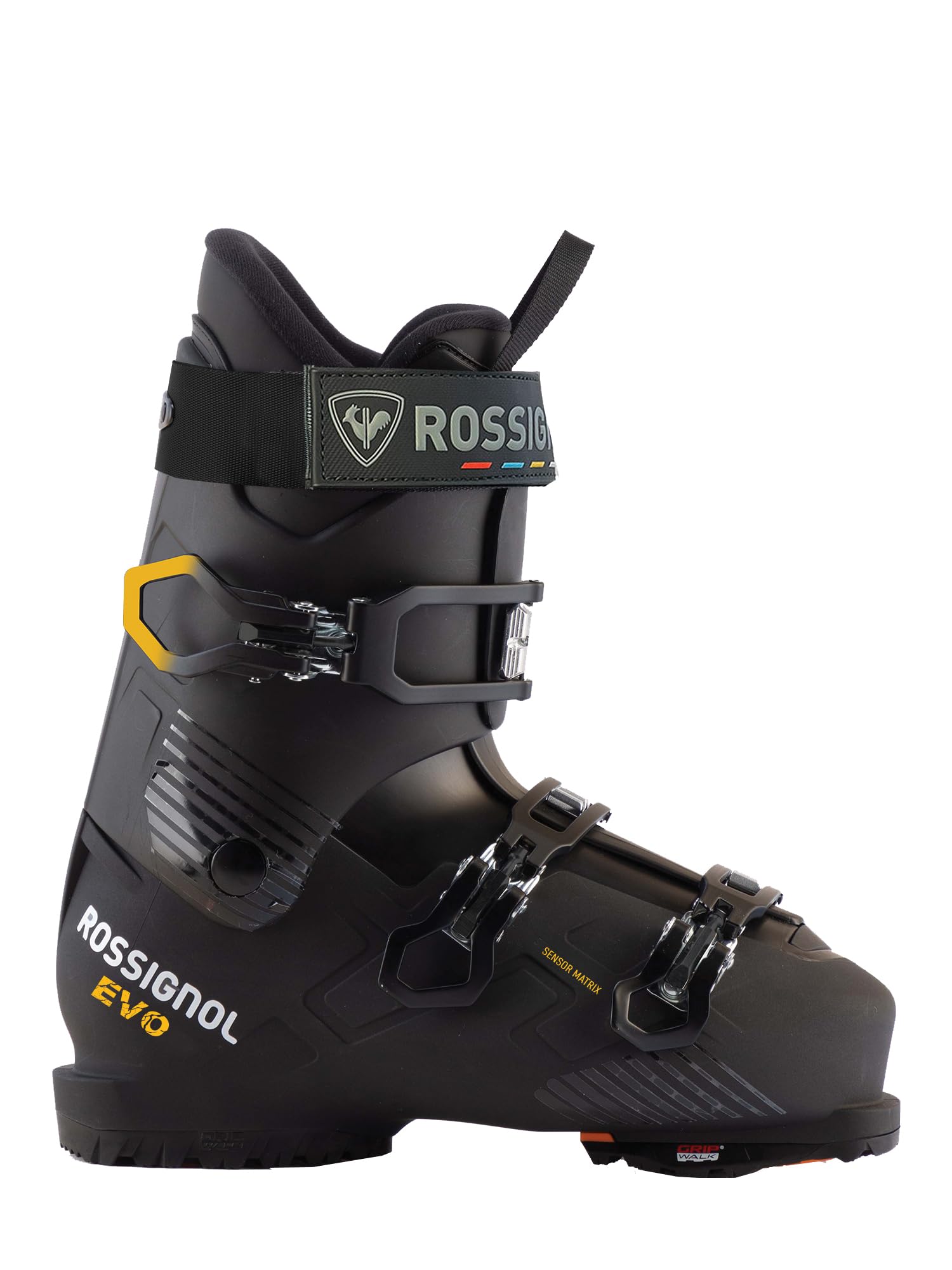
The Rossignol Evo 70 is the goldilocks boot for beginners: soft enough to learn on (flex 70) and wide enough (104mm last) to accommodate most foot shapes without clamping down. The Sensor Matrix shell reduces overall weight while maintaining direct energy transfer, so you don’t have to muscle the boot to get your edges engaged. Combined with the relaxed fit that allows your toes to wiggle freely, this boot lets new skiers focus on balance rather than pain management.
The Evo 70’s shell and liner construction features zones of softer padding through the ankle and instep, plus easy opening of the overlap for getting in and out. Multiple buyers report zero shin pain even after a full day, which is rare for any ski boot. The Evo 70 also supports GRIPWALK soles (sold separately) for easier walking in the lodge.
Heat-moldable customization is possible at a shop, which virtually eliminates pressure points. The style (26.5 shown) runs true to street shoe size per the included chart. For a first-time buyer who wants a boot that feels broken-in from day one, this is the most forgiving mid-range performer on the list.
Why it’s great
- Heat-moldable shell offers a custom fit without a boot oven
- 104mm last gives wide-footed skiers generous room
- Very comfortable all day with no reported shin bang
Good to know
- GRIPWALK soles sold separately if you want them
- Some buyers with narrow feet may need an aftermarket insole
2. Nordica Sportmachine 3 80

The Sportmachine 3 80 sits a half-step above entry-level with a flex of 80 and a 102mm last. That flex rating is still forgiving enough for confident beginners but offers more resistance for progression. The 3D custom cork liner is the standout feature here — cork naturally insulates heat more effectively than standard foam, keeping feet warm on the coldest days, and it molds to the heel and ankle for lateral transmission that feels direct without being harsh.
Nordica’s 3 Force technology channels energy from your leg through the liner and into the shell, giving you power and control as you start linking turns with more intent. The softer plastic inserts integrated into the throat allow easy stepping in and out, which is a huge convenience when you’re fumbling with buckles in the parking lot. The medium-width last works best for standard-volume feet.
Customer feedback highlights the all-day comfort and warmth, with several notes about needing to size up once if you are between sizes. The return policy requires covering return shipping, so check sizing carefully. For a beginner who knows they will hit intermediate terrain by mid-season, this boot provides room to grow without overflexing your budget.
Why it’s great
- 3D cork liner provides superior thermal insulation and heel hold
- Flex 80 works well for progressing skiers
- Easy step-in/out thanks to soft plastic throat inserts
Good to know
- 102mm last may feel snug for wide feet over 4 inches across
- Some units may look scratched or lightly used depending on stock
3. K2 BFC 80
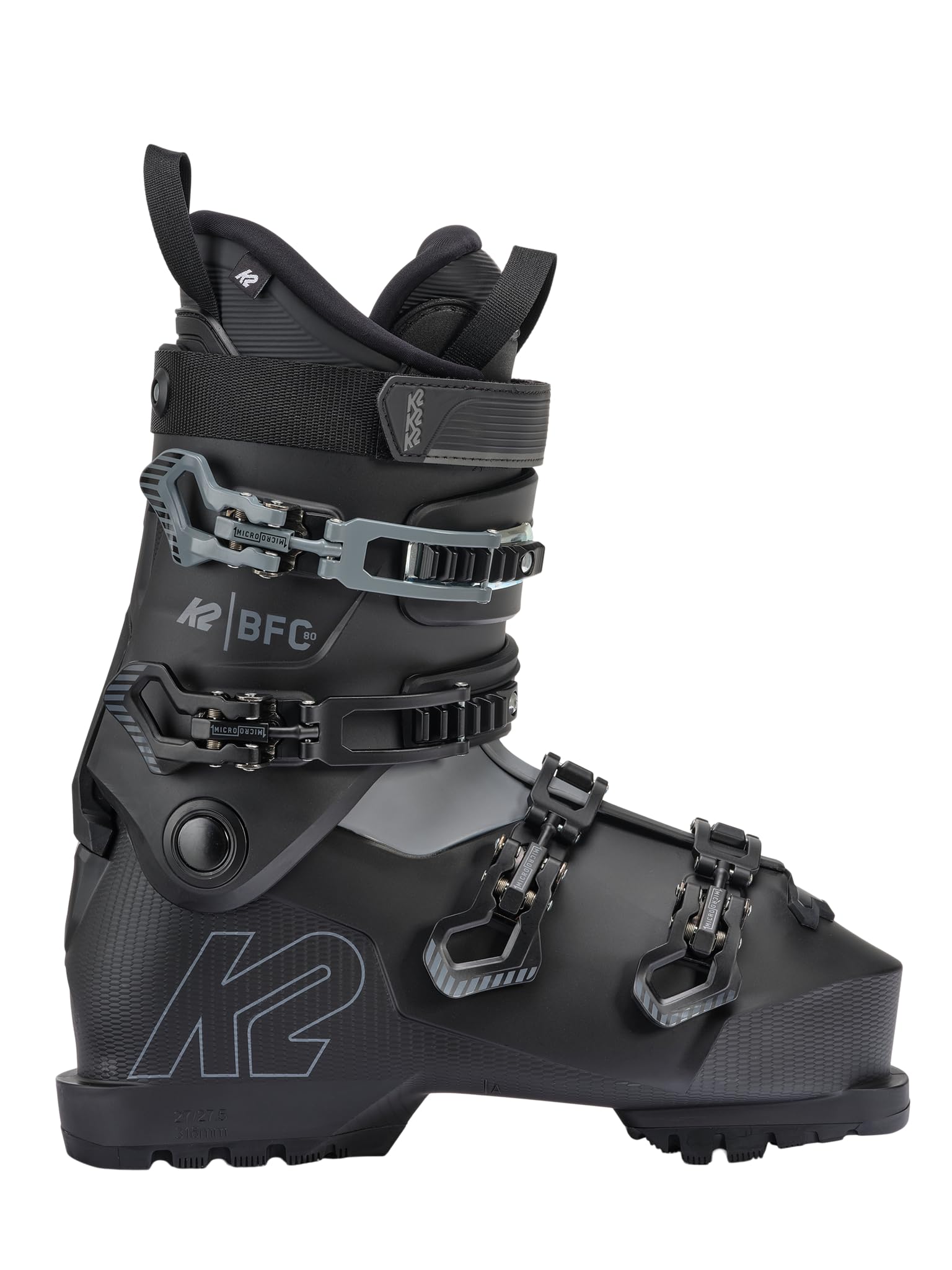
The K2 BFC 80 stands for “Big Fit Comfort,” and it lives up to that name with a 104mm last and a dual-material overlap that enables hands-free exit and entry — you don’t have to pry the boot open with your thumbs. The K2 BFC 80 is also fully heat-moldable, meaning both the shell and the cuff can be oven-baked to match the shape of your foot, including problem areas like the ankle bone or navicular.
The Cushfit Comfort liner adds extra foam in key zones for a plush initial feel that doesn’t pack out as quickly as basic foam liners. Buyers with wide feet specifically note they could wear this boot for six days straight without any pain or numbness. The GripWalk sole system is integrated, giving you better walking traction when you’re shuffling across an icy parking lot.
The BFC 80’s flex is soft enough for complete beginners but the architecture supports heavier riders without folding over. The only downside is the color variance issue mentioned by one buyer — you may not get the exact color shown, but the performance is consistent. For wide-footed skiers, this is the most accommodating boot under .
Why it’s great
- Hands-free entry makes getting in and out effortless
- Heat-moldable shell and cuff for a truly custom fit
- 104mm last works well for wide feet and high volume
Good to know
- Color can vary from the listing photo in some shipments
- Some find the ankle stiffness surprisingly high for a beginner boot
4. Dalbello Veloce 90 MV

The Veloce 90 MV leans a little stiffer (flex 90) than a traditional beginner boot, but it’s a viable choice for a heavier skier or someone who plans to progress quickly to carving turns. The 100mm last is a medium fit, snug enough for good heel hold but not punishing for a standard-width foot. The construction feels solid, with four micro-adjustable aluminum buckles that let you dial in pressure across the instep and forefoot.
This boot requires a slight break-in, as multiple reviewers noted it’s comfortable out of the box but does need a few days of skiing to fully settle around the calf and instep. The fit aligns accurately with the size chart — a size 10 street shoe matches a 27.5 boot. Users transitioning from old rental gear reported a significant upgrade in warmth and heel hold.
At this price point, the Veloce 90 MV lacks a heat-moldable liner, so you won’t get custom zonal fit unless you visit a bootfitter. But for a new skier who wants a performance-oriented boot that won’t feel too soft as they improve, this is a solid mid-range entry with good build quality.
Why it’s great
- Micro-adjustable aluminum buckles for precise fit
- Flex 90 supports heavier skiers well
- Fits true to size chart for easy ordering
Good to know
- Needs break-in time before reaching max comfort
- Not heat-moldable out of the box
5. Head Edge LYT RX HV

Head’s Edge LYT RX HV is built specifically for high-volume feet — extra room through the forefoot, a taller instep, and a 104mm last. This is the boot to pick if you have a high arch or a thick foot that gets squeezed in a standard 100mm shell. The flex is right around 75, well within beginner territory, and the polyurethane shell construction provides a damp, smooth feel that reduces vibration chatter.
The HV designation is a relief for skiers who have struggled with numb feet in the past. Multiple customers with wide feet report that these are comfortable right out of the box with no significant pressure points. The Edge LYT RX HV works for up to a few trips per season without breaking the bank. The lace system is standard micro-buckles, easy to adjust even with gloves on.
The downsides are minimal for the price. The boot is rated intermediate by Head, but it’s forgiving enough for a first-time buyer who expects to see the mountain a handful of days per season. If you have wide feet across the metatarsal area or a bony instep, this boot is worth trying before any mid-volume option.
Why it’s great
- High volume fit with 104mm last and roomy instep
- Very comfortable out of the box for wide feet
- Good value for occasional use
Good to know
- Flex may feel a touch soft for intermediate skiers
- Some may desire a stiffer boot after a season
6. Nordica Cruise (Men’s)

For the lowest entry cost in this guide, the Nordica Cruise delivers a 60-flex boot with a massive 104mm last and a dual soft flap instep that opens the boot throat exceptionally wide for slipping in. The design is deliberately forgiving — there is no aggressive forward lean, and the shell has enough give to absorb beginner mistakes without transferring shock to your shins. It’s built for comfort, not speed.
The heel hold is good for a wide-last boot thanks to infrared technology that allows custom molding at the most sensitive points. Users with medium-width feet also found this boot plenty comfortable, which speaks to the Cruise’s “take it easy” philosophy. The aluminum micro-adjustable buckles are a nice touch at this price tier, allowing fine adjustments to relieve pressure points on the top of the foot.
The Cruise runs large in sizing per several buyers. A 31.5 boot corresponds to a street shoe size of roughly 13. If you’re between sizes, go down one. The flex is very soft — ideal for complete beginners but may feel too noodly for someone who weighs over 200 pounds. For a first pair that you’ll only wear for a season or two before upgrading, this is the most affordable way to get out of rental boots.
Why it’s great
- Very soft 60 flex — extremely forgiving for learning
- 104mm extra-wide comfort with easy entry
- Micro-adjustable aluminum buckles at a low price
Good to know
- Runs large — size down if between sizes
- Too soft for heavier or more aggressive skiers
7. Nordica Cruise S W (Women’s)

This women’s-specific version of the Cruise keeps the same 104mm last, 60 flex, and dual soft flap entry, but the shell shape is optimized for a woman’s lower calf and narrower heel. The shell material is slightly softer to match a lighter skier’s weight range, ensuring the flex rating actually feels like a 60 and not a 80 because of rider weight. The heat-moldable liner and customizable shell allow a boot fitter to adjust pressure points.
Women who have been stuck in uncomfortable rental boots will immediately appreciate the difference. Buyers mention wearing these for full days without aching feet or cold toes — a testament to the thermal properties of the stock liner. The easy entry and exit also scores high with skiers who have struggled with stiff boot tongues in the past. The colorway (black/light blue/white) is subtle and modern.
The only drawback is the perceived build quality of the buckles — one buyer mentioned skepticism about long-term durability. The price is impressively low for a boot that offers a heat-moldable liner, micro-adjustable buckles, and a wide last. For a first-season skier, this represents outstanding value.
Why it’s great
- Women’s-specific shell shape for lower calf fit
- Heat-moldable liner and 104mm last for all-day comfort
- Very affordable
Good to know
- Buckle quality might not be as robust as premium models
- 60 flex may be too soft for aggressive intermediate terrain
8. K2 Maysis (Snowboard Boot)
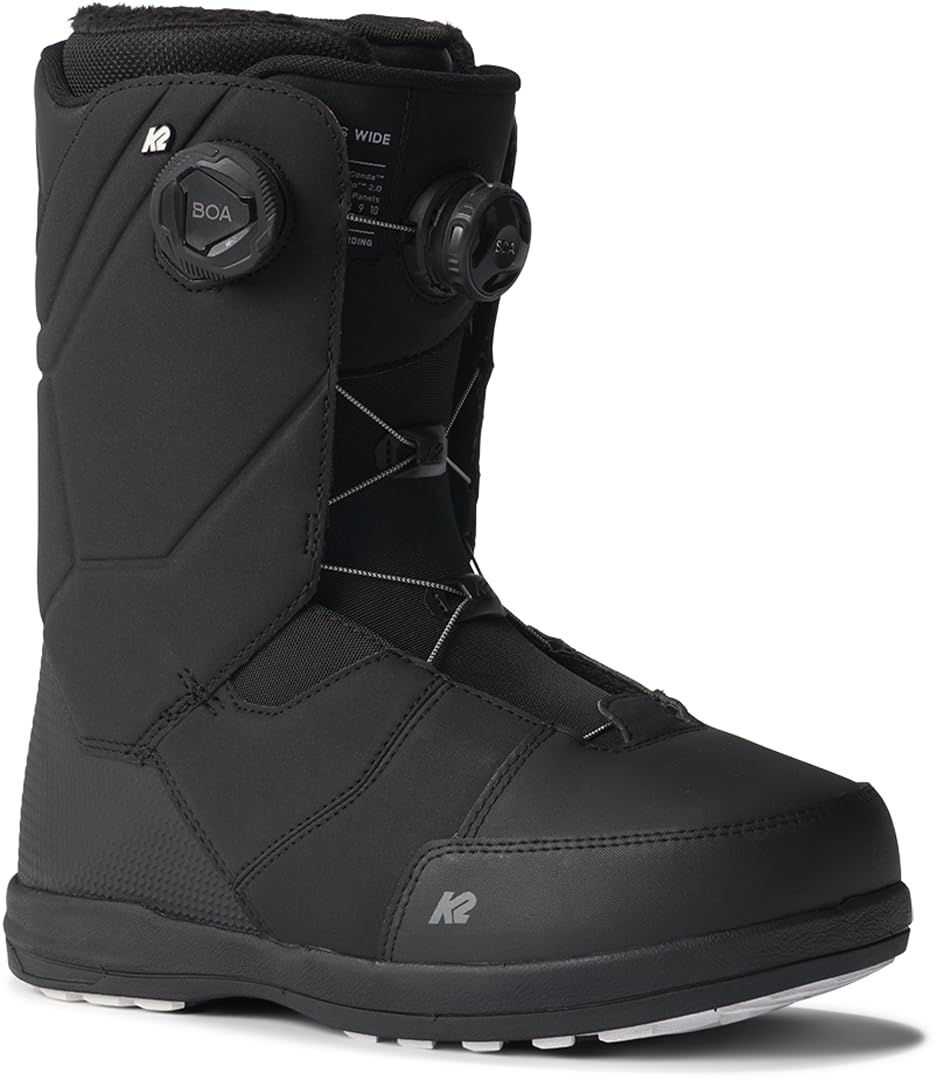
The K2 Maysis is not a ski boot — it’s a snowboard boot — but it’s included here for snowboarders who need a high-quality boot for their first season. The Maysis features the H4 Coiler BOA fit system, which uses two separate zones to lock the heel down while allowing the toe box to remain comfortable. The flex rating of 7 out of 10 is a medium-stiff flex suitable for all-mountain and freeride riding.
The Intuition Control Foam 3D liner is heat-moldable and packed with a dense foam that supports the ankle and shin without feeling like a cast. The “Grips!” premium rubber outsole with Harshmellow technology dampens vibration on hardpack and provides excellent traction when hiking. The mid-calf height offers a good balance between support and mobility for park or groomer laps.
Wide-footed riders will appreciate that the Maysis is available in wide sizing. Multiple buyers with wide feet confirm this is the most comfortable snowboard boot they have ever worn, especially when combined with a step-in binding like the Nidecker Supermatic. The Maysis is a premium boot that will last through several seasons of hard use.
Why it’s great
- BOA H4 Coiler system provides micro-adjustable, even tension
- Intuition liner molds to foot for zero break-in
- Wide sizing available for high-volume feet
Good to know
- Expensive for a beginner snowboard boot
- Some wide-foot riders still find it slightly snug
9. Nidecker Supermatic (Snowboard Binding)
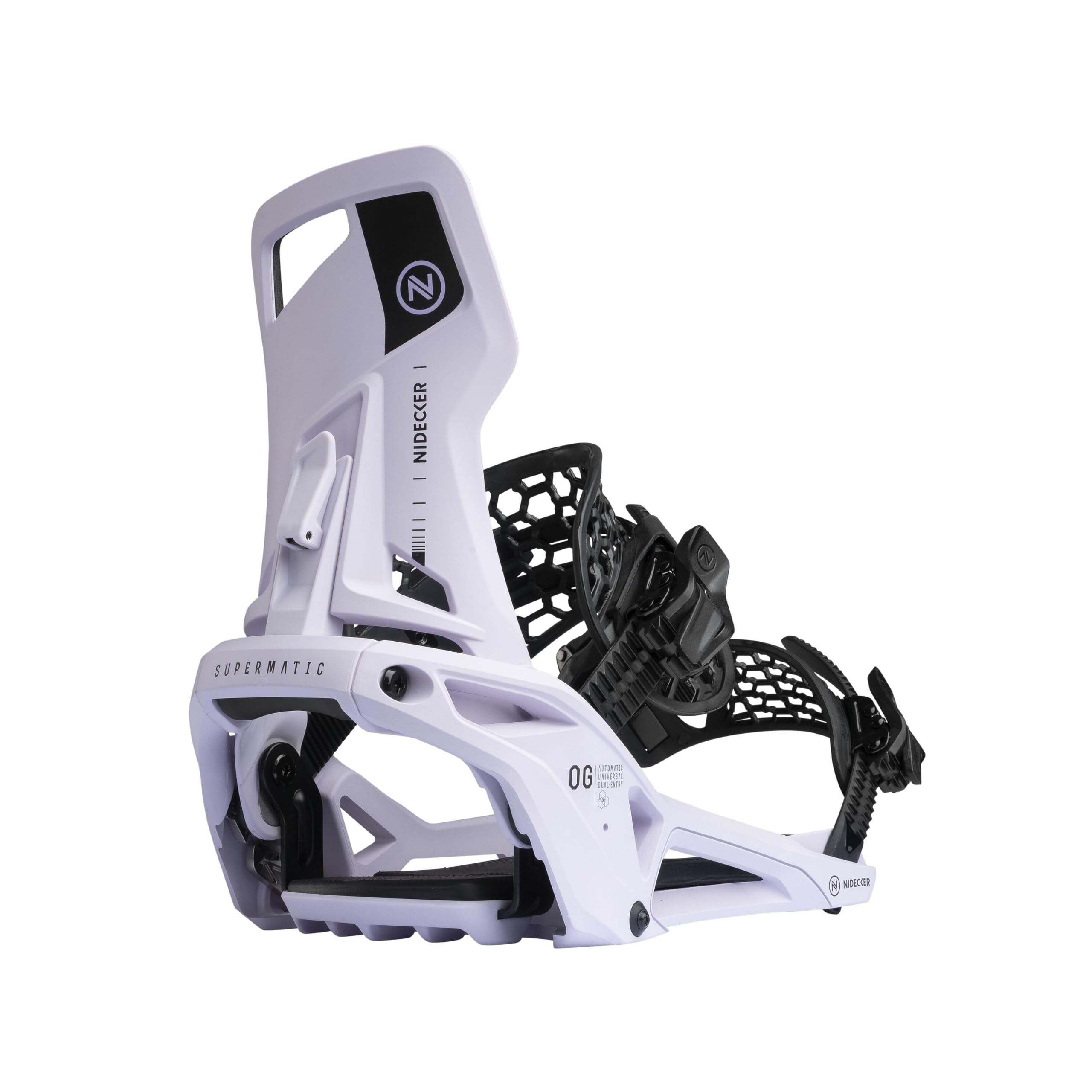
The Nidecker Supermatic is a snowboard binding, not a boot. It’s included here because it pairs perfectly with boots like the K2 Maysis to create a setup where you never have to sit down to strap in. The Supermatic uses a drop-in tech design: you place your boot on the baseplate, push your heel back, and the highback automatically locks around your boot. It’s a step-in system that still provides the locked-in support of a traditional two-strap binding.
The construction uses a flax fiber highback and recycled carbon hanger for a stiff, responsive feel without excessive weight. The plush straps and padded highback reduce hotspots, and the shock-absorbing footbeds dampen chatter on rougher snow. For a beginner snowboarder, these bindings eliminate the most frustrating part of learning: struggling with straps on a flat surface.
Buyers note that initial entry requires a slight learning curve — you have to loosen the middle strap the first few times — but once you get the feel, you can step in without sitting down. The Supermatic is rated for beginner to intermediate skill levels and fits most standard snowboard boots (size XL fits US men’s 11-13). For anyone who hates bending over, this is a genuinely transformative upgrade.
Why it’s great
- Drop-in step-in system eliminates sitting down
- Recycled carbon and flax construction is lightweight and stiff
- Works with standard alpine boots
Good to know
- Initial learning curve for entry/disengagement
- Locking lever can freeze in wet snow
FAQ
How do I know what size ski boot to buy?
Can I use beginner ski boots with rental bindings?
How long do beginner ski boots last?
Should I buy a boot with a 104mm last if I have narrow feet?
Final Thoughts: The Verdict
For most users, the best beginner ski boots winner is the Rossignol Evo 70 because it balances a forgiving 70 flex with a generous 104mm last, heat-moldable shell, and GRIPWALK compatibility at a mid-range price. If you need even more room for wide feet, grab the K2 BFC 80 for its hands-free entry and fully heat-moldable construction. And for the best value on a women’s-specific boot, nothing beats the Nordica Cruise S W — it delivers wide-last comfort and all-day warmth without breaking your budget.