
Nothing kills a heavy squat session faster than a lifting belt that buckles, slips, or digs into your ribs. The wrong belt doesn’t just feel bad — it fails to create the intra-abdominal pressure your spine needs at max loads, turning what should be a safety tool into a distraction. Whether you are chasing a new deadlift PR or bracing through a set of heavy front squats, the belt you choose determines how much force your core can actually generate.
I’m Min — the co-founder and writer behind Gadgets Feed. I’ve spent hundreds of hours analyzing the material thickness, leather grain quality, buckle mechanisms, and sizing charts across dozens of belts to understand which specs translate into real on-platform stability. This guide focuses on the concrete differences between 7mm tapered competition belts, 10mm lever belts, and classic 5mm double-prong designs.
After poring over thousands of verified buyer reports and cross-referencing every technical dimension, I compiled this guide to the single most reliable belts for lifting you can buy right now, ranked by their real-world build quality and performance at the rack.
How To Choose The Best Belts For Lifting
A lifting belt is not a piece of supportive clothing — it is a rigid wall your abs push against to create intra-abdominal pressure. Every spec on the page, from the leather thickness in millimeters to the prong count on the buckle, directly affects whether that wall stays solid or collapses when the bar is at its heaviest.
Material and Thickness
The two common thicknesses you will find are 5mm and 10mm, with a niche 7mm option bridging the gap for competition taper designs. A 10mm belt offers maximum rigidity and is ideal for heavy powerlifting where you need a completely unyielding surface to brace into. A 5mm belt is more flexible, breaks in faster, and suits general gym goers or those who do dynamic movements like Olympic lifts. The leather grain itself matters — full-grain cowhide or calfskin holds its shape over years of use, while bonded leather layers can delaminate.
Buckle Mechanism
Single-prong buckles are the most traditional — they are simple, reliable, and allow micro-adjustments between sets. Double-prong buckles add security by engaging two holes simultaneously, reducing the chance of the belt loosening during a heavy rep. Lever belts use a ratcheting cam system that locks at a set position — they are the fastest on and off once dialed in, but they require a perfect initial fit because you cannot change tightness mid-session without adjusting the lever itself.
Width and Taper Profile
Standard powerlifting belts are 4 inches wide across the entire back. Some competition belts taper from 4 inches at the back down to 2 or 3 inches at the front — this taper allows for better hip mobility during the clean and jerk, or a more comfortable fit for shorter torsos. A non-tapered 4-inch belt provides the most consistent surface for bracing on squats and deadlifts but can dig into the ribs of smaller lifters.
Break-In Period and Comfort
Stiff leather belts, especially 10mm variants, require a break-in period of several sessions to mold to your body shape. Some lifters accelerate this by rolling the belt or bending it by hand. Softer suede-lined belts may be comfortable immediately but can compress over time, losing their supportive edge. Padding is rare on serious powerlifting belts because it compresses unevenly — raw leather against a shirt or rash guard provides the most consistent feedback.
Quick Comparison
On smaller screens, swipe sideways to see the full table.
| Model | Category | Best For | Key Spec | Amazon |
|---|---|---|---|---|
| Dark Iron Fitness Genuine Leather | Double-Prong Leather | Versatile heavy training | 5mm thickness, 4″ wide, 12 adjustment holes | Amazon |
| Body Reapers Lever Belt | Lever | Quick on/off, max rigidity | 10mm thick calfskin, steel lever buckle | Amazon |
| Iron Bull Strength 7mm Tapered | Competition Taper | IPF meets and dynamic lifting | 7mm thickness, 4″ to 2″ taper | Amazon |
| MRX Powerlifting Leather Belt | Solid Leather | Value-driven heavy lifting | 10mm thick, 4″ wide, double-prong | Amazon |
| Mytra Fusion Genuine Leather | Steel Duo Lock | Secure dual-lock bracing | 10mm thick, HG-Steel duo adjustable | Amazon |
| Fitgriff Classic Leather | Entry Leather | New lifters, moderate loads | 5mm thick, 3-layer cowhide, double-prong | Amazon |
| GurZinn Leather Belt | Budget Beginner | Casual gym use, lighter loads | 9mm thick, 4″ wide, sponge padding | Amazon |
In‑Depth Reviews
1. Dark Iron Fitness Genuine Leather Weightlifting Belt
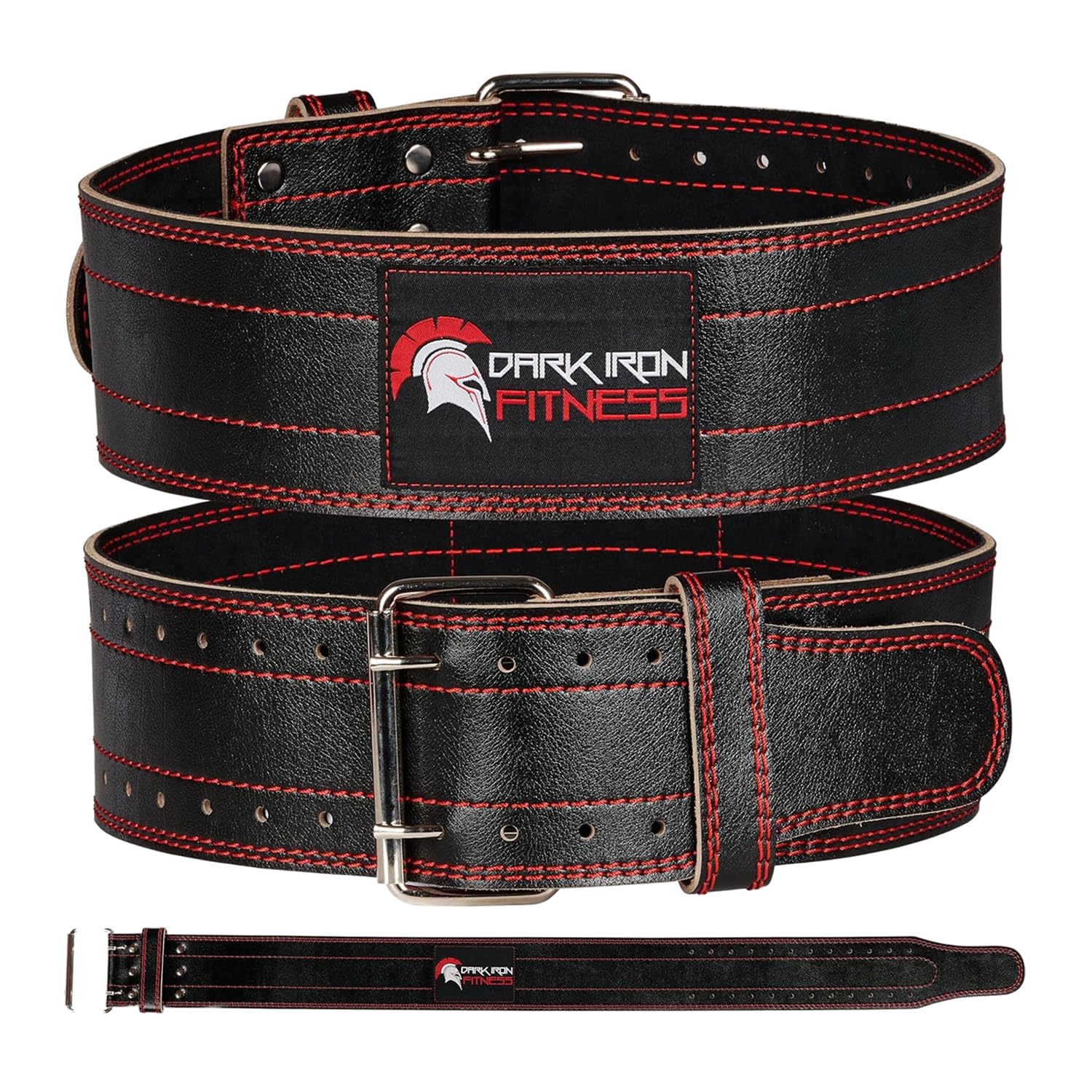
The Dark Iron Fitness belt strikes an ideal balance between rigidity and comfort that makes it the top pick for most lifters. Its 5mm genuine leather construction hits the sweet spot — thick enough to provide serious back support for squats over 400 pounds, yet supple enough that the break-in period is barely noticeable compared to a stiff 10mm belt. The double-prong buckle with a keeper loop keeps the tail secured, eliminating the annoying flap that single-prong belts sometimes leave hanging.
The 4-inch uniform width provides consistent bracing surface across your entire lower back, and the 12 adjustment holes at 1-inch intervals allow fine-tuning that wider-spaced belts cannot offer. The real leather develops a natural patina over time without cracking, and the reinforced double-stitching along the edges holds up against years of heavy deadlifts and overhead presses. It also carries a lifetime warranty, which adds peace of mind for lifters who train near their max every session.
Sizing is straightforward — measure your belly button circumference with a tape, not your jeans size. The range runs from XS for smaller frames around a 22-inch waist up to XL for larger athletes up to 49 inches. The unpadded edge can feel firm against bare skin during high-rep sets, so wearing a shirt or a thin layer is recommended for comfort over longer sessions.
Why it’s great
- Genuine leather with reinforced double-stitching for long-term durability
- 12 adjustment holes at 1-inch intervals for precise fit
- Lifetime warranty covers manufacturing defects
Good to know
- Unpadded edges can dig into bare skin during high-volume sets
- Non-tapered 4-inch width may feel bulky for shorter torsos
2. Body Reapers Lever Weight Lifting Belt

The Body Reapers lever belt is built for lifters who hate wasting time between sets fiddling with a prong buckle. The steel lever mechanism provides a tight, consistent lock every time you snap it closed — once you set the lever to your preferred tightness, you can take the belt on and off in under two seconds without re-measuring. The 10mm thick calfskin leather with suede lining delivers uncompromised rigidity for maximal strength lifts, and the 4-inch uniform width creates a solid wall for bracing.
The construction uses triple-stitched seams and a heavy-duty metal buckle that withstands the pressure of heavy squat walkouts. The calfskin leather is noticeably stiffer than cowhide at the same thickness, meaning the break-in period is more demanding — expect around 5 to 8 sessions before the belt fully conforms to your body. The suede lining reduces skin irritation compared to raw leather and helps the belt stay in place even when you sweat heavily.
Sizing requires extra attention because the lever mechanism has fewer adjustment points than a prong belt. Measure your waist at the navel and consult the manufacturer’s chart carefully — some users reported needing to size down after losing waist inches. The lever itself is adjustable but requires tools to change, so establish your fit before the first heavy session.
Why it’s great
- Steel lever buckle provides instant on/off between sets
- 10mm calfskin with suede lining for maximum support and comfort
- Triple-stitched construction for long-term durability
Good to know
- Longer break-in period due to stiff calfskin leather
- Lever adjustment requires tools — not adjustable mid-session
3. Iron Bull Strength 7mm Leather Weight Lifting Belt
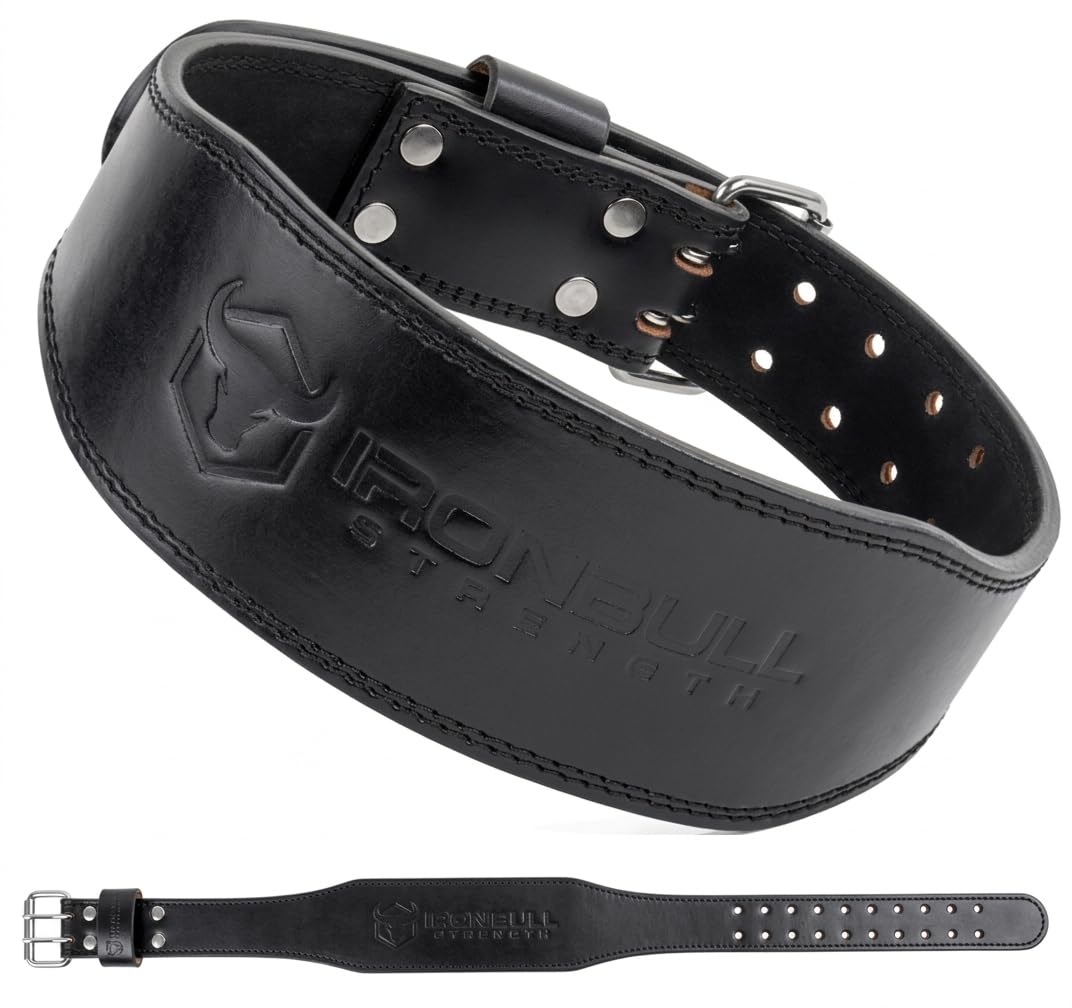
The Iron Bull Strength 7mm belt is the standout choice for competitive powerlifters and Olympic lifters who need IPF approval without the eye-watering price tag of custom brands. Its A-grade leather construction uses a single cut of material through the entire belt, ensuring consistent 7mm thickness with no weak spots from glued layers. The 4-inch to 2-inch taper design provides robust back support while freeing up hip flexion for cleans, snatches, and front squats — a significant advantage over uniform-width belts in dynamic movements.
The double roller steel buckle prongs are coated in black finish and seat deeply into the adjustment holes, holding firm even during heavy deadlift pulls where some prong buckles can slip. The 7mm thickness sits in a unique Goldilocks zone — it is thinner and more flexible than 10mm belts, making it more comfortable for lighter sets and front-loaded movements, yet it still provides enough rigidity for heavy squat work. The belt required virtually no break-in period and felt supportive from the first session.
It carries certifications for IPF, USAPL, USPA, IPL, USAW, and IWF, meaning it is legal in virtually every major federation. The lifetime warranty covers manufacturing defects, and the 30-day satisfaction guarantee provides a safety net for lifters who are unsure about sizing. The 7mm taper design is not ideal for lifters who prefer a uniform 4-inch wall for deadlift bracing — some may find the front section too narrow.
Why it’s great
- IPF/USAPL/USPA sanctioned — ready for competition use
- 4″ to 2″ taper improves hip mobility for dynamic lifts
- A-grade single-cut leather with virtually no break-in needed
Good to know
- Narrow front section may feel less supportive for heavy deadlifts
- Not ideal for lifters who prefer a stiff 10mm uniform belt
4. MRX Powerlifting Leather Belt
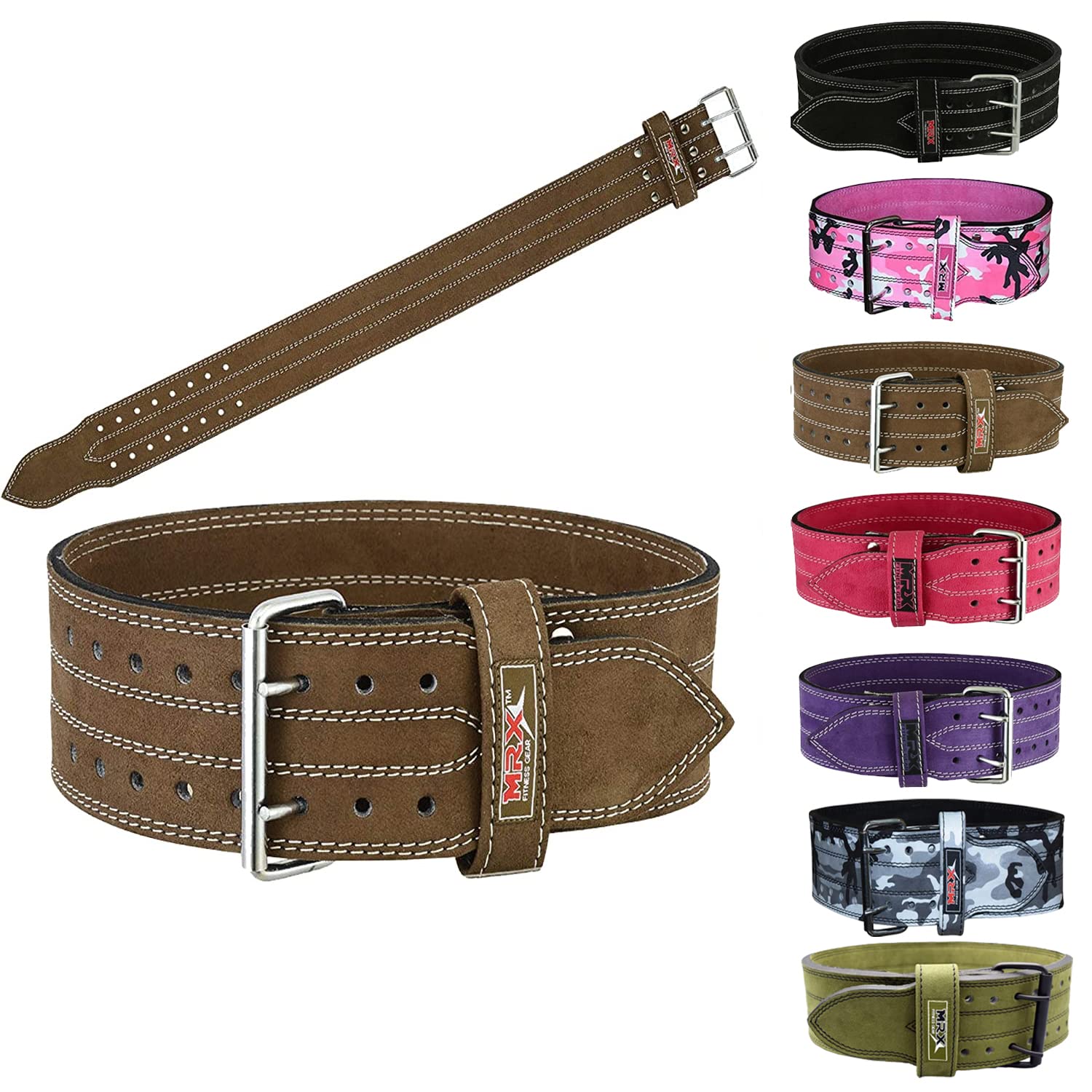
The MRX belt delivers 10mm of solid leather support at a price point that usually buys thinner, less durable options. The full 4-inch width provides excellent lower back coverage, and the double-prong buckle with a stainless steel slide bar ensures the belt stays locked through the most intense hip drive. Buyers consistently report that the build quality rivals belts costing twice as much, with heavy-duty stitching and thick leather that holds its shape.
This belt is stiff — expect a significant break-in period of several sessions where the leather needs to be worked by bending, rolling, or simply wearing it during warm-ups. The payoff is a highly supportive base that does not compress under load. The sizing runs accurately as long as you measure your waist at the navel, and the range from Small up to 3XL covers most body types. Some users noted that the leather has a slightly glossy finish that softens with use.
The stainless steel slide bar buckle allows for quick adjustment between holes, though the double-prong design takes slightly longer to thread compared to a single-prong system. The belt is unpadded, which is standard for serious powerlifting designs, but beginners may find the firm edge uncomfortable against their shirt during higher rep ranges below 85 percent.
Why it’s great
- 10mm thick leather at a price that undercuts comparable belts
- Double-prong buckle with stainless steel slide bar for secure hold
- Excellent stitching and leather quality for multi-year durability
Good to know
- Very stiff initially — requires dedicated break-in time
- Glossy finish may look less premium than matte leather options
5. Mytra Fusion Genuine Leather Weight Lifting Belt

The Mytra Fusion belt uses 100 percent genuine leather with a 10mm thickness and 4-inch uniform width, paired with a unique HG-Steel Duo adjustable locking system that uses two independent locking points for added security. The dual-lock design prevents the prong from disengaging during lifts where the belt shifts under load — a rare failure point on single-prong belts that this belt completely eliminates. The hardcore stitching along the entire perimeter reinforces the leather at stress points.
The steel buckle and locking mechanism are machined with tight tolerances, and the adjustment system allows for a highly customizable fit across 10 rows of holes. The break-in period takes around 2 to 3 heavy sessions, after which the leather conforms to your body shape while maintaining its supportive rigidity. The embroidered logo adds a subtle aesthetic touch without looking obtrusive.
Some users noted that the locking screws can loosen over time — a drop of thread locker on the buckle screws solves this issue permanently. The belt is well-suited for lifters who have experienced buckle slip on other belts and want redundant security. The 10mm thickness makes it less ideal for lifters who need a tapered front for Olympic movements.
Why it’s great
- HG-Steel Duo adjustable locking system prevents buckle slip
- 10mm genuine leather with hardcore stitching for durability
- Customizable fit with precise adjustment rows
Good to know
- Locking screws may need thread locker to stay tight
- Uniform 4-inch width not ideal for Olympic lifting mobility
6. Fitgriff Classic Weight Lifting Belt

The Fitgriff Classic brings an old-school aesthetic with a three-layer, 5mm thick cowhide construction that prioritizes flexibility over brute rigidity. The 4-inch width provides decent lower back coverage, but the thinner leather means this belt works best for intermediate loads and general strength training rather than maximal powerlifting attempts. The double-prong buckle and solid rivets keep the tail secured, and the leather is soft enough to require minimal break-in time.
The 5mm thickness makes it significantly lighter and more packable than a 10mm belt — a real advantage for lifters who carry their gear in a duffel bag. The genuine cowhide grain develops character with use, and the included instructions help new lifters understand proper bracing technique. The sizing runs true to the navel measurement, and the 2-year warranty provides basic coverage against manufacturing defects.
This belt is not suitable for heavy deadlifts or squats above the 400-pound range where the extra rigidity of a 10mm belt becomes necessary. Some users found the leather too soft to maintain consistent support across multi-week training cycles. The buckle keeper loop sometimes loosens during use and requires re-tightening.
Why it’s great
- Flexible 5mm leather with minimal break-in time
- Lightweight and portable for bag carry
- 2-year warranty covering manufacturing issues
Good to know
- Too flexible for maximal deadlifts and squats near 1RM
- Buckle keeper loop may loosen during extended use
7. GurZinn Leather Fitness Weight Lifting Belt

The GurZinn belt offers a surprisingly thick 9mm leather construction at an entry-level price point, making it an accessible starting point for new lifters exploring proper bracing. The 4-inch width with an integrated sponge pad in the lumbar area provides a softer feel against the lower back compared to unpadded leather belts, which can help beginners acclimate to wearing a belt during training. The 6 stainless steel rivets and double reinforcement technology add structural stability to the leather.
The belt has 10 rows of adjustment holes, giving a wide range of fit options for different waist sizes, and the buckle closure is straightforward to use. The leather is double-sided and reinforced with top stitches, which helps prevent tearing at the edges during regular use. The sponge padding is a double-edged sword — it provides immediate comfort but can compress permanently under heavy load, reducing the belt’s effective support over time.
Sizing is critical here — the chart must be followed precisely, as some users found the smaller sizes run slightly large. The belt works well for general gym routines, lighter strength work, and for lifters who prioritize comfort over the uncompromising rigidity of a 10mm unpadded powerlifting belt. The padded design is not recommended for competition powerlifters or anyone squatting above the 400-pound mark.
Why it’s great
- 9mm leather thickness at an accessible price point
- Integrated sponge pad for lumbar comfort during lighter sets
- 6 stainless steel rivets add structural reinforcement
Good to know
- Sponge pad may compress over time, reducing support
- Not suitable for heavy max-effort powerlifting work
FAQ
Should I buy a 10mm or 5mm belt for my first powerlifting belt?
How long does it take to break in a stiff 10mm leather belt?
Does an IPF-approved belt matter if I am not competing?
Why do some powerlifting belts have no padding?
Final Thoughts: The Verdict
For most users, the belts for lifting winner is the Dark Iron Fitness Genuine Leather because its 5mm thickness balances immediate comfort with enough rigidity for heavy squats, and the lifetime warranty removes the risk of investing in a belt you will outgrow. If you want a competition-ready tapered belt that is IPF-approved from day one, grab the Iron Bull Strength 7mm Tapered. And for the fastest on/off experience with uncompromising 10mm rigidity, nothing beats the Body Reapers Lever Belt.