
After knee replacement, the path back to fitness requires equipment that protects your new joint while rebuilding strength and range of motion. The wrong bike can overload the patellofemoral joint or force an awkward leg extension, sabotaging recovery. This guide focuses exclusively on bicycles and stationary options engineered with low step-through frames, recumbent postures, and adjustable ergonomics designed to minimize stress on a surgically repaired knee.
I’m Min — the co-founder and writer behind Gadgets Feed. I’ve spent countless hours analyzing biomechanical specs, customer recovery feedback, and frame geometries to identify which models actually deliver the joint-friendly ride knee replacement patients need, filtering out marketing fluff that could derail your rehab.
Whether you prefer the stability of a three-wheel trike, the controlled resistance of a recumbent stationary bike, or the freedom of an electric-assist cruiser, this guide helps you find the right bicycle after knee replacement for a safe and effective recovery journey.
How To Choose The Best Bicycle After Knee Replacement
Finding a bike that protects your new knee joint requires understanding three factors that the general cycling world rarely discusses. The frame geometry must allow a flat-footed mount without twisting or over-extending your leg. The seat-to-pedal distance must be infinitely adjustable to accommodate a limited range of motion that improves over weeks, not days. And the resistance system must deliver smooth, predictable load without shock or jerk that could strain the patellar tendon.
Recumbent vs. Upright vs. Tricycle
The recumbent design positions your hips behind the pedals with a supported backrest, reducing the compressive load on the knee joint by up to 40% compared to an upright cycling position. This makes recumbent stationary bikes the clinical gold standard for early-stage rehab. Three-wheel tricycles offer a similar supported posture for outdoor riding, with the added stability of a low center of gravity. Traditional upright bikes with a high crossbar are generally discouraged until significant quadriceps strength has returned.
Step-Through Height and Mounting Safety
After total knee arthroplasty, any twisting motion during mounting can stress the collateral ligaments. Look for a step-through height of 18 inches or less — the distance from the ground to the top tube. Recumbent stationary bikes naturally eliminate this issue since you sit directly from a standing position. For outdoor trikes, the MOPHOTO model’s low-step frame allows you to swing your leg over without raising your surgical knee past 90 degrees of flexion.
Resistance Type and Adjustability
Magnetic resistance systems provide the smoothest load application without the friction spikes of felt-pad or wool-pad systems. For rehab purposes, at least 8 levels of magnetic resistance allow you to start with near-zero load and progress incrementally. Premium models like the 3G Cardio Elite RB X offer 16 levels, giving you finer control over your progressive loading protocol. Avoid friction-based systems that create jerky resistance changes.
Seat Ergonomics and Adjustability
Your bike must allow independent adjustment of seat fore-aft position and backrest angle. The ideal setup places your knee directly over the pedal spindle at the 3 o’clock position when the pedal is at its furthest point — this prevents hyperextension and reduces shear forces on the tibial tray. Look for seats with at least 4 inches of fore-aft travel and backrests that recline to at least 45 degrees. The JOROTO JH50 and 3G Cardio models excel here with multi-position tilting backrests.
Quick Comparison
On smaller screens, swipe sideways to see the full table.
| Model | Category | Best For | Key Spec | Amazon |
|---|---|---|---|---|
| 3G Cardio Elite RB X | Recumbent Stationary | Premium at-home rehab with commercial durability | 16 levels magnetic resistance, 350 lb capacity | Amazon |
| JOROTO JH50 | Recumbent Stationary | Comfort-focused recovery with app connectivity | 16 levels magnetic, 400 lb capacity, Bluetooth | Amazon |
| LFEYYD W215 | Recumbent Stationary | Heavy-duty rehab with full-body engagement | 16 levels magnetic, 450 lb capacity, arm exerciser | Amazon |
| MERACH S19 | Recumbent Stationary | Compact entry-level with smart app integration | 8 levels magnetic resistance, 330 lb capacity | Amazon |
| XVGVSV W241 | Recumbent Elliptical Hybrid | Elliptical motion for reduced knee shear | 16 levels magnetic resistance, 400 lb capacity | Amazon |
| ECHANFIT CBK2409 | Recumbent Stationary | High weight capacity budget-friendly rehab | 8 levels magnetic, 380 lb capacity, arm exerciser | Amazon |
| Sunny Health & Fitness SF-RB420032 | Recumbent Stationary | Affordable recumbent with full-body option | 8 levels magnetic resistance, 265 lb capacity | Amazon |
| MOPHOTO Adult Tricycle | Outdoor Three-Wheel | Outdoor stability with low-step entry | 7-speed drivetrain, 350 lb capacity, 20/24/26″ | Amazon |
| HiKNiGHT H6 Pro | Electric Fat Tire | Powered assistance for outdoor recovery rides | 52V 20Ah battery, dual motor, fat tires | Amazon |
| SAVADECK Titan 612 | Full-Suspension Mountain | Advanced off-road rehab for experienced cyclists | Full carbon frame, 12-speed, 2.4″ tires | Amazon |
| SAVADECK Carbon Road Bike | Carbon Road | Lightweight road option for late-stage recovery | T800 carbon frame, Shimano 105, 19.4 lb | Amazon |
In‑Depth Reviews
1. 3G Cardio Elite RB X Recumbent Bike

The 3G Cardio Elite RB X sets the standard for post-knee replacement recumbent bikes by combining a 49-inch compact footprint with commercial-grade build quality. Its narrow Q-factor — the distance between pedal attachment points — reduces hip and knee abduction stress, keeping your surgical knee in a natural sagittal-plane path. The 16-level magnetic resistance system delivers imperceptibly smooth transitions, essential for avoiding sudden load spikes that can trigger patellar tendonitis.
The oversized seat tilts through 5 positions and slides across 25 detents of fore-aft travel, accommodating users from 5 feet to 6 feet 5 inches. The Airflow Mesh Flex backrest conforms to your spine while keeping your back cool during longer sessions. The FreeSync FTMS Bluetooth connectivity works with third-party apps like Zwift, while the included wireless heart rate strap lets you stay within safe recovery heart rate zones.
This bike rolls through standard doorways on built-in wheels, making it easy to store when not in use. The lifetime frame warranty and 7-year parts coverage reflect confidence in the build quality. For serious home rehab that matches commercial gym standards, the Elite RB X is the investment that pays for itself in safe, consistent recovery.
Why it’s great
- Narrow Q-factor minimizes knee valgus stress
- Multi-position tilting seat and backrest accommodate any recovery stage
- Commercial-grade magnetic resistance with 16 smooth levels
Good to know
- 115-pound weight requires two-person setup
- Premium price reflects professional-level components
2. JOROTO Recumbent Bike JH50
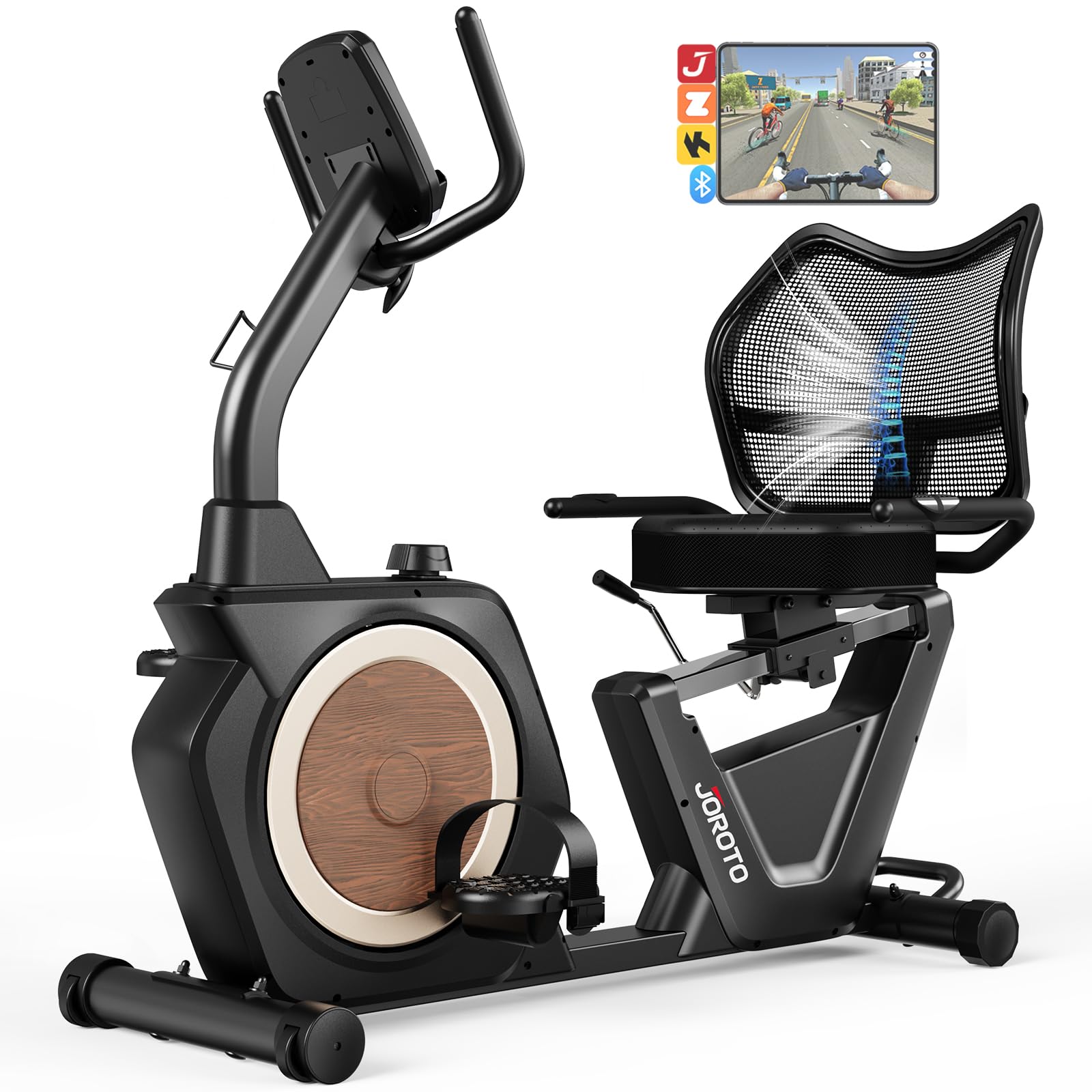
The JOROTO JH50 stands out for its senior-friendly design philosophy, integrating a wider step-through opening and lockable armrests that improve mounting safety for patients with reduced quadriceps control. The 11-pound magnetic flywheel provides 16 resistance levels with near-silent operation, allowing you to start at level 1 for passive range-of-motion work and progress to higher intensity for strength building. Users with back pain specifically praise the ergonomic backrest that reduces lumbar pressure during extended sessions.
The backlit LCD monitor shows time, speed, distance, calories, and pulse from the handlebar sensors, with easy readability in dim light — helpful if you’re exercising early morning or late evening. Bluetooth connectivity pairs with the JOROTO app for workout tracking, and also works with Kinomap and Zwift for interactive training that can make rehab feel less clinical. The 95% pre-assembled design includes a dust cover, and transport wheels make repositioning straightforward.
At 83 pounds, the JH50 is lighter than the 3G Cardio while still supporting up to 400 pounds. The 2-year warranty provides reasonable coverage. For recovering patients who want app connectivity and a cushioned seat without paying commercial-grade prices, the JH50 delivers the best balance of comfort and technology.
Why it’s great
- Lockable armrests and wide step-through improve mounting safety
- Works with Zwift and Kinomap for interactive rehab
- Backlit display visible in low-light rooms
Good to know
- Some units reported missing drilled holes for backrest
- Pedal extensions may be needed for users over 5’10”
3. LFEYYD W215 Recumbent Bike
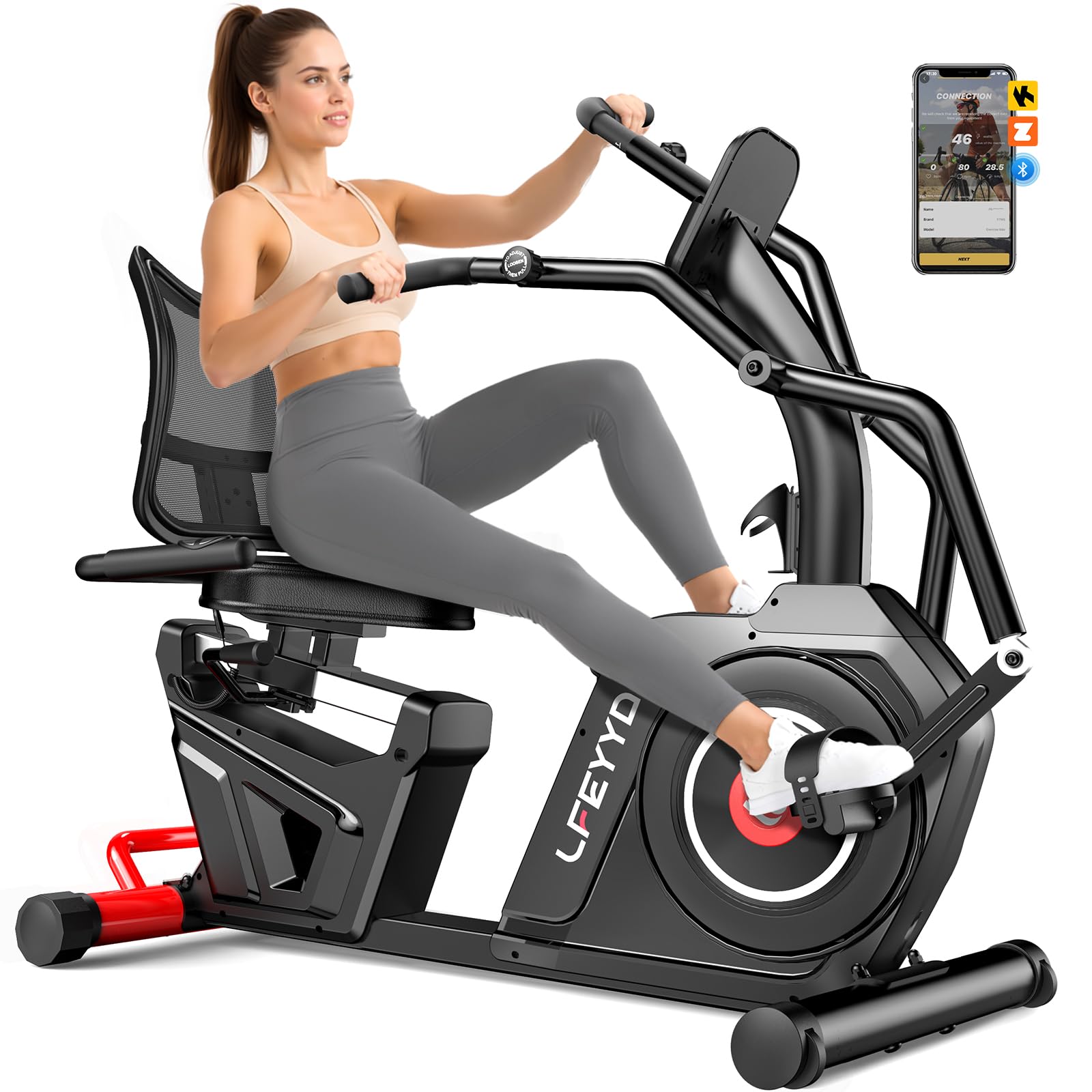
The LFEYYD W215 addresses a critical gap in the rehab bike market: supporting heavier users up to 450 pounds without compromising stability. The thickened steel frame and anti-slip foot pads eliminate wobble even during more aggressive pedaling. The 2-in-1 elliptical-recumbent design allows switching between cycling and elliptical motion, which can reduce shear stress on the tibial plateau by keeping the foot in a fixed platform rather than a rotating pedal.
The 16-level magnetic resistance system is genuinely whisper-quiet — multiple users report their partners can watch TV in the same room without noticing the machine is running. Bluetooth app connectivity tracks your workout data, helping you demonstrate progressive load increases to your physical therapist. The oversized padded seat with breathable foam reduces pressure points during 30-minute+ sessions.
Assembly is straightforward with 80% pre-installation, taking roughly 30 minutes. The adjustable handlebars and pedal straps accommodate users from 4 feet 8 inches to 6 feet 4 inches. For larger patients or those wanting a recumbent-elliptical hybrid to vary joint loading angles, the W215 provides a robust platform that doesn’t flex or creak.
Why it’s great
- 450-pound capacity with zero frame wobble
- 2-in-1 cycling and elliptical motion reduces knee shear
- Genuinely silent magnetic resistance
Good to know
- 87-pound weight requires planning for room placement
- Bluetooth app is basic; no Zwift compatibility
4. MERACH S19 Recumbent Bike
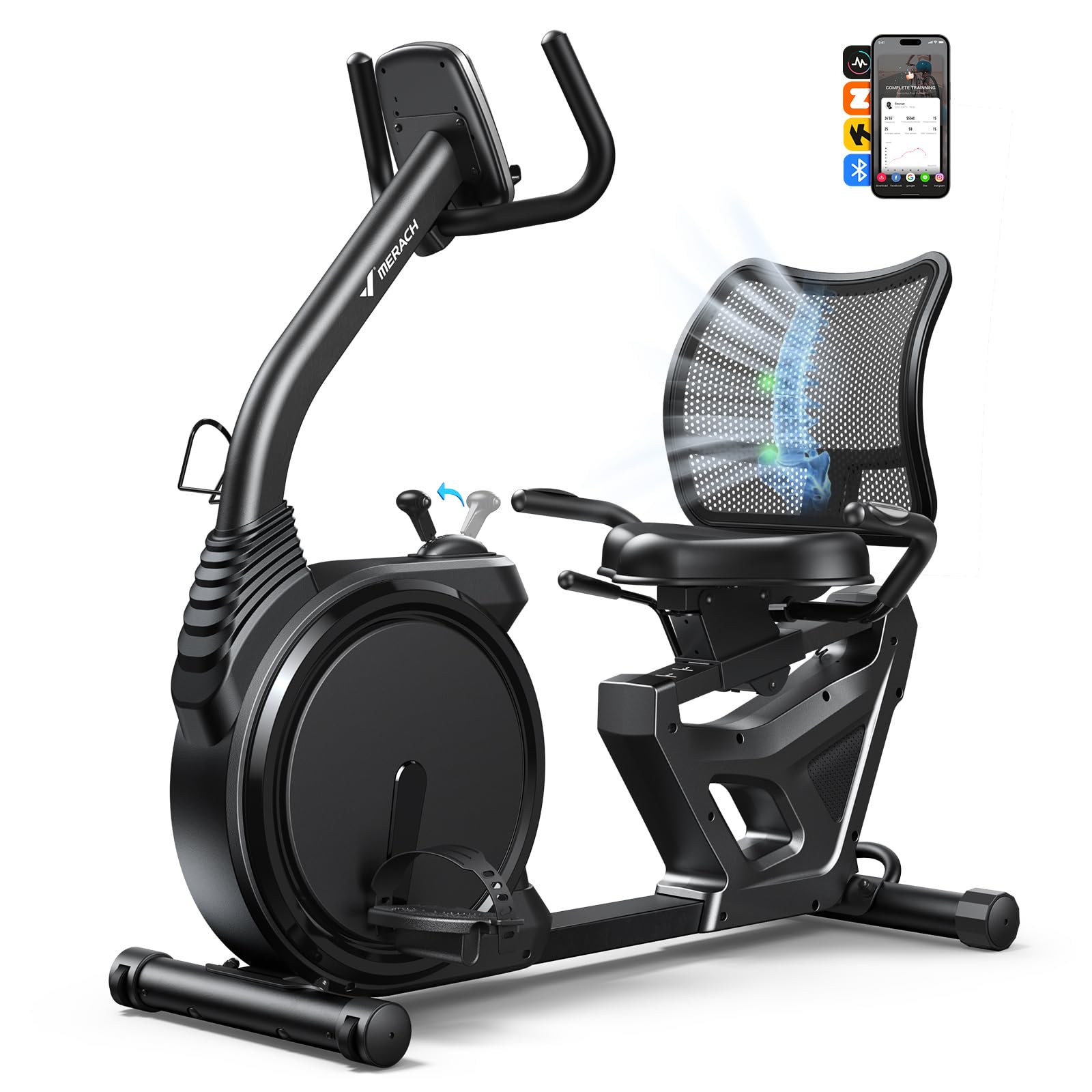
The MERACH S19 targets users who want a compact smart bike without the bulk of commercial models. The 6.6-pound perimeter-weighted flywheel provides a smooth pedal stroke comparable to heavier flywheels, and the 8-level car-style resistance lever lets you adjust mid-ride without looking down — useful when your focus is on maintaining proper knee tracking. The mesh backrest promotes airflow, reducing sweat accumulation that can cause skin irritation around surgical incisions.
The self-developed MERACH app transforms the bike into a gamified experience, which can boost adherence to daily rehab routines. Bluetooth connectivity syncs real-time metrics including distance, calories, and heart rate. The frosted handlebars provide a non-slip grip even when hands are sweaty, and the included iPad holder lets you follow physical therapy videos directly from the console.
Assembly takes under 30 minutes thanks to 80% pre-assembly. At 84.9 pounds, the S19 is solid enough for stability but manageable for one person to reposition. The 1-year manufacturer warranty is standard for this price tier. For tech-savvy patients who want a connected experience and a compact footprint, the S19 delivers strong value.
Why it’s great
- Gamified app encourages daily rehab adherence
- Breathable mesh backrest reduces incision-site sweat
- Car-style lever allows blind resistance adjustments
Good to know
- C-curve backrest may aggravate some back surgery patients
- Resistance levels 1-5 feel too light for strength building
5. XVGVSV W241 Recumbent Elliptical Bike
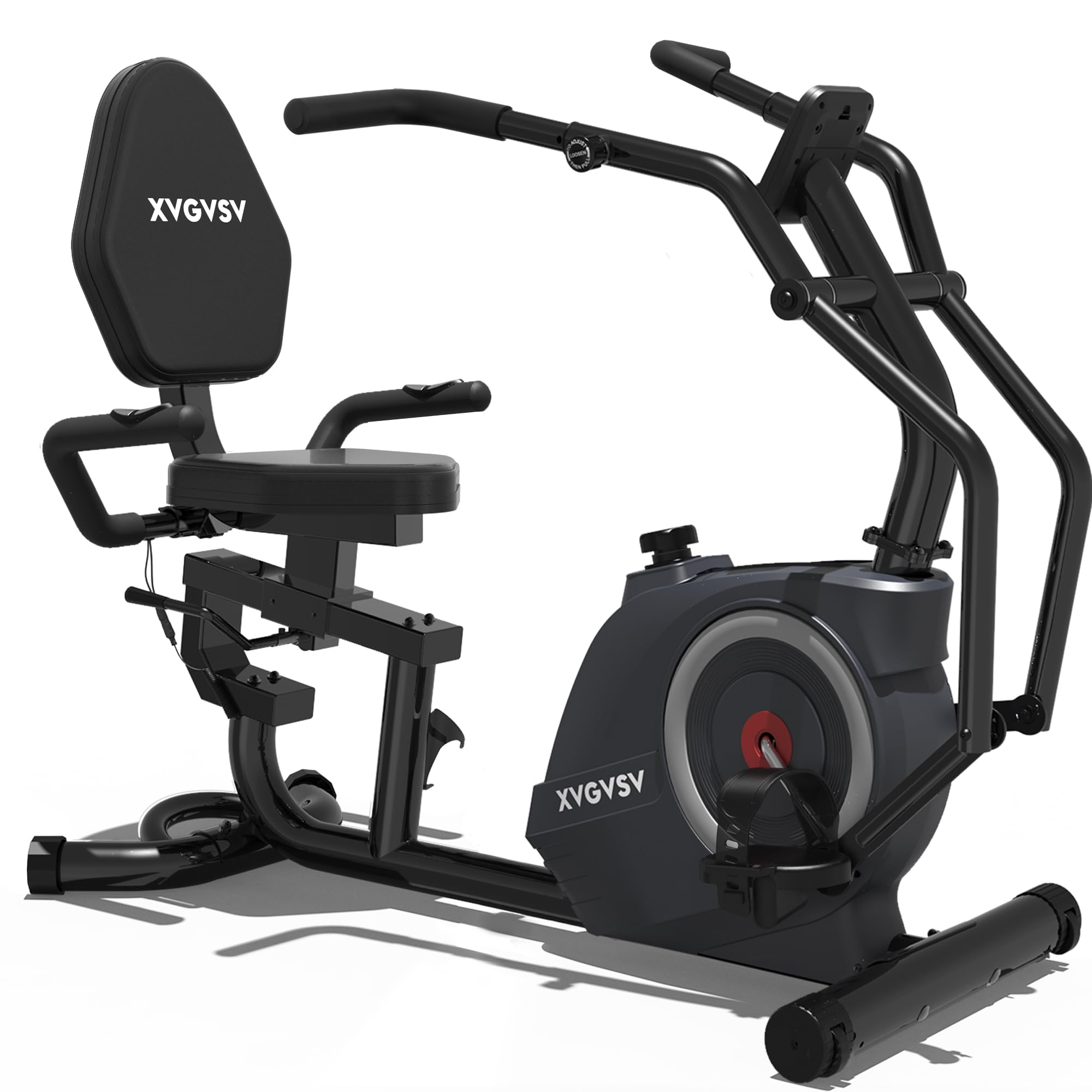
The XVGVSV W241 is the most versatile option in this guide, combining recumbent bike and elliptical motion in a single machine. This hybrid design allows you to switch between cycling for quadriceps isolation and elliptical motion for reduced patellofemoral compression. The 16-level magnetic resistance spans from barely perceptible for passive motion to challenging for mid-stage rehab, all delivered through a whisper-quiet belt drive.
The cushioned seat with ergonomic backrest and lever-based adjustment fits users of varying heights, making it a practical family rehab tool. The LCD monitor tracks time, speed, distance, calories, and heart rate via grip sensors. At 66 pounds, it’s one of the lighter recumbent hybrids, and the integrated transport wheels make room-to-room movement manageable for a single person.
At 85% pre-assembled, setup takes roughly 30 minutes. The commercial-grade steel frame supports up to 400 pounds without flex. For patients who want the option to vary their joint loading angle without buying two machines, the W241 provides an adaptable solution that grows with your recovery.
Why it’s great
- Dual recumbent and elliptical motion for varied joint loading
- Lightest hybrid option at 66 pounds with transport wheels
- 16 resistance levels for progressive rehab
Good to know
- Elliptical stride length may feel short for taller users
- No Bluetooth app connectivity
6. ECHANFIT CBK2409 Recumbent Bike
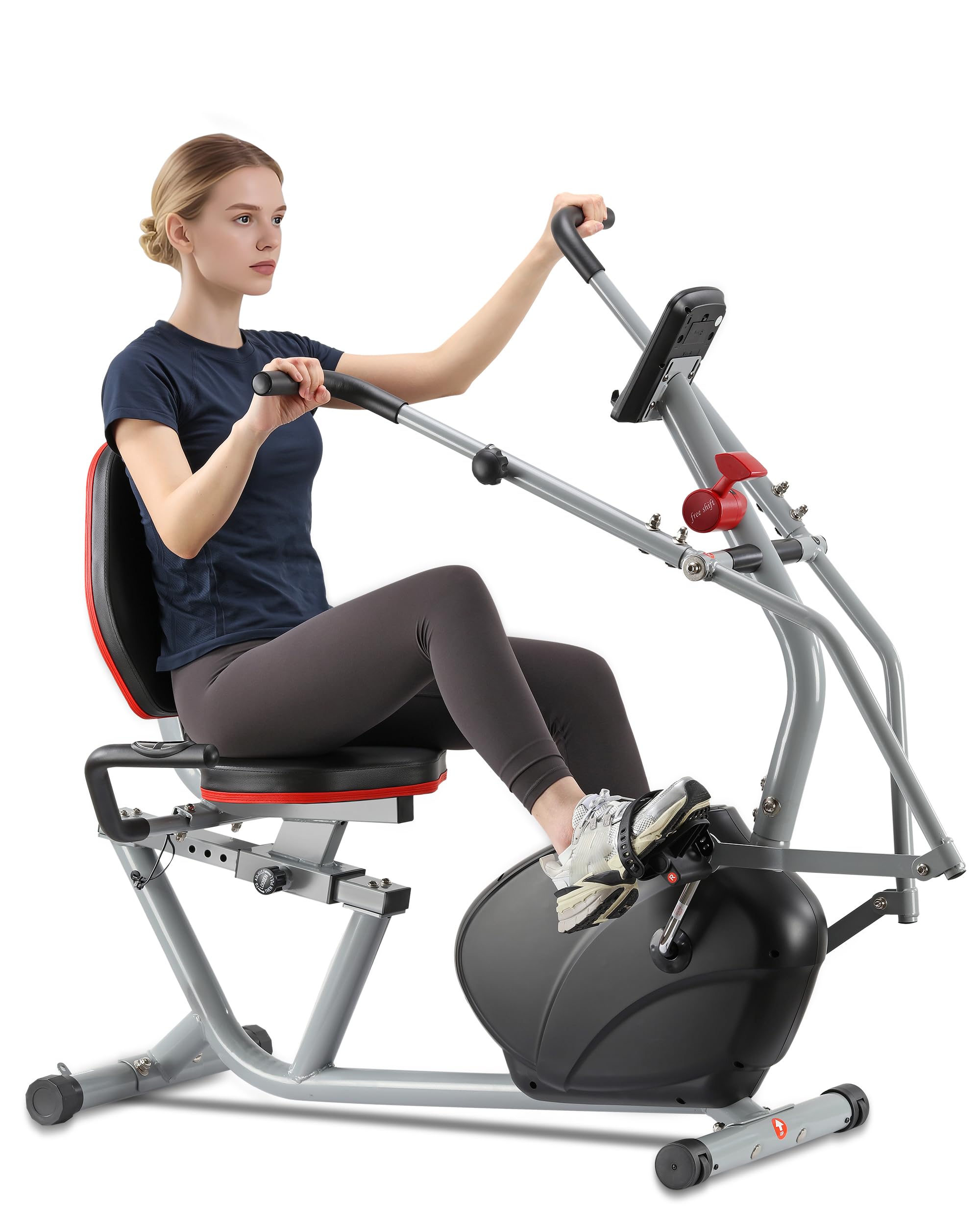
The ECHANFIT CBK2409 punches above its price point by offering a 380-pound weight capacity and dual-action arm exercisers at a budget-friendly price. The sliding seat accommodates users from 4 feet 9 inches to 6 feet 3 inches, making it one of the most inclusive height ranges in the sub- category. The 8-level magnetic resistance combined with a belt drive system delivers the quiet operation necessary for apartment use.
The backlit LCD monitor displays time, speed, distance, calories, odometer, and pulse from the grip sensors — a feature set usually reserved for more expensive models. The included resistance bands allow you to supplement your cycling with upper-body strength work, which many physical therapists recommend for post-knee replacement patients. The extra-wide padded seat and backrest provide adequate comfort for 20-to-30-minute sessions.
Assembly takes about 1 hour with clear instructions and good image diagrams. At 62.2 pounds, it’s easily the lightest recumbent option in this guide. For patients on a strict budget who still need a 380-pound capacity and arm exercisers, the CBK2409 is the clear best value pick.
Why it’s great
- 380-pound capacity at a budget-friendly price
- Dual-action arm exercisers engage upper body
- Widest height range from 4’9″ to 6’3″
Good to know
- LCD timer runs ~20% slow; other metrics may be inaccurate
- Seat may not adjust low enough for users under 5’0″
7. Sunny Health & Fitness SF-RB420032

The Sunny Health & Fitness SF-RB420032 is a dedicated recumbent bike that prioritizes simplicity and comfort for older adults recovering from knee surgery. The large, cushioned seat with a padded backrest provides immediate comfort, and the step-through design eliminates any need to swing a leg over a top tube. The 8-level magnetic resistance ranges from ultra-light to moderate, appropriate for early-stage rehab and endurance building.
The moveable handles engage the upper body independently of the pedaling motion, allowing you to isolate leg work when the upper body handles are stationary. The digital performance monitor shows time, speed, RPM, distance, calories, and resistance level. Pulse sensors on the stationary handlebars let you monitor heart rate without holding onto moving parts. The free SunnyFit app provides access to 1,000+ trainer-led workouts and 10,000+ virtual scenic tours.
Assembly takes approximately 1 hour with clear instructions. The 265-pound weight capacity suits average-sized adults. For seniors seeking a straightforward, low-tech recumbent option with strong brand support and a 20-year company history, the SF-RB420032 is a reliable choice.
Why it’s great
- Step-through frame with zero crossbar to swing over
- Independent upper body handles for isolated leg work
- Free SunnyFit app with 1,000+ guided workouts
Good to know
- 265-pound capacity may not suit all users
- Maximum resistance level may feel too low for strength-focused rehab
8. MOPHOTO Adult Tricycle
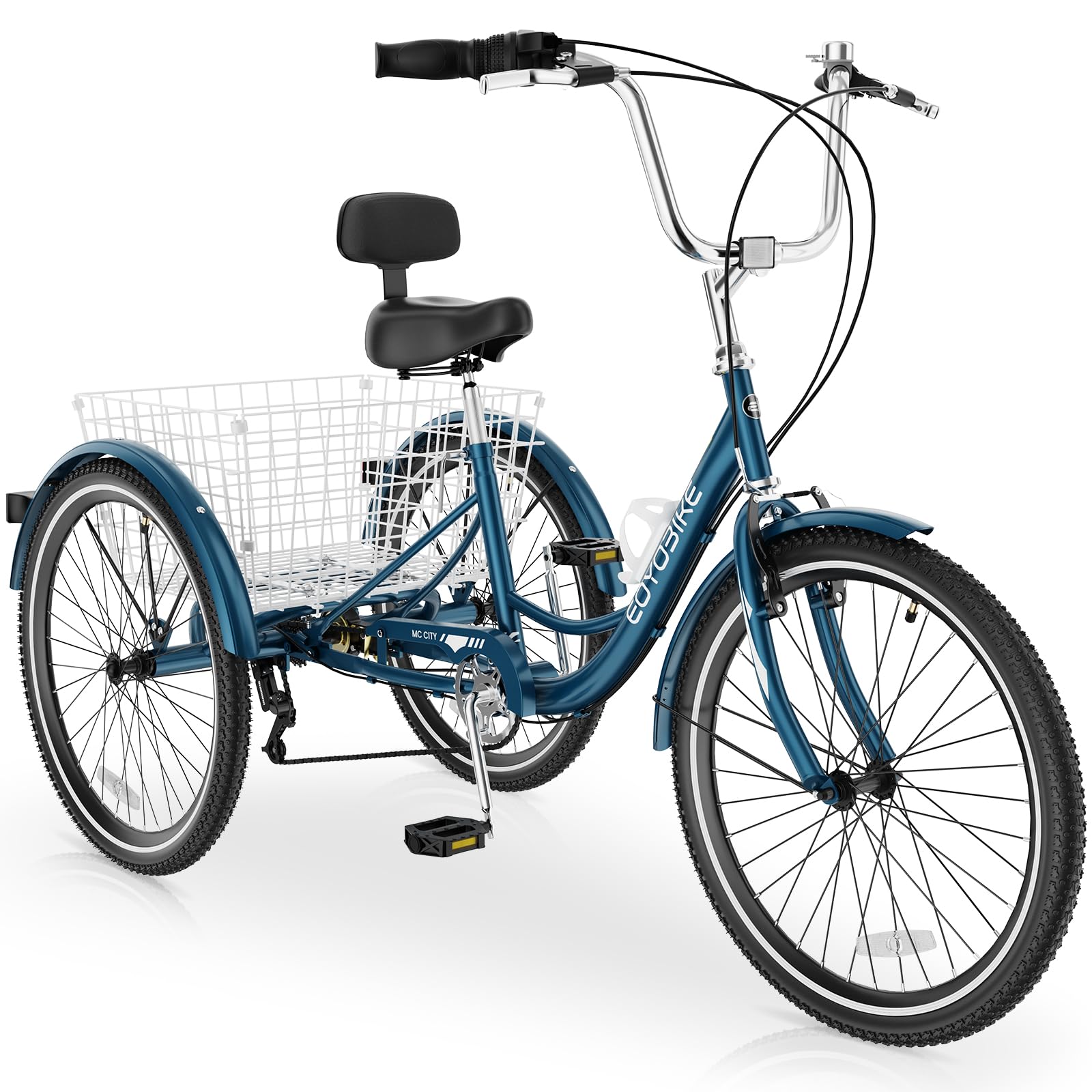
The MOPHOTO Adult Tricycle offers the only three-wheel outdoor cycling option in this guide, providing inherent stability that eliminates the need for balance — a critical advantage for patients whose proprioception is still recovering. The low step-through frame allows you to mount and dismount without raising your surgical knee past 90 degrees. Available in 20-inch, 24-inch, and 26-inch wheel sizes, the trike fits riders from 4 feet 8 inches to 6 feet 2 inches.
The 7-speed drivetrain provides enough gear range for flat bike paths and gentle inclines, though steeper hills will require walking. The wide padded saddle and stable three-wheel design reduce hip and knee compensation patterns that riders often develop on two-wheelers to maintain balance. The large rear basket accommodates grocery runs, turning your recovery rides into practical errands that build confidence.
Assembly is the primary challenge — expect 3 to 4 hours of work with tools you may need to provide. The included instructions are sparse, but online video guides help. The steel frame supports up to 350 pounds. For patients who want fresh air and outdoor cycling without the fear of falling, the MOPHOTO trike delivers unmatched stability.
Why it’s great
- Three-wheel design eliminates balance concerns during recovery
- Low step-through frame avoids high knee flexion during mounting
- Three wheel sizes fit a broad height range
Good to know
- Assembly can take 3+ hours with inadequate instructions
- 7-speed gearing limits use on steep terrain
9. HiKNiGHT H6 Pro E-Bike
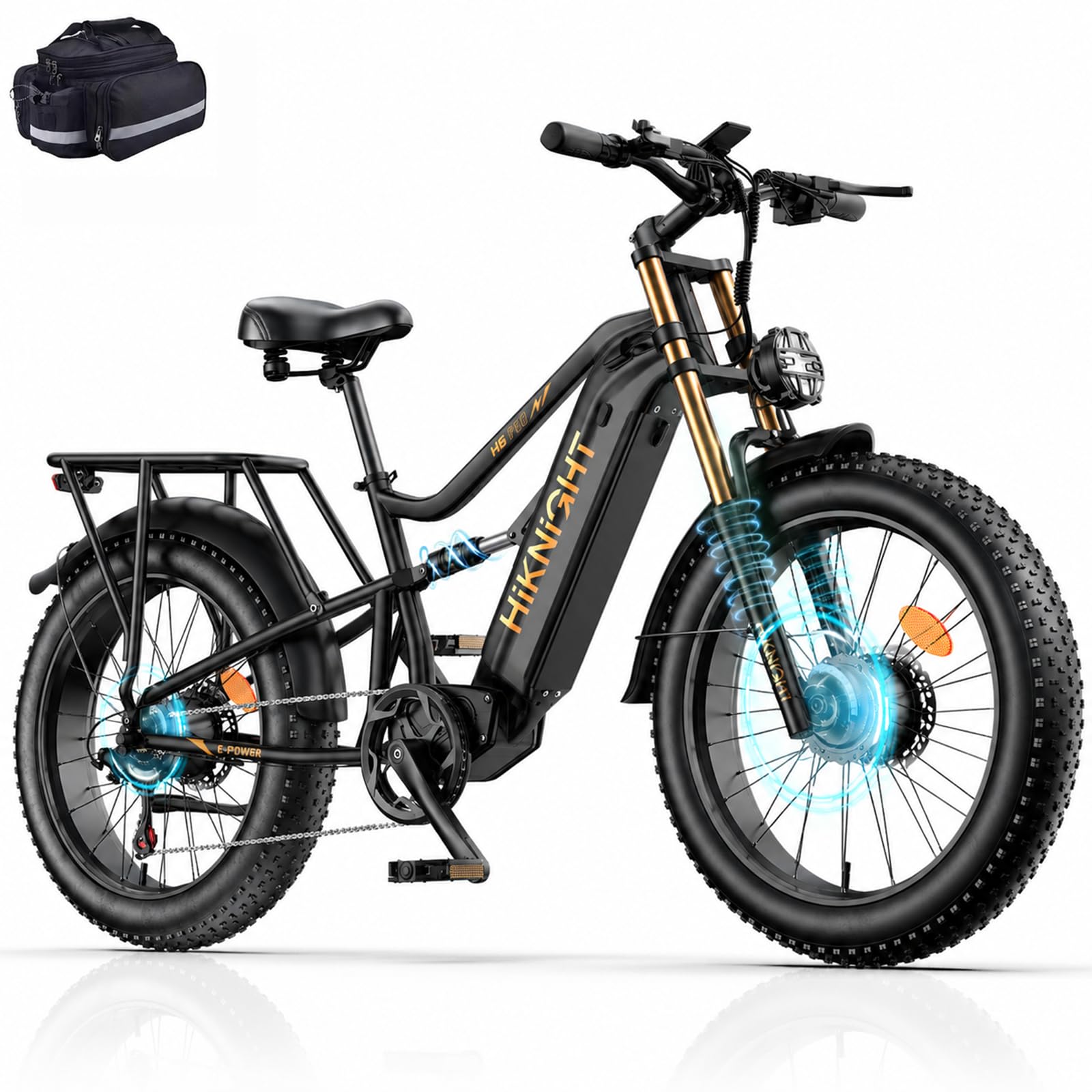
The HiKNiGHT H6 Pro is a dual-motor electric fat-tire bike that serves a very specific post-knee replacement role: it lets you ride without pedaling when your knee isn’t ready, using the throttle to cruise while still being on a bicycle. The 52V 20Ah removable battery provides enough range for a full day of errands or park rides. The 24×4.0-inch fat tires provide stability on loose surfaces, reducing the wobble that can trigger protective muscle guarding around the knee.
The adjustable handlebar stem and extra-large cushioned seat address two common pain points for post-surgery riders: neck strain from a too-low riding position and hip pressure from a narrow saddle. The dual hydraulic disc brakes provide confident stopping power, which is essential when your quadriceps aren’t yet strong enough for emergency braking. The full front and rear suspension absorbs road vibrations that could transmit up through the knee joint.
At roughly 80+ pounds, this is a heavy bike — you’ll need a strong kickstand and stable parking spots. Assembly is 95% pre-completed. The included accessory pack (bike bag, lock, pump, phone holder) adds value. For patients who want cycling’s psychological benefits but need electric assistance to control joint load, the H6 Pro is a powerful tool.
Why it’s great
- Throttle-only mode lets you ride hands-free of knee extension
- Adjustable handlebar stem and extra-large seat improve ergonomics
- Dual hydraulic brakes ensure safe stopping with weak quads
Good to know
- 80+ pounds makes transport and lifting difficult
- Dual-motor top speed may exceed local e-bike regulations
10. SAVADECK Titan 612 Mountain Bike
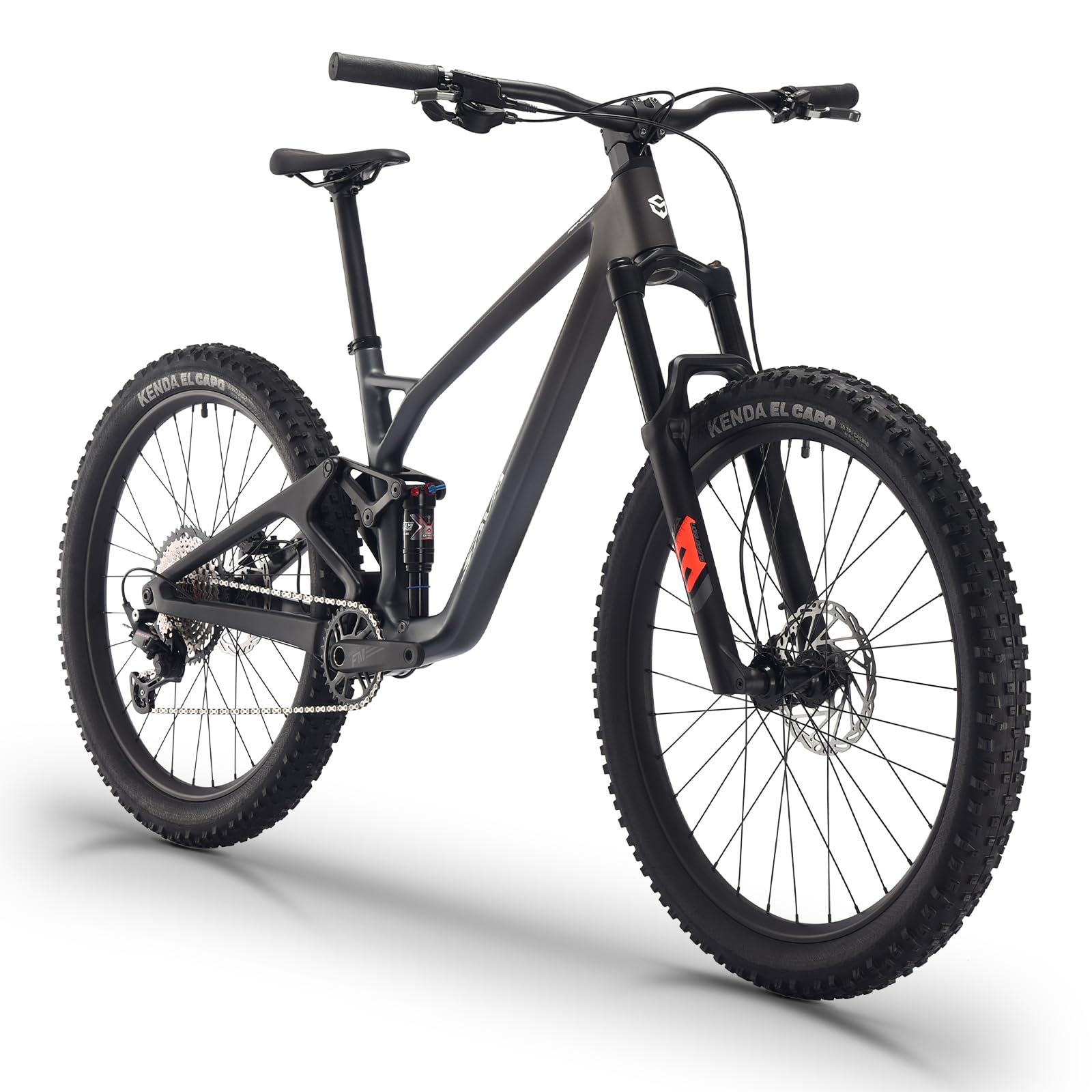
The SAVADECK Titan 612 is a full-suspension carbon mountain bike designed for experienced riders returning to trail riding after knee replacement. The dual-link suspension system with DNM air shock provides 120mm of travel that absorbs trail impacts before they reach your knee joint. The Shimano DEORE M6100 12-speed groupset delivers crisp shifting across a wide gear range, allowing you to spin up climbs with minimal knee torque.
The four-piston hydraulic disc brakes provide the stopping power required for technical descents, reducing the need to use your surgical leg for stability braking. The 2.4-inch Continental tires offer aggressive traction on loose terrain, while the frame supports 2.6-inch tires for even more cushion. The internal cable routing keeps cables away from mud and debris that could cause shifting issues mid-ride.
This bike is not for early-stage recovery — you need good quadriceps control, full knee extension, and confidence with trail riding technique. The carbon frame weighs approximately 28 pounds, making it manageable for loading onto a car rack. Sizing runs large, so shorter riders should be cautious. For aggressive trail riders who want to return to off-road cycling post-recovery, the Titan 612 is the tool for the job.
Why it’s great
- Full suspension absorbs trail impacts before they reach the knee
- Wide 12-speed gearing reduces torque demand on climbs
- Lightweight carbon frame for easy transport
Good to know
- Not suitable for early-stage recovery — requires good quadriceps control
- Sizing runs large; not recommended under 5’4″
11. SAVADECK Carbon Fiber Road Bike
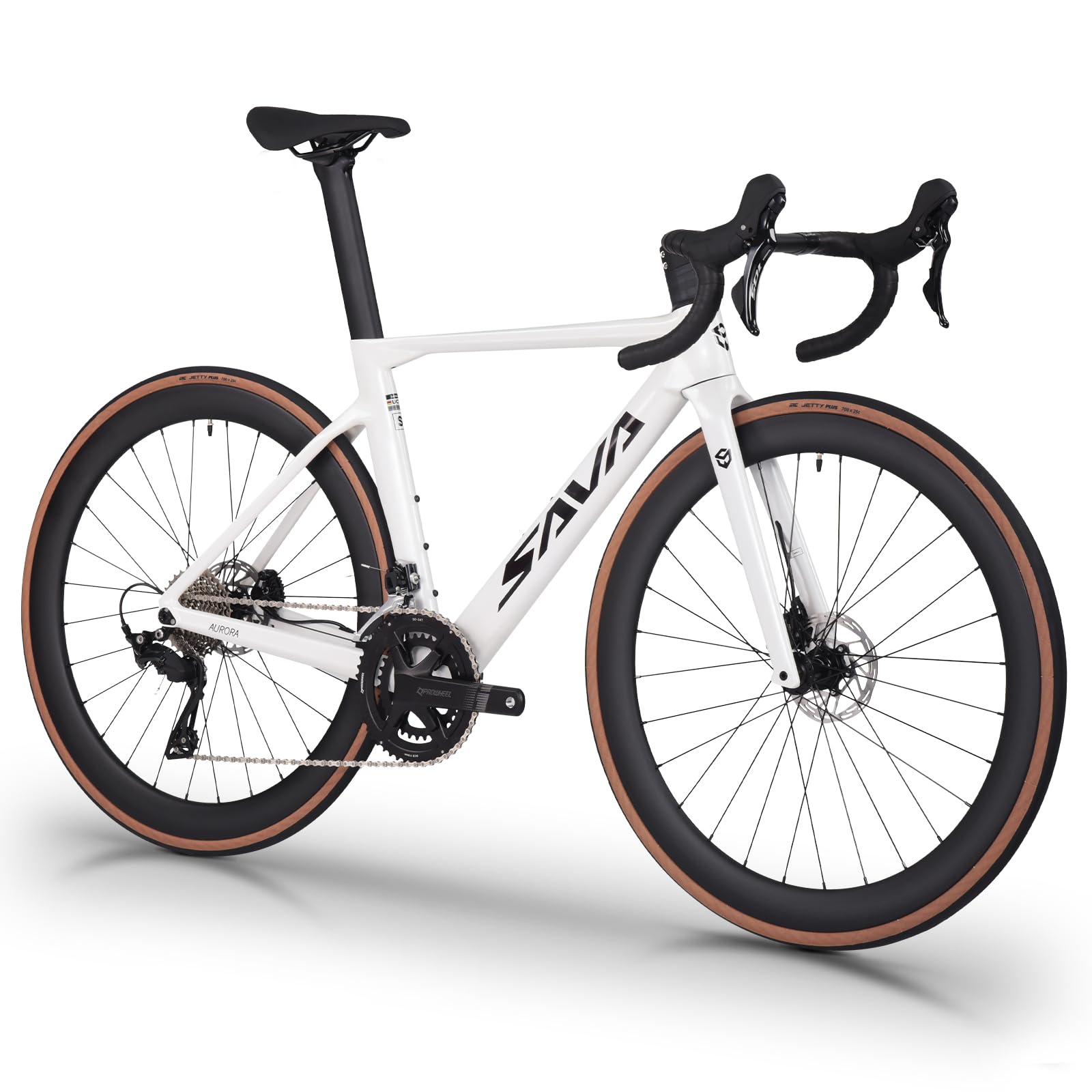
The SAVADECK Carbon Fiber Road Bike brings race-day performance to the post-knee replacement cyclist who has progressed through full rehab and wants to return to group rides or weekend centuries. The T800 carbon fiber frame weighs just 19.4 pounds, making climbing much less demanding on your surgical quadriceps. The Shimano R7120 105 groupset provides 24 speeds with hydraulic disc brakes, offering reliable braking in wet conditions without requiring high hand force.
The full internal cable routing reduces aerodynamic drag and keeps the cockpit clean. The 700x25C wheels with anti-skid tire tread provide confident cornering grip. The aggressive geometry is designed for performance, not comfort — you’ll need adequate core strength and hip mobility to hold the drop bars comfortably. The frame stiffness contributes to efficient power transfer, meaning you can maintain a higher cadence with lower knee torque.
Installation is straightforward with 90% pre-assembly. This bike is for the late-stage recovery cyclist who has passed all physical therapy milestones. For returning road cyclists who want a full carbon race bike without the premium brand markup, the SAVADECK delivers weight and shifting performance that competes with bikes at twice the price.
Why it’s great
- 19.4-pound carbon frame reduces climbing knee torque
- Shimano 105 groupset delivers race-quality shifting
- Hydraulic disc brakes require less hand force than mechanical discs
Good to know
- Aggressive geometry requires good core strength and hip mobility
- Inexpensive pedals included; upgrade recommended for optimal power transfer
FAQ
Can I ride an upright bike after knee replacement?
How many resistance levels do I need for rehab cycling?
Is a tricycle safer than a two-wheel bike during recovery?
What pedal setup is best for post-knee replacement cycling?
Final Thoughts: The Verdict
For most users, the bicycle after knee replacement winner is the 3G Cardio Elite RB X because it combines a narrow Q-factor, 16-level magnetic resistance, and a 5-position adjustable seat designed for commercial-grade recovery. If you want Bluetooth app integration at a mid-range price, grab the JOROTO JH50. And for outdoor stability with electric assistance, nothing beats the HiKNiGHT H6 Pro.