
Finding a pair of binoculars that delivers crisp, bright images without requiring a second mortgage is a real challenge, especially when the magnification numbers and prism types start flying. The market is flooded with options that look great on paper but deliver fuzzy, dim views the moment you try to spot a distant bird or a player on the field. Every optical spec—from objective lens diameter to prism coating—directly impacts what you actually see, and knowing which ones matter at a tight budget is the difference between a purchase you love and one you regret.
I’m Min — the co-founder and writer behind Gadgets Feed. I’ve spent years sifting through technical spec sheets, analyzing customer feedback, and comparing optical performance across hundreds of models to separate genuine value from marketing fluff..
Shopping on a constrained budget means you have to prioritize the specs that actually drive image quality—like BAK-4 prisms and fully multi-coated lenses—while avoiding the gimmicks that inflate the price. This guide breaks down the top contenders to help you find the best binoculars under $50 that balance magnification, brightness, and durability without breaking the bank.
How To Choose The Best Binoculars Under $50
In the sub-fifty-dollar range, every component choice represents a trade-off. Instead of chasing the highest magnification number, which often introduces shakiness and a narrow field of view, focus on the optical elements that actually determine whether your view is crisp or a washed-out blur. The three pillars below are your cheat sheet.
Prism Quality: BAK-4 vs. BK-7
The prism is the internal glass component that erects the image in your binoculars. BAK-4 (Barium Crown glass) has a higher refractive index than BK-7 (Borosilicate glass), which means it produces a perfectly round exit pupil and transmits more light to your eye. BK-7 prisms create a squared-off, dimmer exit pupil. For budget binoculars, BAK-4 is the single most important spec to hunt for—it directly separates a bright, contrasty image from a dull, grey one.
Lens Coatings: The Brightness Factor
Uncoated lenses lose up to 4% of light per air-to-glass surface. A single-layer coating drops that to under 2%, but “fully multi-coated” (FMC) lenses stack multiple layers on every surface, pushing light transmission above 95% and virtually eliminating internal reflections and glare. On a tight budget, FMC is the coating level that gives you the biggest leap in low-light performance and color fidelity—never settle for “coated” optics.
Exit Pupil: Matching Your Eye to the Lens
The exit pupil is the beam of light leaving the eyepiece, calculated by dividing the objective lens diameter by the magnification. A 5mm exit pupil (e.g., 10×50) matches the human pupil in bright conditions, while a 2.5mm exit pupil (e.g., 20×50) is smaller and works best in bright daylight. For under $50 models, an exit pupil between 2mm and 4mm is typical—understand your primary lighting scenario before choosing.
Quick Comparison
On smaller screens, swipe sideways to see the full table.
| Model | Category | Best For | Key Spec | Amazon |
|---|---|---|---|---|
| Rodcirant 18×50 | Premium | Versatile outdoor use with phone adapter | BAK-4, FMC, IPX7 waterproof | Amazon |
| Occer 15×30 | Premium | Lightweight carry & travel | FMC, BAK-4, 16mm eye relief | Amazon |
| OPAITA 20×32 | Mid-Range | Compact pocket binoculars | BAK-4, FMC, foldable design | Amazon |
| Sogries 20×60 | Mid-Range | Maximum magnification for stationary use | BAK-4, multi-coated, 60mm lens | Amazon |
| LULOLO 25×32 | Mid-Range | Ultra-wide angle nature viewing | BAK-4, FMC, 7.8° FOV, 0.7 lbs | Amazon |
| Deesoo 20×52 | Budget | Low-light viewing with large objective | BAK-4, FMC, 52mm objective lens | Amazon |
| Sfeoot 20×50 | Budget | Stargazing & entry-level birding | BAK-4, FMC, rubber armor | Amazon |
In‑Depth Reviews
1. Rodcirant 18×50 Professional Large View Binoculars
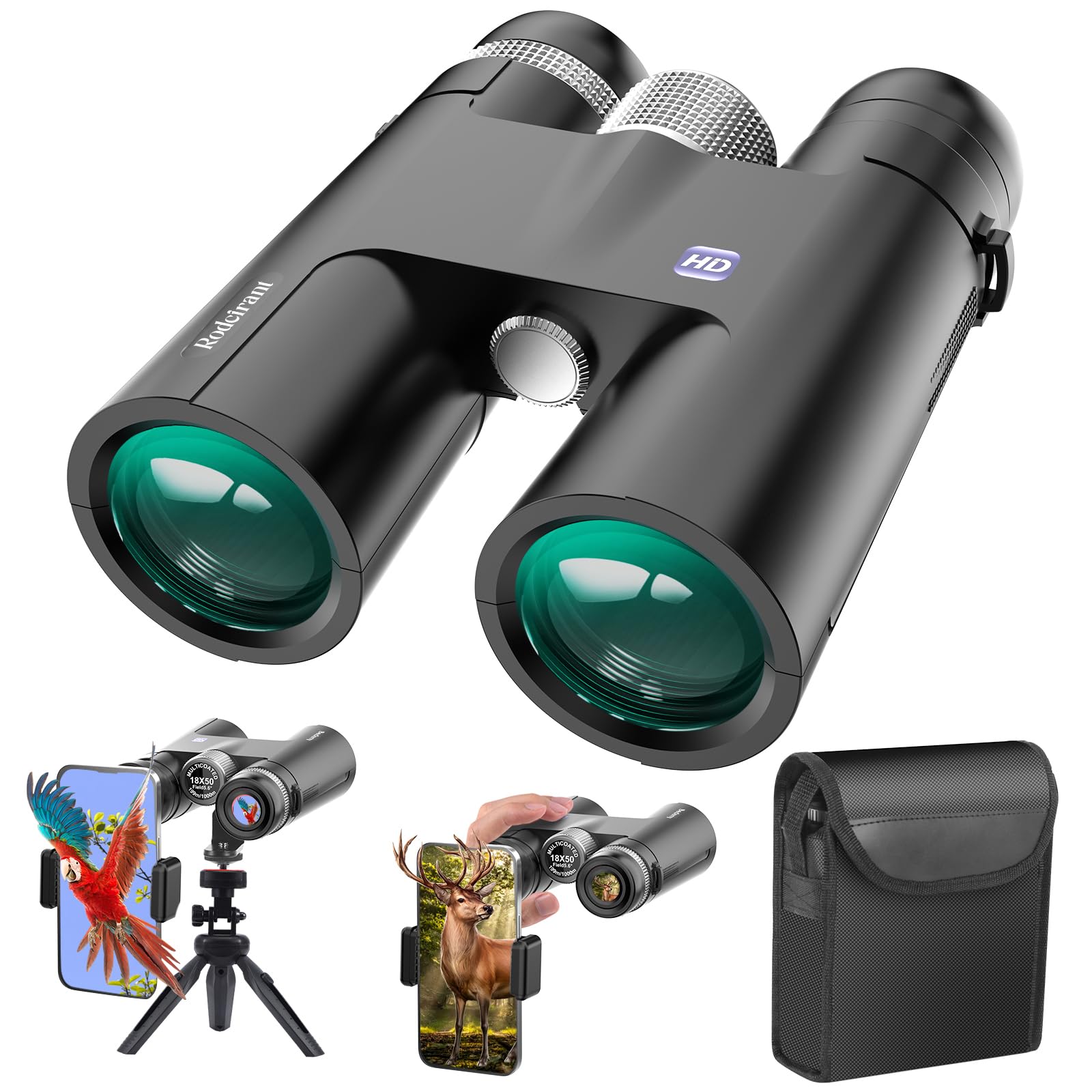
This pair punches well above its weight class by combining BAK-4 prisms with fully multi-coated and phase-coated lenses to hit 99.9% light transmission—a spec usually found on models costing much more. The 18x magnification gives you serious reach, while the 50mm objective gathers enough light to keep images bright even in the deep woods at dusk. At just 1.1 pounds with a 19mm eyepiece, it also manages to feel balanced in the hand rather than front-heavy.
The included IPX7 rating means it can handle a full-on downpour or an accidental drop in a puddle without fogging internally, which is rare at this price point. The package is absurdly complete: a 360° rotatable tripod, a universal phone adapter for digiscoping, and a tripod adapter are all in the box. Center-focus operation is smooth, and the rubber-armored polycarbonate housing provides a secure grip even in wet conditions.
Reviewers consistently praise the clarity for both distant terrain and moving wildlife, noting that the optical stack eliminates the chromatic aberration that plagues cheaper models. The primary downsides are the included neck strap—which some users replace for security—and the carrying case, which is functional but not premium. If you want a single binocular that can handle low-light hunts, birding treks, and even casual digiscoping, this is the strongest all-rounder in the group.
Why it’s great
- Exceptional 99.9% light transmission with phase-coated BAK-4 prisms
- IPX7 waterproof/fogproof construction adds real durability
- Comes with tripod, phone adapter, and all mounting hardware
Good to know
- Neck strap loosens over time and may need a secondary knot
- Carrying case is basic, not padded for heavy gear use
2. Occer 15×30 Compact Binoculars

Weighing just 12.8 ounces with a 30mm objective, the Occer 15×30 is built for the scenario where every gram counts—think day hikes, summits, and cruise-ship excursions where you don’t want a heavy weight around your neck. The BAK-4 prism and FMC broadband coating deliver a claimed 96.48% light transmission, and the 16mm large eyepiece prevents the “black blob” effect that plagues smaller eyepieces by letting in more peripheral light.
The center-focus dial operates smoothly with one hand, and the compact body fits easily into a large coat pocket or a small daypack pouch. A 368-foot field of view at 1000 yards gives you enough width to track birds in flight or scan a tree line without constant micro-adjustments. The included set is generous: a protective bag, cleaning cloth, and neck strap, plus an eyepiece cover that stays put.
Owner feedback is overwhelmingly positive about the sharpness and color contrast, with many noting the optics outperform expectations for the size. The main caveat is that the actual effective magnification is debated among users—some feel it behaves closer to 8x than 15x under true field conditions, so if raw magnification is your priority, one of the 20x or 25x models may serve you better. Also, the diopter ring is smooth enough to drift if bumped, so set it carefully and leave it.
Why it’s great
- Ultra-portable at 12.8 oz with pocket-friendly dimensions
- BAK-4 and FMC coatings produce bright, crisp images
- Smooth one-handed center-focus operation
Good to know
- Some users report actual magnification feels lower than 15x
- Diopter ring lacks friction lock and can shift during use
3. OPAITA 20×32 Compact Binoculars

The OPAITA 20×32 strikes a rare balance: it folds down small enough for a jacket pocket yet still packs BAK-4 prisms and fully multi-coated optics that deliver a genuinely sharp, bright view. The 20x magnification is ambitious for a 32mm objective, but the optical stack compensates well in daylight, giving you a 30% wider field of view compared to standard 15x compact models. The eyepiece design offers 13mm of eye relief, which works for eyeglass wearers in a pinch.
Build quality is reassuring—the plastic body has a durable, textured feel and the folding bridge is tight enough to hold its position without play. The included kit is simple but complete: a carrying bag, neck strap, and cleaning cloth, plus tethered rubber lens caps that are less likely to get lost in the field. The center wheel is sensitive, letting you rack focus with a single finger, and the diopter ring at the right eyepiece offers +/-4 diopters of adjustment.
Customers consistently call it “surprisingly sharp” for its size, and one reviewer specifically noted seeing whales on an Alaska cruise that would have been missed with lower-magnification bins. The main quality caveat is a single report of a lens separating from its housing after a jostle in a backpack, which suggests the internal retention could be more robust. If you carry your binoculars loose in a bag without a case, this might be a concern.
Why it’s great
- Folds to pocket size without sacrificing BAK-4/FMC optics
- Wide field of view for its magnification class
- Smooth, responsive center-focus wheel
Good to know
- One report of a lens detaching after jostling in a bag
- Plastic housing lacks the impact resistance of metal builds
4. Sogries 20×60 Waterproof Binoculars
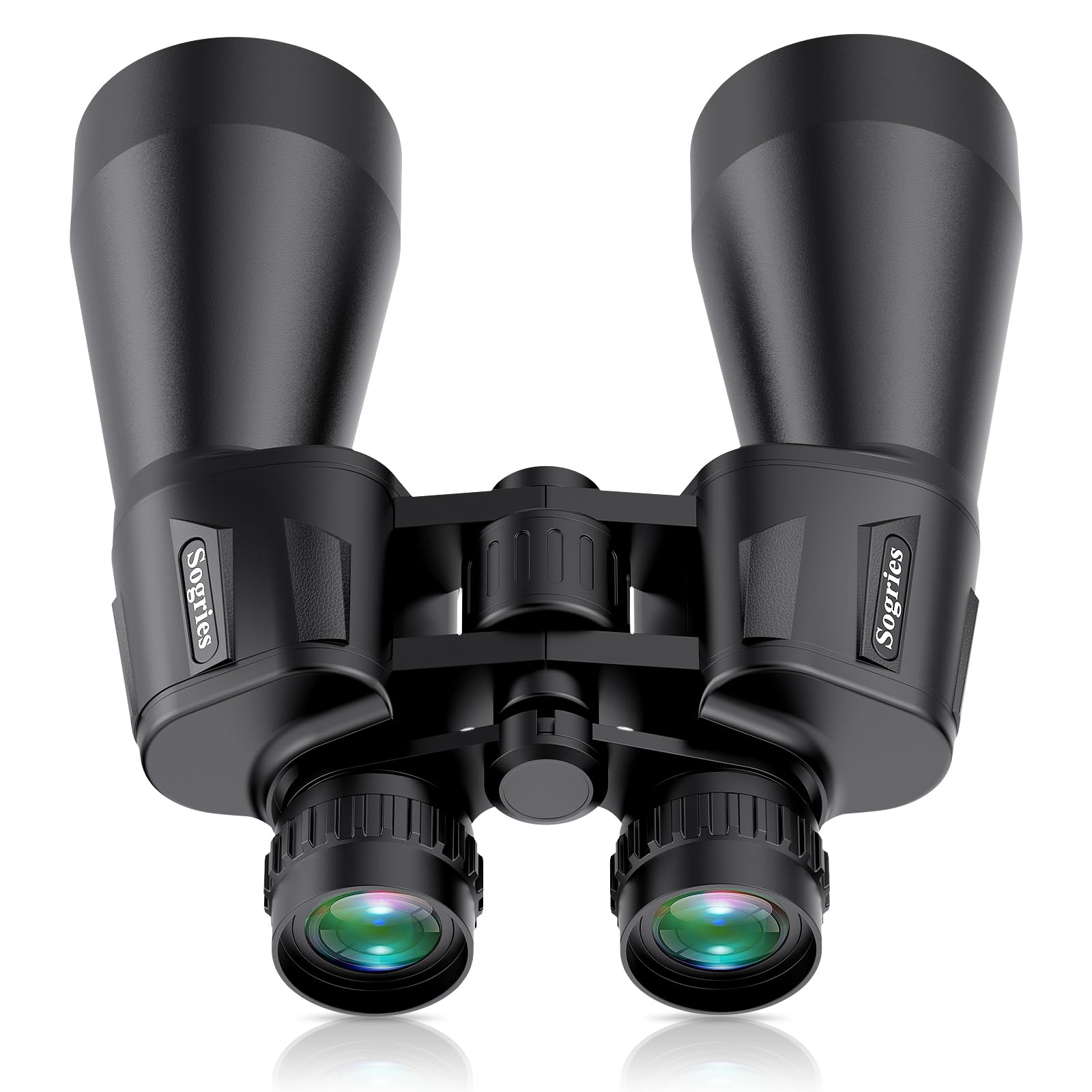
If your priority is reaching out and touching far-away objects—whether it’s a mountainside detail or a stage performer in a stadium—the Sogries 20×60 puts the biggest objective lens in this lineup to work. The 60mm glass gathers enormous amounts of light, which is critical when the magnification is this high, and the multilayer-coated aspherical lenses with BAK-4 prisms keep distortion impressively low for the price. The 28mm eyepiece is a nice touch, reducing eye fatigue during extended sessions.
The body is a mix of metal and rubber, giving it a solid, impact-resistant feel at 1.4 pounds. It’s definitely on the heavy side for handheld use—you’ll want the included tripod for long-range stargazing or landscape scanning. The dual focusing system (center wheel plus individual right-eyepiece diopter) works well once set, and the daily waterproofing handles splashes and rain without issue. The box also includes a tripod, phone adapter, and EVA pouch, making it a complete digiscoping kit.
Real-world owners call it “sharp and bright” in low light, with one reviewer noting the 20×60 configuration delivers excellent value for astronomy beginners. The weak point is the lens caps: the objective caps are thin and untethered, which means they’re easy to lose on a hike. The weight also means this lives in a daypack rather than a pocket, so it’s best suited for stationary or tripod-based observation sessions.
Why it’s great
- Huge 60mm objective lens for maximum light gathering
- Multilayer-coated lenses with BAK-4 for low distortion
- Complete kit with tripod and phone adapter included
Good to know
- Heavy at 1.4 lbs; best used with a tripod or support
- Thin objective lens caps are not tethered and easy to lose
5. LULOLO 25×32 UHD Compact Binoculars
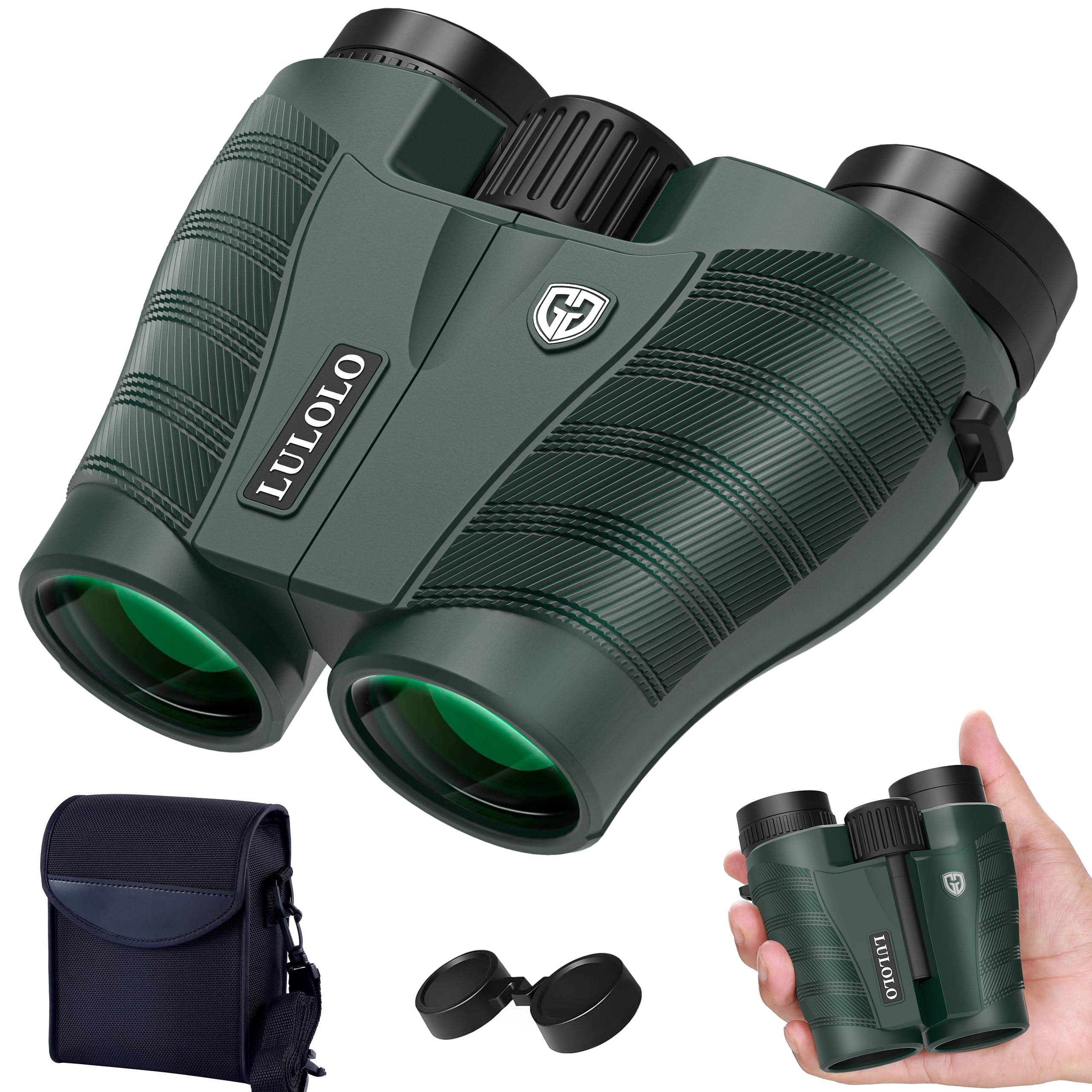
The LULOLO 25×32 is the outlier in this lineup—a 25x magnification in a 32mm objective body that somehow weighs only 0.7 pounds. The key to making this work is the exceptionally wide 7.8° angle of view, which gives you a broad enough horizontal sweep to locate birds and wildlife quickly, even at high magnification. The fully multi-coated lenses and dielectric-coated BAK-4 porro prisms are the real deal here, producing high color fidelity and sharpness that reviewers consistently call out for detail work like identifying bird species.
The open-hinge design and dynamic fast-focus system make this extremely comfortable to hold for long periods, and the twist-up eyecups provide a custom fit for different users. The magnesium chassis is a premium touch at this price point, providing shockproof durability and reducing overall weight. The set includes a rainguard eyepiece cover, a comfortable padded neck strap, and a lifetime warranty card—unusual for a budget model.
Observation is the sweet spot: birders love the ability to pick out plumage details in dense brush, and stargazers appreciate the bright exit pupil for scanning star fields. The only notable omission is objective lens caps—the package comes with eyepiece covers but no front caps, which is a head-scratcher given the otherwise thorough accessory set. If you want an ultralight, wide-angle binocular that excels at detailed nature observation, this is a compelling choice.
Why it’s great
- Ultrawide 7.8° field of view at 25x magnification
- Lightest model at 0.7 lbs with magnesium chassis durability
- Dielectric-coated BAK-4 prisms for excellent color fidelity
Good to know
- No objective lens caps included, only eyepiece covers
- High magnification means a steady hand or support is beneficial
6. Deesoo 20×52 Binoculars for Adults

The Deesoo 20×52 puts a large 52mm objective lens together with a generous 26mm eyepiece, which helps prevent the tunnel-vision fatigue that sometimes comes with extended use. The BAK-4 prism and FMC lens coatings are present here, and the aspherical lens design keeps edge distortion controlled. The 5mm exit pupil (derived from the 20×52 configuration) is actually on the larger side for this price tier, making it one of the better options for low-light conditions like dawn birding or dusk walks.
Rubber-coated, non-slip grips cover the plastic body, and the ergonomic shape fits naturally into medium-to-large hands. It’s not a compact model—at 2.18 pounds and 7.2 inches in length, it’s best carried across the body with the included strap rather than stowed in a pocket. The center-focus wheel is sensitive and responsive, and the +/-5 diopter range covers users with significant prescription differences between eyes. Tripod mountability is a welcome option for steady long-range viewing.
Buyers call it “good value for money” and praise the large eyepieces for eliminating the dark blob effect that plagues smaller eyepieces. The major durability complaint is the neck strap, which multiple users report can slip loose unexpectedly—one reviewer added their own stitches as a fix. The bulk is also a trade-off: reviewers describe it as “big and bulky” compared to 30mm-class compact models. If low-light performance and wide eyepieces matter more than portability, this is a strong budget contender.
Why it’s great
- 5mm exit pupil offers better low-light performance
- Large 26mm eyepiece prevents eye fatigue and dark corners
- Wide diopter range covers varying eyesight prescriptions
Good to know
- Bulky at 2.18 lbs; not suited for pocket carry
- Neck strap can loosen and drop binoculars if not secured
7. Sfeoot 20×50 High Powered Binoculars
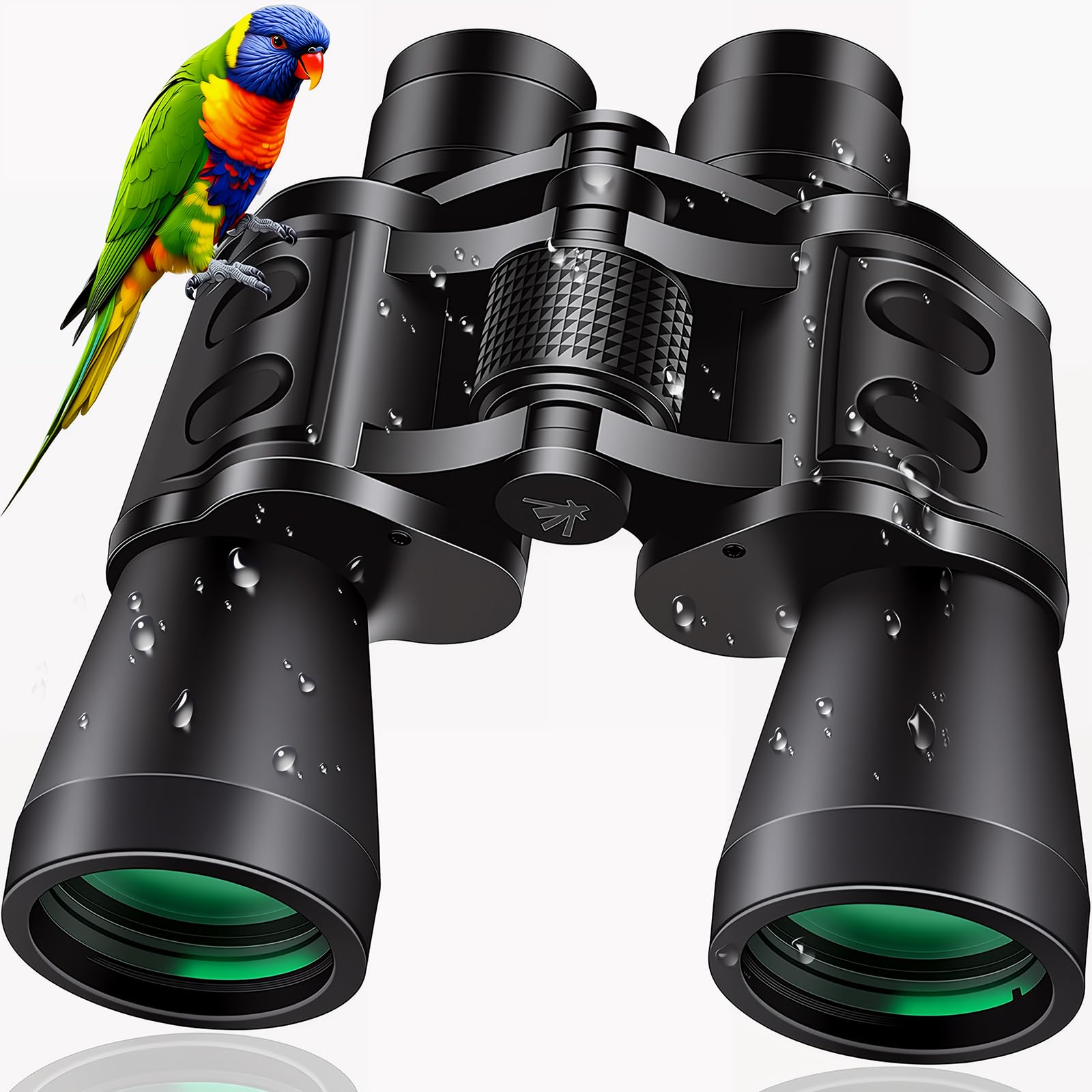
The Sfeoot 20×50 is the entry-gateway binocular that proves you don’t need a big budget to get BAK-4 prisms and fully multi-coated lenses. The 20x magnification paired with a 50mm objective is a classic configuration that gives you a good balance of reach and light collection, and the 42° field of view is decent for scanning wide areas. The rubber-armored body is both impact-resistant and provides a secure grip, even in damp conditions, and the daily waterproofing handles mist and light rain.
Focusing is handled by a smooth center wheel with a soft rubber surface that prevents finger fatigue during long sessions—a small detail that makes a big difference when you’re glassing a tree line for ten minutes. The included accessories are practical: a carrying case, a neck strap that’s separate from the case strap (so you can use the binoculars without the case flopping around), and tethered lens caps that stay attached. The two side handles feature a unique concave-convex ergonomic texture that feels secure even with one hand.
Customer reviews are remarkably strong, with multiple users calling it “magic” for stargazing—one specifically noted it revealed stars invisible to the naked eye. Image quality is praised as “crisp” and “spectacular” for the price, though some note the weight becomes noticeable after about 10 minutes of continuous use. The main nitpick is that the four separate lens cup covers (two objective, two ocular) are not connected, making them easy to misplace. If you’re looking for the absolute lowest-cost entry to decent optics, this is it.
Why it’s great
- BAK-4 prisms and FMC lenses at an entry-level price
- Ergonomic rubber armor with comfortable grip texture
- Surprisingly strong stargazing performance for the cost
Good to know
- Weight causes minor fatigue after extended handheld use
- Four separate untethered lens caps are easy to lose
FAQ
What does “BAK-4” mean and why does it matter on budget binoculars?
Is higher magnification always better for binoculars under 50 dollars?
Final Thoughts: The Verdict
For most users, the binoculars under $50 winner is the Rodcirant 18×50 because it combines BAK-4 phase-coated prisms, IPX7 waterproofing, and a complete tripod/phone adapter kit into a lightweight, versatile package that handles everything from birding to digiscoping. If you want maximum portability, grab the Occer 15×30 for its pocket-friendly 12.8-ounce build. And for stationary stargazing, nothing beats the Sogries 20×60 with its massive 60mm objective lens.