
Our readers keep the lights on and my morning glass full of iced black tea. As an Amazon Associate, I earn from qualifying purchases.
Specs are compiled from manufacturer listings and verified buyer reviews and can change over time — please confirm the key details on the product page before buying.
Pick the wrong wood for a birdhouse and it rots in one season, splits at the nails, or traps heat that kills chicks. The real choice is not about buying wood — it is about which type gives you years outdoors without constant upkeep. This guide covers six options, from fully assembled houses built for specific species to DIY kits you build as a weekend project.
I’m Min — the founder and writer behind Gadgets Feed. This guide is built by comparing the manufacturers’ published specifications and the patterns across verified customer reviews, so you get each pick’s real strengths and trade-offs instead of marketing spin.
Mounting a house for wrens or hanging a multi-room box for bluebirds means you need to know why cedar resists rot naturally while pine needs a protective coat, and how a 1-1/8 inch entrance hole decides who moves in.
Quick Picks
- Kingsyard Wooden Wren House with Predator Guard, Royal Blue — Top Performer
- Woodlink Audubon Traditional Wren House Model NAWREN — Best Value
- Gtongoko Wren Bird House for Outside, Hanging Wood Nesting Box, Black — Smart Design
- SISTERBIRD Wren Bird Houses for Outside Cedar Hanging, Red — Beautiful Cedar
- STARSWR 3 Hole Bird House Room for 3 Bird Families, Brown — Multi-Family
- SparkJump Premium Wooden Bird House Kit – Build it Yourself — DIY Fun
How To Choose The Best Birdhouse Wood
The wood you pick decides how long your birdhouse lasts against rain, snow, and summer heat. Choose the right material up front and you avoid repairs a year later.
Cedar vs Pine
Cedar wins for outdoor use because it naturally resists rot and insect damage — you do not need to paint or stain it. Pine costs less and is still sturdy, but it soaks up moisture and eventually cracks if you skip a weatherproof coating.
The 1-1/8 Inch Entrance Rule
House wrens and chickadees need an opening exactly 1-1/8 inches wide. A hole that size keeps out bigger birds like sparrows and starlings. If the entrance is 1.57 inches, you let in larger species such as bluebirds and finches. Match the hole to the birds in your yard.
Predator Guards and Ventilation
A metal ring or wooden guard around the entrance stops squirrels, raccoons, and woodpeckers from chewing the hole bigger to reach the nest. Air vents near the roof and drain holes at the bottom stop the box from getting too hot or turning into a puddle — both conditions that can kill hatchlings.
Quick Comparison
On smaller screens, swipe sideways to see the full table.
| Model | Best For | Material | Entrance Hole | Weight | Amazon |
|---|---|---|---|---|---|
| Kingsyard Royal Blue | Premium predator protection | Wood | 1 inch | 2.09 Pounds | $23.49$24.99Amazon |
| Woodlink Audubon NAWREN | Classic wren nesting | Natural Cedar | — | 0.9 Pounds | $19.45$20.59Amazon |
| Gtongoko Wren Black | Easy assembly out of box | Wood | 1-1/8 inch | 0.59 Kilograms | $19.99$24.99PrimeAmazon |
| SISTERBIRD Cedar Red | Dual species flexibility | Cedar | 1-1/8 inch | 1.54 Pounds | $21.99Amazon |
| STARSWR 3-Hole Brown | Multi-family setup | Wood | 1.57 inch | 0.9 Kilograms | $27.95Amazon |
| SparkJump DIY Kit | Family DIY project | Cedar | — | — | $44.99Amazon |
In‑Depth Reviews
1. Kingsyard Wooden Wren House with Predator Guard, Royal Blue

A thick wooden house with a metal predator guard that buyers report had wrens raising three broods in a single season.
The Kingsyard gives you the strongest predator defenses without any extra work after hanging it. The metal ring around the 1-inch entrance hole stops squirrels and woodpeckers from making the opening bigger, and the roof lifts off without tools for fast cleaning — owners mention the design is “so genius and EASY to remove the roof for cleaning” while being impossible for predators to open. At 2.09 Pounds versus the Woodlink NAWREN at 0.9 Pounds, it stays stable on a pole in wind.
Unlike the SISTERBIRD cedar house that attracts both wrens and chickadees, the Kingsyard targets wrens specifically with its 1-inch hole. It is built from wood and needs a protective finish if you want maximum weather protection. The 8.94-inch depth gives nesting birds more interior room than the SISTERBIRD at 5.5 inches deep. One buyer who hung it on a porch says wrens claimed this house within days.
Solid construction: The thick wood body, easy-removal roof, and metal predator guard combine into a house that a buyer says produced a “third clutch of house wrens” in one season. No screws needed for access.
Minor weight trade-off: At 2.09 Pounds, you need a sturdy mounting pole or branch — not a thin shepherd hook. The 1-inch hole means chickadees and larger bluebirds will not fit, so stick with this if wrens are your target.
Reach for this if: you want a low-maintenance wren house with proven predator protection and an easy-clean roof that wrens move into within days.
Look elsewhere if: you need a house for multiple species or a light unit for a hanging branch.
2. Woodlink Audubon Traditional Wren House Model NAWREN
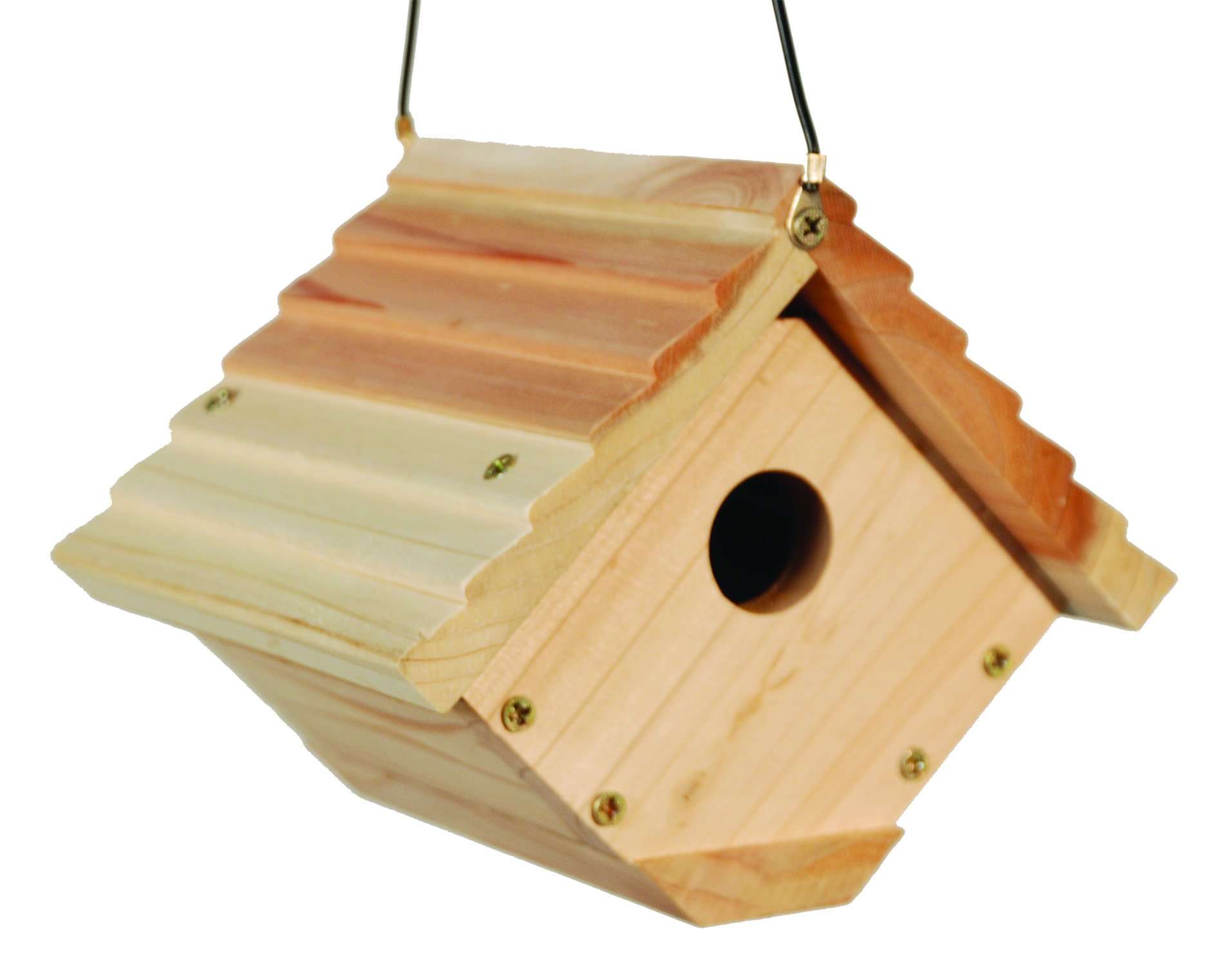
A lightweight cedar house that arrives pre-built, and customers note wrens raise broods the same week it gets hung.
The Woodlink NAWREN is for anyone who wants a proven Audubon-standard design and has no interest in assembly. It is built from natural cedar with brass screws that will not rust, and at 0.9 Pounds it is the lightest house here — noticeably easier to hang from a thin branch or under an eave than the 2.09 Pound Kingsyard. Reviewers point out one unit “mounted near door; wrens arrived immediately and raised two or three broods last year,” which matches the 5-inch height that fits wren preferences.
Two practical trade-offs: the cedar is rough-cut and soaks up paint heavily if you plan to customize it, and some shoppers say the wood feels like pine rather than dense cedar, suggesting it may need indoor winter storage to last many seasons. The roof is removable for cleaning, and the brass screw construction avoids the staple joints that fail on cheaper houses. Unlike the Gtongoko model which includes a screwdriver, the Woodlink has no hardware or extras — it is a straightforward, ready-to-hang house.
What stands out
- Natural cedar with rust-proof brass screws
- Lightest house at 0.9 Pounds for easy hanging
- Roof removable for quick seasonal cleaning
Watch out for
- Rough wood texture may need sanding if painting
- Some buyers recommend winter storage for longevity
A good fit for: anyone who wants a no-assembly Audubon house that attracts wrens fast and looks classic on a porch or tree.
Not the best for: buyers who want a thick, heavy house or one with a built-in predator guard.
3. Gtongoko Wren Bird House for Outside, Hanging Wood Nesting Box, Black
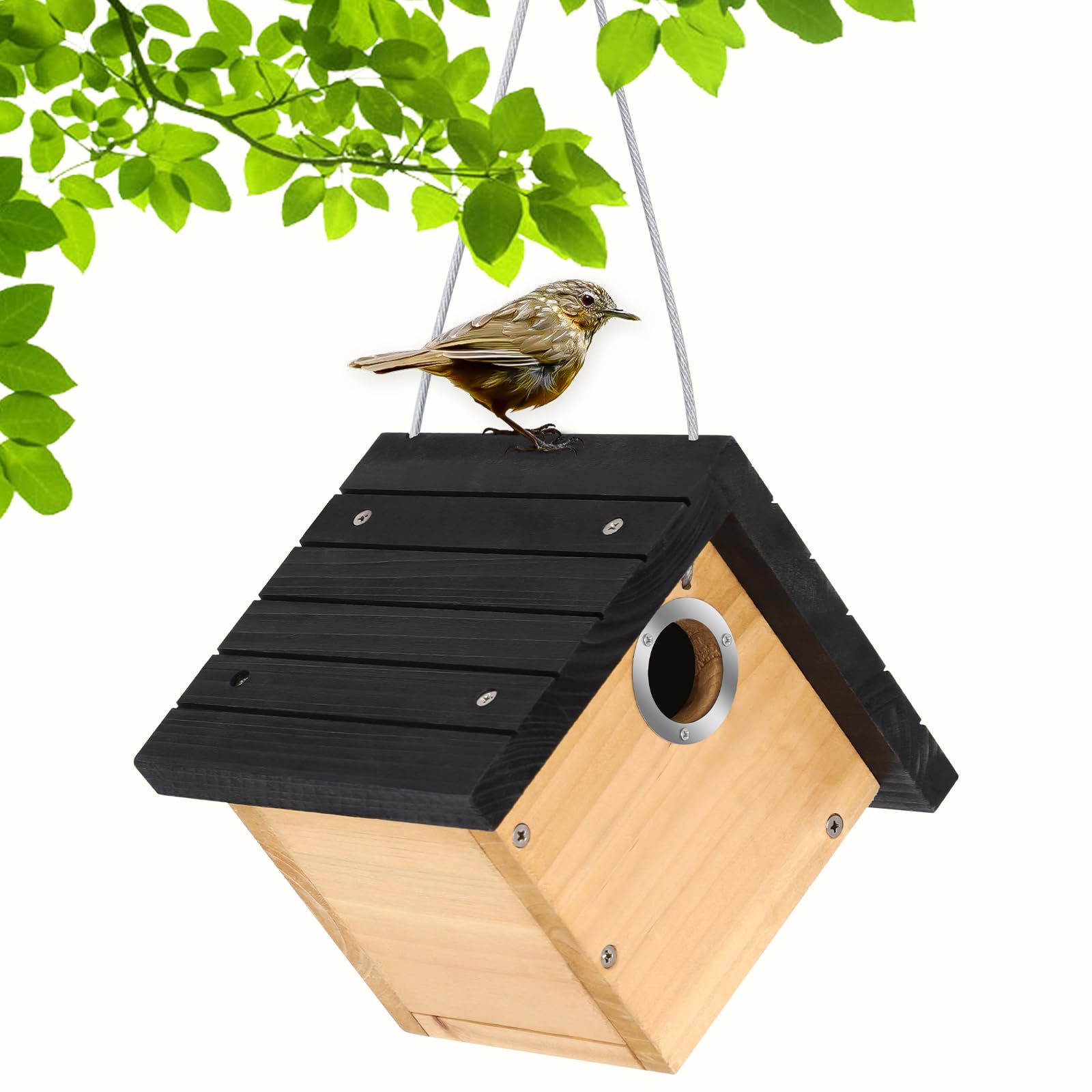
A modern black wren house that includes a screwdriver for assembly and a metal-reinforced entrance to keep out animals that chew.
The Gtongoko stands out because it arrives with every piece of hardware plus a small screwdriver, so you can assemble it in minutes without hunting for tools — though one buyer notes a “power driver recommended” for speed. The 1-1/8 inch entrance hole is exactly sized for House Wrens and Carolina Wrens while excluding larger birds, and the interior has climbing grooves that help young fledglings grip their way up to exit. A lower metal grate under the entrance keeps nesting material clean and adds to the burliness that other hanging houses lack.
An upgrade over the simpler Woodlink: this house includes a clean-out door on the side for end-of-season maintenance and built-in air vents near the roof for ventilation. Weighing 0.59 Kilograms (about 1.3 Pounds), it sits between the light 0.9 Pound Woodlink and the heavy 2.09 Pound Kingsyard. The black paint hides dirt well, but at this price point you are not getting cedar — the material is painted wood, so a protective topcoat may extend its life beyond a single season outdoors.
Smart touches
- 1-1/8 inch hole is species-specific for wrens
- Metal-reinforced entrance and bottom grate
- Screwdriver and all hardware included
Consider before buying
- Painted wood may need a sealant for multi-season use
- Some buyers had to wait for birds to discover it
Go for this if: you appreciate a kit with everything you need in the box, including a door for cleaning and a hole guard for safety.
skip it if: you want natural cedar rot resistance without needing paint maintenance.
4. SISTERBIRD Wren Bird Houses for Outside Cedar Hanging, Red

A vibrant red cedar house with five fledgling ladders inside that buyers report had wrens nesting the very day it went up.
The SISTERBIRD delivers on two fronts: natural cedar that resists rot without paint, and a 1-1/8 inch hole that welcomes wrens, chickadees, titmice, and nuthatches — four species from one box. The roof slopes and overhangs to keep rainwater out, and the bottom has six drain holes to keep the nest dry. Unlike the Gtongoko painted model, this cedar house can go straight outside untreated, though the red coating on this version gives you both beauty and wood protection.
Owners mention it is pre-assembled from the start with a heavy-duty 304 stainless steel hanging hook that is chew-proof. One reviewer noted they had “wrens nesting as soon as I put it up” and praised how easy it is to clean. The 5.5-inch depth is less than the Kingsyard’s 8.94-inch depth, which some species prefer. A minor quibble: the door latch uses a metal hook that one buyer worried curious squirrels could jostle open, so a small additional latch may give confidence.
Why it shines
- Natural cedar with vibrant stain for weather resistance
- Attracts four small bird species, not just wrens
- Five interior fledgling ladders help babies exit
One caveat
- Shallow at 5.5 inches deep versus the Kingsyard at 8.94 inches
- Door latch may need a pin to prevent squirrel theft
Perfect for: anyone who wants a colorful cedar house that attracts multiple small species and requires no assembly or painting.
Skip if: you need a deep nesting chamber for larger families or prefer a latch system that is squirrel-proof from the start.
5. STARSWR 3 Hole Bird House Room for 3 Bird Families, Brown

A three-room wooden condo for bluebirds and finches with a 1.57 inch platform at each entrance for easy landing.
This STARSWR design breaks away from the single-family wren houses above. It offers three separate nesting compartments, each with its own 1.57 inch entrance and a small platform so birds can land before hopping inside. The target species here are bluebirds and finches — larger birds than the wrens and chickadees that use the 1-1/8 inch holes on the SISTERBIRD and Gtongoko models. The house measures 11.8 inches wide by 8.66 inches deep by 4.7 inches high, making it wide and horizontally oriented.
The biggest concern among buyers is cleaning: one reviewer says it “does not have a way to open it to clean out the old nest except for a small hole in the back,” which makes year-after-year reuse harder than the SISTERBIRD’s full-access door. Another buyer called the wood “very flimsy and thin” and said it needs staining or painting to survive more than one season, unlike the solid cedar of the SISTERBIRD. On the positive side, bluebirds reportedly love it, and the heavy hemp rope makes hanging from a tree branch simple. Buyers who add a protective sealant report good durability.
Best for multi-species yards: If you have bluebirds and finches visiting and want three families in one hanging unit, the compartment layout works well.
Plan for extra maintenance: The back access hole is small for cleaning, and the thin wood almost certainly needs a weatherproof coat immediately after unboxing to last beyond one season.
Choose this for: yards with bluebirds and finches looking for a multi-family hanging house that keeps several nests in one spot.
Too much hassle if: you want natural rot resistance, easy cleaning access, or a single sturdy house for one bird family.
6. SparkJump Premium Wooden Bird House Kit – Build it Yourself

A cedar DIY kit with pre-drilled holes that turns a weekend craft session into a real nesting box.
The SparkJump is not a ready-to-hang house — it is a build-it-yourself kit for adults and families who want the experience of hammering nails and gluing shingles. The box contains 7 cedar wood pieces, cedar shingles for the roof, 2 decorative windows, 6 wood slices, 30 nails, wood glue, 2 eye hooks, 1 perch, and 3 sandpaper pieces, plus instructions. No hammer is included, so you need your own. The final house measures 10 inches deep by 8 inches wide by 14 inches tall — the tallest design in this lineup.
Buyers consistently praise the instruction quality and the solid cedar material, with one stating “pre-drilled holes, solid cedar, clear instructions, creative flexibility.” A few reports mention missing small pieces — the seller appears responsive according to one review where the company quickly addressed an open-box shortage. A common note: the included wood glue can be messy, so using your own may give a cleaner finish. Unlike every other pick on this list which arrives fully assembled, the SparkJump needs about an hour of building time, making it a gift for a woodworking hobbyist or a grandparent-grandchild project rather than a quick hanging solution.
Why build it
- Real cedar wood, not particle board or thin plywood
- Pre-drilled holes make alignment easy for beginners
- All fasteners, glue, and decorative accents included
What to know
- No hammer included — you supply your own tools
- Glue quality can vary between kits
Grab this for: a rainy afternoon project with kids or as a thoughtful gift for anyone who enjoys building things.
Not for: anyone who needs a birdhouse they can hang immediately — this is a craft kit, not a ready-to-use nest box.
Understanding the Specs
Wood Type and Durability
The material decides how many seasons your birdhouse will survive outdoors without rotting. Cedar is the premium choice because it contains natural oils that repel moisture and insects — you can hang it untreated and it lasts for years. Painted or unfinished wood needs a stain, paint coat, or sealant for better weather resistance. Standard pine is the most affordable but almost always needs a sealant, and many customers note thin pine boards warping or splitting after one rainy winter. For a house you leave up year-round, cedar is worth the small premium.
Entrance Hole Diameter
The hole size is the most important spec for controlling which birds move in. A 1-1/8 inch opening fits house wrens, Carolina wrens, chickadees, and nuthatches — the small songbirds most backyard birders want. A 1 inch hole is even more restrictive, targeting wrens almost exclusively. A larger 1.57 inch opening invites bluebirds, finches, and the occasional sparrow. A female bird will reject a house if the hole is too large because it lets predators enter, so matching the diameter to your local species is critical.
FAQ
What is the best wood for a birdhouse that stays outside all year?
Will a birdhouse with a 1-1/8 inch hole keep out sparrows?
How often should I clean a wooden birdhouse?
Do I need to paint or stain a cedar birdhouse?
What is a predator guard and do I need one?
How high should I mount a wooden wren house?
Can I use a birdhouse with multiple compartments for different species?
Should a birdhouse have air vents and drainage holes?
Final Thoughts: The Verdict
For most buyers looking for a birdhouse wood that balances weather resistance, predator safety, and easy cleaning, the winner is the Kingsyard Wooden Wren House because its thick wooden build and metal guard have proven results with wrens raising three broods in one season. If you want a lighter, pre-assembled cedar house that attracts wrens instantly and costs less, grab the Woodlink Audubon NAWREN. And for a weekend project that results in a real nesting box from real cedar, the standout is the SparkJump DIY Kit.
How We Picked
We do not accept paid placement, and we did not hands-on test every unit. Instead, we match each pick to a real buyer and use-case by comparing the manufacturers’ published specifications against the patterns in verified customer reviews — so you get each pick’s real strengths and trade-offs instead of marketing copy.
Sources & Methodology
Specifications: manufacturer listings and product documentation. Review insights: verified customer reviews, as of July 2026. Pricing: not shown on this page (it changes often); check the current price via the retailer link.
As an Amazon Associate, Gadgets Feed earns from qualifying purchases. This does not affect which products we feature.
Product prices and availability are accurate as of the date/time indicated and are subject to change. Any price and availability information displayed on Amazon at the time of purchase will apply to the purchase of this product. As an Amazon Associate I earn from qualifying purchases.
CERTAIN CONTENT THAT APPEARS ON THIS SITE COMES FROM AMAZON. THIS CONTENT IS PROVIDED "AS IS" AND IS SUBJECT TO CHANGE OR REMOVAL AT ANY TIME.
Amazon and the Amazon logo are trademarks of Amazon.com, Inc. or its affiliates.