
Finding a board game that actually works for exactly two, three, or four people without feeling like you’re stuck with a broken player count is the quiet frustration of every game night. Many titles skew toward larger groups or are strictly two-player affairs, leaving the sweet spot of 2–4 players surprisingly underserved. The games that nail this range share one trait: they scale their mechanics so every player count feels intentional, not like a compromise.
I’m Min — the co-founder and writer behind Gadgets Feed. My analysis centers on how each game’s rule set, component quality, and replayability hold up under repeated sessions, specifically for groups of two to four, because the wrong choice here leads to lopsided fun or a shelf-sitter after one play.
This guide cuts through the noise to deliver only the titles that earn their spot on your table. After comparing dozens of options across mechanics, playtime, and strategic depth, these are the board games 2-4 players that actually deliver consistent, engaging sessions regardless of your exact headcount.
How To Choose The Best Board Games 2-4 Players
Selecting the right game for groups of two to four demands more than box art. You need to evaluate how the core mechanics shift when you drop from four players to two, since many games lose tension or become unbalanced at lower counts. The categories below break down the most critical filters.
Player Count Scaling & Interaction
The biggest trap is assuming a game labeled “2–4 players” works equally well at every count. Tile-laying and set-collection games like Azul or Harmonies maintain consistent tension because each player operates on their own board and your only interaction is through drafting shared resources. In contrast, games built on direct sabotage or blocking — like the Tetris board game — can feel more cutthroat at lower player counts because every move targets a single opponent. For maximum consistency, prioritize games where the core loop doesn’t rely on a minimum number of opponents to create meaningful decisions.
Playtime Commitment & Setup Speed
A 60-minute game works fine for a dedicated game night, but if your group pulls out a box during a casual dinner or while waiting for food, anything over 20 minutes of setup or 45 minutes of play might kill the mood. Dumpster Dice nails the 5-10 minute slot with near-zero setup, making it the ideal filler. Sky Team plays in about 20 minutes with a clean cockpit board that stays organized. Meanwhile, CATAN and Ticket to Ride run 60-90 minutes and require table space for boards and tokens. Match the time budget to your group’s typical availability — not your aspirational game night fantasy.
Component Quality & Tactile Appeal
Board games live or die on how satisfying the pieces feel in hand. Premium resin tiles (Azul), thick wooden landscape tokens (Harmonies), and chunky plastic trains (Ticket to Ride, 2025 Refresh) elevate the experience far beyond a card-and-paper affair. The Tetris board game uses semi-translucent Tetrimino pieces that mimic the video game’s look but some reports note occasional bending. For games you’ll open dozens of times, invest in options where the box insert, card stock thickness, and token weight signal durability. Cheap components erode enthusiasm after the second play.
Quick Comparison
On smaller screens, swipe sideways to see the full table.
| Model | Category | Best For | Key Spec | Amazon |
|---|---|---|---|---|
| Azul | Tile Placement | Award-winning strategy with gorgeous components | 30-45 min playtime | Amazon |
| Sky Team | Co-op Dice | Intense silent co-op for two | 20 min playtime | Amazon |
| Ticket to Ride | Route Building | Classic train adventure for 2-5 | 30-60 min playtime | Amazon |
| CATAN (6th Ed.) | Trading & Building | Replayable island settlement | 60-90 min playtime | Amazon |
| Harmonies | Landscape Building | Tactile puzzle with stunning art | 30 min playtime | Amazon |
| Spin Master Tetris Board Game | Real-Life Puzzle | Competitive Tetris for families | 20 min playtime | Amazon |
| Dumpster Dice | Dice Game | Fast-paced chaos on the go | 5-10 min playtime | Amazon |
In‑Depth Reviews
1. Azul Board Game

Azul won the 2018 Spiel des Jahres for a reason: its draft-and-place loop is immediately satisfying and rewards repeated plays with layers of tactical depth. You select colored resin tiles from shared factory displays, complete pattern rows on your board, and build a mosaic wall. The drafting tension escalates perfectly — at two players you can aggressively deny your opponent specific colors, while at three or four the shared pool becomes a chaotic free-for-all that demands quick adaptability.
The 100 resin tiles are heavy, glossy, and click together satisfyingly when placed. Each of the four player boards shows a unique mosaic pattern, giving the final tableau a personalized aesthetic. The gameplay runs 30–45 minutes, fast enough to play two or three rounds in a single game night, and setup involves little more than dumping the tiles into the included linen bag and distributing factory displays. Scoring rewards both vertical and horizontal connections, so your strategy must adapt every round as tiles disappear from the central pool.
Beginners pick up the rules in under five minutes, but the draft-and-deny mechanics keep experienced players engaged. The only downside is the box size — it’s larger than it needs to be, and a travel version exists but costs extra. Still, for a game that scales from 2 to 4 without losing an ounce of tension, Azul remains the gold standard.
Why it’s great
- Gorgeous, weighty resin tiles provide a premium tactile experience
- Scales perfectly from 2 to 4 players with no dead feeling at any count
- Rules are learnable in minutes but strategic depth lasts hundreds of plays
Good to know
- Box is larger than necessary for the components
- Player interaction is indirect — no direct sabotage beyond tile denial
2. Scorpion Masqué Sky Team

Sky Team won the 2024 Spiel des Jahres and redefines cooperative play for exactly two people. You and your co-pilot must land a plane by assigning dice silently onto a shared cockpit board. After a brief planning phase where you can discuss strategy, all communication stops — you roll your dice and place them independently, hoping your partner’s placements align with your own assumptions. The tension is genuinely sweat-inducing because one misplaced die can send your approach track into a stall.
The box includes 20 different scenarios based on real airports, each introducing new challenges like crosswinds, ice on the runway, or a fuel leak that reduces your available dice. A deck of coffee tokens lets you re-roll or swap dice, offering a limited safety net that forces tough decisions about when to spend them. The cockpit board is clean and intuitive, with clear tracks for altitude, speed, and approach angle, and the player aid screens block line-of-sight so you cannot see your partner’s die placements.
Gameplay runs about 20 minutes, making it perfect for a quick weeknight session or as a warm-up before a heavier game. The cooperative design eliminates the “alpha player” problem common in co-op games because the silence mechanic forces equal participation. A minor consideration: this game is strictly two-player, so it won’t work for your wider 3-4 player group. But if you and a partner want a challenging, communication-driven experience, Sky Team is unmatched.
Why it’s great
- Silent co-op mechanic eliminates quarterbacking and forces real teamwork
- 20 scenarios with escalating difficulty provide huge replay value
- Compact box and quick setup fit any occasion
Good to know
- Strictly two-player — does not support 3 or 4 players
- Dice luck can occasionally undo perfect planning
3. Asmodee Ticket to Ride Board Game (2025 Refresh)
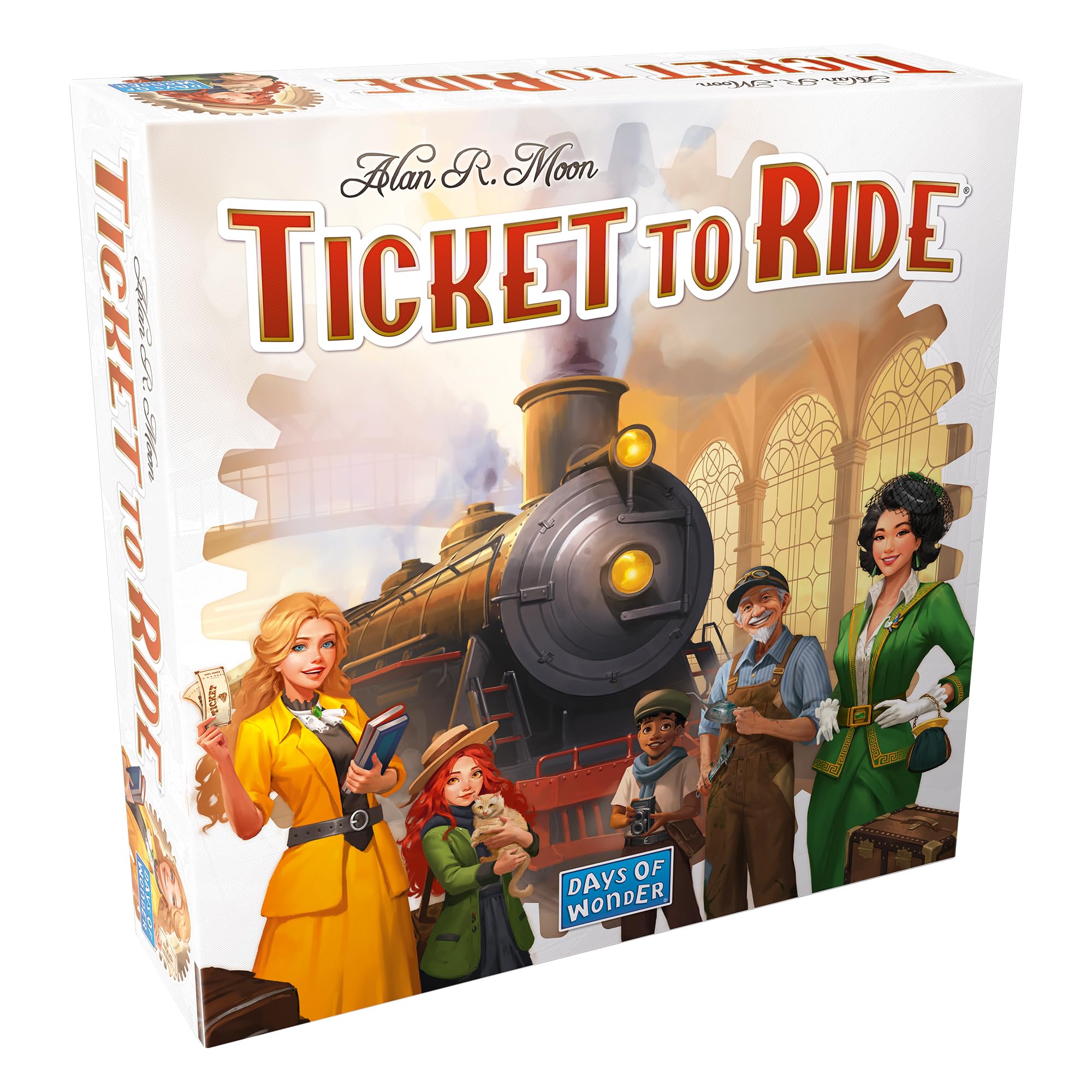
The 2025 Refresh of Ticket to Ride retains the iconic cross-country train adventure while upgrading component quality and rulebook clarity. Players collect colored train cards and claim routes across a map of North America, attempting to connect distant cities to complete destination tickets. The core set-collection and route-building loop is elegant and accessible — you can teach someone in under five minutes — yet the strategic depth emerges from blocking opponents’ routes and deciding when to deviate from your tickets to maximize points from the longest continuous path.
The new edition features a giant map board with clearer city labels, 225 plastic trains in five colors with improved paint application, and a redesigned rulebook that cuts confusion during first plays. The 110 train cards feature fresh illustrations while maintaining compatibility with existing expansions. At two players, the map feels spacious enough to avoid direct conflict — you can specialize in opposite corners — while at 4 players, the competition for critical routes intensifies dramatically. The sweet spot is three players, where blocking becomes viable without feeling mean.
Game sessions run 30–60 minutes depending on player experience and number of tickets completed. The box is large (11.7 inches square) but well-organized with an insert that minimizes setup time. The only friction point is the luck of the card draw — sometimes the cards you need simply don’t appear — but the risk-reward of drawing blind versus drawing from the visible face-up pool keeps decisions interesting. Ticket to Ride remains a family-friendly classic that scales well from 2 to 5 players.
Why it’s great
- Easy to teach with deep strategic route-blocking at higher player counts
- 2025 Refresh includes chunky trains and a clearer rulebook
- High replayability due to randomized ticket draws and card decks
Good to know
- Card draw luck can frustrate strategists who prefer deterministic outcomes
- Box may be oversized for those with limited shelf space
4. CATAN Board Game (6th Edition)

CATAN needs no introduction — it’s the game that introduced modern board gaming to millions. In the 6th Edition (2025), the modular hexagonal board produces a unique layout every game, ensuring no two sessions play out identically. You gather resources (brick, wood, wheat, ore, sheep) based on dice rolls connected to terrain hexes, then build roads, settlements, and cities to reach 10 victory points. Trading with opponents is the heart of the game — you can haggle, negotiate, and make deals that shift the power dynamic dramatically.
The 6th Edition upgrades include built-in card trays that keep resource cards organized, chunkier wooden player pieces (96 pieces in four colors), a redesigned rulebook that simplifies the learning curve, and vibrant natural art on the hexes and cards. The box now includes two bonus victory point tiles, and the rulebook has renamed “Lumber” to “Wood” and “Grain” to “Wheat” for clarity. The largest change is the card back redesign, which means older expansions may have mismatched backs, so purchase expansions designed specifically for the 6th Edition.
CATAN officially supports 3–4 players, with an optional expansion to reach 5–6. At three players, the board feels open and trading is essential because no single player can dominate resource production. At four, blocking and the robber become aggressive tools. The 60–90 minute session is perfect for a dedicated game night, but newcomers should budget an extra 15 minutes for setup and rules explanation. The dice roll dependency means some games feel swingy, but the trading and negotiation layer gives savvy players a way to mitigate bad luck.
Why it’s great
- Modular board guarantees massive replayability across every session
- Trading and negotiation create memorable stories and deal-making moments
- 6th Edition components are visibly upgraded with card trays and chunkier pieces
Good to know
- Only supports 3-4 players out of the box, not 2
- Dice luck can lead to frustrating streaks with no resource production
5. Asmodee Harmonies Board Game

Harmonies is a tile-laying game where you build a three-dimensional landscape using wooden tokens, then populate it with animal cubes based on illustrated card requirements. The tactile sensation of stacking wooden landscape pieces — mountains, forests, rivers, and plains — into a layered diorama is immediately rewarding. Each turn you draw a token from a central pool and place it on your personal board, trying to match terrain patterns that satisfy animal cards for victory points.
The component quality is outstanding: 120 wooden tokens are sanded smooth and painted with clear terrain symbols, 79 animal cubes feel substantial in hand, and the 42 illustrated cards feature Libellud’s signature dreamlike art style. The game includes four personal boards, a central board with a token dispenser pouch, and reminder cards that explain scoring conditions. A solo mode is included, which uses Nature’s Spirit cards to provide a variable AI opponent — a rare feature that adds value for solo gamers who occasionally want a break from group play.
Gameplay runs about 30 minutes and works well at 2 players where the token pool refreshes quickly, while 3-4 player sessions introduce more competition for specific landscape pieces. The rules are straightforward — you need about three minutes of explanation — but the scoring system rewards planning multiple turns ahead as you set up perfect terrain combinations. The minimal player interaction (everyone builds their own board) means Harmonies functions as a satisfying multiplayer solitaire puzzle, but those seeking direct confrontation should look elsewhere.
Why it’s great
- Beautiful three-dimensional wooden components provide unmatched tactile appeal
- Simple to learn with deep scoring puzzles that reward planning
- Includes a genuine solo mode for solo play practice
Good to know
- Very low direct player interaction — essentially multiplayer solitaire
- Games can end suddenly with minimal warning
6. Spin Master Games Tetris: The Board Game
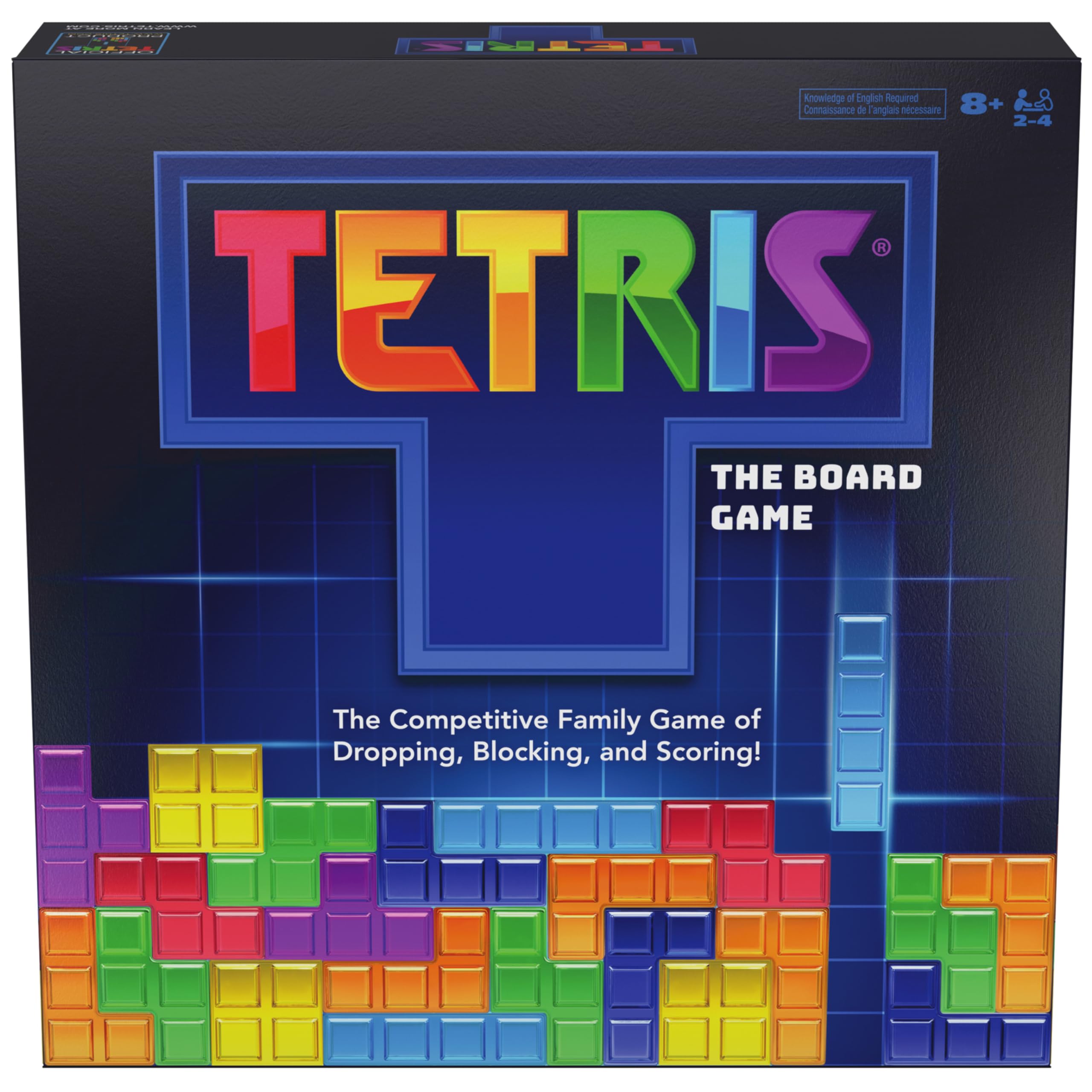
This tabletop adaptation of the classic digital puzzle translates Tetris into a competitive head-to-head experience for 2–4 players. Each player has a grid board where they drop semi-translucent Tetrimino pieces (the iconic seven shapes), completing horizontal lines to score points and discard filled rows. The twist: landing a piece on a “Garbage Drop Icon” in your grid lets you add a blocking piece to an opponent’s grid, sabotaging their progress. This direct-interaction element transforms the solitary puzzle into a multiplayer race.
The components include four Tetris grids with grid bases, four player cards, a game board, 24 Tetrimino cards, 128 Tetriminos in semi-translucent plastic (matching the video game aesthetic), and 8 Minos. The pieces are colorful and recognizable to anyone who has played Tetris, though some customer reports mention occasional bending in the plastic. Setup is quick — each player takes a grid, and the Tetrimino cards are shuffled into a central deck. Games run about 20 minutes, making it a fast filler that works well for families with kids aged 8 and up.
At 2 players, the game becomes a direct duel where each garbage drop feels personal. At 3–4 players, the chaos escalates — you have to track multiple opponents’ boards while managing your own, creating a satisfying puzzle-under-pressure feel. The main downside is the luck factor: the order of drawn Tetrimino cards determines your options, and the garbage drop icon placement is random. Strategy matters, but the randomness keeps it from being a pure skill game. For fans of the digital original who want a social, physical version, this delivers exactly that.
Why it’s great
- Perfect translation of the classic video game into a physical competitive format
- Semi-translucent pieces look authentic and match the digital aesthetic
- Fast 20-minute sessions are great for quick game nights
Good to know
- Some pieces may arrive slightly bent due to thin plastic
- Random piece draws and garbage icon placement can feel luck-driven
7. Big Discoveries Dumpster Dice
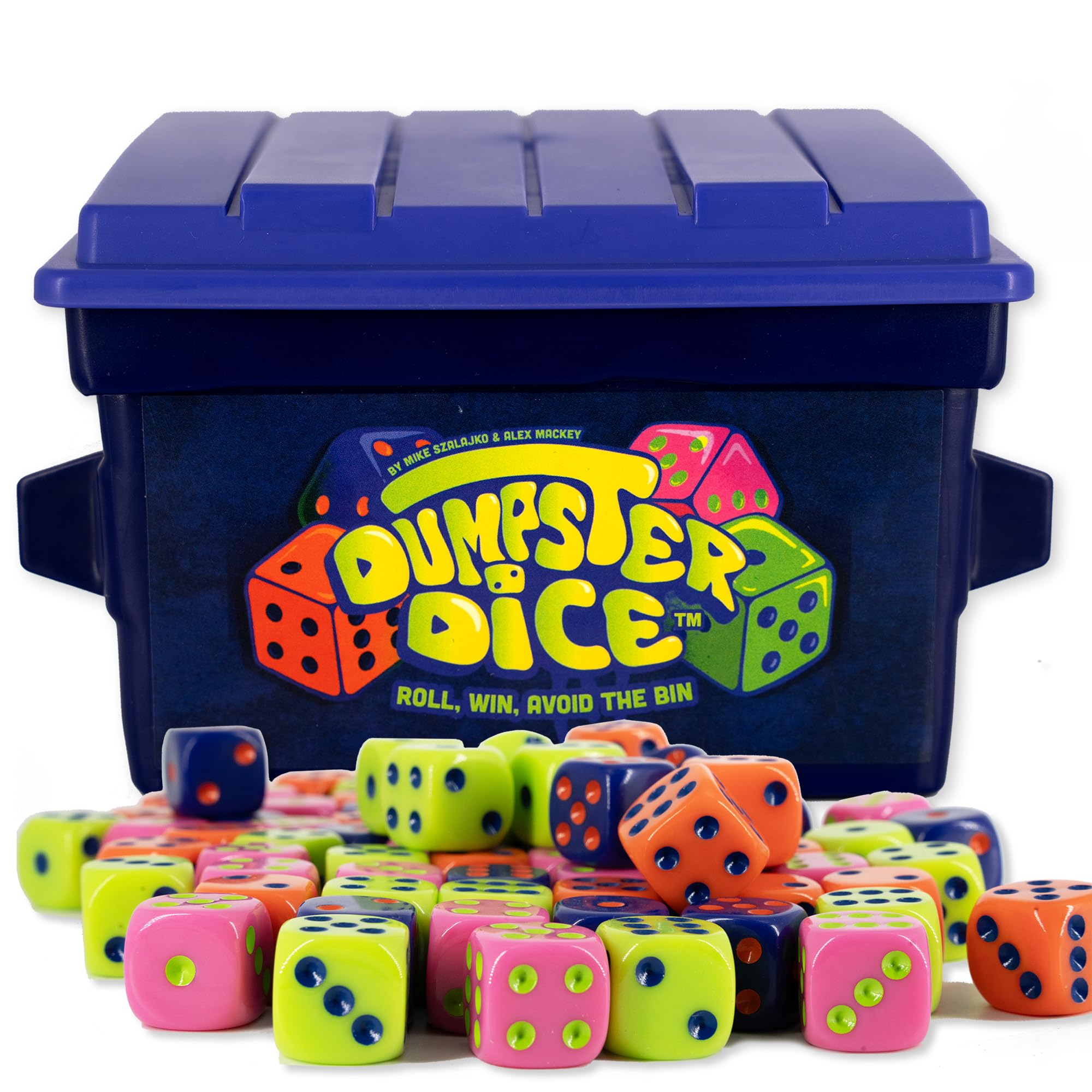
Dumpster Dice leans into absurdity with its premise: you’re competing to collect a full 1–6 dice set while avoiding duplicates, and the “dumpster” — a sturdy tin container with a removable lid that doubles as the game board — adds a tactile, silly centerpiece. The game includes 80 colorful dice in four colors (red, blue, green, pink), a graffiti sticker sheet for customizing the dumpster, and an instruction sheet with five gameplay variations. The core loop is straightforward: roll dice, keep the ones you need, and re-roll the rest while trying to fill your sequence before opponents.
The component quality surprises given the entry-level positioning. The dice are colorful and perfectly legible, and the tin dumpster feels durable enough to survive being tossed in a backpack. The 5–10 minute playtime makes it ideal for waiting rooms, restaurant tables, or as a warm-up before a longer game. The included graffiti sticker sheet lets kids personalize the dumpster, adding a creative DIY element. The compact dimensions (6 x 5 inches) mean it fits in a jacket pocket or purse.
At 2 players, the game is a quick race with direct competition over the same dice pool. At 4 players, the chaos spikes because turns rotate quickly and you can snatch a die another player just discarded. The game can be combined with the publisher’s Trash Dice to expand to 6 players, though that requires a separate purchase. The main knock is strategic depth — this is pure push-your-luck randomness with minimal decision-making beyond which dice to keep. It’s not a game you play for hours, but it fills a specific niche: fast, loud, portable family fun when you have five minutes and want something accessible.
Why it’s great
- Extremely portable tin dumpster design with compact footprint
- Five gameplay variations add replayability beyond the base rules
- 5-10 minute rounds are perfect for ultra-casual or filler sessions
Good to know
- Pure luck-based with almost no strategic depth
- 4-player claim fits but 5-6 players require an additional purchase
FAQ
Can I play CATAN with 2 players out of the box?
What board games 2-4 players are most portable for travel?
Are tile-placement games like Azul good for 2 players?
Final Thoughts: The Verdict
For most users, the board games 2-4 players winner is the Azul because its tile-drafting mechanics scale flawlessly from 2 to 4, the component quality is stunning, and the 30–45 minute playtime fits almost any evening. If you want intense cooperative tension for exactly two players, grab the Sky Team. And for a classic family strategy session that supports 3–4 with infinite replayability, nothing beats the CATAN.