
Standing on a concrete floor for ten hours while pulling wire through conduit demands a boot that does not compromise on safety or comfort. An electrician’s footwear must block electrical hazards, resist punctures from stray screws, and keep feet dry on wet job sites — all while delivering all-day support that prevents back and joint fatigue by the end of a shift.
I’m Min — the co-founder and writer behind Gadgets Feed. I’ve combed through hundreds of verified buyer reports and technical spec sheets across nine models to identify exactly which safety features, materials, and sole constructions matter most for an electrician’s daily reality.
The right pair reduces slip risk on oily surfaces, protects against accidental live circuit contact, and outlasts the abuse of ladders, crawl spaces, and outdoor trenches. This guide breaks down the best boots for electricians by ranking each model on electrical hazard rating, waterproofing, and long-haul comfort.
How To Choose The Best Boots For Electricians
Electricians face unique hazards that separate their footwear needs from general construction workers. Ladders, wet surfaces, energized panels, and tight crawl spaces all put specific demands on a boot. Focus on the four areas below to match your daily conditions with the right construction.
Electrical Hazard (EH) Rating vs. Composite Toe Materials
EH-rated boots provide secondary protection against accidental contact with live circuits up to 600 volts in dry conditions — a critical layer for anyone working near panels or exposed wiring. Many boots combine EH certification with a composite toe, which offers the impact protection of steel without conducting cold or tripping metal detectors. Steel toes remain durable and cheaper, but composite toes are lighter and safer for cold-weather sites where metal conducts temperature directly to the foot.
Waterproofing and Breathability Balance
Standing in wet mud or walking through puddles all morning demands a boot with a sealed membrane — either a proprietary layer like Timberland PRO’s waterproof system or a Scubaliner found in Carolina boots. However, full waterproofing can trap sweat in summer attic work. Look for models with mesh interior linings or moisture-wicking footbeds if you work in mixed climates where dry feet matter more than deep puddle submersion.
Sole Construction: Wedge vs. Lugged Outsoles
Wedge soles provide maximum surface contact on flat, dry floors — ideal for indoor commercial jobs where you walk on concrete or finished hardwood. Lugged outsoles with deep treads grip loose gravel, muddy trenches, and icy ladder rungs but can track debris onto clean floors. If your week alternates between rough terrain and polished lobbies, a multi-directional lug pattern with self-cleaning channels offers the best compromise.
Ankle Support and Side-Zipper Convenience
Taller 8-inch shafts stabilize the ankle when carrying heavy spools up extension ladders, while 6-inch boots offer more mobility for low-crawl attic spaces. Side zippers drastically speed up donning and doffing during long shifts, but a zipper’s durability matters — models with YKK or heavy-duty metal zippers survive repeated use better than plastic alternatives. Ensure the zipper sits behind a storm flap to maintain waterproof integrity.
Quick Comparison
On smaller screens, swipe sideways to see the full table.
| Model | Category | Best For | Key Spec | Amazon |
|---|---|---|---|---|
| Timberland PRO Boondock 6″ Composite Toe | Premium | Extreme wet and cold sites | Composite Toe / EH Rated | Amazon |
| KEEN Utility Dover 8″ Carbon-Fiber Toe | Premium | All-day walking on concrete | Carbon-Fiber Toe / 8″ Shaft | Amazon |
| ARIAT Rigtek Wide Square Toe Composite Toe | Premium | Heavy outdoor utility work | Composite Toe / Waterproof | Amazon |
| Carolina 28 Series 8″ Composite Toe | Mid-Range | Snow grip and all-day comfort | Scubaliner / Lug Outsole | Amazon |
| Wolverine Overpass Composite Toe | Mid-Range | Long-term durability on metal surfaces | Composite Toe / Slip-Resistant | Amazon |
| Carolina 8″ Waterproof Logger Boot | Mid-Range | Lineman and tall-shaft support | EH Rated / Welt Construction | Amazon |
| Timberland PRO Gridworks Wedge 6″ Alloy Toe | Mid-Range | Indoor commercial jobs | Alloy Safety Toe / Wedge Sole | Amazon |
| ROCKY AlphaForce Zipper Composite Toe | Mid-Range | Fast on/off for multi-site electricians | Composite Toe / Side Zipper | Amazon |
| Puma Safety Conquest Waterproof Composite Toe | Budget | Entry-level EH protection on a budget | Composite Toe / Side Zipper | Amazon |
In‑Depth Reviews
1. Timberland PRO Boondock 6″ Composite Safety Toe

The Boondock delivers the tightest balance of safety, durability, and out-of-box comfort in this lineup. Its composite toe protects against impact without conducting cold — critical when working on metal ladder rungs in winter. The anti-fatigue sole uses a rubberized stress-ball density that absorbs shock during ten-hour concrete shifts, and multiple verified buyers report zero break-in period.
The waterproof membrane keeps feet bone dry in standing water up to three inches deep, according to reviewers who tested it through snow and bleach spills. Stitching is triple-lower and double-upper, with the sole both glued and stitched to prevent delamination. The mesh interior helps vent summer sweat, a feature several reviewers flagged as a major advantage over fully lined boots.
Downsides center on the insole cloth separating from the foam and laces fraying at the eyelets — both fixable with aftermarket insoles and paracord replacements. Despite those details, multiple users report the boot lasting over a year in harsh conditions where other brands failed within six months.
Why it’s great
- Triple-stitched lower construction prevents blowouts on ladders and sharp debris
- Composite toe keeps toes warmer than steel in cold environments
- Anti-fatigue sole eliminates break-in period for immediate all-day wear
Good to know
- Insole fabric may separate from foam over extended use
- Laces tend to fray at metal eyelets and may need replacement
2. KEEN Utility Dover 8″ Waterproof Carbon-Fiber Toe
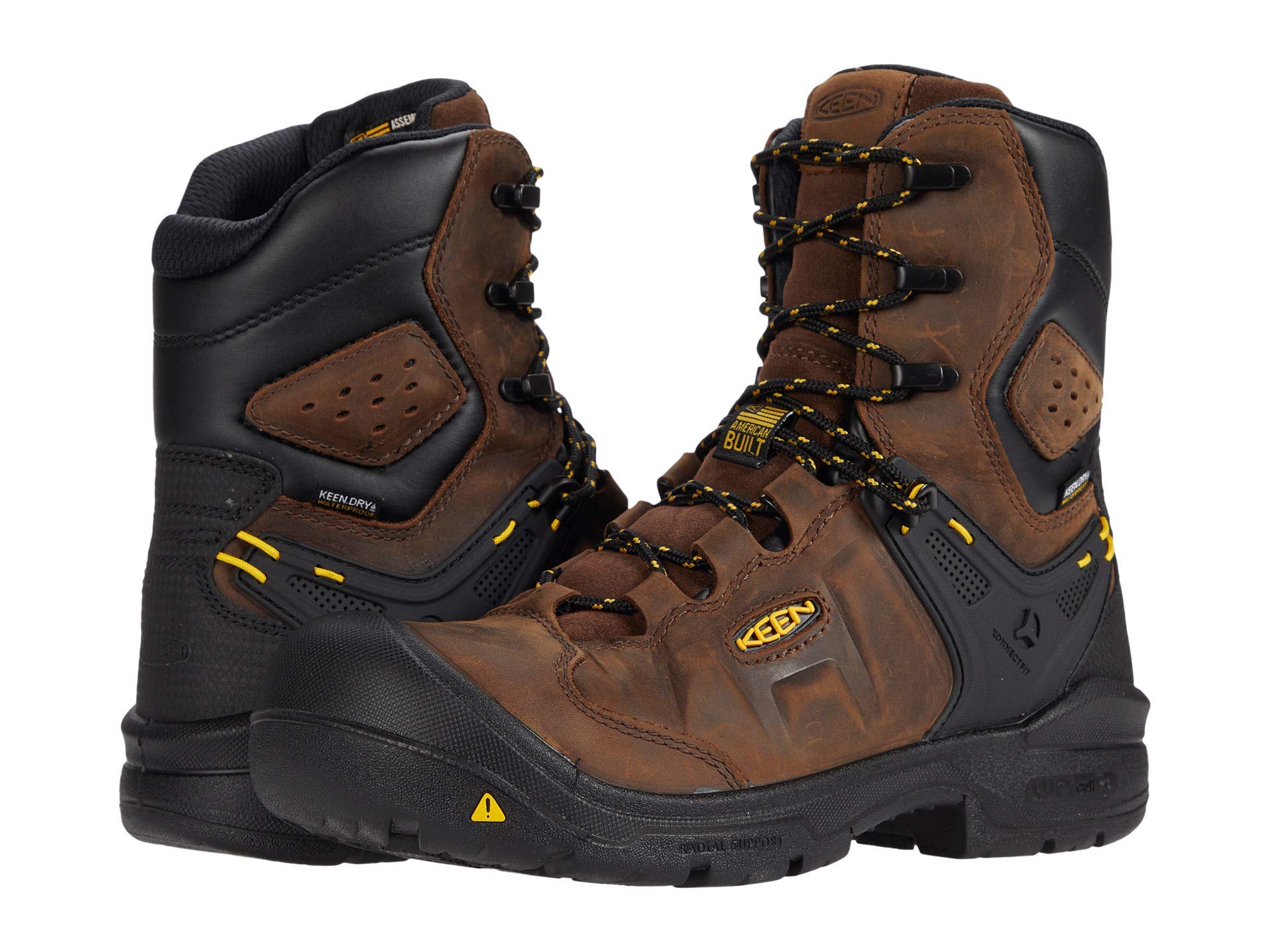
KEEN’s Dover uses a carbon-fiber toe that is significantly lighter than both steel and standard composite, reducing fatigue for electricians who log eight to twelve miles of walking on job sites. The 8-inch shaft provides substantial ankle support when carrying heavy conduit up extension ladders, and the wider toe box accommodates naturally splayed feet — a detail multiple buyers with plantars fasciitis praised.
The waterproof membrane held up in Alaska rain and heavy downpours, with reviewers specifically noting that their feet stayed both dry and non-sweaty thanks to the boot’s breathable lining. The fit runs true to size with thicker socks, which matters for colder months where insulation is needed. Buyers report the boot lasting two to four years on daily construction use when properly cared for.
The primary complaint involves a sharp inner membrane stitching near the ankle tongue that can wear a hole into the sock and skin. Several buyers fixed this with gorilla tape. The boot also runs slightly heavier than 6-inch alternatives, but the trade-off in ankle protection is worth it for ladder-heavy work.
Why it’s great
- Carbon-fiber toe reduces weight compared to steel and composite alternatives
- Wide toe box improves comfort for long walking days and foot conditions
- Breathable waterproof membrane prevents sweat buildup in mixed climates
Good to know
- Inner ankle stitching can cause abrasion until broken in or padded
- Slightly heavier build may feel bulky to users used to 6-inch boots
3. ARIAT Rigtek Wide Square Toe Composite Toe Waterproof

Ariat’s Rigtek is built for outdoor utility work where rock salt, asphalt, mud, and submersion are daily threats. The composite toe holds up against heavy impacts, and the waterproof barrier extends to the boot’s full height — not just a low cuff. A verified buyer working in Midwest sanitation reported the boots surviving a full year of exposure to chemicals, snow, and standing water, easily outlasting a previous pair of Redwings.
The wide square toe provides extra room for thicker socks in cold weather, and the slip-resistant outsole handles wet concrete and steel surfaces without losing grip. Multiple buyers praised the arch support and moisture resistance as superior to other boots in the same tier. The boot runs slightly long, so sizing down half ensures a snug heel fit.
The most notable drawback is a squeaking noise that developed in one reviewer’s right boot after a month of daily use. The sole texture also separated from the upper after one year of heavy abuse, though regular monthly oiling and a boot dryer extended the boot’s lifespan. Leather scuffs are cosmetic but show wear faster than synthetic overlays.
Why it’s great
- Full-height waterproof barrier protects against chemical and water submersion
- Wide square toe allows thick socks in cold environments without pressure
- Outlasts Redwing alternatives in heavy outdoor conditions per verified reports
Good to know
- Squeaking may develop in the right boot after extended use
- Leather requires monthly conditioning to prevent cracking and scuffing
4. Carolina 28 Series 8″ Composite Toe Scubaliner
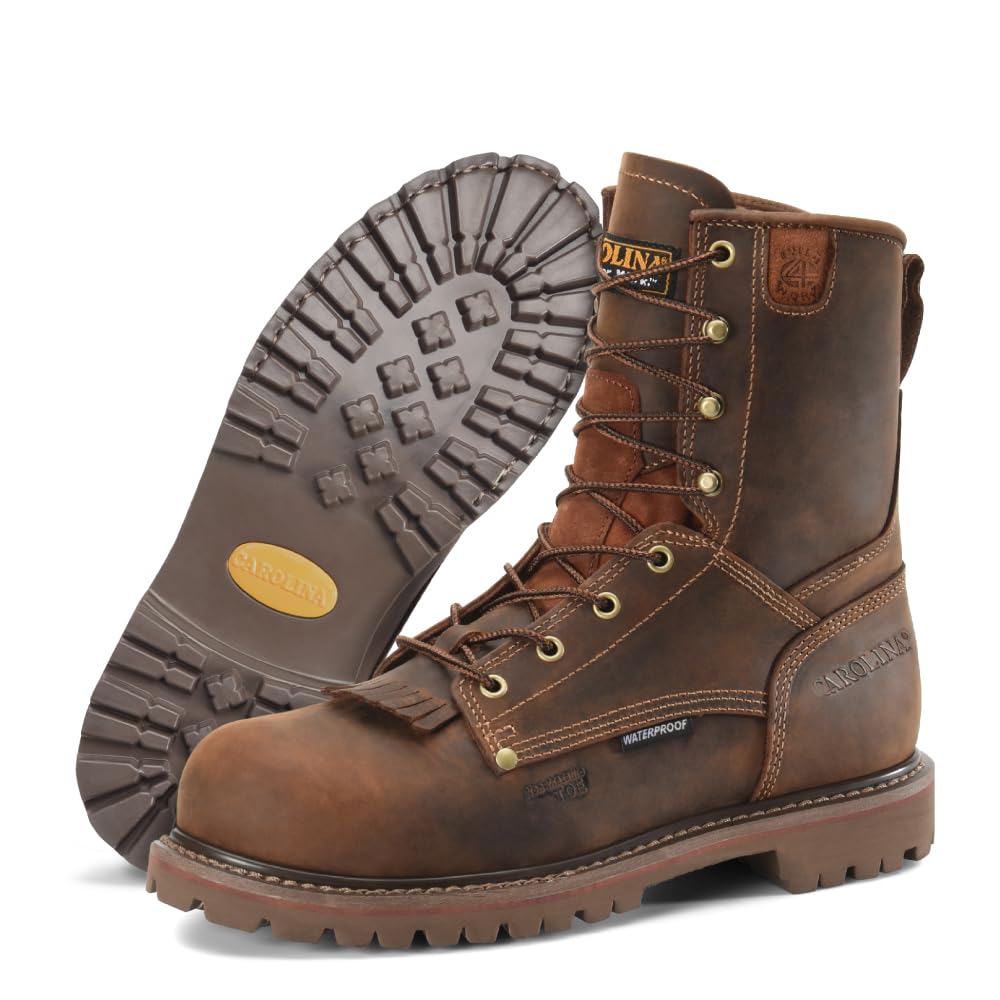
The Carolina 28 Series uses a Scubaliner waterproof membrane that rivals dedicated wet-weather gear, combined with a deep lug outsole that buyers say grips snow better than the Thorogood wedge sole. An electrician working outdoors in snowy climates specifically praised the boot for not slipping on icy ladder rungs — a critical safety advantage over flat-sole designs.
The 8-inch shaft provides superior ankle stabilization, and the composite toe meets EH standards for secondary electrical protection. Several buyers with plantars fasciitis reported zero foot ache after full shifts, attributing the comfort to the removable footbed and generous toe box.
The main issue reported is that the laces on one reviewer’s left boot arrived damaged, suggesting inconsistent quality control on the lacing hardware. The boot is heavy overall due to the tall shaft and thick rubber outsole, but most buyers find the trade-off acceptable for the winter traction it provides.
Why it’s great
- Scubaliner membrane delivers waterproof performance in snow and standing water
- Deep lug outsole provides superior snow grip compared to wedge sole alternatives
- Removable footbed accommodates custom orthotics for foot pain relief
Good to know
- Laces may arrive damaged or degrade faster than the boot itself
- Tall 8-inch shaft adds weight compared to 6-inch models
5. Wolverine Overpass Composite Toe Waterproof

Wolverine’s Overpass stands out for its three-plus-year lifespan in harsh conditions — expanded metal walkways, water, mud, and ice — with soles only half-worn after that period. The composite toe meets EH standards, and the slip-resistant outsole provides reliable grip on icy ladder rungs, which multiple buyers cited as a key reason for repurchasing.
The boot is lightweight for its protection level, with a design that one 30-year Wolverine loyalist called the most comfortable pair he has used. The waterproof membrane holds up to standing immersion without leakage, and the plastic lace eyes resisted rust and breakage. Multiple buyers reported the boot felt like sneakers from the first wear, with zero blistering during the break-in.
The sizing inconsistency is the biggest frustration — one size 13 buyer found the half-inch extra length caused their toes to catch on the steel plate, ripping socks and causing pain by day three. The inner padding also wears out before the outer boot, leading to foot pain after extended use. True-to-size ordering with thick socks seems to mitigate the issue for most.
Why it’s great
- Outsole lasts over three years in harsh industrial conditions
- Lightweight construction with sneaker-like comfort from day one
- Plastic lace eyes resist rust and withstand heavy use
Good to know
- Sizing inconsistency can cause foot pain from steel plate contact
- Inner padding degrades before the outer boot shows wear
6. Carolina 8″ Waterproof Logger Boot EH-Rated
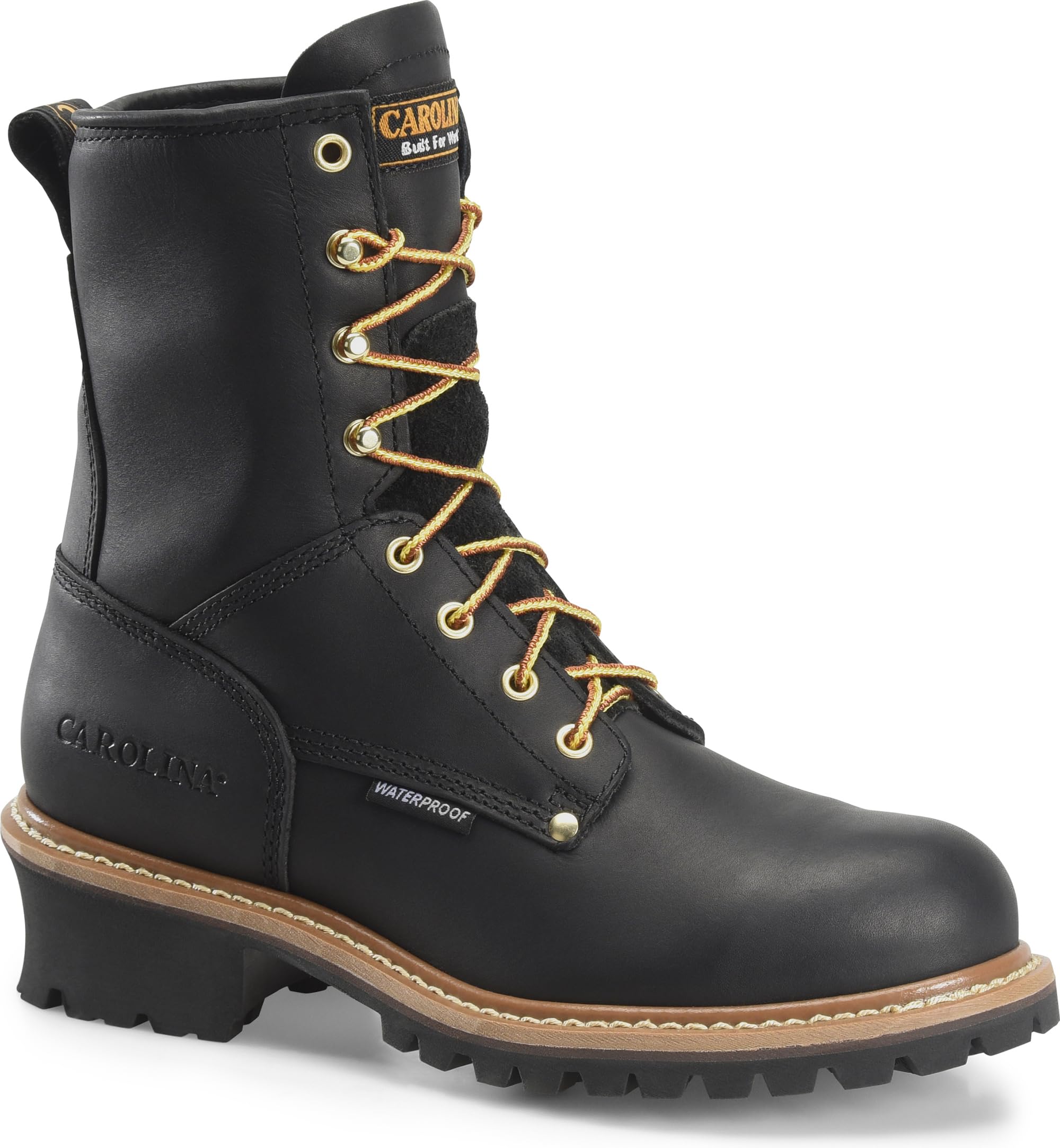
The Carolina Logger Boot is built with welt construction, meaning the outsole can be replaced when it wears down — a major cost-saving advantage over cemented soles that must be discarded. The 8-inch shaft provides the tall protection linemen prefer when climbing poles, and the EH rating delivers secondary electrical protection up to 600 volts.
The slip-resistant rubber lug outsole handles loose gravel and muddy trenches, and the full-grain leather resists abrasion from sharp electrical panel edges. Buyers praised the cushy feel and sturdy build, with one husband reporting his carpenter wife found them perfect for walking and standing all day. The boot runs true to size and the leather finish was described as an attractive deep brown that cleans up well with standard boot care.
The boot is heavy — a trade-off inherent to logger-style welt construction. The stiff leather upper requires a longer break-in period than synthetic or mesh-lined boots, and the lack of a side zipper means slower on/off during busy shifts. Several buyers noted the boot is best suited for outdoor utility work rather than indoor commercial settings.
Why it’s great
- Welt construction allows outsole replacement, extending boot lifespan
- Tall 8-inch shaft supports ankles during climbing and ladder use
- EH-rated for secondary protection up to 600 volts
Good to know
- Heavy logger build adds fatigue on long walking days
- Longer break-in period required for stiff full-grain leather
7. Timberland PRO Gridworks Wedge 6″ Alloy Safety Toe

The Gridworks Wedge uses an alloy safety toe that is thinner and lighter than steel, allowing a more natural toe splay without sacrificing impact protection. The wedge sole provides maximum surface contact on flat floors, which makes it ideal for commercial electricians who spend all day on concrete, tile, or hardwood without tracking debris.
The waterproof membrane holds up in wet conditions, and the alloy toe does not conduct cold — a benefit for those working in unconditioned spaces. Buyers reported the sole lasting more than two years with three insert changes, and the scuffs remain manageable with biweekly waxing. The boot fits wide naturally, accommodating thicker socks without pinching, and multiple buyers praised the instant comfort out of the box.
The wedge sole lacks the deep tread needed for mud, loose gravel, or icy surfaces. If your job site includes outdoor trenches or snowy walkways, the flat wedge profile significantly reduces traction. The low 6-inch shaft also offers less ankle support compared to 8-inch boots, which matters less on flat surfaces but becomes a compromise on uneven terrain.
Why it’s great
- Alloy safety toe provides impact protection without cold conduction
- Wedge sole delivers maximum grip on clean indoor flooring
- Wide natural fit eliminates pinching during all-day standing
Good to know
- Wedge sole lacks traction on mud, gravel, and icy surfaces
- 6-inch shaft provides less ankle support than tall boots
8. ROCKY AlphaForce Zipper Composite Toe

ROCKY’s AlphaForce is built for the electrician who needs to lace up and get moving fast. The side zipper runs the full shaft height and stays intact through heavy daily use — one buyer reported buying a third pair in five years specifically because the zipper design was unmatched for quick boot changes between vehicle and site.
The composite toe meets safety standards without setting off metal detectors, a practical advantage for electricians who pass through security checkpoints at data centers or government buildings. The boot is tough but lightweight, with a buyer who works in fire academy training praising its durability through months of intense use. The traction performs well on wet ice and snow, and the toe protection is robust enough for heavy ladder drops.
The heel lining wears out from friction within months, which can cause irritation if you wear thin socks. Several buyers noted the zipper works best with matching laces for full support, but the zipper alone provides enough closure for quick cafe breaks without unlacing fully. The boot runs slightly stiff initially but breaks in after about a day and a half on site.
Why it’s great
- Full-length side zipper enables fast donning and doffing throughout the day
- Composite toe keeps boots lightweight and checkpoint-friendly
- Excellent traction on wet ice and snow for all-season electricians
Good to know
- Heel lining wears out from friction within several months
- Short initial break-in period required for flexibility
9. Puma Safety Conquest Waterproof Composite Toe EH Side Zip

Puma’s Conquest delivers entry-level EH protection at a price point that lets budget-focused electricians get into a composite-toe waterproof boot without sacrificing essential safety. The side zipper matches ROCKY’s convenience for quick on/off, and the boot is notably lightweight — a factor that prevents leg fatigue during ten-hour shifts on concrete floors.
The comfort level surprised multiple buyers, with one 15-year work boot veteran calling them the most comfortable pair they have owned — feeling like slippers straight out of the box. The waterproof membrane keeps feet dry in wet conditions without excessive sweating, and the traction holds steady on typical construction site surfaces. Several buyers reported the boot held up well through eight months of daily construction use, with the zipper and toe rubber showing only minor wear.
The sizing runs half-to-full size small, so ordering up is essential — multiple returns resulted from buyers ordering their usual size and finding the boots unwearable. Durability trails premium options like the Timberland Boondock; the tread and inner heel material show wear faster, making this a better choice for electricians who replace boots annually rather than expecting multi-year service. The toe rubber scuffs easily on rough concrete.
Why it’s great
- Lightweight composite toe construction reduces leg fatigue on long shifts
- Side zipper offers fast entry and exit matching higher-priced competitors
- Exceptional out-of-box comfort for a budget-tier safety boot
Good to know
- Sizing runs significantly small — order at least half a size up
- Tread and inner material wear faster than premium alternatives
FAQ
Are composite safety toes better than steel for an electrician?
Can I wear non-EH boots if I never work on live panels?
How often should I replace boots used for daily electrical work?
Do side zippers compromise waterproofing or safety?
Final Thoughts: The Verdict
For most users, the boots for electricians winner is the Timberland PRO Boondock 6″ Composite Toe because it combines immediate anti-fatigue comfort, triple-stitched durability, and a waterproof membrane that holds up in snow and standing water without a break-in period. If you need maximum walking comfort for mile-long commercial job sites, grab the KEEN Utility Dover 8″ Carbon-Fiber Toe. And for snow grip and outdoor utility work, nothing beats the Carolina 28 Series 8″ Composite Toe with its Scubaliner liner and deep lug outsole.