
Farm work means mud, manure, machinery, and twelve-hour shifts on your feet. The wrong boot leaves you with wet socks, crushed toes, or soles that dissolve in barnyard chemicals — and that’s where most buyers make expensive mistakes.
I’m Min — the co-founder and writer behind Gadgets Feed. I’ve analyzed hundreds of product listings and customer reviews to identify which boots actually survive a season of real farm labor versus which ones look tough on a shelf.
This guide filters out the hype to deliver a focused comparison of the eight best options available today, helping you find the right boots for farm work without wasting money on fashion boots that can’t handle the field.
How To Choose The Best Boots For Farm Work
Farm boots live a harder life than construction boots because they face not just impact and abrasion but also moisture, animal waste, and chemical fertilizers. Choosing correctly means matching the boot’s protection profile to your specific daily tasks.
Steel Toe vs. Soft Toe
Steel toe boots protect against crushing from falling bales, tractor implements, or heavy gates, and meet ASTM F2413 safety standards. Soft toe boots are lighter and more comfortable for long periods but offer zero impact protection — skip them unless you never work near heavy livestock or machinery.
Waterproofing Method
Full rubber construction (like neoprene-lined wellies) provides absolute waterproofing for wet conditions and is easy to hose off. Leather boots with waterproof membranes (like Gore-Tex or proprietary treatments) breathe better for all-day wear but eventually leak through the seams and lacing areas after enough abuse.
Outsole Compound and Tread
Oil- and slip-resistant outsoles with deep lugs prevent falls on wet concrete, greasy shop floors, and muddy inclines. Wedge soles shed mud more easily than lug soles, making them ideal for barns and feedlots where thick clay builds up underfoot.
Quick Comparison
On smaller screens, swipe sideways to see the full table.
| Model | Category | Best For | Key Spec | Amazon |
|---|---|---|---|---|
| Ariat Groundbreaker Steel Toe | Western Work | All-day comfort in livestock barns | Full-grain leather, Duratread outsole | Amazon |
| Georgia Boot Wedge Industrial | Wedge Sole | Muddy job sites and concrete | Goodyear welt, 5.07 lb per pair | Amazon |
| Georgia Boot Farm & Ranch Pull On | Wellington | Chemical resistance in barns | SPR leather, PU wedge sole | Amazon |
| Hunthor Puncture-Proof Rubber Boot | Rubber Wellie | Wet, cold, and messy environments | 6mm neoprene, steel shank | Amazon |
| HISEA NINGO Pull On Steel Toe | Wellington | Versatile light industrial work | Full-grain leather, steel toe | Amazon |
| Wolverine Floorhand Steel Toe | Lace-Up Work | Women needing zero break-in | Waterproof, rubber midsole | Amazon |
| NORTIV 8 Steel Toe Cowboy Boot | Western Work | Budget-conscious first-time buyers | Suede upper, wide square toe | Amazon |
In‑Depth Reviews
1. Ariat Men’s Groundbreaker Wide Square Toe Steel Toe Work Boot
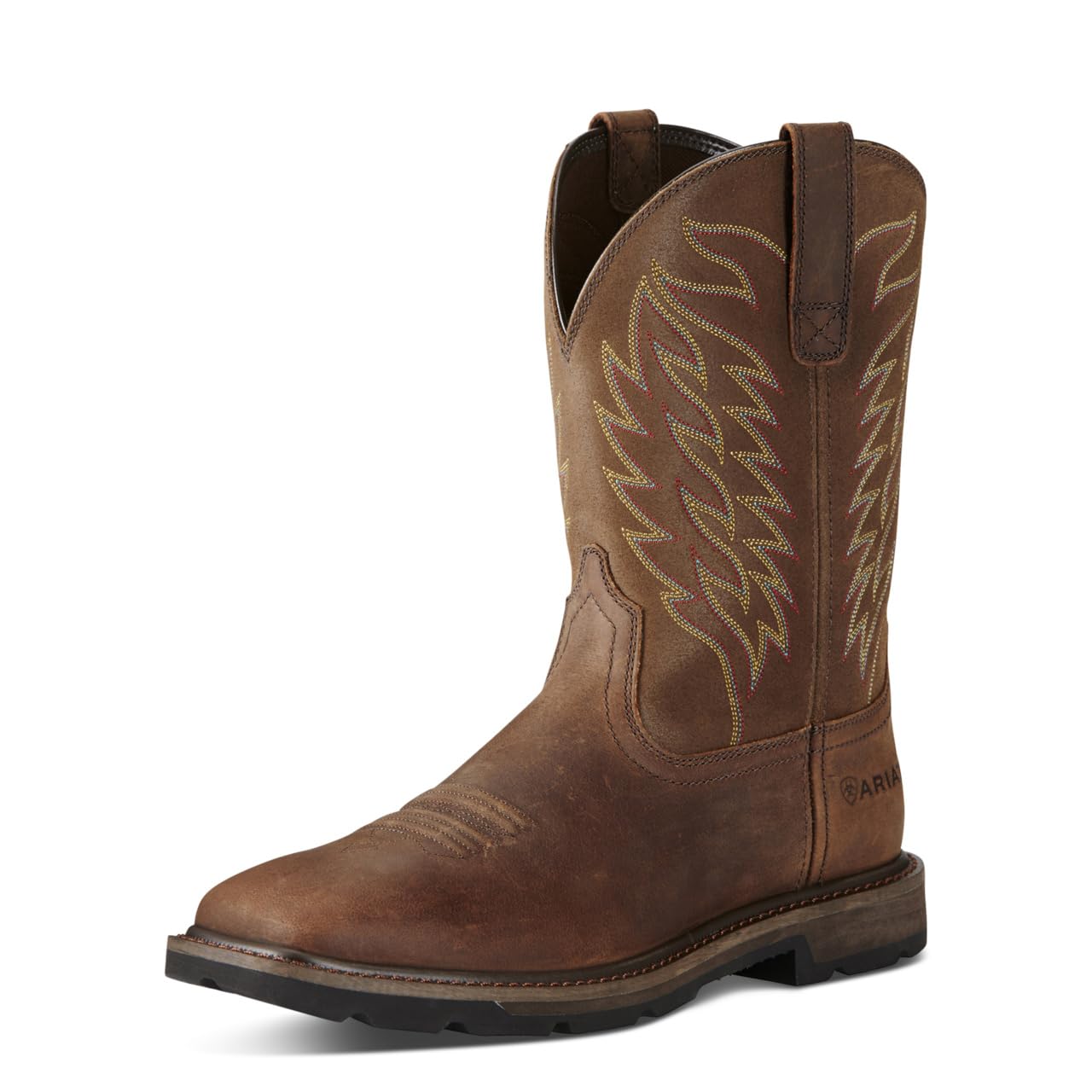
The Ariat Groundbreaker delivers the highest level of comfort for a steel-toe western boot in this lineup. The full-grain leather upper resists punctures from barbed wire and rough brush, while the wide square toe gives your toes room to splay during long shifts in the barn. Multiple users reported wearing them for nine-hour shifts straight out of the box with zero break-in pain.
The Duratread outsole provides maximum wear resistance and flexibility on concrete, packed dirt, and wet grass, outperforming cheaper rubber outsoles that harden and crack in cold weather. At roughly 1.9 pounds per boot, they are light enough for all-day wear but still deliver ASTM-rated steel toe protection for heavy livestock and equipment work.
Some users with wider feet noted a slightly loose heel fit, but this is common with western pull-on boots and can be solved with thicker socks or heel inserts. The ATS technology in the footbed provides solid arch support that helps reduce fatigue on concrete barn floors.
Why it’s great
- Out-of-box comfort with no break-in period for most users
- Full-grain leather durable enough for continuous ranch work
- Lightweight for a steel toe, reducing leg fatigue
Good to know
- Heel fit may feel slightly loose for some foot shapes
- Lacks chemical resistance of rubber barn boots
2. Georgia Boot Men’s Wedge Industrial Boot

The Georgia Wedge Industrial is built with Goodyear welt construction — a resoling-friendly design that makes these boots a long-term investment for daily farm use. The shock-absorbing wedge sole sheds mud effectively and provides a stable platform on slippery concrete, which is critical for tasks like loading hay or washing down pens.
At 5.07 pounds per pair, these are among the heavier boots here, but the weight translates to durability. The soft leather upper conforms to the foot and offers excellent arch support, though the boot neck fits tightly to prevent heel slip. Several carpenters and farmers reported using them for muddy form-setting and barn work over multiple years with minimal sole wear.
The leather scratches easily and shows scuffs, which is cosmetic only but worth noting for buyers who want pristine boots. The wedge sole provides less traction on soft mud compared to deep lug soles, so these are best for mixed concrete-and-dirt environments rather than deep muck.
Why it’s great
- Goodyear welt allows sole replacement, extending boot life
- Wedge sole sheds mud and provides excellent stability
- True-to-size fit with solid arch support
Good to know
- Heavy at over 5 pounds per pair
- Leather shows scuffs and scratches easily
3. Georgia Boot Farm and Ranch Pull On Work Boot

This Georgia boot uses SPR leather, which is roughly three times stronger than standard leather and 2.5 times more abrasion-resistant — specs that matter when you’re walking through barn aisles treated with disinfectants and fertilizers. The direct-attached polyurethane suspension wedge outsole resists chemicals better than EVA or standard rubber compounds.
User reports confirm the waterproofing holds up in ankle-deep water, and the boots remain comfortable for 7-10 hour days on concrete. The pull-on Wellington design makes them easy to kick off after a long shift, though the leather does stretch significantly and runs large, requiring insole modifications for a secure fit.
Multiple owners noted that after two years of ranch and hunting use, the boots still looked nearly new with barely worn soles. That kind of longevity justifies the mid-range investment, especially for farmers who need a single do-everything boot that handles both pasture and workshop.
Why it’s great
- SPR leather resists chemicals and abrasion far better than standard full-grain
- PU wedge sole holds up for years on concrete
- Excellent waterproofing in moderate water exposure
Good to know
- Runs large and leather stretches significantly over time
- Needs aftermarket insoles for optimal fit
4. Hunthor Puncture-Proof Rubber Work Boot

For wet, cold, or messy farm environments, the Hunthor rubber boot is the specialist choice. Built with 6mm neoprene insulation and a steel shank for puncture resistance, it handles standing water for 12-hour shifts — multiple users report working in 2-7 inches of water daily with completely dry feet. The steel toe meets safety requirements for heavy livestock and equipment.
The thick rubber sole provides excellent traction on wet concrete and muddy ground, and the easy-clean design means you can hose off manure and mud in seconds. The back kick tab and top strap make removal simple even with wet or cold hands. At 4.41 pounds per pair, these are lighter than full leather boots but offer superior waterproofing.
A small number of boots arrived with cosmetic discoloration from manufacturing, and the neoprene insulation makes them warm — they are not ideal for hot summer barn work. The tall shaft may fit snugly on larger calves despite the gusseted design, so check calf fit before committing.
Why it’s great
- Absolute waterproofing for hours of standing water
- Puncture-proof shank and steel toe for safety
- Easy to hose clean after barn work
Good to know
- Insulation makes them too warm for summer use
- Some units arrived with cosmetic blemishes
5. HISEA NINGO Steel Toe Pull On Work Boot
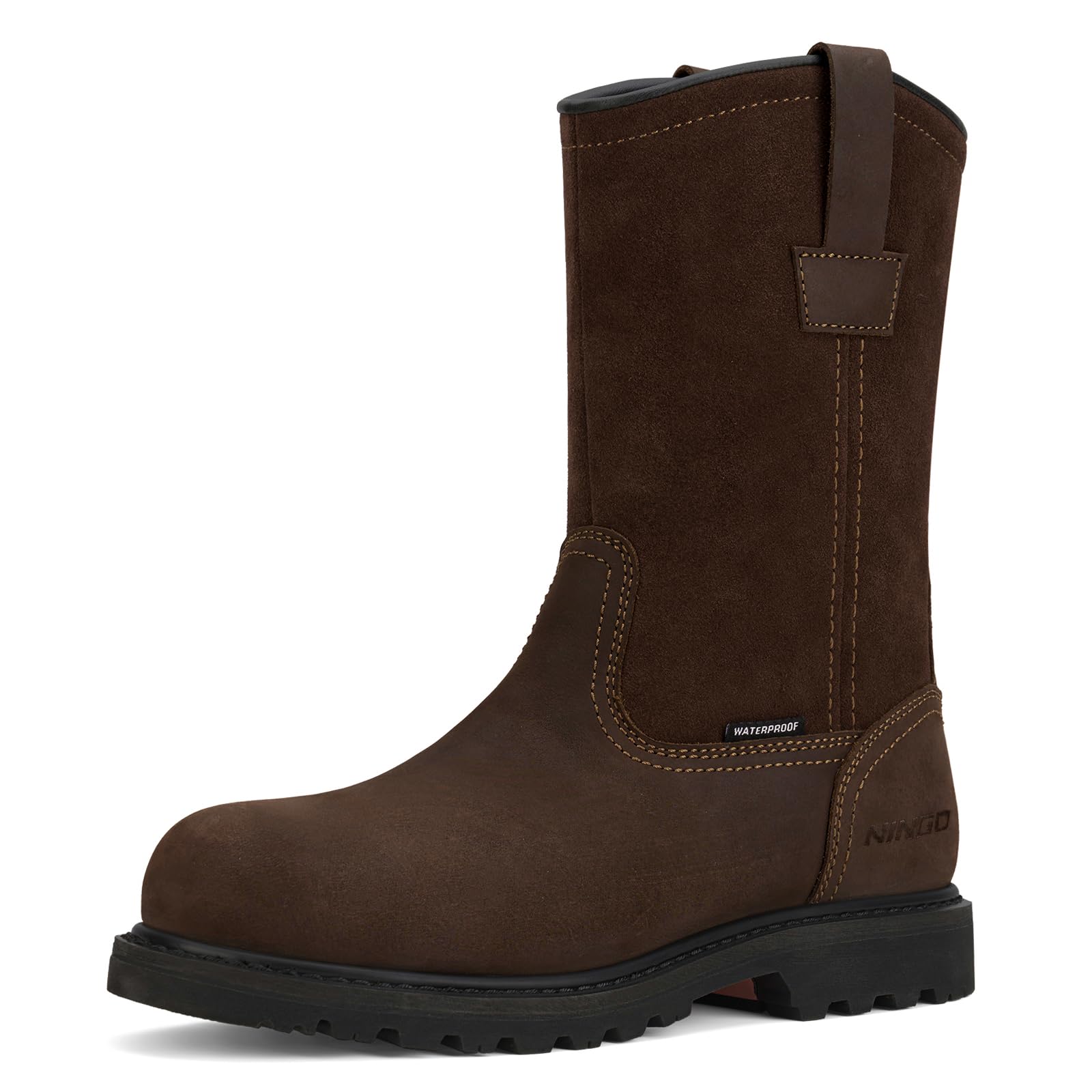
The HISEA NINGO competes directly with Red Wing boots at roughly half the cost, using full-grain leather and steel toe construction that has held up for nearly a year in manufacturing and construction environments. The Wellington pull-on design makes them easy to slip on for quick barn checks or feed runs.
Users report they are comfortable straight out of the box with minimal break-in, and the oil- and slip-resistant outsole handles wet concrete and chemical spills in manufacturing settings. The boots come in both waterproof and water-resistant versions, so check the color selection carefully before ordering. At roughly 1.8 to 2.2 pounds per boot, they are light enough for all-day wear.
The reddish-brown leather darkens over time into a natural patina, which some users love and others consider unexpected. For the price point, these offer impressive durability and comfort, though they lack the advanced chemical resistance of dedicated barn boots like the Georgia Farm and Ranch.
Why it’s great
- Full-grain leather at a budget-friendly price point
- Comfortable out of the box with minimal break-in
- Oil- and slip-resistant outsole suitable for wet concrete
Good to know
- Waterproof level varies by color option — check carefully
- Leather darkens significantly with wear and age
6. WOLVERINE Women’s Floorhand Steel-toe 6″ Waterproof Work Boot

The Wolverine Floorhand is one of the few women-specific farm work boots that doesn’t compromise on safety features. It offers a steel toe, waterproof construction, and a rubber midsole in a true-to-size women’s fit — a rare combination that eliminates the need to size down from men’s boots. Users report that the boots feel broken-in immediately with no rubbing on the pinky toe.
The removable full-cushioned footbed provides solid support for long days on concrete, and the waterproof membrane keeps feet dry in wet grass and shallow puddles. At this price point, the quality and sturdiness beat out popular competitors like Timberland Pro, especially for women who need a narrower heel and lower volume fit.
The rubber midsole provides decent shock absorption, though the boots are not designed for deep standing water or heavy chemical exposure. For light to moderate farm tasks like feeding, fencing, and stall cleaning, they offer excellent value and comfort that rivals boots costing twice as much.
Why it’s great
- True women’s sizing with zero break-in needed
- Steel toe protection in a lightweight package
- Excellent value compared to premium women’s work boots
Good to know
- Not designed for deep standing water or heavy chemicals
- Long-term durability under daily heavy use is unverified
7. NORTIV 8 Steel Toe Cowboy Boots
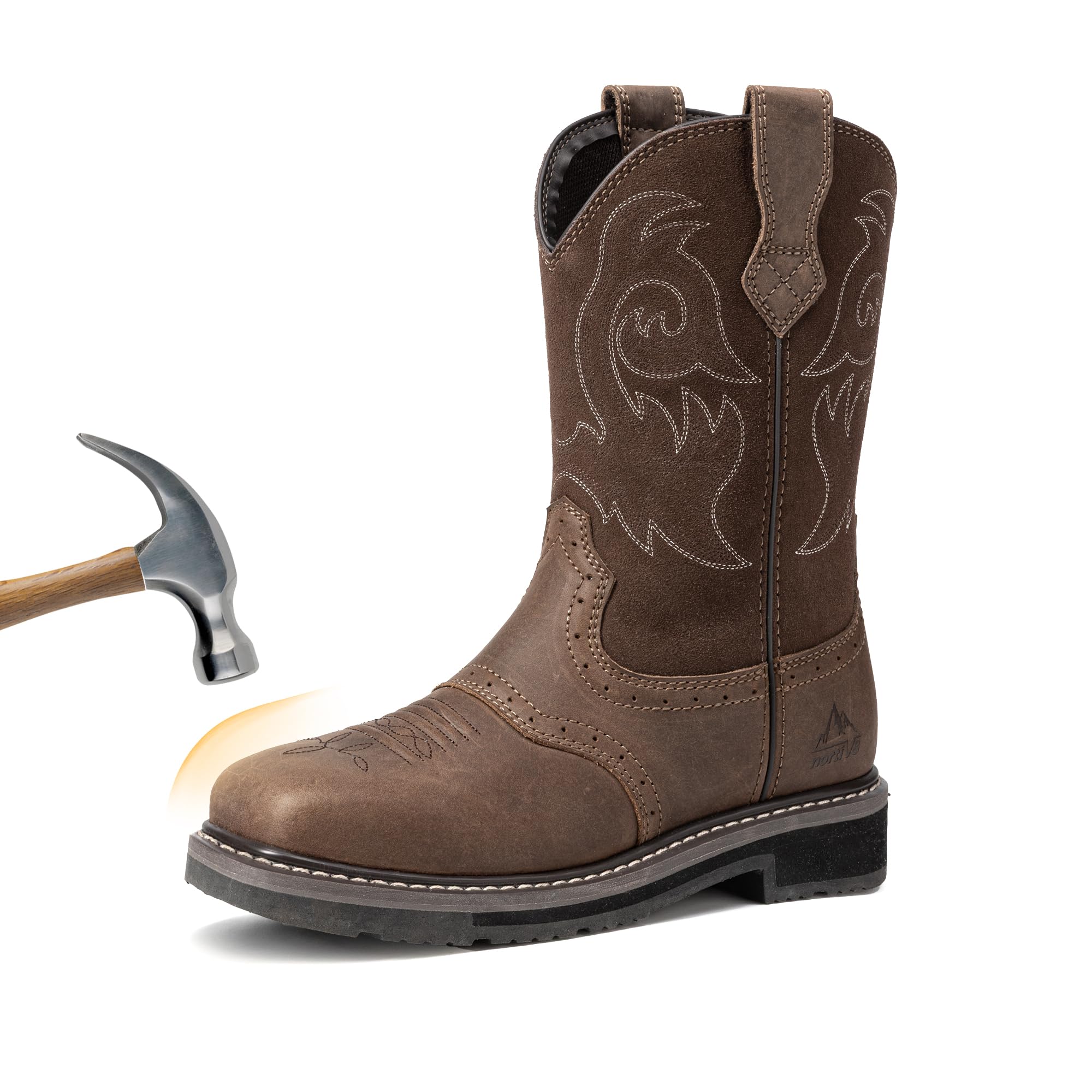
The NORTIV 8 is the most affordable option in this guide and performs surprisingly well for the price. The wide square toe accommodates unbendy feet and provides a roomy toe box that many expensive boots lack. Users report excellent grip on wet surfaces and minimal muck pickup — important for barn work where you don’t want to track debris everywhere.
After five months of heavy use, the suede upper showed some discoloration in snow but kept feet dry throughout. The boots are comfortable for 12-hour shifts, though the lack of insulation means they offer no warmth in cold weather. Users recommend sizing up if you need wide width, as the standard sizes run slightly narrow.
While the suede upper is less durable than full-grain leather and may show wear faster, the low cost makes these a practical choice for occasional use or as a backup pair. At this price level, even getting six months of daily use represents solid value compared to expensive boots that need resoling.
Why it’s great
- Excellent traction on wet and slippery surfaces
- Wide square toe provides room for foot swelling
- Very low cost for a steel-toe boot
Good to know
- Suede upper discolors in wet snow and lacks insulation
- May only last 6-12 months under daily heavy use
FAQ
Can I wear steel toe boots for farm work every day without foot damage?
Are rubber wellies or leather boots better for farm work?
How long should a good pair of farm boots last?
What does ASTM F2413 mean for farm boots?
Final Thoughts: The Verdict
For most users, the best boots for farm work winner is the Ariat Groundbreaker Steel Toe because it combines out-of-box comfort with full-grain leather durability and a weight that won’t fatigue you before lunch. If you work in primarily wet conditions, grab the Hunthor Puncture-Proof Rubber Boot for absolute waterproofing and easy cleaning. And for muddy job sites where concrete and dirt mix, nothing beats the Georgia Boot Wedge Industrial with its resoleable Goodyear welt and mud-shedding wedge sole.