
A snowboard boot that lets your heel lift even a millimeter during a toe-side carve kills your edge control and drains your energy by the third run. The wrong flex, an ill-fitting liner, or a single-zone lacing system can turn a powder day into a foot-cramping ordeal before lunch. Finding the right pair is about matching your riding style to a specific combination of stiffness, closure type, and liner technology — not just picking a color that matches your jacket.
I’m Min — the co-founder and writer behind Gadgets Feed. I spent dozens of hours cross-referencing customer feedback, manufacturer spec sheets, and flex-rating charts to isolate the nine models that actually deliver on their promises across the -to- range. Nothing in this guide is guesswork.
Whether you’re lapping groomers inbounds or chasing boot packs into the backcountry, choosing the right fit starts here with this breakdown of the best boots for snowboarding on the market right now.
How To Choose The Best Boots For Snowboarding
Snowboard boots are the single most important interface between you and your board. A mismatch in flex, closure system, or shell shape ruins the ride before it starts. Focus on these three criteria before looking at graphics or brand heritage.
Flex Rating — The Backbone of Your Ride
Flex is measured on a 1-to-10 scale, with 1 being pillow-soft and 10 being ski-boot rigid. Beginners and park riders generally want a soft flex (1–3) for forgiving presses and butter tricks. All-mountain freeriders and carvers need a medium flex (4–6) that supports aggressive edge changes without sacrificing walking comfort. Big-mountain charging and backcountry splitboarding demand a stiff flex (7–10) for maximum power transfer at high speed. A boot that flexes outside your skill or terrain zone will either hold you back or hurt your feet.
Closure System — Laces, BOA, or Dual BOA
Traditional laces give you infinite adjustability at the cost of on-mountain convenience — you have to stop, remove gloves, and retie. A single-zone BOA dial cinches the entire boot with one twist but can’t independently tighten the forefoot versus the ankle. Dual-zone BOA uses two separate dials — one for the lower foot and one for the upper cuff — allowing you to lock your heel down without overtightening your toes. Dual BOA costs more and adds one more failure point, but the heel-hold improvement is dramatic for riders with narrow heels.
Liner Technology — Molding and Materials
Stock liners range from basic foam slabs to heat-moldable constructs with J-bars (internal pads that wrap the Achilles area). Heat-moldable liners shrink break-in time from weeks to a single session when professionally baked. A liner with a built-in lace lock or quick-pull system keeps your heel planted inside the liner shell. If you ski or ride more than ten days a season, the extra investment in a moldable liner pays for itself in reduced foot fatigue and blister prevention.
Quick Comparison
On smaller screens, swipe sideways to see the full table.
| Model | Category | Best For | Key Spec | Amazon |
|---|---|---|---|---|
| Burton Photon BOA | Premium | All-mountain performance | Dual-zone BOA / Flex 5–7 | Amazon |
| ThirtyTwo Lashed Double Boa | Premium | Durable all-mountain | Dual BOA / Flex 5 | Amazon |
| DC Lotus BOA (Women’s) | Mid-Range | Women’s all-mountain | Dual BOA / Flex 4 | Amazon |
| Nidecker Altai (Purple) | Mid-Range | Backcountry all-mountain | Dual BOA / Vibram sole | Amazon |
| Nidecker Altai (Black) | Mid-Range | All-mountain park | Dual BOA / Vibram sole | Amazon |
| Burton Moto BOA | Mid-Range | Entry-level single BOA | Single-zone BOA / Flex 3 | Amazon |
| ThirtyTwo Shifty BOA | Mid-Range | Comfort-first single BOA | Single-zone BOA / Flex 3–4 | Amazon |
| DC Phase BOA (Men’s) | Value | Wide feet budget entry | Single-zone BOA / Flex 4 | Amazon |
| Alpine Swiss Men’s | Budget | Budget beginner | Traditional lace / Flex 4 | Amazon |
In‑Depth Reviews
1. Burton Men’s Photon BOA Snowboard Boots
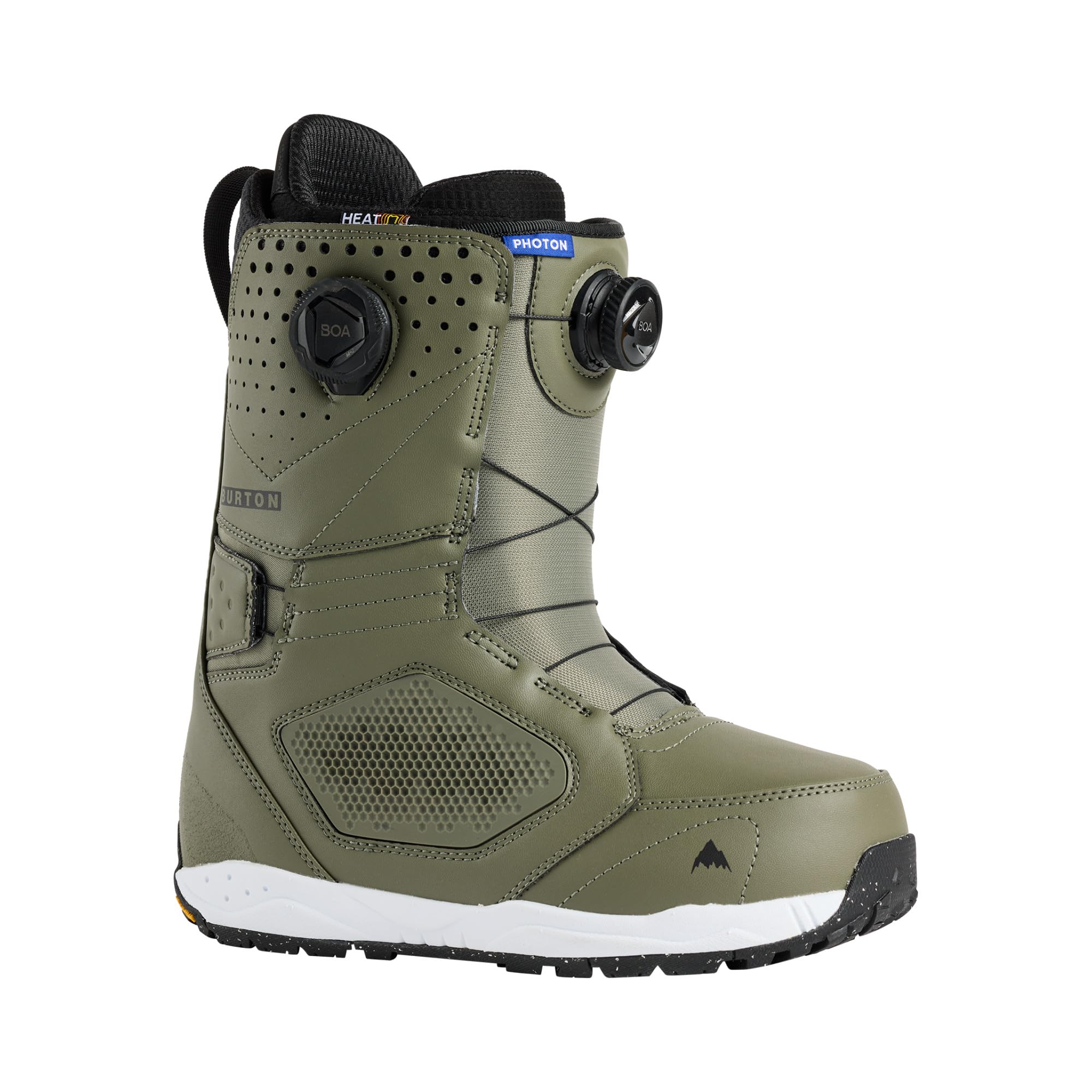
The Photon BOA sits exactly where the best all-mountain boot should — a medium-stiff flex (roughly a 5–7 on Burton’s scale) that drives aggressive carves without punishing your feet in the lift line. The Dual-Zone BOA with Coiler and Lockdown technology splits control between the forefoot and the upper cuff, letting you crank heel hold independent of toe pressure. That separation is the difference between a locked-in feel and that vague clunking sensation cheap boots deliver.
The Imprint 3 liner is heat-moldable and includes a hook-and-loop closure with a lace lock, so the liner itself cinches independently from the shell. Underfoot, the Vibram Traction Lug outsole with 30 percent recycled EcoStep rubber gives you confident grip on icy parking lots and cat tracks. The EST-optimized midsole lowers your center of gravity for improved board feel — a noticeable advantage when you’re feathering edge pressure on variable snow.
Owners consistently report that sizing runs small; most riders need to go up a full size from their street shoe. The boots are warm to -5°C even during extended chairlift sits, and the Dual BOA dials are easy to micro-adjust on the fly without removing gloves. This is the boot you buy when you want one quiver-killer that handles groomers, trees, and the occasional park lap equally well.
Why it’s great
- Dual-zone BOA delivers independent heel and toe tension
- Vibram outsole with recycled rubber provides excellent traction
- Imprint 3 liner heat-molds for a truly custom fit
Good to know
- Runs a full size small — definitely size up
- Easy to over-tighten the BOA dials if you’re not careful
2. ThirtyTwo Lashed Double Boa Snowboard Boots
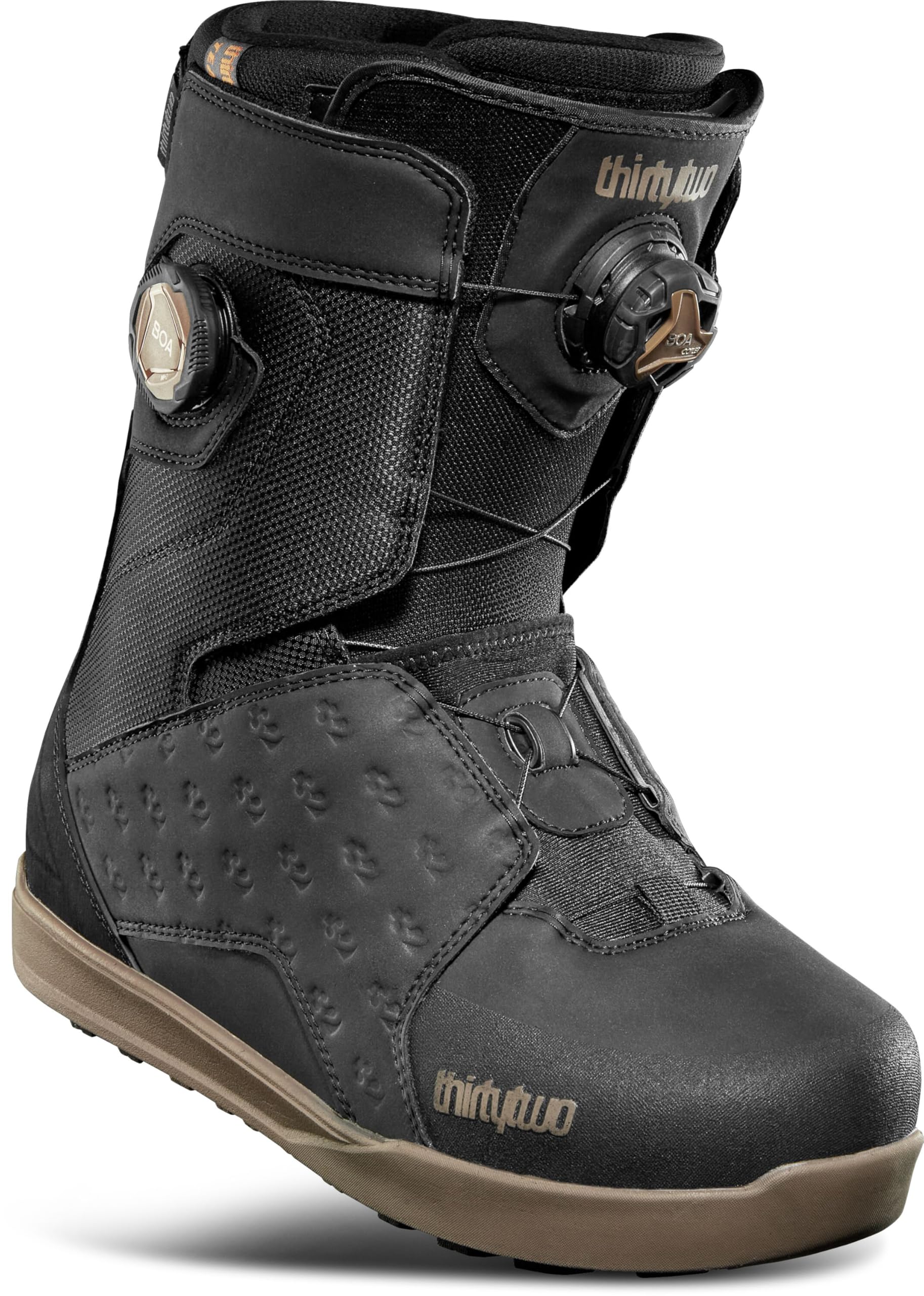
ThirtyTwo’s Lashed Double Boa is a workhorse boot that has earned its place on the mountain through consistent build quality and a flex profile that hits the sweet spot for all-mountain riders who like to push hard. The dual-zone system uses two independent dials to separate lower-foot lockdown from upper-cuff response, which is critical for anyone with a narrow heel who struggles to keep the foot planted during toe-side turns. The double BOA design also simplifies entry and exit — twist to tighten, pull to release, no fumbling with wet laces.
The fleece-lined interior runs thicker than many competitors, adding noticeable warmth on sub-zero days. The EVA outsole keeps weight manageable — at roughly 6.2 pounds for a size 10, these are competitive with lighter offerings in the same flex bracket. The stitching on the shell and liner holds up well; owners report the boots maintaining structural integrity through heavy resort use and occasional backcountry boot packs. The silhouette is clean and understated, with no overdone branding.
Sizing guidance varies. Most riders with normal-width feet find the Lashed fits true to street-shoe size, but riders with wider feet or high arches may need to go up a half to full size. The boots break in over roughly two weeks of weekly riding, so expect a snug initial fit that packs out to a comfortable shell. If you want a premium boot that skips the flash and focuses on durability and heel hold, this is a strong candidate.
Why it’s great
- Dual BOA gives independent heel and forefoot control
- Fleece lining provides excellent cold-weather insulation
- Durable stitching and shell construction handle heavy use
Good to know
- Some riders with wide feet need to size up 0.5–1 full size
- Heel can slip slightly on very narrow heels despite dual BOA
3. DC Lotus BOA Women’s Snowboard Boots
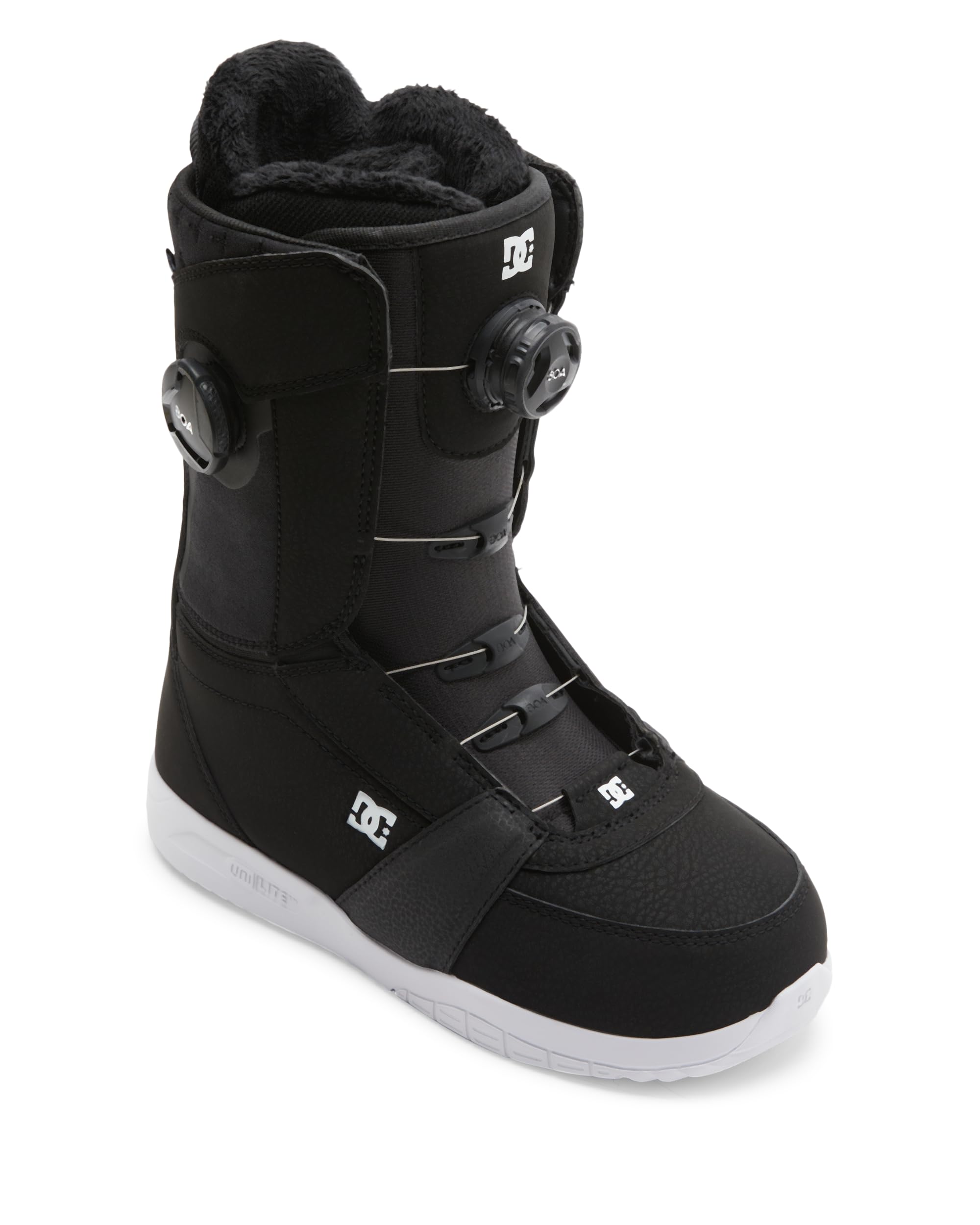
The Lotus BOA from DC is a women’s-specific boot built around a playful medium flex rating of 4 out of 10 — forgiving enough for intermediate progression but responsive enough to hold an edge through groomer carves. The Dual Zone BOA Fit System uses two H4 Coiler dials to separate lower and upper tension, which makes a measurable difference in heel hold for riders with a narrower heel pocket. The Unilite outsole keeps the weight down without sacrificing grip on hardpack and icy walkways.
The Response Liner II features a 360-degree power strap and latex J-bars that wrap the Achilles area to lock the heel down. Combined with the articulated construction, this liner provides a level of support typically found in boots costing more. The molded IMPACT-ALG insole adds arch support and a structured heel cup that reduces foot fatigue over long days. The fit runs slightly small — most women report needing to go up one full size from their street shoe.
Customer feedback consistently highlights the immediate comfort out of the box with no major pressure points, and the dual BOA system receives praise for allowing riders to loosen the upper zone during lunch without losing the lower-foot lockdown. If you’re a female rider looking for a mid-range dual-BOA boot that balances park playfulness with all-mountain capability, the Lotus delivers without the premium price tag of high-end models.
Why it’s great
- Dual BOA with H4 Coiler dials for precision fit adjustment
- Responsive Liner II with latex J-bars locks the heel securely
- Lightweight Unilite outsole improves board feel
Good to know
- Runs small — order one full size up
- Some units arrived with scuff marks out of the box
4. Nidecker Altai Men’s Snowboard Boots (Purple)
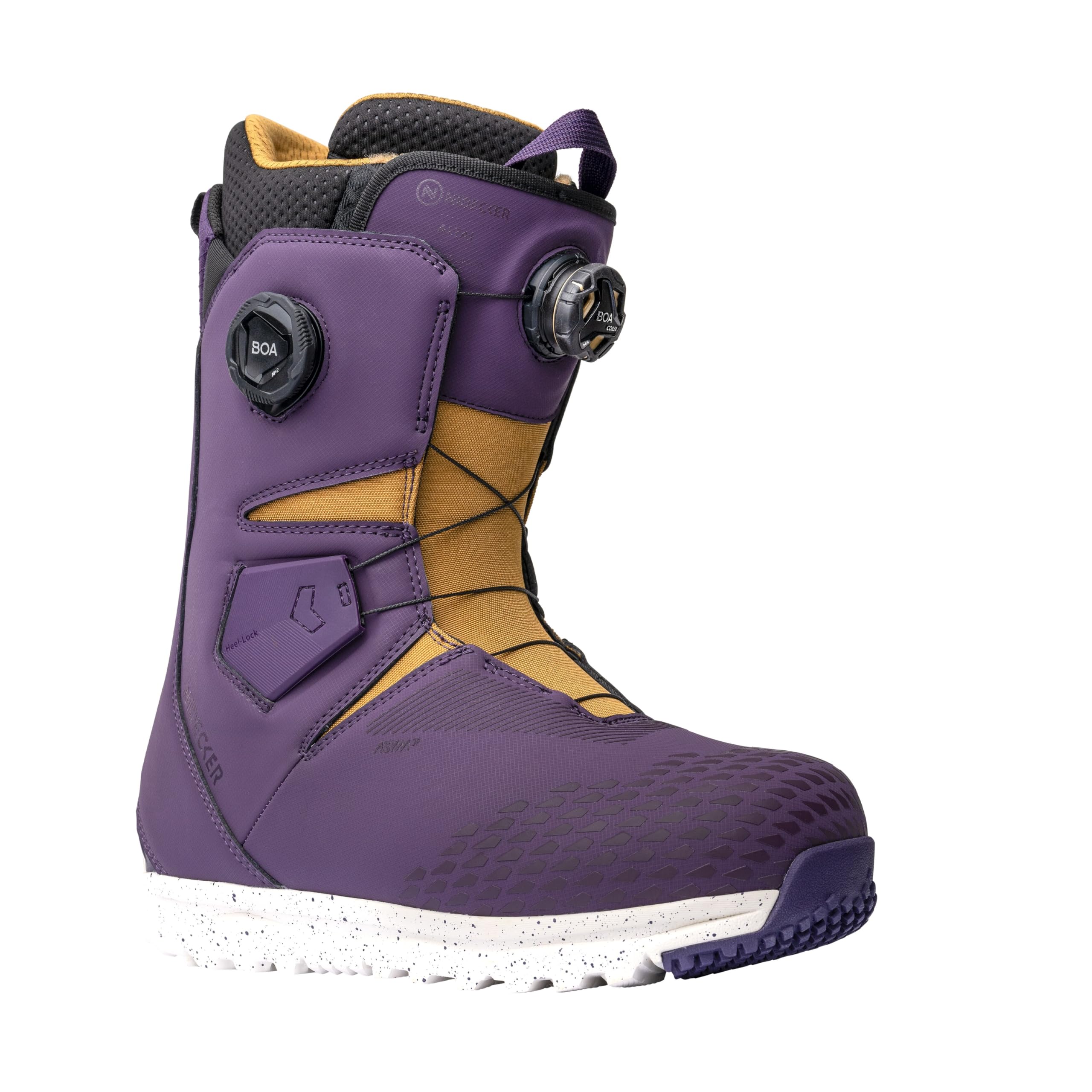
Nidecker’s Altai is a dual-BOA boot that punches well above its price point thanks to a Vibram traction outsole and a 3D molded lasted toe box and tongue. The Vibram rubber compound provides grip that genuinely matters when you’re walking across frozen lots or boot-packing up a ridge — most boots in this range use generic EVA slabs that slide on ice. The dual-zone closure lets you separate lower-foot snugness from upper-cuff response, which helps riders with low-volume feet achieve that locked-in feel without crushing their toes.
The asymmetrical flex zone (labeled ASYM3F) improves lateral support during heel-side turns, and the articulating flex zone reduces shell distortion during deep crouches. The anatomically designed EVA insole uses two densities — firmer under the heel cup and arch for support, softer under the forefoot for cushion. The synthetic water-resistant liner adds a layer of protection against slush and wet snow. The boots run true to size for most riders, though a heat-molding session improves the fit significantly.
Owners report that the Altai is comfortable right out of the box and becomes even better after a professional bake. The medium-stiff flex (roughly a 5–6) handles aggressive all-mountain riding without being too punishing for occasional park laps. If you want dual-BOA convenience and a Vibram sole at a mid-range price, this boot deserves a close look.
Why it’s great
- Vibram outsole delivers superior grip on ice and snow
- Dual BOA system for independent foot and cuff tension
- 3D molded lasted construction improves heel hold
Good to know
- Heat molding recommended for best fit
- Heavier than some competitors at 8 pounds per pair
5. Nidecker Altai Men’s Snowboard Boots (Black)
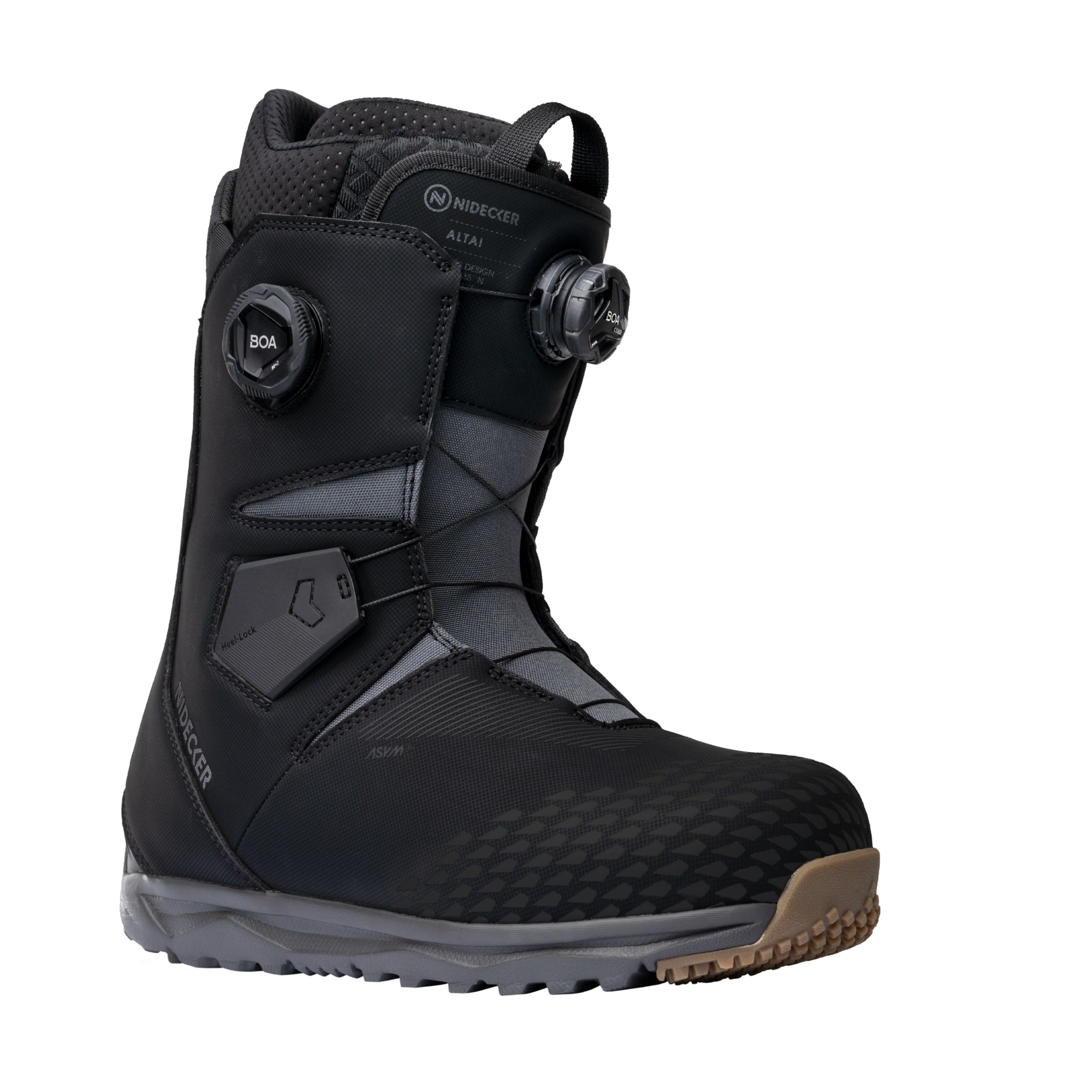
The black colorway of the Nidecker Altai offers the same core architecture as the purple version — dual BOA closure, Vibram outsole, and 3D molded lasted components — but swaps the color scheme for a low-profile all-black look that blends with any setup. The 3D molded lasted toe box and tongue work together to reduce dead space around the forefoot, which translates into more precise edge control. The articulating flex zone allows the boot to bend more naturally during deep carves without creating a pressure ridge across the top of the foot.
The rubber backstay reinforces the heel area, resisting the shell deformation that can create heel lift over time. The synthetic water-resistant liner keeps moisture out during slushy conditions, and the two-density EVA insole provides the same arch and heel support as the purple version. At 6.2 pounds for a size 12, the black Altai is actually lighter than its purple sibling, likely due to different upper material densities — something to note if weight is a priority.
Reviews mirror the purple version closely: true-to-size fit for most, excellent comfort after heat molding, and a stiffness that suits all-mountain riding without feeling plank-like. The dual BOA system is praised for its convenience and adjustment range. If you want a no-frills dual-BOA boot with genuine grip and a neutral look, the black Altai delivers the same performance as its flashier counterpart at the same price point.
Why it’s great
- Vibram outsole provides real traction on icy surfaces
- Dual BOA for precise, independent fit adjustment
- Lighter weight than the purple Altai version
Good to know
- Heat molding strongly recommended for best fit
- Neutral color may not appeal to riders wanting flash
6. Burton Moto BOA Mens Snowboard Boots
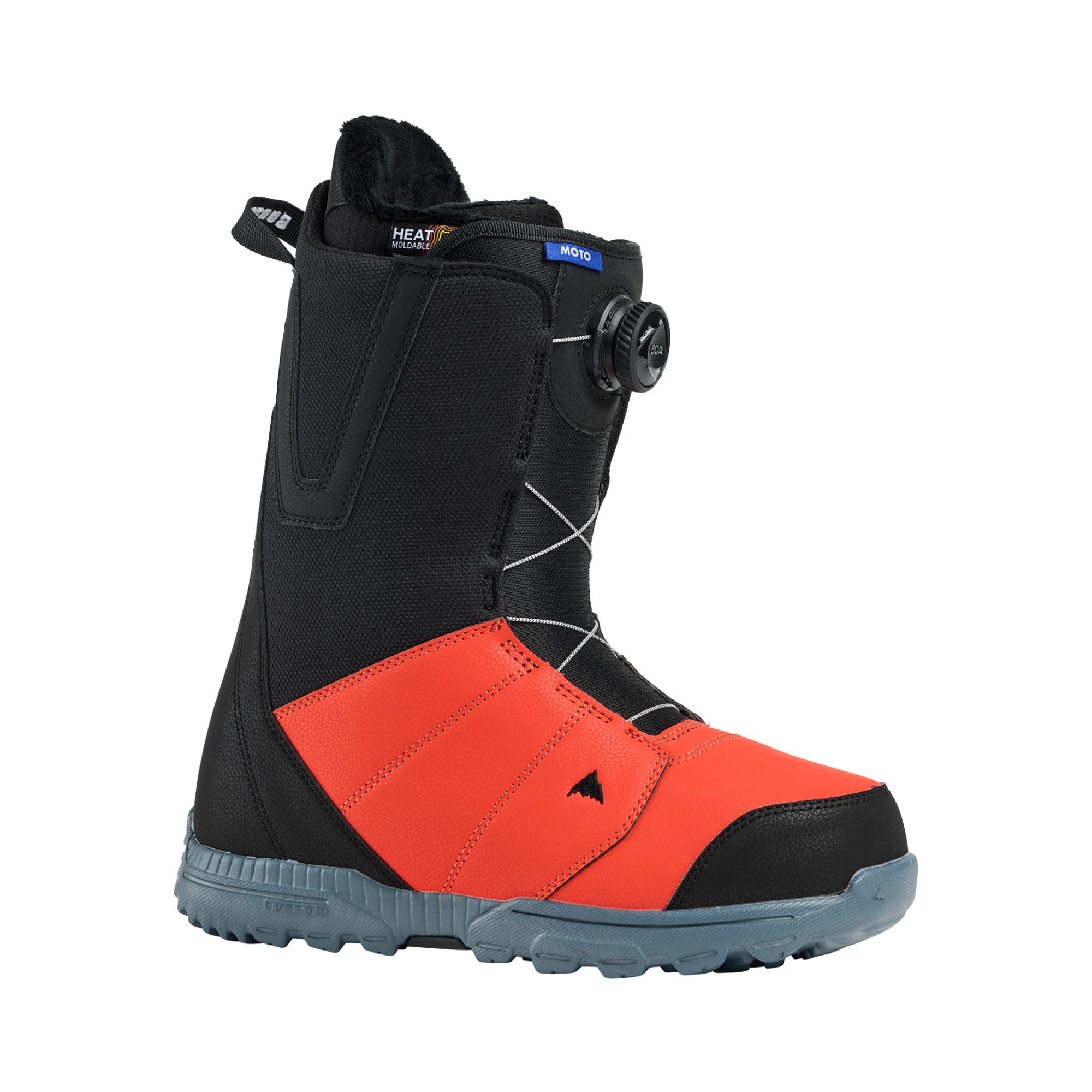
The Burton Moto BOA is the quintessential entry-level boot designed for the first-time buyer who wants BOA convenience without the premium price. The single-zone system uses one dial to tighten the entire boot, which simplifies the process for new riders who don’t yet know how to independently tension their forefoot versus cuff. The soft flex rating of 3 makes this boot ideal for beginners learning to initiate turns and for park riders who want a forgiving, jib-friendly feel.
The Imprint 1+ liner is heat-moldable, which is a surprising feature at this price tier — it lets riders bake the liner to their foot shape, dramatically shortening the break-in period. Total Comfort Construction means the boot feels broken-in from the first day, reducing the foot fatigue that often discourages new riders. The DynoLITE outsole provides decent board feel and consistent lightweight support, though it lacks the aggressive tread pattern of pricier boots.
Owners report that the Moto runs small — riders who wear a men’s size 10.5 in Nike should buy an 11.5 in this boot. The sleeping bag reflective foil underfoot improves warmth, and the snow-proof internal gusset seals the lower zone effectively. If you’re buying your first snowboard boots and want the convenience of a dial closure without breaking the bank, the Moto BOA is the safest bet in its class.
Why it’s great
- Heat-moldable Imprint 1+ liner reduces break-in time
- Single-zone BOA is simple and fast for beginners
- DynoLITE outsole is lightweight and comfortable
Good to know
- Runs small — size up at least a full size
- Soft flex limits performance for aggressive riding
7. ThirtyTwo Shifty BOA Men’s Snowboard Boots
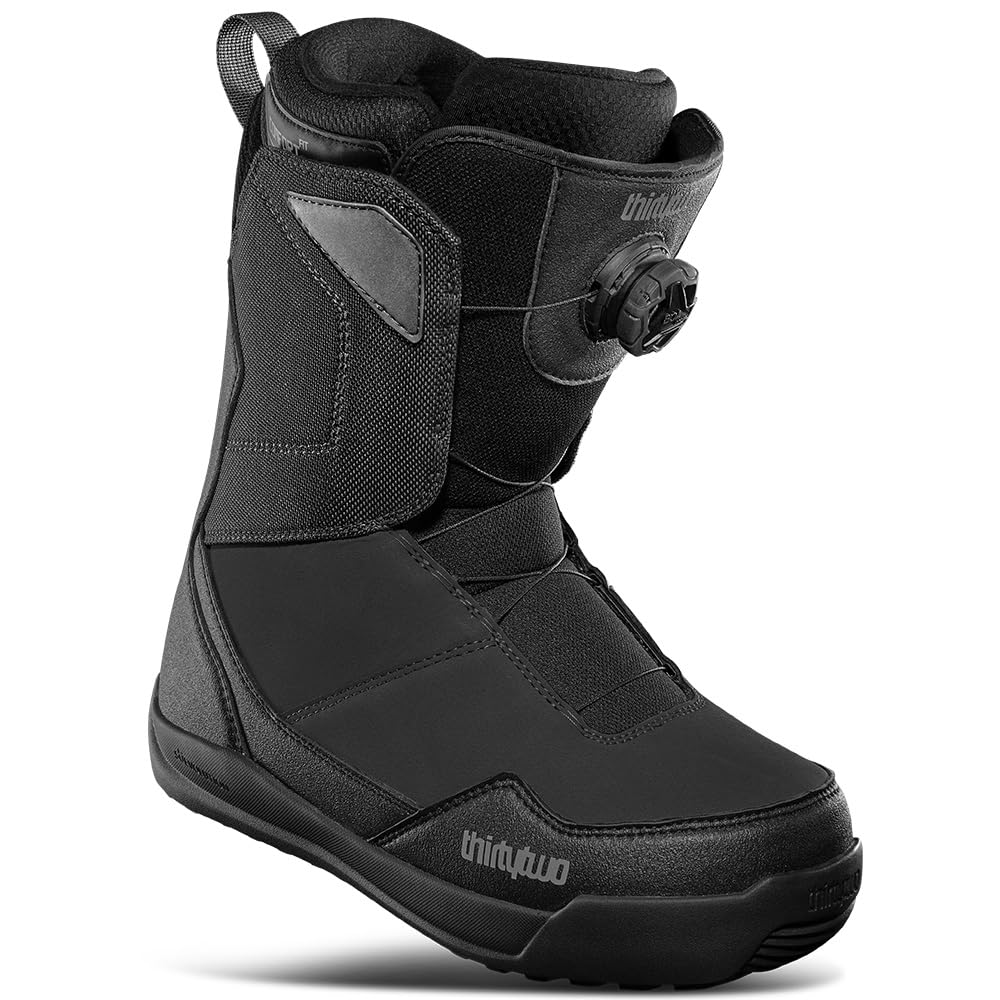
The ThirtyTwo Shifty BOA is built around comfort first, with a soft-medium flex (roughly 3–4) that appeals to intermediate all-mountain riders who prioritize ease of use over hard-charging response. The single-zone BOA dial cinches the boot quickly, and the heat-moldable foam liner adapts to your foot shape after a session in the shop’s oven. The EVA outsole and insole keep the boot light enough for all-day walking during multi-mountain days.
The Shifty’s strength is its out-of-the-box comfort — owners consistently report that the boot feels good from the first wear with minimal pressure points. The liner includes enough padding to avoid the shin bang that often plagues stiffer, more performance-oriented boots. The single BOA system is simple to operate with gloves on and provides enough retention for intermediate carving and park laps. The boot runs small; most riders need to go up 1.5 to 2 sizes from their street shoe.
Customer service from ThirtyTwo earns praise in reviews, with one owner reporting overnight replacement of defective components before a trip. The boot’s construction feels solid for its price tier, though the flex profile will feel too soft for advanced riders charging steep terrain. If you want a comfortable, easy-entry boot for resort cruising with moderate performance demands, the Shifty delivers exactly that.
Why it’s great
- Excellent out-of-the-box comfort with minimal break-in
- Heat-moldable foam liner adapts to foot shape
- Single BOA is fast and easy with gloves on
Good to know
- Runs very small — order 1.5–2 sizes up
- Soft flex limits performance for advanced riders
8. DC Phase BOA Men’s Snowboard Boots
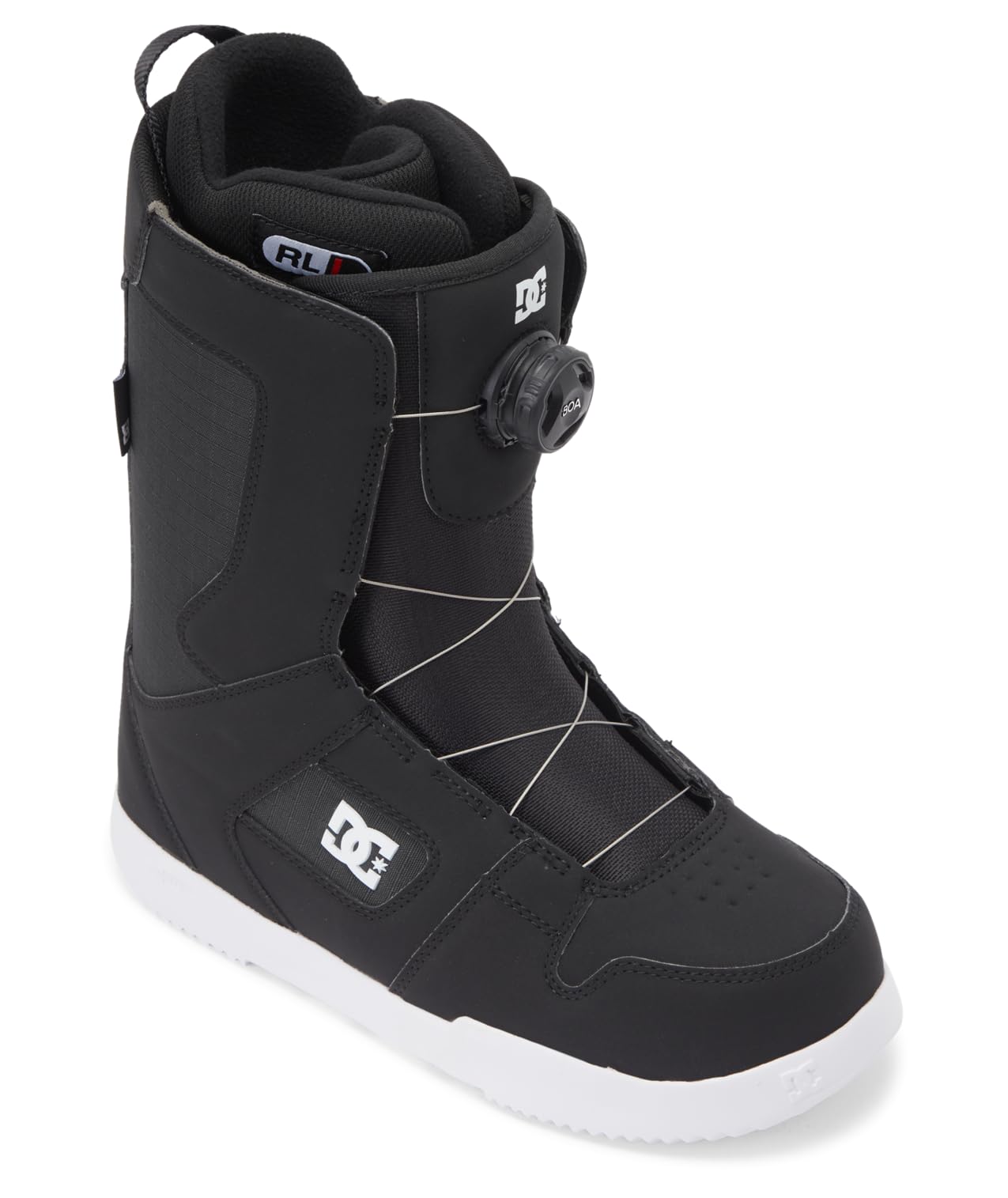
The DC Phase BOA is a no-nonsense entry-level boot that prioritizes fit for riders with wider feet. The shell is noticeably roomier in the forefoot than many competitors, allowing riders who normally struggle with pinky-toe pressure to find a comfortable home without going up multiple sizes. The single-zone BOA system uses an H4 Coiler dial for smooth adjustment, and the Flex 4 rating offers a soft-medium feel suitable for beginners through lower-intermediate riding.
The Foundation UniLite outsole keeps weight reasonable, and the Response Liner I provides basic support without the J-bars or power straps found on higher-end models. The IMPACT ALG insole adds a touch of arch support that helps with fatigue on longer days. The boots are fully waterproof thanks to a sealed construction, and owners report they feel like sneakers in terms of walking comfort — a common compliment from riders transitioning from ski boots or rental gear.
Reviewers praise the fit for wide feet, but there are durability concerns with the BOA cable system. A handful of owners report the cables breaking after roughly one season of heavy use (three-plus days per week), which is worth noting if you ride frequently. For a budget-conscious rider with wide feet who wants a dial-closure boot for casual resort days, the Phase BOA offers a compelling value proposition as long as you accept the cable longevity risk.
Why it’s great
- Wide forefoot accommodates larger foot shapes
- BOA dial makes entry and exit fast and easy
- Lightweight Unilite outsole for walking comfort
Good to know
- BOA cables may break after a season of heavy use
- Soft flex not suitable for aggressive or advanced riding
9. Alpine Swiss Men’s Snowboard Boots

The Alpine Swiss snowboard boot is a traditional lace-up designed for the budget-conscious beginner who wants a functional boot without the price premium of dial closures. The medium flex rating makes it suitable for all-mountain learning, and the traditional lacing system gives the rider full control over tension distribution — you can crank the ankle zone tight while leaving the forefoot loose, something a single-zone BOA cannot do. The double posted lace hooks keep laces from slipping during aggressive turns.
The inner liner is heat-moldable EVA foam with internal 3D J-bars around the Achilles, a feature rarely found at this price point. The 5mm removable insole adds basic arch support, and the faux fur collar provides insulation that helps retain warmth. The rubber outsole includes anti-grinding ice spikes for grip on hard surfaces. Build quality is decent for the price — synthetic leather and nylon combine for waterproofing, and reinforced stitching adds to the boot’s lifespan.
Owners report that the fit runs true to street shoe size for most, though half sizes should round up. The liner does pack out over time, so expect the boots to feel looser after ten to fifteen days. For a first pair of snowboard boots or a budget-friendly backup pair, the Alpine Swiss delivers surprising value if you are willing to tie laces instead of turning a dial.
Why it’s great
- Traditional lacing allows separate forefoot and ankle tension
- Heat-moldable liner with J-bars for heel hold
- Rubber outsole with ice spikes improves grip
Good to know
- Lace-up closure is slower and less convenient than BOA
- Liner packs out noticeably after heavy use
FAQ
Should I size up my snowboard boots from my street shoe size?
What does a stiffer flex rating do for my snowboarding?
How long does it take to break in snowboard boots?
Final Thoughts: The Verdict
For most riders, the best boots for snowboarding overall is the Burton Photon BOA because it combines dual-zone closure, a heat-moldable Imprint 3 liner, a Vibram outsole, and a versatile medium-stiff flex that handles everything from groomers to trees. If you want stiffer response and bombproof durability for aggressive all-mountain riding, grab the ThirtyTwo Lashed Double Boa. And for a budget-friendly entry point with traditional lace-up reliability, the Alpine Swiss Men’s Snowboard Boots are hard to beat.