
The portable power station market is flooded with boxes that promise the world but deliver barely enough juice to top off a phone. Buyers chasing a budget portable power station often end up with a unit that either cuts out under a laptop load or takes eight hours to recharge itself. The real trick is finding the sweet spot—enough watt-hours to run a CPAP machine through the night, a charging speed that doesn’t test your patience, and a battery chemistry that lasts longer than a season.
I’m Min — the co-founder and writer behind Gadgets Feed. I’ve spent dozens of hours cross-referencing capacity ratings, inverter specs, charge cycle counts, and real-world user data to separate the honest performers from the inflated marketing claims in this sub- power station space.
This guide cuts through the spec sheet noise to deliver the definitive list of the world’s best budget portable power station options, ranked by real-world usability, battery longevity, and pure value.
How To Choose The Best Budget Portable Power Station
Selecting a budget power station forces you to prioritize. You cannot have the highest capacity, the fastest charging, and the smallest footprint all at once when the price is capped. The key is to identify which compromises are acceptable for your specific use case—whether that’s emergency home backup, weekend tent camping, or running a CPAP machine during a road trip.
Battery Chemistry: LiFePO4 vs. Lithium-Ion
LiFePO4 batteries are the new standard for longevity, offering 3,000-3,500 charge cycles compared to the 500-1,000 cycles of standard lithium-ion. For a budget station, a LiFePO4 unit costs slightly more upfront but saves you money over five years because you won’t need to replace it. If you plan to use the station weekly or keep it plugged in as UPS backup, LiFePO4 is the only chemistry worth buying.
Inverter Output and Surge Capacity
A 300W inverter can handle a laptop, a fan, and a phone charger simultaneously, but it will trip if you try to start a mini-fridge compressor or a hairdryer. Look at the peak surge rating—usually double the continuous wattage—to understand what the station can briefly handle. Budget stations often list the peak value prominently, but the continuous 300W-330W figure is what determines your safe daily load limit.
Quick Comparison
On smaller screens, swipe sideways to see the full table.
| Model | Category | Best For | Key Spec | Amazon |
|---|---|---|---|---|
| EF ECOFLOW RIVER 3 | Premium | UPS backup and fast recharge | 245Wh, 1hr AC recharge, 3000+ cycles | Amazon |
| GRECELL 330W | Premium | High-capacity 288.6Wh with wireless charging | 288.6Wh, 330W AC, 5W wireless pad | Amazon |
| EBL EB300 | Mid-Range | CPAP and multi-device camping | 288.6Wh, 330W AC, 60W USB-C PD | Amazon |
| GRECELL 330W (Green) | Mid-Range | Family camping and RV trips | 288.6Wh, 330W AC, 60W USB-C PD | Amazon |
| DaranEner NEOZ | Mid-Range | Compact LiFePO4 with 3500+ cycles | 192Wh, 300W AC, LiFePO4 | Amazon |
| Anker SOLIX C200 DC | Mid-Range | Ultra-portable DC power for tech | 192Wh, 200W DC, 140W USB-C | Amazon |
| Apowking 300W | Budget | Entry-level home backup and lights | 220Wh, 300W AC, 7 output ports | Amazon |
In‑Depth Reviews
1. EF ECOFLOW RIVER 3

The ECOFLOW RIVER 3 sets a new bar for what a budget-friendly power station can deliver with its 245Wh LiFePO4 battery pack and a full recharge time of just one hour via AC. The GaN-based X-GaNPower technology keeps the unit whisper-quiet at under 30 dB while delivering double runtime for sub-100W appliances. The <20 ms auto-switching UPS feature is a genuine differentiator at this price level, providing seamless transition during power outages for sensitive networking equipment and home servers.
The RIVER 3 weighs 7.8 lb and is 30% smaller than the industry average for its capacity class, making it genuinely portable for camping, RV trips, or tucking into a closet for emergency backup. The X-Boost feature allows the 300W inverter to handle loads up to 600W for devices like mini-fridges with compressor startup surges, and the IP54 battery protection provides splash resistance and dust protection for outdoor use. The built-in handle makes one-handed carrying easy, and the compact footprint fits in tight spaces.
Real-world users consistently praise the fast recharge speed and the quiet operation, with several noting it runs a CPAP machine through the night or powers a home office network for days. The ECOFLOW app adds valuable control including battery monitoring and load management, though the lack of a built-in wireless charging pad is a minor omission. For anyone seeking a versatile, long-lasting station that doubles as a reliable UPS, this is the top contender in the budget segment.
Why it’s great
- Fully recharges in 1 hour via AC — unbeatable in its class
- 3000+ cycle LiFePO4 battery lasts a decade of daily use
- Seamless UPS mode with <20ms switchover protects sensitive electronics
Good to know
- No built-in wireless charging pad for phones
- X-Boost surge is limited to 600W peak, not continuous
2. GRECELL 330W (Grey)
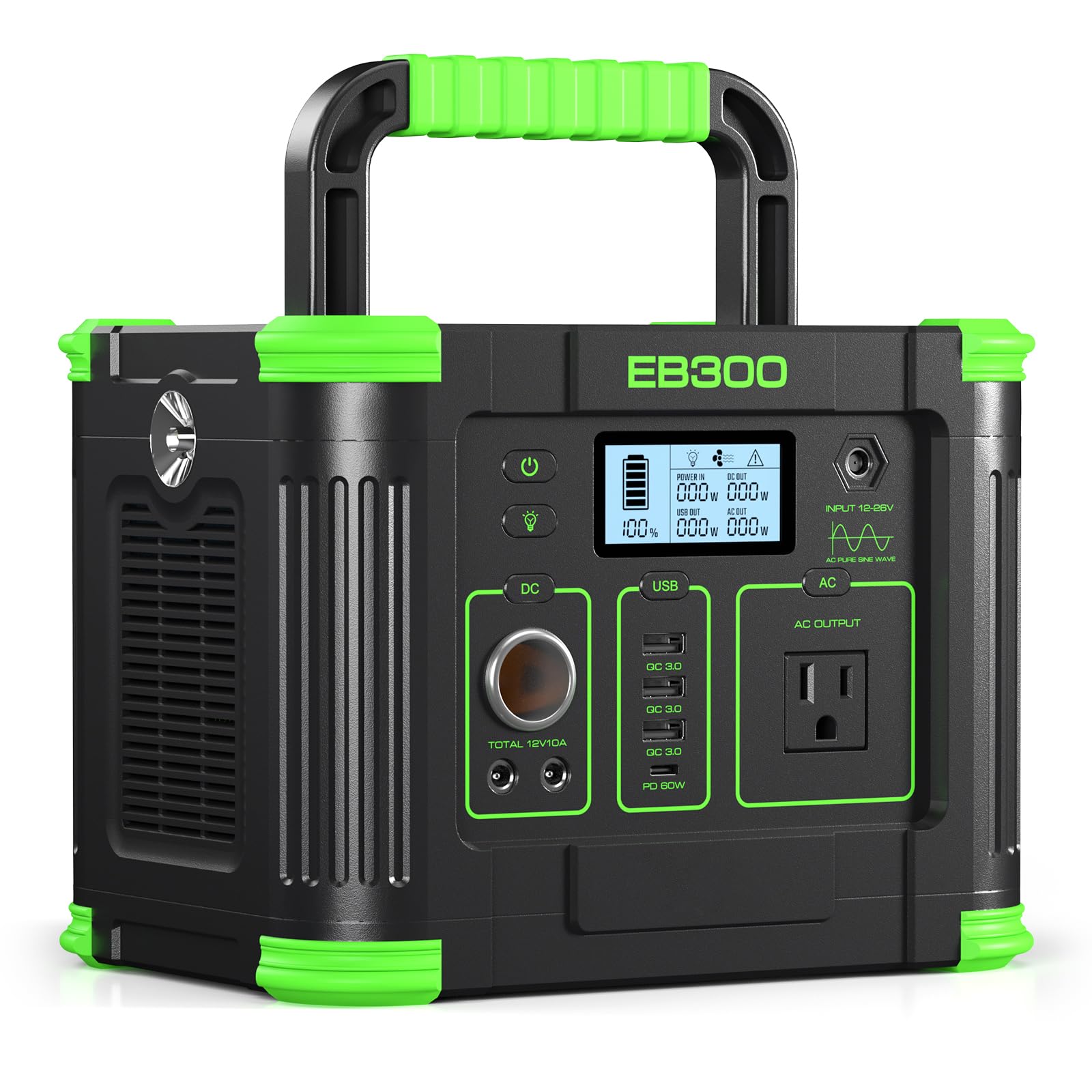
The GRECELL 330W packs a 288.6Wh capacity into a chassis that weighs only 7.94 lb, making it one of the highest energy-density options in the budget tier. The pure sine wave 330W AC inverter delivers clean power for sensitive electronics like CPAP machines and laptops, while the 600W surge capability handles brief startup loads from small appliances. The inclusion of a 60W USB-C PD port means you can fast-charge a MacBook Air or similar laptop from the station without needing a separate AC adapter.
The 9-port charging hub includes a 5W wireless charging pad, dual USB-A QC 3.0 ports, a 12V car socket, and two DC 5521 ports, providing extensive flexibility for simultaneous device charging. The built-in MPPT solar controller improves solar charging efficiency by approximately 30% compared to standard PWM controllers, making this station notably more effective when paired with a 100W or 120W solar panel for off-grid charging. The 3W LED flashlight with SOS mode operates on an independent circuit, preserving main battery power for connected devices.
User reviews highlight the station’s reliability for tent camping, with one user powering two 15-inch speakers, a wireless mic system, and a mixer for five hours while the battery stayed above 75%. The dual silent cooling fans activate during heavy loads to maintain safe temperatures without disruptive noise. The 24-month warranty adds extra confidence for a budget-priced unit, though the wireless charger’s alignment can be finicky depending on phone camera bump location.
Why it’s great
- 288.6Wh capacity is the highest in the budget field, ideal for full-night CPAP use
- MPPT solar controller boosts panel efficiency for faster off-grid recharges
- 9 output ports including wireless pad and 60W USB-C PD
Good to know
- Wireless charging pad alignment can be tricky with larger phone cases
- AC recharge time of 6-7 hours is slower than the ECOFLOW RIVER 3
3. EBL Portable Power Station 330W
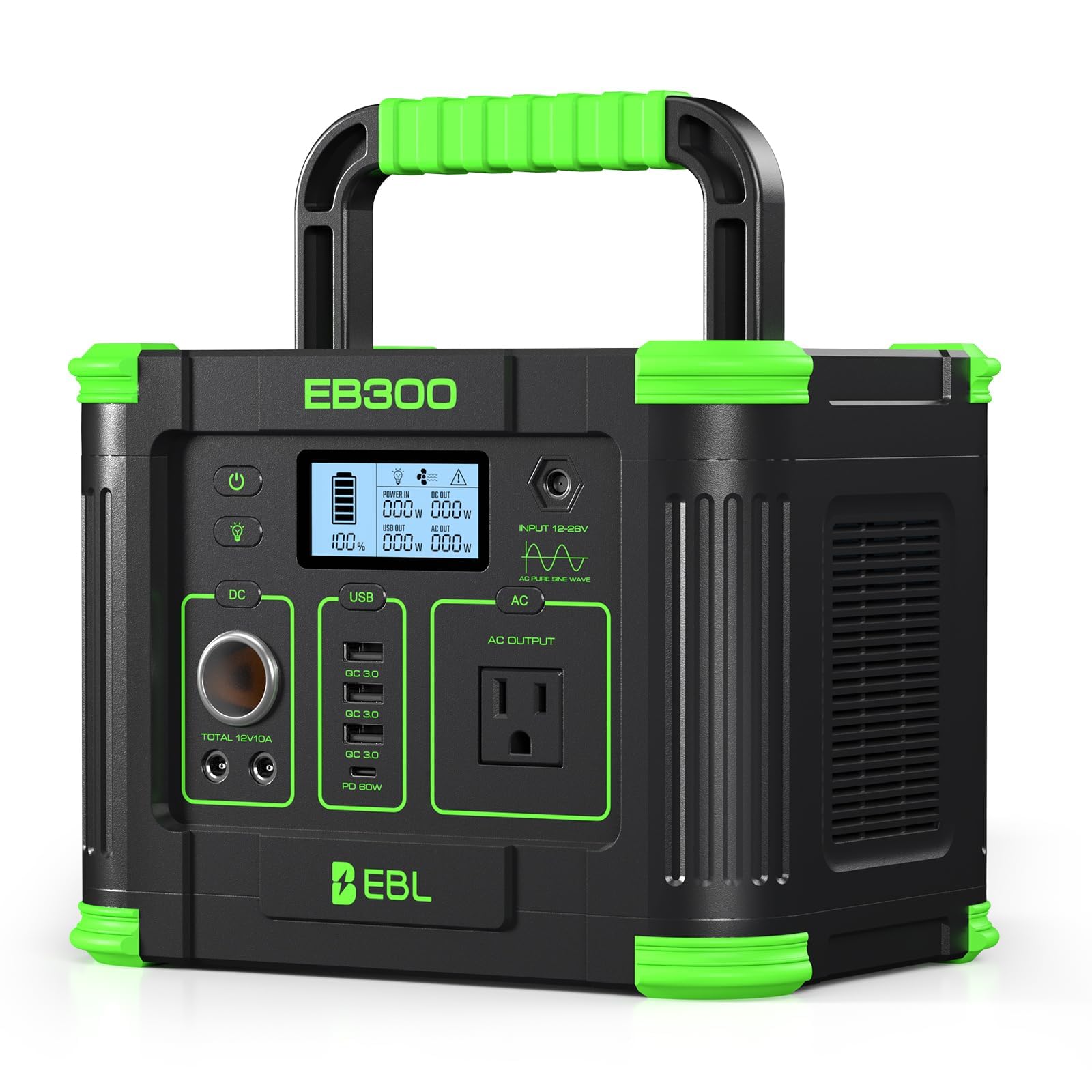
The EBL EB300 brings a 288.6Wh capacity and 330W pure sine wave AC output with a 600W peak surge, matching the GRECELL on raw power specs but adding a dedicated 5W wireless charging pad and an independent SOS LED light system that operates without draining the main battery. The unit weighs 7.94 lb and measures 9.61 x 6.73 x 6.97 inches, with a folding handle and anti-collision strips that protect the chassis during transport. The multi-port layout includes two DC 5521 ports, a 12V cigarette lighter port, USB-A QC 3.0, USB-C PD 60W, and the primary AC outlet.
Real-world feedback from CPAP users confirms the EB300 runs a CPAP machine through an entire night, with one reviewer noting it handled the load for two nights with careful power management. The wireless charging pad is a convenient bonus for topping off a phone during the night, though several users report it wastes energy and recommend turning it off when not in use. The three recharge methods—AC wall adapter (6-7 hours), 12V car (7-9 hours), and 60-120W solar panels (5-9 hours)—provide solid flexibility for various use scenarios.
The built-in smart cooling fan automatically activates during high-load discharge and charging to prevent overheating, and the low-power hibernation mode kicks in when output falls below 5W for over eight hours to conserve residual charge. Some user experiences mention the display quality could be better, and a small number of units required warranty replacement for sudden battery depletion. Overall, the EBL EB300 delivers reliable power for medical devices and camping gear at a competitive mid-range price point.
Why it’s great
- Independent SOS LED light works without main power, preserving battery for CPAP use
- 288.6Wh capacity provides enough juice for full-night CPAP operation
- Compact build with folding handle and protective strips for rugged portability
Good to know
- Wireless charging can be inefficient and drain battery faster
- Some units required warranty service for sudden battery level drops
4. GRECELL 330W (Green)
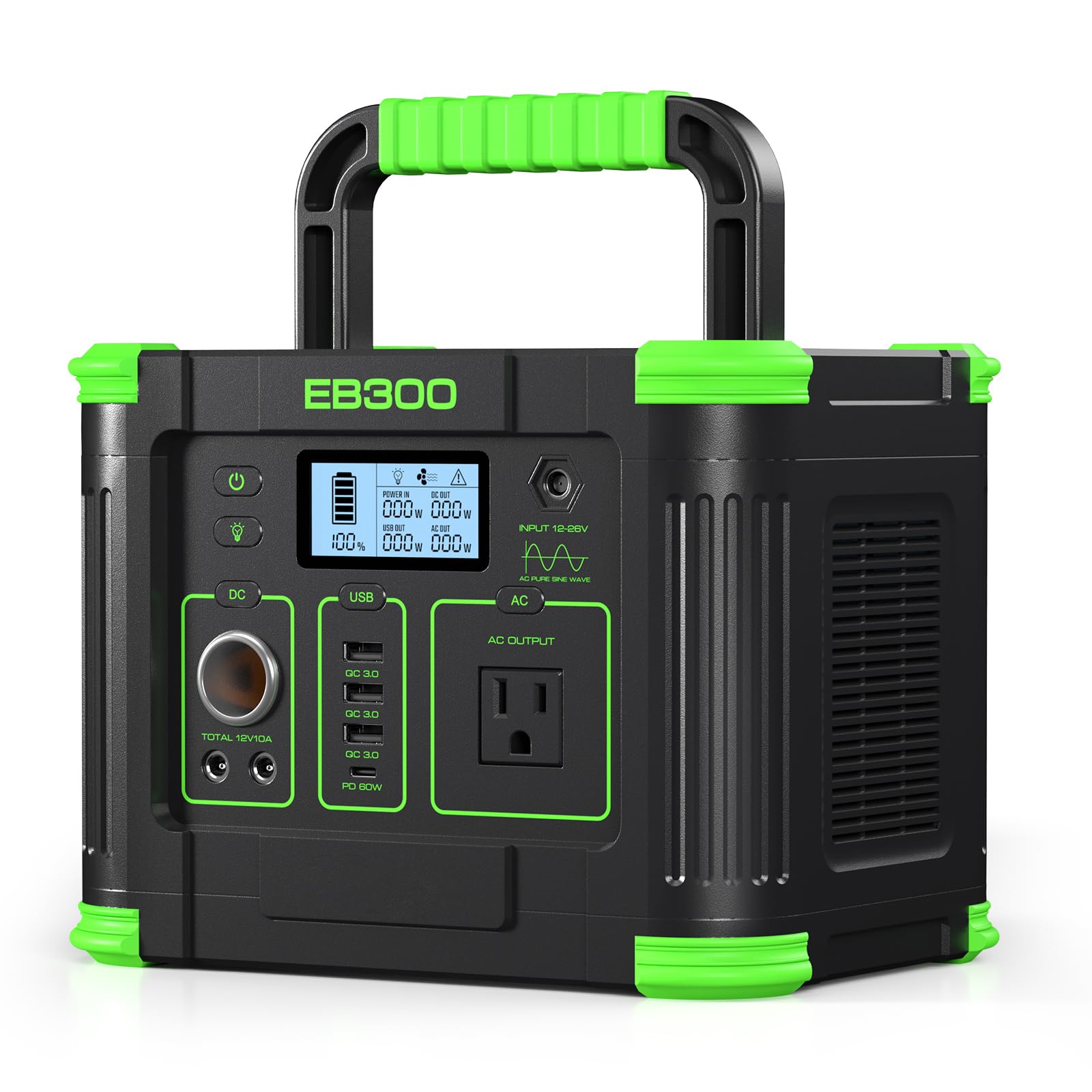
The GRECELL 330W in green offers the same 288.6Wh capacity and 330W pure sine wave AC output as the grey version but distinguishes itself with a slightly different port layout and a more efficient BMS. The station features one AC outlet, one PD 60W USB-C port, three USB-A QC 3.0 ports, one DC car port, two DC 5521 outputs, and a 5W wireless charging pad, allowing up to nine devices to charge simultaneously. The dual silent cooling fans and upgraded BMS provide protection against overload, overcharge, and short circuits.
User reviews consistently note the station’s strong performance in Cub Scout camping scenarios, where it charged lights, mobile devices, and a Nintendo Switch overnight for three families without running out of power. One reviewer successfully used it to cook a 200W mini rice cooker ten times during a road trip, with the battery depleting to only 50-56% each session. The three-level brightness LED flashlight with SOS mode adds utility for nighttime emergencies, and the compact 12.8 x 7.68 x 8.46-inch size fits easily in a car trunk or RV storage compartment.
The station lacks pass-through charging capability, meaning you cannot charge devices while simultaneously recharging the station itself, a limitation that power users should note. The wireless charging pad also struggles with phone camera bumps that create an air gap. Despite these minor drawbacks, the GRECELL 330W represents outstanding value for its capacity and feature set, earning its place as a top contender for family camping and emergency home backup.
Why it’s great
- 9-device simultaneous charging capability unmatched at this price tier
- Real-world testing shows it runs a 200W rice cooker ten times on a single charge
- Three-level brightness LED flashlight with SOS for emergencies
Good to know
- No pass-through charging — cannot charge devices while station recharges
- Wireless charging may not work with phones that have large camera bumps
5. DaranEner Portable Power Station
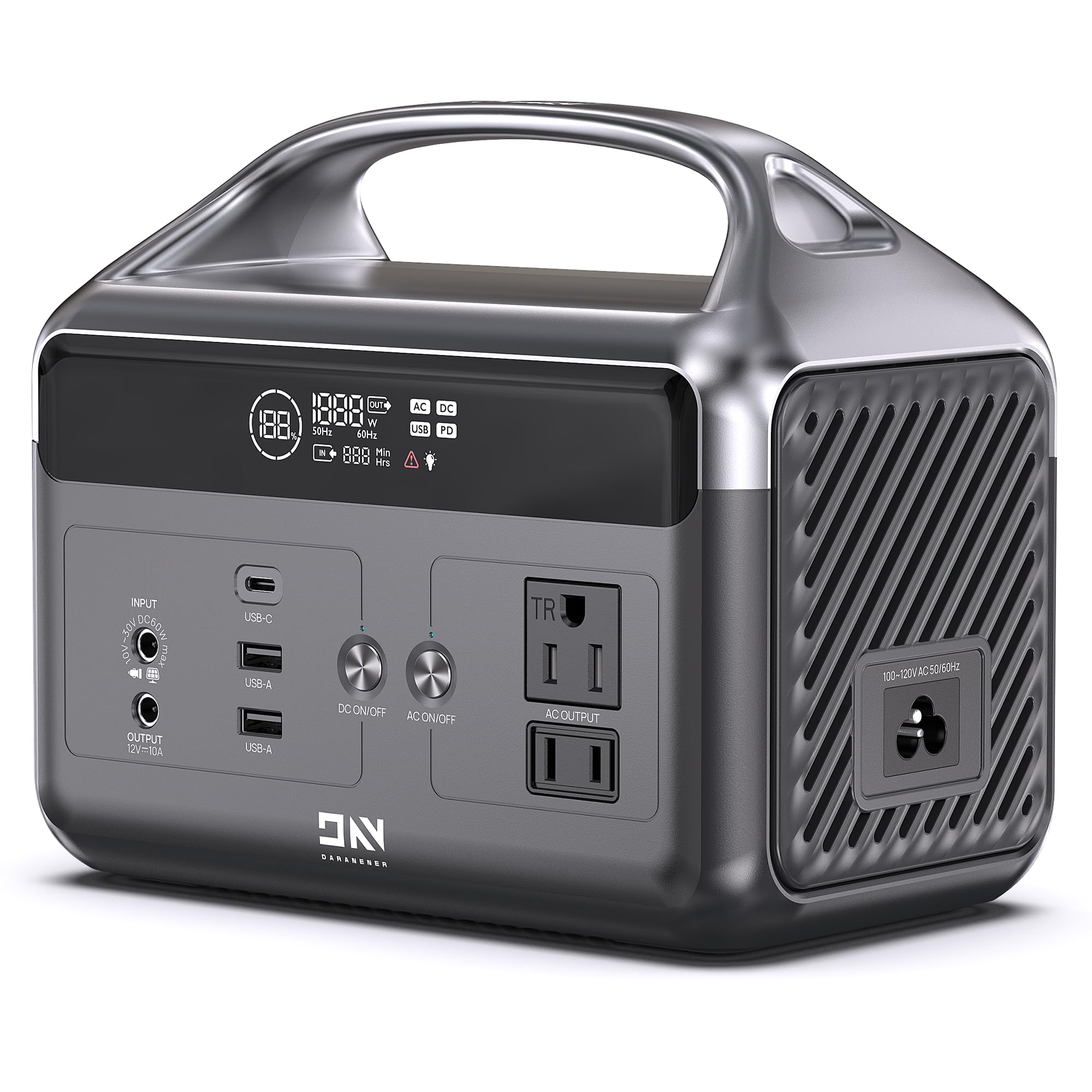
This chemistry choice means the station will outlast most other budget options by roughly 15%, making it the best long-term investment for regular weekly use. The 192Wh capacity and 300W pure sine wave output with 600W surge handle the same mid-range devices as its peers—CPAP machines, laptops, fans, and camera batteries—but with the peace of mind that the battery will still hold strong charge years down the line.
The unit weighs only 5.73 lb and is smaller than a toaster, making it exceptionally portable for backpacking or tossing in a daypack. The six-device charging capability includes two 300W AC outlets, one USB-C PD 60W port, two USB-A QC 3.0 ports, and one 12V DC output. The built-in LED flashlight offers four brightness modes including SOS, and the smart BMS protects against overcharging, overheating, and short circuits. Users report excellent customer service experiences, with a defective unit replaced quickly without requiring a return.
One notable advantage of the DaranEner is its 30V solar input capability, which allows two 18V solar panels to be connected in series for faster off-grid charging. Real-world users confirm the station runs a CPAP machine most of the night and keeps a 12V cooler running during camping trips. The main drawbacks are the lack of a wireless charging pad and a battery gauge that some users found never accurately synced with the actual charge level. Still, for buyers prioritizing cycle life and weight savings, this is a compelling package.
Why it’s great
- 3500+ cycle LiFePO4 battery offers the longest service life in the budget segment
- 30V solar input allows dual-panel series connection for faster solar charging
- Weighs just 5.73 lb — the lightest full-featured station on this list
Good to know
- Battery level gauge may not always display accurate remaining charge
- No built-in wireless charging pad for phone convenience
6. Anker SOLIX C200 DC

The Anker SOLIX C200 DC is a fundamentally different take on a budget power station: it omits the traditional AC inverter entirely and focuses entirely on high-wattage DC output via USB-C. The 192Wh LiFePO4 battery pack feeds a single 140W two-way USB-C PD 3.1 port, a 100W USB-C port, a 15W USB-C port, and two 12W USB-A ports. This design makes the C200 DC 39% smaller than comparable power stations with AC outlets—measuring just 3.94 x 7.28 x 4.33 inches—and allows it to fit in a laptop bag or glove compartment.
The absence of an AC inverter makes the C200 DC unsuitable for powering household appliances like mini-fridges or CPAP machines with AC plugs, but it excels at what it does: keeping laptops, tablets, phones, and portable Starlink Mini terminals running all day. Users report the 140W USB-C port charges a MacBook Pro at full speed while simultaneously providing 100W to another laptop. The pass-through charging capability means the station can power devices while recharging itself, a feature missing from several competitors on this list.
The 3000-cycle LiFePO4 battery and 3-year warranty back the C200 DC for long-term reliability. Real-world testing shows the station runs a Starlink Mini for 6-8 hours on a single charge, making it a favorite among remote workers and van-lifers who prioritize digital connectivity. The wall charger is not included in the box, which is a notable omission—you must supply your own 18W or higher USB-C PD charger. For tech-focused users who don’t need AC power, the C200 DC is the most compact and efficient option available.
Why it’s great
- Industry-leading 140W USB-C PD 3.1 port charges laptops at maximum speed
- 39% smaller than AC-inclusive stations — fits in a laptop bag
- Full pass-through charging capability for continuous device power
Good to know
- No AC outlet — cannot power CPAP machines, mini-fridges, or standard appliances
- Wall charger not included in the box, must be purchased separately
7. Apowking 300W Portable Power Station
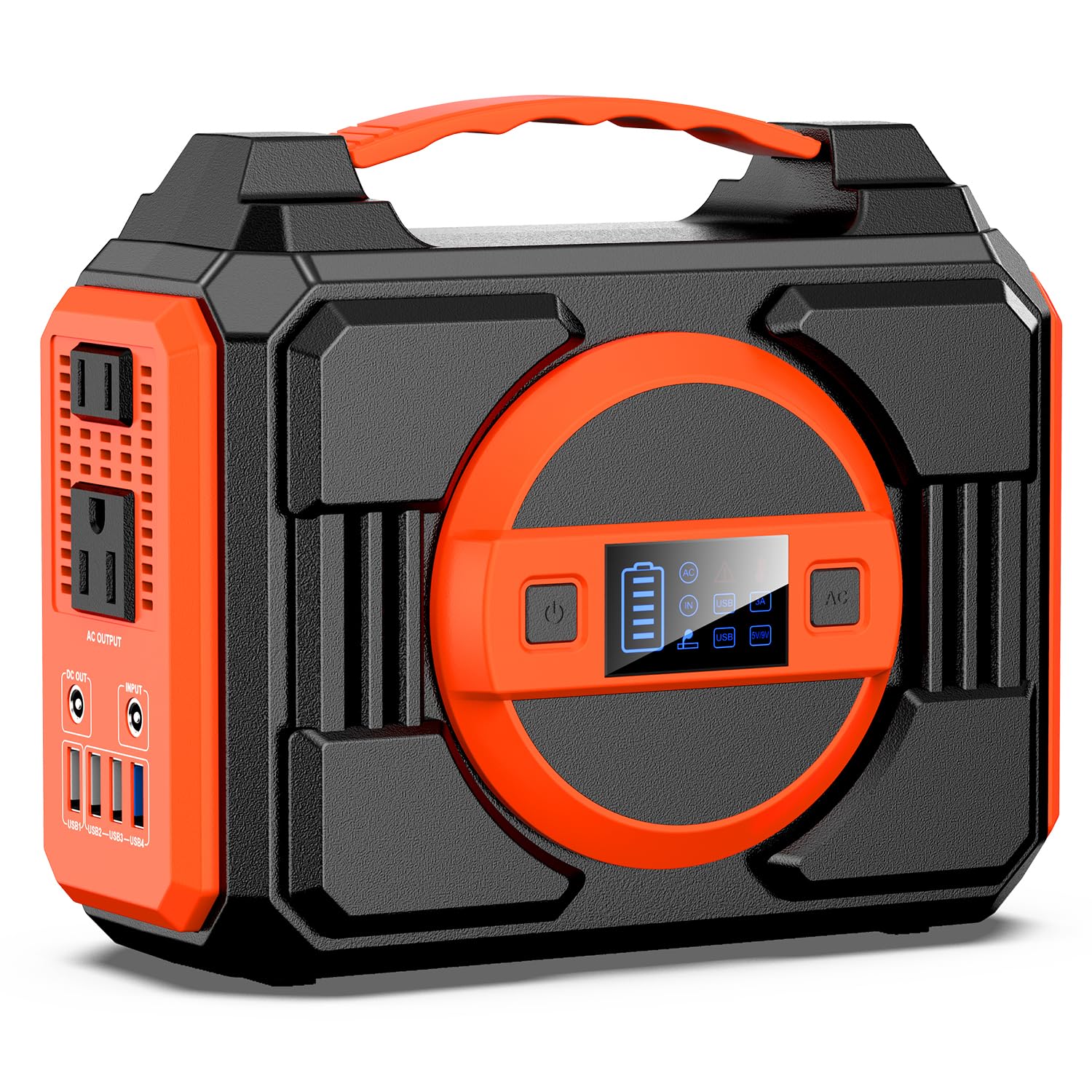
The Apowking 300W portable power station hits the entry-level sweet spot with a 220Wh lithium-ion battery and a 300W pure sine wave AC inverter that peaks at 600W. The unit measures 8.5 x 6.7 x 4.1 inches and weighs a mere 5 lb, making it one of the most portable AC-inclusive stations available at this price. The seven-output port arrangement includes two 110V AC outlets, three USB-A ports (5V/3.1A max), one USB port with 9V/2A capability, and one DC vehicle output port, providing solid versatility for its class.
Real-world users report the station holds a charge for approximately eight hours when powering essential devices like phones, lights, and a small fan during emergencies. The built-in LED light is notably bright, covering the entire back panel and providing full security lighting for dark campsites or power outages. The advanced BMS includes voltage control, temperature regulation, short-circuit protection, and overload protection, with silent cooling vents that maintain safe operating temperatures without adding distracting fan noise.
The main trade-off at this entry-level price is the slower recharge time—users report AC charging takes over four hours, and solar charging with the included 40W panel is notably slow, with some users recommending a 60W panel for practical off-grid use. The lack of USB-C PD output means laptop charging requires the AC inverter, which drains the battery faster than direct USB-C. The Apowking is best suited for users who need occasional emergency power and light camping backup rather than daily or high-demand use, and the 12-month warranty provides basic protection for the investment.
Why it’s great
- Lightest AC-inclusive station on the list at just 5 lb, ideal for backpacking
- Back-full-coverage LED light provides exceptional illumination for emergencies
- 7 output ports including dual AC outlets for versatile device charging
Good to know
- No USB-C PD port — laptops require AC inverter which drains battery faster
- AC charging takes over 4 hours; solar charging is very slow without upgraded panel
FAQ
Can a budget portable power station run a mini-fridge?
How long does a 192Wh LiFePO4 station last before needing replacement?
Why doesn’t my budget power station charge my laptop at full speed?
Final Thoughts: The Verdict
For most users, the best budget portable power station winner is the EF ECOFLOW RIVER 3 because it combines the fastest recharge time in its class with the longest-lasting LiFePO4 battery and a genuine UPS mode that competitors can’t touch. If you want maximum capacity for full-night CPAP use or multi-family camping, grab the GRECELL 330W. And for tech-focused travelers who need ultra-portable laptop power without the bulk of an AC inverter, nothing beats the Anker SOLIX C200 DC.