
Fine red dust, sudden downpours, and bumpy game-drive tracks are the real test for any camera bag. A dedicated safari camera bag must seal out grit, offer quick access for fleeting shots, and carry a heavy telephoto lens without digging into your shoulders for hours.
I’m Min — the co-founder and writer behind Gadgets Feed. I’ve spent hundreds of hours combing through technical specs, real-world field reviews, and build-quality reports to separate bags that merely look rugged from ones that truly protect your gear in the African bush.
After analyzing weather sealing, suspension systems, access speed, and capacity for a pro-grade telephoto setup, these seven contenders define the best camera bag for safari.
How To Choose The Best Camera Bag For Safari
A safari-specific camera bag is a different animal from a city commuter pack. You need dust seals that survive hours in a hot, open vehicle, a harness that stays stable when you stand up to shoot, and an internal layout that lets you swap a 100-400mm lens for a wide-angle without missing a lion sighting.
Weather & Dust Sealing
Look for bags with YKK zippers, tight fabric weaves, and a dedicated rain cover. Waxed canvas offers natural water resistance but collects dust in the weave — nylon with a PU coating sheds grit more effectively. A bag that fails the dust test on a Kenyan game drive will let fine particles into your lens barrel threads.
Quick Side Access
On safari, you seldom have room to spin a backpack off both shoulders. A side-access panel lets you grab your camera body without removing the pack, keeping you ready for that split-second cheetah sprint. Top-access alone forces you to set the bag down, costing you the shot.
Harness & Stability
A 15-pound load of telephoto glass demands a padded hip belt, wide shoulder straps, and a sternum strap. Without a waist belt, the bag swings forward every time you lean out of the vehicle. Look for removable hip belts that let you stash them during flights but use them on drive.
Internal Volume & Modular Dividers
A safari kit typically includes a full-frame body, a 100-400mm or 200-500mm lens, a second body or wide-angle, plus batteries, filters, and a bean bag. You need at least 20L of usable camera volume with configurable padded dividers that lock lenses in place — foam walls that sag under weight defeat the purpose.
Quick Comparison
On smaller screens, swipe sideways to see the full table.
| Model | Category | Best For | Key Spec | Amazon |
|---|---|---|---|---|
| Peak Design Everyday Backpack 30L | Premium | Top-tier weatherproofing & modular carry | 30L expandable / MagLatch + UltraZip seals | Amazon |
| Thule Aspect DSLR Backpack | Premium | Heavy telephoto & drone carry | Fits 15.6″ laptop / removable hip belt | Amazon |
| PGYTECH OneMo Lite 22L | Mid-Range | Modular storage for mirrorless + drone | 1.65 kg / PU coating + YKK zippers | Amazon |
| Lowepro Fast Pack BP250AW III | Mid-Range | Compact carry-on for short hikes | 25L / padded laptop + tablet slot | Amazon |
| NOMATIC McKinnon Sling 8L | Premium | Ultra-light sling for one-body setups | 8L capacity / water-resistant nylon shell | Amazon |
| K&F CONCEPT Professional 25L | Mid-Range | Adjustable split for camera + personal gear | Expandable to 25L / rain cover included | Amazon |
| JAEP Camera Backpack | Budget | Vintage style on a budget | Waxed canvas / 3.75 lb / 18″H | Amazon |
In‑Depth Reviews
1. Peak Design Everyday Backpack 30L
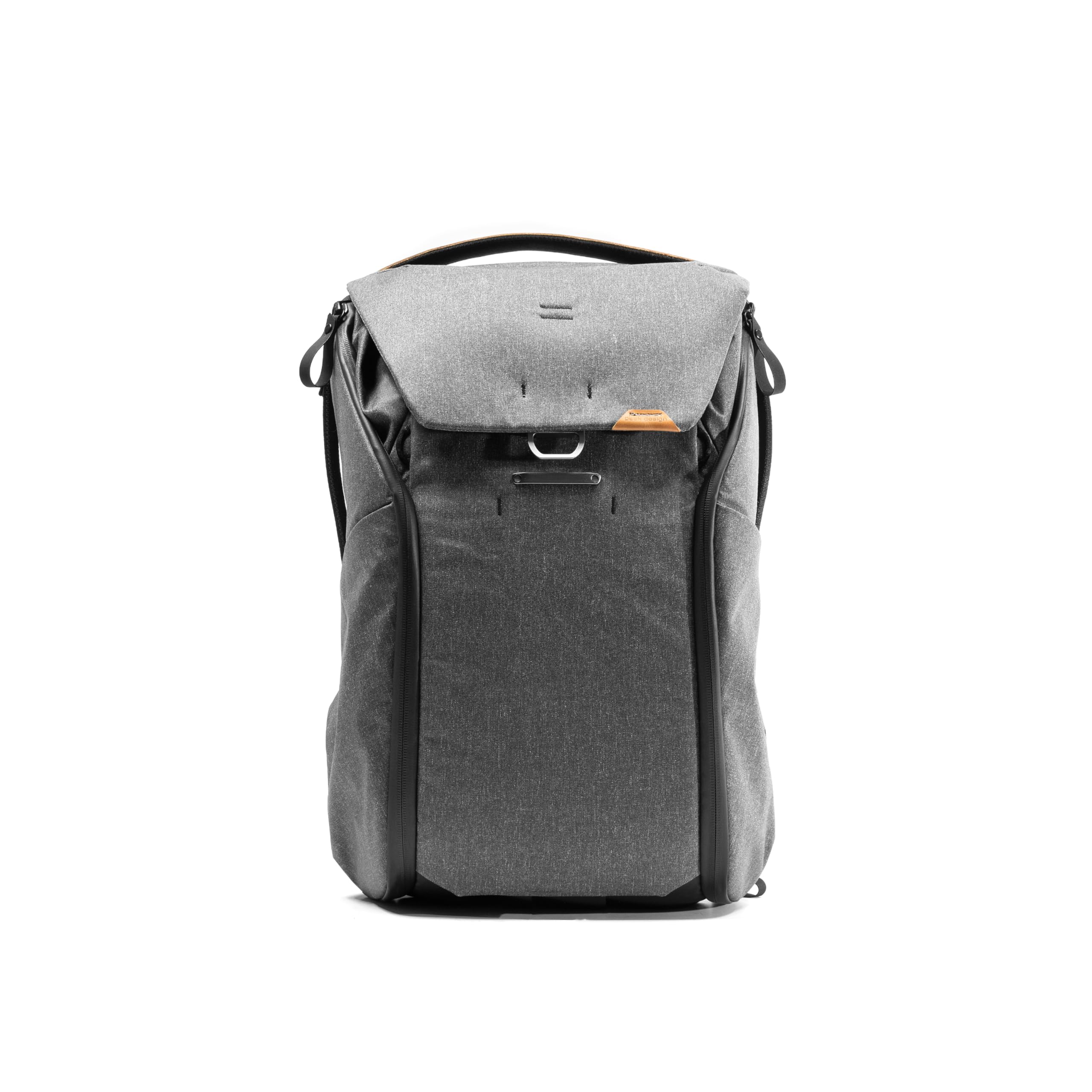
The Peak Design Everyday Backpack 30L uses a 100% recycled weatherproof shell with sealed UltraZip zippers — critical when a sudden Serengeti downpour hits. The MagLatch top closure lets you grab your camera one-handed from the front seat, while dual side-access weatherproof zippers give you a second entry point without spinning the pack around. FlexFold dividers create a customizable interior that holds a pro DSLR with a 70-200mm f/2.8 attached, plus three additional lenses and a 16-inch laptop.
At 30L expandable, this bag swallows a full safari kit — body, telephoto, wide-angle, flash, batteries, and a small drone — without bulging awkwardly. The sternum strap and padded hip belt stabilize the load when you stand to shoot out of a pop-up roof. The external carry straps let you lash a tripod or a jacket on the outside without compromising the main compartment’s dust seal.
Two years of heavy use reports show zero zipper failures and no fabric delamination. The only compromise is the luggage pass-through strap orientation, which slightly restricts access when sliding the bag over a roller handle. For photographers who demand bombproof sealing and daily ergonomics, this is the definitive safari backpack.
Why it’s great
- Weatherproof shell with sealed UltraZip zippers block dust and rain
- MagLatch one-handed top access and dual side zippers for fast camera retrieval
- FlexFold dividers allow infinitely adjustable compartment layouts
Good to know
- Luggage pass-through strap orientation limits access when on a roller
- Side pockets are shallow for cylindrical items like water bottles
2. Thule Aspect DSLR Camera Bag Backpack

The Thule Aspect is built for photographers who carry a heavy telephoto plus a drone. The main compartment fits a DSLR with a 200-400mm f/4 detached, a DJI Mavic Pro (up to 260mm x 240mm x 130mm), and three to four additional lenses. The padded hip belt is fully removable — stash it in luggage during flights, clip it on for game drives where you need load stability.
The air-mesh back panel and contoured shoulder straps keep you cool during long walks from the vehicle to a hide. The top compartment stores personal gear — sunscreen, hat, binoculars — while the bottom camera section keeps bodies and lenses isolated from dust. A separate padded sleeve protects a 15.6-inch laptop and an iPad.
Build quality is excellent: YKK zippers, 100% nylon fabric, and reinforced stitching that has held up after a year of heavy safari travel. The side-access flap is functional but not as quick as the Peak Design’s zipper system — you need to rotate the bag to your front to reach the camera. For users who prioritize load capacity and drone compatibility over split-second draw speed, the Aspect is a strong contender.
Why it’s great
- Large main compartment fits big telephoto lenses plus a drone
- Removable padded hip belt gives excellent load control
- Air-mesh back panel keeps you cool in hot conditions
Good to know
- Side-access flap requires rotating the bag, slower than top-opening designs
- Velcro dividers can be tricky to reposition through the small opening
3. PGYTECH OneMo Lite Camera Backpack 22L

The PGYTECH OneMo Lite packs premium features at a mid-range price point. The high-performance PU coating resists scratches, dirt, and splash — exactly what you need when leaning on a dusty vehicle door. YKK zippers with weather-resistant pulls seal the main compartment. The large front opening gives you full access to the interior, making lens swaps faster than a traditional roll-top.
Weighing just 1.65 kg (3.6 lbs) without dividers, this 22L bag is lighter than many competitors. The Module Pro divider system uses thick foam panels that stay rigid, preventing lenses from shifting during bumpy drives. A dedicated battery pocket includes a magnetic power indicator so you never leave dead batteries behind. The hidden pocket stashes a passport or cash securely.
The angled exterior reduces usable space slightly — some users report 22L feels more like 18L for rectangular objects. Still, it comfortably holds a full-frame mirrorless body, a 70-200mm, a 35mm prime, and a DJI Mini 4 Pro. For photographers who want premium organization and low weight without the premium- tier price, the OneMo Lite is the smart choice.
Why it’s great
- PU coating resists dust, scratches, and splash — ideal for safari
- Large front opening and modular dividers for fast lens swaps
- Lightweight at 1.65 kg with YKK zippers and lifetime warranty
Good to know
- Angled exterior reduces usable interior space below 22L
- Side-access panel limits configuration options for large gear
4. Lowepro Fast Pack BP250AW III

The Lowepro Fast Pack BP250AW III is a streamlined backpack designed for day hikes and carry-on travel. It fits a DSLR with a telephoto zoom attached, two to three spare lenses, and a 15-inch laptop. The rigid build uses thick padding that protects gear even when you shove the bag under a safari vehicle seat.
Separate compartments keep personal items — sunscreen, snacks, water — isolated from camera gear. The waist belt and sternum strap stabilize the load on uneven terrain. Side access works well for quick draws, though the compartment design means you need to unzip the main flap to reconfigure dividers. At 25L, it’s more compact than the Peak Design 30L or Thule Aspect, making it easier to fit in overhead bins.
The primary weakness is the tripod lashing system, which feels flimsy compared to dedicated straps on other bags. Users report it works for lightweight travel tripods but struggles with larger carbon-fiber sticks. For photographers who prioritize carry-on compliance and short-walk comfort, this is a capable companion.
Why it’s great
- Rigid build with thick padding for gear protection
- Separate personal and camera compartments keep dust off lenses
- Compact 25L fits under plane seats easily
Good to know
- Tripod lashing system is weak for large tripods
- Harness shape best for flatter chests; can feel loose for some body types
5. NOMATIC McKinnon Camera Sling 8L

The NOMATIC McKinnon Sling 8L is a premium sling for photographers who want to travel light without sacrificing protection. The one-handed quick-latch opening lets you draw your camera in under two seconds — critical when a leopard appears briefly. The water-resistant nylon shell and durable zippers withstand light rain and dust, though this sling is not designed for extended exposure.
Three-way carry system lets you wear it as a crossbody, shoulder bag, or traditional sling, adapting to different vehicle setups. The internal padded dividers secure a mirrorless body with a 24-70mm lens attached, plus one extra prime. External MOLLE hooks let you attach a compact tripod or lens pouch externally. At 8L, capacity is limited — you cannot fit a 200-400mm telephoto or a second DSLR body.
Build quality is excellent: tight stitching, premium zipper feel, and a well-organized interior with battery and SD card pockets. The handle sits on the back instead of the top, which makes hanging the sling awkward. For game-drive photographers who carry one body and one extra lens, the McKinnon Sling offers the fastest draw time of any bag here.
Why it’s great
- Quick-latch opening enables sub-2-second camera draw
- Water-resistant nylon shell handles light rain and dust
- Three carry modes adapt to vehicle and hiking scenarios
Good to know
- 8L capacity is too small for telephoto lenses or multiple bodies
- Handle location on the back makes hanging inconvenient
6. K&F CONCEPT Professional Camera Backpack 25L

The K&F CONCEPT Professional integrates a convertible 50:50 to 20:80 split that shifts space between camera gear and personal items. On a game drive, set it to 20:80 to stash a large telephoto lens in the camera side and a jacket, water, and snacks in the personal side. The expandable front pouch adds roughly 4L for filters, batteries, or a small drone, keeping auxiliary gear organized and stable.
Hidden support fibers in the walls resist compression — if the bag falls over on a rocky road, your gear stays cushioned. The top and side openings both grant access without removing the pack, though the side zipper is the faster draw. The dedicated 16-inch laptop sleeve keeps your computer separated from camera gear. A rain cover is included, though the fabric itself has some water resistance.
The Velcro partition walls sometimes loosen over time, allowing dividers to shift inside the bag. For the price, this is a flexible setup that adapts to different loads — one day a full safari kit, the next a day-pack for a cultural visit. The K&F CONCEPT works best for travelers who want one bag for mixed camera and personal use.
Why it’s great
- Convertible split adjusts camera-to-personal space ratio
- Expandable front pouch adds 4L for accessories
- Hidden support fibers resist external compression
Good to know
- Velcro dividers can loosen and shift over time
- Side access requires careful configuration to work seamlessly
7. JAEP Camera Backpack

The JAEP Camera Backpack brings vintage leather-and-canvas style to a budget price. The waxed canvas fabric is inherently water-resistant, and the crazy horse leather accents add grip where you need it. Inside, removable padded dividers let you configure the space for a DSLR with a 200-400mm lens, two additional lenses, and a 15.6-inch laptop. The anti-theft rear-access opening secures gear when you’re in crowded safari lodges.
The tripod holder works for lightweight travel tripods. Padded shoulder straps and a breathable back panel provide adequate comfort for day hikes, though the lack of a hip belt means heavier loads will dig in over four-hour drives. At 3.75 lbs, it’s heavier than some synthetic competitors, but the canvas stands up to thorn bushes and branch scrapes.
Some units report magnetic latches separating over time, requiring careful re-crimping. For photographers on a budget who want a distinctive look and solid protection for a mid-weight kit, the JAEP delivers value where it counts.
Why it’s great
- Waxed canvas and leather construction repels light rain and dust
- Anti-theft rear access secures gear in crowded lodges
- Customizable padded dividers fit a telephoto lens and laptop
Good to know
- No hip belt — heavy loads become uncomfortable over long drives
- Magnetic latches can separate and require maintenance
FAQ
Is a rain cover essential for a safari camera bag?
Can a sling bag replace a backpack for safari photography?
Final Thoughts: The Verdict
For most users, the best camera bag for safari winner is the Peak Design Everyday Backpack 30L because its weatherproof shell, sealed UltraZip zippers, and FlexFold dividers deliver the best balance of dust protection, quick access, and load capacity for a pro-grade safari kit. If you want maximum telephoto and drone capacity, grab the Thule Aspect. And for a lightweight, budget-friendly option that still protects your gear, the JAEP Camera Backpack punches above its price class.