
Mountaineering destroys gear. The thin air, sub-zero temperatures, abrasive granite, blowing grit, and sudden water crossings turn most electronics into dead weight before you reach base camp. This is the specific engineering that separates a true alpine tool from a fair-weather compact.
I’m Min — the co-founder and writer behind Gadgets Feed. For this guide, I spent hours cross-referencing IP and MIL-STD ratings, analyzing sensor sizes and lens apertures against real alpine shooting conditions, and studying user reports from high-altitude treks where a camera failure means a lost summit record.
After reviewing the rugged specs and real-world field data, I’ve narrowed the field to nine contenders that actually earn their place in your pack. This is the definitive guide to the best camera for mountaineering — built on specs that matter at altitude, not hype.
How To Choose The Best Camera For Mountaineering
The alpine environment punishes cameras in four distinct ways: water ingress from rain, snow, and stream crossings; blunt-force impacts from falls against rock; freezing temperatures that drain lithium-ion batteries; and fine dust or grit that seizes mechanical parts. A mountaineering camera must pass certified thresholds in all four areas, not just carry a “rugged” label.
Waterproof and Dustproof Ratings Are Non-Negotiable
Look for an IPX8 rating or a manufacturer-stated depth rating of at least 10 meters (33 feet) without a housing. This ensures survival during sudden downpours, river crossings, and submersion in snowmelt pools. A dustproof seal (IP6X) is equally critical — fine glacial silt and granite dust will destroy an unsealed lens barrel.
Freeze-Proof Certification Down to -10°C or Lower
Standard consumer cameras stop working below freezing because their lubricants thicken and batteries lose voltage. True mountaineering cameras are rated to operate at -10°C (14°F) or lower. This isn’t a marketing gimmick — it means the battery contact design, LCD fluid, and mechanical zoom mechanisms are all specified for sub-zero use.
Physical Controls You Can Operate with Gloves
A touchscreen becomes useless the moment you put on expedition gloves. Prioritize cameras with dedicated physical buttons for shutter, zoom, mode, and playback. The best options have large, raised buttons with positive tactile click feedback that you can feel through a glove.
Battery Life and Replaceable Cells
Cold air halves effective battery capacity. You need either a camera that delivers three-plus hours of continuous recording on a single charge (action cameras with high-capacity cells) or one that uses standard, swappable batteries (compact point-and-shoots). The ability to carry two or three spare batteries is a massive advantage on multi-day climbs.
Lens Aperture and Low-Light Performance
Alpine light is harsh at midday and near-dark at dawn, dusk, and inside crevasses. A lens with a wide maximum aperture of f/2.0 or faster lets you keep shutter speeds high and ISO low when light is scarce. A fast lens also reduces the need for a tripod during summit-camp twilight shots.
Quick Comparison
On smaller screens, swipe sideways to see the full table.
| Model | Category | Best For | Key Spec | Amazon |
|---|---|---|---|---|
| OM System Tough TG-7 | Point & Shoot | All-round alpine shooting with macro detail | Waterproof 15m, Shockproof 2.1m, Freezeproof -10°C, 4x zoom | Amazon |
| DJI Osmo Action 6 (Enhanced Combo) | Action Camera | Long-duration video in extreme cold | 8K video, 1/1.1″ sensor, f/2.0-f/4.0, 4hr battery, waterproof 20m | Amazon |
| DJI Osmo Action 6 (Essential Combo) | Action Camera | High-res 8K video in a compact kit | 8K video, f/2.0-f/4.0 variable aperture, 50GB storage | Amazon |
| Insta360 X5 Essentials Bundle | 360° Action Camera | Third-person POV with zero camera in frame | 8K 360° video, dual 1/1.28″ sensors, 3hr battery | Amazon |
| GoPro HERO13 Black | Action Camera | Stabilized 5.3K footage with lens mods | 5.3K60 video, 27MP photo, waterproof 10m, HyperSmooth | Amazon |
| GoPro HERO Black | Action Camera | Lightweight 4K video for budget buyers | 4K30 video, 12MP photos, waterproof 10m, 1hr battery | Amazon |
| PENTAX WG-90 | Point & Shoot | Macro inspection with built-in LED ring | Waterproof 14m, Shockproof 1.6m, Freezeproof -10°C, 6-LED macro ring | Amazon |
| Ricoh WG-80 | Point & Shoot | International version with same tough specs | Waterproof 14m, 16MP, 5x zoom, 6-LED macro lights | Amazon |
| Kodak PIXPRO WPZ2 | Point & Shoot | Entry-level waterproof bundle with extras | Waterproof 15m, Shockproof 2m, 16MP, 4x zoom | Amazon |
In‑Depth Reviews
1. OM System OLYMPUS Tough TG-7

The OM System Tough TG-7 is the gold standard for mountaineering stills. It carries a 15-meter waterproof rating, 2.1-meter shockproof certification, and freeze-proof operation down to -10°C — every single environmental spec a climber needs. The 4x optical zoom lens starts at f/2.0, letting in enough light for dawn summit shots without forcing ISO into the noise zone. The 12-megapixel back-illuminated CMOS sensor produces clean JPEGs and RAW files, and the five underwater modes include an underwater microscope for glacial ice detail.
What sets the TG-7 apart from action cameras is its physical control layout. You get a dedicated zoom rocker, a mode dial, and a shutter button with distinct positive travel — all operable with thick expedition gloves. The 2.7-inch LCD has an Anti-Reflection coating and dedicated Outdoor View Setting mode that boosts brightness in direct alpine sun, a feature no action camera matches. It also shoots 4K video at 30fps and 120fps high-speed recording, making it a genuine hybrid.
The variable macro system is the secret weapon for mountaineers documenting rock texture, ice crystal formations, and equipment wear. With the included Macro Stand, you can focus from 1 centimeter, and the FD-1 flash ring attachment (sold separately) turns the TG-7 into a field microscope. Battery life is solid for a compact, but carry one spare — cold drains it faster than a phone.
Why it’s great
- Certified waterproof, shockproof, and freezeproof to genuine expedition specs
- Fast f/2.0 lens with 4x optical zoom outperforms fixed-lens action cameras
- Physical buttons and mode dial work with heavy gloves
- Underwater microscope mode captures glacial detail invisible to the naked eye
Good to know
- Small 1/2.3-inch sensor means soft low-light images above ISO 800
- No external microphone jack for vloggers
- Battery life is adequate but not class-leading
2. DJI Osmo Action 6 Enhanced Combo
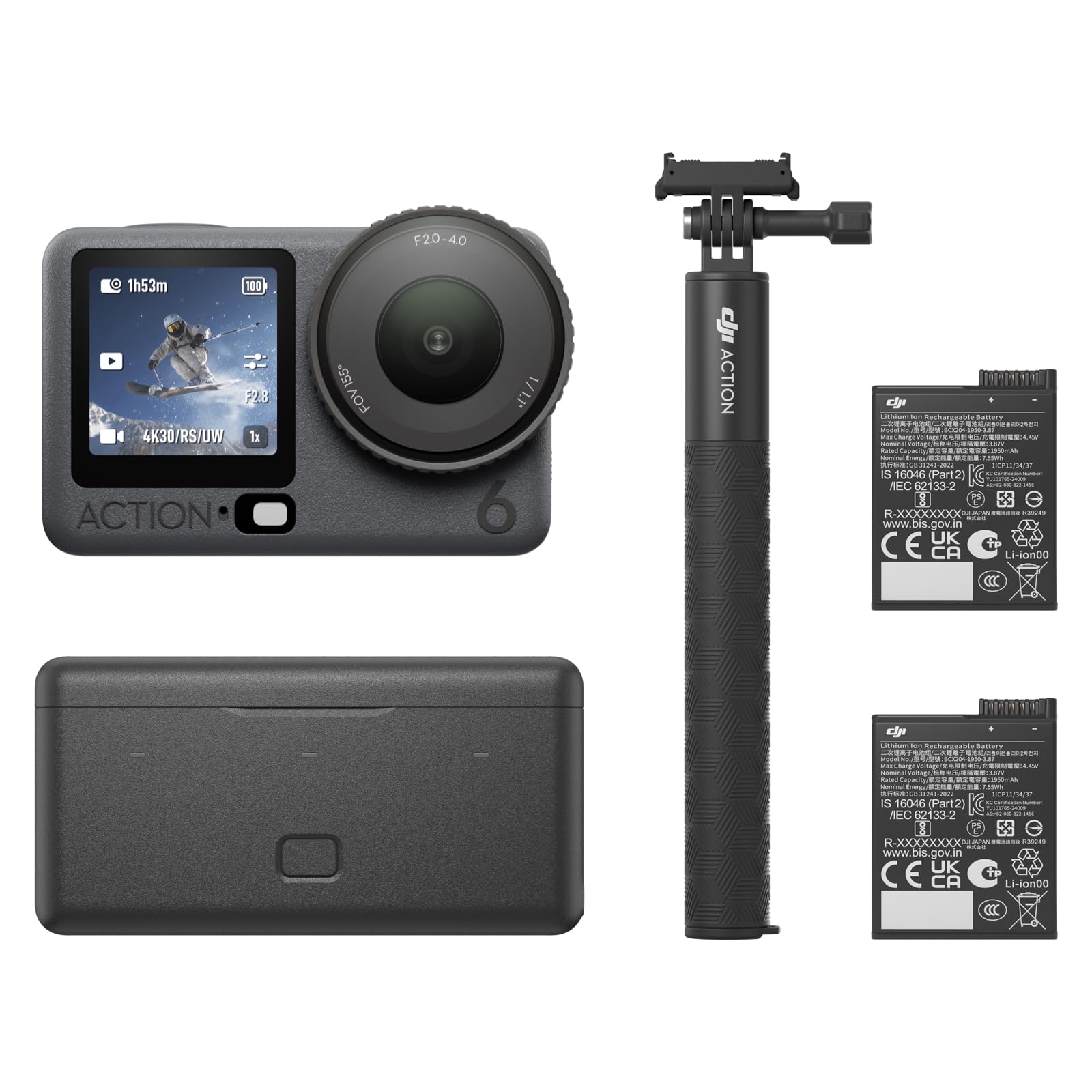
The DJI Osmo Action 6 Enhanced Combo is the video specialist for mountaineers who prioritize hours-long 4K and 8K recording in freezing conditions. Its 1/1.1-inch square sensor is significantly larger than any competing action camera sensor, producing cleaner low-light footage with less noise. The variable aperture from f/2.0 to f/4.0 is a unique feature — you can stop down for deep depth-of-field in bright snow fields or open up for maximum light gathering in crevice shadows or twilight.
Cold resistance is this camera’s superpower. DJI rates the built-in Extreme Battery Plus (1950 mAh) for up to four hours of recording in normal conditions, and the camera is engineered to keep shooting when temperatures drop below zero. The Enhanced Combo includes two batteries and a multifunctional battery case that doubles as a power bank, so you can recharge one cell while shooting with the other. The 20-meter waterproof depth rating without a housing means you can cross alpine streams and film under waterfalls without pausing.
The 360° HorizonSteady and RockSteady 3.0 stabilization are stunningly effective. Even when you’re scrambling over unstable talus, the horizon stays level and footage looks gimbal-mounted. The 50GB built-in storage gives you a buffer if you forget a microSD card, and the gesture and voice controls let you start recording without removing gloves. Dual-person audio via two DJI microphone transmitters connects without a receiver, though the in-camera mic is only average.
Why it’s great
- Large 1/1.1-inch sensor delivers best-in-class low-light video
- Variable aperture f/2.0-f/4.0 adapts to changing alpine light
- 4-hour battery rating plus cold-optimized cells
- Enhanced Combo includes spare battery and charging case
Good to know
- Touchscreen is less responsive with gloves than physical buttons
- Built-in microphone is mediocre for windy environments
- No optical zoom — all high-quality footage is digital crop
3. DJI Osmo Action 6 Essential Combo
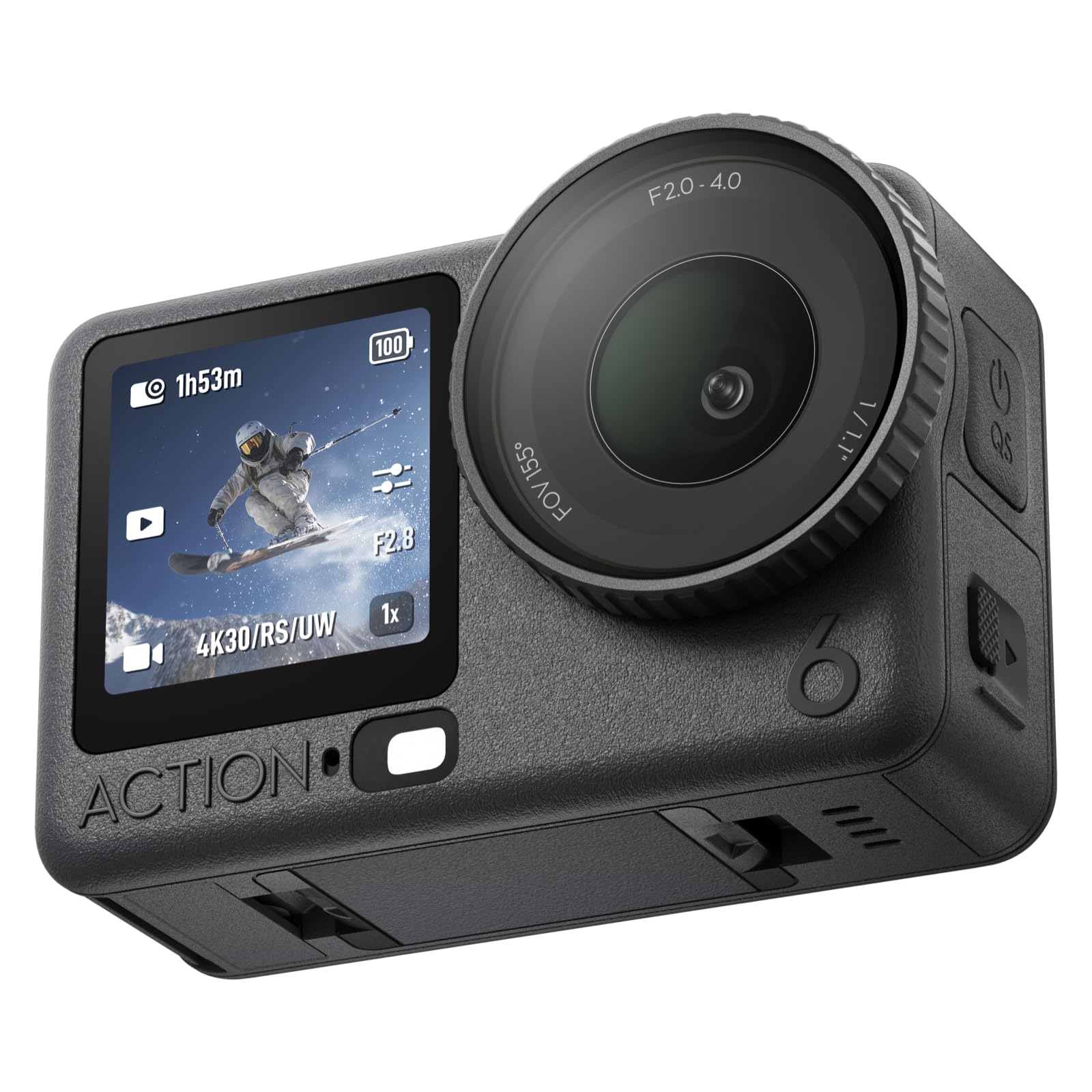
The DJI Osmo Action 6 Essential Combo delivers the same exceptional 8K video quality, same 1/1.1-inch sensor, same variable aperture, and same 20-meter waterproof depth as the Enhanced Combo — but in a more compact kit without the extra battery and charging case. For climbers who already own USB-C power banks and don’t need the second cell, this is the smarter buy. You still get the cold-resistant battery rated for four hours, 50GB of built-in storage for shooting without a card, and all the stabilization features.
The 8K video resolution (7680 x 4320) gives you massive cropping and reframing headroom. You can shoot wide and later punch in for a static close-up of a distant peak, all without losing 4K detail. The 4K Custom Mode lets you export multiple aspect ratios for different social platforms from one shoot — useful if you’re documenting an expedition in real time. The camera also supports wireless cloud upload, so you can offload footage at base camp without a laptop.
The trade-off for the Essential Combo is simple: you get one battery instead of two, no multifunctional charging case, and no 1.5-meter extension rod. If your climbs are day trips where one battery charge lasts the whole outing, this combo saves significant weight in your pack. If you’re heading out for multi-day alpine traverses, the Enhanced Combo’s extra cell is a meaningful upgrade.
Why it’s great
- Identical 8K sensor and cold-weather battery as the premium combo
- 50GB built-in storage saves you from buying a microSD
- Variable aperture handles alpine light transitions superbly
- Lighter and more packable than the Enhanced Combo
Good to know
- Only one battery included — not ideal for multi-day expeditions
- No extension rod for selfie shots
- Internal mic captures wind noise without external wind guard
4. Insta360 X5 Essentials Bundle

The Insta360 X5 Essentials Bundle changes the mountaineering game with 360-degree capture that lets you choose your angle later. Clip it to your pack strap with the Invisible Selfie Stick, and it records everything around you simultaneously. After the climb, you reframe in the Insta360 app — grabbing a forward-facing view of the ridge, a backward look at your team, or a dramatic third-person angle that looks like a drone shot. The dual 1/1.28-inch sensors shoot 8K 360° video at 30fps, delivering enough resolution for sharp reframes.
Waterproof depth is 15 meters (49 feet) without a housing, matching the TG-7. The replaceable lenses are a huge practical advantage on a climbing camera — scratch a lens against granite, and you swap it in seconds instead of replacing the whole camera. The new Wind Guard four-mic array dramatically reduces wind roar, a genuine problem on exposed ridges. Battery life is rated at 208 minutes, and fast charging hits 80% in 20 minutes, so you can top up during a lunch break.
Low-light performance is surprisingly good for a 360° camera, thanks to the triple AI chip design that applies noise reduction in real time. The FlowState Stabilization and 360° Horizon Lock keep footage level even during falls or fast descents. The downside is file size — 8K 360° footage eats storage fast, and you’ll need a high-end microSD card. The stitching line can occasionally be visible in close-range macro shots, but for alpine landscapes and team footage, it’s invisible.
Why it’s great
- Reframe any angle after the climb — never miss a shot
- Replaceable lenses survive granite scratches
- 15m waterproof without housing covers all alpine conditions
- Excellent Wind Guard audio for vlogging on exposed ridges
Good to know
- Requires microSD card sold separately
- 360° files are large and demand fast cards
- Stitching can show artifacts in close-up macro shots
5. GoPro HERO13 Black

The GoPro HERO13 Black is the most refined action camera GoPro has ever made, and its compatibility with the HB-Series Lens Mod system makes it uniquely adaptable for mountaineering. The Ultra Wide Lens Mod captures the full sweep of a ridgeline, the Macro Lens Mod lets you document ice crystal formations up close, and Neutral Density Filters add motion blur to waterfalls and moving clouds. The auto-detection feature adjusts camera settings the instant you attach a lens — no menus to navigate with cold fingers.
Video resolution tops out at 5.3K at 60fps, which is 91% more resolution than 4K and gives you generous reframing room. The Burst Slo-Mo mode records at 13x normal speed, capturing a crampon slip or an ice axe swing in exquisite detail. HyperSmooth stabilization remains industry-leading — footage from a running descent down moraine looks gimbal-smooth. The water-repelling lens cover reduces flare from snow and ice reflection, a thoughtful alpine touch.
The Enduro battery is rated for approximately 79 minutes of recording at the highest settings, which is decent but not class-leading. The camera is waterproof to 10 meters (33 feet) without a housing, sufficient for all non-diving wet conditions. The included Curved Adhesive Mount works well on helmets and pack straps. Missing from the package is a carrying case or extra batteries — you’ll want to buy spares for full-day summit pushes.
Why it’s great
- HB-Series Lens Mods add wide, macro, and ND filters without body swaps
- 5.3K60 video with 13x Burst Slo-Mo for dramatic alpine action
- HyperSmooth stabilization is still the smoothest in action cams
- Water-repelling lens cover reduces snow and ice flare
Good to know
- Non-removable battery requires USB-C charging between climbs
- Battery life adequate for day trips but short for multi-day expeditions
- Touchscreen is primary control — less glove-friendly than button designs
6. GoPro HERO Black

The entry-level GoPro HERO (2024 model, simply called GoPro HERO) distills the core GoPro mountaineering experience into a smaller, lighter body at a lower cost. It records 4K video at 30fps and captures 12-megapixel stills — half the resolution of the HERO13, but more than enough for social sharing and personal documentation. HyperSmooth video stabilization is included, smoothing out rocky trail runs and descent shakes. Weighing just 3 ounces, it’s the lightest camera on this list and disappears into a pocket.
Waterproof depth is 33 feet (10 meters) without a housing, identical to the HERO13. The 50-in-1 accessory kit bundled with this version adds a 64GB microSD card, tripod, head strap, chest mount, and selfie stick — everything you need for a climbing shoot right out of the box. Voice control works with eight commands in eleven languages, letting you start and stop recording without removing gloves. The USB-C rechargeable battery delivers about one hour of recording time, which is short but consistent with the size.
The main limitations are fixed: no removable battery, no lens mod compatibility, and no 5.3K or 8K resolution. The 2x digital zoom is all you get — no optical zoom range. For casual climbers documenting day hikes and summit selfies, this represents strong value. For serious mountaineers who need all-day battery swaps and maximum image quality, the HERO13 or DJI Osmo Action 6 are better investments.
Why it’s great
- Ultra-compact 3-ounce body fits any pocket
- Bundled 50-in-1 kit includes 64GB card and all mounts
- HyperSmooth stabilization punches above its price tier
- Voice control works with thick gloves
Good to know
- Non-removable battery limits continuous shooting to about 1 hour
- Fixed lens with 2x digital zoom — no optical range
- No lens mod compatibility for macro or wide shots
7. PENTAX WG-90 Black
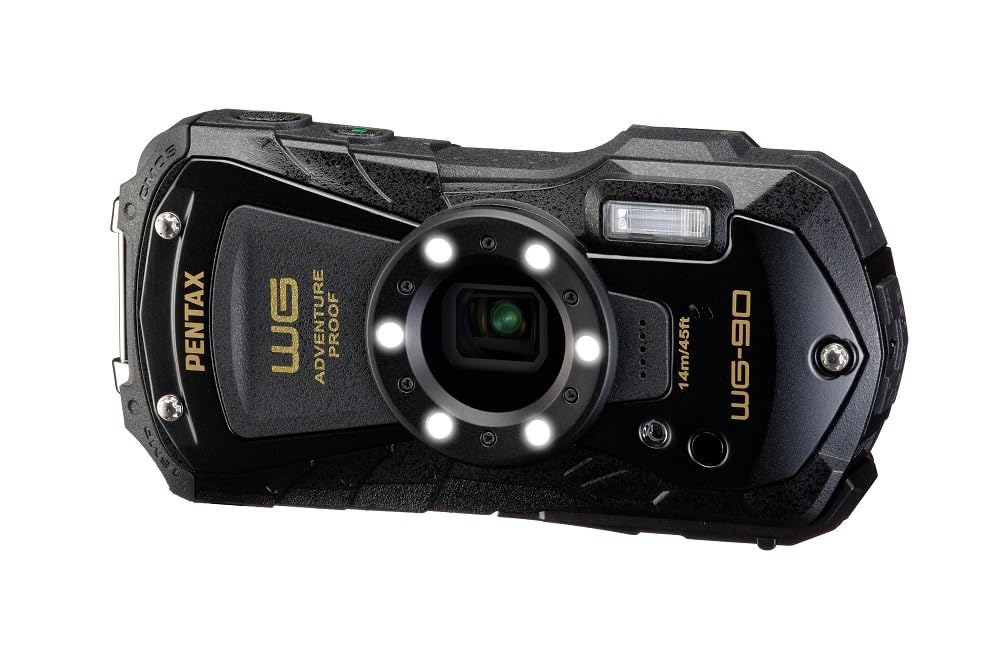
The PENTAX WG-90 is the closest thing to a scientific instrument in the mountaineering camera world. Its defining feature is the six-LED Macro Ring built directly into the lens barrel, providing shadow-free, uniform illumination for subjects as close as 1 centimeter. For geologists documenting rock types, climbers inspecting ice screws, or engineers assessing equipment wear, this is the only camera that doubles as a digital microscope without awkward add-on lights.
Its tough-body construction is certified to the exact same spec as the pricier TG-7: waterproof to 14 meters, shockproof against a 1.6-meter drop, and freezeproof to -10°C. The 16-megapixel back-illuminated CMOS sensor handles ISO up to 6400, and the 5x optical zoom (28-140mm equivalent) covers wide landscape to moderate telephoto. The Digital Microscope Mode is genuinely unique — it captures the micro-texture of ice, snow crystals, and rock grain at a level no other rugged camera matches.
The 2.7-inch LCD includes an Outdoor View Setting mode and an AR coating that cuts glare effectively. Battery life is rated at about 2 hours of continuous shooting, which is reasonable for a compact. The WG-90 uses standard lithium-ion cells, so carrying a spare is cheap and easy. The weak spot is video: only Full HD 1080p, no 4K. If you primarily shoot stills and need extreme macro capability on the mountain, the WG-90 is the pick.
Why it’s great
- Built-in 6-LED Macro Ring illuminates close-ups without shadows
- Digital Microscope Mode captures details invisible to the naked eye
- Full environmental sealing: waterproof, shockproof, freezeproof
- 5x optical zoom covers wide to telephoto range
Good to know
- Only Full HD 1080p video — no 4K capability
- Auto mode is weak; manual controls required for best results
- Screen resolution is modest compared to modern action cams
8. Ricoh WG-80 Orange

The Ricoh WG-80 is essentially the same camera as the PENTAX WG-90 — same 16-megapixel sensor, same 5x optical zoom (28-140mm equivalent), same six-LED macro light system, and same waterproof/shockproof/freezeproof certifications — sold under the Ricoh brand as an international version. The orange body color makes it highly visible on a snowpack or rock face, reducing the chance of losing it in a crevasse or under a bivvy.
The back-illuminated CMOS sensor delivers the same macro detail and microscope mode performance as the WG-90. The LED macro lights are still the standout feature for field inspection work. The 14-meter waterproof depth and -10°C freeze-proof rating match the WG-90 exactly. The lens barrel has no image stabilization, so you’ll need a steady hand or the included Macro Stand for sharp 1-centimeter macro shots. The 4:3 aspect ratio sensor is optimized for print and standard screens.
The trade-off is the same as the WG-90: no 4K video, auto mode that doesn’t match manual control quality, and a relatively slow contrast-detect autofocus that hunts in low light. The battery life is adequate for a full day of field shooting. If you can find the WG-80 at a lower price than the WG-90, it’s a direct alternative with identical image quality and toughness. Just confirm the international version includes your region’s warranty support.
Why it’s great
- Six-LED macro lights identical to WG-90 for shadow-free close-ups
- Bright orange body is easy to spot against snow and rock
- Full environmental seals: waterproof, shockproof, freezeproof, dustproof
- 5x optical zoom provides framing flexibility
Good to know
- Contrast-detect autofocus is slow and hunts in dim light
- No image stabilization on the lens
- Video quality limited to Full HD — no 4K
9. Kodak PIXPRO WPZ2 Rugged Bundle

The Kodak PIXPRO WPZ2 is the entry-level waterproof compact that proves you don’t need to spend big for a camera that survives alpine conditions. It’s waterproof to 15 meters (49 feet) and shockproof to 2 meters (6.56 feet) — both specs that legitimately match the more expensive TG-7 for drops and submersion. The 16-megapixel sensor and 4x optical zoom (27-108mm equivalent) deliver decent daylight images that outresolve any phone in wet or dusty conditions.
This bundle is the real value story: you get the camera, a 32GB SD card, a floating strap (critical if you drop the camera in a river or snowmelt pool), a black point-and-shoot case, a monopod, a USB card reader, screen protector, cleaning cloth, and a wrist strap. For a climber who wants a single-purchase solution that covers all the accessories, this bundle saves a lot of individual ordering. The floating strap alone could save the camera from sinking into a crevasse pool.
The picture quality is good for the price but won’t match the TG-7 or DJI cameras in low light or dynamic range. The 2.7-inch LCD is bright enough for outdoor framing but lacks the anti-reflective coating of the Pentax models. No 4K video — only 1080p Full HD. The autofocus is contrast-detection and works fine in good light but hunts in dim conditions. For climbers on a tight budget who need a rugged camera that works, the WPZ2 bundle is a genuine bargain.
Why it’s great
- Impressive 15m waterproof and 2m shockproof at an entry-level price
- Bundle includes 32GB card, floating strap, case, monopod, and accessories
- Floating strap prevents loss in water and snow
- 16MP sensor and 4x zoom cover basic alpine needs
Good to know
- No 4K video — maximum output is 1080p Full HD
- Low-light image quality is inferior to premium compacts
- Autofocus is slow and hunts in dim crevice light
FAQ
Do I need a freeze-proof camera for mountaineering or will any camera work?
Is an action camera better than a rugged compact for mountaineering?
How many spare batteries should I carry for a multi-day climb?
Does optical zoom matter if I can reframe 8K video in post?
Final Thoughts: The Verdict
For most users, the best camera for mountaineering winner is the OM System Tough TG-7 because it balances certified waterproof/shockproof/freezeproof construction with a fast f/2.0 lens, 4x optical zoom, and physical controls usable with heavy gloves — all in a body that shoots both RAW stills and 4K video. If you want cinematic 8K video with gimbal-level stabilization and cold-resistant batteries that last four hours, grab the DJI Osmo Action 6 Enhanced Combo. And for the unique third-person perspective that lets you reframe every angle after the climb, nothing beats the Insta360 X5.