
Choosing a dedicated camera for video is no longer just about resolution. The market is flooded with capable sensors, but the real separator today is codec depth, autofocus intelligence, thermal management, and the type of stabilization baked into the body.
I’m Min — the co-founder and writer behind Gadgets Feed. My analysis of video cameras focuses on real-world recording limits, codec efficiency, and the sensor readout speeds that determine rolling shutter severity, because those specs dictate whether a camera works for your specific production pipeline.
After spending many hours cross-referencing critical video specs across the largest pool of contenders, from PTZ streaming to full-frame cinema, I am confident this guide to the best camera for recording video will save you time and prevent a costly mismatch between your creative needs and what the box actually delivers.
How To Choose The Best Camera For Recording Video
The right video camera depends on how much control you need over the final image versus how much automation you expect from the hardware. Understanding a few key specifications will guide you to the correct tier.
Sensor Size and Dynamic Range
Full-frame sensors deliver shallower depth of field and better high-ISO performance, but Micro Four Thirds sensors like those in the Blackmagic Pocket Cinema Camera 4K offer a deeper depth of field that is often preferred for run-and-gun documentary work. Dynamic range, measured in stops, determines how much detail you retain in shadows and highlights — 13 stops is the professional baseline for cinematic grading.
Bit Depth and Codec Flexibility
8-bit video is standard for consumer cameras and produces noticeable banding in skies and gradients during color grading. 10-bit video gives you smoother tonal transitions and is the entry point for serious post-production. Raw recording, like Blackmagic RAW or Cinema RAW Light, offers the most flexibility at the cost of massive file sizes and demanding storage requirements.
Stabilization System Type
In-Body Image Stabilization (IBIS) physically shifts the sensor to counteract handheld shake, making static walk-around shots smoother without cropping. Optical Image Stabilization (OIS) built into the lens achieves similar results. Many budget options rely on digital stabilization, which crops the image and can introduce a jello-like warping effect. For handheld video without a gimbal, IBIS is the preferred solution.
Autofocus Tracking and Subject Detection
For solo shooters and vloggers, reliable autofocus is essential. Look for phase-detection AF with eye-tracking for humans and animals. Contrast-based AF systems hunt in low light and create unusable focus-pull artifacts. Cameras like the Sony ZV-E10 and Canon EOS R5 feature the fastest, most reliable real-time tracking available, while the Blackmagic cameras require manual focus entirely.
Recording Limits and Thermal Management
Some cameras impose a 30-minute recording limit for 4K, while others can run indefinitely. Overheating is a known issue for compact bodies that shoot 8K or 4K high frame rates — the Canon EOS R5 is notorious for heat-related shutdowns during 8K recording. If your shoots run long, prioritize cameras with active cooling or a proven thermal track record.
Quick Comparison
On smaller screens, swipe sideways to see the full table.
| Model | Category | Best For | Key Spec | Amazon |
|---|---|---|---|---|
| Canon EOS R5 | Mirrorless | 8K Hybrid Pro | 8K RAW internal / 45MP sensor | Amazon |
| Sony a7 III | Mirrorless | All-Around 4K Workhorse | 693 phase-detection points | Amazon |
| Blackmagic Cinema Camera 6K | Cinema | Full-Frame Raw Production | 6K 6048×4032 / 13 stops DR | Amazon |
| Blackmagic Pocket Cinema 4K | Cinema | Budget Cinema Raw | MFT mount / 13 stops DR | Amazon |
| Canon EOS RP | Mirrorless | Entry Full-Frame Travel | Full-frame sensor / 4K UHD | Amazon |
| Nikon D850 | DSLR | High-Res Stills + 4K B-Roll | 45.7MP BSI sensor / 153 AF | Amazon |
| Nikon Z 7II | Mirrorless | High-Resolution Mirrorless | 45.7MP / 4K 60p UHD | Amazon |
| Panasonic LUMIX G85 | Mirrorless | IBIS-Centric Vlogging | 5-axis Dual I.S. 2 | Amazon |
| Sony ZV-E10 | Vlog | Compact Vlogging Hybrid | 24.2MP APS-C / 4K 6K oversampled | Amazon |
| Panasonic LUMIX FZ80D | Bridge | Ultra-Zoom Travel | 60x optical zoom / 20-1200mm | Amazon |
| OBSBOT Tail Air | PTZ | AI-Powered Streaming | 4K 320° PTZ / AI tracking | Amazon |
In‑Depth Reviews
1. Canon EOS R5 Mirrorless Camera (Body Only)

The Canon EOS R5 is the most complete hybrid video camera in this list, offering internal 8K RAW recording alongside a 45-megapixel stacked full-frame sensor. The DIGIC X image processor enables up to 20 fps electronic shutter shooting with zero blackout, and the Dual Pixel CMOS AF II covers 100% of the frame with subject detection for people, animals, and vehicles. For video-first users, the ability to record 4K up to 120 fps internally with autofocus is a massive practical advantage.
The 5-axis In-Body Image Stabilization provides up to 8 stops of correction, making handheld wide and medium shots remarkably smooth without a gimbal. The body design is weather-sealed and the electronic viewfinder is one of the highest resolution available, which reduces eyestrain on long shoots. Real-world reports indicate that overheating during 8K recording is a genuine limitation, but for 4K production and stills work the camera runs reliably.
Investing in the R5 means committing to the RF lens mount and fast CFexpress Type B cards. The file sizes from 8K RAW or 4K HQ modes are enormous, requiring a robust post-production storage workflow. For professionals who need the highest resolution and frame rate flexibility in a single body, the R5 delivers capabilities that nothing else at this level can match.
Why it’s great
- Unmatched 8K RAW and 4K 120p internal recording
- Excellent subject tracking and Eye Control AF
- Powerful IBIS with up to 8 stops of shake correction
Good to know
- Overheating limits extended 8K and high-frame-rate recording
- Requires fast CFexpress Type B cards for full bitrates
- Battery life is moderate, around 650 shots per charge
2. Sony a7 III Full-Frame Mirrorless Camera with 28-70mm Lens

The Sony a7 III remains the benchmark for full-frame video at a mid-range investment, featuring a 24.2MP Exmor R BSI sensor with 15 stops of dynamic range and 14-bit uncompressed RAW output. The 693 phase-detection AF points cover 93% of the image area, enabling reliable eye-tracking for humans even in dim conditions. It records oversampled 4K from a 6K readout, delivering sharper detail than many native 4K sensors.
Its battery life is exceptional for a mirrorless body, rated at approximately 710 shots, which translates to hours of continuous video recording when using an external power source. The S-Log2 and S-Log3 gamma curves provide a flat profile for color grading, and the 5-axis stabilization works well for static handheld shots. The menu system is Sony’s older design, which some users find less intuitive than competitors, but the physical control layout is solid once customized.
The 28-70mm f/3.5-5.6 kit lens is usable for casual work, but to unlock the sensor’s full video potential you will want faster primes or the 24-105mm f/4 G lens. The a7III does not have a fully articulating screen, which limits vlogging angles, and 4K 60p is available only with an APS-C crop. Despite its age, it remains a reliable all-around video camera that professional videographers still use as a B-cam.
Why it’s great
- Outstanding battery life for long recording sessions
- Fast and accurate 693-point phase detection AF
- Oversampled 4K with great high-ISO performance
Good to know
- Screen does not flip forward for self-recording
- 4K 60p forces a 1.2x APS-C crop
- Menu system is dense and takes time to learn
3. Blackmagic Design Cinema Camera 6K

The Blackmagic Design Cinema Camera 6K is a dedicated cinema camera that prioritizes uncompromised image quality above all else. Its full-frame 6K sensor (6048 x 4032) delivers 13 stops of dynamic range with dual native ISO up to 25,600, producing clean shadows and highlight retention that rivals cameras costing three times as much. The Leica L-mount provides access to a growing ecosystem of high-quality glass from Sigma, Panasonic, and Leica.
It records 12-bit Blackmagic RAW internally to CFexpress Type B cards or external SSDs via USB-C, giving colorists immense latitude in post-production. The 5-inch 1500-nit HDR touchscreen is bright enough for outdoor use and eliminates the need for an external monitor in many scenarios. Professional audio is handled by dual mini XLR inputs with phantom power and a 3.5mm jack, making it a complete production package.
This camera has no autofocus, no in-body stabilization, and limited battery life from the included NP-F570. You must rig it with a cage, rods, and a V-mount battery solution for extended shoots. It is not a casual vlogging tool. For narrative filmmakers, commercial work, or any scenario where manual operation is standard, the Cinema Camera 6K offers the best image quality in its class.
Why it’s great
- Full-frame 6K sensor with 13 stops of dynamic range
- Records 12-bit Blackmagic RAW for professional grading
- Pro-level audio with dual mini XLR and phantom power
Good to know
- No autofocus or image stabilization
- Requires extensive rigging for field production
- Battery life is short without external power
4. Blackmagic Pocket Cinema Camera 4K

The Blackmagic Pocket Cinema Camera 4K democratized professional video by offering a genuine cinema sensor with 13 stops of dynamic range at a budget-conscious investment. The Micro Four Thirds sensor records up to 4K DCI 4096 x 2160 in 12-bit Blackmagic RAW or Apple ProRes, giving editors the flexibility of professional codecs without the typical price barrier. Dual native ISO up to 25,600 means it performs well in low light despite the smaller sensor format.
The camera includes a 5-inch LCD touchscreen, dual SD/UHS-II and CFast 2.0 card slots, and a USB-C port for direct SSD recording. Its mini XLR audio input with phantom power makes it a credible documentary tool straight out of the box. The included full DaVinci Resolve Studio license adds post-production value, eliminating the need for separate color grading software.
Like its larger sibling, the Pocket 4K lacks autofocus and stabilization, forcing you to rely on lenses with OIS or a gimbal. The battery life using the standard LP-E6 is around 30 minutes, so external power is mandatory for real shoots. The screen is also difficult to see in direct sunlight. For filmmakers who prioritize image quality and color science over automation, it remains one of the most cost-effective cinema cameras available.
Why it’s great
- Professional 12-bit Blackmagic RAW and ProRes recording
- 13 stops of dynamic range with dual native ISO
- Includes DaVinci Resolve Studio license
Good to know
- No autofocus or in-body stabilization
- Extremely short battery life without external power
- Screen is dim and hard to see outdoors
5. Canon EOS RP with RF24-105mm Lens Kit

The Canon EOS RP is the lightest and most compact full-frame mirrorless camera in this guide, weighing just 0.95 pounds with the RF 24-105mm f/4-7.1 lens attached. It provides a 26.2MP full-frame sensor with Canon’s Dual Pixel CMOS AF for smooth and reliable face-tracking during video. The 4K UHD video is derived from a 4K readout and the camera supports 1080p at 60 fps for lower-bitrate projects.
The kit lens includes Optical Image Stabilization with up to 5 stops of correction, which works well for handheld walk-around footage. The articulating 3-inch touchscreen allows for front-facing recording, making it a viable travel vlogging camera. It also supports clean HDMI output and can be used as a high-quality webcam through Canon’s EOS Utility software, adding versatility for live streaming.
The EOS RP records 4K with a 1.6x crop factor, which changes the effective field of view and limits wide-angle options. The burst rate of 5 fps is slow for action video, and the battery life is modest at around 250 shots per charge. For creators stepping up from a smartphone or entry-level DSLR who want full-frame depth of field without the bulk, the RP offers an accessible entry point.
Why it’s great
- Very lightweight and compact full-frame body
- Reliable Dual Pixel AF for video and stills
- Articulating touchscreen for vlogging and streaming
Good to know
- 4K video uses a 1.6x crop factor
- Battery life is below average for video
- Slow burst rate limits action capture
6. Nikon D850 FX-Format Digital SLR Camera Body

The Nikon D850 remains a top-tier DSLR for video work despite the mirrorless shift, thanks to its back-side illuminated 45.7MP full-frame sensor with no optical low-pass filter. It captures 4K UHD video at 30 fps using the full width of the sensor, and can record slow-motion 1080p up to 120 fps. The 153-point autofocus system delivers fast subject acquisition in good light, and the tilting touchscreen allows for flexible framing.
The D850 supports Focus Shift shooting for timelapse and macro video, and its battery performance is excellent for a DSLR, rated at approximately 1840 shots per charge. The body is built from magnesium alloy with extensive weather sealing, making it durable in demanding environments. The dual card slots offer one XQD and one UHS-II SD, but the XQD is noticeably faster for 4K recording.
Video autofocus on the D850 is contrast-based in live view, which hunts more than modern mirrorless systems. The camera is heavy for handheld gimbal use, and its 4K output is limited to 30 fps with no log profile for color grading. For photographers who need high-resolution stills alongside capable 4K video B-roll, the D850 delivers robust build quality and a proven optical viewfinder.
Why it’s great
- 45.7MP BSI sensor with excellent dynamic range
- Extremely long battery life for extended shoots
- Robust weather-sealed magnesium alloy body
Good to know
- Video AF is contrast-based and slow in live view
- Heavy for handheld gimbal or run-and-gun
- 4K limited to 30 fps with no log profile
7. Nikon Z 7II Full-Frame Mirrorless Camera

The Nikon Z 7II combines a 45.7MP full-frame BSI sensor with dual card slots (CFexpress/XQD and UHS-II SD) and improved buffer capacity over its predecessor. For video, it records 4K UHD at up to 60 fps from the sensor’s full width, enabling smoother action and the ability to slow down footage in post. The IBIS system provides up to 5 stops of stabilization, which is effective for handheld video with compatible NIKKOR Z lenses.
It includes a 493-point phase-detection AF system that covers 90% of the frame, with reliable eye-detection for people and animals. The 2-axis tilt touchscreen is useful for waist-level and low-angle compositions. The body is weather-sealed and comfortable to hold even during long shoots. USB-C power delivery means it can run continuously for livestreams and timelapses without battery swaps.
The Z 7II does not support 10-bit internal video recording, and its 4K 60p mode uses a slight crop. The native Z lens lineup is still growing, and adapting F-mount glass requires the FTZ adapter, which adds length. For high-resolution stills shooters who also need solid 4K video with good stabilization, the Z 7II is a refined choice with a clear upgrade path.
Why it’s great
- 45.7MP BSI sensor with excellent detail retention
- Dual card slots for recording flexibility
- Reliable IBIS with 5 stops of shake correction
Good to know
- No 10-bit internal video recording
- Native Z lens system still maturing
- 4K 60p mode introduces a crop factor
8. Panasonic LUMIX G85 with 12-60mm Power O.I.S. Lens

The Panasonic LUMIX G85 is a Micro Four Thirds mirrorless camera that punches above its weight class for hybrid shooters who prioritize stabilization. Its 5-axis Dual I.S. 2 combines in-body stabilization with lens-based OIS for smooth handheld footage that rivals gimbal work at a fraction of the cost. The 16MP sensor lacks an anti-aliasing filter, boosting fine detail resolution, and the camera records 4K video at 30 fps with Panasonic’s reliable contrast-detect autofocus.
The body is splash-proof and dust-proof, with a magnesium alloy frame that feels solid without being heavy. The OLED live viewfinder is sharp and responsive, and the 3-inch articulating touchscreen makes it easy to frame shots at awkward angles. It includes a microphone jack but no headphone port, which is a common omission at this tier. The 12-60mm kit lens covers a useful range for travel and general purpose video.
The G85 uses contrast-detect AF, which can hunt in low light or during 4K recording, making it less reliable for fast-moving subjects than phase-detect systems. Battery life is average at around 320 shots per charge. For budget-conscious videographers who need excellent image stabilization in a weather-sealed body, the G85 delivers better handheld footage than many premium alternatives.
Why it’s great
- Outstanding 5-axis Dual I.S. 2 stabilization
- Weather-sealed magnesium alloy body
- Very good value for the image quality and features
Good to know
- Contrast-detect AF can hunt in low light
- No headphone jack for audio monitoring
- Average battery life for video recording
9. Sony Alpha ZV-E10 Mirrorless Vlog Camera
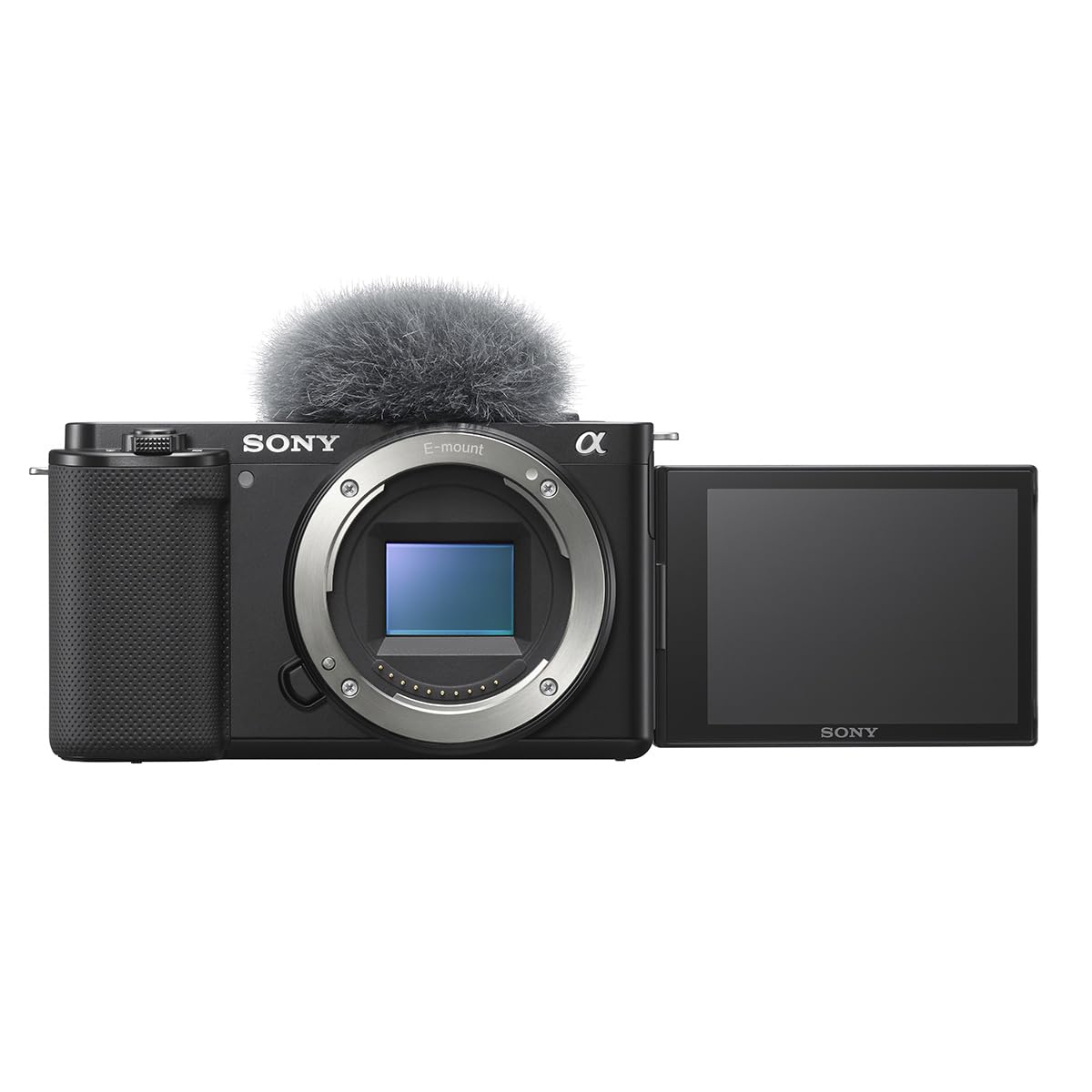
The Sony ZV-E10 is purpose-built for vloggers, combining a 24.2MP APS-C Exmor CMOS sensor with a BIONZ X processor that oversamples 4K from a 6K readout for sharp, detailed footage. The Product Showcase Setting instantly transitions focus from your face to an object held up to the lens, a feature that saves significant editing time for reviewer content. The Background Defocus button toggles shallow depth of field on command, and the directional 3-capsule microphone captures clear audio.
The flip-out touchscreen faces forward, making self-recording straightforward, and the camera supports USB streaming directly as a UVC/UAC device without a capture card. It uses Sony E-mount lenses, providing access to a massive selection of affordable glass. The Sony Real-Time Eye AF and Real-Time Tracking deliver fast, reliable autofocus that stays locked on subjects even during movement.
The ZV-E10 lacks in-body image stabilization, relying on electronic stabilization that introduces a crop. It also suffers from significant rolling shutter in 4K, limiting its usefulness for fast panning. The small body drains batteries quickly, typically lasting around 25 minutes of continuous 4K recording. For dedicated vloggers who want a lightweight, AF-focused setup with high-quality 4K, the ZV-E10 is a strong choice when paired with a gimbal and spare batteries.
Why it’s great
- Oversampled 4K from a 6K readout for excellent detail
- Real-Time Eye AF with fast, reliable subject tracking
- Product Showcase and Background Defocus features
Good to know
- No in-body stabilization; electronic crop required
- Severe rolling shutter in 4K mode
- Short battery life for continuous 4K recording
10. Panasonic LUMIX FZ80D Point and Shoot Camera

The Panasonic LUMIX FZ80D is a bridge camera that packs a 60x optical zoom lens (20-1200mm equivalent) into a compact, lightweight body, making it a unique tool for capturing distant video subjects that would be impossible with interchangeable lens cameras at this price point. It records 4K video at 30 fps and includes Panasonic’s POWER O.I.S. stabilization to reduce telephoto shake. The 4K Photo mode extracts 8MP stills from 4K video clips, adding flexibility for action shots.
The high-resolution 2,360K-dot electronic viewfinder is usable in bright sunlight, and the camera’s Post Focus feature allows you to select the focus point after capture, a useful trick for static subjects. For travel, wildlife, or surveillance-style video where reach is the primary need, the FZ80D delivers a focal length that rivals professional telephoto setups at a fraction of the weight.
The FZ80D is limited by its small sensor size, which produces noisy footage above ISO 800 and struggles in low light. The autofocus is slower than mirrorless alternatives, and the camera does not support external microphone input. Video quality is acceptable for social media and reference footage, but serious video producers will notice the lack of dynamic range and detail. For budget-minded users who need extreme zoom reach in a single package, the FZ80D is the only viable option at this level.
Why it’s great
- 60x optical zoom covers an enormous focal range
- Lightweight and compact for travel and wildlife
- Post Focus feature adds creative flexibility
Good to know
- Small sensor produces noise above ISO 800
- No external microphone input for video
- Autofocus is slower than mirrorless cameras
11. OBSBOT Tail Air NDI Streaming Camera 4K

The OBSBOT Tail Air is a specialized PTZ (pan-tilt-zoom) camera designed specifically for streaming, offering 4K resolution with 320° horizontal and 180° vertical rotation. Its AI tracking system can follow humans, animals, and objects using gesture control or a remote, making it ideal for solo livestreamers, church broadcasts, and educational content. The camera supports multiple connection protocols including USB-C, Micro HDMI, Ethernet, and Wi-Fi, and can output NDI for professional network-video workflows.
The companion OBSBOT Start app provides full control over AI Director, preset positions, and visual settings, allowing a single operator to manage multi-camera setups. The integrated microphone is decent for close-range use, and the camera functions as a plug-and-play 4K webcam in UVC mode. The compact body, smaller than a soda can, makes it easy to position discreetly in any environment.
The NDI license is sold separately, adding to the total cost. Several user reports highlight reliability concerns, with units failing after several months and the internal battery being non-replaceable, which renders the camera useless when the battery degrades. The Tail Air also produces audible fan noise in quiet recording spaces. For streamers who need automated tracking and professional PTZ features in a compact form, this camera offers unique capabilities with acknowledged longevity risks.
Why it’s great
- AI-powered tracking for humans, animals, and objects
- Multiple connectivity options including NDI and Ethernet
- Compact PTZ body with 320° rotation
Good to know
- NDI license requires separate purchase
- Non-replaceable battery risks long-term failure
- Audible fan noise in quiet environments
FAQ
What is the minimum bit depth I should look for in a video camera?
Why do Blackmagic cameras not include autofocus?
Does a higher megapixel count always mean better video quality?
Final Thoughts: The Verdict
For most users, the best camera for recording video winner is the Canon EOS R5 because it offers the highest video resolution (8K RAW), the most complete feature set (IBIS, fast AF, high frame rates), and the best all-around hybrid performance at its level. If you want uncompromised cinema-grade image quality and are comfortable working completely manually, grab the Blackmagic Design Cinema Camera 6K. And for reliable all-around 4K video with no major weaknesses, nothing beats the Sony a7 III as a workhorse that has proven itself over years of professional use.