
Waking up with a stiff back and numb shoulders after a night on hard-packed dirt is the fastest way to ruin a weekend outdoors. A quality camping bed pad is the single piece of gear that transforms a restless, cold night into deep, restorative sleep — and the difference comes down to material density, thickness, and insulation rating, not just brand reputation.
I’m Min — the co-founder and writer behind Gadgets Feed. I’ve spent hundreds of hours analyzing foam densities, R-value test results, valve mechanisms, and packed dimensions to separate the pads that actually support your body from those that leave you tossing until dawn.
Whether you drive to a campsite or hike miles in, this guide breaks down the specs that matter so you can find the best camping bed pad that matches your sleep style and terrain.
How To Choose The Best Camping Bed Pad
Selecting the right pad involves balancing insulation, thickness, packed size, and durability. The wrong choice means cold spots, ground feel, or a roll that won’t fit your pack.
R-Value and Insulation
The R-value measures how well the pad resists heat loss. For summer camping, an R-value around 2 works. For three-season use, aim for 4 to 5. Winter camping demands an R-value of 7 or higher. Higher numbers mean warmer sleep, especially when the ground temperature drops below freezing.
Thickness and Comfort
Thicker pads (3 to 4.25 inches) keep your hips and shoulders from bottoming out against the ground, critical for side sleepers. Thinner pads (under 1.5 inches) are lighter but often require an inflatable layer underneath for comparable comfort.
Packed Size and Weight
Car campers can prioritize comfort with bulky memory foam pads. Backpackers need compact rolls under 10 inches in diameter and weight under 2 pounds. Self-inflating pads offer a middle ground, but foam-filled models rarely match the packability of air-only designs.
Valve Design and Inflation Ease
Two-way valves allow separate inflation and deflation paths, preventing air from rushing back in during packing. Pump sacks or one-way valves with wide openings reduce inflation time significantly, especially at altitude or in cold weather.
Quick Comparison
On smaller screens, swipe sideways to see the full table.
| Model | Category | Best For | Key Spec | Amazon |
|---|---|---|---|---|
| Therm-a-Rest MondoKing 3D | Self-Inflating | Ultimate car camping comfort | 4.25 in thick · R-Value 7.0 | Amazon |
| Therm-a-Rest NeoAir Xlite NXT | Air Pad | Ultralight backpacking | 13 oz weight · R-Value 4.5 | Amazon |
| Hikenture 4 Inch Self Inflating | Self-Inflating | Four-season comfort at value | 4 in thick · R-Value 9.5 | Amazon |
| Wevelel Memory Sleeping Pad | Self-Inflating Foam | Supportive sleep with built-in pillow | 3.1 in thick · R-Value 9.5 | Amazon |
| CYMULA 3 Inch Memory Foam Pad | Memory Foam | Cot or tent floor luxury | 3 in thick · Waterproof bottom | Amazon |
| MLILY Memory Foam Camping Mattress | Memory Foam | Budget-friendly roll-up pad | 2.5 in thick · Non-slip base | Amazon |
| NEMO Equipment Switchback | Closed-Cell Foam | Ultralight durability and backup | 0.9 in thick · R-Value 2.0 | Amazon |
In‑Depth Reviews
1. Therm-a-Rest MondoKing 3D Self-Inflating Camping Sleeping Pad

The MondoKing 3D delivers the closest experience to a home mattress inside a tent. Its StrataCore construction sandwiches a continuous thermal foam layer between alternating ridges of air and foam, achieving a 7.0 R-value that handles extreme cold without needing supplemental insulation. The vertical 3D sidewalls maximize the 80 x 30-inch sleep surface, so your arm doesn’t slide off onto cold nylon.
The TwinLock valve system separates inflation and deflation paths, making setup and takedown straightforward. The included pump sack inflates the pad in under ten minutes, and the foam inside provides structural stability that eliminates the deflated morning sag common with air-only pads. At 5.5 pounds, it’s strictly for car camping — no one is carrying this into the backcountry.
User feedback highlights the stretch knit fabric’s quiet, soft feel and the pad’s ability to support sleepers over 300 pounds without bottoming out. Some units ship with valve defects, so verify the one-way mechanism works before your first trip. The packed size of 26 x 10.3 inches is large but manageable for vehicle storage.
Why it’s great
- 4.25 inches of thickness keeps hips and shoulders off the ground
- R-Value 7.0 insulates well below freezing
- Self-inflating foam core prevents overnight air loss
Good to know
- Heavy at 5.5 pounds — not for backpacking
- Valve defects reported on some units; test before leaving
- Packed size is bulky for small cars
2. Therm-a-Rest NeoAir Xlite NXT Ultralight Camping and Backpacking Sleeping Pad

The NeoAir Xlite NXT redefines what’s possible in an ultralight sleeping pad. Weighing just 13 ounces in the regular size, it packs down to the volume of a one-liter water bottle while delivering a 3-inch thick, 4.5 R-value insulated platform. The Triangular Core Matrix baffling minimizes convective heat loss, and the reflective ThermaCapture layer traps radiant warmth — a combination that keeps you comfortable into the low 30s Fahrenheit.
The WingLock valve allows one-way inflation and rapid deflation, and the included pump sack makes inflation easy without moisture from your breath entering the pad. The 30D ripstop nylon fabric saves weight but demands careful site selection — a stray thorn or sharp rock can puncture it. Users consistently praise the NXT’s near-silent sleep surface, a significant improvement over earlier crinkly NeoAir generations.
Side sleepers report the 25-inch width provides enough room to roll without bottoming out, though broad-shouldered individuals may want the large version. A small number of units arrive with non-functional valves, so inspect and inflate before your first backcountry trip. This pad is the standard for gram-counting backpackers who refuse to sacrifice warmth.
Why it’s great
- Only 13 ounces with a 4.5 R-value for year-round use
- Packs to the size of a water bottle
- WingLock valve makes inflation and deflation simple
Good to know
- Thin 30D nylon requires careful ground selection
- Premium price reflects the weight savings
- Some units have defective valves; test immediately
3. Hikenture 4 INCH Thick Self Inflating Sleeping Pad

The Hikenture 4 Inch pad delivers an extraordinary 9.5 R-value at a price well below premium competitors. The self-inflating foam core combined with a polyester top cover provides a plush feel that works for side, back, and stomach sleepers. Its 80 x 28-inch footprint accommodates taller campers without feet hanging off the edge, and the 4-inch thickness ensures you never feel the roots or rocks underneath.
The patented two-way valve simplifies the inflation process: open both layers for rapid self-inflation, then use the included pump sack to top off. Deflating is equally straightforward — open only the first layer to let air escape while the second layer prevents re-entry. At 6.5 pounds, this pad is too heavy for backpacking but perfect for car camping, RV use, or even as a guest bed at home.
Multiple owners report the pad holds air for months without noticeable leaks, and the ability to fit a twin fitted sheet keeps the sleeping surface clean. Some users note the deflation process requires effort to roll out all the air, and the packed size is relatively large. For four-season car campers who prioritise warmth and comfort, this is the best value in the category.
Why it’s great
- 9.5 R-value handles extreme winter conditions
- 4 inches of thickness eliminates ground feel
- Patented two-way valve prevents air suck-back during deflation
Good to know
- Heavy at 6.5 pounds — car camping only
- Deflation and rolling require effort to expel all air
- Packed size is too large for backpacking
4. Wevelel Memory Sleeping Pad, 3.1″ Ultra-Thick Foam Sleeping Mats

The Wevelel pad uses 50D high-density memory foam — significantly denser than the 19D foam found in budget sleeping pads — to create a supportive surface that distributes weight evenly across pressure points. The 77 x 26.98 x 3.1-inch inflated size offers generous length, and the integrated pillow eliminates the need for an extra inflatable pillow that often slides away during the night.
The self-inflation process takes around 30 seconds with the three-valve system, and the dual-use valve design requires opening only the first layer during deflation to prevent air from sneaking back in. The 50D stretch knit cover is noiseless and skin-friendly, making it comfortable for direct contact without a sheet. With a tested R-value of 9.5, this pad provides exceptional insulation for winter camping.
Users report the pad is comfortable for both car camping and occasionally for indoor guest use, though the packed weight of 6.59 pounds is heavy for hiking. Some owners note the actual width is closer to 26 inches than the advertised 30 inches, which may feel narrow for broad-shouldered side sleepers. The built-in pillow is lower than ideal for some sleepers, but functional in a pinch.
Why it’s great
- 50D dense memory foam provides even weight distribution
- 9.5 R-value insulates well in below-freezing conditions
- Noiseless knit fabric is comfortable against skin
Good to know
- Weight of 6.59 pounds limits use to car camping
- Actual width narrower than stated
- Built-in pillow may be too low for some sleepers
5. CYMULA 3 Inch Memory Foam Camping Pad
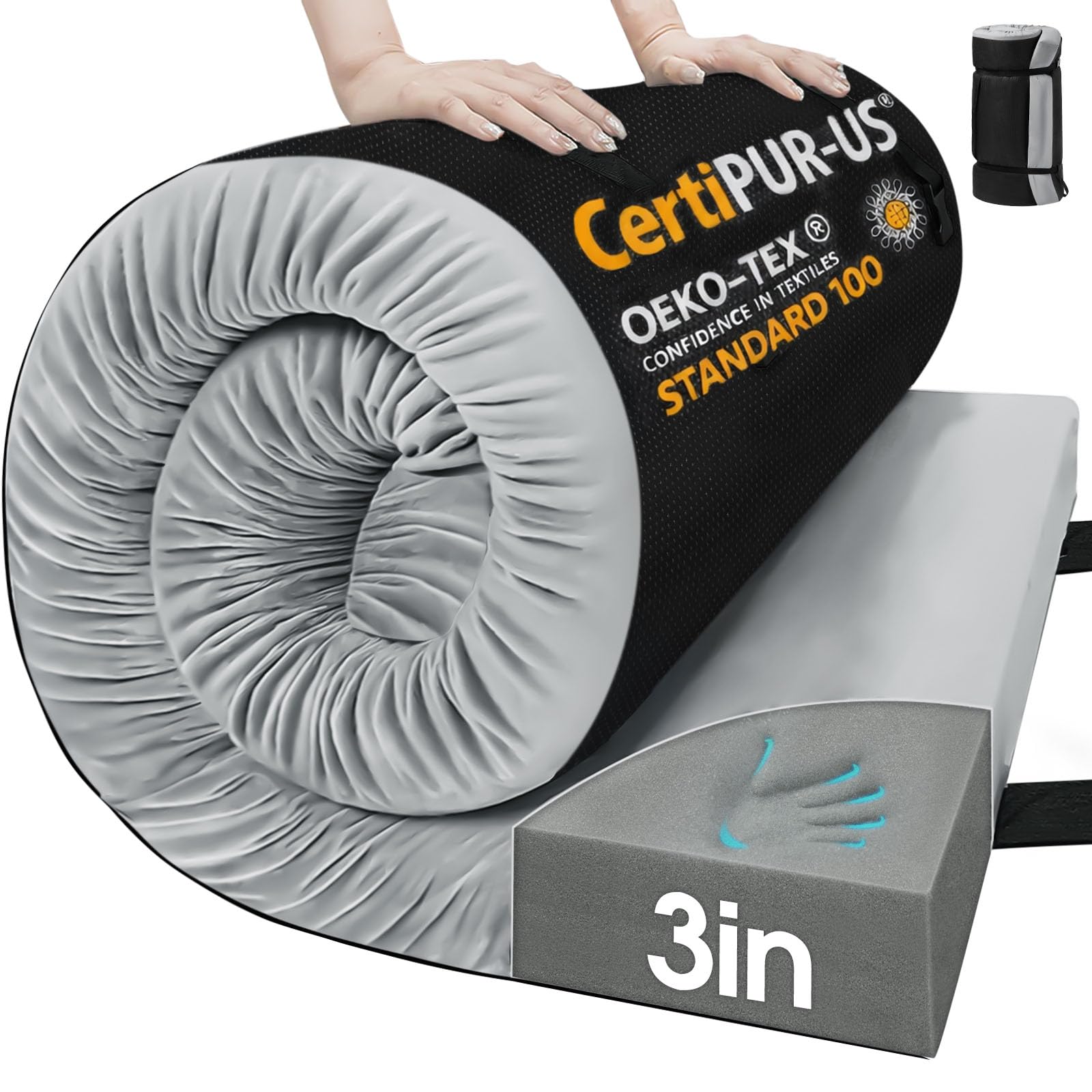
The CYMULA 3 Inch pad combines carbon-fiber-infused memory foam with a high-density base layer to deliver a plush sleep surface that cradles your body without sagging. The 72 x 24-inch dimensions fit standard cots and truck beds, and the waterproof, rubberized bottom uses anti-slip dots to keep the pad from sliding around on slick tent floors or truck carpets.
One of the standout features is the removable, machine-washable cover with a durable zipper. After a muddy trip, you can unzip the cover and toss it in the wash instead of scrubbing the foam by hand. The roll-up design with integrated straps makes packing straightforward, though the rolled size is bulky and won’t fit inside a typical backpack — this is a car camping or RV pad.
Customers consistently praise the comfort level when used on a cot, describing it as mattress-like rather than pad-like. The main drawbacks are a strong chemical odor that requires a few days of airing out, and the included straps that some users found weak enough to replace with aftermarket tension straps. For the price, this pad offers excellent comfort for car camping and guest room floor use.
Why it’s great
- Removable machine-washable cover keeps the pad clean
- Anti-slip rubber dots prevent sliding on smooth surfaces
- 3 inches of memory foam provides true mattress feel on a cot
Good to know
- Strong chemical smell requires ventilation before first use
- Straps are flimsy; consider replacing with stronger tension straps
- Bulky when rolled — not suitable for backpacking
6. MLILY Memory Foam Camping Mattress 2.5 Inch
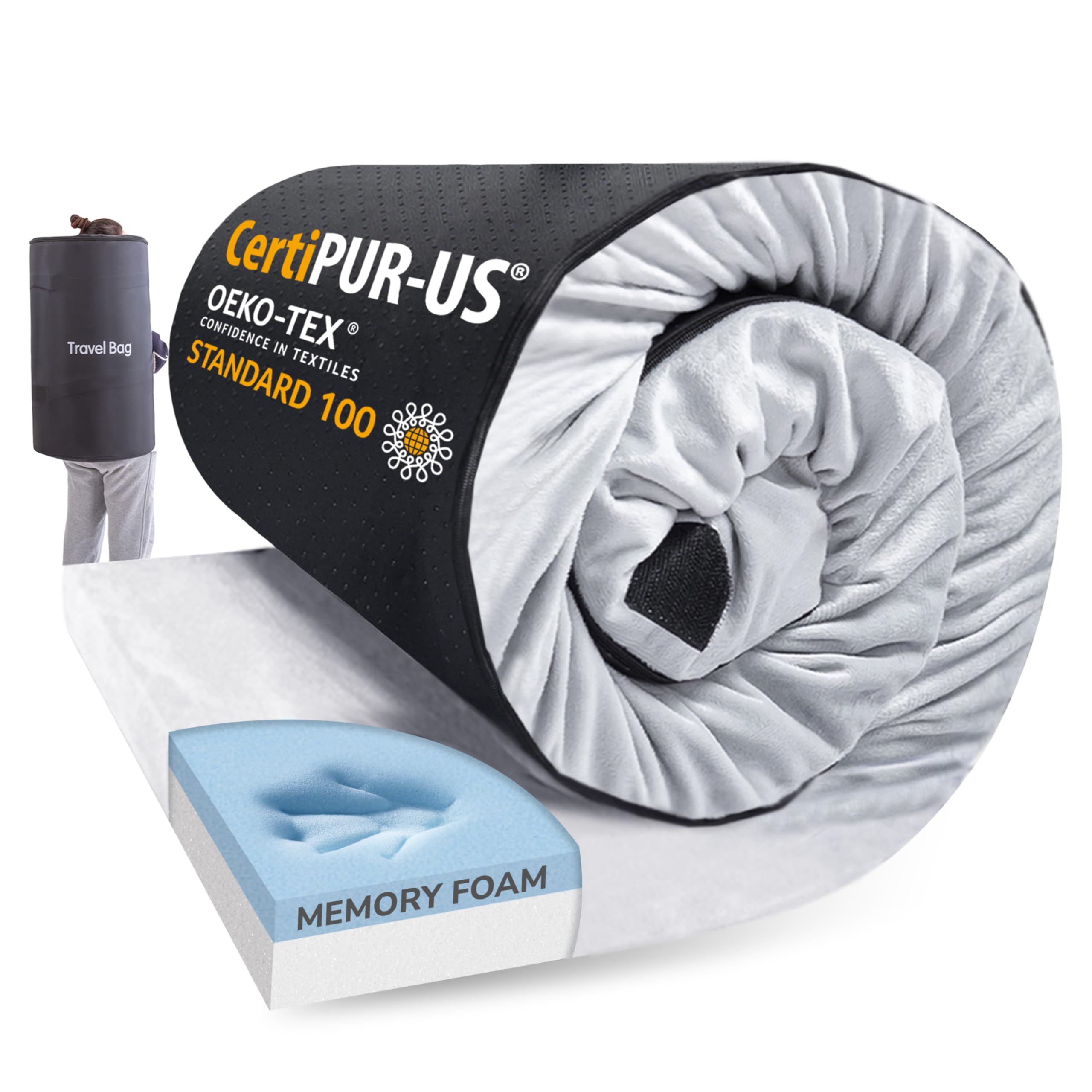
The MLILY 2.5-inch camping mattress uses AeroFusion memory foam over a Flex Support foam base, offering a balance of contouring softness and structural support. The 72 x 24-inch size fits most cots and truck beds, and the waterproof non-slip bottom keeps it stable on grass, tent floors, and bunk bed surfaces. CertiPUR-US certification ensures the foam meets safety standards for off-gassing and durability.
Rolling the pad into the included travel bag takes seconds thanks to the attached straps, and the 3.52-kilogram weight is manageable for car-to-tent carries. Users highlight the “not too firm, not too soft” feel that works for both kids and adults, and the polyester cover’s smooth texture that doesn’t trap heat or feel sticky on warm nights. Some owners repurpose this pad as a guest bed on sofas or as a play mat for toddlers.
The primary limitation is the 2.5-inch thickness, which may not be sufficient for side sleepers who need more cushioning to prevent hip pressure points on hard ground. On a cot or carpeted floor, the thickness works well. A few customers note the pad is bulky when rolled, taking up significant trunk space. For budget-conscious campers who sleep primarily on cots, this is a solid choice.
Why it’s great
- CertiPUR-US certified foam for safe, durable use
- Waterproof non-slip bottom prevents shifting
- Rolls up quickly with attached straps for easy transport
Good to know
- 2.5 inches may not provide enough ground clearance for side sleepers
- Bulky when rolled; not for backpacking
- Best used on a cot rather than directly on hard ground
7. NEMO Equipment Switchback Foam Sleeping Pad
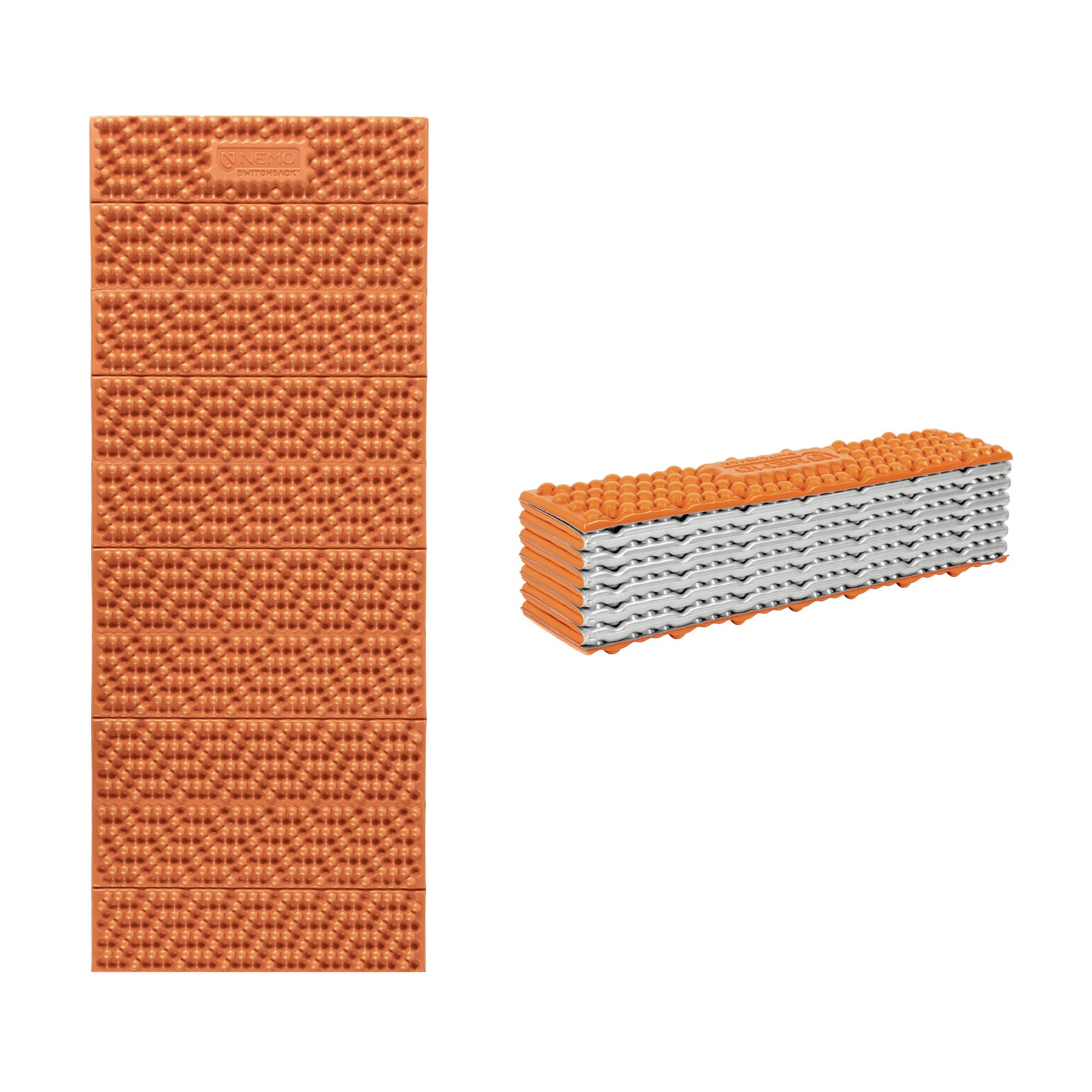
The NEMO Switchback uses a hexagonal nesting pattern with taller, wider nodes that deliver significantly more plushness than traditional closed-cell foam pads like the Z-Lite. The premium dual-density Axiotomic foam layers a supple comfort surface on top of a resilient support base, and a metallized thermal reflective film bounces body heat back to improve warmth in cool conditions.
At just 1 pound and folding into a compact 51 x 20 x 0.9-inch panel, the Switchback is designed for ultralight backpackers who prioritize durability over inflated comfort. The closed-cell construction is virtually indestructible — it can’t leak, puncture, or lose air over time. Many users deploy it under an inflatable pad to boost R-value and provide backup insulation in case of a leak.
The R-value of 2.0 suits summer and mild three-season use, but cold sleepers will need supplemental insulation below freezing. Owners report the pad doubles well as a camp seat, gear mat, or dog bed. The main drawback is the bulk relative to its weight — strapped to the outside of a pack, it takes up volume. Side sleepers may find the 0.9-inch thickness insufficient for hip comfort without an inflatable layer underneath.
Why it’s great
- Indestructible closed-cell foam — no punctures or leaks
- Weighs only 1 pound for ultralight backpacking
- Doubles as a sitting pad, gear mat, or sleeping pad backup
Good to know
- R-Value 2.0 limits use to warmer weather without supplemental insulation
- Bulk takes up pack space despite light weight
- 0.9-inch thickness is thin for side sleepers on hard ground
FAQ
What R-value do I need for winter camping in below-freezing temperatures?
Should I buy a self-inflating pad or a closed-cell foam pad?
Final Thoughts: The Verdict
For most users, the best camping bed pad winner is the Therm-a-Rest MondoKing 3D because its 4.25-inch foam core and 7.0 R-value deliver unmatched comfort and warmth for car campers. If you want an ultralight option for backpacking, grab the Therm-a-Rest NeoAir Xlite NXT. And for four-season car camping on a budget, nothing beats the Hikenture 4 Inch Self Inflating Pad.