
That hesitation when you hit the gas, the rough idle that shakes the cabin, or the cold-start stumble that makes you wonder if the engine will catch — these are the classic symptoms of gum, varnish, and carbon deposits choking your carburetor. A proper carb cleaner additive dissolves those deposits chemically, restoring the precise air-fuel mixture your engine needs without the hassle of disassembly and manual scrubbing. The right formula doesn’t just clean the carb bowl; it also scours jets, passages, intake valves, and combustion chambers for a full fuel-system reset.
I’m Min — the co-founder and writer behind Gadgets Feed. I’ve spent countless hours analyzing the chemical compositions, customer-use patterns, and real-world cleaning efficacy of every major fuel-system additive on the market to separate the products that genuinely dissolve deposits from those that simply add detergent and hope.
From marine outboards to high-mileage pickups to daily-driven sedans, the right treatment restores lost power and smooths out drivability issues. This guide breaks down the top contenders to help you find the best carb cleaner additive for your specific engine and driving conditions.
How To Choose The Best Carb Cleaner Additive
Not all pour-in cleaners work the same way. The chemistry behind the additive determines whether it merely lubricates the fuel system or actively dismantles the hardened carbon deposits that cause drivability issues. Here are the key factors that separate an effective treatment from a bottle of scented solvent.
Active Detergent Chemistry — PEA vs. Older Formulations
Polyether amine (PEA) is the gold-standard detergent chemistry for removing carbon deposits from carburetors, intake valves, and combustion chambers. It withstands high combustion temperatures without breaking down, allowing it to continue cleaning through the entire burn cycle. Older chemistries like polyisobutylene amine (PIBA) are better at cleaning the intake tract but struggle with combustion-chamber deposits. Look for “PEA” in the ingredient list or safety data sheet if you are dealing with heavy carbon buildup in a high-mileage engine.
Shock Treatment vs. Maintenance Dosing
A product’s treat ratio — the amount of additive per gallon of fuel — dictates whether you are performing a deep clean or simply maintaining a clean system. Shock treatments use 2-4 times the normal concentration to dissolve stubborn deposits in a single tank. Maintenance additives use a lower concentration meant for every fill-up. If your engine has noticeable hesitation or stalling, choose an additive that supports a shock-treatment ratio for the first application, then switch to a maintenance product afterward.
Compatibility With Sensors and Catalytic Converters
Modern engines with oxygen sensors and catalytic converters require a non-chlorinated formula that won’t poison those components. Chlorinated solvents, common in older aerosol carb cleaners, can destroy oxygen sensors in a single treatment. Every pour-in additive on this list is safe for catalytic converters, but double-check that the formulation is clearly marked “oxygen sensor safe” if your vehicle has an OBD-II system.
Quick Comparison
On smaller screens, swipe sideways to see the full table.
| Model | Category | Best For | Key Spec | Amazon |
|---|---|---|---|---|
| BG 44K Fuel System Cleaner | Premium | High-mileage engine deep clean | 11 oz treats 20 gal; PEA base | Amazon |
| Liqui Moly Jectron | Premium | Stubborn deposit removal | 2-pack; PEA detergent; 300ml each | Amazon |
| Liqui Moly Truck Series | Premium | Preventive maintenance on larger engines | 500 ml; corrosion inhibitor | Amazon |
| Gumout Fuel System Cleaner | Mid-Range | Moisture removal in marine/seasonal use | 6-pack; concentrated formula | Amazon |
| Berryman B-12 | Mid-Range | Fuel system cleaning + mileage gain | 20 oz aerosol; non-chlorinated | Amazon |
| STP Super Concentrated | Budget | Daily driver maintenance | 12 oz; jet fuel carrier | Amazon |
| Quicksilver Quickleen | Budget | Outboard and marine carb cleaning | 12 oz; 1 oz treats 5 gal gasoline | Amazon |
In‑Depth Reviews
1. BG 44K Fuel System Cleaner (2 Pack)

BG 44K is the professional-grade standard that mechanics have trusted for over 40 years, and its reputation is built on a high-concentration PEA detergent that rapidly dissolves carbon from fuel injectors, intake valves, and combustion chambers. Each 11-ounce can treats up to 20 gallons of gasoline, making it a true shock-treatment product that clears heavy deposits in a single tank. Real-world reports from owners of high-mileage engines — including a 2001 Chevy Silverado with 341,000 miles — confirm a significant improvement in performance and fuel economy after one application.
The two-pack provides enough product for two full treatments or one treatment for a larger fuel tank. The formula is safe for all gasoline engines, including those with catalytic converters and oxygen sensors, so there is no risk of damaging emissions components. Users consistently rate it as the most effective pour-in cleaner they have tried, especially when other products failed to resolve stalling or hesitation.
For a premium product, the cost per treatment is justifiable given the concentration of active detergents. The can is compact and easy to pour, though you will want to add it to a near-empty tank before filling up to ensure proper mixing. If you own a high-mileage vehicle or are dealing with severe carbon buildup, this is the most reliable choice on the market.
Why it’s great
- Professional-grade PEA chemistry removes heavy carbon deposits in one treatment
- Each can treats 20 gallons — ideal for full-size trucks and SUVs
- Trusted by dealerships and independent mechanics for over 40 years
Good to know
- Higher cost per bottle than retail-store additives
- Designed for gasoline engines only — not suitable for diesel
2. Liqui Moly Jectron Gasoline Fuel Injection Cleaner (2 Pack)

Liqui Moly Jectron is the German-engineered answer to stubborn carbon deposits that refuse to budge. Multiple reviewers report that their engine’s hesitation and rough idle persisted through four bottles of competing products before a single treatment of Jectron resolved the issue after just 100 miles of driving. That kind of direct comparison speaks volumes about the effectiveness of its PEA-based detergent package, which targets both fuel injectors and carburetor passages.
The two-pack offers excellent value for users who want a second treatment for a different vehicle or a follow-up cleaning. Each 300ml bottle treats a standard 15-20 gallon tank, and the formula improves throttle response and lowers fuel consumption as deposits are removed. Owners of older carbureted engines, including a 1989 Mazda B2200, report that Jectron restored smooth operation after years of disuse and fuel-system contamination.
While Jectron is formulated for port-injected and carbureted engines, several users have also run it successfully in direct-injection engines without issues. The screw-on funnel integrated into the bottle cap makes pouring clean and easy — a small but appreciated design detail. If you have tried other additives without success, this is the product that finally delivers results.
Why it’s great
- PEA chemistry resolves issues that other cleaners fail to fix
- Integrated pour spout prevents spills during application
- Two-pack price per treatment is competitive for premium performance
Good to know
- Some users note it quiets lifters only partially on turbo engines
- Not specifically optimized for direct-injection carbon cleaning
3. Liqui Moly Truck Series Complete Gasoline System Cleaner

The Liqui Moly Truck Series cleaner is a 500ml formula designed for larger fuel tanks common in trucks and SUVs, but its cleaning power extends to any gasoline engine. The additive cleans the injection system, intake valves, and combustion chamber while also adding a corrosion inhibitor that protects the fuel system from rust and oxidation — a critical feature for vehicles that sit idle for extended periods or use ethanol-blended fuels. The green-tinted liquid includes MoS2 (molybdenum disulfide) as an additional friction modifier.
Multiple truck owners report using this additive every 2-3 months as preventive maintenance, noting that it effectively removes deposits that accumulate from low-quality gasoline. The formula normalizes exhaust emissions values and fuel compensation, which can help a vehicle pass a smog check if carbon buildup was causing a rich running condition. Despite the “Truck Series” branding, it works equally well in sedans and SUVs.
The bottle includes a screw-on funnel that makes pouring into a fuel tank straightforward. A few customers have received bottles with minor shipping dents, but the integrity of the seal and the product inside remained unaffected. For anyone driving a larger-capacity vehicle who prefers a scheduled maintenance approach, this additive delivers consistent results without requiring a shock-treatment concentration.
Why it’s great
- 500ml bottle treats larger fuel tanks common in trucks and SUVs
- Corrosion inhibitor protects against ethanol-related fuel system damage
- MoS2 additive provides additional lubrication to upper cylinder components
Good to know
- Designed for maintenance use rather than heavy shock-treatment cleaning
- Some users find subjective effectiveness hard to measure without baseline diagnostics
4. Gumout 510021W-6PK Fuel System Cleaner

Gumout’s concentrated fuel system cleaner has a well-established reputation among boat owners for combating moisture-related fuel issues. Ethanol-blended gasoline absorbs water from the air, leading to condensation in fuel tanks — especially in marine environments where seasonal use is common. This Gumout formula not only prevents carbon buildup on injectors and carburetors but also helps remove water from the fuel system, preventing the corrosion and phase separation that plague boats left idle over winter.
The six-pack provides excellent value for users who maintain multiple vehicles or want to keep a bottle in each car for routine treatments. The concentrated formula is oxygen-sensor safe and compatible with turbocharged and supercharged engines, so it works across a wide range of applications. Multiple users have reported noticeable improvements in idle smoothness and throttle response after a single bottle, and several have been using Gumout for years as their go-to fuel system cleaner.
One important distinction: while Gumout performs very well for maintenance cleaning, some users feel that Seafoam offers slightly stronger results for severe carbon removal at a higher price point. The real strength of Gumout lies in its moisture-fighting capability and the sheer convenience of the six-pack format. If you need a fuel-system cleaner for a boat, lawn equipment, or a seasonal vehicle, this is the most practical option.
Why it’s great
- Six-pack format provides excellent per-bottle value for multiple vehicles
- Effective at removing condensation and moisture from marine fuel systems
- Safe for catalytic converters, oxygen sensors, and turbocharged engines
Good to know
- Not the strongest option for heavy carbon deposit removal on high-mileage engines
- Each bottle treats a standard tank — larger trucks may need two per treatment
5. Berryman B-12 Carburetor, Choke and Throttle Body Cleaner (20 oz)

Berryman B-12 has been an American-made standard since 1918, and the current non-chlorinated formula delivers the same aggressive cleaning power as the original without endangering oxygen sensors or catalytic converters. This 20-ounce aerosol format is unique among the products on this list — it is designed as a pour-in additive that cleans the entire fuel system, not just a spray for external carb cleaning. The fast-drying formula penetrates gum, varnish, and carbon deposits quickly, then evaporates without leaving sticky residue.
Users consistently note that B-12 improves fuel mileage noticeably after a single treatment, and the large 20-ounce can provides more volume per dollar than most competing additives. The product is safe for both carbureted and fuel-injected engines, and its aggressive solvent action makes it particularly effective at dissolving the varnish that forms when ethanol fuel sits in a carburetor bowl for weeks or months. Several DIY mechanics keep a can of B-12 on the shelf specifically for reviving small engines and classic cars.
The aerosol can requires careful handling during pouring — it is not as convenient as a bottle with a spout. Additionally, the strong solvent odor means you should add it to the fuel tank outdoors or in a well-ventilated area. For the price, the cleaning power per ounce is hard to beat, especially if you need a single product that works for both carburetor cleaning and fuel-system treatment.
Why it’s great
- 20 ounces of concentrated cleaner at a very competitive per-ounce cost
- Non-chlorinated formula is safe for modern emissions components
- Fast-drying, no-residue chemistry dissolves varnish and gum effectively
Good to know
- Aerosol can format lacks a pour spout, making transfer less convenient
- Strong solvent odor requires ventilation during use
6. STP Super Concentrated Fuel Injector Cleaner (12 oz)
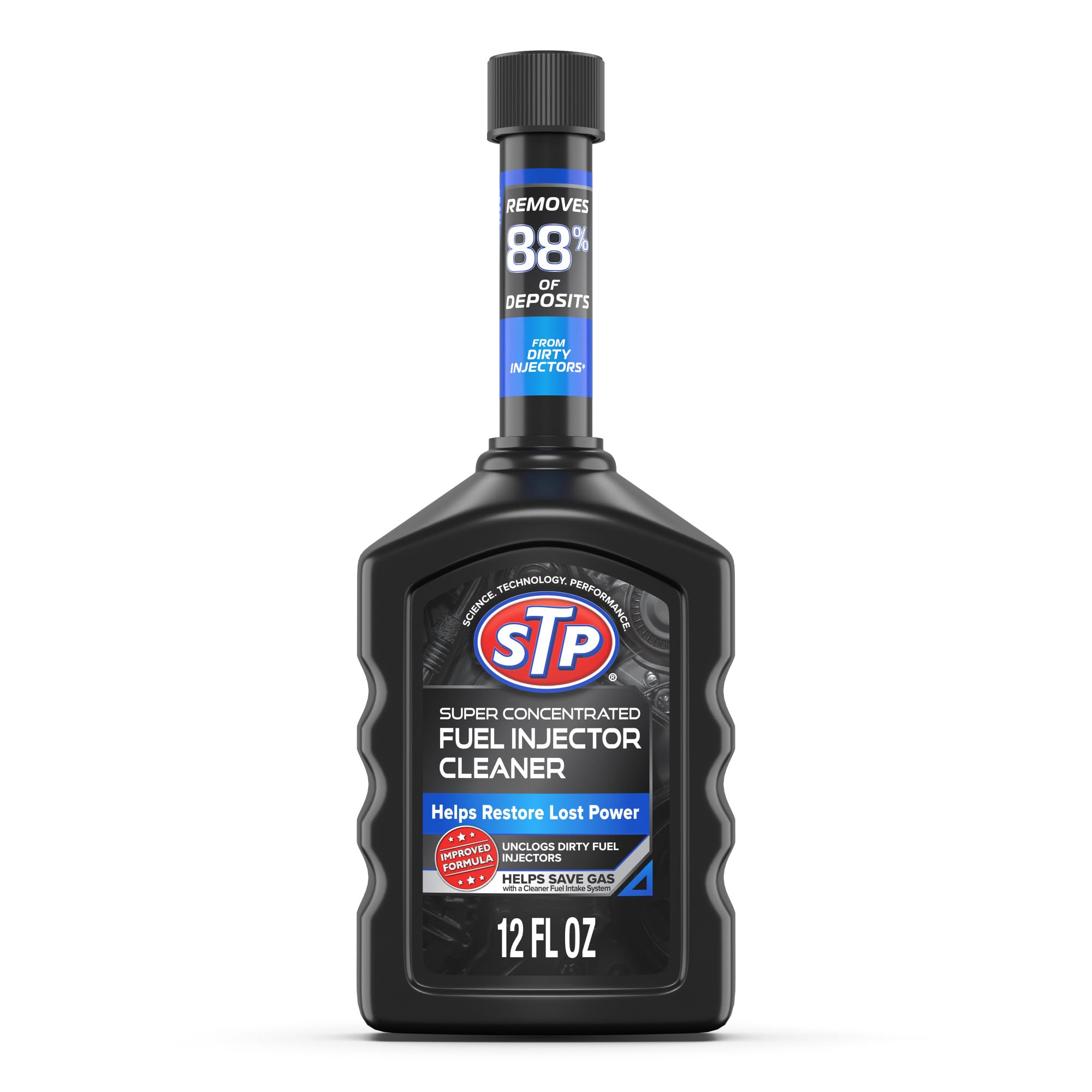
STP Super Concentrated Fuel Injector Cleaner is the budget-conscious entry that still delivers tangible results, especially for drivers who want a maintenance dose rather than a heavy shock treatment. The formula uses a high-quality carrier of active ingredients — including a jet-fuel base — that unclogs dirty injectors and removes carbon deposits from the combustion chamber. Multiple users with Volkswagens, Jettas, and other daily drivers report improved throttle response and smoother acceleration after a single bottle.
The 12-ounce bottle is sized for a standard 15-20 gallon fuel tank, making it a convenient drop-in-and-fill solution. While the product is listed as discontinued by the manufacturer in some retail channels, it remains widely available on Amazon, and users continue to purchase it as a reliable, low-cost option.
Where STP falls short is in severe-deposit situations. Users who need to revive a classic car that has been sitting for years, or who are dealing with a high-mileage engine with heavy carbon buildup, will likely need a PEA-based product with higher concentration. For routine maintenance on a daily driver or a second car that sees regular use, STP delivers exactly what it promises at a budget-friendly price point.
Why it’s great
- Budget-friendly single-bottle price for routine fuel system maintenance
- Jet-fuel carrier base dissolves deposits effectively for most daily drivers
- Easy to use — pour into a near-empty tank before refueling
Good to know
- Not concentrated enough for heavy carbon deposit removal on high-mileage engines
- Listed as discontinued by manufacturer — long-term availability is uncertain
7. Quicksilver Quickleen Engine and Fuel System Cleaner (12 oz)

Quicksilver Quickleen is the marine-specific additive that outboard owners turn to when their engine develops an intermittent miss or rough idle after a season of storage. One verified user restored smooth power and eliminated a persistent miss in a 75hp Mercury outboard after a single shock dose.
The 12-ounce bottle provides a 1-ounce-per-5-gallon maintenance dose, meaning a single bottle can treat up to 60 gallons of fuel when used as a regular additive. This makes it extremely economical for boat owners who want to prevent the carbon buildup and piston seize-up that can occur with ethanol-blend marine fuels. Quickleen can be used at every fill-up without risk of over-treatment, and it is compatible with all grades of gasoline and ethanol blends.
One limitation is that Quickleen lacks a fuel stabilizer, so if you are winterizing a boat, you will need a separate stabilizer product for long-term storage. Additionally, while the product is excellent for cleaning carbon and restoring lost power, it does not address water in the fuel system as effectively as some moisture-focused marine additives. For outboards and personal watercraft that are run regularly, this is the most targeted and effective carb cleaner additive available.
Why it’s great
- Shock-treatment ratio of 3 oz/gal effectively revives idle engines and outboards
- Treats up to 60 gallons per bottle at maintenance dosing (1 oz per 5 gal)
- Designed specifically for marine engines running ethanol-blend fuel
Good to know
- Does not contain fuel stabilizer — separate winterization product needed
- Some users on high-performance jet drives saw no immediate performance change
FAQ
Can a carb cleaner additive fix a carburetor that has been sitting for years?
How often should I use a carb cleaner additive in my daily driver?
Will a carb cleaner additive damage my oxygen sensor or catalytic converter?
Final Thoughts: The Verdict
For most users, the best carb cleaner additive winner is the BG 44K Fuel System Cleaner because its professional-grade PEA formulation combines the highest concentration of active detergent with a track record of reviving high-mileage engines that other cleaners could not fix. If you want a corrosion-inhibiting maintenance additive for a truck or SUV that sees regular use, grab the Liqui Moly Truck Series. And for marine applications where moisture and ethanol are the primary enemies, nothing beats the Gumout Fuel System Cleaner 6-Pack for convenient, targeted protection.