
That chirp at 2 a.m. from a dying battery or the blaring false alarm from a shower’s steam is the real daily friction of home safety. Choosing the right detector means navigating sensor types, power sources, and interconnection options to match your specific home layout and tolerance for nuisance events.
I’m Min — the co-founder and writer behind Gadgets Feed. I’ve spent hundreds of hours analyzing the technical specifications of ionization versus photoelectric sensors, the real-world longevity of sealed lithium batteries, and the compliance requirements for UL 217 and UL 2034 standards across dozens of detector models to build this guide.
The quiet compromise between fast detection and fewer false alarms defines the modern detector. After deep research, I’ve identified the best options to help you secure your home without the beeping headaches, simplifying your search for the best smoke detector.
How To Choose The Best Smoke Detector
Selecting a smoke detector isn’t just about buying the cheapest unit on the shelf. The right choice depends on your home’s electrical setup, your tolerance for false alarms from cooking or steam, and whether you need carbon monoxide protection in a single device.
Sensor Type: Ionization vs. Photoelectric
Ionization sensors are faster at detecting fast-flaming fires but are notorious for nuisance alarms triggered by cooking or steam. Photoelectric sensors excel at sensing smoldering fires and are far less sensitive to kitchen vapors. For modern homes, a photoelectric or a dual-sensor unit provides the best balance of safety and peace.
Power Source: Battery vs. Hardwired vs. Sealed Battery
Standard AA-powered units are easy to install but require battery swaps. Hardwired models with battery backup offer maximum reliability during power outages but need an electrician. Sealed 10-year lithium battery models remove all chirps and battery changes, though the entire unit must be replaced at end-of-life. A sealed battery is ideal for high or hard-to-reach ceilings.
Interconnection: Wired vs. Wireless
When a single detector triggers, interconnected units sound every alarm in the house — critical for ensuring you hear a basement fire from a second-floor bedroom. Hardwired interconnection is best for new construction. Wireless RF interconnection is a clean retrofit solution for existing homes without running new cable. Wi-Fi connectivity adds smartphone alerts but typically raises the price.
Dual Detection: Smoke and Carbon Monoxide Combo
A combination unit saves installation space and provides dual protection from a single device. This is especially valuable in bedrooms and hallways near sleeping areas. Ensure any CO detector is UL 2034 certified to guarantee accurate carbon monoxide detection.
Quick Comparison
On smaller screens, swipe sideways to see the full table.
| Model | Category | Best For | Key Spec | Amazon |
|---|---|---|---|---|
| X-Sense SC06-W 3-Pack | Wireless Interconnect | Retrofit whole-home interconnection | 10-Year Sealed Lithium Battery | Amazon |
| First Alert SMI105-AC 3-Pack | Hardwired with Backup | Whole-home hardwired systems | 10-Year Battery Backup | Amazon |
| Kidde AC Hardwired I12040 | Hardwired Ionization | Replacing older Kidde hardwired units | Interconnects up to 24 Devices | Amazon |
| First Alert SMCO100 | Battery Smoke & CO | Budget combo protection | AA Battery Powered | Amazon |
| First Alert SMICO100 | Battery Smoke & CO | Compact combo unit for small spaces | 9V Battery Powered | Amazon |
| Kidde 10-Year Battery P3010K | Sealed Battery | No-battery-change convenience | Photoelectric Sensor | Amazon |
| Kidde AA Battery 20SDR | Basic Battery | Simple, low-cost replacement | 85 dB Alarm | Amazon |
In‑Depth Reviews
1. X-Sense Wireless Interconnected SC06-W 3-Pack
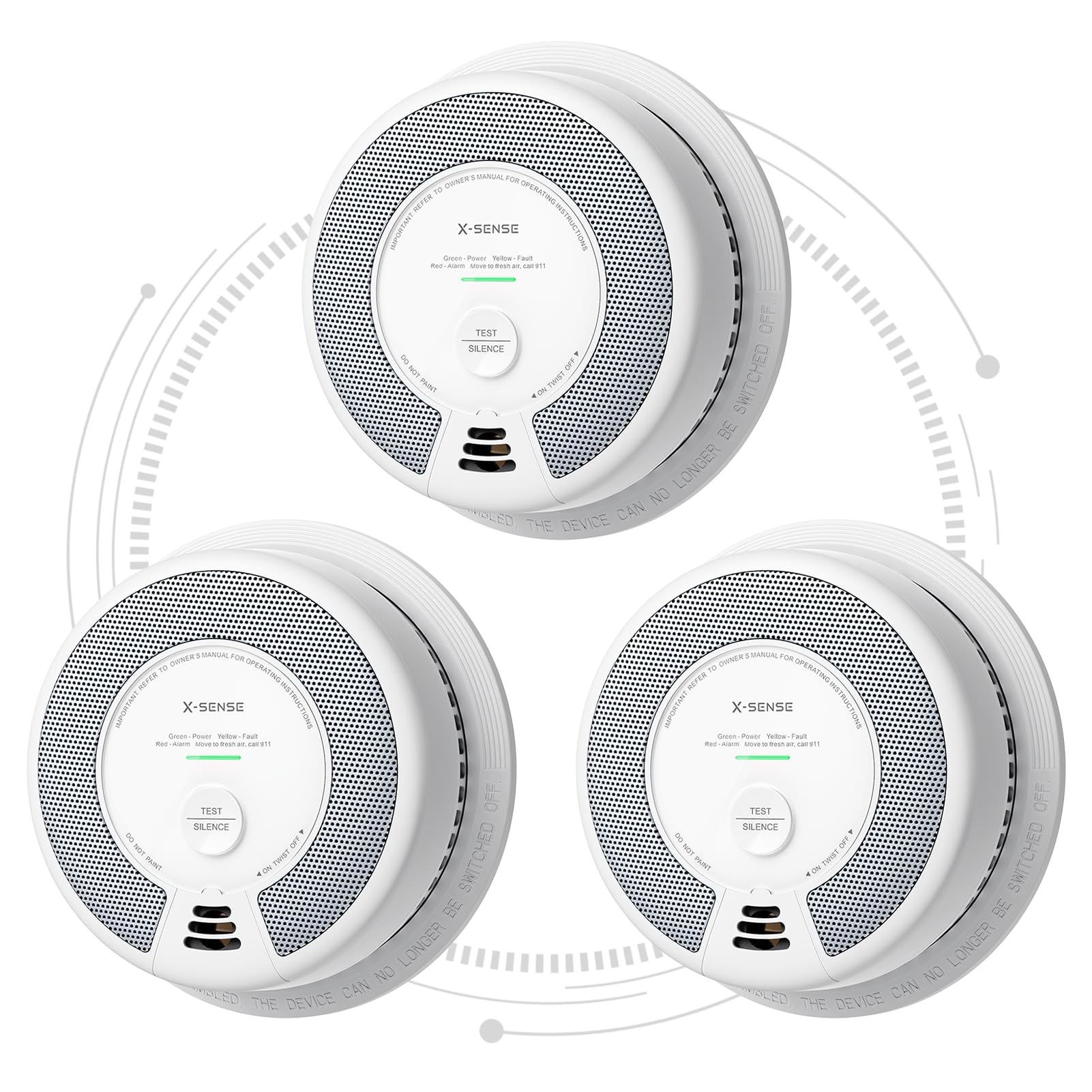
This 3-pack from X-Sense combines smoke and carbon monoxide detection in a single unit with a sealed 10-year lithium battery, eliminating the need for any battery swaps over its lifetime. The wireless RF interconnection allows up to 18 Link+ devices to communicate, meaning a fire detected in the basement will sound every alarm in the house instantly — a powerful safety advantage without running wire through walls.
The photoelectric sensor is optimized for smoldering fires and drastically reduces nuisance alarms from cooking or steam compared to older ionization units. At 85 decibels, the alarm is loud enough to wake a household, and the UL 217 and UL 2034 certifications guarantee it meets modern safety standards. Installation is straightforward with the included mounting brackets and screws, and the units come pre-paired from the factory for a frustration-free setup.
While the upfront cost is higher than basic battery units, the elimination of battery changes and the wireless interconnection make this a standout choice for homeowners retrofitting a whole-home safety system. The 60-day money-back guarantee and 5-year warranty add further confidence.
Why it’s great
- Wireless interconnection across up to 18 devices without hardwiring
- Sealed 10-year lithium battery means zero chirps or battery changes
- Dual smoke and CO protection in a single unit per detector
Good to know
- Does not include a Wi-Fi module for smartphone alerts
- May require a custom mounting plate to cover old junction boxes
2. First Alert BRK SMI105-AC 3-Pack

The First Alert SMI105-AC is designed for homes that already have hardwired detectors. Its Precision Detection technology uses a photoelectric sensor to significantly cut down on nuisance alarms from cooking while still providing fast warning for smoldering fires. The built-in 10-year battery backup ensures continuous protection even during a power outage, which is a critical upgrade over older units that rely on a standard 9V.
Through the hardwired interconnect system, when one alarm detects smoke, all compatible units in the chain will sound — a key requirement for modern building codes. The alarm indicator LED visually identifies which unit initiated the alert, making it easy to pinpoint the source. The 3-pack is an economical way to replace multiple expired detectors at once, and the easy adapter plug simplifies the swap.
Users consistently report a simple twist-off installation that takes minutes per unit. The subtle green LED backlight on newer models is a nice touch for nighttime visibility. For anyone with an existing hardwired system looking for a quiet, reliable upgrade, this is a premium choice that delivers peace of mind without the nuisance beeps.
Why it’s great
- 10-year sealed battery backup eliminates late-night chirps forever
- Precision Detection technology dramatically reduces cooking false alarms
- Interconnect feature ensures all alarms sound for whole-home warning
Good to know
- Requires existing hardwired setup or professional installation
- Mounting screws may need to be sourced separately
3. First Alert SMCO100 Battery Smoke & CO Alarm

This First Alert SMCO100 offers dual smoke and carbon monoxide protection in a battery-operated package that runs on two AA batteries. It uses Precision Detection technology to reduce nuisance alarms while providing early warning for both fire emergencies and CO buildup. The end-of-life warning chirps to let you know when the entire unit needs replacement, ensuring you aren’t relying on a detector past its safe lifespan.
At just over half a pound, the unit is lightweight and easy to mount on any ceiling or wall. The test/silence button lets you quickly verify functionality or hush a false alarm triggered by cooking or shower steam. Users appreciate the multiple mounting hole patterns that often line up with existing screw holes from older detectors, making it a convenient replacement option.
While it requires a standard battery change every year or so, the non-wired, non-lithium design keeps the upfront price very accessible. For a bedroom or hallway where both smoke and CO protection are essential, this unit delivers reliable dual protection without the complexity of hardwiring or sealed batteries.
Why it’s great
- Combines smoke and carbon monoxide detection in one affordable unit
- Precision Detection reduces false alarms from everyday cooking
- Multiple mounting hole patterns simplify replacement of old detectors
Good to know
- Requires AA battery replacements every 12 months or so
- Mounting base may differ from older First Alert models
4. First Alert SMICO100 Battery Smoke & CO Alarm

Very similar to the SMCO100, the SMICO100 from First Alert is a compact 2-in-1 smoke and carbon monoxide alarm that runs on a single 9V battery. It also features Precision Detection technology to minimize false alarms while maintaining fast detection. The unit’s 5.6-inch diameter and 2-inch depth make it one of the more space-efficient combo detectors on the market, ideal for tight spaces or small apartments.
Installation is quick with the included 9V battery and mounting hardware. The test/silence button is intuitive, and the end-of-life warning ensures you replace the unit when the sensor degrades. Real-world users report strong reliability and ease of setup, with many trusting the First Alert brand from years of experience.
The key trade-off is the 9V battery versus the AA-powered SMCO100. 9V batteries are slightly less common and may cost a bit more per replacement. However, for an entry-level dual detector that provides essential safety without any wiring, this is a solid and proven performer for bedrooms, hallways, and rental properties.
Why it’s great
- Compact 2-in-1 design saves space compared to separate units
- Easy 9V battery installation and setup
- Proven First Alert reliability and brand trust
Good to know
- 9V batteries need to be replaced about once a year
- Mounting plate may not match older First Alert bases
5. Kidde AC Hardwired Interconnect I12040
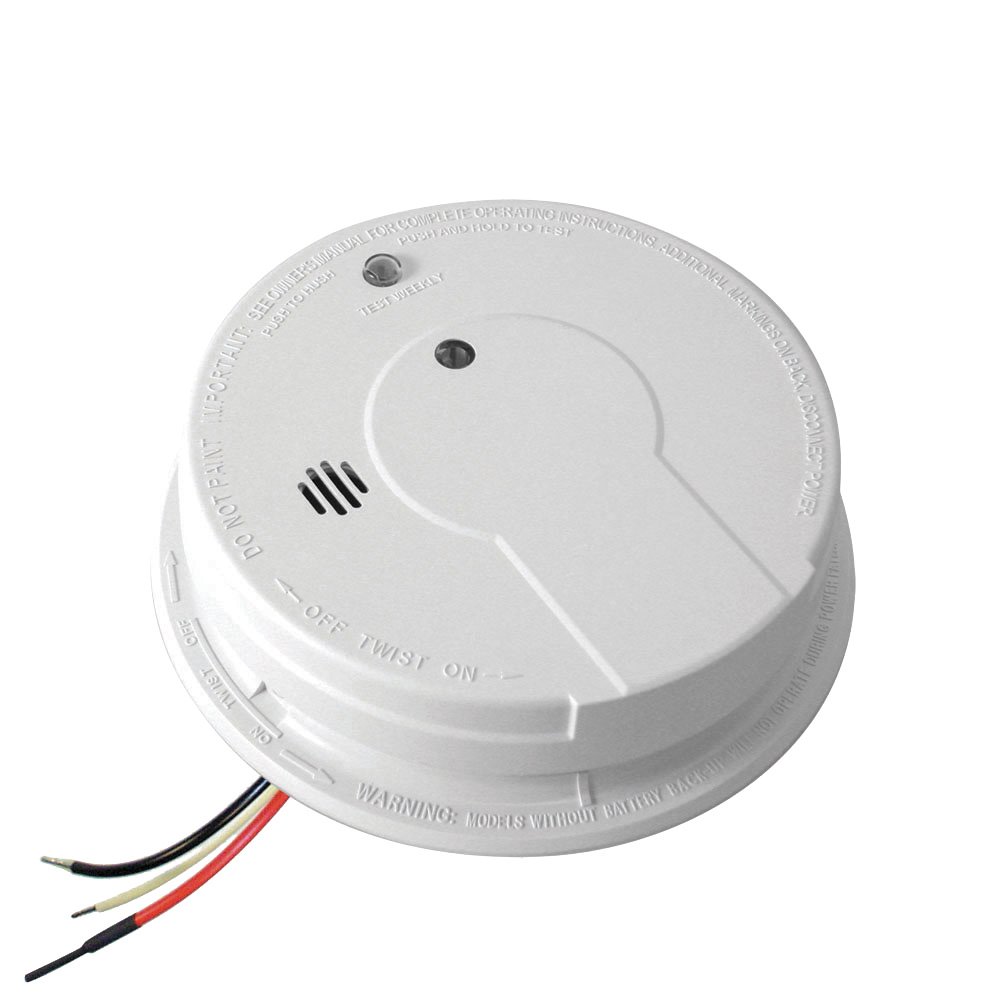
The Kidde I12040 is a hardwired smoke detector that has been a staple in American homes for years. It uses ionization sensing technology, which is excellent for detecting fast-flaming fires, and can be interconnected with up to 24 Kidde devices including smoke, CO, and heat alarms. The front battery pull tab allows you to activate the 9V backup battery without removing the alarm from the mounting bracket — a thoughtful design detail for initial installation.
One standout feature is the battery run-down protection: when AC power is absent, the alarm automatically shuts down its memory function to preserve battery life and reduce annoying low-battery chirps. The tamper-resistant locking feature deters theft, which can be a consideration in rental properties. A dust cover protects the sensor during construction, minimizing false alarms caused by drywall dust or paint fumes.
While the ionization sensor is prone to more nuisance alarms from cooking than a photoelectric unit, the I12040 remains a reliable choice for those replacing existing hardwired Kidde units. The easy-connect wiring harness and included adapters make swapping out old alarms a clean, tool-friendly job. For homes with a full Kidde hardwired system, this is a direct, compatible drop-in replacement.
Why it’s great
- Interconnects up to 24 Kidde devices for whole-home coverage
- Battery run-down protection extends backup life during outages
- Dust cover protects sensor during home renovations
Good to know
- Ionization sensor can be more sensitive to cooking false alarms
- Does not detect carbon monoxide — smoke only
6. Kidde Smoke Detector P3010K 10-Year Battery

This Kidde P3010K uses a photoelectric sensor and operates on a sealed 10-year lithium battery, meaning no battery replacements for the entire lifespan of the unit. The photoelectric technology is specifically designed to detect visible fire particles from smoldering fires — those slow, smoky fires that can fill a home with toxic gases before a flame ever appears. It’s also inherently less prone to false alarms from kitchen steam or bathroom humidity.
The alarm automatically activates when twisted onto the mounting bracket, preventing installation errors. The Test-Hush button allows you to silence nuisance alarms (from burnt toast, for instance) without disabling the detector permanently. The end-of-life chirp will notify you approximately 10 years from the date of installation that it’s time for a full replacement.
Some users have reported sporadic false alarms after several months and note that the mounting bracket design changed from earlier Kidde models, requiring minor adjustments for replacement. However, for a sealed, no-maintenance detector that prioritizes smoldering fire detection, this is a strong mid-range option that eliminates the annual battery dance entirely.
Why it’s great
- Sealed 10-year lithium battery means zero battery changes for a decade
- Photoelectric sensor excels at smoldering fire detection
- Auto-activation upon mounting prevents forgetfulness
Good to know
- Mounting bracket may differ from older Kidde models
- Some reports of intermittent false alarms after a few months
7. Kidde AA Battery Smoke Detector 20SDR

The Kidde 20SDR is a straightforward AA-battery-powered smoke detector that gets the job done without any frills. It claims to detect smoke over 25% faster than the minimum UL 217 standard and uses advanced sensing to distinguish between real smoke and everyday cooking or steam, reducing false alarms. The 85-decibel alarm with a red LED strobe provides both audible and visual warnings.
Powered by two included AA batteries, this detector is easy to install anywhere without wiring. The Test & Hush button lets you quickly test the unit or silence a false alarm without disabling the sensor. It meets both UL 217 10th Edition and FCC standards, ensuring compliance with current safety regulations.
This is the most budget-friendly option in this lineup. The trade-off is the need to replace AA batteries every year or so and the lack of carbon monoxide detection or any interconnectivity. For a simple, effective, and code-compliant smoke detector for an apartment, rental unit, or as a quick replacement, the 20SDR delivers solid value without the premium price tag.
Why it’s great
- Very affordable entry-level smoke detection
- Advanced sensing helps reduce false alarms from cooking
- Comes ready with two included AA batteries
Good to know
- No carbon monoxide detection — smoke only
- Requires AA battery swaps each year
- No interconnect feature for whole-home alerts
FAQ
Why does my smoke detector keep chirping even with a new battery?
Should I use an ionization or photoelectric smoke detector in my kitchen?
Final Thoughts: The Verdict
For most users, the best smoke detector winner is the X-Sense Wireless Interconnected SC06-W 3-Pack because it combines the convenience of a sealed 10-year battery with wireless interconnection for whole-home safety without hardwiring. If you want a premium hardwired system with a long-lasting battery backup, grab the First Alert SMI105-AC 3-Pack. And for a budget-friendly combo unit that covers both smoke and carbon monoxide, nothing beats the First Alert SMCO100.